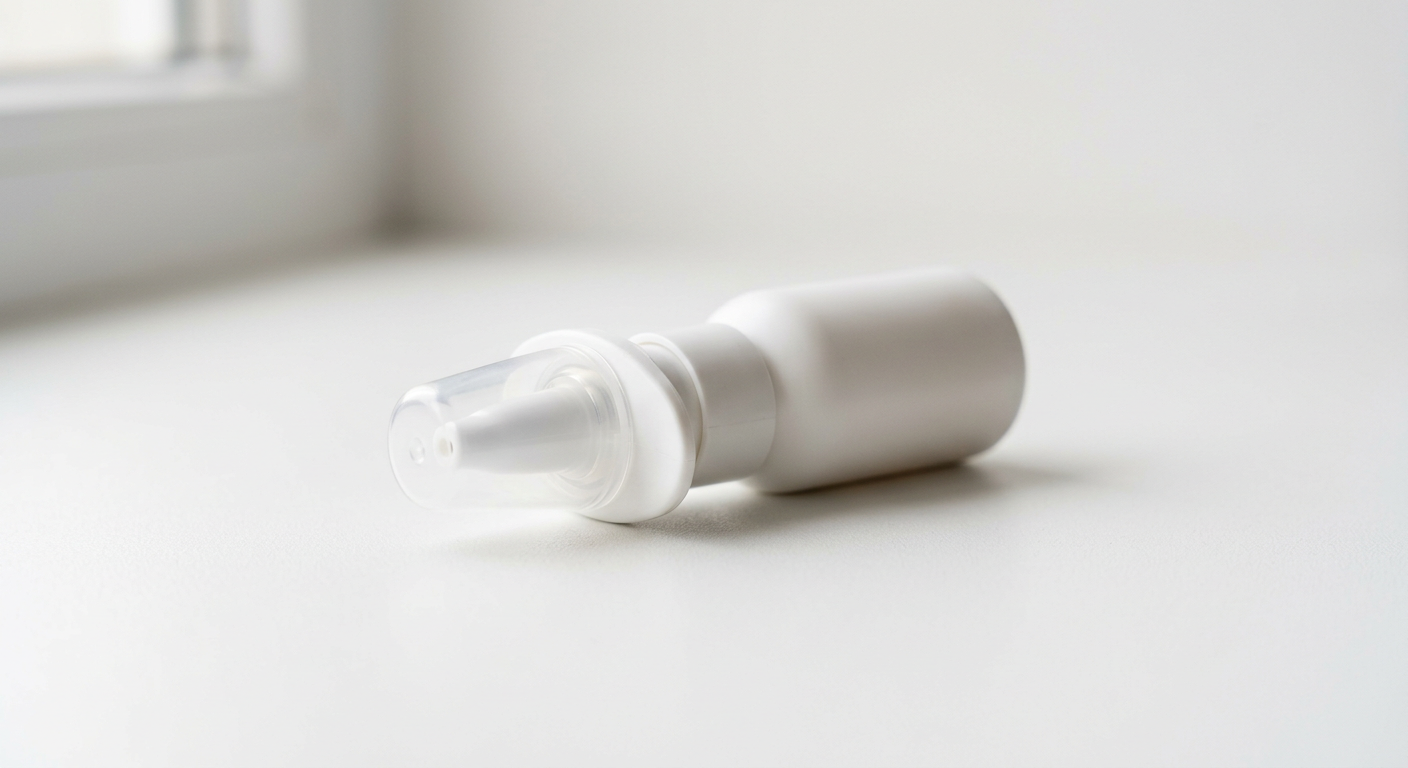
| The essentials: On March 27, 2026, the FDA approved a label update for neffy 1 mg (epinephrine nasal spray, ARS Pharmaceuticals) removing the minimum age requirement from the indication. Any patient weighing 33 pounds (15 kg) or more can now use neffy 1 mg for emergency treatment of Type I allergic reactions, including anaphylaxis, regardless of age. Previously, the 1 mg dose required patients to be at least 4 years old AND weigh between 33 and 66 pounds. The age floor is now gone entirely. Who this affects: approximately 25% of patients in the 33 to 66 pound weight range are under age 4, a group that was previously excluded despite meeting the weight criterion and facing real anaphylaxis risk. The label update also clarified: sniffing after administration is not required for the drug to work; the device remains usable if accidentally frozen and thawed; high-temperature exposure up to 122°F for brief periods does not compromise the product. What neffy is: a needle-free intranasal epinephrine spray that delivers epinephrine through the nasal mucosa without injection, cleared as the first non-injectable epinephrine option for anaphylaxis. Available in two doses: neffy 1 mg for patients 33 to 66 pounds (15 to 30 kg) and neffy 2 mg for patients 66 pounds or more (30 kg or more). |
|---|
Anaphylaxis is a medical emergency. It can progress from first symptoms to respiratory failure or cardiovascular collapse within minutes. The only FDA-approved first-line treatment is epinephrine, and the evidence is unambiguous: early administration saves lives. Delayed administration of epinephrine is a consistent factor in anaphylaxis fatalities.
Yet epinephrine is frequently not given when it should be, and the reason is often not the absence of a device. It is fear of the needle.
Multiple studies have documented that a significant proportion of caregivers, parents, and even patients delay or avoid using epinephrine autoinjectors because of needle phobia, fear of injuring the child or themselves during a high-stress emergency, or hesitation about whether the situation truly warrants injection. One survey found that fewer than half of patients at risk for anaphylaxis consistently carry their epinephrine, and non-adherence is frequently attributed to the injection format itself.
neffy (epinephrine nasal spray) was developed specifically to address this barrier. It delivers epinephrine through the nasal mucosa without a needle. It is compact, discreet, and does not require injection technique. The March 27, 2026 label update makes it accessible to the youngest weight-eligible patients for the first time.
What Changed and Why It Matters
The original neffy 1 mg approval in May 2025 included a pediatric age restriction: patients using the 1 mg dose had to be at least 4 years old in addition to meeting the 33 to 66 pound weight criterion. Children under 4 who were in the eligible weight range were excluded from the labeled indication.
The updated label removes the age floor entirely. Eligibility is now determined solely by weight: 33 pounds or more for the 1 mg dose, regardless of how old the patient is.
This is not a small gap. Approximately 25% of patients in the 33 to 66 pound weight range are under 4 years of age. Anaphylaxis in young children is not rare. Food allergies affect approximately 8% of children, and the foods most commonly causing severe reactions in young children, including peanuts, tree nuts, milk, and egg, are foods that toddlers and preschool-aged children routinely encounter. A 3-year-old who weighs 35 pounds and has a severe peanut allergy was previously outside the labeled indication for neffy despite being in the labeled weight range. That gap is now closed.
The Clinical Evidence Behind the Label Expansion
The age requirement was removed based on clinical data presented to the FDA, including pharmacokinetic and pharmacodynamic evidence. Here is what the data shows.
Pharmacokinetic equivalence to injectable epinephrine
The original approval of neffy 1 mg was based on extensive clinical trials demonstrating that pharmacokinetic and pharmacodynamic responses in pediatric and adult subjects were consistent with those of injectable epinephrine products. This means neffy delivers comparable blood concentrations of epinephrine and produces comparable effects on blood pressure and heart rate as intramuscular autoinjector products.
This is the pharmacological foundation of the entire neffy program: if the blood epinephrine levels achieved are equivalent, the clinical effect should be equivalent. That equivalence was established in healthy adults and pediatric subjects in the original approval.
Real-world effectiveness data
Since neffy’s approval, real-world prescribing data has been accumulating. Real-world data show that a single dose of neffy achieves an 89.2% symptom resolution rate in anaphylaxis, comparable to the 88.9% rate observed with intramuscular epinephrine autoinjectors. That near-identical real-world effectiveness rate across the two delivery formats is a meaningful data point for families deciding between options.
Pediatric trial response data
In pediatric clinical trials, 100% of patients responded to a single dose of neffy, with a median response time of 16 minutes. Adverse events in pediatric trials were generally mild and transient, consistent with the known epinephrine side effect profile (increased heart rate, pallor, tremor) rather than drug-specific adverse effects from the nasal route.
Human factors studies
Human factors studies demonstrated that children as young as 10 years old can use neffy effectively by following the instructions, and that untrained individuals, including babysitters, teachers, and other non-medical caregivers, can successfully administer the device in simulated emergency conditions. This real-world usability finding is as important as the pharmacokinetic data for a rescue medication whose effectiveness depends on whether it actually gets used.
The Other Label Updates: Storage and Administration Clarifications
The March 27 label update also includes several practical clarifications that address common questions and concerns caregivers have raised:
| What changed | What it means in practice |
|---|---|
| Sniffing after administration is not required | Previously unclear whether patients needed to sniff to pull the medication deeper into the nasal cavity. The label now clarifies that normal administration is effective regardless of whether the patient sniffs. This matters for small children who may not follow instructions during an allergic emergency. |
| Accidental freezing does not render the device unusable | If neffy is accidentally frozen and thawed, it can still be used. Previously, accidental freezing was a concern that might lead caregivers to discard the device. |
| High temperature excursions up to 122°F permitted | Brief exposure to temperatures as high as 122°F (50°C) does not compromise product quality. This matters for devices stored in car glove compartments, diaper bags, or outdoor settings in warm climates. |
| Carrying case included with each prescription carton | Beginning this summer, each carton will include a carrying case. Availability is intended to improve day-to-day portability and reduce the barrier to carrying the device consistently. |
How neffy Compares to Other Epinephrine Options
Epinephrine remains the only FDA-approved medication for anaphylaxis. It is not optional or a second-line measure: antihistamines like diphenhydramine (Benadryl) do not treat anaphylaxis and are not substitutes. For any patient at risk for anaphylaxis, carrying epinephrine is the medical standard.
The available options in the U.S. currently include:
| Product | Format | Doses available | Weight-based dosing | Age restriction |
|---|---|---|---|---|
| EpiPen / EpiPen Jr | Intramuscular autoinjector (spring-loaded, needle-based) | 0.3 mg (adult), 0.15 mg (Jr) | 0.15 mg for 33 to 66 lbs; 0.3 mg for 66 lbs or more | No age floor, weight-based |
| Auvi-Q | Intramuscular autoinjector (needle-retractable, with voice instructions) | 0.1 mg, 0.15 mg, 0.3 mg | Multiple doses for different weight ranges including 16 to 33 lbs | No age floor, weight-based |
| neffy 1 mg | Intranasal spray, no needle | 1 mg | For patients 33 to 66 lbs (15 to 30 kg) | No age floor as of March 27, 2026 |
| neffy 2 mg | Intranasal spray, no needle | 2 mg | For patients 66 lbs or more (30 kg or more) | No age floor |
The key practical difference is the delivery mechanism. EpiPen and Auvi-Q are effective, extensively studied intramuscular products with long track records. Auvi-Q’s voice instructions and needle-retraction design address some of the usability concerns associated with EpiPen, but both still require needle injection. neffy’s non-injectable format does not replace injection-based options but adds a choice for patients, families, and caregivers for whom needle administration is a real barrier.
Clinically, the two approaches should be considered equivalent in terms of epinephrine delivery based on the pharmacokinetic data. The choice between them is appropriately individualized based on patient preference, caregiver confidence, and clinical judgment.
| The anaphylaxis delay problem: why needle hesitancy has clinical consequences Delayed epinephrine administration is the most common preventable factor in anaphylaxis fatalities. Studies consistently show that patients, parents, and bystanders delay using epinephrine for multiple reasons: uncertainty about whether symptoms are severe enough, concern about hurting the patient with a needle, fear of accidentally self-injecting, and lack of confidence in administering a needle device under pressure. Each minute of delay in epinephrine administration during a severe anaphylactic reaction increases the risk of cardiovascular and respiratory compromise. Antihistamines, commonly given as a first response, do not block the systemic cascade that makes anaphylaxis life-threatening. They treat urticaria (hives) and mild symptoms but cannot prevent or reverse anaphylactic shock. The clinical rationale for neffy is not that intranasal epinephrine is pharmacologically superior to injected epinephrine. The rationale is that a treatment which is equivalent in pharmacokinetics but significantly more likely to be used promptly by hesitant caregivers is clinically superior in practice, even if it is equivalent in theory. |
|---|
Dosing, Administration, and What Caregivers Need to Know
Weight-based dosing is the rule:
- neffy 1 mg: patients weighing 33 to 66 pounds (15 to 30 kg), any age
- neffy 2 mg: patients weighing 66 pounds or more (30 kg or more), any age
Administration:
- Remove the device from the case.
- Hold the device upright with your thumb on the bottom and two fingers on the nozzle.
- Insert the nozzle into one nostril. The patient does not need to sniff.
- Press firmly to release the dose.
- If symptoms do not improve within 5 minutes or worsen, administer a second dose in the same nostril from a second device.
- Call 911 or go to the nearest emergency room immediately after use, even if symptoms improve.
Carry two devices: Current prescribing guidelines recommend carrying two epinephrine devices at all times because biphasic anaphylaxis, where symptoms return after initial improvement, can occur in approximately 1 in 5 anaphylaxis events.
Storage guidance: neffy can be stored at room temperature. Brief exposure up to 122°F is permitted. If accidentally frozen, it can be thawed and used. Keep the cap on between uses. The shelf life is 24 months at room temperature.
When to call 911: Always. Even after epinephrine administration and apparent symptom improvement, anaphylaxis requires emergency medical evaluation because of biphasic reaction risk.
What This Means for Schools, Daycares, and Emergency Preparedness
The removal of the age restriction has implications beyond individual families. Schools and daycare facilities with anaphylaxis emergency plans now have an additional option to consider for their youngest students who meet weight criteria. Many early childhood programs struggle with the needle administration training requirements that injectable epinephrine demands of staff, and untrained-user data showing effective neffy administration by non-medical personnel is directly relevant in these settings.
FARE (Food Allergy Research and Education) maintains resources for schools navigating food allergy emergency planning. ACAAI (American College of Allergy, Asthma and Immunology) provides clinical guidance on anaphylaxis preparedness. Both organizations’ resources may be updated to reflect the age restriction removal.
Sources
ARS Pharmaceuticals press release (March 27, 2026): ARS Pharmaceuticals Receives FDA Approval to Remove Age Requirement From neffy 1 mg (epinephrine nasal spray) Label. GlobeNewswire.
ARS Pharmaceuticals IR page: ARS Pharmaceuticals Receives FDA Approval to Remove Age Requirement. ir.ars-pharma.com.
Original neffy 1 mg approval (May 2025): ARS Pharmaceuticals Announces FDA Approval of neffy 1 mg. ir.ars-pharma.com.
FDA drug approval page: FDA approves epinephrine nasal spray for Type I allergic reactions, including anaphylaxis. FDA.gov.
Pharmacy Times coverage: FDA Removes Age Restriction for neffy 1 mg, Expanding Access to Needle-Free Epinephrine. pharmacytimes.com. March 2026.
Contemporary Pediatrics coverage (with 89.2% real-world data): FDA removes age restriction for epinephrine nasal spray. contemporarypediatrics.com. March 2026.
Epinephrine delay and anaphylaxis fatalities: Epinephrine Use and Barriers to Carrying. PMC6290645.
Anaphylaxis overview: AAAAI Anaphylaxis.
Food allergy statistics: Facts and Statistics. FARE.
Patient and caregiver resources: FARE: Food Allergy Research and Education | ACAAI Anaphylaxis | AAAAI Anaphylaxis | neffy prescribing information
| Disclaimer: Health Evidence Digest provides general information about FDA approvals and health research for educational purposes. This content is not a substitute for professional medical advice. Patients with known or suspected anaphylaxis risk should work with a board-certified allergist or immunologist to establish an individualized emergency action plan. Always call 911 after epinephrine administration, even if symptoms appear to resolve. |
|---|