Category: Uncategorized

  • Xeljanz Was the First Oral JAK Inhibitor Approved in the U.S. And Then a Mandatory Safety Trial Changed How the Entire Class Is Used. Its Generic Is Already Here. Here Is What the Science, the Safety Data, and the LOE Mean for Patients.

    Xeljanz Was the First Oral JAK Inhibitor Approved in the U.S. And Then a Mandatory Safety Trial Changed How the Entire Class Is Used. Its Generic Is Already Here. Here Is What the Science, the Safety Data, and the LOE Mean for Patients.

    📌 The essentials Xeljanz (tofacitinib, Pfizer) was the first-in-class oral JAK inhibitor approved in the world, receiving FDA approval in November 2012 for rheumatoid arthritis. Five indications now: moderate to severe rheumatoid arthritis (RA), psoriatic arthritis (PsA), ulcerative colitis (UC), ankylosing spondylitis (AS), and polyarticular course juvenile idiopathic arthritis (pcJIA). Mechanism: oral small-molecule inhibitor of JAK1, JAK2, JAK3, and to a lesser extent TYK2, blocking the intracellular signaling pathway that dozens of pro-inflammatory cytokines share. Xeljanz generated approximately $625 million in U.S. sales in 2025. The pivotal safety trial: ORAL Surveillance (NCT02092467), a mandated post-marketing Phase 3b/4 trial (n=4,362), found tofacitinib was associated with higher rates of MACE, malignancy, and all-cause mortality compared to TNF inhibitors in RA patients aged 50 and older with cardiovascular risk factors. This resulted in a boxed warning encompassing serious infections, mortality, malignancy, MACE, and thrombosis, and repositioned tofacitinib as a second-line option only after TNF inhibitor failure in RA and PsA. The FDA extended this class-level boxed warning to all JAK inhibitors. Generic entry: the FDA approved the first generic tofacitinib citrate from Ajanta Pharma in August 2025. Full generic competition is now underway. Current Xeljanz list price: approximately $5,000 to $6,000 per month for standard 5 mg twice-daily RA dosing. Expected generic price with multi-source competition: approximately $1,000 to $1,200 per month initially, declining further as competition deepens. The safety warning applies to generic tofacitinib identically to the brand. Generic availability does not make the drug safer for high-cardiovascular-risk patients.
    📚 About this series: the 2026 Loss of Exclusivity Watch This is the final post of HED’s 2026 Loss of Exclusivity series, tracking the ten major drugs losing U.S. exclusivity this year. The full series covers: Xolair (omalizumab)Pomalyst (pomalidomide)Opsumit (macitentan)Januvia/Janumet (sitagliptin)Simponi (golimumab)Mavenclad (cladribine)Gattex (teduglutide)Trintellix (vortioxetine)Briviact (brivaracetam) • Xeljanz (tofacitinib). Each post follows the same format: what the drug is and how it works, what the clinical evidence shows, who uses it and why, and what the entrance of competition means for patients, prescribers, and the market.

    When tofacitinib received FDA approval in November 2012, it was the first oral small-molecule disease-modifying antirheumatic drug approved in the United States in more than a decade and the first-in-class JAK inhibitor anywhere in the world. The approval was the culmination of a genuinely novel drug discovery effort: identifying a target inside the immune cell rather than outside it, designing a molecule small enough to cross cell membranes and block the enzyme, and demonstrating that blocking this enzyme could match the efficacy of the injectable biologics that had dominated inflammatory disease treatment for the preceding decade.

    The JAK inhibitor class built on the Xeljanz foundation quickly became one of the most scientifically exciting and clinically contested drug classes in modern medicine. The excitement came from oral administration, rapid onset, broad efficacy across multiple autoimmune diseases, and a reversible mechanism that offered a different risk-benefit profile from continuous biologic immunosuppression. The controversy came from a mandatory post-marketing safety trial, ORAL Surveillance, whose results landed in 2021 and fundamentally reshaped how the entire class is prescribed.

    The FDA concluded, based on its completed review of the ORAL Surveillance trial data, that there is an increased risk of serious heart-related events such as heart attack or stroke, cancer, blood clots, and death with tofacitinib, and required a boxed warning for major adverse cardiovascular events, mortality, malignancy, and thrombosis.

    Xeljanz generated approximately $625 million in U.S. sales in 2025, down substantially from its peak, with the revenue decline driven by both the prescribing restrictions that followed the safety warning and the early entry of generic competition. The first generic tofacitinib was approved by Ajanta Pharma in August 2025. As of 2026, full generic entry is underway, with prices expected to fall approximately 80%, mirroring the trajectory seen with JAK inhibitor generics in international markets.

    This final post in the 2026 LOE series covers tofacitinib’s path from first-in-class JAK inhibitor to a heavily scrutinized drug now entering a generic market, the JAK-STAT pathway it targets, what the ORAL Surveillance data actually says and what it does not say, what it means to prescribe or take tofacitinib in the context of those safety findings, how it compares to the newer and more selective JAK inhibitors that followed it, and what the generic transition means for patients who have been well-controlled on it for years.


    What Tofacitinib Treats: Five FDA-Approved Indications

    Tofacitinib is FDA-approved for five indications. The breadth of that indication portfolio reflects the JAK-STAT pathway’s central role across multiple immune-mediated inflammatory diseases: the same molecular bottleneck drives inflammation in RA synovium, psoriatic joints, ulcerative colitis mucosa, and the axial skeleton in ankylosing spondylitis.

    Rheumatoid arthritis is the primary indication and the one with the deepest evidence base. Since the ORAL Surveillance safety update in December 2021, tofacitinib is specifically indicated for adults with moderate to severe active RA who have had inadequate response or intolerance to one or more TNF blockers. It is no longer a first-line option for RA.

    Psoriatic arthritis follows the same post-TNF-failure positioning. Tofacitinib is approved for adults with active PsA who have had inadequate response or intolerance to one or more TNF blockers.

    Ulcerative colitis is approved at a higher induction dose (10 mg twice daily for the induction phase, then 5 mg twice daily maintenance, or 10 mg maintenance in patients who do not achieve adequate control), making the UC indication pharmacologically distinct from RA and PsA in terms of dose management.

    Polyarticular course juvenile idiopathic arthritis (pcJIA) extends the approved population to children aged 2 years and older, one of the few JAK inhibitor indications in a pediatric population.

    Ankylosing spondylitis received its U.S. approval in 2021, positioning tofacitinib as an oral alternative to the TNF inhibitor and IL-17 inhibitor biologics that had previously been standard for biologic-eligible axial spondyloarthritis patients.


    The JAK-STAT Pathway: How Tofacitinib Works

    To understand tofacitinib’s mechanism and why blocking it suppresses inflammation so broadly, it helps to understand the JAK-STAT signaling pathway, one of the most fundamental communication systems in the immune cell.

    When cytokines bind to their receptors on the surface of immune cells, they trigger a cascade of intracellular signaling events. The first step after receptor activation is the cross-phosphorylation of Janus kinase (JAK) proteins, which are bound to the intracellular portion of the cytokine receptor. There are four JAK family members: JAK1, JAK2, JAK3, and TYK2. Different cytokine receptors pair different JAK family members; the specific JAK pair activated determines which downstream signaling molecules are engaged.

    Once activated, JAKs phosphorylate STAT proteins, signal transducers and activators of transcription. Phosphorylated STATs form dimers, translocate to the nucleus, and directly activate transcription of genes involved in immune cell proliferation, survival, differentiation, and cytokine production. The result is rapid amplification of the inflammatory signal that began at the cell surface.

    Tofacitinib exerts its mechanism by inhibiting intracellular nonreceptor tyrosine kinase JAK enzymes. It inhibits JAK1, JAK2, JAK3, and to a lesser extent TYK2. In cellular settings where JAK kinases signal in pairs, tofacitinib preferentially inhibits signaling by heterodimeric receptors associated with JAK3 and JAK1, with functional selectivity over receptors that signal via pairs of JAK2.
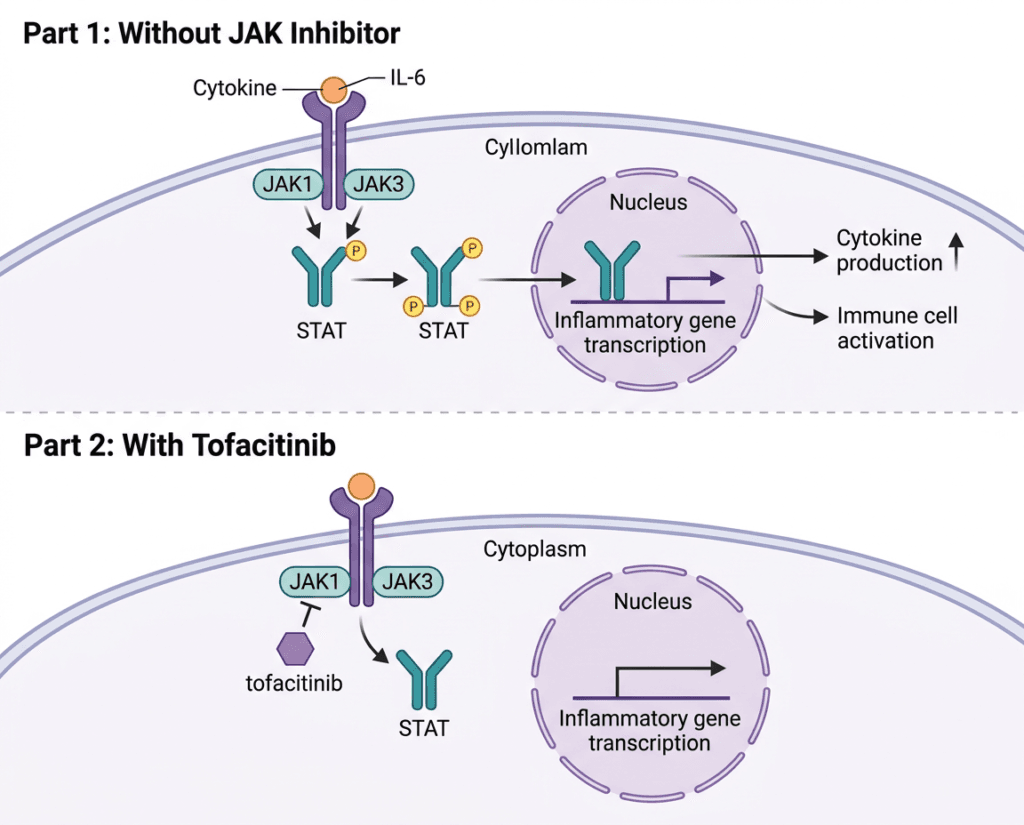
    Inhibition of JAK1 and JAK3 blocks signaling through the common gamma chain-containing receptors for several cytokines, including interleukin-2, -4, -7, -9, -15, and -21. These cytokines are integral to lymphocyte activation, development, proliferation, and function. Rather than targeting one cytokine extracellularly the way a biologic monoclonal antibody does, tofacitinib enters the cell and blocks a signaling enzyme that multiple cytokine pathways share. The breadth of that blockade is both the source of its efficacy across multiple diseases and the mechanistic explanation for some of its safety concerns.

    JAK pair inhibitedCytokines affectedClinical relevance
    JAK1/JAK3 (primary targets)IL-2, IL-4, IL-7, IL-9, IL-15, IL-21Lymphocyte activation and proliferation; adaptive immunity modulation
    JAK1/JAK2IL-6, IL-10, IL-11, IFN-alpha, IFN-betaAcute phase response, inflammatory signaling, innate immunity
    JAK2/TYK2IL-12, IL-23T-helper cell differentiation; relevant in psoriasis and IBD
    JAK1/TYK2Type I interferonsAntiviral defense; relevant to infection risk

    The ORAL Surveillance Story: What the Data Actually Shows

    No discussion of tofacitinib in 2026 can be complete without a thorough and honest account of ORAL Surveillance. It is the single most consequential clinical trial in the history of the JAK inhibitor class and the source of the boxed warning that now governs every tofacitinib prescription.

    What the trial was: ORAL Surveillance (NCT02092467) was a Phase 3b/4 open-label, randomized post-marketing safety study mandated by the FDA. The trial enrolled 4,362 patients with moderate to severe rheumatoid arthritis on methotrexate background therapy, all aged 50 years or older and with at least one additional cardiovascular risk factor. Patients were randomized to tofacitinib 5 mg twice daily, tofacitinib 10 mg twice daily, or a TNF inhibitor (adalimumab in North America, etanercept elsewhere).

    What the primary endpoint was: Non-inferiority of tofacitinib to TNF inhibitors for two co-primary endpoints: major adverse cardiovascular events (MACE, defined as cardiovascular death, myocardial infarction, and stroke) and malignancy (excluding non-melanoma skin cancer). The pre-specified non-inferiority margin was an upper bound of 1.8 for the hazard ratio confidence interval.

    What the results showed: ORAL Surveillance failed to demonstrate non-inferiority of tofacitinib to TNF inhibitors for both MACE and malignancy. Tofacitinib was associated with numerically higher rates of MACE and malignancy than TNF inhibitors in this high-cardiovascular-risk population.

    At the FDA-approved 5 mg twice-daily dose, the number needed to harm was 567 patient-years for MACE and 276 patient-years for malignancy, translating to one additional MACE per approximately 113 patients and one additional cancer per approximately 55 patients treated with tofacitinib instead of a TNF inhibitor over a five-year period. Cancer risk was higher in patients over age 65 (HR 1.70; 95% CI 1.00 to 2.90) than in younger patients (HR 1.36; 95% CI 0.85 to 2.17).

    The critical limitations that honest interpretation requires:

    First, ORAL Surveillance enrolled a deliberately high-risk population, patients aged 50 and older with established cardiovascular risk factors. The trial lacked a group that was neither a JAK inhibitor nor a TNF inhibitor, meaning it can only compare tofacitinib to TNF blockers, not to placebo or to the underlying disease-related risk. The results therefore quantify the difference in risk between tofacitinib and TNF inhibitors in high-risk patients, not the absolute risk in a typical tofacitinib patient population.

    Second, the FDA’s decision to extend the boxed warning to all patients and all JAK inhibitors, not just the high-risk RA population in ORAL Surveillance, was a policy judgment that has been debated in the rheumatology community. Real-world registry data from the Corrona registry, comparing the safety of tofacitinib to other biologics in a broader patient population, found no differences in MACE, serious infection events, malignancy, or death, representing some of the longest-term real-life safety data available for tofacitinib.

    Third, the 10 mg twice-daily dose showed more pronounced safety signals than the 5 mg dose, specifically for pulmonary embolism and all-cause mortality. The 10 mg dose is not approved for RA or PsA; its use is limited to the ulcerative colitis induction period. The class warning effectively applied findings from a dose used in RA only in the trial to clinical contexts where that dose would never be used.

    The honest clinical summary: ORAL Surveillance demonstrated a real safety signal for cardiovascular events and malignancy in a high-cardiovascular-risk population of RA patients aged 50 and older when comparing tofacitinib to TNF inhibitors. That signal is clinically meaningful for patient selection. It does not characterize the risk-benefit profile in all patients across all indications, and the magnitude of risk in lower-risk patients is substantially less certain.


    The Safety Profile: What the Prescribing Information Requires

    The Xeljanz prescribing information contains one of the most extensive boxed warning sections in rheumatology, encompassing six distinct categories of serious risk. The infection screening requirements parallel those for the biologic TNF inhibitors discussed in Post 5 of this series on golimumab and the Simponi LOE: tuberculosis screening before initiating, hepatitis B screening, and updated vaccination status are all required. Live vaccines are contraindicated during tofacitinib therapy.

    Safety categoryDetailsClinical guidance
    Serious infections (boxed warning)Increased risk of bacterial, fungal, viral, and opportunistic infections including tuberculosis. Risk is elevated with concomitant immunosuppressives.Screen for latent TB before initiating. Evaluate for active infection before each refill. Hold tofacitinib during active serious infection.
    Mortality (boxed warning)Higher rate of all-cause mortality including sudden cardiovascular death compared to TNF blockers in ORAL Surveillance RA patients.Use only after failure of TNF inhibitor in RA and PsA. Avoid in patients at high cardiovascular risk unless no suitable alternatives exist.
    Malignancy (boxed warning)Higher rates of lymphoma and lung cancer with tofacitinib versus TNF blockers. Risk increased in patients 65 and older, current or past smokers, and those with known malignancy risk factors.Avoid in patients with known malignancy other than treated non-melanoma skin cancer. Consider alternatives in patients with significant cancer risk factors, especially current or past smokers over 65.
    MACE (boxed warning)Higher rate of MACE (cardiovascular death, MI, stroke) versus TNF blockers in ORAL Surveillance, particularly in patients 65 and older, smokers, and those with cardiovascular risk factors.Use with caution in patients with cardiovascular disease. Avoid in patients at high CV risk unless no suitable alternatives are available.
    Thrombosis (boxed warning)Increased incidence of pulmonary embolism, venous thrombosis, and arterial thrombosis, primarily at the 10 mg twice-daily dose.Use with caution in patients with risk factors for VTE. Promptly evaluate patients reporting signs of DVT or PE.
    Herpes zoster reactivationRates of herpes zoster higher with tofacitinib than with TNF inhibitors.Ensure zoster vaccination before starting tofacitinib where possible. Monitor during treatment.
    HyperlipidemiaDose-dependent increases in total cholesterol, LDL, and HDL.Monitor lipid levels 4 to 8 weeks after initiating. Manage dyslipidemia per standard clinical guidelines.
    AnemiaHemoglobin decreases observed; avoid initiating in patients with hemoglobin below 9 g/dL.Monitor CBC during treatment.
    GI perforationsCases of GI perforation reported, particularly in patients with Crohn’s disease or diverticulitis.Use with caution in patients at increased risk for GI perforations.
    Renal and hepatic impairmentDose reduction required in moderate renal impairment (eGFR 30 to 60 mL/min) or moderate hepatic impairment. Avoid in severe impairment.Assess renal and hepatic function at baseline and periodically.

    How Tofacitinib Compares to the Newer JAK Inhibitors

    Tofacitinib’s approval opened the door to a JAK inhibitor generation that has continued to evolve. Baricitinib (Olumiant), upadacitinib (Rinvoq), and filgotinib (Jyseleca, approved in Europe but not the U.S.) are more selective for specific JAK isoforms, primarily JAK1, compared to tofacitinib’s broader JAK1/JAK2/JAK3 inhibition.

    AgentPrimary targetKey indicationsSelectivity profileSafety class warning
    Tofacitinib (Xeljanz)JAK1/JAK3RA, PsA, UC, AS, pcJIABroad: inhibits JAK1, 2, 3Full boxed warning (class)
    Baricitinib (Olumiant)JAK1/JAK2RA, alopecia areata, COVID-19Preferential JAK1/JAK2Full boxed warning (class)
    Upadacitinib (Rinvoq)JAK1-selectiveRA, PsA, AS, AD, UC, Crohn’sHighest JAK1 selectivity in classFull boxed warning (class)

    The theoretical advantage of JAK1 selectivity is that JAK3 inhibition disrupts common gamma chain cytokine signaling (IL-2, IL-7, IL-15) more dramatically and may contribute to a broader immunosuppressive effect that is not necessary for anti-inflammatory benefit in most autoimmune diseases. Whether this translates to meaningful real-world safety differences between agents in the class is still being studied. The FDA extended the class-level boxed warning to all JAK inhibitors in 2021 based on ORAL Surveillance findings, pending further evidence from the class.

    For patients: the arrival of generic tofacitinib does not make it the automatic choice over newer, still-branded JAK inhibitors. The prescribing decision should still be driven by individual patient characteristics, cardiovascular risk, prior treatment history, specific indication, and comorbidities, with the rheumatologist or gastroenterologist making a risk-stratified recommendation. What the generic does mean is that tofacitinib becomes far more accessible for patients in whom it is the appropriate choice and for whom cost has been a barrier.


    The Generic Entry: What Has Already Happened

    The primary composition-of-matter patent for tofacitinib expired in December 2025. In August 2025, the FDA approved the first generic tofacitinib citrate from Ajanta Pharma, Ltd., marking the first generic entry into the Xeljanz market.

    As of 2026, full generic entry is underway. Multiple manufacturers have filed ANDAs for generic tofacitinib tablets and extended-release tablets (Xeljanz XR). The immediate-release 5 mg and 10 mg tablets are the highest-volume products; the extended-release 11 mg once-daily tablet has its own separate patent profile and may follow a slightly different generic timeline.

    As a small molecule, Xeljanz is far more straightforward to replicate than the monoclonal antibodies used in similar indications. Unlike the biologics covered in this series, golimumab (Simponi) and omalizumab (Xolair), which require complex manufacturing, stability verification, and specialized storage, generic tofacitinib tablets are produced through conventional pharmaceutical chemistry and distributed through standard pharmacy channels. This raises the prospect of rapid substitution, particularly in healthcare systems under cost pressure.

    The current Xeljanz list price is approximately $5,000 to $6,000 per month for standard 5 mg twice-daily RA dosing. At approximately 80% price erosion, generic tofacitinib would reach approximately $1,000 to $1,200 per month initially, falling further as competition deepens. For health systems globally where JAK inhibitors have often been reserved for patients with access to payer-negotiated or government-reimbursed pricing, generic availability may meaningfully expand treatment reach.

    Pfizer’s response to the LOE includes a branded copay assistance program. As with most specialty drug LOE events in this series, commercial copay assistance for insured patients slows but does not prevent market conversion, with the main beneficiaries of the generic being uninsured patients, Medicare patients, and health systems negotiating formulary contracts.


    What Patients Currently on Xeljanz Should Know

    If you are currently taking Xeljanz and your disease is well controlled, the generic transition is clinically straightforward. Generic tofacitinib citrate is the same molecule, at the same dose, with the same mechanism. Your disease-modifying benefit, your infection risk, and your safety monitoring requirements are unchanged by the switch from brand to generic.

    What does change is cost, in your favor, as formularies transition to preferring the lower-cost generic. Expect formulary notifications about generic tofacitinib in 2026 and into 2027. When that notification arrives, discuss it with your rheumatologist or gastroenterologist at your next visit, not as a cause for alarm, but to confirm your dose and monitoring schedule remain appropriate.

    If you are in the high-cardiovascular-risk population that ORAL Surveillance studied, aged 65 or older with cardiovascular risk factors, or a current or past smoker, the prescribing conversation with your rheumatologist should specifically address whether tofacitinib remains the best option for you given the ORAL Surveillance findings, or whether a TNF inhibitor might be more appropriate for your individual risk profile. Generic availability does not change the safety data. It does not make the drug safer for high-risk patients. The boxed warning applies to the generic exactly as it applies to the brand.

    For patients newly diagnosed with RA, PsA, or AS: the label now requires demonstrating inadequate response or intolerance to at least one TNF blocker before starting tofacitinib. The generic’s arrival does not change that positioning. It remains a drug for the second-line and later autoimmune treatment setting.

    For related HED coverage on other JAK inhibitor approvals and autoimmune disease treatment developments in 2026, see our post on the Simponi (golimumab) LOE and the Immgolis biosimilar litigation and our post on Fasenra (benralizumab) receiving a new indication for hypereosinophilic syndrome.


    📌 A note on the completed series This post closes out HED’s 2026 Loss of Exclusivity Watch, a 10-post series covering drugs that generated over $17 billion in combined annual U.S. sales now entering the competitive generic and biosimilar market. The series spanned four therapeutic areas and three drug modalities: small molecules (sitagliptin, cladribine, vortioxetine, brivaracetam, tofacitinib, macitentan), a peptide biologic (teduglutide), and injectable biologics (golimumab, omalizumab, pomalidomide). What runs through every post — from Xolair’s interchangeable biosimilar to generic cladribine’s patent invalidation to Xeljanz’s generic entry — is the same fundamental tension in pharmaceutical markets. The periods of exclusivity that fund drug development are real and often necessary. The prices those exclusivity periods produce are frequently out of reach for the patients who need the drugs most. And the generic and biosimilar transitions that eventually bring prices down are complicated, incomplete, and slower in the U.S. than in most other developed health systems. The 2026 patent cliff does not resolve that tension. But for millions of patients currently priced out of Januvia, Trintellix, Mavenclad, Briviact, and Xeljanz, it moves the needle in a meaningful direction.

    Sources

    Xeljanz FDA approval: FDA approves tofacitinib for rheumatoid arthritis. FDA.gov. November 2012.

    FDA boxed warning update (December 2021): FDA requires warnings about increased risk of serious heart-related events, cancer, blood clots, and death for JAK inhibitors. FDA.gov. December 2021.

    First generic tofacitinib approval (Ajanta Pharma, August 2025): ANDA Drug Approval Database. FDA.gov.

    Patent expiry and generic pricing: XELJANZ patent and generic information. DrugPatentWatch. | The next pharma patent cliff: how 2026 to 2032 will reshape revenue. Labiotech. March 2026.

    ORAL Surveillance trial registration: NCT02092467. ClinicalTrials.gov.

    ORAL Surveillance primary publication: Ytterberg SR et al. Cardiovascular and Cancer Risk with Tofacitinib in Rheumatoid Arthritis. NEJM. 2022;386(4):316–326. doi:10.1056/NEJMoa2109927.

    ORAL Surveillance NNH analysis: JAK inhibitors and black box warnings: what is the future for JAK inhibitors? PMC10615860.

    Lancet Rheumatology editorial (FDA class warning debate): FDA expands JAK inhibitors warning: going beyond the data? Lancet Rheumatology. 2021.

    Corrona registry real-world safety data: Curtis JR et al. Real-world comparative risks of herpes virus infections in tofacitinib and biologic-treated patients with rheumatoid arthritis. Annals of the Rheumatic Diseases. 2021. PMID 34185363.

    Tofacitinib mechanism (StatPearls): Tofacitinib. StatPearls. NCBI.

    JAK-STAT pathway review: JAK-STAT Signaling Pathway. PMC8440069.

    Tofacitinib JAK selectivity in RA: Tofacitinib Suppresses Several JAK-STAT Pathways in RA In Vivo. Frontiers in Immunology. 2021.

    JAK inhibitor selectivity comparison: Molecular Modeling Insights into Upadacitinib Selectivity. PMC8778839.

    Baricitinib FDA approval: FDA approves baricitinib for moderately to severely active rheumatoid arthritis. FDA.gov.

    Upadacitinib FDA approval: FDA approves upadacitinib for moderate to severe rheumatoid arthritis. FDA.gov.

    Latent TB screening: Testing for Latent TB Infection. CDC.

    Herpes zoster: Herpes Zoster. StatPearls. NCBI.

    Xeljanz prescribing information: XELJANZ (tofacitinib) Prescribing Information. Pfizer.

    NIAMS disease overviews: Rheumatoid Arthritis | Psoriatic Arthritis | Ankylosing Spondylitis | Juvenile Arthritis

    NIDDK ulcerative colitis: Ulcerative Colitis. niddk.nih.gov.

    HED internal references: LOE Post 5: Simponi (golimumab) | Fasenra HES approval post

    Patient resources: Arthritis Foundation | Crohn’s and Colitis Foundation | Pfizer RxPathways patient assistance | Good Days Patient Assistance

    Disclaimer: Health Evidence Digest provides general information about FDA approvals, loss of exclusivity events, and health research for educational purposes. This content is not a substitute for professional medical advice. Tofacitinib carries a boxed warning for serious infections, mortality, malignancy, major adverse cardiovascular events, and thrombosis. Decisions about initiating, continuing, or transitioning from brand-name to generic tofacitinib must be made in close collaboration with a board-certified rheumatologist or gastroenterologist who can assess the patient’s individual cardiovascular risk, infection history, and overall benefit-risk profile. Never stop a DMARD without medical guidance.
  • The First Gene Therapy for Deafness Is Here and It’s Free. Here’s What That Actually Means.

    The First Gene Therapy for Deafness Is Here and It’s Free. Here’s What That Actually Means.

    📌 The essentials On April 23, 2026, the FDA approved Otarmeni (lunsotogene parvec-cwha, Regeneron) as the first FDA-approved gene therapy for inherited deafness in history. The therapy is indicated for children and adults with profound hearing loss due to biallelic mutations in the OTOF gene, which causes a condition where the inner ear is structurally normal but cannot transmit sound signals to the brain. The clinical basis: Results from the CHORD Phase 1/2 trial (NCT05295056) showing 80% of participants (16 of 20) achieved or exceeded the primary endpoint at 6 months, and 42% of participants with longer follow-up achieved normal hearing. Nine of 12 children who received the therapy gained enough hearing to stop using cochlear implants. The approval was granted under accelerated approval with continued approval contingent on confirmatory trial results. This was also the first gene therapy approved under the FDA’s Commissioner’s National Priority Voucher (CNPV) program, approved in just 61 days after BLA submission. The price: Regeneron has stated it will provide Otarmeni at no cost for the drug itself to eligible patients in the United States. Important caveat: the surgical procedure required to administer it is not covered by Regeneron and will be subject to normal insurance and cost-sharing.

    When Travis Smith was born, he failed his newborn hearing test. His mother, Sierra, was told it was probably just fluid in the ears. But weeks passed, and nothing changed. Slamming pots and pans, yelling his name — nothing reached him. Travis was, as Sierra later described it, 100% deaf.

    A few months later, after genetic testing confirmed a mutation in a gene called OTOF, Travis received an experimental treatment at Columbia University in New York. About ten weeks after the procedure, Sierra laughed loudly while driving. Travis, asleep in his car seat, startled for the first time. She and her friend started yelling. He woke up.

    On April 23, 2026, that experimental treatment became Otarmeni (lunsotogene parvec-cwha), the first FDA-approved gene therapy for inherited deafness in history. And in a move that surprised nearly everyone in the pharmaceutical industry, Regeneron announced it will provide the drug at no cost to eligible patients in the United States.

    There is a lot to unpack here: the science, the price, the very reasonable counterarguments from the Deaf community, and what this means for the larger field of genetic hearing loss.


    What Is OTOF-Related Hearing Loss?

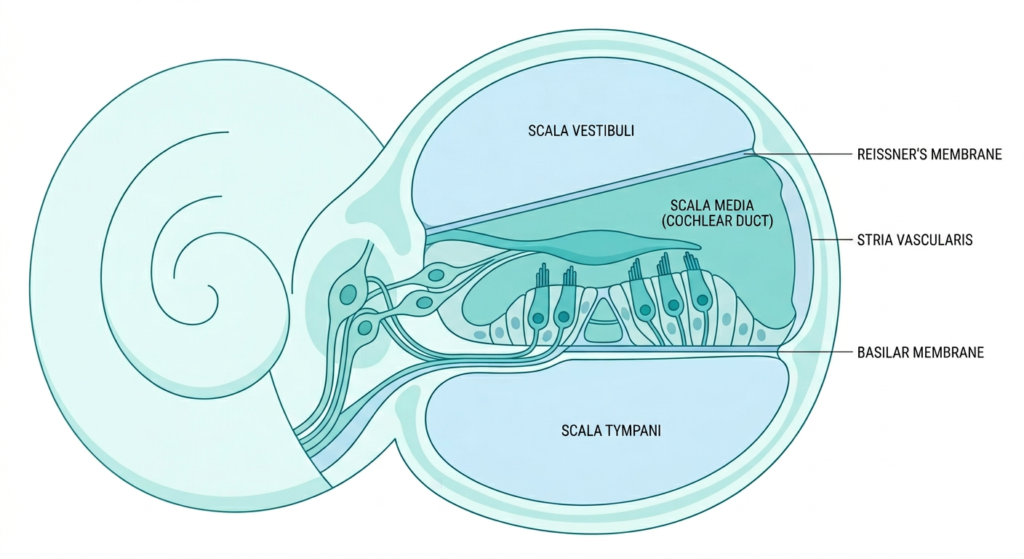
    Hearing happens through a remarkably precise chain of events. Sound waves enter the ear canal, cause the eardrum to vibrate, and those vibrations travel through three tiny bones in the middle ear before reaching the cochlea, the snail-shaped structure of the inner ear. Inside the cochlea, thousands of hair cells convert those vibrations into electrical signals. A protein called otoferlin is what allows those hair cells to release the neurotransmitters that carry those signals to the auditory nerve and then on to the brain.

    In children with biallelic mutations in the OTOF gene, meaning they inherited a non-working copy from both parents, otoferlin is absent or non-functional. The cochlea is structurally intact. The hair cells are there. Sound waves are converted normally. But the signal cannot be passed to the brain because the neurotransmitter release mechanism is broken. The result is profound sensorineural deafness from birth, despite an otherwise normal-looking inner ear.

    OTOF mutations account for roughly 2% to 8% of inherited non-syndromic hearing loss, according to the FDA. In absolute numbers, about 50 babies are born each year in the United States with the condition, a number small enough that most audiologists and pediatricians will rarely encounter it. But the impact on those families is total..

    How Otarmeni Works

    Otarmeni is an adeno-associated virus (AAV) vector-based gene therapy, specifically a dual-vector system, because the OTOF gene is unusually large and too big to fit inside a single AAV. Regeneron’s approach splits the gene in half across two AAV serotype 1 vectors that are co-administered. Once inside the hair cells, the two halves recombine to produce a functional OTOF gene, which then directs the cells to make working otoferlin protein.

    The treatment is administered surgically. Under general anesthesia, a surgeon makes a small incision behind the ear to access the cochlea and delivers the viral vectors directly into the fluid-filled space of the inner ear via a syringe and catheter, a procedure similar in approach to cochlear implant surgery, though the anatomy targeted is slightly different. The therapy can be given to one ear or both.

    One important technical detail: the OTOF gene in Otarmeni is under the control of a proprietary Myo15 promoter, which is designed to restrict gene expression specifically to hair cells that normally produce otoferlin. This cell-type specificity is important both for efficacy and safety, as it reduces the chance of off-target expression in tissues that do not need the protein.

    Why is the OTOF gene so large, and why does that matter? Standard single-AAV gene therapies are limited by the packaging capacity of the virus, roughly 4.7 kilobases of genetic material. The OTOF gene is approximately 6 kilobases, which has long made it technically challenging to deliver in a single vector. Regeneron’s dual-AAV approach is one of several strategies the field has developed to work around this constraint. It addresses the same large-gene delivery challenge that has been encountered in gene therapy for conditions like Duchenne muscular dystrophy. The fact that this approach produced consistent, durable results in the CHORD trial is a meaningful technical achievement, not just for hearing loss, but for the broader field of large-gene delivery.

    The CHORD Trial: What the Clinical Data Shows

    The FDA approval is based on results from the CHORD trial (NCT05295056), an ongoing, registrational Phase 1/2 multicenter, open-label study. Twenty participants aged 10 months to 16 years with molecularly confirmed OTOF mutations received a single dose of Otarmeni in one or both ears. The primary endpoint was improvement in hearing sensitivity measured by pure-tone audiometry at week 24.

    CHORD trial key results
    Participants meeting or exceeding primary endpoint at 6 months16 of 20 (80%)
    Participants achieving normal hearing with longer follow-up42%
    Children who stopped using cochlear implants after treatment9 of 12
    Minimum follow-up with durable hearing benefitsAt least 2 years
    Age range in trial10 months to 16 years
    Effect of age at treatment on efficacyNot significant, which supported label inclusion of adults
    Most common adverse eventsMiddle ear infection or inflammation, vomiting, nausea, dizziness (consistent with surgical procedure)

    Source: CHORD Phase 1/2 trial, NCT05295056. Primary results published in NEJM, 2026.

    Accelerated approval: what it means here Otarmeni received accelerated approval based on improvement in pure-tone audiometry as a surrogate endpoint. Continued approval may be contingent upon verification of treatment effects on clinical measures of speech development and quality of life, the outcomes families ultimately care most about. The confirmatory portion of the CHORD trial is ongoing. The FDA specifically notes that durability of hearing improvement is a key variable still being assessed. For a one-time gene therapy, how long the benefit lasts is the central question that will define long-term clinical value and public health cost-effectiveness. The approval was also notably fast: granted just 61 days after the Biologics License Application was filed, tied for the fastest BLA approval in modern FDA history, and the first gene therapy approved under the FDA’s Commissioner’s National Priority Voucher (CNPV) program. For context on how the CNPV program works and which other drug programs have received vouchers, see our post on the FDA’s fast-tracking of three psychedelic drug programs.

    The Price Tag: $0. What Is Actually Going On There?

    Gene therapies for rare diseases are expensive. Not slightly expensive — the kind of expensive that regularly makes headlines. Hemgenix (hemophilia B) was priced at $3.5 million per patient. Zolgensma (spinal muscular atrophy) at $2.1 million. Casgevy (sickle cell disease) at $2.2 million. These prices reflect the reality of developing treatments for patient populations sometimes numbering in the hundreds, where there is no scale to amortize development costs.

    Regeneron’s internal analysis suggested Otarmeni could have been priced as high as $4 million per patient, generating an estimated $200 million to $400 million in annual revenue. The company chose not to. Regeneron’s co-founder and president, Dr. George Yancopoulos, acknowledged the company made a deliberate choice to prioritize access over revenue from this particular therapy, despite internal discussion about alternative pricing models.

    That decision came alongside Regeneron’s participation in the Trump administration’s Most Favored Nation drug pricing announcement, a policy effort to bring U.S. drug prices more in line with prices paid in European and Asian markets. The timing was politically convenient, but the substance of offering the therapy free stands regardless of the surrounding context.

    Sarah Emond, President and CEO of the Institute for Clinical and Economic Review (ICER), noted in a statement following the approval that Regeneron has shown that one option companies can consider to ensure affordable patient access to these therapies is to simply not charge the health system for the drug. She called it a model worth understanding for what it demonstrates about the range of approaches available to developers of rare disease therapies.

    There are important nuances in the “free” framing worth noting clearly. Regeneron is providing the drug itself at no cost to clinically eligible patients. The company does not control and is not covering the cost of the surgical procedure required to administer it. Cochlear implant surgery, which uses a similar approach, typically costs between $30,000 and $100,000 including hospitalization and anesthesia. The out-of-pocket portion for patients will depend on their insurance coverage for the procedure, not the drug.

    Otarmeni’s pricing model also has no established precedent for international markets. CEO Leonard Schleifer told CNBC that overseas pricing has not been set, stating that other countries should pay their fair share. For families outside the United States with children who have OTOF mutations, the picture is much less clear.


    A Perspective Worth Sitting With: The Deaf Community Response

    Not everyone greeted this approval with unqualified celebration, and that response deserves more than a footnote.

    Jaipreet Virdi, a historian of medicine, technology, and deafness at the University of Victoria who is herself deaf, raised a concern that has been articulated within Deaf culture for years: that genetic therapies targeting deafness can reinforce the assumption that deafness is a deficiency to be corrected rather than a difference to be accommodated. For members of the Deaf community who use sign language, have Deaf cultural identities, and live full, rich lives, a medical framing of deafness as a problem in need of eradication is not a neutral position.

    This is not a fringe view. It is a well-established strand of Deaf cultural identity that preceded cochlear implants and will continue to evolve as genetic therapies expand. It does not invalidate what Otarmeni has done for Travis, or Miles, or the other children in the CHORD trial. But it does mean that the conversation around who benefits from these therapies, and on what terms, is more complex than the headline numbers suggest.

    Regeneron’s own press release acknowledged this directly. Janet DesGeorges, Executive Director of Hands and Voices, a family-driven organization supporting children with all forms of hearing loss and all communication approaches, was quoted in the approval announcement noting that families deserve access to balanced information and a range of options when navigating genetic hearing loss, and that the choice of approach belongs to individual families.

    Cochlear implants versus gene therapy: how they are different Cochlear implants are electronic devices surgically implanted in the inner ear that bypass damaged hair cells and directly stimulate the auditory nerve. They restore useful hearing for many patients but do not restore physiological hearing. The sound quality is different from natural hearing and varies considerably between users. They require external processors worn behind the ear, run on batteries, and must be managed over a lifetime. Otarmeni, by contrast, restores the biological mechanism of hearing by enabling the hair cells themselves to function. The hearing it produces is closer to natural hearing that is present continuously without external hardware. However, it only works for patients with OTOF mutations who have no prior cochlear implant in the ear to be treated. The two approaches are not directly comparable and serve partially overlapping but distinct populations.

    Beyond OTOF: What This Approval Unlocks

    OTOF mutations account for only 1% to 3% of cases of genetic hearing loss at birth. The significance of this approval is therefore less about its immediate patient population, roughly 50 children per year in the U.S., and more about what it proves and where it leads.

    Genetic hearing loss involves more than 100 identified genes. OTOF attracted early attention because its mechanism was well-understood, the hair cell pathology is isolated (outer hair cell function is preserved), and the AAV delivery route to the cochlea had been mapped in preclinical models. Proving that this approach works, that you can deliver a gene to inner ear hair cells via surgical infusion and produce durable, functional hearing, is the foundational result the broader field needed.

    Eli Lilly and several academic groups are also developing gene therapies targeting OTOF, many showing comparably strong results. The publication of strong data in the New England Journal of Medicine in 2026, which preceded and contributed to the FDA’s accelerated review, has drawn significant investment into the broader genetic hearing loss space. Dr. Lawrence Lustig of Columbia University, who treated several CHORD participants, noted substantial interest in pursuing other forms of genetic deafness that are more common, and that investment is now arriving.

    Researchers are also beginning to consider whether someday gene therapy approaches might address acquired hearing loss from aging or noise exposure, which affects hundreds of millions of people globally. That is a much longer road, requiring different targets and delivery methods. But the clinical validation of cochlear gene delivery in OTOF patients makes it a more credibly walkable path than it was before April 23, 2026.


    What This Approval Does Not Yet Answer

    How long does the benefit last?

    The CHORD trial has follow-up of at least two years in some participants, and hearing benefits have been durable over that period. But two years is a short window for what is being offered as a one-time, potentially permanent treatment, particularly for children who may live for seven more decades. Long-term follow-up from the confirmatory CHORD trial will be critical. The FDA has specifically listed durability of hearing improvement as a condition of continued approval.

    What about speech and language development?

    Pure-tone audiometry tells us whether a patient can detect sounds at various frequencies and volumes. It does not directly measure what matters most to families: speech comprehension, language acquisition, and the ability to communicate in the ways they choose. The confirmatory trial is tasked with verifying treatment effects on these clinical measures. The gap between “can detect a whisper” and “is developing speech and language normally” is the one families and clinicians most need filled.

    Which patients are candidates?

    The indication requires molecularly confirmed biallelic OTOF variants, preserved outer hair cell function (confirmed by otoacoustic emissions testing), and no prior cochlear implant in the ear to be treated. Genetic testing infrastructure for identifying OTOF mutations in newborns varies considerably across health systems. The therapy’s real-world reach will depend partly on how systematically genetic diagnosis of congenital deafness is pursued, which is currently inconsistent in the U.S.


    For families navigating genetic hearing loss:

    This approval touches on intersecting questions: the science of gene delivery, the ethics of treating deafness, the unprecedented pricing decision, and what proof-of-concept in OTOF means for the dozens of other genetic causes of hearing loss. For families with children recently diagnosed with genetic hearing loss, regardless of which gene is involved, several organizations maintain current resources:

    Hands and Voices supports families navigating all communication approaches without advocacy for any single one. The National Association of the Deaf (NAD) provides resources from a Deaf cultural perspective. The Hearing Loss Association of America (HLAA) offers advocacy and practical support resources. The NIDCD maintains clinical information on cochlear implants and emerging therapies. Families interested in the CHORD confirmatory trial or other OTOF gene therapy studies can search for open enrollment studies at ClinicalTrials.gov.


    Sources

    FDA approval announcement: FDA Approves First-Ever Gene Therapy for Treatment of Genetic Hearing Loss Under National Priority Voucher Program. FDA.gov. April 23, 2026.

    Regeneron press release: Otarmeni (lunsotogene parvec-cwha) Approved by FDA. investor.regeneron.com. April 23, 2026.

    CHORD trial registration: NCT05295056. ClinicalTrials.gov.

    Primary clinical data: CHORD Phase 1/2 trial results. New England Journal of Medicine. 2026.

    ICER pricing commentary: Institute for Clinical and Economic Review. Statement on Otarmeni pricing. icer.org.

    Pricing context (CNBC): Schleifer L. Regeneron weighs overseas price for Otarmeni. CNBC. April 24, 2026.

    Deaf community perspective: Virdi J. Quoted in NPR/KERA News. Rob Stein. The FDA gives the green light to the first gene therapy for deafness. keranews.org. April 23, 2026.

    Hands and Voices: handsandvoices.org. Cited in Regeneron approval press release.

    Patient story (Travis): NPR/KERA News. Rob Stein. April 23, 2026.

    Patient story (Miles): CNN. Meg Tirrell. April 23, 2026.

    Pipeline context: Gene therapy for deafness approved. Science. April 23, 2026.

    Patient and family resources: Hands and Voices | National Association of the Deaf | Hearing Loss Association of America | NIDCD Cochlear Implants | ClinicalTrials.gov: OTOF hearing loss

    Disclaimer: Health Evidence Digest provides general information about health research and FDA decisions for educational purposes. This content is not a substitute for professional medical advice, diagnosis, or treatment. Accelerated approval does not constitute final confirmation of clinical benefit. The confirmatory CHORD trial is ongoing. Always consult a qualified audiologist, otolaryngologist, or geneticist regarding treatment decisions for your child or yourself.
  • AVLAYAH Approved: For Hunter Syndrome Families, This FDA Decision Hits Different

    AVLAYAH Approved: For Hunter Syndrome Families, This FDA Decision Hits Different


    📌 The essentials On March 25, 2026, the FDA granted accelerated approval for AVLAYAH (tividenofusp alfa-eknm, Denali Therapeutics) for the treatment of neurologic manifestations of Hunter syndrome (mucopolysaccharidosis type II, MPS II) in pediatric patients weighing at least 5 kg, when initiated prior to advanced neurologic impairment. This is the first FDA-approved therapy specifically designed to cross the blood-brain barrier, and the first new FDA-approved treatment for Hunter syndrome in nearly 20 years. The clinical basis: Phase 1/2 trial (NCT02055118) in 47 patients (ages 0.3 to 13 years, median age 5), showing 91% reduction in CSF heparan sulfate (95% CI: 89% to 92%) by week 24, with 93% of treated patients (41 of 44) reaching CSF HS levels within the range of unaffected individuals. Secondary endpoints included improvements in Vineland-3 adaptive behavior scores, Bayley Scales of Infant and Toddler Development (BSID-III), liver volume normalization, and hearing. Accelerated approval context: continued approval may be contingent on the ongoing Phase 2/3 COMPASS confirmatory trial, which randomizes patients 2:1 to AVLAYAH versus idursulfase (standard of care) over 96 weeks. A Rare Pediatric Disease Priority Review Voucher was granted alongside the approval.

    When the National MPS Society shared news of the AVLAYAH approval on social media, the comments section filled with responses from parents who had been tracking this program for years. “We’ve been waiting 18 years for this.” That context is worth keeping in mind as we go through what this approval actually means, and what it does not yet answer.

    AVLAYAH (tividenofusp alfa-eknm), developed by Denali Therapeutics, received FDA accelerated approval on March 25, 2026, as a treatment for Hunter syndrome (MPS II). It is the first new therapy for this condition in nearly two decades. It is also the first therapy ever designed to reach the brain.


    What Is Hunter Syndrome?

    Hunter syndrome (MPS II) is a rare, X-linked lysosomal storage disorder caused by a deficiency of the enzyme iduronate 2-sulfatase (IDS). Without sufficient IDS, complex sugars called glycosaminoglycans (GAGs), specifically heparan sulfate and dermatan sulfate, accumulate in cells throughout the body.

    The condition is estimated to affect fewer than 500 people in the United States, almost all of them male. The consequences compound over time: developmental delays, cognitive regression, hearing loss, progressive joint stiffness, and organ dysfunction. The disease has a neuronopathic form, where the accumulation affects the brain and causes progressive neurological deterioration, and a non-neuronopathic form with primarily somatic (body) manifestations.

    The existing treatment, Elaprase (idursulfase, Takeda), was approved in 2006. It has been the only FDA-approved therapy for Hunter syndrome for nearly 20 years. It reduces GAG accumulation in peripheral tissues and improves some physical symptoms, but it does not meaningfully cross the blood-brain barrier. Families managing the neuronopathic form have watched their children lose cognitive and developmental ground knowing that existing enzyme replacement therapy simply could not reach where the damage was happening.


    What AVLAYAH Does Differently: The Blood-Brain Barrier Problem

    The blood-brain barrier (BBB) is a highly selective physical barrier formed by the specialized endothelial cells lining brain capillaries. It protects the central nervous system from pathogens and toxins but also blocks the passage of most large molecules, including therapeutic proteins. Most enzyme replacement therapies, regardless of how effective they are in peripheral tissues, cannot reach the brain in therapeutic concentrations.

    Denali’s approach to this problem is their TransportVehicle (TV) platform, which engineers therapeutic molecules to exploit a transport system the brain’s own blood vessels already use. The transferrin receptor (TfR1) is expressed on brain endothelial cells and mediates the transport of iron-bound transferrin across the BBB through receptor-mediated transcytosis. By engineering a therapeutic molecule to bind TfR1 with carefully tuned affinity, Denali can hitch the molecule across the BBB using this existing transport pathway.

    Tividenofusp alfa consists of the IDS enzyme fused to an antibody fragment targeting TfR1. After intravenous infusion, the molecule circulates through the bloodstream, reaches brain blood vessels, binds to TfR1 on those vessels, and is transported into the brain, where the enzyme can then begin reducing the heparan sulfate accumulation that drives neurological deterioration. The same molecule also distributes to peripheral tissues, addressing the somatic manifestations of the disease through a standard intravenous infusion route, without requiring intrathecal (spinal) administration.

    No spinal tap required. That is not a minor practical detail for pediatric patients and their families.


    The Phase 1/2 Trial: What the Data Shows

    The FDA accelerated approval is based on data from a Phase 1/2 international, multicenter, open-label trial (NCT02055118) published in the New England Journal of Medicine on January 1, 2026. The trial enrolled 47 patients with Hunter syndrome, including both enzyme replacement therapy-naive patients (n=15) and previously treated patients (n=32). Ages ranged from 0.3 to 13 years, with a median age of 5.

    The primary objective was safety and tolerability. Secondary objectives evaluated CNS and peripheral effects through multiple biomarker and clinical measures.

    EndpointResultDetail
    CSF heparan sulfate reduction at week 2491% reduction from baseline95% CI: 89% to 92%
    Patients reaching normal CSF HS range at week 2493% (41 of 44 evaluable)Levels within range of individuals without Hunter syndrome
    Vineland-3 adaptive behaviorImprovements observedMeasures real-world functional skills: communication, daily living, socialization
    BSID-III developmental scalesImprovements observedBayley Scales of Infant and Toddler Development
    Liver volumeNormalization observedHepatomegaly is a characteristic feature of MPS II
    HearingImprovements observedHearing loss is a common complication of MPS II
    Most common adverse reactionInfusion-related reactionsConsistent with other enzyme replacement therapies

    Source: Denali Therapeutics FDA approval press release, March 25, 2026. New England Journal of Medicine. January 1, 2026. Phase 1/2 tividenofusp alfa in MPS II.

    The 91% reduction in CSF heparan sulfate with 93% of patients reaching the normal range is a striking biomarker result for a rare disease study of this size. The secondary signals in adaptive behavior, developmental assessments, liver volume, and hearing add clinical texture to the biomarker data, suggesting the molecular effect is translating into meaningful functional signals across multiple organ systems.

    Dr. Joseph Muenzer, MD, PhD, Director of the Muenzer MPS Research and Treatment Center and the Bryson Distinguished Professor in Pediatric Genetics at the University of North Carolina at Chapel Hill, described the approval as a breakthrough advance and the first therapeutic innovation for the Hunter syndrome community in nearly 20 years in a statement accompanying the approval announcement.

    What accelerated approval means here, and why the distinction matters Accelerated approval means the FDA accepted CSF heparan sulfate reduction as a surrogate endpoint reasonably likely to predict clinical benefit, a common pathway for rare diseases where full outcome trials would take years and withholding a promising therapy during that time carries its own cost. AVLAYAH still needs to demonstrate in the ongoing Phase 2/3 COMPASS study that reducing heparan sulfate actually slows or prevents cognitive decline at the clinical level. That is a meaningful distinction for families making treatment decisions right now: the biomarker effect is real and dramatic, but the evidence that it translates into preserved or improved cognitive and neurological function will come from the COMPASS study, not from the Phase 1/2 data. Continued approval may be contingent on those confirmatory trial results.

    The COMPASS Trial: What to Watch

    The Phase 2/3 COMPASS confirmatory trial is the most important ongoing study in this program. It randomizes patients 2:1 to receive either AVLAYAH or idursulfase (the current standard of care, Elaprase), with a planned 96-week treatment duration. The trial is global and includes both pediatric and young adult participants with Hunter syndrome.

    COMPASS is designed to do what the Phase 1/2 study could not: compare AVLAYAH to standard of care in a randomized, controlled design and assess whether the biomarker normalization translates into measurable clinical benefit in terms of cognitive and neurological function. The primary clinical endpoints will need to capture developmental trajectories over time, which is methodologically challenging in a disease with considerable individual variability.

    The trial results are expected to take several years to mature fully. During that time, AVLAYAH is available for clinical use under the accelerated approval, and prescribing decisions will be made on the basis of the current Phase 1/2 biomarker and secondary data.


    What We Still Do Not Know

    Long-term cognitive outcomes

    Biomarker normalization is the most encouraging early signal possible in a disease where the brain has historically been unreachable. Whether it translates into meaningfully preserved or improved cognitive trajectories over years will be answered by COMPASS. That answer will take time and will matter enormously for how this therapy is used and positioned.

    Cost and access

    Denali has not yet publicly announced U.S. list pricing. For ultra-rare disease therapies of this complexity, pricing will directly determine real-world access, especially for families navigating insurance coverage determinations or living outside the United States. The Rare Pediatric Disease Priority Review Voucher granted alongside the approval has significant commercial value for Denali and is a standard incentive mechanism created specifically to encourage development of therapies for conditions like Hunter syndrome, where market size alone does not support development investment. Denali Patient Services is available as a support resource; the practical details of coverage assistance will matter significantly for affected families.

    Global regulatory submissions

    COMPASS is designed to support global regulatory submissions beyond the U.S. Families outside the United States are watching those timelines closely.


    Why This Matters Beyond Hunter Syndrome

    The neuroscience community is watching this approval closely for reasons that extend beyond the MPS II patient population.

    The blood-brain barrier has been one of the central unsolved problems in treating neurological diseases for decades. Most large molecules cannot get through it. Delivering enzyme replacement therapy, gene therapy vectors, antibody-based biologics, or any other large therapeutic molecule to the brain in meaningful concentrations has required either intrathecal delivery (spinal administration) or has simply not been possible at all for most candidates.

    Denali’s TransportVehicle platform is now a clinically validated approach to crossing that barrier in humans, not just a promising hypothesis from animal models. The company has applied the same technology to other conditions, including Alzheimer’s disease-related programs targeting BACE1. This approval is the kind of proof-of-concept that tends to accelerate an entire field of drug development. If COMPASS confirms the clinical benefit and the platform continues to hold up in other applications, the implications extend well beyond lysosomal storage disorders to neurodegenerative disease more broadly.

    For related coverage of other rare pediatric disease FDA approvals and the regulatory frameworks supporting them, see our posts on the first gene therapy for genetic deafness and what the Rare Pediatric Disease PRV means for rare disease development and the UX111 gene therapy BLA for Sanfilippo syndrome now under FDA review.


    For Families and Clinicians

    For patients with Hunter syndrome and their families, AVLAYAH represents the first treatment specifically designed to address the neurological aspect of the disease. The therapy is available in the United States under the accelerated approval. The label specifies initiation in presymptomatic or symptomatic patients prior to advanced neurologic impairment, which underscores the importance of early identification and newborn screening programs for MPS II.

    Optimal management of Hunter syndrome is through a specialist in metabolic or lysosomal storage disorders, ideally at a center with MPS expertise. The National MPS Society provides disease information, family support, a physician directory, and real-time updates on treatment access and the AVLAYAH program. Project Alive focuses specifically on MPS II research and family support. The National Organization for Rare Disorders (NORD) maintains a clinical overview of MPS II with current treatment and research information.


    Sources

    FDA approval press announcement: FDA Approves Drug to Treat Neurologic Manifestations of Hunter Syndrome. FDA.gov. March 25, 2026.

    Denali Therapeutics investor press release: Denali Therapeutics Announces U.S. FDA Approval of AVLAYAH (tividenofusp alfa-eknm) for Treatment of Hunter Syndrome (MPS II). GlobeNewswire. March 25, 2026.

    Phase 1/2 trial primary publication: Phase 1/2 study of tividenofusp alfa in Hunter syndrome. New England Journal of Medicine. January 1, 2026.

    Phase 1/2 trial registration: NCT02055118. ClinicalTrials.gov.

    COMPASS trial search: COMPASS tividenofusp. ClinicalTrials.gov.

    NeurologyLive clinical coverage: FDA Grants Accelerated Approval to Tividenofusp Alfa for Neurologic Hunter Syndrome. neurologylive.com. March 2026.

    Child Neurology clinical commentary: FDA Grants Accelerated Approval to Tividenofusp Alfa for Neurologic Hunter Syndrome. child-neurology.org. March 2026.

    PharmExec approval coverage: FDA Approves Avlayah for Treatment of Hunter Syndrome. pharmexec.com. 2026.

    Elaprase (idursulfase) FDA approval: FDA approves idursulfase for Hunter syndrome. FDA.gov.

    Blood-brain barrier overview: Blood-Brain Barrier. StatPearls. NCBI.

    TfR1-mediated transcytosis: Transferrin Receptor as a Brain Drug Delivery Vehicle. PMC6558765.

    MPS II/Hunter syndrome GARD: Mucopolysaccharidosis Type II. rarediseases.info.nih.gov.

    IDS gene: IDS gene. NCBI.

    Glycosaminoglycans biology: Glycosaminoglycans. StatPearls. NCBI.

    Accelerated approval pathway: Accelerated Approval Program. FDA.gov.

    Rare Pediatric Disease PRV: Rare Pediatric Disease Priority Review Voucher Program. FDA.gov.

    Denali TV platform: Blood-Brain Barrier Science. denalitherapeutics.com.

    Patient resources: National MPS Society | Project Alive | NORD: MPS II | ClinicalTrials.gov: COMPASS

    Disclaimer: Health Evidence Digest provides general information about FDA approvals and health research for educational purposes. This content is not a substitute for professional medical advice, diagnosis, or treatment. AVLAYAH received accelerated approval; continued approval may be contingent on confirmatory trial results from the COMPASS study. Treatment decisions for Hunter syndrome should be made in consultation with a qualified specialist in metabolic or lysosomal storage disorders.