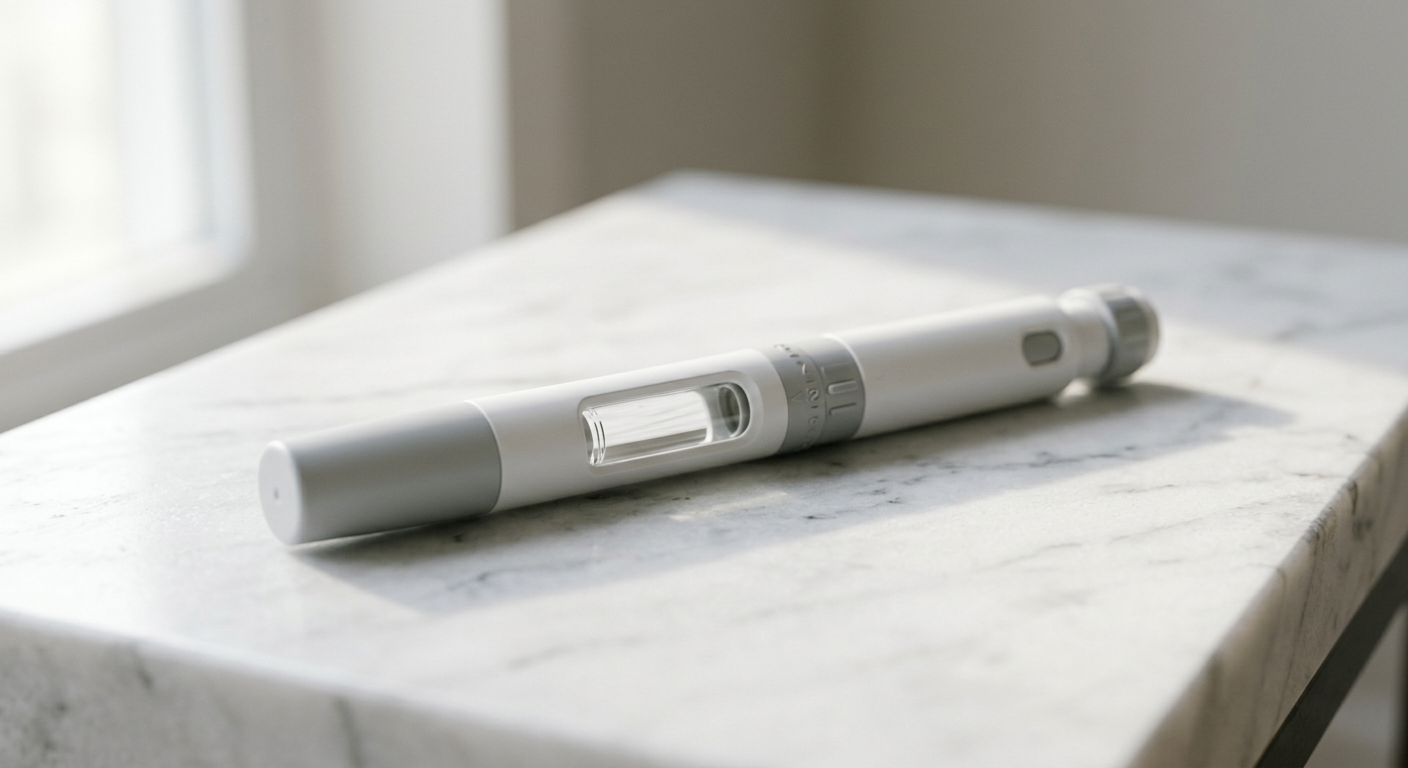
If you have polycystic ovary syndrome and have been following health news over the past year or two, you have almost certainly wondered about semaglutide. The GLP-1 receptor agonist that transformed conversations about obesity and type 2 diabetes is now being formally investigated as a treatment for PCOS. Multiple clinical trials are actively enrolling patients in 2026.
The scientific rationale is genuinely compelling. The existing evidence from smaller studies is encouraging. But there is an important distinction between buzz and evidence, and for a condition as complex and heterogeneous as PCOS, that distinction matters enormously. Semaglutide is not approved for PCOS. No drug is specifically approved for PCOS. The question these trials are trying to answer is whether semaglutide should be.
This post covers the biology behind why semaglutide makes sense for PCOS, what published data already shows, which trials are now running and what they are specifically measuring, and what questions still need answers before this becomes standard practice.
PCOS: Why Treatment Has Always Been a Patchwork
Polycystic ovary syndrome affects an estimated 10% of women of reproductive age worldwide, making it one of the most common endocrine disorders in women. Despite that prevalence, there is no FDA-approved drug specifically for PCOS. Treatment today consists of medications developed for other conditions, repurposed off-label: oral contraceptives for cycle regulation, metformin for insulin resistance, spironolactone for androgen-related symptoms like excess hair growth and acne, and fertility medications for those trying to conceive.
The patchwork approach exists because PCOS is not a single disease. It is a syndrome with multiple overlapping features that present differently from woman to woman. To receive a PCOS diagnosis under the Rotterdam criteria, a woman must have two of the following three: irregular or absent ovulation, elevated androgen levels (causing symptoms like hirsutism, acne, and hair loss), and polycystic-appearing ovaries on ultrasound. Many but not all women with PCOS also have insulin resistance and metabolic features. A significant proportion have obesity. A meaningful minority, sometimes estimated at 20 to 30%, are lean.
| What PCOS actually involves: the four main feature clusters Ovulatory dysfunction: Irregular or absent periods, anovulation, and associated difficulty conceiving. This is the most common reason women seek evaluation. Hyperandrogenism: Elevated testosterone and related androgens causing hirsutism (excess body and facial hair), acne, and androgenic hair loss. This is the feature most affecting quality of life for many women. Metabolic features: Insulin resistance (present in 50 to 70% of women with PCOS regardless of weight), dyslipidemia, elevated fasting glucose, and increased risk of type 2 diabetes and cardiovascular disease later in life. Psychological features: Depression, anxiety, and disordered eating occur at significantly higher rates in women with PCOS than in the general population, though these are often underaddressed in standard care. |
|---|
Why Semaglutide Makes Biological Sense for PCOS
Semaglutide is a GLP-1 receptor agonist. It mimics glucagon-like peptide 1, a gut hormone that stimulates insulin secretion in response to meals, slows gastric emptying, and signals satiety to the brain. It was developed for type 2 diabetes and obesity, both conditions strongly driven by insulin resistance. This is where the PCOS connection begins.
In PCOS, insulin resistance is not just a complication. It is a central driver and amplifier of the disorder. Elevated insulin levels act directly on the ovary, specifically on theca cells, to stimulate androgen production. More insulin means more testosterone and DHEA-S. More androgens mean disrupted follicle development, impaired ovulation, and worsened symptoms. It also feeds back into insulin resistance through inflammatory and metabolic pathways, creating a self-reinforcing cycle.
Reducing insulin resistance has long been a therapeutic target in PCOS. Metformin, the current first-line metabolic treatment, works primarily by reducing hepatic glucose output and improving insulin sensitivity. GLP-1 receptor agonists reduce insulin resistance through a complementary but distinct pathway: they enhance glucose-stimulated insulin secretion, reduce postprandial glucose spikes, lower fasting insulin, and produce significant weight loss that further improves insulin sensitivity. For many women with PCOS, this combination of effects addresses multiple features of the disorder simultaneously.
For a broader overview of what the 2026 research shows about GLP-1 medications across the full spectrum of fertility, ovulation, and pregnancy safety in PCOS, see our companion post: GLP-1 Medications and PCOS: What the 2026 Research Actually Shows.
What Published Evidence Already Shows
The current evidence base for GLP-1 receptor agonists in PCOS comes from a mix of older liraglutide trials, smaller semaglutide studies, and published meta-analyses that synthesize this literature. It is encouraging. It is also preliminary.
The published meta-analyses
A 2024 meta-analysis published in the Journal of Diabetes and Its Complications pooled data from four randomized controlled trials involving 176 women with PCOS treated with GLP-1 receptor agonists (primarily liraglutide, with some semaglutide). Compared to placebo, GLP-1 agonists produced:
| Outcome | Result vs. placebo |
|---|---|
| Waist circumference | Reduced by 5.16 cm (95% CI 4.21 to 6.11; p less than 0.00001) |
| BMI | Reduced by 2.42 units (95% CI 1.74 to 3.10; p less than 0.00001) |
| Serum triglycerides | Reduced significantly (MD −0.20 mmol/L; p less than 0.00001) |
| Total testosterone | Reduced significantly (MD −1.33 nmol/L; 95% CI −2.55 to −0.12; p=0.03) |
| HOMA-IR (insulin resistance) | Significant improvement |
Source: Morais et al. Journal of Diabetes and Its Complications. 2024;38(10):108834. doi:10.1016/j.jdiacomp.2024.108834
A May 2025 meta-analysis in Scientific Reports, searching databases through October 2024, reached broadly consistent conclusions: GLP-1 receptor agonists outperformed both placebo and metformin on anthropometric and metabolic outcomes in women with PCOS, with additional improvements in androgen markers and lipid profiles.
The liraglutide RCT and the menstrual regularity finding
The most robust individual trial in this space is the Nylander et al. 2017 randomized controlled trial published in Human Reproduction, which enrolled 72 women with PCOS. Participants received liraglutide (the predecessor GLP-1 agonist to semaglutide) for 26 weeks. Results showed significant reductions in BMI, free androgen index, fasting insulin, and LH/FSH ratio compared to placebo. Notably, 44% of women in the liraglutide group achieved regular menstrual cycles by week 24 versus significantly fewer in the placebo group. That menstrual regularity finding is the most clinically meaningful single result from the existing literature.
Combination semaglutide plus metformin
A prospective randomized controlled trial published in 2025 specifically examining overweight and obese women with PCOS assigned participants to metformin alone, semaglutide alone, or combination therapy. The combination group outperformed metformin monotherapy in reducing BMI, androgen levels, insulin resistance, and menstrual irregularities. Notably, the natural pregnancy rate was significantly higher in the combination group than in the metformin-only group. This is the most direct evidence to date supporting a fertility benefit, though the trial was not large enough to draw definitive conclusions and was conducted in a specific patient population.
| The honest limitations of the existing evidence base The published meta-analyses and most individual trials have important limitations that must be acknowledged before drawing clinical conclusions. Sample sizes are small: The 2024 meta-analysis pooled just 176 participants across four trials. The 2025 Scientific Reports meta-analysis similarly covered a limited participant pool. These are underpowered to detect meaningful differences in rarer outcomes like live birth rates. Populations are selective: Most trials enrolled women with PCOS and obesity or overweight. The evidence base for women with lean PCOS (BMI under 25 with documented insulin resistance) is far more limited, and some benefits may be primarily mediated through weight loss rather than any direct hormonal effect. Follow-up is short: Most trials run 12 to 28 weeks. The long-term effects of GLP-1 agonist use on reproductive function, ovarian reserve, and metabolic health in young women with PCOS over years of use are not yet characterized. Primary endpoints vary: Different trials measured different outcomes. Without a consistent primary endpoint across studies, synthesizing results into a definitive conclusion is difficult. The ongoing trials are attempting to address this. |
|---|
The 2025 to 2026 Trials: What They Are Specifically Studying
Several clinical trials registered and recruiting in 2025 and 2026 are specifically investigating semaglutide in women with PCOS. Here are the most relevant currently active programs.
RESTORE trial: NCT05819853 (University of Colorado)
This is the most clinically ambitious of the currently active trials. RESTORE (Role of Semaglutide in Restoring Ovulation in Youth and Adults with Polycystic Ovary Syndrome) is a Phase 3 study enrolling 80 girls and women aged 12 to 35 years old with obesity and PCOS. Participants receive up to 10 months of semaglutide with dose escalation per manufacturer recommendations, with a maximum dose of 1.7 mg.
| Feature | Details |
|---|---|
| NCT number | NCT05819853 |
| Phase | Phase 3 |
| Sponsor | University of Colorado, Denver |
| Age range | 12 to 35 years |
| Estimated enrollment | 80 participants |
| Treatment | Semaglutide (Wegovy/Ozempic) injectable, 10 months, dose escalation to max 1.7 mg |
| Primary endpoint | Change in ovulation frequency before and after semaglutide |
| Secondary endpoints | Change in whole-body insulin sensitivity; change in ovarian morphology; androgen levels; metabolic markers |
| Projected completion | February 2028 |
| Status | Recruiting |
The choice of ovulation frequency as the primary endpoint is significant. Rather than measuring weight loss or metabolic markers as primary outcomes, RESTORE is asking the most clinically meaningful question for a reproductive-age population: does semaglutide restore the normal ovulatory function that PCOS disrupts? The adolescent inclusion (ages 12 to 17) is also notable, as it addresses the understudied question of whether early metabolic intervention in young women with PCOS can improve reproductive outcomes before the condition becomes entrenched.
Semaglutide and PCOS: Emerging Treatment Strategy (NCT06222437)
Sponsored by Methodist Health System, this Phase 1 single-arm interventional study focuses specifically on ovulation and androgen outcomes. Its primary objective is to determine the effect of semaglutide on ovulation and menstrual regularity, and it also measures testosterone, sex hormone-binding globulin (SHBG), and changes in hirsutism. This is one of the few trials that lists androgen-specific clinical measures (not just lab values) as a primary focus, making it directly relevant for women whose main PCOS burden is hirsutism and acne rather than fertility concerns.
Semaglutide vs. metformin in PCOS (NCT05646199, NCT06896981)
Two Phase 2/3 trials are specifically comparing semaglutide against the current standard metabolic therapy for PCOS. The University of Hull trial (NCT05646199) randomizes 60 women with PCOS and obesity to semaglutide or metformin over 28 weeks, with primary endpoint of weight loss and secondary endpoints including free androgen index, glucose tolerance, and blood pressure. The Bangladesh trial (NCT06896981) is evaluating the combination of low-dose semaglutide plus metformin versus metformin alone over 12 weeks in 30 women with PCOS and obesity.
The metformin comparison matters clinically. If semaglutide is going to displace or be added to metformin in PCOS care, it needs to demonstrate it does something meaningfully better than the existing cheap, well-tolerated, off-patent treatment. Head-to-head data is more actionable for prescribers than placebo-controlled data alone.
What the Trials Will Need to Show
For semaglutide to move from promising to proven in PCOS, the clinical trials will need to demonstrate several things that smaller studies have not yet conclusively shown.
- Ovulatory restoration across the weight spectrum. Most trial participants have obesity. Whether semaglutide restores ovulation in normal-weight women with PCOS, where the mechanism is less clearly tied to weight loss and more to a possible direct hormonal effect, is not yet established.
- Androgen normalization and symptom improvement. Lab values are useful, but what patients care about is whether hirsutism, acne, and hair loss actually improve. Trials need patient-reported outcome measures and validated clinical scales for these symptoms, not just serum testosterone numbers.
- Live birth rates for women trying to conceive. This is the endpoint that matters most for a large proportion of the PCOS population. One trial showed higher natural pregnancy rates with combination semaglutide plus metformin, but live birth rate data is absent from most studies. And critically, semaglutide must be stopped before attempting conception, so the fertility benefit question is more nuanced than it first appears.
- Long-term safety in reproductive-age women and adolescents. Semaglutide’s safety data comes predominantly from adults with diabetes or obesity, typically older than the PCOS population. The RESTORE trial’s inclusion of participants as young as 12 will generate important adolescent safety data that currently does not exist.
- Efficacy in lean PCOS. Roughly 20 to 30% of women with PCOS have a BMI under 25. Their insulin resistance is real but may be less severe, and the weight loss mechanism that drives metabolic improvement in obese participants may contribute less to benefit in this group. None of the current trials are designed specifically for lean PCOS.
The Pregnancy Contraindication: A Critical Practical Issue
Semaglutide is contraindicated during pregnancy. This is not a precautionary label statement. Animal studies have shown fetal harm at doses producing exposures similar to the human therapeutic dose. The FDA prescribing information for both Ozempic and Wegovy includes a recommendation to discontinue semaglutide at least two months before a planned pregnancy, to allow for adequate washout given the drug’s approximately one-week half-life.
For women with PCOS who are actively trying to conceive, this creates a specific clinical scenario that requires careful planning. Semaglutide can be used to improve metabolic parameters and potentially restore ovulatory function, then discontinued before conception is attempted. Effective contraception during treatment is required. The fertility benefit, if it exists, would need to manifest through improved baseline reproductive function that persists after drug discontinuation rather than through ongoing treatment during the conception window.
This is an important conversation to have with a reproductive endocrinologist before starting semaglutide with the goal of improving fertility. The timing, the contraception plan, and the monitoring protocol all require individual clinical guidance. For a full discussion of the safety evidence around GLP-1 medications and pregnancy, including what the 2026 pharmacovigilance data shows, see our post: GLP-1 Medications and PCOS: What the 2026 Research Actually Shows About Fertility, Ovulation, and Pregnancy Safety.
What Women With PCOS Can Do Right Now
If you want to participate in a trial
Search ClinicalTrials.gov using “semaglutide” and “polycystic ovary syndrome” for actively recruiting studies. The RESTORE trial (NCT05819853) at the University of Colorado is enrolling girls and women aged 12 to 35 with obesity and PCOS. Participation in clinical trials is not a last resort. It is how the field generates the evidence that eventually benefits all patients with the condition.
If you are currently managing PCOS
Semaglutide is not currently approved for PCOS, and prescribing it off-label for this indication without a diabetes or obesity co-diagnosis involves clinical judgments that should be made with a specialist, not based on online health content. Evidence-based options available today include metformin for insulin resistance, oral contraceptives or progestins for cycle regulation, spironolactone for androgen symptoms, and letrozole or clomiphene for ovulation induction in those trying to conceive. The 2023 International Evidence-Based PCOS Guideline from Monash University is a reliable reference for understanding the current standard of care.
If you also have obesity or overweight
If your BMI qualifies you for an obesity medication on its own merits (BMI 30 or above, or 27 or above with at least one weight-related comorbidity), semaglutide or another GLP-1 agonist may already be an appropriate treatment for your weight and metabolic health, and there is published evidence suggesting it also benefits PCOS features in this population. This is a conversation worth having with your gynecologist or endocrinologist, who can assess whether you meet criteria for approved obesity pharmacotherapy.
We will be watching these trials closely.
The RESTORE trial at the University of Colorado is the most clinically ambitious study of semaglutide in PCOS currently running, with results expected in 2028. For women with PCOS who have been managing symptoms with off-label therapies for years, the prospect of a drug that addresses the metabolic root of the condition rather than just managing individual symptoms is worth following carefully. The best resources for staying current on PCOS care include ACOG, the Androgen Excess and PCOS Society, and the international evidence-based PCOS guideline from Monash University.
For more women’s health coverage on Health Evidence Digest, see our posts on new 2026 cervical cancer screening guidelines and the first FDA-approved non-hormonal endometriosis drug entering human trials.
Sources
RESTORE trial registration: Role of Semaglutide in Restoring Ovulation in Youth and Adults With Polycystic Ovary Syndrome. NCT05819853. ClinicalTrials.gov.
NCT05646199: Semaglutide vs Metformin in Polycystic Ovary Syndrome (PCOS). University of Hull. ClinicalTrials.gov.
NCT06896981: Semaglutide in Women With Polycystic Ovary Syndrome and Obesity. BSMMU, Bangladesh. ClinicalTrials.gov.
2025 meta-analysis (Scientific Reports): Efficacy and safety of GLP-1 receptor agonists on weight management and metabolic parameters in PCOS women. Scientific Reports. May 2025. doi:10.1038/s41598-025-99622-4
GLP-1 RAs in PCOS narrative review: Endocrine and metabolic effects of GLP-1 receptor agonists on women with PCOS. Endocrine Connections. 2025;14(5). doi:10.1530/EC-24-0529
2024 PCOS guideline meta-analysis: Goldberg et al. Anti-obesity pharmacological agents for PCOS: A systematic review and meta-analysis to inform the 2023 international evidence-based guideline. Obesity Reviews. 2024;25(5):e13704. doi:10.1111/obr.13704
Combination semaglutide + metformin in PCOS: Effects of combined metformin and semaglutide therapy on body weight, metabolic parameters, and reproductive outcomes in overweight/obese women with PCOS. PMC12297736. pmc.ncbi.nlm.nih.gov. 2025.
Patient resources: ACOG PCOS FAQ | Androgen Excess and PCOS Society | International PCOS Guideline | ClinicalTrials.gov
| Disclaimer: Health Evidence Digest provides general information about clinical research and health topics for educational purposes. This content is not a substitute for professional medical advice. Semaglutide is not FDA-approved for PCOS. Women with PCOS should speak with their gynecologist, reproductive endocrinologist, or healthcare provider about their individual treatment plan. |
|---|