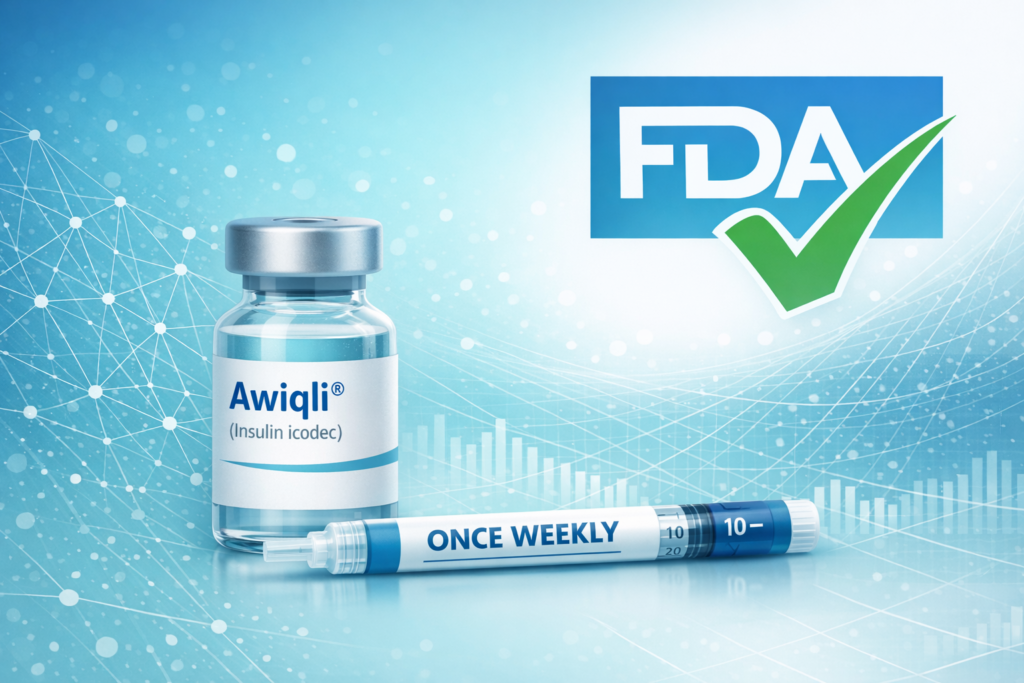
In a major development for diabetes care, the FDA has approved Awiqli®, the first and only once-weekly basal insulin for adults with type 2 diabetes. This marks a meaningful shift in treatment options for people who currently rely on daily basal insulin injections.
What Was Approved
Awiqli® (insulin icodec-abae), developed by Novo Nordisk, is designed to improve blood sugar control when used alongside diet and exercise. Its standout feature is the dosing schedule: instead of seven injections per week, adults with type 2 diabetes can now take just one. This could make insulin therapy less burdensome and easier to maintain for many.
What the Clinical Trials Showed
The FDA’s approval is based on Novo Nordisk’s ONWARDS clinical trial program, which included about 2,680 adults with type 2 diabetes. Key findings from the trials include:
- Effective reductions in HbA1c, a key measure of long-term blood sugar control
- Safety profile consistent with existing basal insulin options
Why This Approval Matters
This approval represents a significant advancement in diabetes treatment, potentially improving adherence and quality of life for people managing type 2 diabetes. With fewer injections, patients may find insulin therapy more convenient and less disruptive.
When It Will Be Available
Novo Nordisk plans to launch Awiqli® in the United States in the second half of 2026, using its FlexTouch® injection device. The medicine has already been approved in the European Union and more than a dozen other countries.
The Bottom Line
Awiqli® offers a promising new option for adults with type 2 diabetes, combining effective blood sugar control with a more convenient once-weekly dosing schedule.
For more details, read the full press release from Novo Nordisk: Novo Nordisk Press Release
Disclaimer: Health Evidence Digest provides general information about health research. Content is for informational purposes only and is not a substitute for professional medical advice.
Leave a Reply