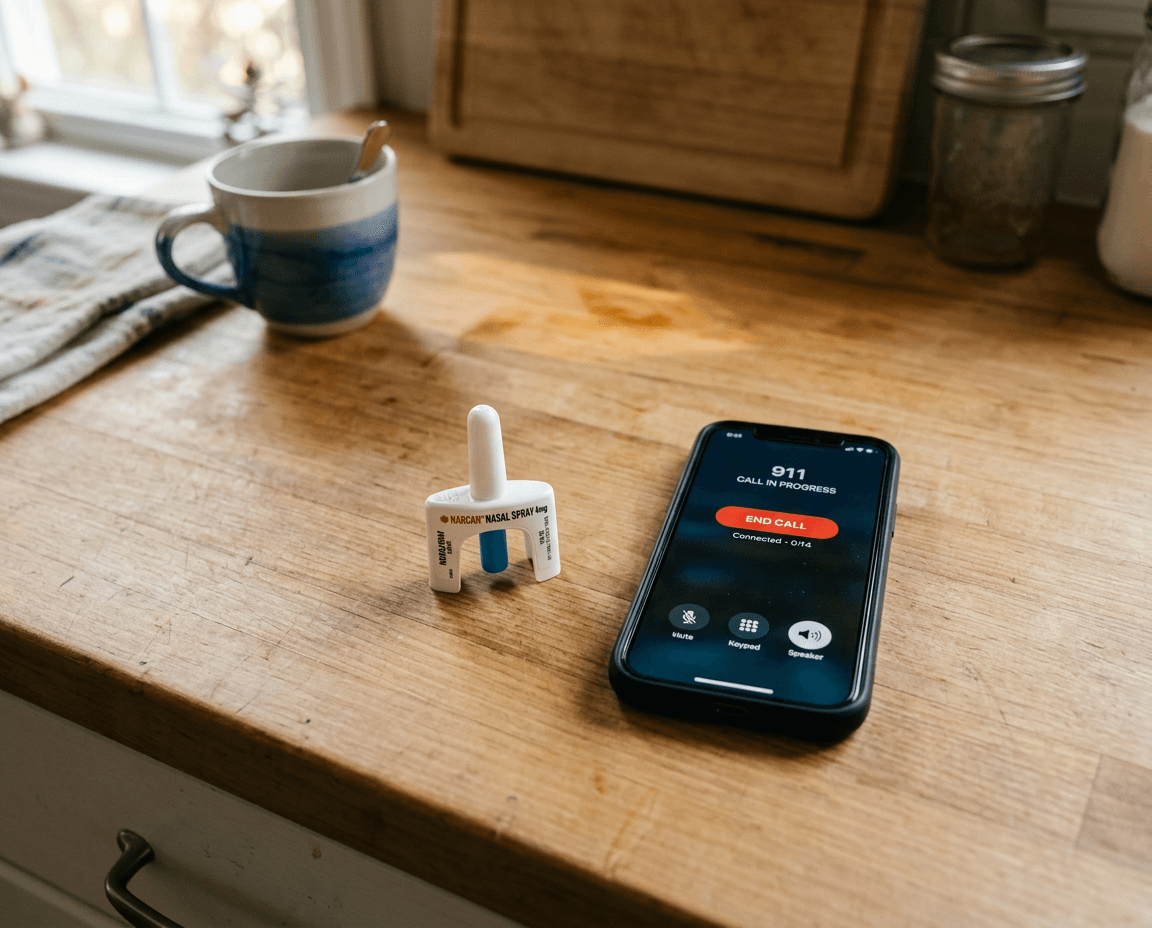
| The essentials: On June 16, 2026, the FDA approved Rextovy (naloxone hydrochloride 4 mg nasal spray, Amphastar Pharmaceuticals) for over-the-counter sale, making it the third naloxone nasal spray available without a prescription in the United States. No prescription, no pharmacist consultation, and no physician visit is required. Consumers can purchase Rextovy directly at pharmacies, convenience stores, and online retailers. What it is: a single 4 mg intranasal spray per device, supplied in a carton of 2 devices. The same active ingredient and the same 4 mg dose as OTC Narcan (Emergent BioSolutions). The difference is manufacturer: Rextovy is made by Amphastar Pharmaceuticals. A third OTC product, RiVive (Harm Reduction Therapeutics), contains 3 mg. All three are approved for bystander use without medical training. Rx version pricing: approximately $44 to $60 per box. OTC pricing was not immediately available at launch. Historical precedent: OTC naloxone prices declined by only approximately $0.49 per quarter between late 2023 and late 2024 following the first OTC approval, according to a 2026 study in the Journal of Substance Use and Addiction Treatment. A third competitor changes the economic calculus. Overdose death trend: in the 12-month period ending August 2023, 111,451 overdose deaths were reported; in the 12-month period ending December 2025, 68,632 were reported — a 38% decline since the first OTC naloxone approval. Drug overdose deaths remain a major public health issue, primarily driven by synthetic opioids including illicit fentanyl. Pricing equity note: the same 2026 study found that areas with larger American Indian and Alaska Native populations paid an estimated more than $5 extra per unit compared with predominantly white communities — a documented racial pricing disparity in OTC naloxone access. |
|---|
The number of overdose deaths has dramatically decreased since the first FDA approval of an OTC naloxone nasal spray in 2023, but drug overdose persists as a major public health issue in the U.S., primarily driven by synthetic opioids like illicit fentanyl. In the 12-month period ending August 2023, 111,451 overdose deaths were reported. In the 12-month period ending December 2025, 68,632 were reported. That 38% decline is meaningful, and OTC naloxone availability is widely credited as one of its contributors. It is also not enough. More than 68,000 people dying per year from overdose is not a public health success. It is a reduced catastrophe. BioSpace
Against that backdrop, the FDA’s June 16, 2026 approval of Rextovy (naloxone hydrochloride, Amphastar Pharmaceuticals) as the third OTC naloxone nasal spray matters for two distinct reasons. The first is access: more manufacturers, more retail channels, and more products on shelves means more opportunities for the right person to have the right medication at the right moment. The second is economics: the most persistent barrier to naloxone adoption since the first OTC approval has not been awareness. It has been price. A third competitor in a market where prices have barely moved creates conditions for the competition that could finally change that.
This post covers what naloxone is and how it works, the OTC naloxone landscape and how Rextovy fits into it, what the pricing and access research actually shows, what the evidence says about bystander naloxone and its effect on survival, and what any person reading this needs to know about how to use it.
What Opioid Overdose Is and Why Minutes Matter
Opioid overdose occurs when the concentration of opioids in the body exceeds what the brain’s opioid receptors can manage without suppressing essential automatic functions. Opioids bind to mu-opioid receptors in the brainstem’s respiratory control centers. At therapeutic doses, this produces analgesia and sedation. At overdose doses, it produces profound respiratory depression: breathing slows, becomes shallow, and eventually stops. Without intervention, hypoxia progresses to cardiac arrest and death, typically within minutes.
The trajectory of a fatal opioid overdose, from respiratory depression to death, unfolds in a window of approximately 1 to 5 minutes in many cases, faster with high-potency synthetic opioids like fentanyl and carfentanil, somewhat longer with longer-acting opioids like methadone. This time window is the entire clinical rationale for OTC naloxone: by the time emergency medical services arrive, a reversible overdose has often become an irreversible one.
Recognizing an opioid overdose requires recognizing several characteristic signs. Any person who is:
- Unresponsive or cannot be woken up
- Breathing slowly, shallowly, or not at all
- Making gurgling, choking, or rattling sounds (sometimes called the “death rattle”)
- Limp and unable to hold their head up
- Showing blue, gray, or pale lips, gums, or fingertips (indicating hypoxia)
- Showing pinpoint (very small) pupils
should be treated as a suspected opioid overdose. Naloxone will not harm someone who does not have opioids in their system, so the risk of administering it to someone who turns out not to be overdosing on opioids is negligible. The risk of not administering it to someone who is overdosing on opioids is death.
How Naloxone Works: The Mechanism
Naloxone is a competitive opioid receptor antagonist. It binds to the same mu-, kappa-, and delta-opioid receptors in the brain that opioids bind to, but it does not activate them. Because naloxone’s binding affinity for these receptors is higher than that of most opioids, it rapidly displaces the opioid molecules already occupying the receptors and occupies those sites itself, blocking further opioid activity.
The clinical result of this receptor displacement is the reversal of opioid-induced respiratory depression within 2 to 5 minutes of administration. The person begins breathing again. Consciousness typically returns. The overdose reversal is complete for the duration of naloxone’s action.
The critical pharmacokinetic limitation of naloxone is its shorter duration of action compared to most opioids. Naloxone’s effects last approximately 30 to 90 minutes. Many opioids, particularly long-acting formulations like extended-release oxycodone or methadone, last substantially longer. Illicit fentanyl, which is now the dominant driver of overdose deaths, acts rapidly but can linger at high receptor occupancy.
This means that after naloxone wears off, opioid effects can return, a phenomenon called re-narcotization. This is the clinical reason why calling 911 after the first dose is not optional, even if the person wakes up and feels better. The naloxone reversal is temporary. The opioids are still in the system. Without professional medical monitoring and potentially additional doses, re-narcotization can cause a second respiratory depression episode just as lethal as the first.
What happens when the person wakes up is also important for bystanders to understand. Naloxone precipitates acute opioid withdrawal in opioid-dependent individuals by abruptly displacing opioids from receptors throughout the body. This produces sudden withdrawal symptoms: sweating, shaking, nausea, vomiting, irritability, and sometimes agitation or aggression. This is a normal and expected physiological response, not a sign that something has gone wrong. It is not dangerous. The person may be confused and frightened. The appropriate response is calm reassurance and staying with them until emergency services arrive.
| Naloxone does not cause a “high” or produce any opioid effect In people who do not have opioids in their system, naloxone produces no clinically significant effect. It is pharmacologically inert as a monotherapy: it blocks receptors but does not activate them, so administering it to someone who is not overdosing on opioids produces no harm. This is one reason the FDA and public health authorities consistently recommend a low threshold for use: when in doubt, administer it. The consequence of a false positive is negligible. The consequence of a false negative is death. |
|---|
The OTC Naloxone Landscape: Where Rextovy Fits
The United States OTC naloxone nasal spray market now has three approved products:
| Product | Manufacturer | Dose | OTC approval | Status |
|---|---|---|---|---|
| Narcan 4 mg | Emergent BioSolutions | 4 mg per spray | March 2023 | Commercially available |
| RiVive 3 mg | Harm Reduction Therapeutics (nonprofit) | 3 mg per spray | July 2023 | Commercially available |
| Rextovy 4 mg | Amphastar Pharmaceuticals | 4 mg per spray | June 16, 2026 | Newly approved |
Rextovy contains the same active ingredient at the same dose as OTC Narcan. The products are pharmacologically equivalent: both deliver 4 mg of naloxone hydrochloride as a single intranasal spray. The distinction is manufacturer, supply chain, and ultimately price. Amphastar Pharmaceuticals is a well-established injectable and inhalable drug manufacturer with existing manufacturing infrastructure for drug products in similar delivery formats. Its entry into the OTC naloxone market adds a second 4 mg option and a new supply source.
The original prescription version of Rextovy was approved on March 7, 2023. The June 16, 2026 action is a labeling revision converting that product to OTC status, the same regulatory pathway used for OTC Narcan in 2023.
How to Use Rextovy: Step-by-Step
Rextovy’s packaging includes pictorial step-by-step instructions designed for use without medical training. The FDA-approved dosing protocol:
Step 1: Call 911 immediately after (or simultaneously with) giving the first dose. Do not wait to see if the dose works before calling. Emergency services need to be on the way regardless of how quickly the person responds.
Step 2: Lay the person on their back. Tilt their head back slightly to open the airway.
Step 3: Insert the tip of the nasal spray device gently into one nostril. Press the plunger firmly to deliver the full 4 mg dose as a single spray.
Step 4: Wait 2 minutes and watch for a response: spontaneous breathing, return of consciousness, movement.
Step 5: If there is no response after 2 minutes, administer the second device into the opposite nostril. The carton contains 2 devices for this reason.
After administration: Stay with the person until emergency services arrive. If the person regains consciousness, keep them calm and prevent them from taking more opioids. Explain that medical help is coming. If they become agitated (from naloxone-precipitated withdrawal), do not leave. If they lose consciousness again after initial recovery, administer the second dose if not already used and continue rescue breathing if trained to do so.
Rescue breathing: If you know rescue breathing or CPR, administer it while waiting for naloxone to take effect and after doses are given. Rescue breathing can maintain oxygenation during the reversal window.
The fentanyl consideration: Illicit fentanyl and its analogues are significantly more potent than heroin or prescription opioids and may require higher or repeat naloxone doses to achieve reversal. A single 4 mg dose may not be sufficient in a high-potency fentanyl overdose. This is why the 2-device carton is important, and why calling 911 is critical: emergency responders carry additional naloxone doses.
The Pricing Problem and Why a Third Competitor Matters
The clinical and public health value of OTC naloxone is not theoretical. Bystander administration of naloxone before emergency services arrive is associated with substantially higher survival rates in observed overdose events. Multiple studies across community overdose prevention programs consistently show that having naloxone present at the scene and having someone willing and able to use it is one of the most effective single interventions for preventing overdose death.
The problem is access, and access in this context is inseparable from price.
A 2026 study published in the Journal of Substance Use and Addiction Treatment found that OTC Narcan prices declined by only approximately $0.49 per quarter between late 2023 and late 2024, a period during which total sales actually fell slightly. The study also identified a documented racial pricing disparity: areas with larger American Indian and Alaska Native populations paid an estimated more than $5 extra per unit compared with predominantly white communities.
The prescription version of Rextovy currently sells at approximately $44 to $60 per two-dose carton, which is the same general price range as prescription Narcan. OTC pricing was not immediately disclosed at Rextovy’s launch. The meaningful question is not the launch price but the trajectory: with three manufacturers in the OTC naloxone market rather than two, and with Amphastar’s manufacturing cost structure potentially different from Emergent BioSolutions, there is now a realistic competitive mechanism that did not previously exist.
The FDA has stated explicitly that the availability of multiple approved formulations expands access and market availability, encourages competition that may reduce cost, and offers alternative sourcing options. That is a policy statement, not a guarantee. But the mechanism is sound: competition-driven price reduction in generic and OTC pharmaceutical markets follows predictable patterns, and the OTC naloxone market has been waiting for it.
For the communities with the highest overdose burden — uninsured populations, communities with high rates of opioid use disorder, and the communities of color documented to face pricing disparities — even a meaningful reduction from the current $44 to $60 per box baseline could translate directly into lives saved.
Naloxone Is Safe to Give — and There Are No Situations Where Hesitation Is the Right Choice
This point is worth stating plainly because hesitation at the scene of a suspected overdose remains one of the most documented barriers to naloxone use.
Naloxone will not harm someone who does not have opioids in their system. It is not possible to give a fatal dose of naloxone to an overdose victim. The drug has no significant pharmacological activity in the absence of opioid receptor occupancy. Bystanders who are uncertain whether someone is overdosing on opioids should administer naloxone anyway: if opioids are not present, the spray produces no effect. If opioids are present, it may save their life.
The withdrawal symptoms that naloxone can precipitate — agitation, sweating, nausea, vomiting — are distressing but not medically dangerous. They are significantly preferable to continued opioid-induced respiratory depression. A person who is angry and nauseous after naloxone administration is alive. That is the outcome.
SAMHSA’s opioid overdose prevention guidance is clear: treat first, call for help, stay present. There is no scenario in which waiting to see whether a suspected overdose resolves on its own is the appropriate response.
What This Means Practically
If you live with or care for someone using prescription opioids: Ask your pharmacist about keeping naloxone at home. Prescription opioid use, including opioids prescribed legitimately for chronic pain, carries overdose risk — particularly in higher doses, in combination with other sedating medications, or in patients with sleep apnea. Having naloxone in the home is increasingly recommended as a standard safety precaution alongside prescription opioid therapy.
If you use opioids yourself: Carry naloxone. Tell a trusted person where it is and how to use it. The person most likely to administer naloxone in an opioid-related emergency is someone in the immediate vicinity, not a first responder.
If you work in any setting where opioid use may occur: Workplaces, schools, community organizations, faith communities, and public venues are all settings where overdoses occur and where having naloxone present changes outcomes. Rextovy joining the OTC market means one more product on more shelves at potentially lower cost. Stock it.
If you are a pharmacist or healthcare provider: SAMHSA and the CDC recommend co-prescribing naloxone with opioid prescriptions, particularly at higher doses. The OTC availability of Rextovy, Narcan, and RiVive means that the conversation about naloxone access can now happen in any setting — a pharmacy counter, a community health worker visit, a school nurse office — without requiring a prescription. Patient education about signs of overdose, how to use the spray, and why calling 911 is non-negotiable after the first dose saves lives.
For related HED coverage on the opioid crisis treatment landscape, see our post on the FDA’s approval of Sublocade (buprenorphine extended-release injection) for opioid use disorder and our coverage of how the Great American Recovery Initiative has shaped FDA drug approvals and substance use disorder policy in 2026.
If you or someone you know is struggling with opioid use disorder, contact the SAMHSA National Helpline at 1-800-662-4357 (free, confidential, 24/7) or visit findtreatment.gov.
Sources
FDA approval announcement: FDA broadens access to over-the-counter naloxone nasal spray for opioid overdose. FDA.gov. June 16, 2026. BioSpace
Drugs.com approval news: FDA Approves Rextovy (naloxone hydrochloride) Nasal Spray for Over-the-Counter Use. drugs.com. June 16, 2026.
Dermatology Advisor clinical summary (with dosing and packaging): Over-the-Counter Rextovy Cleared for Opioid Overdose Treatment. dermatologyadvisor.com. June 2026.
Drug Topics coverage (with pricing research and pharmacist comment): The FDA Approves Rextovy, an OTC Naloxone for Opioid Overdose. drugtopics.com. June 2026.
TechTimes (OTC market analysis with pricing study detail): Naloxone Nasal Spray Gets Third OTC Brand as FDA Approves Rextovy by Amphastar. techtimes.com. June 2026.
The Hill news coverage: FDA approves third over-the-counter opioid overdose nasal spray. thehill.com. June 2026.
Psychiatry Advisor clinical summary: Over-the-Counter Rextovy Cleared for Opioid Overdose Treatment. psychiatryadvisor.com. June 2026.
Rextovy original Rx approval (March 2023): Rextovy FDA Approval History. drugs.com.
Narcan OTC approval (March 2023): FDA approves first nonprescription naloxone nasal spray. FDA.gov.
Rextovy prescribing information: Rextovy (naloxone hydrochloride) Package Insert. Amphastar Pharmaceuticals. 2026.
Naloxone mechanism and overdose StatPearls: Opioid Toxicity. StatPearls. NCBI.
Mu-opioid receptor pharmacology: Opioid Receptors. StatPearls. NCBI.
Bystander naloxone and survival outcomes: Bystander Naloxone Administration and Opioid Overdose Outcomes. PMC9388745.
CDC naloxone consumer guidance: Naloxone for Opioid Overdose. CDC.
SAMHSA opioid overdose guidance: Opioid Overdose Prevention. SAMHSA.
SAMHSA National Helpline: SAMHSA National Helpline. 1-800-662-4357.
Find treatment: findtreatment.gov. SAMHSA.
Patient resources: National Alliance for Eating Disorders Helpline: 1-866-662-1235 (removed — not relevant to this post) | 988 Suicide and Crisis Lifeline: call or text 988 | SAMHSA National Helpline: 1-800-662-4357 | Harm Reduction Coalition | Next Distro (mail-based naloxone access)
| Disclaimer: Health Evidence Digest provides general information about FDA approvals and health research for educational purposes. This content is not a substitute for professional medical advice. Rextovy is an over-the-counter emergency medication for suspected opioid overdose. Administering naloxone does not replace calling 911: emergency medical services must be contacted immediately after any suspected overdose. Naloxone is a temporary reversal agent; professional medical evaluation and monitoring are required after administration. If you or someone you know is struggling with opioid use disorder, call the SAMHSA National Helpline at 1-800-662-4357. |
|---|
Leave a Reply