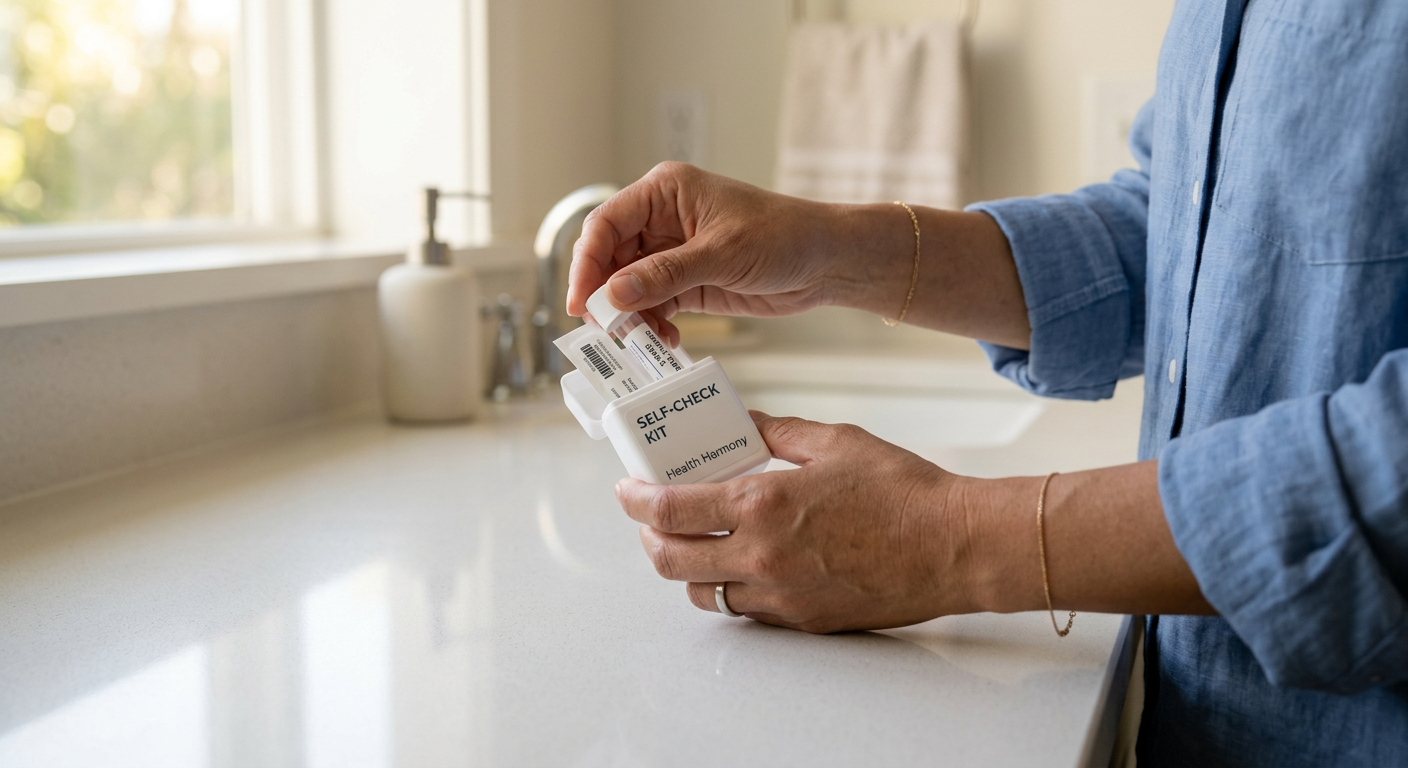
| 📌 The key update at a glance On January 5, 2026, updated Women’s Preventive Services Guidelines added self-collection as a recognized option for cervical cancer screening. Women ages 30 to 65 at average risk can now collect their own vaginal sample for high-risk HPV (hrHPV) testing without a clinician-performed pelvic exam. hrHPV testing is designated as the preferred screening approach for this age group. The update was published in JAMA and is effective immediately. A companion insurance coverage requirement covering follow-up testing after a positive result takes effect January 1, 2027. This post explains what changed, who it applies to, and what to do now. |
|---|
Cervical cancer is one of the most preventable cancers we have. Screening works. The HPV vaccine works. And yet, in the United States, roughly 13,000 women are diagnosed with cervical cancer each year, and about 4,000 die from it. Most of those women were either never screened or hadn’t been screened recently enough.
The barriers are real: no insurance, no regular doctor, not enough time, anxiety about pelvic exams, or living too far from a clinic that offers them. For a lot of women, the Pap smear is not inaccessible in theory. It’s inaccessible in practice.
New guidelines published on January 5, 2026, updated the Women’s Preventive Services Guidelines to include self-collection as an option for cervical cancer screening. Women ages 30 to 65 at average risk can now collect their own vaginal sample for hrHPV testing. The update was published in JAMA and is effective immediately.
Here is what the updated guidelines actually say, what the science behind HPV-based screening shows, and what this change means in practical terms for women who are overdue for screening.
What Changed: The Key Updates in Plain Language
The updated HRSA guideline designates high-risk HPV (hrHPV) testing as the preferred screening modality for average-risk women ages 30 to 65, whether collected by the patient or a clinician, while retaining the option for cervical cytology (Pap) testing. For average-risk women ages 21 to 29, cervical cancer screening using cervical cytology remains the recommendation. No change for that group.
The insurance coverage piece is equally significant. The guideline includes new language requiring most insurance plans to cover any additional testing needed to complete the screening process after an abnormal result, with coverage beginning January 1, 2027.
| What Changed in the January 2026 HRSA Update | What It Means for Patients |
|---|---|
| Self-collection is now a recognized option for average-risk women ages 30 to 65 | You can collect your own vaginal sample for hrHPV testing without a clinician-performed pelvic exam |
| hrHPV testing designated as preferred screening method for women ages 30 to 65 | HPV testing every 5 years is the primary recommended approach for this age group; the Pap remains available |
| Women ages 21 to 29 continue to screen with Pap smear every 3 years | No change for this age group |
| Insurance coverage for follow-up testing required from January 1, 2027 | Colposcopy, biopsy, and follow-up after an abnormal result will be required to be covered by most plans |
A note on guideline bodies: The American Cancer Society has separately recommended hrHPV-primary screening starting at age 25 since 2020. That is existing guidance, not a 2026 change. The January 2026 HRSA update discussed throughout this post applies specifically to women ages 30 to 65. If you are between 25 and 29, ask your provider about hrHPV testing options, because your age group sits at the intersection of two different guideline recommendations.
Why HPV Testing Instead of the Pap Smear?
This is worth understanding, because many women are more familiar with the Pap smear, and the shift to HPV-primary screening is not just a convenience update. It reflects a genuinely better test for this purpose.
Cervical cancer is caused almost entirely by persistent infection with high-risk strains of human papillomavirus (HPV). Not every HPV infection causes cancer; most clear on their own. But when certain high-risk strains (HPV 16 and 18 are the most dangerous) persist in cervical cells over time, they can trigger changes that progress to cancer if not detected and treated.
The Pap smear detects abnormal cell changes that have already happened. HPV testing detects the underlying viral cause before those changes necessarily occur. This is why HPV testing catches more cases earlier, generates fewer false negatives, and allows for longer intervals between screenings.
| Test | What It Detects | Screening Interval | Sensitivity for CIN2+ | Self-Collection Validated? |
|---|---|---|---|---|
| Pap smear (cytology) | Abnormal cervical cells | Every 3 years (ages 21 to 65) | ~55 to 60% | No, clinician collection required |
| hrHPV test alone | High-risk HPV strains | Every 5 years (ages 25 to 65 per ACS; 30 to 65 per HRSA) | ~90 to 95% | Yes |
| Co-test (Pap + HPV) | Both | Every 5 years (ages 30 to 65) | High | Partial |
Sensitivity estimates for CIN2+ detection based on meta-analyses including Koliopoulos et al., Cochrane Database of Systematic Reviews, 2017 and subsequent validation studies.
How Self-Collection Works
Self-collected samples for HPV testing use a vaginal swab, not a cervical swab. This is an important distinction. You are not performing a Pap smear on yourself. You are collecting cells from the vaginal wall, which also carry HPV and have been validated in extensive research as an accurate way to detect high-risk strains.
In clinical validation studies, self-collected vaginal samples detect high-risk HPV with sensitivity comparable to clinician-collected cervical samples, particularly for detecting CIN2+ (the precancerous cell changes that matter most for preventing cancer).
How it works in practice:
- A self-collection kit contains a vaginal swab, similar in size and feel to a tampon applicator.
- You insert the swab a few inches into the vagina, rotate it, and remove it.
- The swab is sealed in the provided container and either mailed to a lab or returned to a clinic.
- The sample is tested for high-risk HPV strains.
Most women describe the process as quick and straightforward. No speculum. No stirrups. No need to undress.
Self-collection kits are not yet universally available through all U.S. healthcare systems. The 2026 guidelines establish the framework, but distribution will expand over time. The insurance coverage requirement starting in 2027 is expected to accelerate availability.
Who These Guidelines Apply To
Women ages 30 to 65 at average risk are the primary group for whom self-collection is now a recognized option. “Average risk” means no history of high-grade cervical precancer or cervical cancer, no immunocompromising conditions such as HIV, and no prior DES exposure in utero.
Women ages 21 to 29: No change. Pap smear every 3 years remains the recommendation. Self-collection is not recommended for this group because HPV infections in younger women are more commonly transient, and the Pap smear, which detects actual cell changes, is more clinically actionable for this age group.
Women ages 25 to 29, a note on the ACS guideline: The American Cancer Society’s preferred approach recommends hrHPV-primary testing starting at age 25. If you are in this age range and interested in HPV testing rather than a Pap smear, talk to your provider. The 2026 HRSA update does not cover this group for self-collection, but the ACS guideline supports HPV-primary screening beginning at 25 with clinician-collected samples.
Women with higher-than-average risk (HIV, history of cervical cancer, immunosuppression) require individualized schedules. These general guidelines do not apply to them.
Women who have had a hysterectomy that removed the cervix and have no history of cervical cancer or high-grade lesions generally do not need routine cervical cancer screening. Confirm with your provider.
What About the Insurance Coverage Change?
Previously, most insurance plans covered the initial screening test at no cost under the ACA. But if that test came back abnormal and required follow-up, such as a colposcopy, genotyping, or biopsy, patients often owed cost-sharing for those procedures. This created a situation where the screening was free but the follow-up it triggered was not, and some women skipped follow-up care as a result.
The updated guideline now includes language requiring most insurance plans to cover the additional testing needed to complete the screening process, with coverage beginning January 1, 2027.
This removes a key financial barrier. If your hrHPV test comes back positive, you should no longer face unexpected bills for the colposcopy or biopsy it necessitates, at least not starting next year.
Why This Matters for Screening Equity
Cervical cancer rates in the United States are not evenly distributed. Black women and Hispanic women have higher cervical cancer incidence and mortality rates than white women. Women in rural areas and women without a primary care provider are less likely to be up to date on screening.
Self-collection directly addresses several of these gaps. It removes the requirement for a clinical pelvic exam, which is a barrier for women who have experienced trauma, women who avoid clinical settings for cultural reasons, and women in areas with provider shortages. It enables screening to happen at home, through mailed kits, at community health events, or in non-clinical settings.
Research supports this. Studies in underscreened populations have consistently found that offering self-collection substantially increases participation. In some analyses, uptake increased by more than double compared to standard clinic-based reminders alone.
This guideline change is part of a broader shift in women’s health toward evidence-based updates that close access gaps. The same pattern is visible in other areas: earlier this year, ACOG updated its diagnostic guidance for endometriosis to remove the requirement for surgical confirmation before treatment begins, reducing barriers for women who had been undertreated for years. We covered that development and what it means for the endometriosis treatment pipeline here.
A Note on the HPV Vaccine
Screening guidelines are separate from vaccination, but they are part of the same prevention story. The HPV vaccine (Gardasil 9) protects against the high-risk strains most likely to cause cervical cancer. It is recommended for all children at age 11 or 12, teens and young adults through age 26 who were not vaccinated earlier, and adults ages 27 to 45 on a shared decision-making basis.
Vaccination does not eliminate the need for screening. Even vaccinated women should continue following cervical cancer screening guidelines, because the vaccine does not protect against all HPV strains and does not help those who were already infected before vaccination.
What to Do Now
If you are a woman between 30 and 65 and have not been screened in the last 5 years, this is the right moment.
- Contact your primary care provider or OB-GYN and ask about hrHPV testing, including whether self-collection is available through their practice.
- If you don’t have a regular provider, community health centers offer cervical cancer screening regardless of insurance status.
- Ask specifically about self-collection kits. Availability is expanding but not yet universal.
- If you are ages 21 to 29, follow the current Pap smear recommendation: every 3 years.
- If your test comes back positive, follow up. Starting in 2027, most insurance plans are required to cover that follow-up testing.
Quick Reference: 2026 Cervical Cancer Screening by Age
| Age group | Recommendation |
|---|---|
| Ages 21 to 29 | Pap smear every 3 years. Self-collection not recommended. |
| Ages 25 to 29 (ACS guideline) | hrHPV testing every 5 years with clinician-collected sample is the ACS preferred approach. Discuss with your provider. |
| Ages 30 to 65 (HRSA 2026 update) | hrHPV testing every 5 years. Self-collection now a recognized option. |
| Ages 30 to 65 (alternative) | Pap + HPV co-test every 5 years, or Pap alone every 3 years. |
| Over 65 | May be able to stop if adequately screened in the prior 10 years. Confirm with provider. |
Sources
HRSA press release: New Cervical Cancer Screening Guidelines Strengthen Women’s Preventive Health. January 5, 2026.
Federal Register: Update to the Women’s Preventive Services Guidelines. January 5, 2026.
JAMA publication: jamanetwork.com/journals/jama/fullarticle/2843501
AACR Blog: Updated Guidelines Can Help Make Cervical Cancer Screening and HPV Vaccination More Convenient. January 12, 2026.
American Cancer Society guidelines: cancer.org/cancer/types/cervical-cancer
Sensitivity data: Koliopoulos G, et al. Cytology versus HPV testing for cervical cancer screening in the general population. Cochrane Database of Systematic Reviews. 2017.
Find a health center: findahealthcenter.hrsa.gov
| Disclaimer: Health Evidence Digest provides general information about screening guideline updates and health research for educational purposes. This content is not a substitute for professional medical advice. Cervical cancer screening decisions should be made in consultation with a qualified healthcare provider based on your individual health history. |
|---|
Leave a Reply