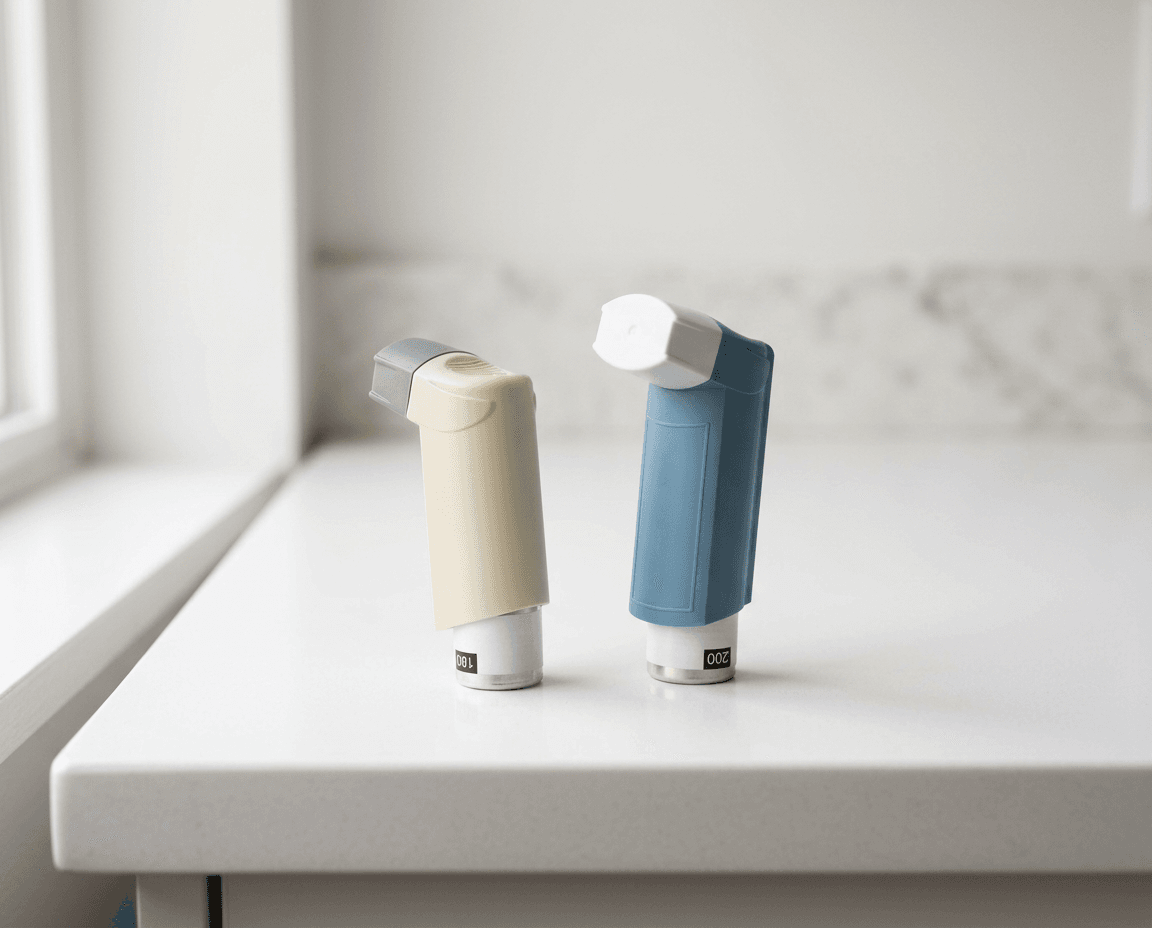
| The essentials: two inhaler generic approvals Generic Flovent HFA (fluticasone propionate 44 mcg per actuation, Glenmark Specialty SA): FDA approved March 3, 2026. First true generic equivalent of Flovent HFA. Controller inhaler for maintenance treatment of asthma in adults and pediatric patients aged 4 and older. GSK discontinued brand-name Flovent in December 2023; authorized generics that replaced it triggered insurance coverage and pricing problems that caused patients, particularly children and Medicaid patients, to stop taking their controller medication. Glenmark received a Competitive Generic Therapy (CGT) designation with 180 days of market exclusivity. Flovent HFA 44 mcg had approximately $520 million in annual U.S. sales. Generic Ventolin HFA (albuterol sulfate 90 mcg per actuation, Cipla USA): FDA approved April 22, 2026. First AB-rated generic equivalent of Ventolin HFA (GlaxoSmithKline). Rescue inhaler for treatment or prevention of bronchospasm in patients aged 4 and older, and for prevention of exercise-induced bronchospasm. The U.S. albuterol market is valued at approximately $1.5 billion. Manufactured at Cipla’s dedicated inhalation facility in Fall River, Massachusetts. What this means for patients: these are the same drugs in the same devices. The generics have been demonstrated bioequivalent and therapeutically equivalent to the brand-name products. If your pharmacist substitutes either generic at the counter, the clinical effect is identical. |
|---|
Asthma affects approximately 25 million Americans, including 4.6 million children. It kills an estimated 3,500 people in the United States each year. Most of those deaths are preventable with appropriate medication. And a significant proportion of Americans with asthma are not taking their medication as prescribed, not because they do not want to, but because they cannot afford it.
The two most essential classes of asthma medication, a daily inhaled corticosteroid (ICS) controller to prevent inflammation and attacks, and a short-acting beta2-agonist (SABA) rescue inhaler for acute bronchospasm, have spent the past decade as some of the most expensive everyday medications in the American pharmacy. A Ventolin HFA inhaler without insurance has historically run $50 to $80 per canister. A Flovent HFA 44 mcg inhaler has cost $200 or more per month out of pocket. For patients who need both and lack adequate insurance coverage, the inhaler bill can exceed $3,000 per year for what should be standard, widely accessible management of a common chronic condition.
Between March and April 2026, the FDA approved the first true generics for both inhalers. This post covers why inhaler generics have been so slow to arrive, why the Flovent situation is more complicated than it first appears, what these approvals mean practically for patients and prescribers, and why the path from approval to affordability is not as automatic as it should be.
Why Asthma and Why These Two Inhalers
The disease
Asthma is a chronic inflammatory disease of the airways characterized by variable airflow obstruction, bronchial hyperresponsiveness, and underlying airway inflammation. In susceptible individuals, airways become swollen, narrowed, and clogged with mucus in response to triggers including allergens, exercise, cold air, respiratory infections, pollution, and emotional stress.
Between 5 and 10% of Americans have an asthma diagnosis, with higher prevalence in low-income communities, communities of color, and urban environments with elevated air pollution. Asthma disproportionately affects Black and Puerto Rican Americans, who have higher hospitalization and death rates than white Americans with asthma, a disparity driven by a combination of environmental exposures, healthcare access barriers, and medication affordability.
Why two inhalers are needed: the controller-rescue distinction
The standard two-drug approach to asthma management reflects two distinct clinical needs:
The controller inhaler (inhaled corticosteroid, ICS): taken daily whether or not symptoms are present. Fluticasone propionate (Flovent) is an ICS that suppresses the chronic airway inflammation underlying asthma, reducing the frequency and severity of attacks over time. ICS therapy is the most effective long-term preventive treatment for persistent asthma and is recommended for all but the mildest cases by major asthma guidelines. When taken consistently, ICS reduces asthma hospitalizations, emergency department visits, and deaths. When stopped, airway inflammation returns, attacks become more frequent, and outcomes worsen.
The rescue inhaler (short-acting beta2-agonist, SABA): used during or immediately before an attack or exercise-induced symptoms. Albuterol (Ventolin, Proventil) relaxes the smooth muscle around the airways within minutes, producing rapid bronchodilation that relieves acute bronchospasm. It is the cornerstone of acute symptom management.
The distinction matters for the generic story: the controller inhaler is a daily maintenance medication where consistent, affordable access directly prevents hospitalizations. The rescue inhaler is an emergency tool where access failures can be immediately life-threatening.
The Flovent Discontinuation Disaster: Why a Generic Was Urgently Needed
The generic fluticasone propionate story is not simply a matter of patent expiration and market entry. There is a specific policy failure in the background that makes the Glenmark approval more urgent.
In December 2023, GlaxoSmithKline discontinued Flovent HFA and Flovent Diskus, citing an Inflation Reduction Act provision that would have required GSK to pay rebates on pediatric medicines classified as “small molecule” drugs. Rather than pay those rebates, GSK discontinued the branded product and replaced it with so-called “authorized generic” versions, essentially the same drug under a different commercial arrangement, sold through a partnership with Prasco.
The authorized generic distinction matters because of how drug formularies work. Authorized generics are not subject to the same FDA bioequivalence approval process as true generics; they are sold by the brand manufacturer or its licensee under the same NDA as the brand. Because they do not go through the standard generic approval pathway, they are often not placed on generic formulary tiers by pharmacy benefit managers. In many insurance plans, the authorized generic fluticasone ended up at a higher copay tier than the brand-name Flovent had been, because brand-name formulary positioning depends on rebate negotiations that the authorized generic was not structured to provide.
The result was that many patients found their affordable Flovent suddenly replaced by a technically identical drug at a higher out-of-pocket cost. A 2025 published study found that children stopped using inhaled corticosteroids after Flovent was discontinued, particularly children on Medicaid, increasing their risk of asthma attacks.
This is the public health context for the Glenmark approval. The FDA’s own statement at the time of approval specifically noted the access problem: Acting CDER Director Tracy Beth Høeg stated that the agency anticipated that the first true generic would bring “increased availability and reduced costs” specifically because a true generic approved through the standard ANDA pathway is subject to the same formulary positioning as other generics.
| The authorized generic vs. true generic distinction: why it matters for your wallet When a brand-name drug is discontinued and replaced by an authorized generic, insurance formulary tiers do not automatically reclassify it as a low-cost generic. This is because formulary tier placement is negotiated between pharmacy benefit managers and drug manufacturers based on rebates. Authorized generics made by the original manufacturer are often not competitive on rebates with true generics manufactured independently. When a true generic receives FDA approval through the ANDA pathway, it enters the generic formulary tier automatically, and pharmacists can substitute it for any prescription written for the brand-name drug. This is the mechanism that drives real price competition. Glenmark’s fluticasone propionate, having received FDA approval through the standard process, is now positioned to be placed on generic formulary tiers by insurers, which is what will determine whether patients see lower copays. |
|---|
Why Inhaler Generics Take So Much Longer Than Pill Generics
Albuterol and fluticasone are not new molecules. Albuterol has been used in medicine since the 1960s. Fluticasone has been on the market since 1994. Their small-molecule drug patents expired long ago. And yet first generic inhalers for Ventolin HFA took until 2026 and for Flovent HFA until 2026. Why?
The answer is in the delivery system. An inhaled aerosol is not just the drug; it is the combination of drug, propellant, and device. When the pharmaceutical industry transitioned from chlorofluorocarbon (CFC) propellants to hydrofluoroalkane (HFA) propellants in the early 2000s following the Montreal Protocol on ozone-depleting substances, every inhaler essentially became a new drug-device combination. And drug-device combinations, unlike simple tablets or solutions, are substantially harder to demonstrate bioequivalent.
For an inhaled aerosol to be AB-rated (substitutable at the pharmacy), the FDA requires demonstrating that the generic delivers the same drug dose to the same location in the lung as the brand-name product. This requires showing pharmacokinetic equivalence (that the same amount of drug enters the bloodstream), and in vitro aerosol performance equivalence (that the particle size distribution, delivered dose, and inhaler performance match). The manufacturing precision required to produce a metered-dose inhaler that consistently delivers the correct dose in the correct particle size is considerably more demanding than manufacturing a tablet.
This regulatory and manufacturing complexity created a long gap between small-molecule patent expiry and actual generic availability for HFA inhalers. Cipla’s approval as the first AB-rated Ventolin generic, manufactured at a new dedicated inhalation facility in Fall River, Massachusetts, reflects years of investment in that specialized manufacturing capability.
What Patients and Prescribers Should Know
Generic fluticasone propionate HFA (Glenmark): for daily asthma control
What it is and who it is for: A maintenance inhaled corticosteroid for adults and children aged 4 and older with asthma requiring daily preventive therapy. It is identical in drug, dose, and expected clinical effect to Flovent HFA 44 mcg.
How to use it: Two inhalations twice daily, morning and evening. Rinse your mouth with water and spit after each use without swallowing. This is the single most important adherence step for ICS inhalers, reducing the risk of oropharyngeal candidiasis (oral thrush), a well-known and entirely preventable complication of inhaled corticosteroid use. Many patients skip the rinse and experience oral thrush unnecessarily.
What it does not do: It is not a rescue inhaler and will not relieve an acute asthma attack. Always carry a separate rescue inhaler (albuterol) and use the controller inhaler consistently even on days without symptoms.
Contraindicated for: Primary treatment of status asthmaticus or acute asthma attacks requiring intensive measures. Patients with hypersensitivity to fluticasone propionate or any component of the formulation.
Common adverse effects: Oropharyngeal candidiasis (thrush), hoarseness, immunosuppression effects with long-term high-dose use, slowed growth in children (with long-term use at higher doses, though this effect has been assessed as clinically small relative to the benefit of adequate asthma control).
Generic albuterol sulfate HFA (Cipla): the rescue inhaler
What it is and who it is for: A short-acting beta2-agonist (SABA) for relief of acute bronchospasm and prevention of exercise-induced bronchospasm in adults and children aged 4 and older. It is the rescue inhaler: use it when symptoms occur or are about to occur, not as a daily maintenance therapy.
How to use it: 2 puffs every 4 to 6 hours as needed for bronchospasm. For prevention of exercise-induced bronchospasm: 2 puffs 15 to 30 minutes before exercise. Shake before each use. If using more than twice a week for symptom relief (excluding pre-exercise use), this is a signal that asthma is not adequately controlled on current therapy and that the prescribing clinician should review the management plan.
Contraindicated for: Hypersensitivity to albuterol.
Common adverse effects: Tremor, palpitations, tachycardia, headache, dizziness, throat irritation. Most adverse effects are mild and transient at recommended doses.
The Bigger Picture: The Inhaler Cost Problem in American Asthma Care
The arrival of these generics is a meaningful improvement in access. It is not a complete solution.
The United States has the highest asthma medication costs of any high-income country. American patients pay up to 10 times more for asthma inhalers than patients in comparable countries. A Ventolin HFA that costs $50 without insurance in the U.S. costs under $10 in Canada, France, or the United Kingdom. The gap is driven by a combination of patent protection on drug-device combinations, lack of government price negotiation authority, and the rebate structure of the pharmacy benefit management system.
The consequences are documented and serious. Studies consistently show that a substantial proportion of U.S. asthma patients report rationing medication due to cost, including cutting back on daily controller therapy and relying more heavily on rescue inhalers. This pattern, using rescue inhalers more and controller inhalers less, is associated with worse asthma control, more frequent attacks, and higher hospitalization rates. In a 2023 analysis, cost-related asthma medication adherence problems were most pronounced in uninsured patients, Medicaid patients, and patients in Southern states with lower Medicaid expansion uptake.
Generic entry begins to address this. The market for Flovent HFA 44 mcg is significant, with annual sales in the U.S. estimated at about $520 million, highlighting both the clinical importance of the medication and the potential impact of the generic entrant on pricing and access. The total U.S. albuterol market is valued at approximately $1.5 billion, per February 2026 IQVIA data. Both of these markets have been essentially brand-name only for years. Generic competition in both simultaneously, for the first time, represents a structural shift in access.
For patients, the practical question is not list price but formulary tier and out-of-pocket cost. As insurers and pharmacy benefit managers update their formularies to include the new generics, patients who previously paid high copays for brand-name or authorized generic inhalers should see reductions. This process takes weeks to months depending on the plan and the formulary update cycle.
Resources for Patients Who Cannot Afford Asthma Inhalers Now
For patients who need affordable asthma inhalers immediately, before insurance formulary changes take effect:
- GoodRx: provides real-time pricing comparisons for albuterol and fluticasone at pharmacies near you. GoodRx discount cards often bring the cash price of generics below the insured copay for some plans.
- NeedyMeds: database of patient assistance programs and lower-cost options for asthma medications.
- Asthma and Allergy Foundation of America: maintains current information on asthma medication assistance programs and treatment resources.
- GSK patient assistance programs: for patients who still need Flovent authorized generics, GSK has patient support resources.
- Mark Cuban’s Cost Plus Drugs: lists fluticasone and albuterol generics at significant discounts compared to retail pharmacy cash prices.
For related HED coverage of medication access and the gap between approval and affordability in other drug classes, see our post on PONLIMSI and why 19 denosumab biosimilar approvals have not produced the price reductions patients expected, and our post on Langlara and interchangeable insulin biosimilar approvals, where the same structural issues between approval and real-world affordability play out.
Sources
FDA generic Flovent HFA announcement: FDA approves first generic of Flovent HFA for treatment of asthma. FDA.gov. March 3, 2026.
Cipla generic Ventolin HFA press release: Cipla Receives U.S. FDA Approval for First AB-Rated Generic of Ventolin HFA. PRNewswire. April 23, 2026.
AJMC Flovent generic coverage: FDA Approves First Generic Fluticasone Propionate Inhaler, Boosting Affordable Asthma Care. ajmc.com. March 2026.
Pulmonology Advisor Flovent generic coverage: Glenmark to Launch First Generic Version of Flovent HFA. pulmonologyadvisor.com. March 2026.
Medscape generic Flovent clinical review: Generic Flovent Approval Expands Options for Asthma. medscape.com. March 9, 2026.
Allergy and Asthma Network Flovent background: New Generic Replaces Discontinued Flovent. allergyasthmanetwork.org. March 2026.
Managed Healthcare Executive Flovent access analysis: FDA approves first generic of Flovent for asthma. managedhealthcareexecutive.com. March 2026.
Drug Store News albuterol market data: Cipla receives FDA nod for first generic Ventolin HFA. drugstorenews.com. April 2026.
BioSpace Cipla coverage: Cipla Receives U.S. FDA Approval for First AB-Rated Generic of Ventolin HFA. biospace.com. April 2026.
Contract Pharma Glenmark coverage: Glenmark Gets FDA Nod for Fluticasone Propionate Inhalation Generic. contractpharma.com. March 2026.
NHLBI asthma overview: Asthma. NHLBI.
CDC asthma data: Asthma Surveillance Data. cdc.gov.
Asthma StatPearls: Asthma. StatPearls. NCBI.
Fluticasone StatPearls: Fluticasone. StatPearls. NCBI.
Inhaler cost disparity research: Comparison of Asthma Medication Prices in the US versus Other Countries. PMC6996413.
Montreal Protocol and HFA transition: Montreal Protocol on Substances That Deplete the Ozone Layer. EPA.gov.
Authorized generics explained: Authorized Generic Drugs. FDA.gov.
Patient resources: Asthma and Allergy Foundation of America | GoodRx inhaler pricing | NeedyMeds | Cost Plus Drugs | NHLBI Asthma Action Plan
| Disclaimer: Health Evidence Digest provides general information about FDA approvals and health research for educational purposes. This content is not a substitute for professional medical advice, diagnosis, or treatment. Asthma management should be overseen by a qualified healthcare provider. Do not change your inhaler regimen without consulting your prescribing clinician. If your pharmacist substitutes a generic inhaler, confirm the substitution with your provider at your next visit if you have any questions about device technique. |
|---|
Leave a Reply