Tag: Alzheimer’s disease

  • Tauklarify (Florquinitau F 18) Receives FDA Approval as a Tau PET Imaging Agent for Alzheimer’s Disease Evaluation, Adding the Second Approved Tau Tracer to a Rapidly Evolving Diagnostic Toolkit

    Tauklarify (Florquinitau F 18) Receives FDA Approval as a Tau PET Imaging Agent for Alzheimer’s Disease Evaluation, Adding the Second Approved Tau Tracer to a Rapidly Evolving Diagnostic Toolkit

    The essentials: On August 13 to 14, 2026, the FDA approved Tauklarify (florquinitau F 18 injection, Lantheus Holdings) for positron emission tomography (PET) of the brain in adults with cognitive impairment who are being evaluated for Alzheimer’s disease to identify patients with tau neurofibrillary tangle (NFT) pathology. Tauklarify was previously known as MK-6240 during its clinical development phase. Tauklarify is the second FDA-approved tau PET imaging agent in the United States, joining flortaucipir F 18 (Tauvid, Eli Lilly/Avid Radiopharmaceuticals), which received FDA approval in 2020 as the first tau PET tracer. The approval rests on two blinded-read studies drawn from three clinical trials involving more than 500 subjects. Independent readers analyzed the tau PET images without knowledge of the subjects’ clinical histories or amyloid PET results. Readers characterized each scan as positive or negative for tau neurofibrillary tangle pathology using a standardized visual interpretation method. Key reader agreement data: Study 1 positive percent agreement 80% to 88% across readers. Study 2 positive percent agreement 68% to 82% across readers. Safety: assessed in 1,734 subjects receiving approximately 185 MBq (5 mCi) intravenously. Most common adverse reactions: headache (0.7%), nausea (0.2%), injection site reactions (0.1%), dizziness (0.1%), abdominal discomfort (0.1%). All adverse reactions occurred in less than 1% of subjects. Important limitation of use: the safety and effectiveness of Tauklarify have not been established for the evaluation of non-Alzheimer’s disease tauopathies. Regulatory designations: Fast Track Designation. Lantheus acquired the rights to MK-6240 from Enigma Biomedical USA in 2023 and collaborated with Enigma Biomedical through approval. Clinical context: Lantheus frames Tauklarify as one of several complementary diagnostic tools, alongside amyloid PET, blood-based biomarkers, and CSF analysis, intended to guide Alzheimer’s diagnosis and treatment selection as more disease-modifying therapies, including anti-tau therapies, enter clinical practice. The drug’s approval coincides with the NIH-funded CLARiTI study (a 5-year multisite investigation across all 37 Alzheimer’s Disease Research Centers) for which Lantheus is supplying MK-6240. Tauklarify has not been reviewed by the broader commercial market yet: Lantheus is evaluating the path toward broader commercial availability following the approval. Corporate context: Lantheus recently announced a deal to be acquired by rival Curius for approximately $8 billion.

    Alzheimer’s disease is not a single moment. It is a process that unfolds over decades, beginning with the earliest accumulation of pathological proteins in the brain, progressing through measurable but clinically silent biological changes, and only eventually producing the cognitive symptoms that bring most patients to a physician’s attention. By the time memory loss is obvious, the disease has typically been active for 15 to 20 years.

    Understanding where a patient is in that process, and which pathological changes are present, has become increasingly important as treatment options for Alzheimer’s disease evolve. As HED covered in August 2026, Leqembi Iqlik received approval for at-home subcutaneous initiation dosing, bringing the first disease-modifying anti-amyloid therapy one step closer to practical reach for patients with early Alzheimer’s disease. Anti-amyloid therapy requires not just the clinical diagnosis but the biological confirmation that amyloid pathology is present. And as the disease-modifying pipeline continues to fill with approaches targeting tau rather than amyloid, the ability to characterize tau pathology with the same precision becomes the next diagnostic imperative.

    Tauklarify (florquinitau F 18, Lantheus) is designed specifically for that purpose: a PET imaging agent that binds to tau neurofibrillary tangles in the brain, producing a scan that visualizes both the presence and the anatomical distribution of tau pathology. It does not diagnose Alzheimer’s disease by itself. But it provides information that amyloid PET cannot: the staging of disease progression, the correlation between tau spread and clinical symptom severity, and ultimately the ability to select and monitor patients for tau-directed therapies as those therapies approach approval.


    The Two Pathological Hallmarks of Alzheimer’s Disease and Why Both Matter

    Alzheimer’s disease is defined neuropathologically by two protein abnormalities that accumulate in the brain years to decades before clinical symptoms appear:

    Amyloid beta plaques: Aggregations of misfolded amyloid beta protein that deposit between neurons as extracellular plaques. Amyloid accumulation begins 15 to 20 years before cognitive symptoms appear. Amyloid PET imaging with approved tracers (florbetapir, florbetaben, flutemetamol, and Locametz for PSMA) can visualize amyloid burden and confirm or exclude amyloid pathology as part of the diagnostic workup. Anti-amyloid therapies including Leqembi and donanemab target this pathology.

    Tau neurofibrillary tangles: Aggregations of hyperphosphorylated tau protein that accumulate inside neurons. Normal tau stabilizes the microtubule cytoskeleton of neurons. When tau becomes hyperphosphorylated, it dissociates from microtubules, misfolds, and aggregates into paired helical filaments that form neurofibrillary tangles (NFTs) inside the neuron’s cell body and processes. Tau NFTs are directly toxic to neurons and are strongly correlated with neuronal death.

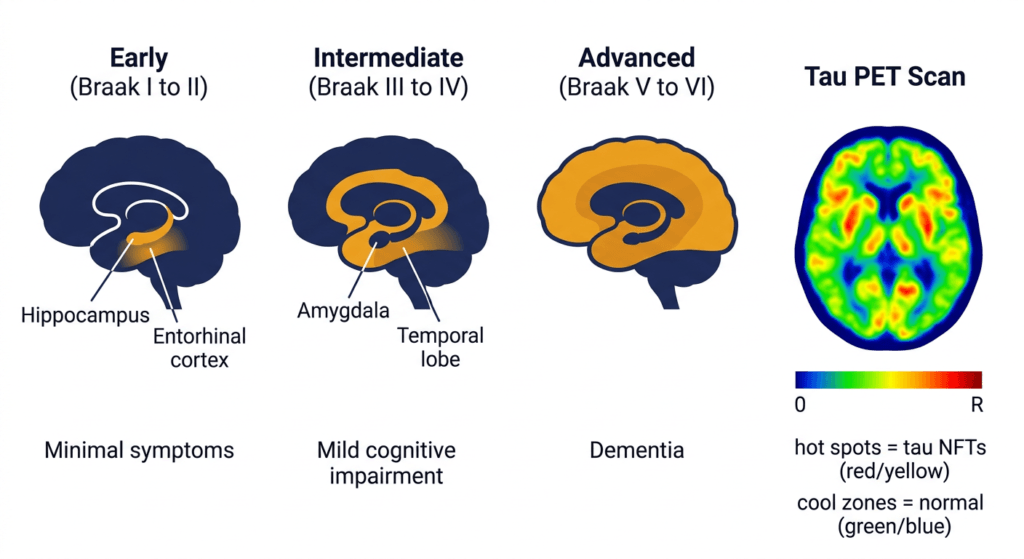
    The relationship between the two pathologies is sequential and important for clinical practice. Amyloid accumulation typically precedes tau NFT formation by many years, though the mechanism connecting the two is not fully understood. Tau pathology follows a stereotyped anatomical staging pattern described by Braak and Braak: beginning in the transentorhinal cortex and hippocampus (Braak stages I to II), spreading to limbic regions (stages III to IV), and eventually spreading across the neocortex (stages V to VI). This anatomical progression of tau NFTs correlates closely with the progression of clinical symptoms: patients with Braak stage I to II tau pathology have minimal symptoms, while patients with Braak stage V to VI have severe dementia.

    This is why tau PET provides information that amyloid PET does not. Amyloid positivity tells you the disease process is underway. Tau PET tells you how far along the process has progressed and which brain regions are affected. Together, they provide a biological characterization of the disease stage that clinical assessment alone cannot match.


    The Tau PET Landscape: What Tauklarify Adds

    The first FDA-approved tau PET agent, flortaucipir F 18 (Tauvid, Eli Lilly/Avid Radiopharmaceuticals), was approved in May 2020 for estimating the density and distribution of aggregated tau NFTs in adults with cognitive impairment.

    Tauklarify is the second approved tau PET tracer. Both are F18-labeled radioligands that bind to aggregated tau in neurofibrillary tangle form and produce a PET signal proportional to the density of tau pathology at each brain location. The two agents differ in their specific binding characteristics, pharmacokinetics, and the standardized visual interpretation approaches validated for each:

    Flortaucipir (Tauvid): Binds to tau NFTs; approved 2020; the most extensively studied tau PET tracer with the largest published clinical evidence base including multiple large phase 2 and 3 clinical trials.

    Florquinitau (Tauklarify): Also binds to tau NFTs; approved August 2026; developed with a different chemical scaffold designed to optimize binding characteristics and imaging quality. Extensively validated in the CLARiTI NIH study infrastructure and in more than 500 subjects across the FDA pivotal studies.

    The availability of two approved tau tracers matters for supply chain resilience, site-specific manufacturing logistics, and potentially for clinical scenarios where one tracer’s pharmacokinetic profile provides a practical advantage. The clinical interpretation framework for both agents uses standardized regional brain uptake patterns to characterize tau positivity.


    How Tau PET Imaging Works: The Technical Framework

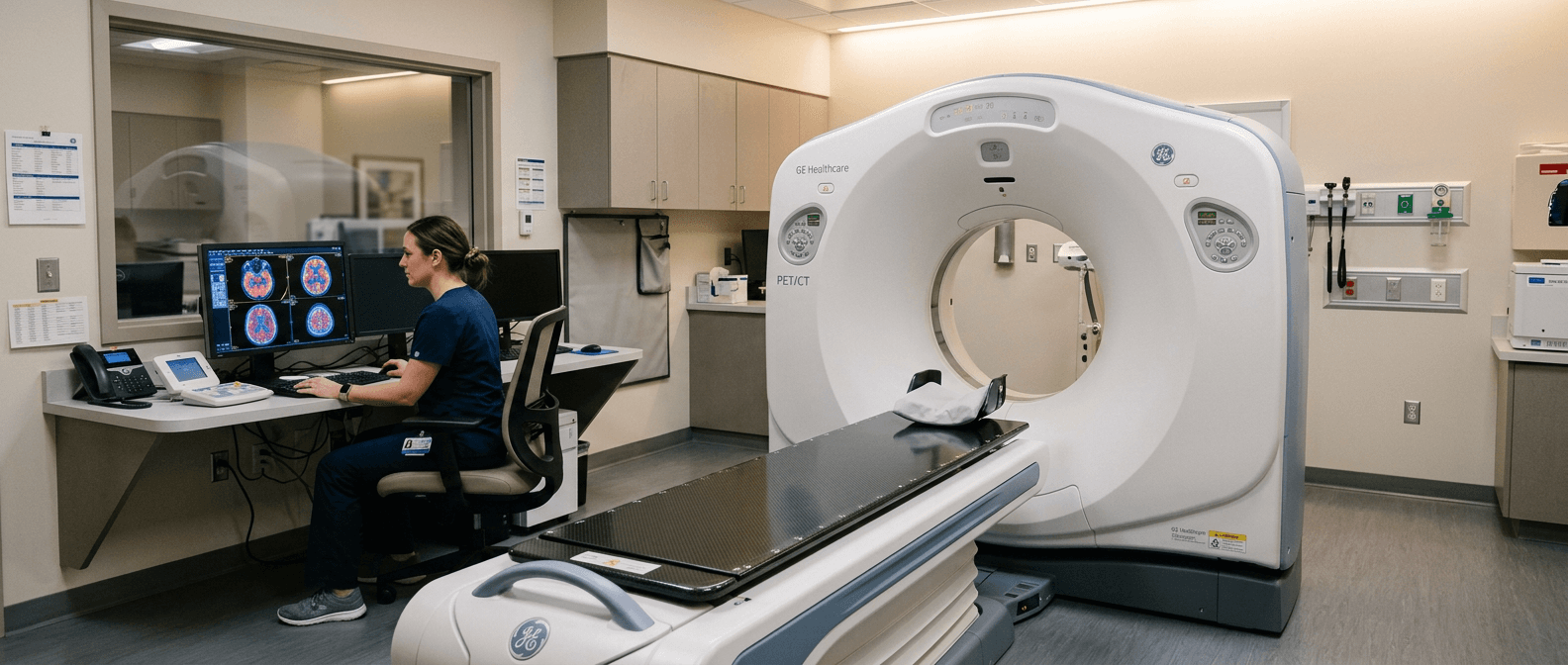
    Tauklarify is administered as a single intravenous dose of approximately 185 MBq (5 mCi) in a low volume. After injection, the F18-labeled compound circulates through the bloodstream and crosses the blood-brain barrier, where it binds with high affinity to aggregated tau in neurofibrillary tangle form. Regions with high tau NFT burden retain more tracer; regions with low or no tau pathology clear the tracer normally.

    After a waiting period to allow non-specific tracer clearance, the patient undergoes PET brain imaging. The scanner detects the positron emissions from the F18 decay at each brain location, producing a 3-dimensional map of tau-binding signal intensity across the brain. A trained reader, typically a radiologist or nuclear medicine physician, interprets the scan using a standardized visual interpretation methodology that characterizes each brain region as positive or negative for tau pathology.

    The regional pattern of tau signal provides staging information consistent with the Braak staging framework: medial temporal lobe signal indicates early-stage tau, while parietal and frontal cortical involvement indicates later-stage disease. This staging information is clinically meaningful because it correlates with the severity of cognitive impairment and with the expected trajectory of decline.

    Important limitation: Tauklarify detects tau neurofibrillary tangle pathology consistent with Alzheimer’s disease tau staging. The label specifically notes that safety and effectiveness have not been established for non-Alzheimer’s disease tauopathies. Other neurodegenerative diseases including progressive supranuclear palsy (PSP), corticobasal degeneration (CBD), and frontotemporal dementia with tau pathology also involve abnormal tau accumulation, but often with different tau isoforms, different anatomical distributions, and different binding characteristics for current tau PET tracers. A tau-positive scan with Tauklarify indicates Alzheimer’s pattern tau pathology specifically, not tau pathology from other conditions.

    The FDA Approval Evidence: What the Pivotal Studies Showed

    The FDA based its decision on two blinded-read studies drawn from three clinical trials involving more than 500 participants. Independent readers who were unaware of patients’ clinical histories or amyloid PET results interpreted the scans.

    The two pivotal studies evaluated whether trained readers could reliably and reproducibly identify tau-positive versus tau-negative PET scans using the Tauklarify standardized visual interpretation methodology. This reader study design is standard for diagnostic imaging agents and reflects the primary regulatory question: not whether the scan predicts patient outcomes (that requires longitudinal studies), but whether trained readers can reliably characterize the scan’s findings with meaningful agreement.

    Both showed high rates of agreement across readers: Study 1 had an 80% to 88% positive percent agreement, and Study 2 had a 68% to 82% positive percent agreement.

    The trial populations included individuals with mild cognitive impairment and mild Alzheimer’s disease dementia, spanning the early Alzheimer’s disease spectrum that is most clinically relevant for the diagnostic workup that Tauklarify supports.

    These inter-reader agreement rates reflect the real-world variability inherent in visual scan interpretation. The 80 to 88% agreement range in Study 1 represents stronger reader concordance; the 68 to 82% range in Study 2 indicates somewhat more variability, which is common when scan populations include more borderline or challenging cases. Standardized training, regional cutoff values, and quantitative software support tools can improve inter-reader reliability in clinical practice.

    Safety across 1,734 subjects at the clinical dose of approximately 185 MBq (5 mCi) showed an excellent profile: headache in 0.7% of subjects, nausea in 0.2%, injection site reactions in 0.1%, dizziness in 0.1%, and abdominal discomfort in 0.1%. No serious adverse reactions were identified in the safety population.


    How Tauklarify Fits Into the Evolving Alzheimer’s Diagnostic Framework

    The diagnosis of Alzheimer’s disease has been transformed by the availability of biomarker-based diagnostics. The 2023 Alzheimer’s Association revised diagnostic criteria (AA/NIA 2023) define Alzheimer’s disease biologically, based on the presence of amyloid and tau pathology, rather than solely on clinical symptoms. This framework places tau PET as a core component of a complete Alzheimer’s disease biological characterization.

    The practical clinical diagnostic framework now integrates multiple biomarker tools:

    Blood-based biomarkers: Plasma phospho-tau 217 (p-tau217), p-tau181, amyloid 42/40 ratio, and GFAP tests that can identify patients with high probability of Alzheimer’s pathology from a blood draw, often as a first-line screen before more costly imaging.

    Amyloid PET: Visualizes amyloid burden across the brain; confirms or excludes amyloid pathology; required before initiating anti-amyloid therapies like Leqembi.

    Tau PET: Visualizes tau NFT distribution and burden; provides disease staging information; required for clinical trial enrollment in many tau-directed therapeutic trials; increasingly used in clinical practice to characterize disease stage.

    CSF analysis: Measures amyloid 42/40 ratio and p-tau to assess both amyloid and tau pathology biochemically; invasive but accurate; used when PET is unavailable or for confirmation.

    Tauklarify sits in the tau PET position in this framework, providing the anatomical staging of tau pathology that blood tests and amyloid PET cannot provide. As Lantheus CEO Mary Anne Heino noted, as the field continues to advance, clinicians are seeking a more complete understanding of this disease, with tau PET imaging providing information that complements amyloid PET and other diagnostic tools.

    The CLARiTI study (5-year NIH multisite investigation across all 37 Alzheimer’s Disease Research Centers), for which Lantheus is supplying Tauklarify, will generate one of the largest prospective datasets linking tau PET findings to clinical outcomes in real-world Alzheimer’s disease populations. This study will help establish the longitudinal prognostic value of tau PET in clinical practice.


    Why Tau PET Is Becoming More Important Now

    The clinical value of tau PET imaging is increasing in direct proportion to the number of anti-tau therapies in the pipeline. Today, more than 30 therapeutic programs targeting tau are in active clinical development, including antibodies targeting tau aggregates, tau vaccines, antisense oligonucleotides targeting tau mRNA, and small molecules inhibiting tau aggregation.

    For these therapies to be appropriately developed and deployed, patient selection by tau PET status is essential. A patient with no tau pathology on PET would not be expected to benefit from an anti-tau therapy; a patient with moderate hippocampal tau but minimal cortical spread is in a different disease stage and prognosis than one with widespread cortical tau. The FDA’s approval of a second tau PET tracer expands the imaging infrastructure that these trials and eventual anti-tau therapy approvals will require.

    The connection to HED’s recent Leqembi post is direct: Leqembi targets amyloid, and its anti-amyloid mechanism removes the upstream pathology. But tau pathology, once established, does not appear to reverse with amyloid removal. Understanding how much tau pathology is present before and during anti-amyloid therapy, and how tau burden correlates with clinical response, are among the most important open questions in Alzheimer’s disease pharmacology. Tau PET tools like Tauklarify are part of the infrastructure that will answer those questions.


    What This Means for Neurologists, Geriatricians, and Patients

    For clinicians evaluating patients for Alzheimer’s disease

    Tauklarify provides a second FDA-approved tau PET option alongside flortaucipir (Tauvid). The practical availability of Tauklarify for routine clinical use will depend on the commercial deployment decisions Lantheus makes following the approval, which the company has characterized as under evaluation. Initial deployment may focus on research settings and Alzheimer’s Disease Research Center sites participating in CLARiTI before broader commercial rollout.

    For clinical settings where tau PET is already being used, Tauklarify provides an additional sourcing option. For settings newly considering tau PET, both approved agents require trained readers using the specific standardized interpretation methodology validated for each tracer. Cross-tracer interpretation methods are not established, and quantitative software tools are tracer-specific.

    The complementary role of tau PET alongside amyloid PET should inform how these studies are ordered in practice: amyloid PET first to confirm Alzheimer’s pathology is present, followed by tau PET for staging and prognosis. In some clinical scenarios (patients who are amyloid-negative on a prior scan but have strong clinical suspicion for Alzheimer’s), tau PET may also help resolve diagnostic uncertainty.

    For patients and families

    If you or a family member is undergoing evaluation for Alzheimer’s disease, a tau PET scan may be recommended as part of a comprehensive diagnostic workup to determine whether tau neurofibrillary tangles are present and how they are distributed in the brain. This information helps characterize how far the Alzheimer’s disease process has progressed and may influence treatment decisions, including eligibility for disease-modifying therapies and clinical trials.

    A positive tau PET scan does not by itself mean a specific course of action is required. It is one piece of diagnostic information, interpreted alongside clinical assessment, cognitive testing, amyloid PET results, and other biomarkers, to inform a complete picture of the disease.

    For related HED coverage on Alzheimer’s disease diagnostics and treatment, see our post on Leqembi Iqlik (lecanemab-irmb subcutaneous) receiving FDA approval for at-home initiation dosing in early Alzheimer’s disease, which covers the anti-amyloid mechanism and the role of amyloid PET confirmation in treatment selection.

    The Alzheimer’s Association (alz.org; 1-800-272-3900) and the Alzheimer’s Drug Discovery Foundation maintain current resources on Alzheimer’s disease diagnosis, biomarker testing, treatment options, and clinical trial opportunities.


    Sources

    Lantheus FDA approval press release: Lantheus Announces FDA Approval of TAUKLARIFY (Florquinitau F 18 Injection), an F18-Labeled Tau PET Imaging Agent for Alzheimer’s Disease. GlobeNewswire. August 14, 2026.

    Lantheus investor relations: Lantheus Announces FDA Approval of TAUKLARIFY. lantheusholdings.gcs-web.com. August 14, 2026.

    Drugs.com approval news: FDA Approves Tauklarify (florquinitau F 18 injection), an F18-Labeled Tau PET Imaging Agent for Alzheimer’s Disease. drugs.com. August 14, 2026.

    Psychiatric Times (reader agreement data, adverse reaction profile): FDA Approves Tauklarify (MK-6240) For Tau Pathology Detection in Alzheimer Disease. psychiatrictimes.com. August 2026.

    NeurologyLive (CLARiTI study context, 30 anti-tau programs in pipeline, fast track history): FDA Approves Tau PET Tracer MK-6240 for Alzheimer Diagnostic Workup. neurologylive.com. August 2026.

    VINnews (three clinical trials, more than 500 subjects basis, 1,734 safety subjects, Enigma Biomedical acquisition): FDA Approves Tauklarify as New Tau Imaging Agent for Alzheimer’s Evaluation. vinnews.com. August 2026.

    Radiology Business (Mary Anne Heino quote, Curius acquisition context, CLARiTI supply): FDA approves new Alzheimer’s PET imaging agent from Lantheus. radiologybusiness.com. August 2026.

    AuntMinnie (F18 binding characteristics, Enigma Biomedical 2023 acquisition detail): Lantheus wins FDA approval for tau PET imaging agent. auntminnie.com. August 2026.

    Investing.com (185 MBq dose, Pharma Solutions commercial path): FDA approves Lantheus’ tau imaging agent for Alzheimer’s disease. investing.com. August 2026.

    Lantheus NDA acceptance announcement (October 2025): Lantheus Announces FDA Acceptance of New Drug Application for MK-6240. lantheusholdings.gcs-web.com. October 2025.

    Lantheus 10-Q (pivotal study co-primary endpoints, NDA submission basis): Form 10-Q FY2026. SEC.gov.

    Tauvid (flortaucipir) original tau PET approval (2020): FDA approves first drug to image tau pathology in patients being evaluated for Alzheimer’s disease. FDA.gov.

    Tau and amyloid pathology in Alzheimer’s disease: Amyloid Beta and Alzheimer’s Disease. PMC7232739.

    NIA Alzheimer’s disease overview: Alzheimer’s Disease Fact Sheet. NIA.

    Tauklarify prescribing information: TAUKLARIFY (florquinitau F 18 injection) Prescribing Information. Lantheus Holdings. 2026.

    Tauklarify approval history: Tauklarify FDA Approval History. drugs.com.

    Patient resources: Alzheimer’s Association: 1-800-272-3900 | Alzheimer’s Drug Discovery Foundation | BrightFocus Foundation | Lantheus Tauklarify information

    Disclaimer: Health Evidence Digest provides general information about FDA approvals and health research for educational purposes. This content is not a substitute for professional medical advice. Tauklarify (florquinitau F 18 injection) is a radiodiagnostic imaging agent indicated for PET imaging only; it is not a therapeutic drug. The safety and effectiveness of Tauklarify have not been established for the evaluation of non-Alzheimer’s disease tauopathies. Tau PET imaging results should be interpreted by trained, qualified nuclear medicine physicians or radiologists using the approved standardized interpretation methodology and in the full clinical context, including amyloid PET results, cognitive testing, and clinical assessment.

  • Leqembi Has Changed What Is Possible in Early Alzheimer’s Disease. Until Now, Every Dose Required a Clinic Visit and an IV Line. That Changed on July 13, 2026.

    Leqembi Has Changed What Is Possible in Early Alzheimer’s Disease. Until Now, Every Dose Required a Clinic Visit and an IV Line. That Changed on July 13, 2026.

    The essentials: On July 13, 2026, the FDA approved a supplemental Biologics License Application for Leqembi Iqlik (lecanemab-irmb, Eisai and Biogen) as a once-weekly subcutaneous injection for treatment initiation in adults with early Alzheimer’s disease. This is the world’s first anti-amyloid therapy that can be started at home, without a clinic visit, and administered by the patient or a caregiver in approximately 15 seconds per injection. What this approval adds: Leqembi Iqlik was previously approved (August 2025) for subcutaneous maintenance dosing following 18 months of IV treatment. The July 13, 2026 approval extends SC use to the initiation phase, meaning the entire treatment course can now be managed subcutaneously from the first dose. No IV infusion is required at any point for patients who choose the SC formulation. The approved initiation regimen: 500 mg subcutaneous once weekly, delivered as two simultaneous 250 mg injections, each administered in approximately 15 seconds, via a pre-filled autoinjector. After completing the initiation phase (18 months of SC or IV dosing), patients transition to maintenance dosing at 360 mg SC once weekly. The evidentiary basis: sub-studies within the Phase 3 Clarity AD long-term extension (LTE) demonstrating that once-weekly SC administration achieves pharmacokinetic exposure equivalent to the approved biweekly IV regimen, with similar clinical and biomarker (amyloid removal) benefits. ARIA-E (amyloid-related imaging abnormalities, edema type) rates with SC administration are expected to be comparable to IV. The underlying efficacy data: the Phase 3 Clarity AD trial (n=1,795, 18 months, double-blind, randomized, placebo-controlled) showed 27% slowing of clinical decline on CDR-SB versus placebo (treatment difference minus 0.45; 95% CI minus 0.67 to minus 0.23; p=0.00005). All key secondary endpoints met. Four-year open-label extension data shows the benefit deepening over time: CDR-SB benefit versus ADNI-matched controls grew from 0.52 points at 18 months to 1.01 at 36 months and 1.75 at 48 months. Real-world data from the LEADER study (AAIC 2026, July 2026): over 75% of early AD patients remained stable and nearly 7% improved over an average of 17 months of lecanemab treatment in clinical practice. U.S. commercial launch of Leqembi Iqlik as initiation dose: planned for late August 2026. Leqembi is currently approved in 53 countries. Leqembi Iqlik is the first and only anti-amyloid treatment in the world to offer at-home dosing from the beginning of treatment through maintenance.

    Alzheimer’s disease affects approximately 7 million Americans today and is projected to affect nearly 13 million by 2050. It is the only disease in the top 10 causes of death in the United States without a therapy that prevents it, stops it, or reverses it. The disease modifies everything, the person living with it, the family surrounding them, the daily structure of home life, the ability to work, to drive, to recognize the people who matter most.

    The January 2023 accelerated approval and July 2023 full traditional approval of Leqembi (lecanemab-irmb, Eisai/Biogen) represented the first time a drug had demonstrated statistically significant, clinically meaningful slowing of Alzheimer’s disease progression in a Phase 3 trial with sufficient safety profile to support full approval. The Phase 3 Clarity AD data were not a marginal finding: 27% slowing of clinical decline measured by the CDR-SB, beginning as early as 6 months of treatment, growing over time, sustained through four years of open-label extension. This was not the drug that reverses Alzheimer’s disease. But it was proof, for the first time in the disease’s clinical history, that the underlying biological process could be meaningfully slowed.

    What it was not, until now, was accessible in the most practical sense. Every lecanemab dose required a biweekly trip to an infusion center. For a patient with mild cognitive impairment or mild Alzheimer’s dementia, managing regular clinic visits was manageable. Over time, as disease progresses, or for patients in rural areas, or for those whose caregiver situation makes regular infusion center visits logistically difficult, this requirement becomes an accumulating burden. And the infusion reactions that occurred in 26% of IV-treated patients in Clarity AD added another layer of clinical management to every visit.

    Leqembi Iqlik’s July 13, 2026 approval as an initiation-dose subcutaneous treatment removes that burden from the first dose. A 15-second subcutaneous injection at home replaces a biweekly infusion clinic visit. For patients who want it, and for whom home administration is appropriate, the treatment that slows Alzheimer’s disease is now something that can happen at the kitchen table rather than in a healthcare facility. That is not a trivial change.


    What Alzheimer’s Disease Is and Why the Disease Stage Matters

    Alzheimer’s disease is a progressive neurodegenerative disease and the most common cause of dementia. It is characterized pathologically by the accumulation of amyloid beta plaques and neurofibrillary tangles of tau protein in the brain, beginning years or decades before clinical symptoms appear, and progressing through stages of cognitive impairment that ultimately result in the inability to perform basic daily functions.

    The disease is understood to follow a continuum:

    Preclinical Alzheimer’s disease: Amyloid accumulation detectable by PET scan or CSF analysis but no cognitive symptoms. This is the earliest detectable stage, before the disease has clinically manifested.

    Mild cognitive impairment (MCI) due to Alzheimer’s disease: Subtle but measurable cognitive changes, below the threshold for dementia, with confirmed amyloid pathology. Activities of daily living are largely preserved. Patients may notice memory lapses, word-finding difficulties, or difficulty with complex planning, but remain independent.

    Mild Alzheimer’s dementia: Cognitive impairment that interferes with daily functioning, though patients retain significant independence. This is the stage at which symptoms are first clearly apparent to family members and often when a diagnosis is formally established.

    Leqembi (and Leqembi Iqlik) is approved for early Alzheimer’s disease, which encompasses both MCI due to Alzheimer’s and mild Alzheimer’s dementia. The approval requires confirmation of amyloid pathology before initiating treatment, either by amyloid PET scan or CSF analysis showing abnormal amyloid levels. This confirmation is not optional: lecanemab’s mechanism of action is directed at amyloid, and the clinical evidence was generated exclusively in amyloid-confirmed patients. Treating without confirmed amyloid would be treating without evidence that the drug’s target is present.

    The restriction to early stages is biologically appropriate and clinically important. The disease-modifying mechanism of lecanemab addresses the amyloid pathology that drives neurodegeneration. By the time a patient reaches moderate or severe dementia, the downstream consequences of amyloid accumulation, significant neuronal loss, synapse loss, and tau tangle burden, are already extensive. Clearing amyloid at that stage provides less opportunity for clinical benefit. The window for anti-amyloid therapy is earlier, before irreversible neuronal damage has accumulated.


    The Amyloid Hypothesis and How Lecanemab Works

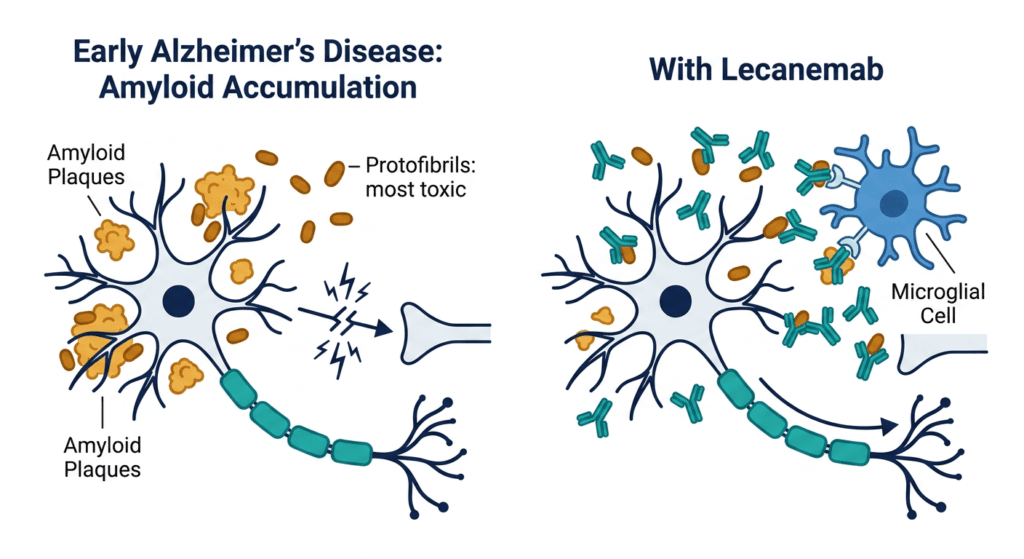
    Amyloid beta is a small peptide generated by cleavage of the amyloid precursor protein (APP) by beta-secretase and gamma-secretase enzymes. In normal aging, amyloid beta is produced and cleared in balance. In Alzheimer’s disease, this balance is disrupted: amyloid beta accumulates, misfolds, and aggregates into progressively larger and more toxic forms, from monomers to oligomers to protofibrils and eventually to the insoluble fibrillar plaques that appear in the brains of patients with the disease.

    The amyloid cascade hypothesis holds that this accumulation is not merely a biomarker of Alzheimer’s disease but a key early driver of the downstream pathological cascade, including tau phosphorylation, neuroinflammation, synaptic dysfunction, and neuronal death. The hypothesis has generated decades of scientific debate, and the failures of numerous amyloid-targeting drugs in clinical trials have repeatedly raised questions about its validity. The Clarity AD results, showing that clearing amyloid produces measurable slowing of clinical decline, provide the strongest clinical evidence to date that the hypothesis is at least partially correct in the early disease setting.

    Lecanemab is a humanized IgG1 monoclonal antibody that targets aggregated forms of amyloid beta, with particularly high affinity for soluble amyloid protofibrils, which are thought to be among the most neurotoxic forms of the protein. The binding specificity for aggregated amyloid (protofibrils and fibrils) rather than monomeric amyloid is a key pharmacological feature. By engaging the aggregated forms most associated with toxicity, lecanemab is thought to clear them through several mechanisms: direct antibody-mediated dissolution of aggregates, Fc-receptor-mediated microglial phagocytosis of opsonized amyloid complexes, and inhibition of further fibril formation.

    The pharmacodynamic evidence from Clarity AD confirms robust amyloid clearance: patients treated with lecanemab showed near-complete clearance of amyloid from PET-measurable brain regions by 18 months. This amyloid removal from the brain, measured in centiloids on PET imaging, was one of the key secondary endpoints and showed highly statistically significant differences versus placebo across all brain regions examined.


    How Leqembi Iqlik Is Different: The Subcutaneous Formulation Story

    The development of a subcutaneous formulation for lecanemab required solving a pharmaceutical challenge that applies to all large monoclonal antibodies: how to deliver an effective therapeutic dose through the skin, where the absorption rate and volume limitations differ substantially from intravenous administration.

    The approved SC formulation uses a concentrated lecanemab solution delivered via pre-filled autoinjector at 500 mg per 2 mL injection volume for initiation dosing (two 250 mg autoinjectors per dose) and 360 mg for maintenance. The formulation does not include hyaluronidase, unlike the SC pembrolizumab formulation (Keytruda Qlex) discussed in a previous HED post. Lecanemab’s SC delivery achieves pharmacokinetically equivalent exposure to IV dosing through the concentration and volume of the SC formulation itself, without enzymatic disruption of the subcutaneous matrix.

    The pharmacokinetic equivalence to IV was demonstrated through sub-studies in the Clarity AD long-term extension (LTE). These studies evaluated multiple SC dosing regimens and established that once-weekly SC administration produces area under the curve (AUC) and steady-state trough concentrations equivalent to the approved biweekly IV regimen of 10 mg/kg. The amyloid removal on PET imaging in LTE participants who switched from IV to SC maintenance dosing was maintained, providing biomarker evidence that the SC route produces clinically equivalent amyloid clearance.

    The autoinjector device is designed for patient or caregiver self-administration. Each injection delivers the dose in approximately 15 seconds. For the 500 mg initiation dose, two injections are given simultaneously or in close sequence at each weekly dosing occasion. Injection sites include the abdomen and thigh.

    The most significant clinical implication of the SC initiation approval is the elimination of infusion reactions as a clinical concern at treatment start. In Clarity AD with IV dosing, infusion reactions occurred in 26.4% of lecanemab-treated patients, concentrated in the first dose (75% occurred on day 1). These reactions, predominantly mild to moderate, required premedication protocols, monitoring time, and occasional infusion rate modifications. The SC route eliminates infusion reactions from the ARIA and infusion management framework.


    The Clarity AD Evidence Base: What the Foundational Trial Data Shows

    The efficacy and safety of lecanemab rest on Phase 3 Clarity AD (NCT03887455), the pivotal global randomized trial that supported full traditional FDA approval in July 2023 and all subsequent regulatory approvals globally.

    Clarity AD design and population

    Clarity AD enrolled 1,795 adults aged 50 to 90 years with confirmed amyloid pathology (by PET or CSF) and clinical diagnosis of either MCI due to Alzheimer’s disease or mild Alzheimer’s dementia. Baseline CDR-SB score indicated early disease (mean approximately 3.2 on a 0 to 18 scale). Patients were randomized 1:1 to lecanemab 10 mg/kg IV every 2 weeks or placebo for 18 months. 95% of completers enrolled in the open-label extension.

    Primary and key secondary endpoints at 18 months

    EndpointLecanemabPlaceboResult
    CDR-SB change from baseline (primary)1.211.66Difference minus 0.45 (95% CI minus 0.67 to minus 0.23); p=0.00005; 27% slowing
    Amyloid PET (centiloids, key secondary)Near-complete clearanceAccumulationp less than 0.001
    ADAS-Cog14 (key secondary)Less declineMore declinep less than 0.001
    ADCOMS (key secondary)Less declineMore declinep less than 0.001
    ADCS-MCI-ADL (key secondary)Less declineMore declinep less than 0.001
    Earliest significant CDR-SB separation6 monthsp less than 0.01

    Source: van Dyck CH et al. Lecanemab in Early Alzheimer’s Disease. NEJM. 2023;388(1):9-21. doi:10.1056/NEJMoa2212948.

    The 27% slowing of clinical decline is measured on the CDR-SB, the Clinical Dementia Rating Sum of Boxes, a clinician-administered scale assessing six domains: memory, orientation, judgment and problem solving, community affairs, home and hobbies, and personal care. Each domain is rated 0 to 3 and the scores are summed for a total of 0 to 18. A lower score reflects better function. The treatment difference of 0.45 points at 18 months, on a scale where a change from 0.5 to 1 in any domain reflects a meaningful shift in independence, represents measurable preservation of function across the early disease population.

    Long-term open-label extension data: the benefit deepens

    The Clarity AD OLE, with four years of data, shows the clinical benefit of sustained lecanemab treatment growing over time compared to a matched control cohort from the Alzheimer’s Disease Neuroimaging Initiative (ADNI):

    TimepointCDR-SB benefit versus ADNI-matched controls
    18 months (end of core study)0.52 points
    36 months (18 months of OLE)1.01 points
    48 months (30 months of OLE)1.75 points

    Source: Clarity AD OLE 48-month data. PMC12725329.

    This growing absolute benefit over time is consistent with the hypothesis that early removal of amyloid pathology interrupts the downstream disease cascade in a way that produces compounding benefit: the longer treatment continues, the more neurological damage is prevented compared to the untreated trajectory.

    The OLE data also showed that 95% of Clarity AD completers chose to enroll in the open-label extension, a patient choice rate that reflects the acceptability of continued treatment and confidence in the drug’s benefit profile among both patients and their treating physicians.

    LEADER real-world data: the clinical practice picture

    The LEADER study, Leqembi’s real-world evidence program, presented data at the Alzheimer’s Association International Conference (AAIC) in July 2026 showing that in clinical practice:

    Over 75% of early Alzheimer’s patients enrolled in the study remained stable and nearly 7% improved over an average of 17 months of treatment. Eisai

    This real-world data is complementary to the controlled trial results and addresses the question of whether the Clarity AD findings translate to the broader clinical population. The stability rate in clinical practice, in patients selected by treating physicians rather than a research protocol, provides some reassurance that the trial results are not artifactual of a highly selected trial population.


    The Leqembi Iqlik Dosing Framework: What the Full SC Schedule Looks Like

    The approval of SC initiation dosing creates a complete at-home treatment pathway for the first time:

    PhaseFormulationDoseFrequencyDurationSetting
    Initiation (SC)Leqembi Iqlik500 mg (two 250 mg injections)Once weekly18 monthsHome (patient or caregiver)
    Initiation (IV alternative)Leqembi10 mg/kgEvery 2 weeks18 monthsInfusion center
    Maintenance (SC)Leqembi Iqlik360 mgOnce weeklyOngoingHome (patient or caregiver)

    Patients and physicians can choose between the SC and IV initiation routes. The clinical data support equivalent efficacy and biomarker outcomes for both routes; the choice is a shared decision based on patient preference, caregiver capacity, infusion center access, and the individual clinical context.

    For patients who initiate with IV and want to transition to SC maintenance, the August 2025 maintenance approval supports that pathway. For patients who prefer to start at home from dose one, the July 2026 initiation approval enables that pathway. The result is flexibility that was not available at any point in the drug’s first three years of commercial availability.


    Safety: What Patients, Caregivers, and Prescribers Need to Understand

    The safety considerations for lecanemab center on ARIA (amyloid-related imaging abnormalities), which are an on-target effect of anti-amyloid antibody therapy reflecting the vascular and parenchymal response to amyloid removal from the brain.

    ARIA: what it is and how it is managed

    ARIA occurs in two forms. ARIA-E involves cerebral edema or sulcal effusion visible on FLAIR MRI sequences, reflecting blood-brain barrier disruption and edema at sites of amyloid clearance. ARIA-H involves cerebral microhemorrhages, superficial siderosis, or macrohemorrhages, reflecting small vascular bleeds associated with amyloid clearance from vessel walls.

    In Clarity AD:

    • ARIA-E: 12.6% (lecanemab) versus 1.7% (placebo). Symptomatic ARIA-E: 2.8% versus 0.0%
    • ARIA-H: 17.3% (lecanemab) versus 9.0% (placebo). Symptomatic ARIA-H: 0.7% versus 0.2%

    The large majority of ARIA events were asymptomatic and detected on protocol MRI monitoring. Symptomatic ARIA events produced headache, confusion, dizziness, or visual disturbances in a minority of those detected radiographically. Most ARIA events resolved spontaneously or with temporary treatment interruption.

    ApoE4 carrier status substantially affects ARIA risk: homozygous ApoE4 carriers (approximately 2 to 3% of the population) had ARIA rates approximately 3-fold higher than non-carriers. ApoE4 genotyping before treatment initiation is recommended in the prescribing information to inform the risk-benefit discussion.

    ARIA monitoring requirements

    MRI monitoring before initiating treatment, before the 5th, 7th, and 14th infusions (at approximately 3, 6, and 12 months with IV dosing), and as clinically indicated is required per the prescribing information. The monitoring schedule for SC initiation dosing aligns with similar timepoints. ARIA detection before it becomes symptomatic allows dose holds to support resolution, which is the primary management approach.

    The ARIA context for SC administration

    The SC formulation is expected to produce ARIA rates comparable to IV administration, based on the pharmacokinetic equivalence and the established relationship between amyloid clearance (which is equivalent between routes) and ARIA incidence. This does not eliminate ARIA risk; it means the risk profile is similar to what has been established with IV dosing. The elimination of infusion reactions with SC administration improves one aspect of the safety experience without affecting the ARIA monitoring requirements.

    Boxed warnings

    Leqembi (and Leqembi Iqlik) carries a boxed warning for ARIA, including serious and life-threatening events. Patients on anticoagulants, or with additional risk factors for bleeding, may have higher ARIA-H risk and should be evaluated carefully before initiating treatment. The use of tissue plasminogen activator (tPA) for stroke in lecanemab-treated patients requires careful clinical judgment given the potential for increased hemorrhagic risk in ARIA-affected individuals.


    The Meaning of This Approval Beyond the Label

    The approval of lecanemab as an at-home self-administered treatment from the first dose is not a minor administrative update to an existing drug. It is a conceptual shift in what disease-modifying Alzheimer’s therapy looks like as a lived experience.

    Every other element of Alzheimer’s disease management, the cognitive and behavioral symptoms, the functional decline, the caregiver burden, the loss of independence, happens at home, in daily life. Until this approval, the only disease-modifying therapy available required a patient and caregiver to organize their lives around biweekly clinic visits for infusions that could last several hours. The subcutaneous initiation approval brings the disease-modifying treatment into the same setting where the disease itself is experienced.

    For early Alzheimer’s patients who retain sufficient independence and cognitive function to engage meaningfully with their own care, a treatment that can be self-administered at home is one that they can participate in as an active health decision rather than as a healthcare system dependent. That distinction matters to patients, to caregivers, and to the long-term sustainability of treatment adherence.

    The LEADER real-world data, showing 75% stability and 7% improvement at an average of 17 months, is the early evidence that this is working outside of trial conditions. It is not definitive; it is not placebo-controlled; but it is a signal from clinical practice that the Clarity AD trial results are not confined to the controlled research environment.

    For patients and families living with early Alzheimer’s disease who want to understand whether lecanemab or Leqembi Iqlik may be appropriate: the conversation begins with a neurologist who can evaluate cognitive status, confirm amyloid pathology, assess ApoE4 status, review anticoagulant and other medications, and discuss the specific risk-benefit profile in the context of the individual patient’s disease stage and overall health.

    The Alzheimer’s Association (alz.org; 24-hour helpline 1-800-272-3900) and the Alzheimer’s Drug Discovery Foundation maintain current information on treatment options, clinical trials, and caregiver resources.


    Sources

    FDA approval announcement: FDA approves first at-home starting dose for Alzheimer’s disease treatment. FDA.gov. July 13, 2026.

    Eisai and Biogen press release: FDA Approves LEQEMBI IQLIK (lecanemab-irmb) Subcutaneous Injection as an Initiation Dose for Early Alzheimer’s Disease. GlobeNewswire. July 13, 2026.

    Biogen investor news: FDA Approves LEQEMBI IQLIK (lecanemab-irmb) Subcutaneous Injection as an Initiation Dose for Early Alzheimer’s Disease. investors.biogen.com. July 13, 2026.

    BioArctic press release: FDA approves Leqembi Iqlik (lecanemab-irmb) subcutaneous injection as a starting dose for early Alzheimer’s disease. bioarctic.com. July 13, 2026.

    Drugs.com approval news: FDA Approves Leqembi Iqlik (lecanemab-irmb) Subcutaneous Injection as an Initiation Dose for Early Alzheimer’s Disease. drugs.com. July 13, 2026.

    Psychiatry Advisor (SC formulation clinical context, home administration framing): Lecanemab SC Starting Regimen Approved for Early Alzheimer Disease. psychiatryadvisor.com. July 2026.

    Healio (LEADER real-world data, AAIC 2026 reference): FDA approves subcutaneous Leqembi for initiation. healio.com. July 2026.

    Clarity AD primary NEJM publication: van Dyck CH et al. Lecanemab in Early Alzheimer’s Disease. NEJM. 2023;388(1):9-21. doi:10.1056/NEJMoa2212948.

    Clarity AD topline press release (Biogen): LECANEMAB CONFIRMATORY PHASE 3 CLARITY AD STUDY MET PRIMARY ENDPOINT. investors.biogen.com. September 2022.

    Clarity AD full results (Eisai/CTAD 2022): Eisai Presents Full Results of Lecanemab Phase 3 Confirmatory Clarity AD Study. eisai.com. November 2022.

    Clarity AD OLE 48-month data (PMC): The Lecanemab Clarity AD Open-Label Extension in Early Alzheimer’s Disease: Initial Findings From the 48-Month Analysis. PMC12725329.

    Clarity AD OLE 4-year AAIC 2025 data (BioArctic): Latest data presented at AAIC 2025 reinforces lecanemab’s clinical effect. bioarctic.com. July 2025.

    SC maintenance approval (August 2025, Biogen): FDA Approves LEQEMBI IQLIK (lecanemab-irmb) Subcutaneous Injection for Maintenance Dosing. investors.biogen.com. August 2025.

    Amyloid biology in Alzheimer’s disease: Amyloid Beta and Alzheimer’s Disease. PMC7232739.

    Leqembi original full FDA approval (July 2023): FDA grants traditional approval to Alzheimer’s disease treatment. FDA.gov.

    NIA Alzheimer’s disease overview: Alzheimer’s Disease Fact Sheet. NIA.

    Leqembi prescribing information: LEQEMBI (lecanemab-irmb) and LEQEMBI IQLIK Prescribing Information. Eisai Co., Ltd. 2026.

    Leqembi approval history: Leqembi FDA Approval History. drugs.com.

    Patient resources: Alzheimer’s Association 24-hour helpline: 1-800-272-3900 | Alzheimer’s Drug Discovery Foundation | Eisai Leqembi patient support | BrightFocus Foundation Alzheimer’s resources | ClinicalTrials.gov: search lecanemab

    Disclaimer: Health Evidence Digest provides general information about FDA approvals and health research for educational purposes. This content is not a substitute for professional medical advice. Leqembi (lecanemab-irmb) and Leqembi Iqlik carry a boxed warning for amyloid-related imaging abnormalities (ARIA), including serious and life-threatening events. Treatment requires confirmation of amyloid pathology before initiating, baseline and periodic MRI monitoring during treatment, and assessment of ApoE4 genotype and anticoagulant use given their effect on ARIA risk. All treatment decisions for early Alzheimer’s disease, including the choice between SC and IV formulations, should be made in close collaboration with a board-certified neurologist or geriatric psychiatrist experienced in Alzheimer’s disease management.
  • Up to 76% of People With Alzheimer’s Disease Experience Agitation. The First Non-Antipsychotic Drug Approved for It Just Arrived.

    Up to 76% of People With Alzheimer’s Disease Experience Agitation. The First Non-Antipsychotic Drug Approved for It Just Arrived.

    The essentials: On April 30, 2026, the FDA approved Auvelity (dextromethorphan HBr and bupropion HCl, Axsome Therapeutics) for the treatment of agitation associated with dementia due to Alzheimer’s disease in adults. This is the first FDA-approved treatment for Alzheimer’s disease agitation that is not an antipsychotic, and only the second FDA-approved drug for this indication overall. Auvelity’s first approved indication was major depressive disorder in adults (August 2022). The mechanism: dextromethorphan is an uncompetitive NMDA receptor antagonist and sigma-1 receptor agonist; bupropion serves as a CYP2D6 inhibitor that slows dextromethorphan metabolism, substantially increasing dextromethorphan blood levels. Auvelity is a first-in-class treatment combining NMDA antagonism and sigma-1 modulation for agitation in Alzheimer’s disease. Regulatory designation: Breakthrough Therapy Designation (2020). The clinical basis: Phase 3 ADVANCE-1 trial (NCT03226522, 5-week parallel-group RCT, n=308) and Phase 3 ACCORD-2 randomized withdrawal trial (NCT04947553, 26-week randomized withdrawal among responders). ADVANCE-1 primary endpoint: statistically significant reduction in Cohen-Mansfield Agitation Inventory (CMAI) total score at week 5 versus placebo. ACCORD-2 primary endpoint: significantly longer time to relapse (HR 0.276; p=0.001) and lower relapse incidence (8.4% vs. 28.6%) in those continuing Auvelity versus switched to placebo. Important nuance: ADVANCE-2, a second 5-week parallel-group trial (n=408), missed its CMAI primary endpoint, though secondary measures showed numerical improvements. Boxed warning: increased risk of suicidal thoughts and behaviors (antidepressant class warning). Serious risks in elderly patients: seizures, elevated blood pressure, mania. Dosing: one tablet (45 mg dextromethorphan / 105 mg bupropion) twice daily.

    Agitation in Alzheimer’s disease is one of the most distressing and difficult-to-manage aspects of the condition, for patients and for caregivers alike. It is not simply behavioral inconvenience. It encompasses excessive motor activity, verbal aggression, physical aggression, emotional distress, disinhibition, and disruptive irritability. It occurs in an estimated 40 to 76% of people with Alzheimer’s disease over the course of their illness. It is among the leading drivers of nursing home placement. It contributes to caregiver burnout. And until April 30, 2026, the only FDA-approved drug for it was brexpiprazole (Rexulti), an atypical antipsychotic that carries a boxed warning for increased mortality in elderly patients with dementia-related psychosis.

    That warning, applied class-wide to all antipsychotics in this population, has made prescribers appropriately cautious. Antipsychotics are associated with increased risk of death in elderly dementia patients, an association serious enough to generate the FDA’s black box in 2005 for typical antipsychotics and 2008 for atypical antipsychotics. They have nonetheless been widely used off-label for Alzheimer’s agitation because the need was so severe and the alternatives so limited.

    On April 30, 2026, the FDA approved the first non-antipsychotic option. Auvelity (dextromethorphan-bupropion) targets NMDA receptors and sigma-1 receptors through a mechanism entirely distinct from dopamine receptor blockade, providing a pharmacological approach that does not carry the mortality warning applied to antipsychotics in this population.

    The clinical data behind the approval requires honest presentation: it is more nuanced than the headline suggests, and families and clinicians deserve a complete picture.


    What Alzheimer’s Disease Agitation Is and Why It Is So Hard to Treat

    Defining agitation in the context of dementia

    Agitation in Alzheimer’s disease is formally defined as behavior that includes at least one of three domains: excessive motor activity (pacing, handwringing, rocking); verbal aggression (screaming, cursing, threatening); or physical aggression (hitting, biting, scratching). To meet a clinical threshold for treatment, these behaviors must be associated with distress in the patient, represent a change from premorbid behavior, and not be solely attributable to another medical cause or psychosis.

    The Cohen-Mansfield Agitation Inventory (CMAI), the instrument used as the primary efficacy measure in ADVANCE-1, is a validated 29-item scale assessing the frequency of specific agitated behaviors on a scale from 1 (never) to 7 (several times per hour). Higher scores indicate more frequent agitation. The CMAI is the most widely used and well-validated agitation measure in Alzheimer’s disease research and has been accepted by the FDA as a primary endpoint in this indication.

    The pathophysiology behind agitation in Alzheimer’s disease

    Agitation in Alzheimer’s disease is not simply a behavioral response to cognitive decline. It reflects specific neurobiological changes in the Alzheimer’s brain: degeneration of the prefrontal cortex and its connections impairs impulse control and emotional regulation; locus coeruleus neurodegeneration disrupts norepinephrine signaling affecting arousal and stress responses; and aberrant glutamate signaling through NMDA receptors contributes to the excitotoxic and dysregulated neuronal activity associated with agitation and other behavioral symptoms.

    This neurobiological basis for agitation is what makes the NMDA antagonist mechanism of dextromethorphan a rational pharmacological target, distinct from the dopamine-based mechanism of antipsychotics.

    Why off-label antipsychotics have remained standard despite the mortality risk The FDA issued boxed warnings for both typical and atypical antipsychotics in dementia patients between 2005 and 2008, following multiple trials and pharmacovigilance analyses showing a 1.6 to 1.7-fold increased risk of death versus placebo in elderly patients with dementia-related psychosis and behavioral disturbances. Despite this warning, antipsychotics (particularly quetiapine, risperidone, and haloperidol) have continued to be widely prescribed for Alzheimer’s agitation off-label, because the severity of unmanaged agitation creates a real and urgent clinical need that outweighs the mortality risk for many patients in institutional settings. The lack of an approved non-antipsychotic alternative for more than 15 years is the direct reason for this uncomfortable clinical reality. The approval of brexpiprazole in 2023 addressed the first part of the gap: an FDA-approved indication for Alzheimer agitation. But it is still an antipsychotic carrying the same mortality warning. Auvelity addresses the second part: a genuinely mechanistically distinct option without that class-level mortality warning.

    How Auvelity Works in Alzheimer’s Disease Agitation

    Auvelity’s pharmacology in Alzheimer’s disease agitation reflects the same mechanism that supported its 2022 approval for major depressive disorder, applied to a different behavioral target.

    Dextromethorphan: the pharmacologically active agent

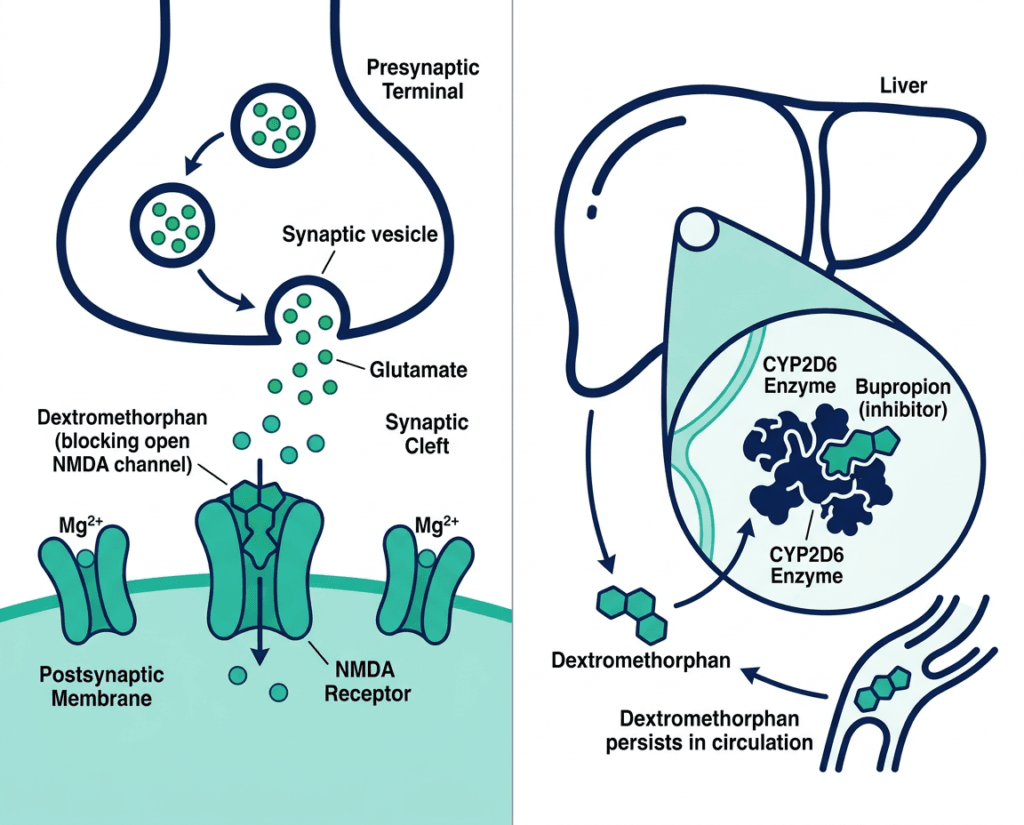
    Dextromethorphan (DXM) is a synthetic morphinan compound familiar as the cough-suppressing active ingredient in many over-the-counter cold preparations. At the doses used in Auvelity, which are substantially higher than OTC cough suppressant doses, it acts as an uncompetitive NMDA receptor antagonist and a sigma-1 receptor agonist.

    NMDA receptor antagonism: NMDA receptors are glutamate receptors involved in synaptic plasticity, learning, and memory but also in excitotoxic signaling when overactivated. In Alzheimer’s disease, aberrant NMDA receptor activity is implicated in both neurodegeneration and behavioral dysregulation. Blocking these receptors, as memantine (Namenda) does (memantine is an FDA-approved NMDA antagonist for moderate to severe Alzheimer’s cognitive symptoms), may reduce the neurochemical substrate for agitation. DXM’s NMDA antagonism is uncompetitive, meaning it binds the receptor channel in its open state, providing a rapid blocking effect that differs pharmacodynamically from memantine’s competitive inhibition.

    Sigma-1 receptor agonism: The sigma-1 receptor is a chaperone protein in the endoplasmic reticulum of neurons involved in neuroplasticity, neuroprotection, and neurotransmitter regulation. Sigma-1 agonism may have independent anxiolytic and neuroprotective effects relevant to Alzheimer’s disease behavioral symptoms.

    Bupropion: the pharmacokinetic enabler

    Bupropion is an aminoketone antidepressant that inhibits CYP2D6, the hepatic enzyme responsible for metabolizing dextromethorphan. When taken alone, DXM is rapidly metabolized by CYP2D6 and does not achieve sustained therapeutic blood levels for neuropsychiatric indications. Bupropion’s CYP2D6 inhibition blocks this metabolism, dramatically increasing DXM blood levels and duration of action, achieving therapeutic NMDA and sigma-1 receptor engagement that OTC doses of DXM cannot.

    This pharmacokinetic partnership is the core mechanism behind Auvelity’s design: bupropion is not chosen for its antidepressant properties in this combination (the bupropion-alone arm in ADVANCE-1 was terminated for futility, confirming bupropion alone has no meaningful effect on Alzheimer’s agitation) but because it makes DXM pharmacologically effective at lower doses with better tolerability.


    The Clinical Evidence: Two Trials, a Complete Picture

    The FDA’s approval is based on two Phase 3 trials: ADVANCE-1 (positive) and ACCORD-2 (positive). A third trial, ADVANCE-2, also informed the totality of evidence but missed its primary endpoint and deserves honest presentation.

    ADVANCE-1 (NCT03226522): the 5-week parallel-group primary efficacy trial

    ADVANCE-1 was a randomized, double-blind, 5-week, parallel-group, placebo-controlled Phase 3 trial in adults with Alzheimer’s disease and moderate to severe agitation. The trial enrolled 308 patients across three arms: Auvelity (n=152), placebo (n=156), and bupropion alone (n, terminated early for futility).

    Primary endpoint: Change in CMAI total score from baseline at week 5.

    Auvelity versus placebo (CMAI change): Auvelity was statistically significantly superior to placebo in reducing CMAI total score at week 5. The improvement was consistent with clinically meaningful agitation reduction.

    Key secondary endpoint: A statistically significantly greater proportion of Auvelity-treated patients were rated by clinicians as “minimally improved” or better on the modified Alzheimer’s Disease Cooperative Study Clinical Global Impression of Change (mADCS-CGIC) at week 5.

    Bupropion-alone arm: Terminated for futility at a planned interim analysis, confirming that bupropion alone has no clinically meaningful effect on Alzheimer’s agitation. This is an important finding: it confirms that the efficacy of Auvelity is attributable to the pharmacological effect of enhanced DXM rather than to bupropion’s antidepressant or dopaminergic properties.

    ACCORD-2 (NCT04947553): the 26-week randomized withdrawal durability trial

    ACCORD-2 used a different trial design: an open-label lead-in phase in which all patients received Auvelity, followed by randomization (only among responders who achieved sustained response) to continue Auvelity or switch to placebo for up to 26 weeks. This enriched randomized withdrawal design is appropriate for evaluating whether response is maintained over longer treatment periods.

    Open-label lead-in findings: Patients showed rapid CMAI improvement during the lead-in phase, with a mean reduction of 20.4 points at week 6 (46% reduction from baseline). Approximately 69% achieved at least a 30% response, qualifying them for the randomized withdrawal phase.

    Randomized withdrawal phase primary endpoint: Time to relapse of agitation symptoms.

    OutcomeContinue AuvelitySwitch to placebo
    Hazard ratio for relapse0.276Reference
    p-value0.001
    Relapse incidence8.4%28.6%

    Patients continuing Auvelity experienced significantly longer time to relapse and substantially lower relapse incidence than those switched to placebo. The approximately 72% reduction in relative relapse risk over 26 weeks confirms durable maintenance of the anti-agitation response.

    The important design caveat: Because ACCORD-2 enrolled only patients who had responded to Auvelity before randomization, its relapse findings should be interpreted in the context of an enriched responder population. It confirms that Auvelity works in those who respond; it cannot speak to what proportion of all Alzheimer’s agitation patients will respond.

    ADVANCE-2: the missed primary endpoint, presented honestly

    ADVANCE-2 was a second 5-week parallel-group trial in 408 participants with Alzheimer’s agitation. Unlike ADVANCE-1, it missed its primary endpoint: the between-group difference in CMAI change at week 5 was −13.8 in the Auvelity arm versus −12.6 in the placebo arm, not reaching statistical significance. Secondary measures showed numerical improvements but these were not formally significant given the failed primary endpoint.

    The FDA’s approval despite ADVANCE-2’s failure reflects the totality of evidence approach: ADVANCE-1 met its primary endpoint, ACCORD-2 met its primary endpoint with a compelling relapse reduction effect, the bupropion-futility finding provides mechanistic clarity, and the long-term safety data is favorable. The difference between ADVANCE-1 and ADVANCE-2 results in the same endpoint is not fully explained and represents genuine clinical uncertainty about the magnitude of benefit in all patients.

    This is important information for families and clinicians: Auvelity works meaningfully for many patients, but the clinical evidence includes one failed parallel-group trial, and not every patient should be expected to respond.


    Auvelity’s Second Indication: How This Differs From the MDD Approval

    Auvelity was first approved in August 2022 for major depressive disorder in adults, based on the GEMINI and ASCEND trials demonstrating rapid antidepressant effects. The Alzheimer’s agitation indication uses the same drug at the same dose but for a neurobiologically and clinically distinct target.

    This creates some complexity for prescribers:

    • The boxed warning for suicidal thoughts in adolescents and young adults is a class effect from the antidepressant pharmacology of bupropion; while the approved Alzheimer’s agitation indication covers elderly adults (who are at lower background risk of this complication), the warning is still on the label
    • In Alzheimer’s disease patients specifically, separating depression from agitation is clinically important: depression is very common in Alzheimer’s disease, and Auvelity’s dual indication means it may be considered for patients who have both conditions, though the trials studied these separately
    • Drug interactions relevant to bupropion’s CYP2D6 inhibition are the same across indications

    Auvelity’s Place in Alzheimer’s Disease Agitation Treatment

    With this approval, two drugs now have FDA approval for Alzheimer’s disease agitation:

    DrugCompanyMechanismApproval dateBoxed warning
    Brexpiprazole (Rexulti)Otsuka/LundbeckAtypical antipsychotic (partial D2 agonist)May 2023Increased mortality in elderly patients with dementia-related psychosis
    Auvelity (dextromethorphan-bupropion)Axsome TherapeuticsNMDA antagonist/sigma-1 agonistApril 30, 2026Suicidal thoughts (antidepressant class); no dementia mortality warning

    The absence of a dementia-specific mortality warning on Auvelity does not mean it is risk-free in this population. It means its mechanism (NMDA antagonism rather than dopamine receptor blockade) does not carry the class-level mortality association established for antipsychotics. Individual patient risk-benefit assessment by a qualified clinician familiar with the patient’s full medical picture remains essential.

    For patients who are not appropriate candidates for antipsychotic therapy, including those with Parkinson’s disease or Lewy body dementia where antipsychotics carry heightened risk, Auvelity may be a particularly relevant option.


    Safety: What the Prescribing Information Covers

    Boxed warning

    Increased risk of suicidal thoughts and behaviors: All antidepressants, including bupropion (a component of Auvelity), carry a class-level boxed warning for increased risk of suicidal thoughts and behaviors in children, adolescents, and young adults. The Alzheimer’s agitation indication is in elderly adults, where this risk is substantially lower, but the warning is present on the label. Monitor for clinical worsening and emergence of suicidal thoughts in all patients.

    Warnings specific to elderly Alzheimer’s patients

    Seizure risk: Bupropion is associated with dose-dependent seizure risk. This risk is relevant in elderly Alzheimer’s patients who may have underlying cerebrovascular disease, which independently increases seizure risk. The seizure warning in the prescribing information is particularly relevant in patients with prior seizures, CNS tumors, or concurrent medications that lower the seizure threshold.

    Elevated blood pressure and hypertension: Bupropion inhibits norepinephrine reuptake, which can elevate blood pressure. Monitor blood pressure before starting and periodically during treatment. In elderly patients with cardiovascular disease, this is a clinically important consideration.

    Activation of mania or hypomania: Relevant primarily for patients with undiagnosed or undertreated bipolar disorder.

    Common adverse events (occurring in at least 5% and more than twice placebo in ADVANCE-1)

    Dizziness, nausea, headache, diarrhea, somnolence, dry mouth, hyperhidrosis.

    Drug interactions

    Because bupropion is a CYP2D6 inhibitor, Auvelity will increase the plasma concentration of other CYP2D6-metabolized drugs (including many antidepressants, antipsychotics, beta-blockers, and opioids). Review the full prescribing information for the complete interaction table. This is particularly relevant in elderly patients on multiple medications.


    Dosing

    One extended-release tablet (dextromethorphan 45 mg / bupropion 105 mg) taken twice daily, morning and evening. Do not crush, cut, or chew the extended-release tablet. The tablet can be taken with or without food.


    For Patients, Families, and Caregivers

    What Auvelity is and is not

    Auvelity is a treatment for agitation in Alzheimer’s disease. It is not a cognitive enhancer, does not slow disease progression, and is not a substitute for existing Alzheimer’s disease treatments such as donepezil, memantine, or lecanemab. It specifically targets one of the most disabling behavioral symptoms of Alzheimer’s disease.

    What to expect if starting treatment

    If Auvelity is prescribed, the ACCORD-2 open-label data showed that meaningful agitation improvement became apparent within the first several weeks of treatment, with about 69% of patients achieving at least a 30% improvement by week 6. Not all patients will respond. If no meaningful improvement is seen after an adequate trial, this should prompt discussion with the prescribing clinician about alternative management strategies.

    Caregiver considerations

    Alzheimer’s disease agitation is one of the most significant drivers of caregiver distress and burnout. The availability of a non-antipsychotic FDA-approved option may facilitate earlier treatment consideration in patients where clinicians or families have been reluctant to start antipsychotic therapy.

    The Alzheimer’s Association maintains current resources on managing behavioral symptoms in Alzheimer’s disease, including agitation, with clinical guidance for families navigating these decisions. The Family Caregiver Alliance provides practical support resources specifically for dementia caregivers. The National Institute on Aging maintains current information on all FDA-approved Alzheimer’s treatments.

    For related HED coverage on Alzheimer’s disease treatment advances and FDA approvals, see our post on AVLAYAH, the first gene therapy crossing the blood-brain barrier to reach neurons in Hunter syndrome for context on how the BBB problem in neurological disease is being approached across conditions, and our post on Ocrevus expanding to pediatric multiple sclerosis as another example of 2026 approvals expanding the treatment toolkit for neurological conditions.


    Sources

    FDA press announcement: FDA Approves First Non-Antipsychotic Drug to Treat Agitation Associated with Dementia. FDA.gov. April 30, 2026.

    Axsome Therapeutics press release: Axsome Therapeutics Announces FDA Approval of Auvelity (dextromethorphan HBr and bupropion HCl) for the Treatment of Agitation Associated with Dementia due to Alzheimer’s Disease. GlobeNewswire. April 30, 2026.

    Drugs.com approval news: Axsome Therapeutics Announces FDA Approval of Auvelity for Agitation Associated with Dementia. drugs.com. April 30, 2026.

    Psychiatric Times detailed clinical summary: FDA Approves Auvelity for Treatment of Agitation in Alzheimer Disease. psychiatrictimes.com. May 2026.

    NeurologyLive detailed coverage: FDA Approves AXS-05 as New Treatment for Alzheimer Disease Agitation. neurologylive.com. May 2026.

    Neurology Advisor: Auvelity Gains Approval for Agitation in Alzheimer Disease. neurologyadvisor.com. April 2026.

    Conexiant clinical summary: FDA Approves Auvelity for Agitation in Alzheimer’s Disease. conexiant.com. April 2026.

    AJMC: FDA Approves Dextromethorphan-Bupropion for Agitation Due to Alzheimer Disease. ajmc.com. May 2026.

    Pharmacy Times: FDA Approves First Non-Antipsychotic Treatment for Agitation Associated with Alzheimer Disease. pharmacytimes.com. 2026.

    Consultant360: FDA Approves Auvelity for Agitation in Alzheimer Disease Dementia. consultant360.com. May 2026.

    ADVANCE-1 trial registration: NCT03226522. ClinicalTrials.gov.

    ACCORD-2 trial registration: NCT04947553. ClinicalTrials.gov.

    Brexpiprazole Alzheimer agitation FDA approval: FDA approves brexpiprazole for agitation associated with Alzheimer’s disease dementia. FDA.gov. May 2023.

    Auvelity prescribing information: Auvelity (dextromethorphan HBr and bupropion HCl) Prescribing Information. Axsome Therapeutics. 2026.

    Alzheimer’s disease agitation overview: Neuropsychiatric Symptoms in Alzheimer’s Disease. PMC8461428.

    CMAI instrument: Cohen-Mansfield Agitation Inventory. PMC5880688.

    NMDA receptor antagonism in AD: NMDA Receptor Antagonists in Alzheimer’s Disease. PMC5542145.

    Sigma-1 receptor: Sigma-1 Receptor in Neurological Disorders. PMC6370317.

    Dextromethorphan pharmacology: Dextromethorphan. StatPearls. NCBI.

    Bupropion: Bupropion. StatPearls. NCBI.

    CYP2D6: CYP2D6. StatPearls. NCBI.

    Memantine FDA approval: FDA approves memantine for moderate to severe Alzheimer’s disease. FDA.gov.

    Agitation StatPearls: Agitation and Delirium in Elderly. StatPearls. NCBI.

    Patient resources: Alzheimer’s Association: Behavioral Symptoms | Family Caregiver Alliance | National Institute on Aging: Alzheimer’s Treatments

    Disclaimer: Health Evidence Digest provides general information about FDA approvals and health research for educational purposes. This content is not a substitute for professional medical advice, diagnosis, or treatment. Auvelity carries a boxed warning for suicidal thoughts and behaviors associated with antidepressant medications. Decisions about treatment for Alzheimer’s disease agitation, including whether Auvelity is appropriate for a specific patient, should be made in close consultation with a qualified neurologist, geriatric psychiatrist, or geriatrician familiar with the patient’s complete medical history, current medications, and clinical circumstances.