Tag: FDA approval

  • The Standard Nilotinib Pill and Acid Reducers Don’t Mix. For the 25% of CML Patients on PPIs, That’s Been a Real Problem. Cavhanza Just Solved It.

    The Standard Nilotinib Pill and Acid Reducers Don’t Mix. For the 25% of CML Patients on PPIs, That’s Been a Real Problem. Cavhanza Just Solved It.

    The essentials: Cavhanza (nilotinib, Cycle Pharmaceuticals/Flex Pharma) is a new orally disintegrating tablet (ODT) formulation of nilotinib, a second-generation BCR-ABL tyrosine kinase inhibitor (TKI), approved by the FDA for the treatment of adult patients with Philadelphia chromosome-positive chronic myeloid leukemia (Ph+ CML). Indications: newly diagnosed Ph+ CML in chronic phase, and Ph+ CML in chronic or accelerated phase with resistance or intolerance to prior therapy including imatinib (Gleevec). This is the same clinical indication as Tasigna (nilotinib capsules, Novartis) — the FDA approval of the ODT version was supported by the established efficacy and safety data from Tasigna’s well-controlled trials. What makes Cavhanza different: the nilotinib molecule is unchanged. The innovation is pharmaceutical delivery. The ElectroNanoSpray (ENS) proprietary technology used by Flex Pharma produces nanoparticle-sized drug particles with dramatically improved solubility and dissolution rate. The result: Cavhanza maintains bioavailability when taken with proton pump inhibitors (PPIs) or histamine H2 receptor antagonists (H2RAs) — acid reducers that substantially reduce Tasigna’s absorption and are currently contraindicated with it. No food effect: Cavhanza can be taken without regard to meals. Standard nilotinib capsules require fasting (no food 2 hours before and 1 hour after each dose) because food substantially increases absorption and can raise drug levels to toxic ranges. The clinical problem this solves: approximately 25% of Ph+ CML patients are co-prescribed PPIs or H2RAs for conditions such as GERD, peptic ulcer disease, or gastroesophageal reflux. With standard nilotinib, these patients face a choice between undertreating their leukemia (due to reduced TKI absorption) or undertreating their GI condition (by stopping the acid reducer). Cavhanza eliminates this compromise. Dosing: consistent with Tasigna: 300 mg orally twice daily for newly diagnosed CML-CP; 400 mg orally twice daily for resistant or intolerant CML-CP and CML-AP. Can be swallowed whole or allowed to dissolve in the mouth before swallowing; can be taken with or without water. Regulatory basis: 505(b)(2) NDA pathway, referencing Tasigna’s clinical efficacy data. The studies showed no difference in the rate or extent of nilotinib absorption whether the ODT was swallowed whole or dissolved in the mouth.

    Chronic myeloid leukemia is one of the most remarkable success stories in oncology’s history. Before 2001, a diagnosis of CML in chronic phase carried a median survival measured in years. The discovery that the BCR-ABL fusion oncogene drives CML, and the subsequent development of imatinib (Gleevec) as the first targeted BCR-ABL inhibitor, transformed CML from a reliably fatal malignancy into a manageable chronic condition. Today, patients on first- or second-generation TKI therapy have survival rates that approach those of the general population.

    But managing a chronic leukemia requires sustained, reliable drug exposure, and for a meaningful proportion of CML patients that has been harder to achieve than the simple instruction to “take your pill twice a day” implies. Nilotinib (Tasigna), one of the most effective second-generation TKIs, has two well-documented, compliance-limiting properties: it cannot be taken with food, and it cannot be taken with the acid-reducing medications that 25% of CML patients regularly need.

    Cavhanza (nilotinib ODT, Cycle Pharmaceuticals), approved in June 2026, is the pharmaceutical engineering answer to both of those problems. The nilotinib molecule is unchanged. The delivery technology is entirely new. And the clinical consequence is that a patient who needs both a TKI and a proton pump inhibitor no longer has to choose between them.


    What CML Is and Why the BCR-ABL Target Changed Everything

    Chronic myeloid leukemia is a clonal myeloproliferative neoplasm caused by a specific and well-characterized genetic abnormality: the Philadelphia chromosome. The Philadelphia chromosome results from a translocation between chromosomes 9 and 22, creating the fusion gene BCR-ABL1. The BCR-ABL1 protein is a constitutively active tyrosine kinase: unlike normal ABL kinase, which requires external activation signals, BCR-ABL constantly fires, driving uncontrolled myeloid cell proliferation.

    This single molecular event — a translocation creating a permanently active kinase — is the driver of CML in the chronic phase for virtually every patient with the disease. That singular, druggable target is what made CML the proving ground for precision oncology.

    CML has three clinical phases, reflecting disease progression if untreated or inadequately treated:

    PhaseDefinitionClinical characteristics
    Chronic phase (CML-CP)Less than 10% blasts in peripheral blood or bone marrowMost patients at diagnosis; generally manageable with oral TKI therapy; good prognosis with treatment
    Accelerated phase (CML-AP)10 to 19% blasts; specific cytogenetic or hematologic criteriaIntermediate stage; higher risk of progression; still potentially responsive to TKI therapy
    Blast phase (CML-BP)More than 20% blasts; resembles acute leukemiaRapid deterioration; TKI therapy less effective; often requires intensive chemotherapy

    The goal of TKI therapy in CML-CP is to achieve and maintain major molecular response (MMR), defined as BCR-ABL1 transcript levels at or below 0.1% on the International Scale (IS). Achieving MMR correlates strongly with preventing progression to accelerated or blast phase, and deep molecular responses (MR4, MR4.5) are associated with the possibility of treatment-free remission (TFR) in a proportion of patients. The monitoring of BCR-ABL1 transcript levels by PCR is standard practice, typically every 3 months during the first year of therapy and every 3 to 6 months thereafter.


    Where Nilotinib Fits in the CML Treatment Landscape

    CML now has five approved BCR-ABL TKIs in the United States, each targeting the same fundamental kinase but with different potency profiles, off-target activity, side effect patterns, and approved indications:

    AgentGenerationFDA-approved indications (adults)Notable features
    Imatinib (Gleevec, generics)FirstNewly diagnosed CML-CP; imatinib-intolerant/resistant CML-CP/AP/BPFirst-in-class; extensive long-term data; generic available
    Nilotinib (Tasigna, Cavhanza)SecondNewly diagnosed CML-CP; resistant/intolerant CML-CP and CML-APHigher affinity for BCR-ABL; superior MMR vs imatinib; food/acid-reducer interaction
    Dasatinib (Sprycel)SecondNewly diagnosed CML-CP; resistant/intolerant CML (all phases)Src kinase activity; effective in most imatinib resistance mutations; pleural effusion risk
    Bosutinib (Bosulif)SecondNewly diagnosed CML-CP; resistant/intolerant CML (CP, AP, BP)GI-dominant side effects; food increases absorption (take with meal)
    Ponatinib (Iclusig)ThirdResistant/intolerant CML; T315I mutationCovers T315I “gatekeeper” mutation; arterial thromboembolism risk

    Nilotinib is classified as a second-generation TKI. It was engineered from the imatinib structure to achieve higher binding affinity and selectivity for BCR-ABL1, addressing imatinib resistance mutations and producing faster, deeper molecular responses. It is described as the most selective inhibitor of BCR-ABL among the approved TKIs, with potency approximately 30 times higher than imatinib in vitro.


    The ENESTnd Trial: The Clinical Evidence Foundation

    Cavhanza’s FDA approval was supported by the established clinical evidence base for nilotinib, specifically the data from the ENESTnd (Evaluating Nilotinib Efficacy and Safety in Clinical Trials-Newly Diagnosed patients) trial (NCT00471497), the pivotal Phase 3 trial that defined nilotinib’s role in frontline CML.

    ENESTnd enrolled 846 adult patients with newly diagnosed CML-CP within 6 months of diagnosis, stratified by Sokal risk score, and randomized them 1:1:1 to nilotinib 300 mg twice daily, nilotinib 400 mg twice daily, or imatinib 400 mg once daily.

    EndpointNilotinib 300 mg twice dailyImatinib 400 mg once dailySignificance
    MMR (BCR-ABL1 at or below 0.1%) at 12 months44%22%p less than 0.0001
    Complete cytogenetic response (CCyR) at 12 months80%65%p less than 0.001
    Progression to accelerated or blast phase0.7%4.2%Significantly reduced
    5-year MMR rate77%60%Durable superior response
    10-year overall survivalGreater than 87%Comparable (non-inferior)Long-term survival similar

    Source: Saglio G et al. Nilotinib versus Imatinib for Newly Diagnosed CML. NEJM. 2010;362(24):2251–2259. doi:10.1056/NEJMoa0912614. 10-year analysis: Hochhaus A et al. Leukemia. 2022.. NCT00471497.

    The landmark finding from ENESTnd was that nilotinib produced significantly higher rates of MMR at 12 months, significantly fewer progressions to accelerated or blast phase, and significantly more patients achieving deep molecular response (MR4, MR4.5) compared to imatinib across all Sokal risk categories. These advantages translated into a durable efficacy benefit through 10 years of follow-up, with 10-year MMR rates of approximately 77% for nilotinib 300 mg twice daily versus 60% for imatinib.

    The 10-year analysis also confirmed a key safety signal: cardiovascular events including ischemic heart disease, peripheral artery disease, and stroke occurred at higher rates in nilotinib-treated patients (approximately 7 to 8%) than in imatinib-treated patients (approximately 2 to 3%) over a decade. This cardiovascular risk is now a well-established element of nilotinib’s prescribing profile and is included in boxed warning language.

    Cavhanza’s approval was via the 505(b)(2) NDA pathway, which allows a new drug application to reference existing published literature and data from a reference-listed drug. The ODT studies showed no difference in the rate or extent of nilotinib absorption whether the ODT was swallowed whole or dissolved in the mouth before swallowing, confirming pharmaceutical equivalence of the two administration methods.


    The Core Problem Cavhanza Solves: Acid Reducers and pH-Dependent Absorption

    This is the clinical story that gives Cavhanza its differentiated value. Understanding it requires a brief look at what standard nilotinib capsules need to be absorbed effectively.

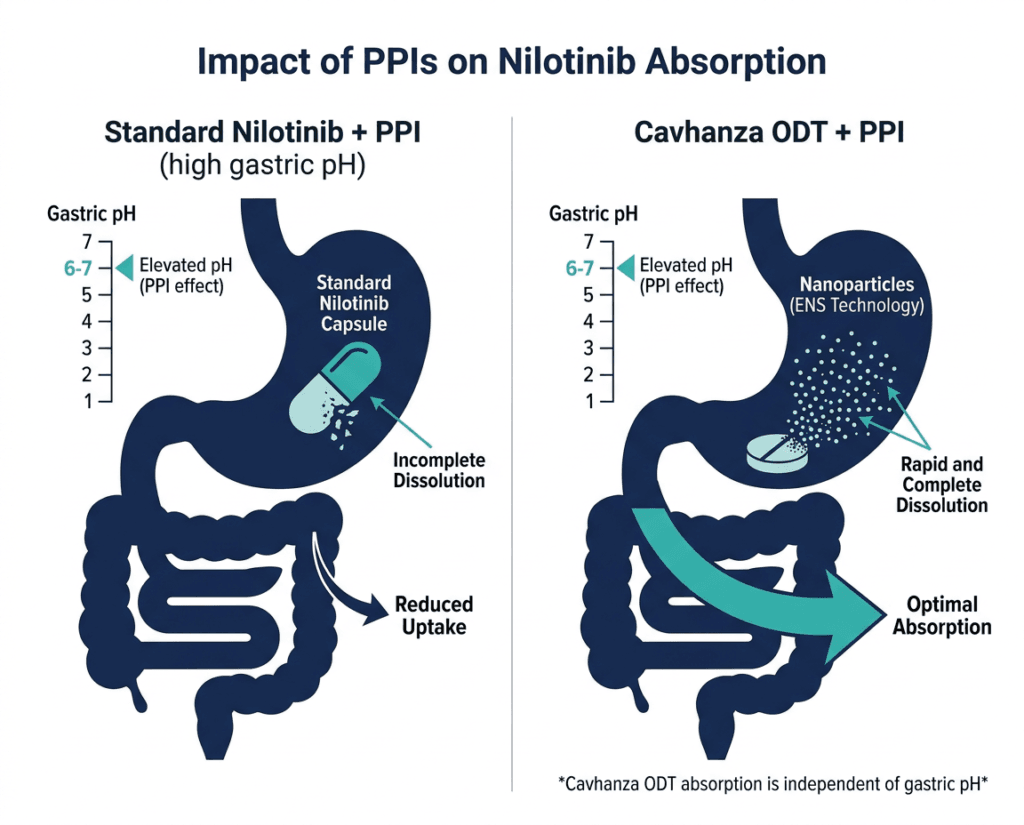
    Nilotinib is a weakly basic molecule that dissolves best in acidic conditions. In the stomach’s normally acidic environment, the drug dissolves adequately before moving into the small intestine where it is absorbed. When proton pump inhibitors (PPIs) or histamine H2 receptor antagonists (H2RAs) are on board, they reduce gastric acid production, raising stomach pH substantially. In this elevated-pH environment, standard nilotinib capsules dissolve poorly, and absorption drops significantly.

    The standard Tasigna prescribing information reflects this directly: PPIs should not be co-administered with nilotinib, and H2RAs must be separated by specific timing restrictions (H2RAs can be administered approximately 10 hours before or approximately 2 hours after nilotinib). For a patient taking a PPI for chronic GERD, that effectively means stopping the PPI. For a patient taking an H2RA, it means carefully coordinating two twice-daily medications around each other’s timing windows.

    The scale of this problem: approximately 25% of Ph+ CML patients are co-prescribed acid-reducing agents. These are largely older adults managing both their leukemia and common age-related comorbidities including reflux, peptic ulcer disease, and gastroprotective use alongside other medications like aspirin or anticoagulants. Telling these patients to stop their acid reducer, or to comply with precise timing restrictions every day for years, is not a trivial ask. Non-adherence to TKI therapy in CML is directly associated with loss of molecular response.

    The food effect compounds this further. Standard nilotinib capsules must be taken without food: eating within 2 hours before or 1 hour after a nilotinib dose significantly increases drug absorption and can raise plasma levels to potentially toxic ranges. This means four distinct daily time windows around which the patient must plan: fast before dose 1, fast after dose 1, fast before dose 2, fast after dose 2. For patients managing a full daily life including meals and medications, this is a substantial behavioral burden.

    How Cavhanza addresses both problems

    Cavhanza uses Flex Pharma’s proprietary ElectroNanoSpray (ENS) technology to produce a nanoparticle-scale formulation of nilotinib with dramatically improved solubility and dissolution characteristics. By engineering the drug particles to be far smaller, the formulation increases the surface area available for dissolution and reduces the drug’s dependence on low gastric pH to dissolve adequately before reaching the small intestine. The result:

    • PPI co-administration: allowed with Cavhanza — no contraindication, no timing restriction
    • H2RA co-administration: allowed with Cavhanza — no timing restriction
    • Food effect: eliminated — Cavhanza can be taken with or without food

    The orally disintegrating tablet format adds a further convenience dimension: the tablet can dissolve in the mouth before swallowing or can be swallowed whole. It can be taken with or without water. For patients who have difficulty swallowing capsules, or for patients in clinical settings where oral medication access is limited, these properties matter.

    Safety: What Prescribers and Patients Need to Know

    Cavhanza carries the same safety profile as nilotinib across all formulations, because the active molecule is identical. The safety program that governs Tasigna governs Cavhanza.

    Boxed warnings:

    QT prolongation and sudden death: Nilotinib prolongs the QT interval and has been associated with sudden death. Hypokalemia or hypomagnesemia must be corrected before initiating nilotinib and monitored during therapy. Avoid drugs that prolong the QT interval, including many anti-arrhythmic medications, certain antifungals, and fluoroquinolone antibiotics. An ECG is required at baseline, 7 days after initiation, and periodically thereafter. Do not use in patients with hypokalemia, hypomagnesemia, or long QT syndrome.

    Hepatotoxicity: Nilotinib may cause severe hepatotoxicity and liver failure, including fatal cases. Monitor liver function tests before initiating and monthly during the first year, then periodically.

    Cardiovascular events: Nilotinib is associated with an increased incidence of ischemic heart disease, peripheral artery disease, and ischemic cerebrovascular events. The 10-year ENESTnd data showed cardiovascular event rates of approximately 7 to 8% over a decade. Patients with cardiovascular risk factors should be assessed carefully before initiating nilotinib, with optimization of modifiable risk factors. Monitor for signs of cardiovascular disease during treatment.

    Key warnings and precautions:

    Safety itemDetailsClinical guidance
    QT prolongation (boxed warning)Prolongs QTcF; sudden death reportedECG at baseline, day 7, and periodically. Correct electrolytes. Avoid QT-prolonging drugs. Hold and restart at reduced dose if QTcF greater than 480 ms.
    Hepatotoxicity (boxed warning)Severe liver injury and fatal liver failure reportedLFTs at baseline, monthly for first year, periodically thereafter.
    Cardiovascular eventsIschemic heart disease, PAD, and stroke at higher rates than imatinib in long-term follow-upAssess and manage CV risk factors before initiating. Monitor for signs of CV disease.
    MyelosuppressionNeutropenia, thrombocytopenia, and anemia; dose modification or interruption may be requiredCBC at baseline, every 2 weeks for first 2 months, then monthly.
    PancreatitisLipase and amylase elevations; symptomatic pancreatitis reportedMonitor lipase and amylase monthly or as clinically indicated.
    Hepatitis B reactivationReactivation in chronic HBV carriers including fulminant hepatitis and fatal outcomesScreen for HBV before initiating. Monitor carriers closely; consider antiviral prophylaxis.
    CYP3A4 interactionsStrong CYP3A4 inhibitors increase nilotinib exposure; strong inducers reduce itAvoid strong CYP3A4 inhibitors (ketoconazole, ritonavir, clarithromycin); avoid strong inducers (rifampin). If unavoidable, dose reduction recommended.
    Embryo-fetal toxicityNilotinib can cause fetal harmWomen of reproductive potential: effective contraception during treatment. Advise of reproductive risks before starting therapy.
    LactationNot recommended during treatment and for 14 days after last doseDiscuss with patients before initiating.
    Pediatric useCavhanza not approved for pediatric patientsThe approved indication is adults only.

    Common adverse reactions (occurring in 10% or more of patients in clinical trials): rash, nausea, headache, fatigue, pruritus, vomiting, alopecia, myalgia, and constipation.


    What This Means for CML Patients and Prescribers

    The practical change

    For an established CML patient currently on Tasigna (nilotinib capsules) who also takes a PPI or H2RA: Cavhanza is now a clinically appropriate alternative that eliminates the drug interaction concern without changing the active compound, the dose, or the established molecular monitoring expectations. The transition from Tasigna to Cavhanza is a formulary and tolerability decision, not a clinical efficacy change.

    For newly diagnosed CML-CP patients who also have GERD, peptic ulcer disease, or any clinical need for an acid reducer: the nilotinib-PPI interaction no longer needs to govern the treatment decision. Cavhanza can be initiated at the standard 300 mg twice-daily dose without worrying about acid-reducer timing or co-prescription contraindications.

    For CML-CP and CML-AP patients with resistance or intolerance to prior therapy including imatinib: Cavhanza at 400 mg twice daily is now an option with the same added prescribing flexibility.

    For oncology pharmacists and hematologists reviewing CML patients on complex polypharmacy regimens: Cavhanza’s elimination of the food restriction and the acid-reducer interaction removes two of the most practically difficult elements of long-term nilotinib adherence. Non-adherence to TKI therapy is directly associated with loss of molecular response and the risk of disease progression in CML. Any formulation innovation that reduces adherence barriers has the potential to translate into better molecular outcomes for this patient population.

    Dr. Kevan Herold’s statement about treating a different disease earlier applies here in spirit: much of the value of precision oncology in CML comes from the consistency and completeness of BCR-ABL suppression. Inconsistent drug levels from missed doses, from food effect violations, or from acid-reducer-mediated reduced absorption, erode that suppression and create the selective pressure that drives resistance mutations.

    The monitoring requirements remain

    Regardless of formulation, patients on nilotinib require: baseline and periodic ECGs; CBC monitoring every 2 weeks for the first 2 months and monthly thereafter; LFTs monthly for the first year; electrolyte monitoring; and BCR-ABL1 PCR monitoring every 3 months during the first year and every 3 to 6 months thereafter. These monitoring requirements are unchanged by the ODT formulation.

    For related HED coverage on CML and hematologic oncology, see our post on Pomalyst (pomalidomide) losing exclusivity and what generic pomalidomide means for multiple myeloma patients from the 2026 Loss of Exclusivity series.


    Sources

    Cycle Pharmaceuticals press release (approval): CAVHANZA (nilotinib) Orally Disintegrating Tablets: A New, FDA-approved Treatment Offering PPI and H2RA Flexibility for Ph+ CML Patients. BusinessWire. June 2, 2026.

    BioSpace coverage: CAVHANZA (nilotinib) Orally Disintegrating Tablets: A New, FDA-approved Treatment. biospace.com. June 2026.

    Targeted Oncology clinical summary: FDA OKs Oral Nilotinib Tablets for Ph+ CML With Acid-Reducer Flexibility. targetedonc.com. June 2026.

    Cancer Therapy Advisor: FDA Approves Cavhanza, an ODT Formulation of Nilotinib for Ph+ CML. cancertherapyadvisor.com. June 2026.

    Oncology Nursing News: FDA Approves Oral Nilotinib Tablets for Ph+ CML. oncnursingnews.com. June 2026.

    WebMD approval summary: Cavhanza (Nilotinib) FDA Approval. webmd.com. June 2026.

    ENESTnd primary publication: Saglio G et al. Nilotinib versus Imatinib for Newly Diagnosed CML in Chronic Phase. NEJM. 2010;362(24):2251–2259. doi:10.1056/NEJMoa0912614.

    ENESTnd 10-year analysis: Hochhaus A et al. Long-term outcomes with frontline nilotinib versus imatinib in newly diagnosed CML-CP: ENESTnd 10-year analysis. Leukemia. 2022.

    ENESTnd trial registration: NCT00471497. ClinicalTrials.gov.

    BCR-ABL mutations and nilotinib selectivity: Nilotinib and BCR-ABL mutations. PMC4915803.

    Philadelphia chromosome and CML mechanism: Chronic Myelogenous Leukemia. StatPearls. NCBI.

    Philadelphia chromosome molecular biology: BCR-ABL1 in CML. PMC7955155.

    PPIs overview: Proton Pump Inhibitors. StatPearls. NCBI.

    H2RAs overview: Histamine H2 Receptor Antagonists. StatPearls. NCBI.

    QT prolongation: QT Prolongation. StatPearls. NCBI.

    505(b)(2) NDA pathway: 505(b)(2) Applications. FDA.gov.

    FDA nilotinib original approval: FDA approves nilotinib for chronic myeloid leukemia. FDA.gov.

    Cavhanza prescribing information: CAVHANZA (nilotinib) Prescribing Information. Flex Pharma/Cycle Pharmaceuticals. 2026.

    American Cancer Society CML overview: Chronic Myeloid Leukemia. cancer.org.

    Patient resources: Leukemia and Lymphoma Society (LLS) | CML Advocates Network | Cycle Pharmaceuticals Cavhanza support | [Breakthrough T1D is not applicable here] | Novartis Tasigna patient support

    Disclaimer: Health Evidence Digest provides general information about FDA approvals and health research for educational purposes. This content is not a substitute for professional medical advice. Nilotinib (Cavhanza) carries boxed warnings for QT prolongation with sudden death risk, hepatotoxicity, and cardiovascular events. CML management requires individualized care by a board-certified hematologist or oncologist with expertise in TKI therapy. Patients considering a transition from Tasigna to Cavhanza should discuss this with their treating hematologist-oncologist.
  • High Blood Pressure That Won’t Budge on Multiple Medications Just Got Its First New Drug Class in Decades. Here Is What Baxfendy Is and What the BaxHTN Data Shows.

    High Blood Pressure That Won’t Budge on Multiple Medications Just Got Its First New Drug Class in Decades. Here Is What Baxfendy Is and What the BaxHTN Data Shows.

    📌 The essentials On May 18, 2026, the FDA approved Baxfendy (baxdrostat, AstraZeneca) as the first and only aldosterone synthase inhibitor (ASI) for the treatment of hypertension. Baxfendy is the first drug in an entirely new pharmacological class to be approved for high blood pressure in decades. Indication: in combination with other antihypertensive drugs, to lower blood pressure in adults who are not adequately controlled on other agents. This is an add-on therapy, not a replacement for existing medications. Dosing: 2 mg orally once daily (recommended dose); 1 mg once daily for patients at increased risk of hyperkalemia or hyponatremia. Available: expected early June 2026. The clinical basis: Phase 3 BaxHTN trial (NCT06034743), published in the New England Journal of Medicine on August 30, 2025, enrolling 796 patients across 214 sites in 29 countries. Key result: placebo-adjusted systolic blood pressure reduction of 9.8 mmHg (2 mg dose) and 8.7 mmHg (1 mg dose) at 12 weeks (p less than 0.001 for both). Key safety warnings: hyperkalemia (elevated potassium) and hyponatremia (low sodium). Monitor electrolytes. Important caveat: the approval is based on blood pressure reduction as a surrogate endpoint, not on direct cardiovascular outcomes data. A cardiovascular outcomes trial is expected to follow.

    Hypertension affects an estimated 1.4 billion people worldwide and approximately 119 million adults in the United States. It is the single largest modifiable risk factor for stroke, myocardial infarction, heart failure, and chronic kidney disease. And yet, despite a treatment landscape that includes a dozen established drug classes and hundreds of individual medications, approximately 50% of patients on multiple antihypertensive treatments still do not have their blood pressure adequately controlled.

    The patients in that 50% are not failing treatment through non-compliance alone. Many of them have a biological reason their blood pressure is hard to control, namely elevated or dysregulated aldosterone, a hormone that promotes sodium and water retention and raises blood pressure through mechanisms that existing drug classes do not directly address. Recognizing that aldosterone dysregulation is far more prevalent in difficult-to-control hypertension than previously understood is part of what makes Baxfendy’s approval a meaningful scientific development rather than just an incremental addition to a crowded market.

    On May 18, 2026, the FDA approved Baxfendy (baxdrostat), the first aldosterone synthase inhibitor ever approved for hypertension. It targets the production of aldosterone itself, a mechanistic approach no approved drug has taken before in this indication.


    What Aldosterone Is and Why Inhibiting Its Production Is a New Idea

    To understand what makes Baxfendy mechanistically distinct, it helps to understand both what aldosterone does and why existing treatments have not addressed its overproduction directly.

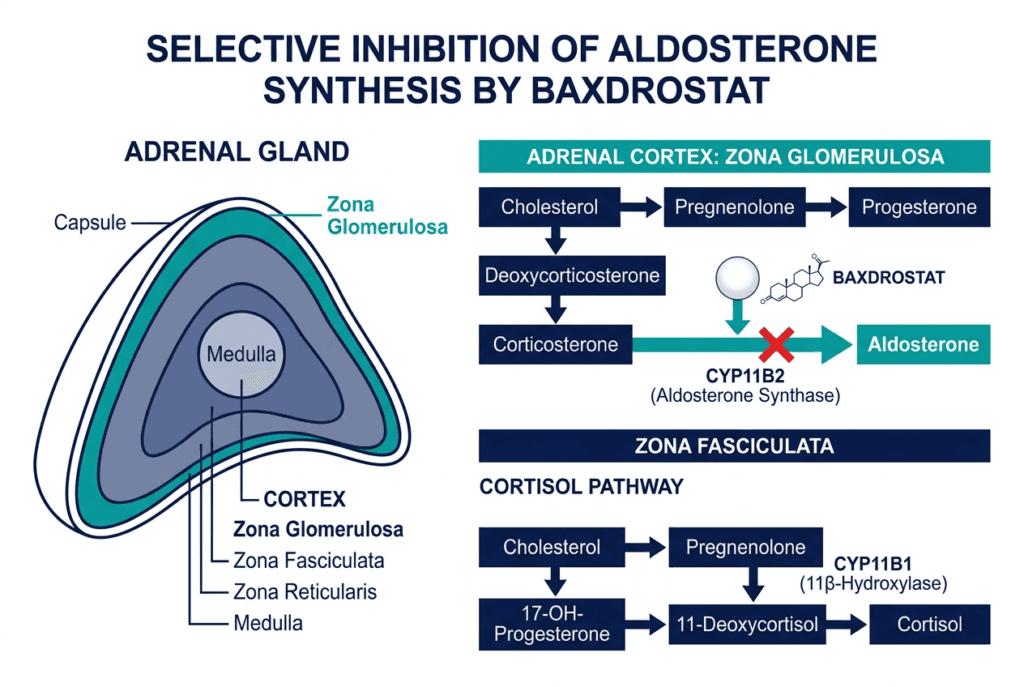
    Aldosterone is a steroid hormone produced by the adrenal glands, specifically in a region called the zona glomerulosa. Its primary role is to regulate sodium and potassium balance in the kidneys. When aldosterone is elevated, the kidneys retain more sodium and water, increasing blood volume and raising blood pressure. Aldosterone also promotes potassium excretion, which is why elevated aldosterone is often associated with low potassium levels.

    The enzyme responsible for producing aldosterone in the zona glomerulosa is called aldosterone synthase (CYP11B2). There is a closely related enzyme, cortisol synthase (CYP11B1), that makes cortisol in a neighboring region of the adrenal gland. Earlier attempts to develop aldosterone synthase inhibitors failed because they could not distinguish between CYP11B2 and CYP11B1 well enough: blocking both suppresses not only aldosterone but also cortisol, which is essential for the stress response and metabolic regulation. The side effects of cortisol suppression at therapeutic doses were unacceptable.

    Baxdrostat is designed to solve this problem. It is described as a highly selective inhibitor of CYP11B2 that spares CYP11B1. In the BaxHTN trial, cortisol levels were monitored and remained stable, with no clinically meaningful cortisol suppression detected.

    How existing drug classes compare mechanistically

    Existing antihypertensive classes target aldosterone’s effects downstream rather than its production:

    • ACE inhibitors and ARBs block the renin-angiotensin-aldosterone system (RAAS) at earlier steps, reducing angiotensin II signaling that drives aldosterone secretion. But in many patients, aldosterone eventually “escapes” this inhibition through angiotensin-independent pathways.
    • Mineralocorticoid receptor antagonists (MRAs) like spironolactone and eplerenone block the aldosterone receptor in the kidney rather than reducing aldosterone itself. They are effective in resistant hypertension but carry a significant hyperkalemia risk, limiting their use in patients with chronic kidney disease.
    • Diuretics reduce blood volume directly, addressing one consequence of aldosterone excess without reducing aldosterone levels.

    Baxdrostat is the first approved drug to work at the top of this pathway, reducing aldosterone production in the adrenal gland before it reaches the circulation. Whether this upstream approach ultimately produces better clinical outcomes than MRAs in head-to-head comparison is not yet established by trial data.


    The BaxHTN Trial: Design and Full Results

    Trial design

    The BaxHTN Phase 3 trial (NCT06034743) was a multinational, randomized, double-blind, placebo-controlled study conducted at 214 clinical sites across 29 countries. Results were presented at the European Society of Cardiology Congress 2025 in Madrid in August 2025 and simultaneously published in the New England Journal of Medicine.

    Eligibility:

    • Seated systolic blood pressure (SBP) of 140 mmHg or higher and less than 170 mmHg
    • Receiving stable treatment with at least 2 antihypertensive medications of different classes, one of which was a diuretic (uncontrolled hypertension group), or at least 3 antihypertensive medications including a diuretic (resistant hypertension group)
    • Estimated glomerular filtration rate (eGFR) of 45 mL/min/1.73m² or higher
    • Serum potassium within acceptable range at baseline

    Enrollment: 796 patients total across uncontrolled and resistant hypertension subgroups.

    Design structure: After a placebo run-in period, the trial had four sequential phases: a 12-week double-blind, placebo-controlled period (the primary analysis period); a 12-week open-label extension; an 8-week randomized withdrawal period to assess persistence of effect; and a 20-week open-label safety assessment.

    Primary endpoint results

    Outcome at 12 weeksBaxdrostat 2 mgBaxdrostat 1 mgPlacebo
    Mean seated SBP reduction from baseline15.7 mmHg (95% CI 13.7 to 17.6)14.6 mmHgApproximately 5.9 mmHg
    Placebo-adjusted SBP reduction9.8 mmHg (95% CI 7.0 to 12.6)8.7 mmHg (95% CI 6.0 to 11.4)Reference
    p-valuep less than 0.001p less than 0.001
    Cortisol levelsNo clinically meaningful changeNo clinically meaningful change
    Aldosterone reductionSignificantSignificantNo change

    Source: Efficacy and Safety of Baxdrostat in Uncontrolled and Resistant Hypertension. New England Journal of Medicine. Published August 30, 2025. doi:10.1056/NEJMoa2507109. BaxHTN NCT06034743.

    The 9.8 mmHg placebo-adjusted SBP reduction at the 2 mg dose is clinically significant in context. Epidemiological data consistently show that a 10 mmHg reduction in systolic blood pressure is associated with approximately a 20% lower risk of serious cardiovascular events. In a population already on two or more antihypertensive medications, achieving nearly 10 mmHg additional reduction from one add-on pill is a meaningful result.

    The randomized withdrawal period confirmed that blood pressure rose when baxdrostat was stopped and returned to target when it was reintroduced, confirming that the drug’s effect was causal rather than incidental.

    The Bax24 trial: 24-hour ambulatory blood pressure

    A separate Phase 3 study, Bax24 (NCT06168409), evaluated baxdrostat specifically in resistant hypertension using 24-hour ambulatory blood pressure monitoring (ABPM) rather than seated office measurements. Ambulatory blood pressure is considered a more reliable predictor of cardiovascular outcomes than clinic-based readings because it captures average pressure across the full daily cycle including nighttime.

    Presented at the American Heart Association Scientific Sessions 2025 and published in The Lancet in March 2026, Bax24 showed a placebo-adjusted reduction of 14.0 mmHg in 24-hour average systolic blood pressure (p less than 0.0001) in patients with resistant hypertension. Nighttime systolic blood pressure was reduced by 13.9 mmHg (placebo-adjusted). Notably, 71% of baxdrostat-treated patients achieved a 24-hour average SBP below 130 mmHg compared with 17% of placebo-treated patients.

    The Bax24 findings are not part of the current FDA approval label, but they are relevant context for understanding how comprehensively baxdrostat controls blood pressure across the full daily cycle in the most difficult-to-treat patients.

    The uncontrolled vs. resistant hypertension distinction The BaxHTN trial enrolled two overlapping but distinct populations. Uncontrolled hypertension is defined as blood pressure that remains above target despite the use of two antihypertensive medications. Resistant hypertension is a more stringent category: blood pressure that remains above target despite three antihypertensive agents including a diuretic, or that requires four or more agents to achieve control. Resistant hypertension is estimated to affect 10 to 15% of all hypertension patients and carries a substantially higher risk of end-organ damage, including left ventricular hypertrophy, kidney disease, and stroke. Both groups were included in BaxHTN because elevated aldosterone has been implicated in both, though the biological rationale is strongest in resistant hypertension where aldosterone escape from RAAS therapy is well-documented.

    Safety: What the Label Covers

    Baxdrostat was generally well tolerated in the BaxHTN trial, with no unexpected safety findings reported. The most clinically significant warnings in the prescribing information are:

    Hyperkalemia (elevated potassium): The most important class-related concern. Aldosterone promotes potassium excretion in the kidney. Inhibiting aldosterone synthesis reduces that excretion, which can raise serum potassium. The risk is greatest in patients with chronic kidney disease or those on other drugs that raise potassium, including ACE inhibitors, ARBs, MRAs, and potassium-sparing diuretics. The 1 mg starting dose is specifically recommended for patients at increased risk of hyperkalemia. Baseline and periodic electrolyte monitoring is essential.

    Hyponatremia (low sodium): Less common than hyperkalemia but present in the trial data. Monitor sodium, particularly in older patients or those at risk for volume-related sodium shifts.

    Adrenal function: Despite the selective mechanism, monitoring for signs of adrenal insufficiency is prudent in patients undergoing physiological stress such as illness or surgery, given the proximity of the drug’s mechanism to cortisol synthesis.

    Common adverse events from the trial included headache, dizziness, and fatigue. Rates of these were generally comparable between baxdrostat and placebo.

    Drug interactions to know: Because baxdrostat reduces aldosterone, its combination with MRAs (spironolactone, eplerenone, finerenone) produces additive aldosterone-lowering effects and substantially increases the risk of hyperkalemia. The prescribing information addresses this interaction specifically. Clinicians should review the full prescribing information before initiating.


    What This Means for Patients and Clinicians

    Who is this drug for?

    Baxfendy is approved as add-on therapy for adults with hypertension that is not adequately controlled on other agents. The typical candidate based on the BaxHTN enrollment criteria is a patient who:

    • Has systolic blood pressure of 140 mmHg or higher despite being on at least 2 established antihypertensive medications
    • Is already taking a diuretic as part of their regimen
    • Has adequate kidney function (eGFR of 45 or higher)
    • Does not have a potassium level that contraindicates further aldosterone suppression

    It is not approved as monotherapy or as initial hypertension treatment. Patients already well-controlled on existing medications have no indication to switch.

    Who should discuss this with their cardiologist or hypertension specialist?

    Patients with documented uncontrolled or resistant hypertension who have cycled through ACE inhibitors, ARBs, calcium channel blockers, and diuretics without achieving target blood pressure are the population this drug was designed for. The mechanism is specifically compelling for patients suspected to have elevated aldosterone as a driver, including those with primary aldosteronism or confirmed aldosterone excess, though the approval does not require this testing.

    What is still unknown

    The current FDA approval is based on blood pressure reduction as a surrogate endpoint, not on direct demonstration that baxdrostat reduces heart attacks, strokes, kidney disease progression, or death. In antihypertensive drug development, this is standard and accepted: the FDA has long approved blood pressure medications based on surrogate blood pressure endpoints given the overwhelming prior evidence that blood pressure reduction reduces cardiovascular events across drug classes.

    That said, a cardiovascular outcomes trial is expected to follow. The results of that trial will be important for fully establishing Baxfendy’s place in the treatment hierarchy and for understanding whether aldosterone-specific lowering produces benefits beyond what is predicted by the blood pressure reduction alone. AstraZeneca has also announced trials in primary aldosteronism, chronic kidney disease with hypertension, and heart failure prevention, as well as a combination development program with dapagliflozin.


    The Bigger Picture: A New Mechanism in a Disease That Has Needed One

    Hypertension’s pharmacological armamentarium has not seen a genuinely new mechanism in a long time. Most drug classes currently prescribed for hypertension were developed between the 1950s and 1990s. Baxfendy’s approval is notable precisely because it represents a new biological angle on a very old problem.

    The recognition that aldosterone dysregulation is far more prevalent in treatment-resistant hypertension than the classical primary aldosteronism diagnosis would suggest has been building in the cardiology literature for more than a decade. Studies using more sensitive aldosterone assays have found that a significant proportion of patients with resistant hypertension have inappropriately elevated aldosterone relative to their sodium and volume status, even without the discrete aldosterone-secreting adenomas that define classical primary aldosteronism. BaxHTN’s results are consistent with this evolving understanding: the magnitude of blood pressure reduction seen suggests that the drug is addressing a real and prevalent biological driver of difficult-to-control hypertension, not just an edge-case mechanism.

    For patients whose blood pressure has resisted years of medication escalation, having a drug that works through a pathway none of their existing medications addresses is clinically meaningful, independent of where it eventually lands in outcome trials.

    For related coverage of advances in cardiovascular and metabolic drug development, see our post on the first generic dapagliflozin, which covers the SGLT2 inhibitor class and its now-expanding role from blood sugar management to cardiovascular and kidney protection, and our post on Awiqli, the first once-weekly basal insulin for type 2 diabetes.


    Sources

    AstraZeneca FDA approval press release: BAXFENDY approved in the US as the first and only aldosterone synthase inhibitor treatment for adults with hypertension. AstraZeneca. May 18, 2026.

    AstraZeneca US press release: FDA Approves Baxfendy (baxdrostat) as the First Aldosterone Synthase Inhibitor Treatment for Adults with Hypertension. businesswire.com. May 18, 2026.

    BaxHTN primary NEJM publication: Efficacy and Safety of Baxdrostat in Uncontrolled and Resistant Hypertension. New England Journal of Medicine. August 30, 2025. doi:10.1056/NEJMoa2507109.

    BaxHTN trial registration: NCT06034743. ClinicalTrials.gov.

    Bax24 primary Lancet publication: Azizi M et al. Effect of baxdrostat on ambulatory blood pressure in patients with resistant hypertension (Bax24). The Lancet. 2026 Mar 7;407(10532):988-999.

    Bax24 trial registration: NCT06168409. ClinicalTrials.gov.

    BaxHTN Phase 3 design paper: Flack JM et al. Baxdrostat for uncontrolled and resistant hypertension: rationale and design of the Phase 3 clinical trials BaxHTN, BaxAsia, and Bax24. Hypertension Research. 2025. doi:10.1038/s41440-025-02297-7.

    BioPharma Dive approval coverage: AstraZeneca wins US approval for Baxfendy hypertension drug. biopharmadive.com. May 18, 2026.

    Cardiology Advisor approval coverage: Baxfendy Earns FDA Nod as First-in-Class Hypertension Treatment. thecardiologyadvisor.com. May 2026.

    PharmExec coverage: FDA Approves Baxdrostat for Uncontrolled Hypertension in First-in-Class Entry. pharmexec.com. May 2026.

    HCPLive approval coverage: FDA Approves Baxdrostat for Uncontrolled Hypertension on Background Therapy. hcplive.com. May 2026.

    ESC Congress 2025 presentation: BaxHTN top-line data presented at ESC Congress 2025, Madrid, August 30, 2025.

    AHA Scientific Sessions 2025 (Bax24): Bax24 Phase III trial full results presented at AHA Scientific Sessions 2025.

    Drugs.com approval news: FDA Approves Baxfendy (baxdrostat) as the First Aldosterone Synthase Inhibitor Treatment for Adults with Hypertension. drugs.com. May 18, 2026.

    Aldosterone biology: Aldosterone. StatPearls. NCBI.

    Aldosterone synthase selectivity: CYP11B2 and CYP11B1 selectivity in aldosterone synthase inhibitors. PMC6116014.

    ACE inhibitors and ARBs: ACE Inhibitors. StatPearls. NCBI.

    MRAs in hypertension: Mineralocorticoid Receptor Antagonists. StatPearls. NCBI.

    Diuretics in hypertension: Diuretics. StatPearls. NCBI.

    NHLBI hypertension overview: High Blood Pressure. National Heart, Lung, and Blood Institute.

    Patient resources: American Heart Association: High Blood Pressure | National Hypertension Control Initiative | AstraZeneca Baxfendy information

    Disclaimer: Health Evidence Digest provides general information about FDA approvals and health research for educational purposes. This content is not a substitute for professional medical advice, diagnosis, or treatment. Baxfendy is approved as add-on therapy and should only be initiated and monitored by a qualified healthcare provider. Blood pressure management requires individualized care; do not stop or change antihypertensive medications without consulting your prescriber.
  • Generic Dapagliflozin Is Here. For 40 Million Americans With Type 2 Diabetes, That’s a Big Deal.

    Generic Dapagliflozin Is Here. For 40 Million Americans With Type 2 Diabetes, That’s a Big Deal.


    📌 The essentials The FDA has approved the first generic versions of dapagliflozin (Farxiga) tablets, the first SGLT2 inhibitor to reach generic status in the United States. Multiple generic manufacturers received approval simultaneously. Available doses: 5 mg and 10 mg tablets. Generic approval covers: type 2 diabetes (glycemic control and cardiovascular risk reduction) and reduction of risk of hospitalization for heart failure in adults with type 2 diabetes and cardiovascular disease or multiple cardiovascular risk factors. The brand-name Farxiga retains additional approved indications (heart failure with preserved ejection fraction, chronic kidney disease) that the generics do not yet carry. Current approximate pricing: brand-name Farxiga runs $550 to $650 per month without insurance; generic dapagliflozin is running approximately $290 to $410 per month with discount coupons (GoodRx, SingleCare) as of April 2026. Confirm current pricing at GoodRx.com/dapagliflozin as prices will continue to change with market competition. Verify therapeutic equivalence: check the FDA Orange Book to confirm which manufacturers have received “AB” ratings, indicating interchangeability.

    If you have been prescribing or taking Farxiga (dapagliflozin) for any length of time, you already know the conversation that tends to come up at refill time: the price. Without insurance, a 30-day supply of brand-name Farxiga runs between $550 and $650 per month. For a medication that many patients need to take daily and indefinitely, that is a meaningful barrier. The FDA’s approval of the first generic versions of dapagliflozin tablets changes that equation.

    Multiple generic manufacturers have received approval simultaneously, and while generic pricing is not always as low as patients hope immediately after launch, the competitive pressure that comes with multiple manufacturers is what ultimately drives costs down. This is how the generic drug system is supposed to work.


    Dapagliflozin: More Than a Diabetes Drug

    Dapagliflozin belongs to a class of medications called SGLT2 inhibitors, short for sodium-glucose cotransporter 2 inhibitors. The mechanism is straightforward: the kidneys normally filter glucose from the blood and then reabsorb almost all of it back into circulation. SGLT2 inhibitors block the transporter protein responsible for that reabsorption, so excess glucose gets excreted in the urine instead. Lower blood glucose, less cardiovascular strain, less kidney filtration burden.

    What made dapagliflozin and its SGLT2 classmates remarkable, and what eventually transformed both cardiology and nephrology practice, was what came out of the cardiovascular outcomes trials that the FDA mandated for all new diabetes drugs after 2008. Researchers expected to show the drugs were not harmful. What they found instead was that they were actively protective: significantly reducing hospitalizations for heart failure and slowing kidney disease progression, even in patients without diabetes.

    The DAPA-HF trial, published in the New England Journal of Medicine in 2019, showed dapagliflozin reduced a composite of worsening heart failure or cardiovascular death by 26% versus placebo in patients with heart failure with reduced ejection fraction, including patients who did not have type 2 diabetes. The DAPA-CKD trial showed it reduced risk of a sustained decline in kidney function, end-stage kidney disease, or death from kidney or cardiovascular causes by 39% in patients with chronic kidney disease, again including non-diabetic patients. These were not minor findings. They were class-redefining.

    The indications that dapagliflozin currently carries, and what the generic covers Dapagliflozin’s full FDA-approved indication list includes: type 2 diabetes in adults (glycemic control plus cardiovascular risk reduction); reduction of risk of hospitalization for heart failure in adults with type 2 diabetes and established cardiovascular disease or multiple cardiovascular risk factors; heart failure with reduced ejection fraction (regardless of diabetes status); heart failure with preserved ejection fraction; and chronic kidney disease in adults at risk of progression. The generic approval currently covers the type 2 diabetes and heart failure hospitalization risk reduction indications specifically. The additional heart failure and CKD indications remain on the brand label but are not yet part of the generic labeling. As the evidence base matures, generic labeling may expand to match. For the complete current list, the FDA prescribing information is the authoritative source.

    Why Generic Approval Matters More for This Drug Than Most

    Type 2 diabetes affects more than 40 million Americans, with 90 to 95% of all diabetes cases falling into this category. It is a condition that disproportionately affects lower-income populations and communities of color, exactly the populations for whom a $600-per-month medication is least accessible.

    Despite its strong evidence base, adoption of SGLT2 inhibitor therapy in clinical practice has remained well below what guidelines recommend, and cost is consistently cited as a primary barrier. A 2025 review in npj Metabolic Health and Disease noted this explicitly, pointing to cost and clinician familiarity as the two main obstacles to uptake of a drug class with clear guideline support for reducing cardiovascular and kidney disease burden.

    Generic availability does not immediately solve the cost problem, but it starts the clock. With discount coupons through services like GoodRx or SingleCare, generic dapagliflozin is currently available in the range of $290 to $410 per month for a 30-day supply, compared to $550 to $650 for the brand. That is a meaningful improvement, though still not cheap. As more manufacturers enter the market over the coming months, prices should continue to fall.

    Current approximate price landscape (30-day supply):

    OptionWithout InsuranceWith Discount Coupon
    Brand-name Farxiga$550 to $650/month~$288 (GoodRx)
    Generic dapagliflozin$400 to $500/month$290 to $410 (GoodRx/SingleCare)
    With commercial insuranceVaries by planCopay $0 to $75 typical
    AZ&Me patient assistancePotentially $0Eligibility required

    AZ&Me is AstraZeneca’s patient assistance program for brand-name Farxiga. Patients who meet income eligibility can receive free medication. Details at azandme.com. Generic dapagliflozin is not covered under this program. Pricing figures are approximate as of April 2026 and subject to change.


    What “Therapeutic Equivalence” Actually Means

    A common question when a generic is approved: is it really the same? The short answer is yes, with a specific technical meaning. The FDA requires generics to demonstrate bioequivalence: they must deliver the same active ingredient in the same form, at the same dose, producing the same blood levels over the same time frame as the brand. The inactive ingredients (fillers, binders, coatings) can differ, which occasionally matters for patients with specific allergies or sensitivities, but the therapeutic effect is required to be equivalent.

    Generics approved under this standard receive an “AB” rating in the FDA’s Orange Book, the Approved Drug Products database, indicating they are interchangeable at the pharmacy level without requiring a new prescription. You can check the Orange Book at accessdata.fda.gov/scripts/cder/ob/ to confirm which manufacturers have received approval and their equivalence rating.


    Safety: The Generic Carries the Same Label

    Generic dapagliflozin carries the same prescribing information, contraindications, warnings, and precautions as brand-name Farxiga. These are worth knowing, particularly for patients or prescribers newer to this drug class.

    Contraindications

    • Known serious hypersensitivity to dapagliflozin or any excipient in the formulation
    • eGFR below the threshold specified in the label for the relevant indication (review the current label for the specific eGFR cutoffs by indication)

    Key warnings to discuss with patients

    Diabetic ketoacidosis (DKA): Can occur even with near-normal blood glucose (euglycemic DKA), a well-documented and sometimes underrecognized risk. Patients should be counseled to hold dapagliflozin before surgery and to recognize DKA symptoms including nausea, vomiting, abdominal pain, fatigue, and difficulty breathing.

    Volume depletion: The osmotic diuretic effect can cause dehydration and hypotension, particularly relevant in older patients or those on diuretics. Assess volume status before initiating in high-risk patients.

    Urinary tract and genital infections: The glucosuria that makes SGLT2 inhibitors effective also creates a more hospitable environment for yeast and bacterial infections. Genital mycotic infections are common, particularly in women. Counsel patients to report symptoms and maintain good hygiene.

    Fournier’s gangrene: A rare but serious necrotizing fasciitis of the genitalia has been reported across the SGLT2 class. Patients with symptoms including pain, tenderness, redness, or swelling in the genital or perineal area should seek immediate care.

    Lower limb amputations: A risk signal first identified with canagliflozin. The signal for dapagliflozin is less clearly established but warrants monitoring in high-risk patients including those with peripheral arterial disease or diabetic neuropathy.

    As the SGLT2 class StatPearls reference notes, despite the substantial clinical advantages of this drug class, therapy requires attention to safety considerations including volume depletion, genital infections, diabetic ketoacidosis, and potential lower extremity complications. These are established safety signals, not new or unexpected findings with the generic.

    A note on perioperative management SGLT2 inhibitors should generally be held before scheduled surgery due to the risk of euglycemic DKA. The recommended hold period varies by guideline. The ADA recommends holding for at least 3 to 4 days prior to major surgery. This is a counseling point worth building into any practice that prescribes dapagliflozin, especially now that more patients may receive it via generic without a specialist involved in initiation.

    The Bigger Picture: Where This Drug Class Is Heading

    Generic dapagliflozin’s arrival coincides with a remarkable moment for this drug class. SGLT2 inhibitors, initially developed as diabetes drugs, have become foundational therapies in cardiology and nephrology, a transformation that has happened faster than almost any comparable pharmacological shift in recent memory.

    The 2024 to 2025 research cycle extended the evidence base further, with large meta-analyses showing benefits in acute myocardial infarction, acute decompensated heart failure, and non-diabetic chronic kidney disease without albuminuria. Trials are now exploring effects on cognitive decline, atrial fibrillation, and liver disease. Next-generation SGLT2-based compounds and dual SGLT1/SGLT2 inhibitors are in Phase II development.

    There is also the Medicare context. Dapagliflozin and empagliflozin were selected as two of the first drugs for price negotiation under the Inflation Reduction Act, with negotiated prices taking effect in 2026. Generic competition and Medicare negotiation happening simultaneously represent an unusual convergence of affordability pressure on a single drug class. If that convergence translates to real-world access, it could meaningfully reduce the burden of undertreated cardiovascular and kidney disease in the populations that carry the highest risk.

    For related coverage on how access to GLP-1 medications is being broadened through higher-dose approvals, see our post on Wegovy HD and the STEP UP trial data. For a parallel access story in diabetes care, our post on GLP-1 medications and PCOS covers how prescribing patterns in metabolic disease are shifting rapidly beyond original approved indications.


    What to Watch Going Forward

    Supply and availability

    As of early 2026, generic manufacturers are still ramping up to full production capacity, which means spotty availability at some pharmacies, particularly in smaller markets. Calling ahead before a patient makes a trip to the pharmacy is practical advice worth passing along. Drug availability search tools like Medfinder can also help patients locate stock in real time.

    Insurance formulary adjustments

    Generic approval often triggers formulary changes. Some insurance plans may shift from covering brand-name Farxiga to preferring the generic, or may adjust tier placement. Patients on Farxiga who are told their insurance no longer covers it or covers it differently should check their updated formulary rather than assume the drug is not covered at all. Generic dapagliflozin should be therapeutically equivalent and typically at lower cost.

    Expanding indications for the generic

    The current generic approval covers type 2 diabetes and heart failure hospitalization risk reduction. As the evidence base continues to mature for heart failure with preserved ejection fraction and chronic kidney disease, it is worth watching whether FDA labeling for generic dapagliflozin expands to match the brand’s full approved indications.


    Sources

    FDA announcement: FDA Approves First Generic Dapagliflozin Tablets. FDA.gov.

    Farxiga original FDA approval (T2D/CV): FDA approves dapagliflozin to reduce risk of hospitalization for heart failure in adults. FDA.gov.

    Farxiga full prescribing information: Dapagliflozin prescribing information. accessdata.fda.gov.

    Orange Book: FDA Approved Drug Products with Therapeutic Equivalence Evaluations. accessdata.fda.gov.

    FDA generic drug bioequivalence: Generic Drug Facts. FDA.gov.

    DAPA-HF trial: McMurray JJV et al. Dapagliflozin in Patients with Heart Failure and Reduced Ejection Fraction. N Engl J Med. 2019;381:1995-2008.

    DAPA-CKD trial: Heerspink HJL et al. Dapagliflozin in Patients with Chronic Kidney Disease. N Engl J Med. 2020;383:1436-1446.

    SGLT2 inhibitor class reference: Padda IS et al. Sodium-Glucose Transport 2 (SGLT2) Inhibitors. StatPearls. Updated September 2025.

    Next-generation SGLT2 compounds: Cohen TD et al. Next-Generation SGLT2 Inhibitors: Innovations and Clinical Perspectives. Biomedicines. 2026;14(1):81.

    Access barriers review: SGLT2 inhibitors across various patient populations in the era of precision medicine. npj Metabolic Health and Disease. 2025.

    Inflation Reduction Act Medicare negotiation: Medicare Drug Price Negotiation. CMS.gov.

    FDA cardiovascular outcomes trial guidance: Guidance for Industry: Diabetes Mellitus — Evaluating Cardiovascular Risk in New Antidiabetic Therapies. FDA.gov.

    Fournier’s gangrene safety communication: FDA Drug Safety Communication: Rare but serious infection of the genitals and area around them. FDA.gov.

    ADA perioperative guidance: Diabetes Care in the Hospital. ADA Standards of Care 2023.

    Pricing tools: GoodRx: dapagliflozin | SingleCare: dapagliflozin

    Patient assistance: AstraZeneca AZ&Me Program. azandme.com.

    CDC type 2 diabetes: Type 2 Diabetes. CDC.gov.

    Disclaimer: Health Evidence Digest provides general information about FDA approvals and health research for educational purposes. This content is not a substitute for professional medical advice, diagnosis, or treatment. Drug pricing information reflects approximate figures at time of publication and is subject to change. Always consult a qualified healthcare provider or pharmacist regarding medication decisions, including decisions about switching from a brand-name product to its generic equivalent.