Tag: Regulatory Updates

  • Enhertu Is Now FDA-Approved for HER2-Positive Early Breast Cancer Before and After Surgery. Here Is What the DESTINY-Breast11 and DESTINY-Breast05 Data Shows.

    Enhertu Is Now FDA-Approved for HER2-Positive Early Breast Cancer Before and After Surgery. Here Is What the DESTINY-Breast11 and DESTINY-Breast05 Data Shows.

    ✅ Updated May 19, 2026: FDA Approval Confirmed On May 15, 2026, the FDA approved two new indications for Enhertu (fam-trastuzumab deruxtecan-nxki, T-DXd) in adults with HER2-positive early-stage breast cancer. This post has been updated throughout to reflect both approvals. For related coverage of Enhertu’s approved indications in metastatic HER2-positive and HER2-low breast cancer, and how this new approval extends Enhertu into the curative-intent setting, see our companion post on Dato-DXd in triple-negative breast cancer for context on the broader ADC landscape.
    📌 The essentials: Two approvals, two different clinical situations Indication 1: Neoadjuvant (before surgery) FDA approved Enhertu followed by THP (taxane, trastuzumab, pertuzumab) for adults with HER2-positive (IHC 3+ or ISH+) stage II or III breast cancer before surgery. Dose: 5.4 mg/kg IV every 3 weeks for 4 cycles, then THP for 4 cycles, then surgery. Clinical basis: DESTINY-Breast11 (NCT05113251): pCR rate 67.3% with T-DXd plus THP versus 56.3% with standard anthracycline-based ddAC-THP (absolute improvement +11.2%; p=0.003). Indication 2: Adjuvant (after surgery, for residual disease) FDA approved Enhertu for adults with HER2-positive (IHC 3+ or ISH+) breast cancer who have residual invasive disease after neoadjuvant HER2-targeted treatment. Dose: 5.4 mg/kg IV every 3 weeks for a maximum of 14 cycles. Clinical basis: DESTINY-Breast05 (NCT04622319): T-DXd reduced the risk of invasive disease recurrence or death by 53% versus T-DM1 (Kadcyla) (HR 0.47; 95% CI 0.34 to 0.66; p less than 0.0001). Three-year invasive disease-free survival (iDFS): 92.4% versus 83.7%. Key safety note: the label carries a boxed warning for interstitial lung disease (ILD) and pneumonitis. ILD rate was 4.4% in DESTINY-Breast11 and approximately 10% in DESTINY-Breast05. Additional warnings: neutropenia and left ventricular dysfunction.

    When a woman is diagnosed with HER2-positive breast cancer, the weeks between diagnosis and surgery are not a waiting period. They are a treatment window, one that oncologists have spent decades trying to use more aggressively and more effectively. The drugs given before surgery, in the neoadjuvant setting, have the opportunity to shrink the tumor, treat any cancer that may have spread to lymph nodes or beyond, and ideally produce an outcome that changes what surgery looks like and what long-term prognosis looks like.

    That neoadjuvant window has been anchored to anthracycline-containing chemotherapy regimens for more than a decade. Anthracyclines work, but they carry a burden: cardiac toxicity, hematologic toxicity, significant treatment interruptions. The question oncologists have been asking is whether something better is now available.

    On May 18, 2026, the FDA is expected to rule on exactly that question. The drug at the center of the decision is Enhertu (trastuzumab deruxtecan, T-DXd), an antibody-drug conjugate that has already redefined outcomes in metastatic breast cancer. The clinical trial behind the application, DESTINY-Breast11, is the first positive global registrational trial for a new neoadjuvant agent in HER2-positive early breast cancer in over a decade. The data makes a compelling case. Understanding what it actually shows, and what it doesn’t yet tell us, is what this post is for.


    HER2-Positive Breast Cancer and the Neoadjuvant Treatment Window

    HER2 (human epidermal growth factor receptor 2) is a protein that promotes cell growth. In approximately 15 to 20% of breast cancers, the HER2 gene is amplified, producing too many HER2 receptors on tumor cell surfaces and driving aggressive cancer growth. HER2-positive breast cancer tends to grow faster than hormone receptor-positive cancer but is also more sensitive to HER2-targeted therapies.

    Neoadjuvant therapy refers to systemic treatment given before surgery. This is different from adjuvant therapy, which is given after surgery to reduce recurrence risk. In HER2-positive early breast cancer, neoadjuvant treatment serves several purposes:

    • It may downstage the tumor, reducing its size and lymph node involvement, potentially enabling less extensive surgery
    • It allows oncologists to observe the tumor’s response to treatment in real time
    • It provides important prognostic information that guides post-surgery treatment decisions
    • Most critically: it creates the opportunity for pathologic complete response, the most meaningful outcome measure in this setting
    What is a pathologic complete response (pCR) and why does it matter? A pathologic complete response (pCR) means that when the removed tumor and lymph nodes are examined under a microscope after surgery, no viable invasive cancer cells are found. In DESTINY-Breast11, the pCR definition used was ypT0/is ypN0, meaning no residual invasive cancer in the breast (with allowance for non-invasive in-situ disease) and no cancer in the lymph nodes. pCR is one of the most important prognostic markers in HER2-positive breast cancer. Patients who achieve pCR have substantially lower rates of cancer recurrence and significantly better long-term survival than those with residual disease. The relationship between pCR and survival is why the FDA accepts it as a surrogate endpoint for approval in the neoadjuvant setting. The clinical decision implications extend beyond prognosis. Patients who achieve pCR typically continue with standard adjuvant therapy and may be candidates for less extensive surgery. Patients who do NOT achieve pCR are typically offered additional targeted therapy after surgery (currently, T-DM1/Kadcyla is the standard for residual HER2+ disease) to try to reduce their recurrence risk. Understanding pCR rates is therefore both a survival question and a treatment-planning question.

    What Enhertu Is and How It Works

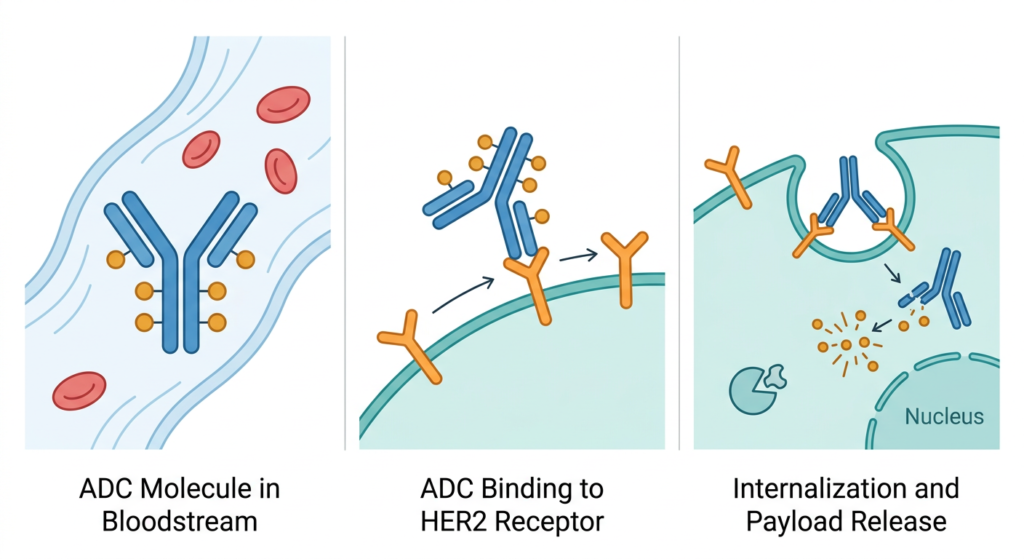
    Enhertu (trastuzumab deruxtecan, T-DXd) is an antibody-drug conjugate (ADC), a category of targeted therapy that links a cancer-targeting antibody to a chemotherapy payload. The antibody component is trastuzumab, which has been a cornerstone of HER2-positive breast cancer treatment for decades. The payload is deruxtecan, a topoisomerase I inhibitor chemotherapy. The linker between them is designed to be stable in the bloodstream but cleaved inside tumor cells.

    The mechanism creates a guided delivery system. Trastuzumab finds tumor cells expressing HER2 on their surface and binds to them. The ADC is then internalized into the cell, where the linker is cleaved and the deruxtecan payload is released directly inside the cancer cell, causing it to die. A key additional property of T-DXd’s payload is what’s called a bystander effect: some of the released chemotherapy can diffuse into neighboring cancer cells, including those that may not strongly express HER2. This may help explain T-DXd’s activity even in heterogeneous tumors.
    T-DXd already has FDA approvals for:

    If the May 18 decision is favorable, the neoadjuvant HER2-positive early breast cancer indication would be added to this list. For context on how ADC technology works in a related breast cancer setting, see our detailed coverage of Dato-DXd and TROPION-Breast02 in triple-negative breast cancer.


    The DESTINY-Breast11 Trial: Design and Results

    Design

    DESTINY-Breast11 (NCT05113251) was a global, multicenter, randomized, open-label Phase 3 trial conducted at 147 sites across 18 countries. It enrolled adults with previously untreated, high-risk HER2-positive early breast cancer, defined as tumors that were either T3 or larger with any nodal status, or any T stage with N1 to N3 nodal involvement (node-positive disease), including inflammatory breast cancer. The HER2-positive definition required either IHC 3+ or positive in situ hybridization. Patients were randomized in a 1:1:1 design across three arms:

    • T-DXd monotherapy arm: T-DXd 5.4 mg/kg every 3 weeks for 8 cycles (n=286), closed early
    • T-DXd-THP arm: T-DXd 5.4 mg/kg every 3 weeks for 4 cycles, then paclitaxel plus trastuzumab plus pertuzumab (THP) for 4 cycles (n=321)
    • ddAC-THP (control arm): Dose-dense doxorubicin plus cyclophosphamide every 2 weeks for 4 cycles, then THP for 4 cycles (n=320)

    The T-DXd monotherapy arm was closed early in March 2024, following an Independent Data Monitoring Committee recommendation based on lower pCR rates than the combination arms and low likelihood of demonstrating superiority. This was a pre-specified adaptive design decision, not a safety signal.

    Primary endpoint: pCR results

    OutcomeT-DXd plus THP (n=321)ddAC plus THP (n=320)
    pCR rate (ypT0/is ypN0)67.3%56.3%
    Absolute difference in pCR+11.0 percentage points
    p-value0.003
    Patients proceeding to surgery97.2%Comparable
    EFS HR (immature, 4.5% events)0.56 (95% CI 0.26 to 1.17)Reference

    Source: Harbeck N et al. Annals of Oncology. 2025. doi:10.1016/S0923-7534(25)04968-3. Presented at ESMO Congress 2025, Berlin. Abstract 291O.

    The 11-point improvement in pCR rate is clinically meaningful by any standard in this disease. To put it in context: with existing standard-of-care regimens, pCR rates in high-risk HER2-positive disease range from approximately 39 to 64% depending on population characteristics and regimen. The DESTINY-Breast11 control arm (56.3%) sits in the middle of that range, reflecting an appropriately representative benchmark. The T-DXd-THP arm’s 67.3% is at the top of and above that historical range.

    The benefit was consistent across pre-specified subgroups, including both hormone receptor-positive and hormone receptor-negative tumors, an important finding because HER2+/HR+ tumors historically have lower pCR rates and represent a more challenging treatment population.

    What about long-term survival?

    The EFS (event-free survival) hazard ratio of 0.56 suggests a 44% reduction in the rate of recurrence or death events in favor of T-DXd-THP numerically. However, EFS data maturity was only 4.5% at the time of the analysis, meaning very few events had occurred. The confidence interval (0.26 to 1.17) crosses 1.0, meaning the survival benefit is directionally promising but not yet statistically confirmed.

    This is expected and appropriate for a neoadjuvant trial in early-stage cancer: these patients were diagnosed at a potentially curable stage, and survival events take years to accumulate. The FDA’s precedent for accepting pCR as a surrogate endpoint in the neoadjuvant setting means approval does not require mature survival data. More mature EFS and overall survival data from DESTINY-Breast11 will emerge over subsequent years and will be critical for confirming the long-term value of the pCR benefit.


    Safety: Better Tolerability Than the Current Standard, With One Key Signal to Monitor

    One of the most striking findings in DESTINY-Breast11 is not the efficacy. It is the safety comparison. The T-DXd-THP arm had substantially fewer severe adverse events than the anthracycline-based control.

    Safety MetricT-DXd plus THPddAC plus THP
    Grade 3 or higher adverse events37.5%55.8%
    Serious adverse events10.6%20.2%
    Treatment interruptions37.8%54.5%
    Left ventricular dysfunction (all grade)1.3%6.1%
    ILD/pneumonitis (all grade)4.4%5.1%
    Grade 3/4 ILD events15
    Grade 5 (fatal) ILD events11
    Treatment-related deaths (all causes)1 (0.3%)2 (0.6%)
    Most common Grade 3 or higher AENeutropenia (13.8%)Hematologic toxicity predominant
    Fatigue (all grade)41.3%54.8%

    The cardiac finding warrants specific emphasis. Doxorubicin (the “A” in AC chemotherapy) is associated with dose-dependent cardiotoxicity, including cardiomyopathy and heart failure, that can emerge during treatment and persist or worsen years later. The 6.1% rate of left ventricular dysfunction in the control arm versus 1.3% in the T-DXd-THP arm represents a clinically important difference in a population that will be living with the long-term consequences of treatment for decades.

    The ILD signal: the key safety consideration for T-DXd Interstitial lung disease (ILD), inflammation and scarring of lung tissue, is the most important safety concern with T-DXd across all its indications. In DESTINY-Breast11, the all-grade ILD rate was 4.4% in the T-DXd-THP arm and 5.1% in the control arm, which are comparable. Most events were Grade 1 or 2 and manageable with dose modification and corticosteroids. However, there was one Grade 5 (fatal) ILD event in each arm, with the independent adjudication committee attributing one death in the T-DXd-THP arm to drug-related pneumonitis. This is not a reason to avoid the drug; one in each arm is a roughly comparable rate at this sample size. But ILD monitoring is a critical clinical requirement for T-DXd in practice. Current guidance requires baseline pulmonary assessment before starting T-DXd, prompt evaluation of any new or worsening respiratory symptoms (dyspnea, cough, fever), immediate T-DXd interruption if ILD is suspected, and corticosteroid treatment for confirmed cases. Providers switching to this regimen must be familiar with ILD surveillance protocols.

    What This Means for Patients Navigating Treatment Right Now

    If you have been diagnosed with HER2-positive breast cancer at stage II or III and are at the stage of discussing neoadjuvant treatment options with your oncologist, this FDA decision is directly relevant to your care.

    If the FDA approves on May 18

    • T-DXd followed by THP would become an FDA-approved option for high-risk (stage II/III) HER2-positive early breast cancer, specifically for patients with node-positive disease (N1 to N3) or large tumors (T3 or larger).
    • Your oncologist may recommend this regimen over the current anthracycline-based standard, particularly if your tumor characteristics suggest high risk and you have cardiovascular risk factors that make doxorubicin’s cardiac effects a concern.
    • The treatment involves 4 cycles of T-DXd (intravenous, every 3 weeks), followed by 4 cycles of paclitaxel plus trastuzumab plus pertuzumab, then surgery. Post-surgery treatment depends on whether you achieved pCR.
    • If you have already started a neoadjuvant regimen: do not switch without discussion with your oncologist. Mid-treatment changes are complex and require careful individual assessment.

    The treatment pathway after surgery

    pCR does not mean treatment is finished. Patients who achieve pCR after neoadjuvant therapy typically continue with adjuvant trastuzumab with or without pertuzumab, and those with HR+ disease also receive endocrine therapy. Patients who do NOT achieve pCR currently receive adjuvant ado-trastuzumab emtansine (T-DM1/Kadcyla) to address the residual disease that proved resistant to neoadjuvant treatment.

    A higher pCR rate means more patients entering that post-surgery phase in the most favorable prognostic position. For patients who still have residual disease, the adjuvant escalation pathway remains unchanged by this approval.

    For related context on ADC mechanisms and how different ADCs work across breast cancer subtypes, see our post on vepdegestrant and the PROTAC mechanism in ESR1-mutated ER+ breast cancer and our analysis of Dato-DXd in triple-negative breast cancer.


    Reading This Honestly: Context and Limitations

    Survival data is immature

    At 4.5% EFS maturity, we do not yet have confirmatory evidence that the pCR improvement translates into longer survival. The FDA’s precedent allows pCR as a surrogate, and the EFS directional signal (HR 0.56) is encouraging, but it is not yet proven. Patients and oncologists making decisions now are extrapolating from a strong surrogate, not from confirmed survival benefit. The maturing EFS and OS data from DESTINY-Breast11 will be the most important data to watch over the next several years.

    Representation limitations

    The published trial report specifically notes under-representation of Black or African American patients. This is a meaningful limitation in a disease where Black women are more likely to be diagnosed with aggressive subtypes and at advanced stages, and where outcomes disparities are well documented. Whether the pCR and safety results generalize fully to this population requires additional study and real-world evidence.

    The monotherapy arm closed early

    T-DXd monotherapy (without the THP sequence) achieved pCR rates of 43 to 51%, which is numerically inferior to both the combination arm and the control arm. The IDMC closed enrollment in that arm based on this finding. The approved regimen, if cleared, will be T-DXd followed by THP, not T-DXd alone. This distinction matters for clinical implementation.


    What Happens on and After May 18

    The PDUFA date is May 18, 2026. This is the deadline by which the FDA must complete its review. Decisions can come on or before this date.

    If approved, T-DXd followed by THP would immediately be available to prescribers as the first ADC-based neoadjuvant regimen for HER2-positive early breast cancer. NCCN guideline updates and payer coverage decisions typically follow relatively quickly for priority FDA approvals, though individual insurance authorization timelines vary.

    China has already approved this regimen based on the same DESTINY-Breast11 data. The European Medicines Agency review is ongoing. Regulatory validation across multiple agencies, if it follows, will strengthen the evidence base further.

    We will update this post when the FDA’s ruling is announced.


    Are you or a family member navigating a HER2-positive breast cancer diagnosis?

    Treatment decisions in early breast cancer are among the most consequential and time-sensitive in oncology. If you have been recently diagnosed with HER2-positive stage II or III breast cancer, the most important step is consultation with a breast oncologist at a cancer center with expertise in HER2-directed therapies and access to current clinical trial data. The NCI-Designated Cancer Centers directory maintains a searchable list of specialized breast oncology programs. Susan G. Komen and the Metastatic Breast Cancer Alliance maintain patient navigation resources. We will continue tracking the FDA’s decision and the maturing DESTINY-Breast11 survival data as both become available.


    Sources

    Primary trial publication: Harbeck N et al. Neoadjuvant trastuzumab deruxtecan alone or followed by paclitaxel, trastuzumab, and pertuzumab for high-risk HER2-positive early breast cancer (DESTINY-Breast11): a randomised, open-label, multicentre, phase III trial. Annals of Oncology. 2025. doi:10.1016/S0923-7534(25)04968-3

    PubMed: Harbeck N et al. DESTINY-Breast11. PubMed. PMID: 41130363.

    ESMO 2025 abstract: Harbeck N et al. DESTINY-Breast11: Neoadjuvant T-DXd alone or followed by THP vs SOC for high-risk HER2+ eBC. ESMO Congress 2025. Abstract 291O.

    DESTINY-Breast11 trial registration: NCT05113251. ClinicalTrials.gov.

    AstraZeneca/Daiichi Sankyo press release: Enhertu followed by THP before surgery resulted in a pathologic complete response in 67% of patients in DESTINY-Breast11 Phase III trial. astrazeneca.com. October 18, 2025.

    Targeted Oncology trial coverage: DESTINY-Breast11: Neoadjuvant T-DXd/THP Improves pCR in High-Risk HER2+ BC. targetedonc.com. October 2025.

    FDA surrogate endpoint resource: Surrogate Endpoint Resources for Drug and Biologic Development. FDA.gov.

    T-DM1 FDA approval: FDA approves ado-trastuzumab emtansine for HER2-positive breast cancer. FDA.gov.

    Patient resources: NCI Cancer Center directory | Susan G. Komen | MBC Alliance | NCCN Breast Cancer Guidelines

    Disclaimer: Health Evidence Digest provides general information about clinical trials and FDA regulatory processes for educational purposes. This content is not a substitute for professional medical advice, diagnosis, or treatment. Decisions about breast cancer treatment, including neoadjuvant therapy, should be made in close consultation with a qualified oncologist who can account for your individual diagnosis, tumor characteristics, and health status.
  • The FDA Said Yes to One ESR1 Drug and No to Another. What That Tells Us About the Future of Targeted Breast Cancer Treatment.

    The FDA Said Yes to One ESR1 Drug and No to Another. What That Tells Us About the Future of Targeted Breast Cancer Treatment.

    📌 The essentials On April 30, 2026, the FDA’s Oncologic Drugs Advisory Committee (ODAC) voted 6 to 3 against the clinical benefit of switching to camizestrant (AstraZeneca) in patients with HR-positive, HER2-negative metastatic breast cancer upon detection of an emerging ESR1 mutation during first-line therapy, before radiographic disease progression. The vote was based on data from the SERENA-6 Phase 3 trial. One day later, on May 1, 2026, the FDA approved vepdegestrant (Veppanu, Arvinas/Pfizer) for ER-positive, HER2-negative, ESR1-mutated advanced breast cancer after prior endocrine therapy. Both decisions involve ESR1 mutations in the same general patient population. They reached opposite conclusions. This post explains why, and what the difference reveals about how the FDA evaluates evidence in precision oncology.

    Within 24 hours in late April and early May 2026, the FDA’s approach to ESR1-guided breast cancer treatment produced two very different outcomes. On the same day that an advisory panel voted against approving camizestrant for a ctDNA-guided treatment switch before disease progression, vepdegestrant was on its way to full FDA approval for the same patient population at a later stage of treatment. Understanding why these two decisions went in opposite directions requires understanding exactly what each drug was asking the FDA to accept.


    What ESR1 Mutations Are and Why They Matter

    ESR1 mutations occur in the gene that encodes the estrogen receptor. In patients with hormone receptor-positive, HER2-negative breast cancer, the estrogen receptor is the primary driver of tumor growth, which is why endocrine therapies that block or degrade it form the backbone of treatment.

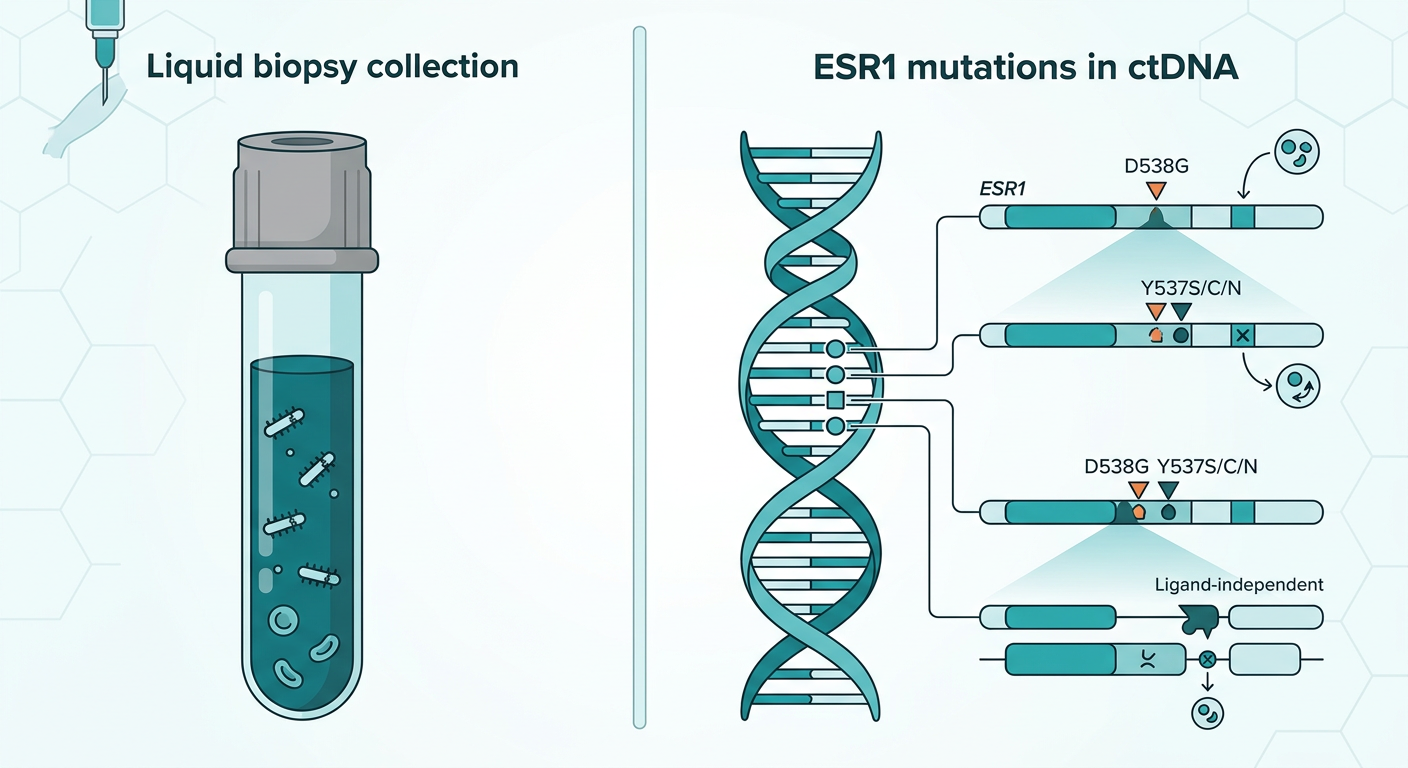
    The problem is that treatment pressure on the estrogen receptor eventually selects for mutations that allow it to remain active even in the absence of estrogen. These ESR1 mutations are acquired, meaning they typically arise during treatment rather than being present at diagnosis. They are detected in approximately 40 to 50% of patients who progress on first-line endocrine therapy plus a CDK4/6 inhibitor. When they emerge, they signal developing resistance and predict poor outcomes on continued aromatase inhibitor-based therapy.

    Liquid biopsy technology, specifically circulating tumor DNA (ctDNA) testing, can now detect these mutations from a blood draw, often before the tumor shows measurable growth on a scan. That capability is central to both of the regulatory stories described in this post, but in two very different ways.


    Vepdegestrant: The Approval That Happened

    On May 1, 2026, the FDA approved vepdegestrant (Veppanu) for adults with ER-positive, HER2-negative, ESR1-mutated advanced or metastatic breast cancer who had disease progression following at least one line of endocrine therapy. The approval arrived more than a month ahead of the June 5 PDUFA date, a signal that the FDA’s review was straightforward.

    The approval simultaneously authorized the Guardant360 CDx liquid biopsy as a companion diagnostic to identify patients with ESR1 mutations who are eligible for treatment.

    What the VERITAC-2 Trial Showed

    The approval was based on data from VERITAC-2 (NCT05654623), a global, randomized, open-label Phase 3 trial that enrolled 624 patients at 213 sites across 25 countries. Patients were required to have disease progression on one to two lines of endocrine therapy, including one line with a CDK4/6 inhibitor. They were randomized 1:1 to receive either vepdegestrant orally once daily or fulvestrant intramuscularly.

    In the 270-patient ESR1-mutated subgroup that drove the approval, vepdegestrant reduced the risk of disease progression or death by 43% compared to fulvestrant, with a median progression-free survival of 5.0 months versus 2.1 months (hazard ratio 0.57; 95% CI 0.42 to 0.77; p=0.0001). Across the overall trial population, regardless of ESR1 status, the PFS benefit did not reach statistical significance (hazard ratio 0.83; p=0.07), which reinforces the importance of ESR1 mutation testing before treatment selection and underscores that this approval is strictly for the ESR1-mutated population. Overall survival data are still immature, with only 16% of deaths having occurred at the time of the PFS analysis.

    The VERITAC-2 results were presented at the 2025 ASCO Annual Meeting and simultaneously published in The New England Journal of Medicine.

    What Makes Vepdegestrant Mechanistically Different

    Vepdegestrant is more than a new drug in an existing class. It is the first PROTAC (proteolysis-targeting chimera) to receive FDA approval for any indication, making this a landmark regulatory event beyond its breast cancer-specific context.

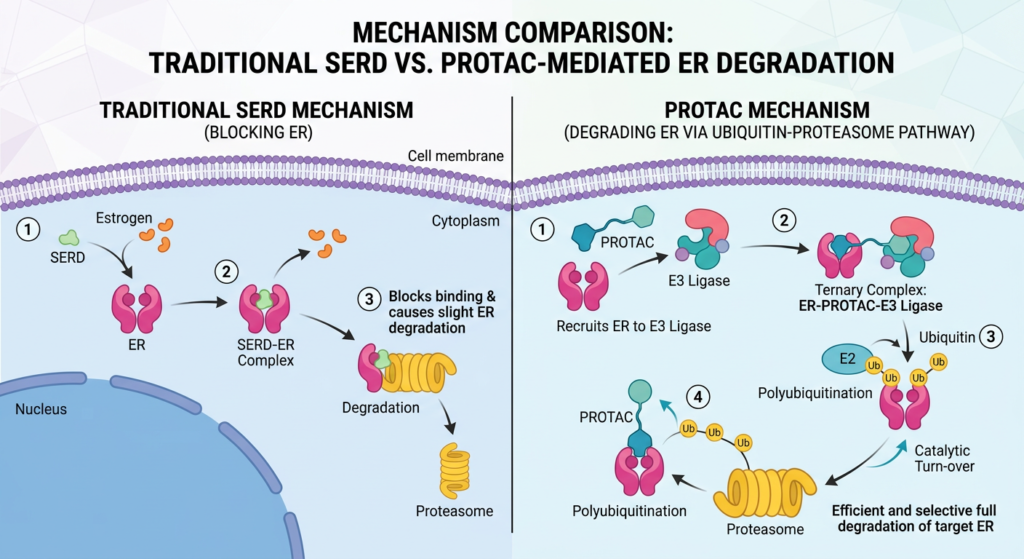
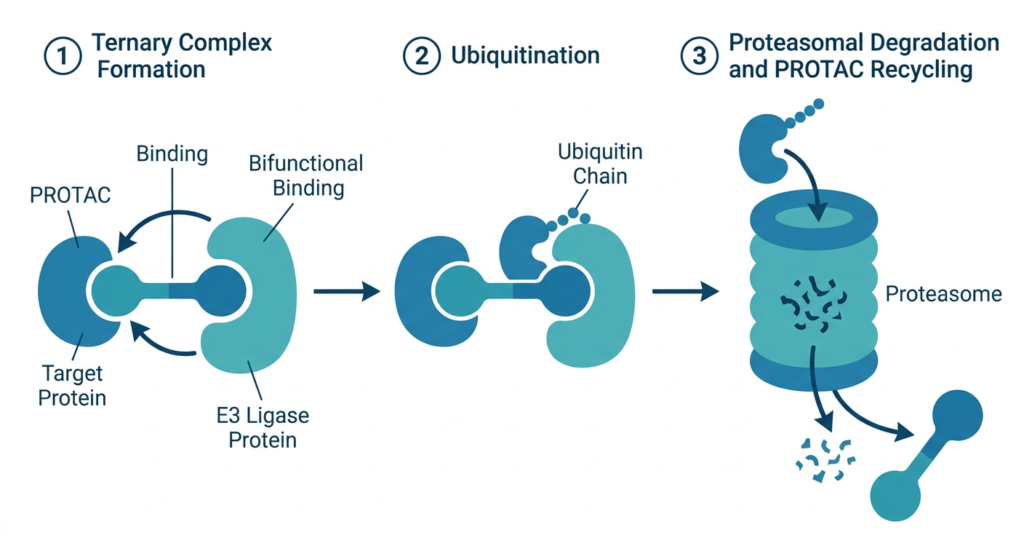
    Traditional SERDs (selective estrogen receptor degraders) like fulvestrant and elacestrant work by binding the estrogen receptor and triggering its degradation. Vepdegestrant takes a different approach: it is a bifunctional molecule that simultaneously recruits the estrogen receptor on one end and a cellular protein-degradation machinery component called an E3 ubiquitin ligase on the other. By bringing these two proteins into proximity, it directs the cell’s own waste-disposal system to destroy the estrogen receptor completely rather than simply blocking it.

    This catalytic mechanism means one molecule of vepdegestrant can degrade multiple copies of the estrogen receptor and is then recycled to degrade more. It eliminates the receptor rather than occupying it, which is mechanistically important when dealing with ESR1 mutations that cause the receptor to remain active even when blocked.

    We covered the full PROTAC mechanism and the VERITAC-2 trial data in detail here. The May 1 FDA approval means that post is now confirmed, and the drug is commercially available.

    What Patients Should Know About Vepdegestrant

    Vepdegestrant (Veppanu) is an oral once-daily tablet taken with food at a dose of 200 mg. It is indicated for patients who have already progressed on at least one line of endocrine therapy, including a CDK4/6 inhibitor. ESR1 mutation testing with an FDA-authorized ctDNA assay such as Guardant360 CDx is required before starting treatment.

    The FDA label includes warnings about QTc interval prolongation (a heart rhythm consideration that requires monitoring) and embryo-fetal toxicity. The most common adverse effects across the trial were musculoskeletal pain, nausea, fatigue, hot flashes, and headache. Patients should discuss the full safety profile with their oncologist.


    Camizestrant: The Vote Against

    The ODAC vote on April 30, 2026, addressed a very different question. AstraZeneca was not asking the FDA to approve camizestrant for patients who had already progressed. It was asking whether camizestrant should be approved for patients who had developed an ESR1 mutation in a ctDNA blood test but had not yet shown radiographic evidence of disease progression on their current treatment.

    This is a fundamentally different clinical scenario, and the distinction is the reason the vote went against approval.

    The SERENA-6 Trial Design

    SERENA-6 (NCT04964934) enrolled patients with HR-positive, HER2-negative advanced breast cancer who were stable on first-line aromatase inhibitor plus CDK4/6 inhibitor therapy for at least six months. Every two to three months, patients had ctDNA testing using the Guardant360 CDx assay. When an ESR1 mutation was detected in the blood, patients who had no evidence of disease progression on imaging were randomized to either continue their existing therapy or switch to camizestrant 75 mg plus their CDK4/6 inhibitor.

    The PFS results were numerically compelling. The median PFS was 16.0 months in the camizestrant arm versus 9.2 months in the continued-aromatase-inhibitor arm (hazard ratio 0.44; p less than 0.00001). By the conventional statistical measures, this looks like a large effect. The ODAC voted 6 to 3 against it anyway. Why?

    Why ODAC Said No

    The committee’s concerns centered on three interconnected problems with interpreting the trial’s results as evidence of clinically meaningful benefit.

    The PFS time zero problem. In SERENA-6, progression-free survival was measured from the time of randomization, which occurred at ESR1 mutation detection rather than at the start of treatment. Patients in the control arm who were still on therapy at randomization were inevitably closer to their next progression event than patients who had just started a new drug. This creates a structural asymmetry in how PFS is measured across the two arms that is not a drug effect. FDA reviewers flagged this as a nonstandard PFS time zero that complicates interpretation.

    PFS2 is confounded by the protocol design. PFS2 (time to progression on the next line of therapy) is sometimes used as a supporting endpoint to demonstrate that a PFS benefit translates downstream. In SERENA-6, patients in the control arm were switched to camizestrant upon progression, as specified in the protocol. This protocol-mandated switch means PFS2 cannot serve as an independent confirmation of benefit, because both arms ultimately received the same drug.

    Overall survival is immature and uncertain. OS data at the time of the ODAC meeting were too early to be interpretable. Committee members noted that without a mature OS signal, and with the PFS data carrying the methodological concerns described above, there was insufficient evidence that the ctDNA-guided switch before progression meaningfully improved patient outcomes compared to simply switching at the time of standard radiographic progression.

    One additional safety note that ODAC discussed: there is a signal of potential cardiac toxicity when camizestrant is combined with ribociclib, one of the CDK4/6 inhibitors used in the trial. This was not a primary reason for the negative vote, but it added to the committee’s caution.


    The Conceptual Question at the Heart of Both Decisions

    Camizestrant and vepdegestrant both target ESR1 mutations. Both are oral SERDs (camizestrant) or SERD-class agents (vepdegestrant). But they were asking the FDA to accept fundamentally different propositions.

    Vepdegestrant asked: does this drug help patients after they have already progressed on prior therapy? This is a well-established clinical endpoint with clear time zero, an appropriate comparator (fulvestrant, which is the current standard), and a patient population that has a demonstrated unmet need. The answer was yes.

    Camizestrant asked: should treatment be switched based on a molecular signal in the blood, before the patient shows any clinical or radiographic signs of progression? This is a newer paradigm in precision oncology called ctDNA-guided adaptive therapy, and the SERENA-6 trial was the first global registrational trial to test it. The FDA’s position, reflected in the ODAC vote, was that SERENA-6 did not adequately answer this question.

    The comparison matters because it illustrates a distinction that runs through many recent oncology regulatory debates. A large PFS hazard ratio is not by itself sufficient evidence of clinical benefit if the design creates ambiguity about what is actually being measured. ODAC members were not questioning whether camizestrant is an active drug. Several acknowledged that the drug likely has meaningful anti-tumor activity. What they were questioning is whether the SERENA-6 trial design adequately demonstrated that switching before progression is better for patients than switching at progression, which is the standard approach.


    What Happens to Camizestrant Next

    An ODAC vote against clinical benefit does not automatically result in a formal FDA rejection, but it is a strong signal. Given that the FDA’s own reviewers raised similar concerns before the advisory committee meeting, approval of the specific indication tested in SERENA-6 is unlikely without additional data.

    AstraZeneca has separate ongoing trials for camizestrant in different settings. The SERENA-4 trial is evaluating camizestrant in the first-line setting for HR-positive, HER2-negative advanced breast cancer, which is a different clinical question and regulatory submission. A negative ODAC vote on one trial in one specific indication does not preclude a different regulatory outcome for the same drug in a different setting.


    What ctDNA-Guided Treatment Really Means for the Field

    SERENA-6 was the first randomized registrational trial to test the concept of using a liquid biopsy molecular signal to guide a treatment switch before clinical progression. The ODAC vote does not close the door on this concept. It identifies what the evidence will need to look like for regulators to accept it.

    The fundamental question is whether catching and responding to molecular resistance earlier than radiographic progression meaningfully changes patient outcomes. The biological rationale is plausible: treating a smaller, less heterogeneous tumor burden before the clone driving resistance has fully taken over should theoretically be advantageous. But biological plausibility and clinical proof are different things. The trial design challenges in SERENA-6 made it difficult for the committee to separate the drug’s effect from the structural features of the ctDNA-guided randomization approach.

    Future trials in this space will likely need to address the PFS time zero issue directly, use OS or PFS2 endpoints that are not confounded by protocol-mandated switches, and potentially show head-to-head evidence that pre-progression switching outperforms standard progression-triggered switching. That is a harder evidentiary bar, but it is a consistent one. The FDA has applied similar rigor to other adaptive precision oncology designs.

    For patients with HR-positive metastatic breast cancer and their oncologists, the practical takeaway is that ctDNA testing for ESR1 mutations is increasingly central to treatment decisions. The Guardant360 CDx approval as a companion diagnostic for vepdegestrant means ESR1 liquid biopsy testing is now both clinically actionable and reimbursement-supported in the context of that approved indication. Whether it will also be used to guide pre-progression switches remains an open question pending further evidence.


    What to Ask Your Oncologist

    If you have HR-positive, HER2-negative advanced or metastatic breast cancer and have progressed on prior endocrine therapy including a CDK4/6 inhibitor, ask whether ESR1 mutation testing has been done on a recent blood sample. If an ESR1 mutation is present, vepdegestrant (Veppanu) is now an approved option and should be part of the treatment discussion.

    If you are currently stable on first-line aromatase inhibitor plus CDK4/6 inhibitor therapy, the ctDNA-guided pre-progression switch with camizestrant is not currently an approved approach based on the April 30 ODAC vote. Routine ESR1 monitoring during first-line therapy is likely to be discussed by your oncologist as evidence continues to develop, but it should not change your current treatment plan without a direct conversation with your care team.

    For information on clinical trials evaluating newer approaches to ESR1-mutated breast cancer, ClinicalTrials.gov is the primary reference.


    Sources

    FDA approval of vepdegestrant: FDA approves vepdegestrant for ER-positive, HER2-negative, ESR1-mutated advanced or metastatic breast cancer. FDA.gov. May 1, 2026.

    VERITAC-2 trial registration: NCT05654623. ClinicalTrials.gov.

    Arvinas FDA approval announcement: Arvinas Announces FDA Approval of VEPPANU (vepdegestrant). GlobeNewswire. May 1, 2026.

    Targeted Oncology vepdegestrant approval: FDA Approves Vepdegestrant for ESR1-Mutated ER+/HER2- Advanced Breast Cancer. Targeted Oncology. May 2026.

    OncLive ODAC vote coverage: FDA ODAC Votes Against Clinical Benefit of Switching to Camizestrant in HR+ Breast Cancer After ESR1 Mutation Detection. OncLive. April 30, 2026.

    CancerNetwork ODAC coverage: FDA ODAC Votes No to Camizestrant for HR+/HER2- ESR1 Advanced Breast Cancer. CancerNetwork. April 2026.

    Targeted Oncology ODAC coverage: FDA’s ODAC Votes Against Camizestrant in Advanced Breast Cancer. Targeted Oncology. April 2026.

    AstraZeneca press release on ODAC vote: Update on FDA Advisory Committee vote on camizestrant. AstraZeneca. April 30, 2026.

    OncLive April breast cancer flashback: FDA Flashback: Breast Cancer Decisions and News From April 2026. OncLive. 2026.

    SERENA-6 trial registration: NCT04964934. ClinicalTrials.gov.

    ESR1 mutation background: ESR1 mutations in breast cancer. StatPearls. NCBI.

    AACR Q1 2026 Approvals: FDA Approvals in Oncology: January-March 2026. AACR Cancer Research Catalyst. April 2026.

    Disclaimer: Health Evidence Digest provides general information about FDA regulatory processes, clinical trial results, and oncology research for educational purposes only. Nothing on this site constitutes medical advice, diagnosis, or treatment. Vepdegestrant (Veppanu) is FDA-approved and commercially available; camizestrant is not approved in the indication discussed in this post. Treatment decisions for advanced breast cancer should be made in close consultation with a qualified oncologist who can evaluate your individual diagnosis, mutation status, and treatment history.
  • Ozempic for PCOS? Clinical Trials Are Testing It Right Now. Here’s What the Research Will Need to Show.

    Ozempic for PCOS? Clinical Trials Are Testing It Right Now. Here’s What the Research Will Need to Show.

    If you have polycystic ovary syndrome and have been following health news over the past year or two, you have almost certainly wondered about semaglutide. The GLP-1 receptor agonist that transformed conversations about obesity and type 2 diabetes is now being formally investigated as a treatment for PCOS. Multiple clinical trials are actively enrolling patients in 2026.

    The scientific rationale is genuinely compelling. The existing evidence from smaller studies is encouraging. But there is an important distinction between buzz and evidence, and for a condition as complex and heterogeneous as PCOS, that distinction matters enormously. Semaglutide is not approved for PCOS. No drug is specifically approved for PCOS. The question these trials are trying to answer is whether semaglutide should be.

    This post covers the biology behind why semaglutide makes sense for PCOS, what published data already shows, which trials are now running and what they are specifically measuring, and what questions still need answers before this becomes standard practice.


    PCOS: Why Treatment Has Always Been a Patchwork

    Polycystic ovary syndrome affects an estimated 10% of women of reproductive age worldwide, making it one of the most common endocrine disorders in women. Despite that prevalence, there is no FDA-approved drug specifically for PCOS. Treatment today consists of medications developed for other conditions, repurposed off-label: oral contraceptives for cycle regulation, metformin for insulin resistance, spironolactone for androgen-related symptoms like excess hair growth and acne, and fertility medications for those trying to conceive.

    The patchwork approach exists because PCOS is not a single disease. It is a syndrome with multiple overlapping features that present differently from woman to woman. To receive a PCOS diagnosis under the Rotterdam criteria, a woman must have two of the following three: irregular or absent ovulation, elevated androgen levels (causing symptoms like hirsutism, acne, and hair loss), and polycystic-appearing ovaries on ultrasound. Many but not all women with PCOS also have insulin resistance and metabolic features. A significant proportion have obesity. A meaningful minority, sometimes estimated at 20 to 30%, are lean.

    What PCOS actually involves: the four main feature clusters Ovulatory dysfunction: Irregular or absent periods, anovulation, and associated difficulty conceiving. This is the most common reason women seek evaluation. Hyperandrogenism: Elevated testosterone and related androgens causing hirsutism (excess body and facial hair), acne, and androgenic hair loss. This is the feature most affecting quality of life for many women. Metabolic features: Insulin resistance (present in 50 to 70% of women with PCOS regardless of weight), dyslipidemia, elevated fasting glucose, and increased risk of type 2 diabetes and cardiovascular disease later in life. Psychological features: Depression, anxiety, and disordered eating occur at significantly higher rates in women with PCOS than in the general population, though these are often underaddressed in standard care.

    Why Semaglutide Makes Biological Sense for PCOS

    Semaglutide is a GLP-1 receptor agonist. It mimics glucagon-like peptide 1, a gut hormone that stimulates insulin secretion in response to meals, slows gastric emptying, and signals satiety to the brain. It was developed for type 2 diabetes and obesity, both conditions strongly driven by insulin resistance. This is where the PCOS connection begins.

    In PCOS, insulin resistance is not just a complication. It is a central driver and amplifier of the disorder. Elevated insulin levels act directly on the ovary, specifically on theca cells, to stimulate androgen production. More insulin means more testosterone and DHEA-S. More androgens mean disrupted follicle development, impaired ovulation, and worsened symptoms. It also feeds back into insulin resistance through inflammatory and metabolic pathways, creating a self-reinforcing cycle.

    Reducing insulin resistance has long been a therapeutic target in PCOS. Metformin, the current first-line metabolic treatment, works primarily by reducing hepatic glucose output and improving insulin sensitivity. GLP-1 receptor agonists reduce insulin resistance through a complementary but distinct pathway: they enhance glucose-stimulated insulin secretion, reduce postprandial glucose spikes, lower fasting insulin, and produce significant weight loss that further improves insulin sensitivity. For many women with PCOS, this combination of effects addresses multiple features of the disorder simultaneously.

    For a broader overview of what the 2026 research shows about GLP-1 medications across the full spectrum of fertility, ovulation, and pregnancy safety in PCOS, see our companion post: GLP-1 Medications and PCOS: What the 2026 Research Actually Shows.


    What Published Evidence Already Shows

    The current evidence base for GLP-1 receptor agonists in PCOS comes from a mix of older liraglutide trials, smaller semaglutide studies, and published meta-analyses that synthesize this literature. It is encouraging. It is also preliminary.

    The published meta-analyses

    A 2024 meta-analysis published in the Journal of Diabetes and Its Complications pooled data from four randomized controlled trials involving 176 women with PCOS treated with GLP-1 receptor agonists (primarily liraglutide, with some semaglutide). Compared to placebo, GLP-1 agonists produced:

    OutcomeResult vs. placebo
    Waist circumferenceReduced by 5.16 cm (95% CI 4.21 to 6.11; p less than 0.00001)
    BMIReduced by 2.42 units (95% CI 1.74 to 3.10; p less than 0.00001)
    Serum triglyceridesReduced significantly (MD −0.20 mmol/L; p less than 0.00001)
    Total testosteroneReduced significantly (MD −1.33 nmol/L; 95% CI −2.55 to −0.12; p=0.03)
    HOMA-IR (insulin resistance)Significant improvement

    Source: Morais et al. Journal of Diabetes and Its Complications. 2024;38(10):108834. doi:10.1016/j.jdiacomp.2024.108834

    A May 2025 meta-analysis in Scientific Reports, searching databases through October 2024, reached broadly consistent conclusions: GLP-1 receptor agonists outperformed both placebo and metformin on anthropometric and metabolic outcomes in women with PCOS, with additional improvements in androgen markers and lipid profiles.

    The liraglutide RCT and the menstrual regularity finding

    The most robust individual trial in this space is the Nylander et al. 2017 randomized controlled trial published in Human Reproduction, which enrolled 72 women with PCOS. Participants received liraglutide (the predecessor GLP-1 agonist to semaglutide) for 26 weeks. Results showed significant reductions in BMI, free androgen index, fasting insulin, and LH/FSH ratio compared to placebo. Notably, 44% of women in the liraglutide group achieved regular menstrual cycles by week 24 versus significantly fewer in the placebo group. That menstrual regularity finding is the most clinically meaningful single result from the existing literature.

    Combination semaglutide plus metformin

    A prospective randomized controlled trial published in 2025 specifically examining overweight and obese women with PCOS assigned participants to metformin alone, semaglutide alone, or combination therapy. The combination group outperformed metformin monotherapy in reducing BMI, androgen levels, insulin resistance, and menstrual irregularities. Notably, the natural pregnancy rate was significantly higher in the combination group than in the metformin-only group. This is the most direct evidence to date supporting a fertility benefit, though the trial was not large enough to draw definitive conclusions and was conducted in a specific patient population.

    The honest limitations of the existing evidence base The published meta-analyses and most individual trials have important limitations that must be acknowledged before drawing clinical conclusions. Sample sizes are small: The 2024 meta-analysis pooled just 176 participants across four trials. The 2025 Scientific Reports meta-analysis similarly covered a limited participant pool. These are underpowered to detect meaningful differences in rarer outcomes like live birth rates. Populations are selective: Most trials enrolled women with PCOS and obesity or overweight. The evidence base for women with lean PCOS (BMI under 25 with documented insulin resistance) is far more limited, and some benefits may be primarily mediated through weight loss rather than any direct hormonal effect. Follow-up is short: Most trials run 12 to 28 weeks. The long-term effects of GLP-1 agonist use on reproductive function, ovarian reserve, and metabolic health in young women with PCOS over years of use are not yet characterized. Primary endpoints vary: Different trials measured different outcomes. Without a consistent primary endpoint across studies, synthesizing results into a definitive conclusion is difficult. The ongoing trials are attempting to address this.

    The 2025 to 2026 Trials: What They Are Specifically Studying

    Several clinical trials registered and recruiting in 2025 and 2026 are specifically investigating semaglutide in women with PCOS. Here are the most relevant currently active programs.

    RESTORE trial: NCT05819853 (University of Colorado)

    This is the most clinically ambitious of the currently active trials. RESTORE (Role of Semaglutide in Restoring Ovulation in Youth and Adults with Polycystic Ovary Syndrome) is a Phase 3 study enrolling 80 girls and women aged 12 to 35 years old with obesity and PCOS. Participants receive up to 10 months of semaglutide with dose escalation per manufacturer recommendations, with a maximum dose of 1.7 mg.

    FeatureDetails
    NCT numberNCT05819853
    PhasePhase 3
    SponsorUniversity of Colorado, Denver
    Age range12 to 35 years
    Estimated enrollment80 participants
    TreatmentSemaglutide (Wegovy/Ozempic) injectable, 10 months, dose escalation to max 1.7 mg
    Primary endpointChange in ovulation frequency before and after semaglutide
    Secondary endpointsChange in whole-body insulin sensitivity; change in ovarian morphology; androgen levels; metabolic markers
    Projected completionFebruary 2028
    StatusRecruiting

    The choice of ovulation frequency as the primary endpoint is significant. Rather than measuring weight loss or metabolic markers as primary outcomes, RESTORE is asking the most clinically meaningful question for a reproductive-age population: does semaglutide restore the normal ovulatory function that PCOS disrupts? The adolescent inclusion (ages 12 to 17) is also notable, as it addresses the understudied question of whether early metabolic intervention in young women with PCOS can improve reproductive outcomes before the condition becomes entrenched.

    Semaglutide and PCOS: Emerging Treatment Strategy (NCT06222437)

    Sponsored by Methodist Health System, this Phase 1 single-arm interventional study focuses specifically on ovulation and androgen outcomes. Its primary objective is to determine the effect of semaglutide on ovulation and menstrual regularity, and it also measures testosterone, sex hormone-binding globulin (SHBG), and changes in hirsutism. This is one of the few trials that lists androgen-specific clinical measures (not just lab values) as a primary focus, making it directly relevant for women whose main PCOS burden is hirsutism and acne rather than fertility concerns.

    Semaglutide vs. metformin in PCOS (NCT05646199, NCT06896981)

    Two Phase 2/3 trials are specifically comparing semaglutide against the current standard metabolic therapy for PCOS. The University of Hull trial (NCT05646199) randomizes 60 women with PCOS and obesity to semaglutide or metformin over 28 weeks, with primary endpoint of weight loss and secondary endpoints including free androgen index, glucose tolerance, and blood pressure. The Bangladesh trial (NCT06896981) is evaluating the combination of low-dose semaglutide plus metformin versus metformin alone over 12 weeks in 30 women with PCOS and obesity.

    The metformin comparison matters clinically. If semaglutide is going to displace or be added to metformin in PCOS care, it needs to demonstrate it does something meaningfully better than the existing cheap, well-tolerated, off-patent treatment. Head-to-head data is more actionable for prescribers than placebo-controlled data alone.


    What the Trials Will Need to Show

    For semaglutide to move from promising to proven in PCOS, the clinical trials will need to demonstrate several things that smaller studies have not yet conclusively shown.

    • Ovulatory restoration across the weight spectrum. Most trial participants have obesity. Whether semaglutide restores ovulation in normal-weight women with PCOS, where the mechanism is less clearly tied to weight loss and more to a possible direct hormonal effect, is not yet established.
    • Androgen normalization and symptom improvement. Lab values are useful, but what patients care about is whether hirsutism, acne, and hair loss actually improve. Trials need patient-reported outcome measures and validated clinical scales for these symptoms, not just serum testosterone numbers.
    • Live birth rates for women trying to conceive. This is the endpoint that matters most for a large proportion of the PCOS population. One trial showed higher natural pregnancy rates with combination semaglutide plus metformin, but live birth rate data is absent from most studies. And critically, semaglutide must be stopped before attempting conception, so the fertility benefit question is more nuanced than it first appears.
    • Long-term safety in reproductive-age women and adolescents. Semaglutide’s safety data comes predominantly from adults with diabetes or obesity, typically older than the PCOS population. The RESTORE trial’s inclusion of participants as young as 12 will generate important adolescent safety data that currently does not exist.
    • Efficacy in lean PCOS. Roughly 20 to 30% of women with PCOS have a BMI under 25. Their insulin resistance is real but may be less severe, and the weight loss mechanism that drives metabolic improvement in obese participants may contribute less to benefit in this group. None of the current trials are designed specifically for lean PCOS.

    The Pregnancy Contraindication: A Critical Practical Issue

    Semaglutide is contraindicated during pregnancy. This is not a precautionary label statement. Animal studies have shown fetal harm at doses producing exposures similar to the human therapeutic dose. The FDA prescribing information for both Ozempic and Wegovy includes a recommendation to discontinue semaglutide at least two months before a planned pregnancy, to allow for adequate washout given the drug’s approximately one-week half-life.

    For women with PCOS who are actively trying to conceive, this creates a specific clinical scenario that requires careful planning. Semaglutide can be used to improve metabolic parameters and potentially restore ovulatory function, then discontinued before conception is attempted. Effective contraception during treatment is required. The fertility benefit, if it exists, would need to manifest through improved baseline reproductive function that persists after drug discontinuation rather than through ongoing treatment during the conception window.

    This is an important conversation to have with a reproductive endocrinologist before starting semaglutide with the goal of improving fertility. The timing, the contraception plan, and the monitoring protocol all require individual clinical guidance. For a full discussion of the safety evidence around GLP-1 medications and pregnancy, including what the 2026 pharmacovigilance data shows, see our post: GLP-1 Medications and PCOS: What the 2026 Research Actually Shows About Fertility, Ovulation, and Pregnancy Safety.


    What Women With PCOS Can Do Right Now

    If you want to participate in a trial

    Search ClinicalTrials.gov using “semaglutide” and “polycystic ovary syndrome” for actively recruiting studies. The RESTORE trial (NCT05819853) at the University of Colorado is enrolling girls and women aged 12 to 35 with obesity and PCOS. Participation in clinical trials is not a last resort. It is how the field generates the evidence that eventually benefits all patients with the condition.

    If you are currently managing PCOS

    Semaglutide is not currently approved for PCOS, and prescribing it off-label for this indication without a diabetes or obesity co-diagnosis involves clinical judgments that should be made with a specialist, not based on online health content. Evidence-based options available today include metformin for insulin resistance, oral contraceptives or progestins for cycle regulation, spironolactone for androgen symptoms, and letrozole or clomiphene for ovulation induction in those trying to conceive. The 2023 International Evidence-Based PCOS Guideline from Monash University is a reliable reference for understanding the current standard of care.

    If you also have obesity or overweight

    If your BMI qualifies you for an obesity medication on its own merits (BMI 30 or above, or 27 or above with at least one weight-related comorbidity), semaglutide or another GLP-1 agonist may already be an appropriate treatment for your weight and metabolic health, and there is published evidence suggesting it also benefits PCOS features in this population. This is a conversation worth having with your gynecologist or endocrinologist, who can assess whether you meet criteria for approved obesity pharmacotherapy.

    We will be watching these trials closely.

    The RESTORE trial at the University of Colorado is the most clinically ambitious study of semaglutide in PCOS currently running, with results expected in 2028. For women with PCOS who have been managing symptoms with off-label therapies for years, the prospect of a drug that addresses the metabolic root of the condition rather than just managing individual symptoms is worth following carefully. The best resources for staying current on PCOS care include ACOG, the Androgen Excess and PCOS Society, and the international evidence-based PCOS guideline from Monash University.

    For more women’s health coverage on Health Evidence Digest, see our posts on new 2026 cervical cancer screening guidelines and the first FDA-approved non-hormonal endometriosis drug entering human trials.


    Sources

    RESTORE trial registration: Role of Semaglutide in Restoring Ovulation in Youth and Adults With Polycystic Ovary Syndrome. NCT05819853. ClinicalTrials.gov.

    NCT06222437: Semaglutide and Polycystic Ovarian Syndrome: an Emerging Treatment Strategy. Methodist Health System. ClinicalTrials.gov.

    NCT05646199: Semaglutide vs Metformin in Polycystic Ovary Syndrome (PCOS). University of Hull. ClinicalTrials.gov.

    NCT06896981: Semaglutide in Women With Polycystic Ovary Syndrome and Obesity. BSMMU, Bangladesh. ClinicalTrials.gov.

    2024 meta-analysis (JDC): Morais BAA et al. The efficacy and safety of GLP-1 agonists in PCOS women living with obesity in promoting weight loss and hormonal regulation. Journal of Diabetes and Its Complications. 2024;38(10):108834. doi:10.1016/j.jdiacomp.2024.108834

    2025 meta-analysis (Scientific Reports): Efficacy and safety of GLP-1 receptor agonists on weight management and metabolic parameters in PCOS women. Scientific Reports. May 2025. doi:10.1038/s41598-025-99622-4

    GLP-1 RAs in PCOS narrative review: Endocrine and metabolic effects of GLP-1 receptor agonists on women with PCOS. Endocrine Connections. 2025;14(5). doi:10.1530/EC-24-0529

    2024 PCOS guideline meta-analysis: Goldberg et al. Anti-obesity pharmacological agents for PCOS: A systematic review and meta-analysis to inform the 2023 international evidence-based guideline. Obesity Reviews. 2024;25(5):e13704. doi:10.1111/obr.13704

    Combination semaglutide + metformin in PCOS: Effects of combined metformin and semaglutide therapy on body weight, metabolic parameters, and reproductive outcomes in overweight/obese women with PCOS. PMC12297736. pmc.ncbi.nlm.nih.gov. 2025.

    Patient resources: ACOG PCOS FAQ | Androgen Excess and PCOS Society | International PCOS Guideline | ClinicalTrials.gov

    Disclaimer: Health Evidence Digest provides general information about clinical research and health topics for educational purposes. This content is not a substitute for professional medical advice. Semaglutide is not FDA-approved for PCOS. Women with PCOS should speak with their gynecologist, reproductive endocrinologist, or healthcare provider about their individual treatment plan.

  • The First Non-Hormonal Endometriosis Drug Just Entered Human Trials and It Works in a Way Nothing Else Does

    The First Non-Hormonal Endometriosis Drug Just Entered Human Trials and It Works in a Way Nothing Else Does

    📌 Read this first: what this milestone is and isn’t On March 23, 2026, the FDA cleared an Investigational New Drug (IND) application for ENDO-205 (EndoCyclic Therapeutics). IND clearance means the FDA has reviewed enough preclinical and manufacturing data to permit human testing to begin. It is not an approval. It is not proof the drug works in humans. The Phase 1 trial is enrolling healthy premenopausal women of reproductive age, not patients with endometriosis. Phase 1 establishes safety and tolerability. Whether ENDO-205 is effective in women who have the disease will be tested in Phase 2, which could be years away. Most drugs that enter Phase 1 do not reach approval. The science behind ENDO-205 is genuinely novel and the preclinical data is promising. It is also early-stage, and the history of women’s health drug development is full of promising early-stage candidates that did not pan out. This post covers both the science and the appropriate context.

    If you have endometriosis, you have probably encountered some version of the same conversation more than once. The pain isn’t that bad. Many women have painful periods. Here’s a birth control pill to help with symptoms. If you’re not trying to get pregnant right now, here’s a hormone therapy that will help. And if none of that works, here’s a surgery, with the understanding that the lesions often come back.

    Endometriosis affects an estimated 190 million women and girls worldwide, roughly 1 in 10 of reproductive age. It takes an average of 7 to 10 years from symptom onset to diagnosis in many healthcare systems. And despite the scale of the disease and the severity of its impact on quality of life, fertility, and daily function, the pharmacological options have remained essentially unchanged for decades: suppress hormones, manage symptoms, repeat.

    On March 23, 2026, the FDA cleared the Investigational New Drug application for ENDO-205, a first-in-class non-hormonal therapeutic developed by EndoCyclic Therapeutics. Human trials are now beginning. The drug uses a mechanism unlike anything currently approved or in late-stage development for this disease: rather than suppressing the hormonal environment that sustains endometriosis lesions, it targets the lesions themselves.


    Endometriosis: The Disease That Took 7 to 10 Years to Diagnose

    Endometriosis occurs when tissue similar to the endometrium, the uterine lining, grows outside the uterus. The most common sites are the ovaries, fallopian tubes, and pelvic peritoneum, but lesions can also develop on the bladder, bowel, diaphragm, and in rare cases elsewhere in the body. Each menstrual cycle, this misplaced tissue responds to estrogen and progesterone the way endometrial tissue does everywhere: it thickens, breaks down, and bleeds. But the blood and tissue have nowhere to go. The result is chronic inflammation, scar tissue formation, and adhesions that can fuse organs together.

    Symptoms vary widely. Severe dysmenorrhea (menstrual pain) is the most common presenting complaint. Many patients also experience chronic pelvic pain throughout the month, painful intercourse (dyspareunia), pain with bowel movements or urination, heavy menstrual bleeding, and fatigue. Infertility affects 30 to 50% of women with endometriosis. For some, the disease is debilitating. For others, lesions are found incidentally during surgery for another reason with minimal symptoms.

    The diagnostic delay: 7 to 10 years is not a rounding error The average time from first symptom to confirmed endometriosis diagnosis is 7 to 10 years in most high-income countries, and longer in settings with less gynecological specialist access. This delay is not primarily a technological problem. Endometriosis cannot be diagnosed with a blood test, an ultrasound, or an MRI alone (though imaging can suggest it). The gold standard for definitive diagnosis has historically been laparoscopic surgery with biopsy. The result: for years, clinicians who were not prepared to offer surgery would offer empirical treatment, a birth control pill or other hormonal suppression, without confirming the diagnosis. This masked symptoms without establishing a diagnosis and delayed specialist referral. In March 2026, ACOG updated its clinical guidance to state that a clinical diagnosis based on symptoms and physical examination is now sufficient to begin treatment, and that surgical confirmation is no longer required before care begins. This is a meaningful change in how the disease is managed and it will bring more women into treatment sooner, increasing the clinical pressure to have treatments that work better and carry fewer trade-offs.

    The Current Treatment Landscape: Effective, But With Costs

    Every pharmacological treatment currently available for endometriosis works by suppressing or modifying the hormonal environment that sustains the disease. The logic is sound: endometrial tissue, including misplaced endometrial-like tissue, responds to estrogen. Reduce estrogen, reduce tissue stimulation, reduce symptoms. But this approach carries the same trade-off at every tier of the treatment ladder.

    Treatment classExamplesHow it worksKey limitations
    Combined oral contraceptivesMany brandsSuppress ovulation and reduce menstrual flow~1/3 of patients have progesterone resistance; does not eliminate lesions; contraceptive effect suspends fertility
    ProgestinsNorethindrone, medroxyprogesterone, dienogestSuppress endometrial tissue growthIrregular bleeding, mood changes, bone density loss with long-term use; does not eliminate lesions
    GnRH agonistsLeuprolide (Lupron), nafarelin, goserelinInduce medical menopause by desensitizing pituitary GnRH receptorsSignificant hypoestrogen side effects; bone loss; must limit use to 6 to 12 months; fertility suspended; hot flashes
    GnRH antagonists (oral)Elagolix (Orilissa, 2018), relugolix/E2/NETA (Myfembree, 2022)Directly block GnRH receptors; dose-dependent estrogen suppression; faster return of ovarian function than agonistsStill hormonal suppression; bone density concerns at higher doses; add-back therapy adds complexity; fertility not immediately restored at suppressive doses
    Surgery (laparoscopic excision)Excision or ablation of lesionsPhysically removes or destroys lesionsRecurrence rates 20 to 40%+ at 2 years; does not address the underlying biology; repeat surgery has cumulative risks; diagnostic laparoscopy no longer required before treatment

    The GnRH antagonist approvals, elagolix in 2018 and the relugolix combination (relugolix/estradiol/norethindrone acetate, Myfembree) in 2022, represented genuine improvements over older GnRH agonists. They are oral, not injectable. They don’t cause an initial symptom flare as agonists do. They allow more granular estrogen control and faster return of ovarian function after stopping. But they are still fundamentally hormonal therapies. They still suppress estrogen. They still suspend fertility at suppressive doses. They still don’t eliminate lesions; they manage symptoms by starving the tissue of hormonal stimulation.

    The consequence is a treatment gap that has never been filled: women who cannot tolerate hormonal therapies, women who want to preserve fertility while treating their disease, and women whose symptoms are not adequately controlled by any available option. This is the population ENDO-205 is attempting to reach.


    What ENDO-205 Is and How It Works

    ENDO-205 is built on EndoCyclic Therapeutics’ proprietary precision peptide platform. The company has spent over a decade developing what it describes as cell-permeating, pH-sensitive peptides, small engineered protein chains designed to act only in diseased tissue.

    The pH-sensitivity mechanism: why diseased tissue is different

    Healthy human tissue maintains a tightly regulated pH. Diseased tissue, including chronic inflammation sites, tumor microenvironments, and endometriosis lesions, tends to be more acidic. This difference is not incidental; it is a product of the inflammatory and metabolic activity occurring at the site of disease.

    EndoCyclic’s peptides are engineered to respond to this pH difference. In the neutral pH environment of healthy tissue, the peptide is largely inert or unable to penetrate cells. In the acidic environment of diseased tissue, the peptide undergoes a conformational change that allows it to penetrate cells and engage its target. This selectivity is the foundational property of the platform: the drug acts where the disease is, and not where it isn’t.

    What ENDO-205 targets inside the lesion

    The specific intracellular target of ENDO-205 has not been fully disclosed publicly by EndoCyclic. The company has described the program as engaging targets once beyond the limits of traditional therapy, language consistent with transcription factors or signaling regulators (such as components of the Wnt/β-catenin pathway, which has been implicated in endometriosis lesion survival and immune evasion) that do not have accessible pockets for conventional small molecule drugs.

    The biological rationale behind the approach relates to a fundamental feature of endometriosis: lesions survive where they shouldn’t. The body normally deploys immune surveillance mechanisms to identify and clear aberrant tissue. In endometriosis, this process fails; lesions evade immune clearance and persist in the peritoneal cavity. ENDO-205 is designed to help the body recognize and eliminate these lesions, targeting the intracellular machinery that allows them to survive the immune environment rather than suppressing the hormone environment that feeds them.

    Preclinical data: what it showed, and why it doesn’t prove human efficacy In preclinical animal model studies, ENDO-205 demonstrated elimination of endometriosis lesions and reduction of associated inflammation. No safety signals were observed in GLP (Good Laboratory Practice) toxicology studies, the rigorous preclinical standard required before the FDA will allow human trials to begin. The NIH NICHD granted the program multiple research grants and a commercialization readiness pilot grant with a perfect impact score of 10. This is a genuinely strong preclinical foundation. It is not, however, proof that ENDO-205 works in humans. The translation from animal models to human efficacy in endometriosis has historically been difficult: the peritoneal microenvironment, the immune landscape, and the heterogeneity of lesion types in women differ meaningfully from rodent models. Many drugs that cleared endometriosis lesions in animals have not done so in humans. The Phase 1 trial, which enrolls healthy women (not patients with endometriosis) to establish safety and tolerability, will not answer the efficacy question. Phase 2 trials in women with the disease, still years away, will be the first test of whether the mechanism translates.

    The Fertility Question: Why Non-Hormonal Treatment Matters So Much

    Thirty to fifty percent of women with endometriosis experience infertility. The disease affects fertility through multiple mechanisms: scarring and adhesions that distort pelvic anatomy, damage to ovarian reserve from endometriomas, inflammatory changes in the peritoneal environment that impair egg quality and sperm function, and in some cases, the hormonal suppression of treatments used to manage the disease.

    Every hormonal treatment for endometriosis suspends fertility while the patient is taking it. GnRH agonists and antagonists at suppressive doses prevent ovulation. Combined oral contraceptives prevent pregnancy. Progestins alone can disrupt ovulation at higher doses. This means women with endometriosis who want to conceive face an impossible choice under the current treatment paradigm: treat the disease or preserve the possibility of pregnancy. Cyclic treatment with rest periods for conception attempts is the imperfect current standard.

    A non-hormonal therapy that works at the lesion level, without touching the hormonal environment, would theoretically allow treatment to continue without suspending ovulation. Whether ENDO-205 achieves this in practice depends entirely on the clinical data, which has not yet been generated. But the theoretical property of a non-hormonal approach is precisely why it is generating interest among reproductive endocrinologists alongside gynecologists.

    For women with overlapping PCOS, the same fertility preservation question is arising with GLP-1 agonist trials. Read more about that here.


    What an IND Clearance Actually Means and What It Doesn’t

    For patients following this news, it’s worth being specific about what FDA IND clearance does and doesn’t represent.

    What IND clearance meansWhat IND clearance doesn’t mean
    The FDA reviewed the preclinical safety package and manufacturing dataThe FDA has approved the drug or endorsed its efficacy
    The company may now conduct human clinical trials in the U.S.The drug is available to patients
    Preclinical GLP toxicology studies showed no safety signals in animalsThe drug is safe or effective in humans
    The scientific foundation is strong enough to test in humansThe drug will eventually be approved
    Phase 1 can now begin (safety testing in healthy volunteers)Phase 1 will produce efficacy data in patients with endometriosis

    The clinical development pathway from IND to potential approval is long. Phase 1 (safety, typically 1 to 2 years), Phase 2 (efficacy in patients with endometriosis, typically 2 to 4 years), Phase 3 (pivotal efficacy and safety, typically 3 to 5 years), and NDA review. The entire process, if successful at every stage, takes roughly 8 to 10 years from IND clearance. Most drugs do not make it through every stage. The overall success rate from Phase 1 to approval across all drug types is approximately 12 to 14%; for drugs targeting complex diseases in women’s reproductive health, the history is sobering.

    This context is not intended to diminish the scientific significance of what EndoCyclic has achieved. A decade of platform development, multiple NIH grants, GLP toxicology clearance, and FDA IND acceptance represent real scientific rigor. The point is that the path from promising preclinical candidate to approved drug in the clinic is long, uncertain, and requires results at each stage before it can proceed.


    The Broader Endometriosis Pipeline: What Else Is Coming

    ENDO-205 is not the only non-standard approach being explored in the endometriosis space. The growing recognition of the disease’s burden has attracted more research attention over the past five years than the previous thirty combined. Other approaches in clinical development include:

    • HMI-115 (Hope Medicine): A monoclonal antibody targeting the prolactin receptor. A Phase 2 trial reported positive results in 2025, showing meaningful pain reduction. This is the most clinically advanced non-GnRH-antagonist approach in the pipeline. Search ClinicalTrials.gov for current enrollment status.
    • Anti-inflammatory and immune modulatory approaches: Several programs are targeting the peritoneal inflammatory environment rather than the hormonal environment, including anti-cytokine strategies. None has yet reached Phase 3.
    • Angiogenesis inhibitors: Endometriosis lesions require new blood vessel formation to establish and grow. Targeting this process is a biologically sound approach being explored in early-stage trials.
    • FemLUNA (EndoCyclic Therapeutics): ENDO-205’s companion program, a non-invasive imaging agent designed to accurately detect endometriosis lesions, including superficial ones that are often missed by ultrasound and MRI. Accurate non-invasive diagnosis would address one of the core drivers of the 7 to 10 year diagnostic delay.

    The convergence of the ACOG diagnostic guidance change, the entry of novel mechanisms into clinical trials, and the growing research attention to the disease represents a genuine inflection point for endometriosis care, even if none of these programs will reach patients for years.


    What Patients Can Do Right Now

    ENDO-205 is not available to patients. The Phase 1 trial recruits healthy premenopausal women, not people with endometriosis. Here is what is actionable today for people living with the disease:

    • Seek specialist care. The updated ACOG guidance means you do not need surgical confirmation to receive treatment. A clinical diagnosis based on symptoms and examination is now sufficient to begin. If your symptoms are being dismissed or undertreated, a referral to a gynecologist or reproductive endocrinologist with endometriosis expertise is the most impactful step.
    • Explore what’s currently approved. Elagolix (Orilissa) and the relugolix combination (Myfembree) are both approved for moderate-to-severe endometriosis pain and are newer, better-tolerated alternatives to older GnRH agonist injections. If you’ve only been offered OCP or are experiencing inadequate pain control, ask your provider about these options.
    • Connect with advocacy organizations. The Endometriosis Association, Endometriosis Foundation of America, and the Nancy’s Nook Endometriosis Education community maintain updated information on disease management and specialist directories.
    • Track the clinical trial landscape. If Phase 2 trials of ENDO-205 open for enrollment in patients with endometriosis in coming years, they will be listed at ClinicalTrials.gov. Searching “endometriosis non-hormonal” or “ENDO-205” there is how to monitor for enrollment opportunities.

    The entry of ENDO-205 into human trials is meaningful precisely because it represents a fundamentally different idea about how endometriosis might be treated. Whether that idea survives contact with human biology is still to be determined, and it will take years to find out. In the meantime, the most important thing for people living with this disease is not waiting for future options. The Endometriosis Foundation of America, Nancy’s Nook on Facebook (a clinician-moderated group), and ACOG’s patient resource page are the strongest starting points for current, evidence-based guidance on diagnosis and treatment. We will continue tracking ENDO-205’s clinical progress.

    For related coverage of changing evidence in women’s health care, see our posts on new 2026 cervical cancer screening guidelines and GLP-1 medications and PCOS fertility research in 2026.


    Sources

    EndoCyclic press release: EndoCyclic Therapeutics Announces FDA Clearance of IND Application for ENDO-205. PR Newswire. March 23, 2026.

    Contemporary OB/GYN: FDA clears ENDO-205 Investigational New Drug application for endometriosis. contemporaryobgyn.net. March 23, 2026.

    Future Fem Health: EndoCyclic Therapeutics advances non-hormonal endometriosis drug into clinical trials. futurefemhealth.com. March 23, 2026.

    EndoCyclic website: EndoCyclic Therapeutics platform description and program overview.

    GnRH antagonist landscape: Oral Gonadotropin-Releasing Hormone Antagonists in the Treatment of Endometriosis. PMC12239828. pmc.ncbi.nlm.nih.gov. 2025.

    Elagolix/relugolix systematic review: Efficacy of Elagolix and Relugolix for Treatment of Pelvic Pain in Endometriosis. PMC12515486. pmc.ncbi.nlm.nih.gov. 2025.

    Pipeline overview: The future of endometriosis research: biotech breakthroughs to watch in 2025. Labiotech.eu. November 2025.

    ACOG diagnostic guidance: Updated clinical guidance: clinical diagnosis based on symptoms now sufficient to begin treatment. ACOG. March 2026.

    WHO endometriosis fact sheet: Endometriosis. World Health Organization.

    Patient resources: Endometriosis Foundation of America | Endometriosis Association | ACOG patient resources | ClinicalTrials.gov

    Disclaimer: Health Evidence Digest provides general information about clinical drug development and health research for educational purposes. ENDO-205 is an investigational drug not approved by the FDA. This content is not a substitute for professional medical advice. If you are living with endometriosis or suspected endometriosis, please consult a qualified gynecologist or reproductive endocrinologist about treatment options currently available to you.
  • A First-of-Its-Kind Cancer Drug Is Heading Toward FDA Approval. What Is a PROTAC  and What Could It Mean for Breast Cancer Treatment?

    A First-of-Its-Kind Cancer Drug Is Heading Toward FDA Approval. What Is a PROTAC and What Could It Mean for Breast Cancer Treatment?

    📌 Updated May 1, 2026: FDA Approval Confirmed The FDA approved vepdegestrant (Veppanu) on May 1, 2026, more than five weeks ahead of the June 5 PDUFA date. This post has been updated throughout to reflect the approval. For a companion analysis covering both this approval and the ODAC vote against camizestrant the day before, see: The FDA Said Yes to One ESR1 Drug and No to Another.

    For most of the past decade, the standard treatment arc for ER-positive, HER2-negative metastatic breast cancer has followed a recognizable sequence. First-line CDK4/6 inhibitor plus endocrine therapy. Disease progression. A second endocrine therapy, often fulvestrant. Progression again. Options narrowing.

    A significant portion of patients progressing on that arc carry a specific tumor mutation in the ESR1 gene that makes their cancer actively resistant to standard endocrine therapies. Their tumors have evolved to activate the estrogen receptor without estrogen. For these patients, the question is not whether the disease will progress but how much time and quality of life can be preserved between progression events.

    Vepdegestrant (Veppanu), developed by Arvinas and Pfizer, was approved by the FDA on May 1, 2026. It is designed specifically for this population. What makes it scientifically distinctive is not just its efficacy data but the mechanism. Vepdegestrant is a PROTAC: a drug that destroys its target protein rather than blocking it. It is the first drug of this type ever cleared in oncology.


    The ESR1 Mutation Problem: How Tumors Learn to Ignore Endocrine Therapy

    ER-positive breast cancer is driven by estrogen signaling through the estrogen receptor, a protein encoded by the ESR1 gene. Standard endocrine therapies work by either suppressing estrogen production (aromatase inhibitors) or blocking estrogen from binding to the receptor (fulvestrant). This works well initially. The problem develops over time.

    Under the selective pressure of prolonged endocrine therapy, tumor cells can acquire point mutations in the ligand-binding domain of ESR1, the region where estrogen normally attaches to activate the receptor. These mutations cause the receptor to adopt an active conformation even in the absence of estrogen. The tumor has effectively rewired itself to bypass the treatment. The cancer grows because it no longer needs the hormone the therapy is trying to suppress.

    This is not a rare edge case. Studies show ESR1 mutations are present in approximately 20 to 40% of ER+/HER2- metastatic breast cancer patients who have received prior aromatase inhibitor therapy, and the prevalence increases substantially with treatment lines, reaching as high as 59% in ctDNA analysis of patients in later lines. The broad adoption of CDK4/6 inhibitors in combination with aromatase inhibitors as the first-line standard has actually accelerated ESR1 mutation emergence, because the CDK4/6 inhibitor extends the duration of aromatase inhibitor exposure and thus the selective pressure for ESR1 mutations.

    Why ctDNA testing matters for this patient population ESR1 mutations are generally not present at initial diagnosis — they are acquired under treatment pressure. This means testing the primary tumor biopsy taken at diagnosis will miss them in most cases. Detection requires liquid biopsy (circulating tumor DNA, or ctDNA) testing on a blood sample taken after disease progression. ASCO and NCCN guidelines recommend ctDNA testing for ESR1 mutations in patients with ER+/HER2- advanced breast cancer progressing on endocrine therapy, because ESR1 mutation status now directly informs treatment selection. The FDA simultaneously approved the Guardant360 CDx as the companion diagnostic for identifying patients eligible for vepdegestrant. If you have ER+/HER2- advanced breast cancer and have not had ctDNA testing, discuss it with your oncologist.

    What Is a PROTAC? The Chemistry Behind a New Era of Cancer Drugs

    To understand what makes vepdegestrant different from everything that came before, it helps to understand how conventional targeted therapies work and where they fall short.

    Most existing targeted therapies, aromatase inhibitors, kinase inhibitors, CDK4/6 inhibitors, work by occupying the active site of a target protein and blocking its function. The analogy often used is a key and a lock: the drug sits in the lock and prevents the key from working. The protein is inhibited but remains present.

    There are two fundamental problems with this approach in cancer. First, tumors can develop mutations that change the shape of the binding site, so the inhibitor no longer fits. The protein is still there; it’s just not blocked anymore. Second, some cancer-driving proteins don’t have conveniently accessible active sites at all, making conventional inhibition impossible. These are sometimes described as “undruggable” targets, a category that has driven decades of failed drug development attempts.

    The PROTAC approach: degrade instead of block

    PROTAC stands for PROteolysis TArgeting Chimera. It is a bifunctional molecule: one end binds to the cancer-driving target protein (in vepdegestrant’s case, the estrogen receptor), and the other end recruits an E3 ubiquitin ligase. This ligase is part of the cell’s own protein disposal machinery, the ubiquitin-proteasome system. When both ends of the PROTAC connect their respective targets, the cell’s disposal machinery tags the cancer protein with ubiquitin chains. The tagged protein is then threaded through the proteasome, essentially a molecular shredder, and destroyed.

    Once the protein is degraded, the PROTAC is released and can recruit the next copy of the target protein for destruction. This catalytic recycling means each PROTAC molecule can degrade multiple copies of the target, potentially making high drug concentrations less necessary. Because the mechanism destroys the protein rather than occupying its active site, resistance through active-site mutation is far harder. The tumor cannot mutate away from destruction the way it can mutate away from blockade.

    FeatureTraditional inhibitor (e.g., fulvestrant)PROTAC (vepdegestrant)
    MechanismBinds to and blocks target protein functionRecruits cell’s own disposal machinery to degrade target protein entirely
    Target protein after treatmentPresent but inhibitedEliminated
    Resistance pathwayActive-site mutations allow escapeHarder to mutate away from degradation
    Drug efficiencyMust maintain continuous occupancy (stoichiometric)Each molecule can be recycled (catalytic)
    Druggability rangeRequires accessible active siteCan target proteins without conventional drug-binding pockets
    AdministrationIntramuscular injection (fulvestrant)Oral, once daily (vepdegestrant)

    The VERITAC-2 Trial: What the Data Shows and What It Doesn’t

    The FDA approval is based on data from VERITAC-2 (NCT05654623), a global, randomized, open-label Phase 3 trial. It enrolled 624 patients with ER+/HER2- advanced or metastatic breast cancer whose disease had progressed on prior CDK4/6 inhibitor plus endocrine therapy. Patients were stratified by ESR1 mutation status and presence of visceral disease, then randomized 1:1 to receive vepdegestrant 200 mg orally once daily or fulvestrant 500 mg by intramuscular injection. VERITAC-2 data were presented at the 2025 ASCO Annual Meeting and simultaneously published in The New England Journal of Medicine.

    Efficacy results

    EndpointVepdegestrantFulvestrant
    ESR1-mutated subpopulation (n=270)
    Median PFS (BICR)5.0 months (95% CI 3.7 to 7.4)2.1 months (95% CI 1.9 to 3.5)
    Hazard ratio0.58 (95% CI 0.43 to 0.78)Reference
    p-valueless than 0.001
    Risk reduction43%
    Treatment ongoing at analysis33%12%
    Overall population (ITT, n=624)
    Median PFS (BICR)3.8 months (95% CI 3.7 to 5.3)3.6 months (95% CI 2.6 to 4.0)
    Hazard ratio (ITT)0.83 (95% CI 0.69 to 1.01)Reference
    p-value (ITT)0.07, NOT statistically significant
    Overall survivalImmature at analysis

    Source: Hamilton E et al. Vepdegestrant, a PROTAC Estrogen Receptor Degrader, in Advanced Breast Cancer. NEJM. 2025. doi:10.1056/NEJMoa2505725

    The ITT miss is the most important nuance in this dataset The VERITAC-2 trial had two primary endpoints: PFS in the ESR1-mutated subpopulation and PFS in the overall intent-to-treat (ITT) population. Vepdegestrant met the first. It did not meet the second: overall ITT PFS was 3.8 versus 3.6 months (HR 0.83, p=0.07), which missed statistical significance. This matters for how the FDA scoped the approval. The indication is specifically for patients with ESR1-mutated tumors, not all comers with ER+/HER2- advanced disease. The drug does not appear to add meaningful benefit in the absence of this mutation. This pattern has been seen before: elacestrant (Orserdu), the currently approved oral SERD for this population, similarly showed its benefit confined to the ESR1-mutated subgroup in the EMERALD trial. The biology makes sense: patients whose tumors don’t carry ESR1 mutations are progressing through other resistance mechanisms that ESR1-targeting drugs don’t address. The clinical implication is that biomarker testing is not optional here. ESR1 mutation status is the selection criterion.

    Safety Profile: What the Trial Showed

    Vepdegestrant was generally well tolerated, with no unexpected safety signals in VERITAC-2. The FDA label includes important warnings about QTc interval prolongation and embryo-fetal toxicity that clinicians and patients should be aware of.

    Adverse EventVepdegestrantFulvestrant
    Fatigue (all grade)26.6 to 27%16%
    Elevated ALT (all grade)14.4%10%
    Elevated AST (all grade)14.4%10%
    Nausea (all grade)13%9%
    Grade 3 or higher adverse events23.4%17.6%
    Treatment discontinuation due to AEs2.9%0.7%
    QTc prolongationSignal present; routine monitoring required per labelNot a labeled concern
    New or unexpected safety signalsNone identified

    The elevated liver enzyme findings (ALT and AST) were predominantly low-grade and did not commonly lead to discontinuation. Fatigue at 27% versus 16% is meaningfully higher than with fulvestrant and worth discussing with patients proactively. The QTc prolongation signal in the label requires routine electrocardiogram monitoring during treatment, particularly when vepdegestrant is used in combination with other QTc-prolonging agents. The 2.9% discontinuation rate due to adverse events, while slightly higher than fulvestrant’s 0.7%, remains low in absolute terms for a heavily pre-treated metastatic population.


    Where Vepdegestrant Fits: The ESR1-Mutated Treatment Landscape

    Vepdegestrant is not the first drug developed specifically for ESR1-mutated ER+ metastatic breast cancer, but it is the first PROTAC in this space. Understanding where it sits relative to elacestrant requires knowing the current options.

    DrugClassFDA StatusKey Trial
    Fulvestrant (Faslodex)SERD (injection)Approved, current standardMultiple trials; no ESR1-specific indication
    Elacestrant (Orserdu)Oral SERDApproved January 2023, ESR1-mutated ER+/HER2- MBCEMERALD: PFS 2.8 vs 1.9 months (ESR1m), HR 0.55
    Vepdegestrant (Veppanu)Oral PROTAC ER degraderApproved May 1, 2026, ESR1-mutated ER+/HER2- MBCVERITAC-2: PFS 5.0 vs 2.1 months (ESR1m), HR 0.58

    The natural comparison is to elacestrant, the only previously approved oral SERD for ESR1-mutated ER+ metastatic breast cancer. Elacestrant showed PFS of 2.8 versus 1.9 months in the ESR1-mutated population of EMERALD (HR 0.55). Vepdegestrant showed 5.0 versus 2.1 months (HR 0.58). The numerics look more favorable for vepdegestrant, but these are separate trials with different patient populations, different prior treatment histories, and different control arms. Cross-trial comparisons are unreliable and should not be used to conclude one drug is superior to the other. No head-to-head trial exists.

    What the landscape now offers is two approved oral options in the ESR1-mutated second-line setting, with different mechanisms and safety profiles. The sequencing question — which drug to use in which patient, and what comes after progression on either — is one the field will be working through over the next several years as real-world experience accumulates.

    For a detailed analysis of how the vepdegestrant approval compares to the same-day ODAC vote against camizestrant, and what both decisions reveal about ctDNA-guided treatment strategies, see our post: The FDA Said Yes to One ESR1 Drug and No to Another.


    Beyond Vepdegestrant: Why a PROTAC Approval Matters for All of Cancer Medicine

    The significance of vepdegestrant’s approval extends well beyond this particular drug and patient population. Dozens of PROTAC candidates are currently in clinical development for a range of cancers, and this first approval validates the entire platform in a way that decades of academic research could not.

    The PROTAC approach is particularly promising for what oncologists call “undruggable” targets, proteins that drive cancer growth but don’t have accessible pockets for conventional inhibitors. Mutant KRAS, certain transcription factors, and specific fusion proteins have resisted decades of drug development attempts. PROTAC-based degradation sidesteps the binding-site requirement, potentially making these targets approachable for the first time.

    In breast cancer specifically, ongoing trials are exploring vepdegestrant in combination with CDK4/6 inhibitors. The VERITAC-1 Phase 1/2 study established tolerability for the vepdegestrant plus palbociclib combination. If vepdegestrant demonstrates durable benefit in combination regimens, the scope of its utility could expand significantly beyond the current second-line monotherapy setting.


    What This Means for Patients Right Now

    Vepdegestrant (Veppanu) is now FDA-approved and commercially available. Here is what patients navigating ER+/HER2- metastatic breast cancer should know:

    • If you have ER+/HER2- metastatic breast cancer and have progressed on CDK4/6 inhibitor-based therapy: ask your oncologist whether your tumor has been tested for ESR1 mutations via ctDNA liquid biopsy. This is increasingly the standard of care and directly affects which therapies are appropriate. The Guardant360 CDx is the FDA-approved companion diagnostic for this indication.
    • If you already have an ESR1 mutation documented: both elacestrant (Orserdu) and vepdegestrant (Veppanu) are now approved options in this setting. Discuss with your oncologist which is appropriate for your situation.
    • If you are in earlier lines of treatment: vepdegestrant is specifically approved for patients who have already received CDK4/6 inhibitor plus endocrine therapy. It is not a first-line option.
    • Do not wait to have the ESR1 testing conversation. Whether or not you are currently considering vepdegestrant, ESR1 mutation status is clinically actionable today because of both approved agents.

    The treatment landscape for ER+/HER2- metastatic breast cancer is evolving faster than at any point in the past decade. The key resources for staying current include NCCN Clinical Practice Guidelines, the Metastatic Breast Cancer Alliance, and Living Beyond Breast Cancer, which maintains patient-facing resources on ESR1 mutations, ctDNA testing, and treatment options in the endocrine-resistant setting.


    Sources

    FDA approval: FDA approves vepdegestrant for ER-positive, HER2-negative, ESR1-mutated advanced or metastatic breast cancer. FDA.gov. May 1, 2026.

    NEJM primary publication: Hamilton E et al. Vepdegestrant, a PROTAC Estrogen Receptor Degrader, in Advanced Breast Cancer. New England Journal of Medicine. 2025. doi:10.1056/NEJMoa2505725

    VERITAC-2 trial registration: NCT05654623. ClinicalTrials.gov.

    Arvinas FDA approval announcement: Arvinas Announces FDA Approval of VEPPANU (vepdegestrant). GlobeNewswire. May 1, 2026.

    AJMC approval coverage: FDA Approves Vepdegestrant for ESR1-Mutated, ER-Positive, HER2-Negative Advanced Breast Cancer. AJMC. May 2026.

    VERITAC-2 study design (PMC): VERITAC-2: a Phase III study of vepdegestrant, a PROTAC ER degrader, versus fulvestrant in ER+/HER2- advanced breast cancer. PMC11524203.

    ESR1 mutation prevalence: Comprehensive genomic profiling of ESR1 in HR+/HER2- MBC. PMC11420341.

    Nature Reviews Clinical Oncology: PROTAC SERD vepdegestrant outperforms fulvestrant for advanced-stage ER+HER2- breast cancer harbouring acquired ESR1 mutations. Nat Rev Clin Oncol. 2025. doi:10.1038/s41571-025-01062-6

    Elacestrant FDA approval: FDA approves elacestrant for ER-positive, HER2-negative, ESR1-mutated breast cancer. FDA.gov. January 2023.

    Patient resources: NCCN Guidelines | MBC Alliance | Living Beyond Breast Cancer | Guardant360 CDx information

    Disclaimer: Health Evidence Digest provides general information about clinical trials and FDA regulatory processes for educational purposes. This content is not a substitute for professional medical advice. Treatment decisions for metastatic breast cancer should be made in close consultation with a qualified oncologist who can account for your individual diagnosis, tumor characteristics, and treatment history.

  • Sarclisa Is Already Approved for Multiple Myeloma. Now Sanofi Wants to Deliver It Without the IV. The Phase 3 Evidence Behind That Ambition.

    Sarclisa Is Already Approved for Multiple Myeloma. Now Sanofi Wants to Deliver It Without the IV. The Phase 3 Evidence Behind That Ambition.

    📌 The essentials On April 22, 2026, Sanofi announced that the FDA extended by up to three months the target action date for its review of Sarclisa subcutaneous (SC), a new formulation of isatuximab-irfc (Sarclisa) designed to replace IV infusion with an on-body injector (OBI). The revised PDUFA date is July 23, 2026. The extension is a delay, not a rejection. The clinical basis: The Phase 3 IRAKLIA trial (NCT05405166), published in the Journal of Clinical Oncology, demonstrated non-inferiority of Sarclisa SC versus Sarclisa IV across all co-primary and key secondary endpoints, including a striking reduction in infusion-related reactions from 25% (IV) to 1.5% (SC). EU status: The EMA’s CHMP issued a positive opinion recommending approval of Sarclisa SC on March 26, 2026. If the FDA approves, Sarclisa SC would become the first anticancer treatment ever administered through an on-body injector.

    Multiple myeloma is the second most common blood cancer. It is not curable for most patients, which means that the drugs used to treat it and the manner in which they are delivered become part of a patient’s life for the long term. Infusion-based regimens, administered intravenously in a clinical setting, require patients to spend hours in infusion chairs, sometimes repeatedly across months or years of treatment. For a drug like Sarclisa (isatuximab-irfc), which is given weekly during the first treatment cycle and biweekly thereafter, that burden is substantial and ongoing.

    On April 22, 2026, Sanofi announced that the FDA has extended by up to three months the target action date for its review of Sarclisa subcutaneous (SC), a new formulation designed to replace the IV infusion with an on-body injector, or OBI. The revised PDUFA date is July 23, 2026. The extension is a delay, not a rejection. The clinical evidence package behind it, built on the Phase 3 IRAKLIA trial, is solid, and the European Medicines Agency’s CHMP has already issued a positive opinion recommending approval. If the FDA ultimately approves Sarclisa SC, it would become the first anticancer treatment ever administered through an on-body injector.

    This post covers what Sarclisa is and why it matters in the myeloma treatment landscape, what the OBI is and how it works, what IRAKLIA showed, what the FDA extension means in practice, and where EU and U.S. regulatory timelines stand.


    What Is Sarclisa and What Is It Already Approved For?

    Sarclisa (isatuximab-irfc) is an anti-CD38 monoclonal antibody. CD38 is a surface protein that is highly and uniformly expressed on the surface of multiple myeloma cells, making it a well-validated therapeutic target. By binding to a specific epitope on the CD38 receptor, Sarclisa triggers multiple antitumor mechanisms: direct induction of programmed cell death (apoptosis), antibody-dependent cellular cytotoxicity, and complement-dependent cytotoxicity. It also modulates immune cells in the tumor microenvironment.

    In the U.S., Sarclisa is currently approved in its intravenous formulation across three indications:

    IndicationCombination partner(s)Approval year
    Relapsed/refractory MM, 2 or more prior lines including lenalidomide and a proteasome inhibitorPomalidomide + dexamethasone (Isa-Pd)2020
    Relapsed/refractory MM, 1 to 3 prior linesCarfilzomib + dexamethasone (Isa-Kd)2021
    Newly diagnosed MM, transplant-ineligibleBortezomib + lenalidomide + dexamethasone (Isa-VRd)2024

    Sarclisa has been approved in more than 60 countries and prescribed to more than 60,000 patients worldwide. The VRd combination approved in 2024 was particularly significant: it made Sarclisa the first anti-CD38 therapy indicated with a standard-of-care triplet regimen for newly diagnosed, transplant-ineligible patients, an earlier and larger patient population than the relapsed/refractory settings covered by earlier approvals.

    All three approved regimens are currently administered as intravenous infusions. The first dose of Sarclisa IV typically requires several hours; even after subsequent dose acceleration, appointments remain multi-hour commitments. For a patient who will receive Sarclisa across multiple treatment cycles, potentially for years, that time burden accumulates significantly.


    What Is the On-Body Injector and Why Does It Matter?

    The on-body injector (OBI) at the center of this BLA is the enFuse device, developed by Enable Injections. Understanding what it is and how it differs from standard subcutaneous injections explains both the clinical rationale and the novelty of what Sanofi is seeking to bring to market.

    Standard subcutaneous injection of a biologic drug involves a healthcare provider manually pushing a syringe or autoinjector to deliver the medication into the tissue just beneath the skin. For biologics that require large volumes of fluid, manual subcutaneous injection can be uncomfortable and slow. The enFuse OBI takes a different approach.

    How the enFuse on-body injector works The enFuse is a small, flat wearable device applied to the skin surface, typically the arm, like a patch. It uses automated delivery technology to administer the drug subcutaneously at a controlled, constant rate rather than requiring manual force from a clinician. Key features: Hands-free delivery: once applied and activated, the device operates automatically and the patient can move around. Fixed dose: Sarclisa SC is given at a flat dose of 1,400 mg, eliminating the weight-based calculation required for IV dosing (10 mg/kg). Small retractable needle: thinner than current subcutaneous injection needles with low local trauma. No electronics or batteries: purely mechanical, single-use operation. Discreet: worn under clothing during administration. The device is prefilled by clinical staff and then applied to the patient. Administration time is substantially shorter than IV infusion.

    For patients with multiple myeloma who receive treatment continuously until disease progression, the practical difference between IV and OBI administration is material. IV infusion requires a patient to sit in an infusion chair, tethered to an IV pole, for an extended period. OBI administration means the drug can be delivered while the patient is mobile, with no IV line, no infusion chair, and a substantially shorter clinic stay.

    This is not cosmetic. The published literature on cancer treatment burden consistently shows that infusion-related time and logistical demands are among the leading factors affecting treatment adherence and quality of life for patients on long-term oncology regimens. A delivery format that preserves efficacy while reducing clinic time and physical constraints is a meaningful clinical advance, not merely a convenience.


    The IRAKLIA Trial: What the Evidence Shows

    The BLA for Sarclisa SC is supported primarily by the Phase 3 IRAKLIA study (NCT05405166), published in the Journal of Clinical Oncology and presented at the 2025 ASCO Annual Meeting and European Hematology Association Congress. IRAKLIA is the first Phase 3 myeloma trial designed to evaluate on-body injector delivery of a cancer treatment.

    Study design

    IRAKLIA enrolled 531 adults with relapsed/refractory multiple myeloma who had received at least one prior line of therapy including lenalidomide and a proteasome inhibitor. Patients were randomized 1:1 to:

    • Sarclisa SC via OBI at 1,400 mg fixed dose plus pomalidomide plus dexamethasone (SC arm, n=263)
    • Sarclisa IV at 10 mg/kg weight-based dose plus pomalidomide plus dexamethasone (IV arm, n=268)

    Both arms followed the same dosing schedule: weekly for the first treatment cycle, then biweekly. The trial was designed to establish non-inferiority of the SC formulation, meaning the goal was to demonstrate that SC delivery was not meaningfully worse than IV, not that it was superior to it.

    The two co-primary endpoints were objective response rate (ORR) and drug concentration at steady state (Ctrough), addressing both clinical efficacy and pharmacokinetic equivalence.

    Results

    EndpointSarclisa SC (OBI)Sarclisa IVNon-inferiority met?
    ORR (overall response rate)71.1%70.5%Yes (RR 1.008; 95% CI 0.903 to 1.126; p=0.0006)
    Ctrough at steady state (C6D1)GMR 1.532 (90% CI 1.316 to 1.784)ReferenceYes (lower CI above 0.8 NI margin)
    Ctrough at cycle 2 (key secondary)GMR 1.302 (95% CI 1.158 to 1.465)ReferenceYes (lower CI above 0.8 NI margin)
    VGPR or better (key secondary)Similar between armsSimilar between armsYes (NI met)
    Infusion-related reactions1.5%25%N/A, significant reduction favoring SC

    Source: Ailawadhi S et al. Journal of Clinical Oncology. 2025. doi:10.1200/JCO-25-00744

    All four co-primary and key secondary endpoints were met. The response depth was comparable between arms, including similar rates of very good partial response (VGPR) and better, stringent complete response, and complete response. The safety profile showed no new or unexpected signals. Notably, the drug concentration in the SC arm was actually somewhat higher than in the IV arm at steady state, meaning the non-inferiority requirement was easily met from both directions.

    The most striking secondary finding was the infusion-related reaction (IRR) rate: 1.5% in the SC arm versus 25% in the IV arm. Infusion reactions are one of the most common and disruptive complications of IV biologic therapy, sometimes requiring dose interruptions, premedication, prolonged monitoring, or clinical intervention. A roughly 16-fold reduction in IRR rate is clinically meaningful and directly relevant to patient experience and healthcare resource use.

    Patient preference data from the companion IZALCO Phase 2 study, which evaluated Sarclisa SC with carfilzomib and dexamethasone, found that approximately 75% of patients preferred OBI delivery over manual subcutaneous injection.

    The lead investigator for IRAKLIA, Dr. Xavier Leleu of Hôpital La Mileterie in Poitiers, France, characterized the trial in the JCO publication as the first Phase 3 multiple myeloma study to incorporate hands-free OBI technology, noting the implications for both practice efficiency and patient convenience.


    What a Three-Month FDA Extension Actually Means

    The April 22 announcement describes a standard FDA procedural action. Here is what it does and does not mean:

    What it isWhat it is not
    A routine extension of the PDUFA review clock by up to three monthsA Complete Response Letter or rejection
    Common for complex biologics where the FDA needs additional time to complete its reviewA signal of clinical deficiency in the evidence package
    Moves the target action date from the original deadline to July 23, 2026An indication that the BLA will not be approved
    A standard regulatory mechanism used across many drug applicationsUnique to Sarclisa or indicative of a problem specific to this program

    Sanofi has not disclosed the specific reason for the extension, which is typical. These extensions can arise from FDA requests for additional data or clarifications, manufacturing inspection scheduling, or the complexity of a novel delivery platform requiring more thorough review.

    The most relevant context is the EU trajectory. The EMA’s CHMP issued a positive opinion recommending approval of Sarclisa SC on March 26, 2026, less than a month before the FDA extension announcement. The CHMP recommendation covers both the OBI and manual injection formats. A positive CHMP opinion nearly always results in European Commission approval, which is expected in the coming months. That the most rigorous equivalent of the FDA review process in Europe has already concluded favorably is a meaningful indicator of where the clinical package stands.

    Why the EU positive opinion matters for the U.S. review The CHMP’s positive opinion is based on the same IRAKLIA Phase 3 dataset supporting the U.S. BLA. CHMP review is scientifically independent from the FDA, conducted by a committee of European member state experts. A positive CHMP opinion based on the same evidence that the FDA is currently reviewing does not guarantee FDA approval, but it does establish that the clinical and safety package met the rigorous evidentiary standards of another leading regulatory authority. For patients and providers tracking this BLA, the EU recommendation is relevant evidence about where the clinical program stands.

    Where This Fits in the Broader Myeloma Treatment Landscape

    Multiple myeloma treatment has advanced substantially over the past decade. The introduction of proteasome inhibitors (bortezomib, carfilzomib, ixazomib), immunomodulatory drugs (lenalidomide, pomalidomide), anti-CD38 monoclonal antibodies (daratumumab, isatuximab), and more recently BCMA-directed therapies (belantamab mafodotin, teclistamab, idecabtagene vicleucel, ciltacabtagene autoleucel) has transformed a disease that once had a median survival of 2 to 3 years into one where many patients survive 10 years or longer.

    With longer survival, treatment becomes a longer-term proposition, and the cumulative burden of repeated clinic visits, infusions, and associated time commitments grows accordingly. The pivot toward more convenient administration formats is a deliberate industry and clinical trend, not specific to Sarclisa.

    The anti-CD38 class is the most direct competitive context. Daratumumab (Darzalex), made by Johnson and Johnson, is the dominant anti-CD38 therapy in the myeloma market and is already available in a subcutaneous formulation (Darzalex Faspro), approved in 2020. Daratumumab SC uses the Halozyme ENHANZE co-formulation with hyaluronidase, which is different from the OBI platform Sanofi is pursuing for isatuximab. Both approaches aim to solve the same clinical problem: reducing the infusion burden of IV anti-CD38 antibody therapy.

    Sarclisa SC vs. Darzalex Faspro: Comparing administration approaches Darzalex Faspro (daratumumab SC) is co-formulated with hyaluronidase-fihj, which breaks down hyaluronic acid in subcutaneous tissue to allow the drug to disperse and be absorbed. Administration is via manual subcutaneous injection, taking approximately 3 to 5 minutes. Sarclisa SC OBI would use the enFuse wearable device for automated, hands-free delivery. The fixed 1,400 mg dose eliminates weight-based calculation. The OBI technology has not been used previously for any approved anticancer therapy. If approved, Sarclisa SC OBI would be the first anticancer treatment ever delivered via on-body injector, a genuinely new delivery format in oncology, not merely an incremental modification of existing subcutaneous techniques.

    For oncologists and hematologists managing patients on long-term anti-CD38 therapy, the choice between formulations will be influenced by institutional experience, patient preference, payer formulary structure, and dosing logistics. The clinical efficacy evidence for both daratumumab SC and isatuximab SC is strong, with non-inferiority to IV demonstrated for each. The OBI differentiator for Sarclisa is the hands-free, automated delivery format and the substantially lower infusion reaction rate (1.5% versus 25% in IRAKLIA), which may influence provider and patient preference in a competitive market.


    What to Watch For: Indications and Timeline

    The Sarclisa SC BLA covers all currently approved U.S. indications for the IV formulation, meaning the three approved regimens (Isa-Pd, Isa-Kd, and Isa-VRd) could all become available in the SC formulation if approved. This reflects the IRAKLIA data demonstrating consistent efficacy and safety across the pharmacokinetic parameters likely applicable to all combinations.

    The revised PDUFA date is July 23, 2026. This is a target action date, not a guaranteed approval date. The FDA could approve, issue a Complete Response Letter, or request additional information by or around that date. Given the clean Phase 3 data and the EU positive opinion, the direction of the BLA appears favorable, but no approval is certain until it occurs.

    The CHMP recommendation in Europe covers both the OBI and manual injection formats, meaning the EU label, if issued, will be broader than what the U.S. BLA has described publicly. Whether Sanofi plans to seek manual injection approval in the U.S. as well has not been specifically disclosed.

    For patients currently on Sarclisa IV who are interested in the SC formulation, no action is needed now. If and when the FDA approves Sarclisa SC, the transition from IV to SC would be a clinical decision made with a treating hematologist, considering individual patient circumstances, tolerability, and the available combinations at that time. Clinical teams should monitor the July 23, 2026 decision window.

    Multiple myeloma is a disease that most patients live with for years, and the treatment experience across those years matters as much as the clinical outcomes in any single trial. Sarclisa SC, backed by robust Phase 3 non-inferiority data and a European positive opinion, represents a meaningful step toward a less burdensome treatment experience for patients who rely on anti-CD38 therapy. The three-month FDA extension is a procedural delay, not a clinical verdict. The July 23 PDUFA date is the one to watch.

    For related coverage on advances in delivery technology and oncology approvals in 2026, see our post on the first FDA approval of a subcutaneous formulation for myasthenia gravis (VYVGART Hytrulo) and our analysis of Dato-DXd and the ADC approach in triple-negative breast cancer.


    Sources

    Sanofi press release (FDA extension): Sanofi provides update on the regulatory submission for Sarclisa subcutaneous in the US. April 22, 2026. sanofi.com.

    Sanofi press release (CHMP opinion): Sarclisa subcutaneous formulation administered via on-body injector recommended for EU approval by the CHMP. March 27, 2026. sanofi.com.

    IRAKLIA Phase 3 primary publication: Ailawadhi S et al. Isatuximab Subcutaneous by On-Body Injector Versus Isatuximab Intravenous Plus Pomalidomide and Dexamethasone in Relapsed/Refractory Multiple Myeloma. Journal of Clinical Oncology. 2025. doi:10.1200/JCO-25-00744

    IRAKLIA trial registration: NCT05405166. ClinicalTrials.gov.

    EMA SARCLISA EPAR: Sarclisa: EPAR product information. EMA.europa.eu.

    Sarclisa IV original FDA approval (Isa-Pd): FDA approves isatuximab-irfc for multiple myeloma. FDA.gov. March 2020.

    Sarclisa IV approval (Isa-Kd): FDA approves isatuximab-irfc with carfilzomib and dexamethasone for relapsed/refractory multiple myeloma. FDA.gov. March 2021.

    Sarclisa IV approval (Isa-VRd): FDA approves isatuximab-irfc with bortezomib, lenalidomide, and dexamethasone for newly diagnosed multiple myeloma. FDA.gov. October 2024.

    Darzalex Faspro FDA approval: FDA approves daratumumab and hyaluronidase-fihj for multiple myeloma. FDA.gov. May 2020.

    CancerNetwork coverage: FDA Delays Decision on Subcutaneous Isatuximab in Multiple Myeloma. cancernetwork.com. April 2026.

    Targeted Oncology: IRAKLIA Trial Validates Subcutaneous Isatuximab in Multiple Myeloma. targetedonc.com.

    OncLive: IRAKLIA Data Support Subcutaneous Isatuximab as a SOC Administration Approach in Myeloma. onclive.com.

    International Myeloma Foundation: CHMP-EMA Recommends Approval of Sarclisa Subcutaneous Formulation via On-Body Injector. myeloma.org. March 2026.

    Patient resources: International Myeloma Foundation | Multiple Myeloma Research Foundation | American Cancer Society: Multiple Myeloma | ClinicalTrials.gov: multiple myeloma

    Disclaimer: Health Evidence Digest provides general information about FDA regulatory updates and health research for educational purposes. This content is not a substitute for professional medical advice. Sarclisa (isatuximab-irfc) subcutaneous formulation is not currently FDA-approved; the BLA is under review with a target action date of July 23, 2026. Decisions about cancer treatment regimens should be made in consultation with a qualified, board-certified hematologist or oncologist.

  • A New Kind of Botox That Wears Off in Weeks Just Hit a Regulatory Snag. Here’s What That Means and What Patients Considering Neurotoxins Actually Need to Know.

    A New Kind of Botox That Wears Off in Weeks Just Hit a Regulatory Snag. Here’s What That Means and What Patients Considering Neurotoxins Actually Need to Know.

    I

    📌 The essentials On April 23, 2026, AbbVie announced it received a Complete Response Letter (CRL) from the FDA for its Biologics License Application for TrenibotE (trenibotulinumtoxinE), a new short-acting aesthetic neurotoxin using botulinum toxin serotype E. The FDA’s concerns are exclusively manufacturing-related. No safety issues. No clinical deficiencies. No new clinical trials required. This is the kind of CRL that companies routinely resolve in months. The clinical data package is intact: two pivotal Phase 3 trials enrolling more than 2,100 patients, all primary and secondary endpoints met. What TrenibotE would offer: onset as early as 8 hours post-injection, effects lasting 2 to 3 weeks rather than 3 to 4 months. It is the first botulinum toxin serotype E product to seek FDA approval for aesthetic use, and it is specifically designed for patients who have been hesitant to try neurotoxins because of concerns about committing to a long-lasting outcome. Using this CRL as a starting point, this post covers what TrenibotE is, where it fits in the neurotoxin landscape, and what patients considering any neurotoxin treatment need to know right now.

    If you have been curious about neurotoxin treatments but hesitant to commit to effects that last three or four months, a new option has been in development specifically designed for you. TrenibotE (trenibotulinumtoxinE), AbbVie’s experimental short-acting neurotoxin, is a botulinum toxin serotype E that kicks in within eight hours and wears off in two to three weeks.

    On April 23, 2026, AbbVie announced it received a Complete Response Letter from the FDA for its Biologics License Application. This is a regulatory setback that delays but does not derail approval. The FDA’s concerns are manufacturing-related only. No safety issues, no clinical deficiencies, no new studies required. This is the kind of CRL that companies routinely resolve in months.


    What Is TrenibotE and Why Does the Duration Matter?

    All currently approved aesthetic neurotoxins in the United States, including Botox Cosmetic, Dysport, Xeomin, Jeuveau, and Daxxify, use botulinum neurotoxin serotype A. TrenibotE uses serotype E, a different protein that acts on the same molecular target (the SNARE complex at the neuromuscular junction) but via a different mechanism, producing a meaningfully different pharmacological profile.

    FeatureTrenibotE (Serotype E)Standard Serotype A (Botox Cosmetic etc.)
    Onset of effectAs early as 8 hours post-injectionTypically 3 to 5 days (Daxxify: similar to standard)
    Duration of effect2 to 3 weeks3 to 4 months (Daxxify: up to 6 months)
    SerotypeBotulinum neurotoxin type EBotulinum neurotoxin type A
    FDA statusBLA under review; CRL received April 2026 (manufacturing only)All approved; available now
    Indication studiedModerate to severe glabellar lines (frown lines)Multiple facial areas depending on product
    Clinical program sizeMore than 2,100 patients across Phase 3 trials; all endpoints metExtensive; decades of real-world safety data
    Target patientFirst-timers wanting a trial; patients preferring flexibilityGeneral aesthetic neurotoxin candidates

    The short duration is the differentiator. AbbVie has positioned TrenibotE specifically for patients who have been reluctant to try neurotoxins because they fear committing to an outcome they might not like. With effects lasting two to three weeks rather than three to four months, a first-time patient who does not like the results can simply wait it out. That is a meaningful psychological and practical barrier removed.

    AbbVie’s own research found that fear of looking unnatural is one of the most significant barriers to first-time neurotoxin use. A short-acting option directly addresses this. For existing neurotoxin users who want more frequent control over their appearance, or for use in areas where very precise and temporary effect management is desirable, TrenibotE may also find a clear role.

    Why a manufacturing CRL is not a clinical concern A Complete Response Letter is the FDA’s mechanism for identifying deficiencies in a BLA before approval. Receiving one does not mean the drug does not work or is not safe. It means specific issues must be addressed. In this case, the FDA’s concerns are exclusively chemistry, manufacturing, and controls (CMC) — the processes by which the drug is made, tested for consistency, and verified for quality. CMC CRLs are common for complex biologics and typically resolved without new clinical trials, as AbbVie has confirmed is the case here. The clinical data package is intact: two pivotal Phase 3 trials enrolling more than 2,100 patients, all primary and secondary endpoints met, adverse event rates similar to placebo. The FDA has not questioned any of this. TrenibotE’s clinical approval path is not in doubt, only the timeline.

    AbbVie’s Full Neurotoxin Portfolio: What’s Already Available

    AbbVie is the dominant company in the aesthetic neurotoxin market, primarily through its Botox franchise, which it acquired as part of its 2020 purchase of Allergan. Understanding what AbbVie already offers helps situate where TrenibotE would fit.

    Botox Cosmetic (onabotulinumtoxinA)

    The original and most widely used neurotoxin in aesthetic medicine, with over 30 years of clinical use. Botox Cosmetic is FDA-approved for the temporary improvement of moderate to severe glabellar lines (frown lines between the brows), forehead lines, and crow’s feet. It typically takes 3 to 5 days to take effect and lasts 3 to 4 months. It is also one of the most studied aesthetic treatments in the world, with an extensive real-world safety dataset.

    Botox Cosmetic generated $2.6 billion in global sales in 2025, a 4.3% decline from the prior year, reflecting competitive pressure from newer entrants like Daxxify and market saturation in the core treatment-experienced population. This commercial context is part of why TrenibotE matters strategically for AbbVie: it targets the large population of aesthetics-curious patients who have not yet tried neurotoxin treatment.

    BOTOX Therapeutic: The Non-Cosmetic Uses

    It is worth noting that botulinum toxin A has a substantial and clinically important therapeutic footprint well beyond wrinkles. BOTOX Therapeutic generated $3.7 billion for AbbVie in 2025 from its medical indications, which include:

    • Chronic migraine: 15 or more headache days per month, with at least 8 being migraines. Administered every 12 weeks by injection into specific head and neck muscles. One of the most effective preventive treatments for this debilitating condition.
    • Overactive bladder and urinary incontinence: injected into the bladder muscle by a urologist, reducing urgency and incontinence episodes.
    • Cervical dystonia: abnormal head position and neck pain caused by involuntary muscle contractions.
    • Upper limb spasticity: following stroke or other neurological conditions.
    • Hyperhidrosis: severe primary axillary hyperhidrosis (excessive underarm sweating) unresponsive to topical treatments.
    • Blepharospasm and strabismus: eye muscle disorders.

    These therapeutic applications are relevant because patients who are prescribed BOTOX for medical reasons sometimes ask whether the same drug can be used for cosmetic purposes, and vice versa. The answer is yes, but therapeutic and cosmetic formulations involve different dosing, injection patterns, and billing structures. A prescriber experienced in BOTOX for migraines may or may not be the right provider for cosmetic treatment.


    The Full Neurotoxin Landscape: Who Else Is on the Market

    The U.S. aesthetic neurotoxin market now has five approved products, with TrenibotE potentially becoming the sixth. Here is a plain-language comparison of what is currently available:

    ProductCompanyOnsetDurationDistinctive feature
    Botox Cosmetic (onabotulinumtoxinA)AbbVie3 to 5 days3 to 4 monthsOriginal; largest real-world dataset; broadest approved indications
    Dysport (abobotulinumtoxinA)Galderma2 to 3 days3 to 4 monthsSlightly faster onset; different diffusion profile from Botox
    Xeomin (incobotulinumtoxinA)Merz3 to 5 days3 to 4 monthsNo complexing proteins; may reduce antibody formation risk
    Jeuveau (prabotulinumtoxinA-xvfs)Evolus2 to 5 days3 to 4 monthsOften priced more competitively; aimed at value-conscious market
    Daxxify (daxibotulinumtoxinA-lanm)Revance2 to 3 daysUp to 6 monthsLongest duration on market; proprietary peptide excipient technology
    TrenibotE (trenibotulinumtoxinE)AbbVie~8 hours2 to 3 weeksShortest duration; first serotype E; targets first-time/hesitant patients. NOT YET APPROVED.

    All approved products are FDA-regulated biologics. Differences in onset and duration are real but modest among the serotype A products; the serotype E distinction of TrenibotE is more significant.


    How Neurotoxins Actually Work: The Science Behind the Treatment

    Botulinum toxin, produced naturally by the bacterium Clostridium botulinum, is one of the most potent biological substances known. In its raw form at high doses, it causes botulism. In precisely calibrated, highly purified, tiny doses injected into targeted muscles, it is one of the most studied and safest aesthetic treatments in medicine.

    The mechanism: botulinum toxin cleaves proteins in the SNARE complex, the molecular machinery that nerve terminals use to release the neurotransmitter acetylcholine. When the toxin is injected into a facial muscle, it temporarily prevents that muscle from receiving the nerve signal telling it to contract. The muscle relaxes. The overlying skin smooths out. The effect is not permanent; eventually, the nerve terminal generates new SNARE proteins, restores its ability to signal, and muscle function returns.

    Serotype A and serotype E toxins act on the same SNARE complex but cleave different proteins within it, SNAP-25 for serotype A and SNAP-23 for serotype E, which is why the duration differs. The serotype E cleavage appears to be more rapidly reversed by the cell’s repair machinery, producing the shorter duration.

    This is also why the myasthenia gravis contraindication for neurotoxins matters: in MG, the neuromuscular junction is already compromised by autoimmune attack, and adding botulinum toxin can amplify weakness dangerously.

    What neurotoxins can and cannot do Neurotoxins work best on dynamic wrinkles, which are lines caused by repeated muscle movement such as frown lines between the brows (glabellar lines), forehead lines, and crow’s feet around the eyes. When the underlying muscle is relaxed, these lines soften or disappear. They are less effective for static wrinkles, which are lines present even at rest caused by volume loss, skin laxity, and collagen degradation over time. These are better addressed by dermal fillers, skin resurfacing, or other interventions. Many patients benefit from a combination approach. Neurotoxins do not address skin texture, pigmentation, pore size, or overall skin quality. They specifically target the muscle activity that creates movement-related lines. Onset, duration, and outcome vary by individual: metabolism, muscle mass, injection technique, and product characteristics all affect how quickly and how long the treatment works for any given person.

    Choosing Between Options: What Actually Matters for Patients

    Given the range of approved products and TrenibotE waiting in the wings, here are the questions that genuinely matter:

    How experienced is your injector?

    This is the single most important variable in neurotoxin outcomes, more important than which product is used. Neurotoxin injection is a skill: placement, depth, dosing pattern, and understanding of individual facial anatomy determine whether results look natural or frozen, whether brow position is maintained or affected, and whether asymmetry is corrected or introduced. Board-certified dermatologists, plastic surgeons, oculoplastic surgeons, and facial plastic surgeons with dedicated aesthetic training have the deepest expertise. The American Board of Dermatology and American Board of Plastic Surgery have physician lookup tools.

    Duration: longer or shorter?

    For patients who are established neurotoxin users and happy with their results, longer-lasting products like Daxxify (up to 6 months) offer fewer clinic visits and potentially better value over time. For first-timers, patients who have had sub-optimal outcomes before, or anyone who values maximum flexibility, shorter duration makes sense. Currently the shortest available lasts 3 to 4 months. TrenibotE would reduce that to 2 to 3 weeks when approved.

    What about safety?

    All approved neurotoxins share a class-level FDA boxed warning: the toxin may spread beyond the injection site and cause serious symptoms including swallowing and breathing difficulties. This is extremely rare at aesthetic doses and is primarily a concern for therapeutic indications where much higher doses are used in or near the throat and neck. It is a required label warning for all formulations.

    Common side effects at aesthetic doses include bruising and swelling at the injection site, headache, and temporary eyelid drooping (ptosis) if the toxin migrates to the levator muscle of the upper eyelid, which is why injector skill and patient positioning matter. Ptosis is temporary and resolves as the toxin wears off.

    Neurotoxins should not be used during pregnancy or breastfeeding. Patients with neuromuscular disorders (myasthenia gravis, Lambert-Eaton syndrome, ALS) should not receive botulinum toxin. Certain antibiotics (aminoglycosides) can potentiate the effect and should be discussed with the injecting clinician.

    The antibody question

    With repeated neurotoxin treatments, a small proportion of patients develop neutralizing antibodies that reduce treatment response over time. This is more common with higher therapeutic doses and less common at aesthetic doses. Xeomin’s “naked toxin” formulation (without complexing proteins) is sometimes selected for patients who show signs of reduced response, on the theory that fewer foreign proteins may lower antibody formation. The clinical evidence base for this theoretical advantage is limited. When TrenibotE arrives, the serotype E mechanism may offer an alternative pathway for patients who have developed antibodies to serotype A products.

    AbbVie’s Chief Scientific Officer Dr. Roopal Thakkar described TrenibotE in the company’s April 2026 announcement as an important innovation in botulinum toxin science with the potential to expand options for patients interested in facial aesthetics. The manufacturing CRL does not change the clinical case for the drug.


    What AbbVie’s Declining Botox Sales Tell Us About the Market

    AbbVie’s total global aesthetics business generated $4.86 billion in 2025, a 6.1% decline from 2024. Botox Cosmetic specifically fell 4.3%. This commercial context illustrates why TrenibotE matters strategically for AbbVie beyond the science.

    Multiple factors are contributing to the decline. Competition from Daxxify (Revance) has taken some market share with its longer-duration proposition. The GLP-1 weight loss medications phenomenon has had an indirect aesthetic effect: patients losing significant weight on semaglutide or tirzepatide are experiencing facial volume loss, a pattern sometimes called “Ozempic face,” which shifts demand toward filler products rather than neurotoxins. For more on how GLP-1 medications affect body composition in ways that extend beyond their primary indications, see our post on GLP-1 medications and their effects in women with PCOS. And the treatment-experienced core market is showing signs of saturation.

    TrenibotE is AbbVie’s attempt to grow the overall market rather than defend share within it. The target is the large proportion of aesthetics-curious consumers who have never tried neurotoxin treatment and cite long duration as a primary concern. The manufacturing CRL is a setback for that timeline, not a refutation of the strategy. A resubmission is expected in 2026, with potential approval in 2027.


    Are you considering a neurotoxin treatment for the first time, or revisiting the decision?

    The neurotoxin market has more good options than at any point in its history, and more are coming. For patients considering any neurotoxin treatment right now, the most important factor is not which product is used but who is injecting it. A consultation with a board-certified dermatologist or plastic surgeon with dedicated aesthetic training is the right starting point. The American Society of Plastic Surgeons and American Academy of Dermatology both have practitioner directories.


    Sources

    AbbVie press release: AbbVie Provides Update on TrenibotulinumtoxinE (TrenibotE) Biologics License Application in the U.S. April 23, 2026. news.abbvie.com

    BioPharm International: AbbVie Receives FDA Complete Response Letter for TrenibotulinumtoxinE. biopharminternational.com. April 2026.

    PharmExec: FDA Issues CRL to AbbVie for TrenibotulinumtoxinE’s Biologics License Application. pharmexec.com. April 2026.

    Plastic Surgery Practice: FDA Issues Complete Response Letter for AbbVie’s Fast-Acting Toxin Application. plasticsurgerypractice.com. April 2026.

    Fierce Pharma: FDA snubs AbbVie’s prospective Botox heir amid series of manufacturing-related CRLs. fiercepharma.com. April 2026.

    AbbVie financials: AbbVie Full-Year 2025 Financial Results. Global aesthetics $4.86B (down 6.1%); Botox Cosmetic $2.6B (down 4.3%). investor.abbvie.com.

    Daxxify FDA approval: FDA approves daxibotulinumtoxinA-lanm for glabellar lines. FDA.gov. September 2022.

    Botox Cosmetic prescribing information: Botox Cosmetic full prescribing information. accessdata.fda.gov.

    FDA botulinum toxin safety communication: Botulinum Toxin Drug Safety Communication: Updated Warnings. FDA.gov.

    Practitioner directories: American Society of Plastic Surgeons | American Academy of Dermatology

    Disclaimer: Health Evidence Digest provides general information about FDA approvals and health research for educational purposes. This content is not a substitute for professional medical advice. Decisions about aesthetic treatments should be made in consultation with a qualified, board-certified medical professional. TrenibotE (trenibotulinumtoxinE) is not yet FDA-approved.
  • The FDA Just Fast-Tracked Three Psychedelic Drug Programs. Here’s What the Clinical Evidence Behind Them Actually Shows.

    The FDA Just Fast-Tracked Three Psychedelic Drug Programs. Here’s What the Clinical Evidence Behind Them Actually Shows.

    📌 The essentials On April 24, 2026, following an Executive Order signed by President Trump on April 18, the FDA announced a series of regulatory actions to accelerate development of psychedelic-based medicines for serious mental illness. Four distinct actions: (1) Three Commissioner’s National Priority Vouchers (CNPVs) issued to Compass Pathways (psilocybin/TRD), Usona Institute (psilocybin/MDD), and Transcend Therapeutics/Otsuka (methylone/PTSD). (2) The first U.S. clinical study of an ibogaine derivative (noribogaine, DemeRx NB) cleared to proceed. (3) Final guidance issued on clinical trial design for serotonin-2A agonists. (4) The overarching political context of an executive order directing HHS to accelerate access to treatments for depression, PTSD, and substance use disorders. None of these drugs are currently FDA-approved. This post focuses on what the clinical evidence actually shows for each program, where legitimate scientific promise lies, and what questions remain genuinely open.

    Treatment-resistant depression affects an estimated 30% of people with major depressive disorder, roughly 100 million people globally who have tried multiple medications without adequate relief. PTSD affects 13 million Americans, and fewer than half respond adequately to available first-line treatments. These are large populations with severe unmet need, and they have been waiting for something meaningfully better for a long time.

    On April 24, 2026, the FDA announced a series of regulatory actions to accelerate the development of psychedelic-based medicines, specifically serotonin-2A agonists and related compounds, for serious mental illness. Three companies received Commissioner’s National Priority Vouchers (CNPVs). An early-phase clinical study of a derivative of ibogaine was cleared to proceed. And final guidance on how to design clinical trials for this drug class was issued.

    These actions followed an Executive Order signed by President Trump on April 18, directing HHS to accelerate access to treatments for serious mental illness, with explicit mention of psychedelic therapies and veterans. The political context is real and worth acknowledging, but it does not determine whether the underlying science is sound. This post focuses on what the evidence actually shows for each program, where the genuine clinical promise lies, and what legitimate scientific questions remain open.


    What the FDA Actually Did on April 24

    There are four distinct actions in the April 24 announcement, and they are not all equal in regulatory significance:

    ActionWhat it meansWhat it does not mean
    3 CNPVs issued (Compass, Usona, Transcend/Otsuka)FDA review compressed to approximately 1 to 2 months after NDA submission, versus the standard 10 to 12 monthsNot an approval; not an efficacy endorsement. The NDA must still be submitted and reviewed.
    Noribogaine IND cleared (DemeRx NB)First-ever U.S. clinical study of an ibogaine derivative can proceed. Phase 1 only.The drug is not approved. Phase 1 tests safety and dosing in a small controlled sample.
    Final guidance issued on serotonin-2A agonist trial designSponsors now have a definitive FDA framework for how to design psychedelic drug trials, addressing the unique scientific challenges of blinding and endpoints.Does not lower the bar for evidence; specifies what is needed.
    Executive Order contextSignals political priority and may increase resource allocation and FDA engagement speedDoes not change the legal standard for approval: substantial evidence of safety and efficacy
    What is a Commissioner’s National Priority Voucher (CNPV)? The CNPV program was launched in 2025 as a way to compress the FDA review timeline for drugs designated as national health priorities. A CNPV compresses the FDA’s review to approximately 1 to 2 months from NDA submission, compared to the standard 10 to 12 months. Earlier in 2026, CNPVs were used to approve Foundayo (orforglipron, oral GLP-1 for obesity) in 50 days and Wegovy HD in 54 days. For psychedelic drugs, a CNPV does not mean the FDA has pre-approved the drug or concluded it works. It means the FDA will prioritize and accelerate its review once a complete application is submitted. The drugs still need to demonstrate substantial evidence of safety and efficacy through their NDA package. A company that submits an NDA and receives a CNPV could still receive a Complete Response Letter if the evidence is insufficient, as happened with MDMA/Lykos, which did not have a CNPV but illustrates the principle.

    COMP360 (Compass Pathways): Two Phase 3 Trials, Both Positive

    Of the three CNPV recipients, Compass Pathways has by far the most mature clinical evidence package. COMP360 is a synthetic, proprietary formulation of psilocybin, the active compound in psychoactive mushrooms, being developed for treatment-resistant depression (TRD), defined as inadequate response to at least two adequate courses of antidepressant therapy.

    Compass has completed the primary endpoints of both Phase 3 trials in this program, and both are positive:

    TrialDesignPrimary endpoint result
    COMP005Randomized, double-blind; single 25 mg dose vs. placebo; approximately 568 patients; North America and EuropeMADRS score difference at week 6: 3.6 points versus placebo (p less than 0.001). Highly statistically significant and clinically meaningful.
    COMP006Randomized, double-blind; two fixed doses (3 weeks apart) of 25 mg vs. 1 mg; approximately 568 patientsMADRS difference between 25 mg and 1 mg at week 6: 3.8 points (p less than 0.001). Durable effects; 26-week data expected Q3 2026.

    The MADRS (Montgomery-Asberg Depression Rating Scale) is the most widely used validated scale for measuring depression severity in clinical trials. A difference of 3.6 to 3.8 points is considered clinically meaningful, particularly in a treatment-resistant population where previous antidepressants have failed. Across two robust Phase 3 trials involving more than 1,000 participants combined, COMP360 produced consistent, highly statistically significant results at the primary endpoint, a result that is notable in a population where proving benefit has historically been challenging.

    Critically, the Data Safety Monitoring Board for the program reported no evidence of a clinically meaningful imbalance in suicidality between treatment and placebo arms in either COMP005 or COMP006, a reassuring finding for a drug used in a depressed population with elevated baseline suicide risk. The most common adverse events were headache, nausea, and visual hallucinations, the large majority occurring on the day of administration and resolving within 24 hours.

    Compass has indicated it plans to submit an NDA to the FDA in Q4 2026. With a CNPV in hand, review could potentially be completed in early 2027.


    Usona Institute: Psilocybin for Major Depressive Disorder

    The Usona Institute is a Wisconsin-based nonprofit developing PSIL201, a psilocybin formulation for major depressive disorder (MDD) rather than treatment-resistant depression. The distinction matters: MDD is a broader population that includes patients for whom first-line antidepressants may have provided partial or inadequate response but who do not meet the stricter TRD definition.

    Usona’s program received FDA Breakthrough Therapy designation in 2019, one of the earliest such designations for a psychedelic drug. It is currently in Phase 3. Phase 2 trial data showed rapid, sustained reductions in depressive symptoms in many participants, with benefits persisting at six months after a single session, a durability profile notably different from daily antidepressants, which require continuous dosing.

    As a nonprofit, Usona’s structure is oriented around access and affordability rather than investor return. The CNPV accelerates its path to FDA review once Phase 3 data is complete.


    Transcend Therapeutics / Otsuka: Methylone for PTSD

    The third CNPV went to TSND-201, a methylone-based treatment for PTSD being developed by Transcend Therapeutics and in the process of being acquired by Otsuka. This is the most scientifically interesting and the most clinically immature of the three programs.

    Methylone is a synthetic entactogen, a compound that produces empathogenic and prosocial effects, structurally related to MDMA but with a different pharmacological profile. It targets similar receptor systems (serotonin, dopamine, norepinephrine) but is thought to have reduced cardiovascular effects and a somewhat shorter duration of action than MDMA. Transcend received FDA Breakthrough Therapy designation for TSND-201 in July 2025.

    TSND-201 met its primary endpoint in a Phase 2 study, showing significant improvement on the Clinician-Administered PTSD Scale (CAPS-5) compared to placebo, the same validated scale used in the MDMA/Lykos trials. The program is now entering Phase 3. A CNPV for a Phase 3-stage program is less immediately actionable than for a program preparing an NDA, but it signals FDA’s willingness to prioritize the review once Phase 3 data is available.

    Why methylone and not MDMA? The Lykos rejection context The MDMA/PTSD story is the essential backdrop for understanding why methylone is receiving attention. Lykos Therapeutics spent years developing MDMA-assisted therapy for PTSD and submitted an NDA with Phase 3 data showing 71% of patients no longer met PTSD criteria after treatment (versus roughly 48% on placebo). The FDA rejected it in August 2024 and issued a Complete Response Letter. The FDA’s concerns with the Lykos application were multiple: questions about functional unblinding (MDMA’s subjective effects make it nearly impossible for patients to not know whether they received drug or placebo, potentially inflating self-reported outcomes); concerns about trial conduct integrity; and questions about the standardization of the psychotherapy component. An FDA advisory committee voted 10 to 1 that the benefits did not outweigh the risks. A retraction of several early Lykos trial papers compounded the credibility issues. Methylone enters this space as a structurally related compound that may offer similar therapeutic mechanisms with potentially cleaner trial methodology, if the blinding and conduct issues that plagued MDMA development can be avoided. The final guidance issued April 24 specifically addresses these challenges for the entire class.

    Noribogaine: The First Ibogaine Derivative to Enter U.S. Clinical Trials

    The most novel regulatory action in the April 24 announcement is the IND clearance for DemeRx NB to begin a Phase 1 clinical study of noribogaine hydrochloride for alcohol use disorder. The FDA described it as the first instance in which the agency has allowed a clinical study of a derivative of ibogaine in the United States.

    What is ibogaine, and why the interest?

    Ibogaine is a psychoactive alkaloid derived from the root bark of the Tabernanthe iboga shrub, native to West Central Africa. It has been used in ceremonial contexts by the Bwiti tradition for generations and has been studied for its potential to interrupt addiction, particularly opioid and alcohol dependence, through a mechanism quite different from psilocybin or MDMA. Ibogaine appears to act on multiple receptor systems simultaneously, including opioid receptors, NMDA receptors, serotonin transporters, and sigma receptors, and produces a prolonged, intense visionary experience often described as a life review.

    The clinical interest in ibogaine for addiction is supported by observational data and case reports suggesting dramatic reductions in opioid withdrawal symptoms and prolonged periods of abstinence after a single treatment. Researchers at Stanford and elsewhere have documented cases of significant improvement in PTSD and traumatic brain injury symptoms following ibogaine treatment in settings outside the United States where it is legal.

    Why noribogaine rather than ibogaine itself?

    Ibogaine carries a serious safety concern that has prevented its clinical development in the U.S.: cardiac arrhythmia. Ibogaine blocks cardiac potassium channels (hERG), prolonging the QTc interval and creating a risk of potentially fatal ventricular arrhythmias. Several deaths have been reported in unregulated ibogaine treatment settings, attributed to this cardiac mechanism.

    Noribogaine is ibogaine’s primary metabolite, the compound the body converts ibogaine into after administration. It retains many of ibogaine’s pharmacological properties but appears to have a reduced cardiac safety burden based on preclinical and early human data. DemeRx NB’s Phase 1 study will evaluate noribogaine’s safety, tolerability, and pharmacokinetics in a closely monitored clinical setting, the foundational data needed before any larger efficacy studies could proceed.

    The FDA’s IND clearance is not an endorsement of efficacy. It means the agency has reviewed the preclinical safety package and determined it is adequate to proceed with first-in-human studies under controlled conditions. The noribogaine program is at the very beginning of the clinical development pathway.


    The Final Guidance: Why Trial Design Is the Central Scientific Challenge

    The fourth action, the issuance of final guidance on designing clinical trials for serotonin-2A agonists, is arguably the most durable of the four. It addresses the core methodological challenges that have haunted psychedelic clinical research for decades and that contributed directly to the Lykos rejection.

    Psychedelic drugs create unique clinical trial design problems that do not apply to conventional pharmaceuticals:

    Functional unblinding: Psychedelics produce unmistakable subjective effects. Participants almost invariably know whether they received the active drug or placebo, which can inflate self-reported outcomes through expectancy effects and therapeutic relationship dynamics. The guidance addresses this through active placebo comparators, pre-specified blinding assessment, and outcome measure selection.

    The psychotherapy component: Most psychedelic treatment protocols pair drug administration with structured psychotherapy sessions, including preparation, dosing, and integration. How to standardize, manualize, and report this component so that an approved therapy is reproducible in clinical practice has been a major regulatory challenge. The guidance provides foundational recommendations.

    Session monitoring requirements: These are not drugs you take at home. Administration occurs in monitored clinical settings, often all-day sessions with trained therapists present. The logistics of adequate monitoring, adverse event capture, and patient safety require specific infrastructure specifications.

    Outcome measure selection: Traditional depression and PTSD rating scales were not designed to capture the kind of rapid, potentially lasting shifts in symptomatology that psychedelic therapies may produce. The guidance addresses which endpoints are acceptable for demonstrating clinical benefit.

    This guidance having moved from draft to final, incorporating public comment, means that sponsors now have a definitive framework rather than interpretable draft recommendations. For companies preparing NDAs, this reduces regulatory uncertainty and should make clinical trial design decisions more defensible.


    Reading This Evenhandedly: What This Signals and What It Does Not

    The psychedelic medicine space has attracted both credible science and significant hype, and the April 24 announcement has elements of both. An honest assessment requires holding both simultaneously.

    What the evidence legitimately supports

    The Compass psilocybin program for TRD has now produced two positive Phase 3 trials with consistent, statistically significant, and clinically meaningful results. This is real evidence of a real effect in a population where existing treatments have genuinely failed. The Usona Phase 2 MDD data is encouraging. The DSMB’s finding of no meaningful imbalance in suicidality in either Compass trial is reassuring for the safety profile.

    These drugs work through a distinctive mechanism: psilocybin is converted in the body to psilocin, which acts as an agonist at serotonin-2A receptors densely expressed in cortical regions. The result is a temporary but profound disruption of the default mode network, the brain’s self-referential processing hub, which is hyperactive in depression and PTSD. There is a growing body of neuroimaging and mechanistic research supporting this model.

    What remains genuinely uncertain

    Long-term durability: How long do the benefits last after a 1 to 2 dose treatment? The 26-week COMP006 data, expected Q3 2026, will be the first rigorous window into this question for TRD. Phase 2 psilocybin data has shown benefits at 3 to 6 months; whether this holds at 1 to 2 years is not yet known from controlled trials.

    The blinding problem: Functional unblinding remains the most serious methodological challenge for the class. Even with the new guidance, the question of how much of the observed effect is genuine pharmacology versus expectancy and therapeutic relationship is not fully resolved. The 1 mg active comparator dose in the Compass trials is an attempt to address this, but it remains a subject of legitimate scientific debate.

    Scalability: Psychedelic-assisted therapy as currently practiced requires significant infrastructure: trained therapists, all-day monitoring sessions, preparation and integration support. How this translates into real-world healthcare delivery, at what cost, and with what fidelity to trial protocols is an open question with major access implications.

    The political acceleration: The executive order framing, particularly the emphasis on veterans and ibogaine specifically, reflects lobbying by specific interest groups. Political enthusiasm for a treatment does not validate or invalidate its science, but the concentration of federal attention on specific compounds driven partly by political rather than purely scientific prioritization is worth tracking as the field moves forward.

    In the April 24 announcement, FDA Commissioner Marty Makary, MD, MPH stated that as this field moves forward, it is critical that drug development be grounded in sound science and rigorous clinical evidence, describing this standard as what the nation’s veterans and all Americans suffering from these conditions deserve. The standard he named, substantial evidence of safety and efficacy through rigorous clinical trials, is the one against which the approvals that follow will be judged. The CNPV accelerates the clock; it does not change the threshold.


    Are you following the psychedelic medicine pipeline as a patient, clinician, or researcher?

    The treatment-resistant depression and PTSD populations represent tens of millions of people for whom existing treatments have provided inadequate relief. If the Compass NDA, backed by two positive Phase 3 trials, results in an approved drug in 2027, it will be a genuine clinical advance for a population that has been waiting a long time. The noribogaine program is further out but scientifically interesting. The methylone/PTSD program sits in a space where the need is enormous and the precedent from MDMA’s rejection is recent and instructive.

    For patients with treatment-resistant depression or PTSD interested in the clinical trial landscape, ClinicalTrials.gov is the most current source for open enrollment studies. The Multidisciplinary Association for Psychedelic Studies (MAPS) and Compass Pathways both maintain current information on trial availability. For general mental health resources, the National Alliance on Mental Illness (NAMI) and the 988 Suicide and Crisis Lifeline (call or text 988) are available 24 hours a day. We will continue tracking this space as the Compass NDA submission and the COMP006 26-week data approach.


    Sources

    FDA press announcement: FDA Accelerates Action on Treatments for Serious Mental Illness Following Executive Order. April 24, 2026. fda.gov

    Executive Order: White House. Accelerating Medical Treatments for Serious Mental Illness. April 18, 2026. whitehouse.gov

    FDA final guidance: Clinical Trials of Serotonin-2A Agonists for the Development of Mental Health-Related Indications: Guidance for Industry. FDA.gov. April 2026.

    CNPV recipients: Compass, Usona and Transcend score FDA national priority vouchers amid Trump administration’s psychedelic push. Fierce Biotech. April 2026.

    CNN coverage: FDA moves to fast-track review of psilocybin and methylone for mental health. CNN. April 24, 2026.

    Psychedelic Alpha: Breaking: FDA Awards Priority Review Vouchers to Otsuka, Compass, and Usona. psychedelicalpha.com. April 24, 2026.

    NBC News: FDA grants quick review for 3 psychedelic drug trials. nbcnews.com. April 24, 2026.

    COMP005 Phase 3 results: Compass Pathways Successfully Achieves Primary Endpoint in First Phase 3 Trial Evaluating COMP360 Psilocybin for TRD. ir.compasspathways.com. June 23, 2025.

    COMP006 Phase 3 results: Compass Pathways Successfully Achieves Primary Endpoint in Second Phase 3 Trial Evaluating COMP360. ir.compasspathways.com. February 17, 2026.

    Psychiatric Times: COMP360 Psilocybin for Treatment-Resistant Depression Achieves Primary Endpoint in Phase 3 Trial. psychiatrictimes.com. February 2026.

    MDMA/Lykos rejection (NPR): FDA rejects MDMA, disappointing drugmaker Lykos and psychedelics industry. npr.org. August 9, 2024.

    Lykos CRL context (STAT News): FDA criticism of MDMA-assisted therapy is an opportunity for psychedelic medicine. STAT News. October 2025.

    MAPS statement: MAPS Statement on FDA’s Public Release of Complete Response Letter for MDMA-assisted Therapy. maps.org. September 4, 2025.

    Stanford ibogaine study: Ibogaine Treatment Outcomes for Veterans. Stanford Medicine. 2023.

    Patient resources and crisis support: NIMH Depression | NIMH PTSD | NAMI | 988 Suicide and Crisis Lifeline | ClinicalTrials.gov: psilocybin depression | MAPS | Compass Pathways

    Disclaimer: Health Evidence Digest provides general information about FDA regulatory updates and health research for educational purposes. This content is not a substitute for professional medical advice. None of the drugs discussed in this post — psilocybin (COMP360, PSIL201), methylone (TSND-201), or noribogaine — are currently FDA-approved treatments. If you are experiencing symptoms of depression, PTSD, or another mental health condition, please consult a qualified healthcare provider. Crisis support is available 24/7 by calling or texting 988.
  • The FDA Just Published a Safety Roadmap for Gene Editing Therapies. Here Is What the NGS Guidance Actually Covers and Why It Matters.

    The FDA Just Published a Safety Roadmap for Gene Editing Therapies. Here Is What the NGS Guidance Actually Covers and Why It Matters.

    📌 The essentials On April 14, 2026, the FDA’s Center for Biologics Evaluation and Research (CBER) published draft guidance titled “Safety Assessment of Genome Editing in Human Gene Therapy Products Using Next-Generation Sequencing.” What it is: a set of recommendations for how companies developing gene editing therapies should use next-generation sequencing (NGS) methods in nonclinical studies to evaluate safety before starting clinical trials. Who it applies to: sponsors developing both ex vivo (cells edited outside the body, then returned) and in vivo (gene editing directly inside the patient’s tissues) human gene therapy products, submitted in support of IND applications and BLAs. What it addresses: sequencing strategies to detect off-target editing events, methods to assess chromosomal integrity, sample selection, analysis parameters, and reporting requirements. Why it matters: this guidance does not approve any drug. It gives sponsors a standardized, scientifically grounded framework for the safety assessment work that must precede clinical trials, reducing regulatory uncertainty and potentially shortening development timelines. Public comment deadline: July 14, 2026. Docket: FDA-2026-D-1255.

    Gene editing therapies are among the most technically complex and scientifically promising treatments in modern medicine. The ability to make precise changes to the DNA of living cells has already produced approved therapies for conditions that were previously untreatable, including sickle cell disease, beta-thalassemia, and most recently the first gene therapy for genetic deafness. The pipeline is substantial and growing. But the path from a gene editing candidate to an approved therapy requires rigorous safety assessment, and one of the most important questions that must be answered before any gene editing therapy enters human clinical trials is: what happens when the editing tool goes somewhere it was not supposed to go?

    On April 14, 2026, the FDA issued draft guidance specifically addressing how to answer that question. The document provides recommendations for using next-generation sequencing (NGS) methods in nonclinical studies to evaluate safety risks associated with off-target gene editing and loss of genomic integrity. It is a technical document aimed primarily at drug developers and researchers, but the questions it addresses are directly relevant to any patient or family considering a gene therapy clinical trial, and to anyone following the gene therapy field’s trajectory.

    This post covers what off-target editing is and why it is a safety concern, how NGS is used to detect it, what the guidance specifically recommends, and why this particular regulatory step matters for the field.


    The Problem the Guidance Is Solving: Off-Target Editing

    To understand why this guidance exists, it helps to understand the specific risk it is designed to evaluate.

    How gene editing works

    Gene editing technologies, the most widely discussed being CRISPR-Cas9, work by directing a molecular complex to a specific sequence in the genome, where it makes a targeted cut or modification. In most therapeutic applications, the goal is to correct a harmful mutation, disrupt a disease-causing gene, or insert a therapeutic gene into a specific location.

    The molecular machinery that performs this editing uses a guide sequence to find its target in the genome. The human genome contains roughly 3 billion base pairs. The guide sequence is designed to match a unique target, but no biological system is perfect. In some cases, the editing complex finds and modifies sites in the genome that are similar in sequence to the intended target but are not the target. These unintended modifications are called off-target edits.

    Why off-target edits are a safety concern

    The consequences of off-target edits depend entirely on where they occur in the genome. Many genomic locations are non-functional or contain genes with no role in cell survival or proliferation. An off-target edit in one of these locations may have no detectable consequence. But the genome also contains tumor suppressor genes, proto-oncogenes, and genes that regulate cell cycle progression. An off-target edit that disrupts a tumor suppressor or activates an oncogene could, in theory, initiate a process leading to cancer. This is not a theoretical concern invented by regulators: insertional mutagenesis, a related phenomenon in early viral gene therapy, caused leukemia in several patients in early trials in the 2000s, which fundamentally shaped how the field approaches vector safety.

    A separate but related concern is chromosomal integrity. Gene editing tools make cuts in DNA. When the cellular repair machinery processes these cuts, it can sometimes cause larger structural changes: translocations (pieces of one chromosome joining to another), deletions spanning larger regions, or chromosomal rearrangements. These structural changes are assessed separately from single-site off-target edits and require different detection methods.

    The FDA guidance addresses both categories of risk.


    What Next-Generation Sequencing Is and Why It Is the Right Tool

    Next-generation sequencing (NGS), also called high-throughput sequencing, refers to a family of technologies that can read millions or billions of short DNA sequences simultaneously. Unlike the original Sanger sequencing approach, which reads one sequence at a time, NGS generates massive parallel data that can characterize the entire genome of a sample at very high depth, meaning each region is read many times to detect even rare variants.

    This depth of coverage is what makes NGS the right tool for detecting off-target editing. Off-target edits may occur in only a small fraction of cells in a treated sample, perhaps 0.1% or less of the total. Detecting these rare events requires reading each genomic region thousands of times to achieve sufficient statistical confidence that a signal is real rather than a sequencing error. The guidance specifically addresses the sequencing depth required for adequate detection of low-frequency off-target events.

    NGS is also used for assessing chromosomal integrity. Whole genome sequencing and structural variant analysis can detect larger chromosomal rearrangements that would be missed by targeted approaches.

    Short-read versus long-read sequencing

    One of the more technically nuanced aspects of the guidance is its discussion of sequencing strategy. Not all off-target events are the same size:

    Short stretches of DNA change at off-target sites (insertions, deletions, or base substitutions spanning a few to tens of base pairs) are well-characterized by short-read sequencing, where each read covers approximately 150 to 300 base pairs. This is the most widely used NGS approach.

    Longer structural changes (larger deletions, translocations, inversions) may require long-read sequencing approaches, where individual reads span thousands to tens of thousands of base pairs, allowing the detection of events that short-read approaches might miss or mischaracterize.

    The guidance advises sponsors to match their sequencing strategy to the type of event being evaluated, rather than applying a single approach to all safety questions. This is a scientifically rigorous position that acknowledges the genuine methodological trade-offs in the field.


    What the Guidance Specifically Recommends

    The draft guidance covers four main areas: sequencing strategies, sample selection, analysis parameters, and reporting.

    Sequencing strategies

    Sponsors should use sequencing approaches appropriate to the type of off-target event being assessed. For detection of small insertions and deletions (indels) at off-target sites, short-read approaches are generally appropriate. For detection of larger structural variants and chromosomal integrity assessment, long-read approaches or complementary methods such as optical genome mapping should be considered.

    The guidance also addresses sequencing depth, recommending that sequencing be performed at a depth sufficient to detect off-target editing events that may occur at frequencies substantially lower than the on-target edit rate. Because off-target events are typically rare relative to on-target edits, inadequate sequencing depth can produce false-negative results that miss biologically relevant events.

    Sample selection

    The cells selected for safety assessment should reflect the actual therapeutic product. For ex vivo therapies (where cells are edited outside the body and then infused), the edited cell product itself is the appropriate test material. For in vivo therapies (where the editing tool is delivered directly into the patient), selecting appropriate tissue types for safety assessment is more complex and requires consideration of the delivery route and target tissues.

    The guidance acknowledges that for individualized therapies, including personalized therapies being developed for patients with ultra-rare diseases where the specific mutation is unique to one individual, sample availability may be limited. It provides recommendations for how to approach safety assessment in these constrained scenarios.

    Analysis parameters and bioinformatics

    The guidance addresses how sponsors should approach the computational side of NGS analysis. Raw sequencing data must be processed through bioinformatics pipelines to identify candidate off-target sites, filter sequencing artifacts, and determine which signals represent genuine editing events. The document recommends that sponsors provide sufficient detail about their bioinformatics workflows to allow the FDA to evaluate the rigor of the analysis.

    It also addresses how to identify candidate off-target sites to examine in the first place. Computational tools can predict likely off-target sites based on sequence similarity to the guide RNA target, and experimental methods such as GUIDE-seq and CIRCLE-seq can empirically identify editing sites in cell-based systems before sequencing. The guidance recommends using both approaches in combination.

    Reporting

    The guidance specifies what sponsors should include in their IND and BLA submissions regarding off-target safety assessment. This includes the complete list of candidate off-target sites evaluated, the sequencing methodology and depth, the bioinformatics pipeline used, the results at each evaluated site, and a risk assessment framework for interpreting any off-target events detected.


    The Regulatory Context: Where This Guidance Fits

    This is not the FDA’s first guidance document on gene editing safety. It builds directly on January 2024 guidance on human gene therapy products incorporating genome editing, which addressed broader nonclinical, clinical, and CMC considerations. The April 2026 draft guidance goes deeper specifically on the NGS methodology question, providing the technical detail that was implicit but not fully specified in the 2024 document.

    It also relates to FDA’s February 2026 draft guidance supporting approval of ultra-rare disease therapies, which specifically addresses genome editing and RNA-based therapies including antisense oligonucleotides for conditions affecting so few patients that conventional randomized trial designs are not feasible. The NGS safety guidance applies in those individualized therapy contexts as well, and the February guidance specifically cited it.

    The broader policy context is the current administration’s stated priority of accelerating gene therapy development. FDA Commissioner Marty Makary stated at the April 14 release that the guidance provides sponsors with clear, scientifically grounded recommendations for evaluating off-target editing risks using state-of-the-art sequencing technologies and that the agency is serious about moving this ball forward. CBER Director Vinay Prasad described the document as giving sponsors a roadmap for comprehensive safety assessment while supporting the efficient development of these promising therapies.

    The practical significance is reduced regulatory uncertainty. Before standardized guidance existed, different sponsors might approach NGS-based off-target assessment very differently, leading to unpredictable FDA feedback and development delays. A clear framework means sponsors can design their safety assessment programs with confidence that the approach will be acceptable to regulators, potentially saving months of back-and-forth early in development.


    Why This Matters for Patients and the Gene Therapy Field

    Gene editing safety assessment is not a topic that patients following the field need to understand in technical detail. But the existence and quality of this guidance matters for several reasons that are directly relevant to anyone with a personal stake in gene therapy development.

    Faster paths to clinical trials. The guidance is specifically designed to help sponsors design adequate nonclinical studies so that IND applications can move forward without extended regulatory delays. For a patient with a genetic disease watching a promising therapy move through development, regulatory efficiency at the nonclinical stage is a meaningful factor in how quickly human trials begin.

    Individualized therapies for ultra-rare diseases. The guidance explicitly addresses scenarios where standard approaches cannot be fully applied because the patient population is too small to generate conventional safety datasets. This is directly relevant to the growing number of individualized gene therapy programs, some designed for single patients, where regulatory flexibility and clear scientific standards are both necessary.

    The off-target safety question is real. For anyone following the first-in-class gene therapy approvals, including Casgevy (exagamglogene autotemcel) for sickle cell disease and Otarmeni for genetic deafness (covered in our post on the first gene therapy for deafness), understanding that rigorous off-target safety assessment underlies every approved gene editing therapy is reassuring context for both patients and families. This guidance represents the standardization of that rigor across the field.

    Transparency through public comment. As a draft guidance, this document is open for public comment through July 14, 2026. Comments can be submitted via Regulations.gov using docket number FDA-2026-D-1255. Academic researchers, patient advocacy organizations, and industry sponsors are all invited to provide feedback that will inform the final guidance. Organizations like the Alliance for Regenerative Medicine and the American Society of Gene and Cell Therapy (ASGCT) will likely submit formal comments representing the field’s collective perspective.


    What This Guidance Does Not Do

    Clarity on scope matters. This guidance does not:

    • Approve any gene editing therapy or change the status of any existing approved therapy
    • Replace the 2024 genome editing guidance, which it supplements rather than supersedes
    • Address clinical study design, patient safety monitoring during trials, or post-approval safety requirements
    • Apply to non-genome editing gene therapies (such as AAV gene replacement without editing) except where editing tools are used
    • Establish a lower bar for approval; it specifies what evidence is needed, not a reduced standard

    The guidance is specifically about the nonclinical safety assessment phase: the studies done before human trials begin. Clinical trial safety monitoring, informed consent, adverse event reporting, and post-approval pharmacovigilance are governed by separate frameworks.


    Are you a researcher, sponsor, or patient advocate who wants to comment on the draft guidance?

    The comment period closes July 14, 2026. Comments can be submitted electronically at Regulations.gov, docket FDA-2026-D-1255. The full draft guidance document is available at FDA.gov. The FDA also encourages sponsors to engage early through INTERACT meetings and pre-IND meetings to discuss specific development strategies before formal submission.

    For patients and families following gene therapy development, the National Human Genome Research Institute, the American Society of Gene and Cell Therapy, and the Alliance for Regenerative Medicine maintain current information on approved and investigational gene editing therapies.


    Sources

    FDA press announcement: FDA Issues Draft Guidance on Genome Editing Safety Standards to Advance Gene Therapy Development. FDA.gov. April 14, 2026.

    Draft guidance document: Safety Assessment of Genome Editing in Human Gene Therapy Products Using Next-Generation Sequencing; Draft Guidance for Industry. FDA.gov.

    Federal Register docket: FDA-2026-D-1255. Safety Assessment of Genome Editing in Human Gene Therapy Products Using Next-Generation Sequencing. Federal Register. April 15, 2026.

    RAPS coverage: FDA drafts guidance on using next-generation sequencing to assess gene therapy safety. raps.org. April 2026.

    BioSpace coverage: FDA bolsters bespoke therapy framework with new draft safety guidelines. biospace.com. April 2026.

    Clinical Trials Arena: FDA shares guide on genome editing best practices. clinicaltrialsarena.com. April 2026.

    European Pharmaceutical Review: New FDA draft guidance to enhance safety of genome editing therapies. europeanpharmaceuticalreview.com. April 2026.

    January 2024 predecessor guidance: Human Gene Therapy Products Incorporating Human Genome Editing. FDA.gov. January 2024.

    February 2026 ultra-rare disease guidance: Considerations for the Development of Individualized Antisense Oligonucleotide and Genome Editing Therapies. FDA.gov. February 2026.

    Comment submission: Regulations.gov docket FDA-2026-D-1255.

    Patient and researcher resources: National Human Genome Research Institute: Gene Therapy | American Society of Gene and Cell Therapy | Alliance for Regenerative Medicine | FDA INTERACT meetings

    Disclaimer: Health Evidence Digest provides general information about FDA regulatory guidance and health research for educational purposes. This document is a draft guidance, not a final rule, and does not constitute final agency policy until published in final form. This content is not a substitute for professional regulatory, legal, or medical advice. Sponsors developing gene therapy products should consult directly with the FDA through formal meeting procedures regarding specific development programs.
  • An Experimental Immunotherapy Just Got FDA Orphan Drug Status for Sarcoma. Here Is What the EFTISARC-NEO Trial Data Actually Shows.

    An Experimental Immunotherapy Just Got FDA Orphan Drug Status for Sarcoma. Here Is What the EFTISARC-NEO Trial Data Actually Shows.

    📌 The essentials On April 15, 2026, the FDA granted Orphan Drug Designation to eftilagimod alfa (IMP321, Immutep) for the treatment of soft tissue sarcoma. The designation is based on data from the Phase 2 EFTISARC-NEO trial (NCT06128863), which met its primary endpoint with a median tumor hyalinization and fibrosis of 51.5% across 38 evaluable patients, well above both the trial’s prespecified threshold of 35% and the historical benchmark of approximately 15% with radiotherapy alone. What eftilagimod alfa is: a soluble form of LAG-3 protein that activates antigen-presenting cells to stimulate a broad immune response. It is not a checkpoint inhibitor. It works through a distinct, complementary mechanism to pembrolizumab. What Orphan Drug Designation means: eligibility for 7 years of market exclusivity, tax credits for clinical development costs, fee waivers, and enhanced FDA guidance. It does not mean the drug is approved or that approval is certain. Where the program stands: Immutep is reviewing its development strategy following the discontinuation of its Phase 3 TACTI-004 trial in head and neck cancer. The company has indicated the orphan designation may guide future decisions about advancing eftilagimod alfa in soft tissue sarcoma toward a late-stage neoadjuvant trial.

    Soft tissue sarcoma is not a single disease. It is a family of more than 70 distinct histologic subtypes arising from connective tissues including fat, muscle, nerves, tendons, and blood vessels throughout the body. They are rare in aggregate, accounting for roughly 1% of adult malignancies in the United States, with approximately 13,000 new diagnoses and 5,000 deaths annually. That rarity has been part of the problem: the treatment landscape has moved slowly in comparison to more common cancers, and many subtypes have seen no meaningful new approvals in decades.

    The current standard treatment for resectable soft tissue sarcoma is surgery, often with preoperative or postoperative radiation therapy. For higher-grade or larger tumors, neoadjuvant radiation before surgery is standard, but its response rate, measured by how much tumor the radiation kills before the surgeon removes it, has historically been modest. Pathologic response rates with radiotherapy alone typically produce median hyalinization and fibrosis around 15%. Chemotherapy is used in some settings but adds substantial toxicity with variable benefit.

    Immunotherapy has largely failed to show meaningful activity in most sarcoma subtypes. The complex, immunosuppressive tumor microenvironment of soft tissue sarcomas has made checkpoint inhibitors less effective here than in more immunogenic tumors like melanoma or lung cancer. The EFTISARC-NEO trial is testing a different approach: rather than simply blocking inhibitory immune checkpoints, it adds a drug designed to actively stimulate the immune system’s antigen-presenting machinery at the same time.

    On April 15, 2026, the FDA granted Orphan Drug Designation to eftilagimod alfa for soft tissue sarcoma, citing the EFTISARC-NEO data as the basis for the designation. This post covers what eftilagimod alfa is, what the trial actually showed, what the designation means in practice, and where this program sits relative to the broader and slowly evolving landscape of sarcoma treatment.


    What Eftilagimod Alfa Is: A LAG-3 Agonist, Not a Checkpoint Inhibitor

    Eftilagimod alfa (IMP321) is a soluble, recombinant form of LAG-3 (Lymphocyte Activation Gene-3), a protein expressed on the surface of activated T cells and natural killer cells. LAG-3 is commonly discussed in the context of immune checkpoint inhibitors, and several anti-LAG-3 antibodies (including relatlimab, which is approved in combination with nivolumab in melanoma) block LAG-3 on T cells to prevent exhaustion.

    Eftilagimod alfa works completely differently. Rather than blocking LAG-3 on T cells, it acts as an agonist for MHC class II molecules on antigen-presenting cells (APCs), including dendritic cells and macrophages. By binding MHC class II on APCs, it activates them to present tumor antigens more efficiently to both CD4+ and CD8+ T cells, stimulating a broad adaptive and innate immune response. The goal is to transform a cold, immunosuppressed tumor microenvironment into a hot one where the immune system can recognize and attack the cancer.

    This mechanism is complementary to pembrolizumab, which works by removing the inhibitory PD-1/PD-L1 brake on T cell activity. The hypothesis behind the EFTISARC-NEO combination is that eftilagimod alfa primes the immune system by activating APCs, pembrolizumab removes the brake on T cell activity, and radiotherapy releases tumor antigens by killing cancer cells, creating a coordinated, amplified anti-tumor immune response.

    Why soft tissue sarcoma has been resistant to immunotherapy The tumor microenvironment of soft tissue sarcoma is characterized by low mutational burden in most subtypes, sparse T cell infiltration, and high levels of immunosuppressive cells including tumor-associated macrophages, myeloid-derived suppressor cells, and regulatory T cells. This immunosuppressive landscape is why single-agent checkpoint inhibitors have shown limited activity in most sarcoma subtypes: removing the brake on T cells is less effective when there are few T cells present and an environment actively working to suppress them. Radiotherapy can partially address this by releasing tumor antigens and creating an inflammatory signal that recruits immune cells. Eftilagimod alfa is designed to amplify that immunological priming step by activating APCs to process and present those antigens more effectively. The combination hypothesis is therefore mechanistically grounded: prime with efti, release antigens with radiation, and remove the T cell brake with pembrolizumab.

    What Is Soft Tissue Sarcoma and Who Does It Affect?

    Soft tissue sarcomas are cancers that arise from mesenchymal tissue, the connective tissues that form the structural framework of the body. The major histologic groups include:

    • Undifferentiated pleomorphic sarcoma (UPS): Among the most common high-grade subtypes in adults. Aggressive with a high rate of local and distant recurrence.
    • Liposarcoma: Arises from fat tissue. Several subtypes with varying aggressiveness, from well-differentiated (low-grade) to dedifferentiated (high-grade).
    • Leiomyosarcoma: Arises from smooth muscle. Common in the uterus and retroperitoneum.
    • Synovial sarcoma: Affects primarily young adults and adolescents. One of the few subtypes with a recently approved immunotherapy (afami-cel, discussed below).
    • Myxofibrosarcoma: Common in the extremities of older adults. High local recurrence rate.

    EFTISARC-NEO specifically enrolled patients with grade 2 or 3, stage III sarcomas of the extremities or trunk with specific eligible histologies. The study was conducted at the Maria Sklodowska-Curie National Research Institute of Oncology in Warsaw, Poland, primarily funded through an approved grant from the Polish Medical Research Agency.

    Most soft tissue sarcomas present as painless masses. Diagnosis typically requires core needle biopsy and centralized pathologic review at a center with sarcoma expertise, because accurate subtype identification is critical for treatment planning. Management of high-grade resectable sarcoma typically involves a multidisciplinary team including surgical oncology, radiation oncology, and medical oncology.


    The EFTISARC-NEO Trial: What the Data Shows

    Trial design

    EFTISARC-NEO (NCT06128863) is a Phase 2, single-arm, single-center investigator-initiated study conducted at the Maria Sklodowska-Curie National Research Institute of Oncology in Warsaw. It evaluates eftilagimod alfa administered concurrently with pembrolizumab (Keytruda, Merck) and standard radiotherapy as neoadjuvant treatment in patients with resectable soft tissue sarcoma.

    Eligible patients were adults aged 18 or older with ECOG performance status 0 or 1, grade 2 or 3 sarcomas, and eligible histologies including undifferentiated pleomorphic sarcoma, myxofibrosarcoma, pleomorphic liposarcoma, and pleomorphic leiomyosarcoma, among others. Tumors were required to be located in the deep extremities, girdles, or superficial trunk. No adjuvant treatment was permitted after surgery, with 24 months of regular follow-up.

    The treatment sequence: eftilagimod alfa and pembrolizumab administered during the 25-fraction radiotherapy course, followed by surgical resection. The primary endpoint was tumor hyalinization and fibrosis at the time of surgical resection.

    The primary endpoint: what tumor hyalinization and fibrosis actually measures

    Tumor hyalinization and fibrosis is a validated histopathologic endpoint in soft tissue sarcoma that quantifies the proportion of the tumor that has been replaced by scar tissue and devitalized cells after treatment, reflecting treatment-induced tumor cell kill. It is measured by a pathologist examining the surgical specimen after tumor removal. Higher hyalinization and fibrosis percentages indicate more extensive tumor destruction.

    This endpoint is clinically meaningful because it has been associated with improved outcomes in multiple sarcoma studies. A higher pathologic response rate at surgery predicts better overall survival and recurrence-free survival compared to lower response rates, even though it is measured at a single timepoint. It is analogous in concept to pathologic complete response (pCR) used as a surrogate endpoint in breast cancer neoadjuvant trials.

    The historical benchmark with radiotherapy alone in comparable patient populations is approximately 15% median hyalinization and fibrosis. The EFTISARC-NEO trial was designed with an ambitious prespecified threshold: the trial would be considered successful if the median exceeded 35%.

    Results

    OutcomeResultContext
    Evaluable patients (full analysis)38Target enrollment completed January 2025
    Median tumor hyalinization/fibrosis51.5%vs 35% prespecified target; vs ~15% historical with RT alone
    Patients achieving 35% or greaterMajority of evaluable patientsExceeded prespecified threshold
    Consistency across subtypesYesBenefit seen across multiple STS histologies
    Grade 3 or higher toxicity from efti or pembrolizumab0No high-grade immune-related toxicity
    Surgical delays related to treatment0All patients proceeded to planned surgery
    Translational immune dataShowed immune activation consistent with mechanism of actionAPC activation, CD4+ and CD8+ T cell engagement

    Source: ESMO Congress 2025 Proffered Paper presentation. CTOS 2025 Annual Meeting Oral Presentation. Immutep press release April 15, 2026.

    The 51.5% median is more than a 3-fold increase over the 15% historical benchmark. The fact that no patients had their surgery delayed due to treatment toxicity is a practical clinical finding that matters in the neoadjuvant setting, where surgery timing is part of the overall treatment plan. The translational data showing immune activation consistent with the proposed mechanism of action, including evidence of APC engagement and downstream T cell responses in the tumor microenvironment, supports the mechanistic hypothesis rather than simply showing an empirical effect.

    Full detailed results from the complete 38-patient analysis were presented at ESMO Congress 2025 as a Proffered Paper, a higher-tier presentation format at ESMO, and at the Connective Tissue Oncology Society (CTOS) 2025 Annual Meeting.


    What Orphan Drug Designation Means and What It Does Not

    FDA Orphan Drug Designation is granted to drugs intended for the treatment of rare diseases or conditions affecting fewer than 200,000 people in the United States. Soft tissue sarcoma meets this threshold.

    The designation provides:

    • 7 years of market exclusivity after approval, protecting against generic or biosimilar competition
    • Tax credits covering 25% of qualified clinical trial costs
    • Fee waivers for FDA application fees
    • Enhanced regulatory guidance and potential for more frequent FDA interaction during development
    • Eligibility for Orphan Drug grants for qualifying organizations

    The European Medicines Agency had already granted a similar designation for eftilagimod alfa in soft tissue sarcoma before the FDA designation, establishing parallel orphan status on both sides of the Atlantic.

    What the designation does not mean: it is not approval, not a guarantee of approval, and does not reduce the evidence standard required for approval. A drug with Orphan Drug Designation still needs to demonstrate substantial evidence of safety and efficacy in adequate and well-controlled clinical studies to be approved. The designation is a development incentive, not a regulatory shortcut.


    The TACTI-004 Context: Why This Is a Pivotal Moment for Eftilagimod Alfa

    Understanding the significance of the soft tissue sarcoma program requires understanding what happened in Immutep’s flagship program.

    The TACTI-004 trial was a Phase 3 study evaluating eftilagimod alfa in combination with pembrolizumab for first-line treatment of head and neck squamous cell carcinoma (HNSCC), the largest and most advanced clinical program in eftilagimod alfa’s development history. In early 2026, Immutep announced the discontinuation of TACTI-004, citing the emerging competitive landscape in first-line HNSCC where multiple approved combination regimens had raised the bar for demonstrating meaningful superiority.

    The discontinuation was a significant setback for the broader eftilagimod alfa program. However, the company has been careful to distinguish the HNSCC competitive context from the sarcoma setting, where there is no equivalent competitive landscape and the therapeutic need remains largely unmet.

    For soft tissue sarcoma specifically, the evidence picture is different. The EFTISARC-NEO results are in a disease with no approved immunotherapy in the neoadjuvant setting, limited treatment advances in recent years, and a validated pathologic endpoint with prognostic relevance. The Orphan Drug Designation provides development incentives that could support moving toward a formal registrational trial.


    The Broader Sarcoma Treatment Landscape: Where This Fits

    The soft tissue sarcoma treatment landscape has seen modest but meaningful recent progress after years of relative stagnation.

    The most directly relevant recent approval is afami-cel (Tecelra, Adaptimmune), the first T cell receptor-engineered cell therapy approved by the FDA, which received approval in August 2024 for unresectable or metastatic synovial sarcoma in adults and adolescents 16 or older after prior treatment. Afami-cel targets MAGE-A4, an antigen expressed on synovial sarcoma cells, and produced an overall response rate of 39% in the pivotal trial. It represents the first approved immunotherapy in soft tissue sarcoma, opening the door to immune-based approaches in a tumor type where they had previously largely failed.

    Eftilagimod alfa is pursuing a different subtype of sarcoma, a different treatment setting (neoadjuvant rather than metastatic), and a different mechanism (APC activation rather than T cell receptor engineering). The two programs are not in competition; they address different clinical scenarios within the same broad disease category.

    Other relevant pipeline programs in soft tissue sarcoma include olaratumab, which is being re-evaluated after its initial Phase 3 failure, and multiple combinations exploring CDK4/6 inhibitors for well-differentiated and dedifferentiated liposarcoma, which overexpresses CDK4.


    What This Means for Patients and Oncologists

    For patients currently being treated for resectable soft tissue sarcoma, eftilagimod alfa is investigational. It is not approved and is not available outside of clinical trials. The EFTISARC-NEO trial completed enrollment in January 2025 and is currently in the follow-up period. Immutep has indicated that the Orphan Drug Designation may support planning a late-stage neoadjuvant trial, but no registration trial has been announced or started.

    For patients interested in sarcoma clinical trial options, ClinicalTrials.gov is the primary resource for identifying open enrollment studies. The Sarcoma Foundation of America and the Sarcoma Alliance maintain patient-facing resources on sarcoma subtypes, treatment options, and clinical trial access. Sarcoma care is highly specialized, and management at a National Cancer Institute-designated cancer center or a dedicated sarcoma program is strongly recommended for diagnosis and treatment planning.

    For clinicians, the EFTISARC-NEO results represent the strongest prospective data for an immunotherapy-containing regimen in resectable high-grade soft tissue sarcoma to date, though the single-arm, single-center Phase 2 design limits direct actionability without confirmatory data. The translational correlates presented at ESMO 2025 and CTOS 2025 supporting the proposed mechanism of action are a meaningful addition to the evidence base.

    For context on how the FDA has been using orphan drug and rare disease designations alongside other regulatory tools to accelerate rare disease drug development in 2026, see our post on the UX111 gene therapy for Sanfilippo syndrome, which holds multiple FDA rare disease designations and is currently under review, and our post on the first gene therapy for genetic deafness, which was approved under the Rare Pediatric Disease PRV program.


    Sources

    Immutep Orphan Drug Designation press release: Immutep Receives FDA Orphan Drug Designation for Eftilagimod Alfa in Soft Tissue Sarcoma. GlobeNewswire. April 15, 2026.

    Immutep company website: Eftilagimod Alfa Pipeline. immutep.com.

    EFTISARC-NEO trial registration: NCT06128863. ClinicalTrials.gov.

    Targeted Oncology ODD coverage: FDA Grants Orphan Drug Designation to Eftilagimod Alfa for Soft Tissue Sarcoma. targetedonc.com. April 2026.

    OncLive primary endpoint coverage: Eftilagimod Alfa/Radiotherapy/Pembrolizumab Yields Favorable Hyalinization/Fibrosis in Soft Tissue Sarcoma. onclive.com. May 2025.

    CancerNetwork coverage: Eftilagimod Alfa/Pembrolizumab/RT Elicit Pathologic Responses in Sarcoma. cancernetwork.com. May 2025.

    Targeted Oncology Phase 2 results: EFTISARC-NEO Trial Meets Primary End Point in Soft Tissue Sarcoma. targetedonc.com. May 2025.

    Afami-cel FDA approval: FDA approves afami-cel for synovial sarcoma. FDA.gov. August 2024.

    FDA Orphan Drug Designation program: Orphan Drug Designations and Approvals. FDA.gov.

    Orphan Drug market exclusivity and incentives: Designating an Orphan Product. FDA.gov.

    LAG-3 biology reference: LAG-3 and its role in cancer immunotherapy. PMC7938019.

    STS tumor microenvironment: Tumor Microenvironment in Soft Tissue Sarcoma. PMC9912345.

    Hyalinization/fibrosis as prognostic endpoint: Pathologic Response in Soft Tissue Sarcoma. PMC4580342.

    Soft tissue sarcoma overview: Soft Tissue Sarcoma. American Cancer Society.

    Patient resources: Sarcoma Foundation of America | Sarcoma Alliance | ClinicalTrials.gov: Soft Tissue Sarcoma | NCI Sarcoma Information

    Disclaimer: Health Evidence Digest provides general information about FDA regulatory actions and health research for educational purposes. This content is not a substitute for professional medical advice. Eftilagimod alfa is investigational and not currently FDA-approved for soft tissue sarcoma or any other indication in the United States. Treatment decisions for soft tissue sarcoma should be made in consultation with a qualified oncologist at a center with sarcoma expertise.