Tag: infectious disease

  • The Only Oral Carbapenem in the World Just Got FDA Approved. Here Is What Utebzi Is and Why It Changes How Drug-Resistant Urinary Tract Infections Can Be Treated.

    The Only Oral Carbapenem in the World Just Got FDA Approved. Here Is What Utebzi Is and Why It Changes How Drug-Resistant Urinary Tract Infections Can Be Treated.

    The essentials: On June 17, 2026, the FDA approved Utebzi (tebipenem pivoxil, GSK/Spero Therapeutics) for the treatment of complicated urinary tract infections (cUTI), including pyelonephritis, caused by susceptible microorganisms in adult patients who have limited or no alternative oral treatment options. This is the first and only oral carbapenem antibiotic approved anywhere in the United States. Previously, every carbapenem available to U.S. clinicians required intravenous administration, meaning that patients with drug-resistant cUTIs requiring carbapenem-level coverage had no oral option and needed hospitalization, a peripherally inserted central catheter (PICC) line, or infusion center visits. Approved organisms: Escherichia coli, Klebsiella pneumoniae, Enterobacter cloacae species complex, Klebsiella oxytoca, and Enterococcus faecalis. The clinical basis: Phase 3 PIVOT-PO trial (NCT06059846), 1,690 hospitalized adults with cUTI or acute pyelonephritis, double-blind, randomized 1:1 oral tebipenem pivoxil versus intravenous imipenem-cilastatin. Trial stopped early for efficacy at interim analysis (May 2025). Primary endpoint: overall response (composite of clinical cure plus microbiological eradication) at test-of-cure visit. Result: 58.5% (261/446) with tebipenem pivoxil versus 60.2% (291/483) with IV imipenem-cilastatin (adjusted difference −1.3%; 95% CI −7.5% to 4.8%), meeting non-inferiority. ESBL-producing Enterobacterales subgroup: composite response 52.2% versus 56.8% with IV imipenem-cilastatin. Regulatory designations: Qualified Infectious Disease Product (QIDP), Fast Track. Regulatory history: GSK resubmitted the NDA in December 2025 after an earlier Complete Response Letter; PIVOT-PO data supported the resubmission. Dosing: 600 mg (two 300 mg tablets) orally every 6 hours for 7 to 10 days, with or without food. Important dosing limits: dose adjustment required for eGFR 15 to below 60 mL/min; use not recommended in patients with eGFR above 150 mL/min due to predicted reduced tebipenem exposure.

    For the past several decades, carbapenems have represented the antibiotic class of last resort in infectious disease medicine. When bacteria have developed resistance to penicillins, cephalosporins, and fluoroquinolones, carbapenems are frequently the agents that still work. They are critically important, routinely used in hospitalized patients with serious infections, and until June 17, 2026, every single carbapenem available in the United States required intravenous administration.

    That meant something specific and consequential for patients with complicated urinary tract infections caused by multidrug-resistant organisms: no matter how well they felt, no matter how stable their condition, they needed a hospital bed, an IV line, or an outpatient infusion arrangement to receive the only effective treatment available to them. The United States has more than 3 million cUTI cases treated annually, and a substantial proportion involve organisms resistant to standard oral agents. For those patients, the arrival of an oral carbapenem is not a minor convenience. It is a clinically meaningful expansion of outpatient treatment options.

    Utebzi (tebipenem pivoxil, GSK/Spero Therapeutics) was approved June 17, 2026, as the first oral carbapenem in the U.S. for cUTI in patients with limited or no alternative oral treatment options. The Phase 3 PIVOT-PO trial compared oral tebipenem pivoxil head-to-head against intravenous imipenem-cilastatin, the gold-standard IV carbapenem, and stopped early for efficacy. This post covers what complicated UTIs are, how carbapenems work and why an oral formulation required a novel prodrug approach, what PIVOT-PO data showed, what the regulatory backstory was, and what this approval means for patients and clinicians managing resistant gram-negative infections.


    What Complicated Urinary Tract Infections Are and Why Drug Resistance Makes Them Harder to Treat

    Complicated urinary tract infections are defined by the presence of structural or functional abnormalities in the urinary tract, or by host factors that impair the normal defenses against infection. They include pyelonephritis (kidney infection), infections associated with urinary catheters or stents, infections in patients with obstructive uropathy or neurogenic bladder, and infections in immunocompromised hosts. Unlike uncomplicated UTIs, which can typically be treated with short courses of oral antibiotics in otherwise healthy outpatient women, cUTIs require more intensive management, longer treatment courses, and often hospitalization.

    The most common organisms causing cUTI are gram-negative Enterobacterales, principally E. coli and Klebsiella pneumoniae. These same organisms are at the center of one of the most serious antimicrobial resistance crises in contemporary medicine.

    Extended-spectrum beta-lactamase (ESBL)-producing Enterobacterales have developed enzymes that inactivate most penicillins and cephalosporins. They are resistant to trimethoprim-sulfamethoxazole in many cases and frequently resistant to fluoroquinolones. In the PIVOT-PO trial, approximately 35 to 39% of Enterobacterales isolates in both arms were ESBL producers, reflecting the real-world prevalence of this resistance pattern in hospitalized patients with cUTI. For patients whose infection is caused by an ESBL-producing organism, the standard outpatient oral antibiotics (ciprofloxacin, trimethoprim-sulfamethoxazole, nitrofurantoin) are often not options. Until now, that left no oral carbapenem alternative.

    Carbapenem-resistant Enterobacterales (CRE), which are resistant even to standard IV carbapenems, are designated by the CDC as an urgent threat. Utebzi’s approved indication specifically covers susceptible organisms, meaning it is not intended for CRE infections where even IV carbapenems would fail. Its value is in the ESBL-producing and fluoroquinolone-resistant Enterobacterales space, where it provides a first oral carbapenem-class option.


    The Science: How Tebipenem Works and Why an Oral Carbapenem Required a Prodrug Approach

    Carbapenem mechanism of action

    Carbapenems belong to the beta-lactam antibiotic class, which also includes penicillins and cephalosporins. All beta-lactams share a core mechanism: they bind to penicillin-binding proteins (PBPs) in bacterial cell walls, inhibiting the transpeptidation reaction that cross-links the peptidoglycan strands that give the cell wall its structural integrity. Without proper peptidoglycan cross-linking, the bacterial cell wall cannot withstand osmotic pressure, the cell lyses, and the bacterium dies.

    What distinguishes carbapenems from other beta-lactams is their stability against beta-lactamase enzymes. Most gram-negative bacteria that cause serious infections produce beta-lactamases, enzymes that hydrolyze the beta-lactam ring of penicillins and cephalosporins, rendering those antibiotics inactive. Carbapenems have a unique bicyclic structure that makes them resistant to the most common beta-lactamases, including ESBLs. This is why carbapenems remain active where penicillins and cephalosporins have failed, and it is the mechanistic basis for their clinical importance as last-resort antibiotics.

    Tebipenem specifically exhibits broad-spectrum activity against gram-negative Enterobacterales by binding with high affinity to PBP2 and PBP3, the penicillin-binding proteins primarily responsible for cell wall elongation and septation during bacterial cell division. Its activity is bactericidal and is optimized against the organisms most commonly implicated in cUTI.

    Why carbapenems were IV-only until now: the oral bioavailability problem

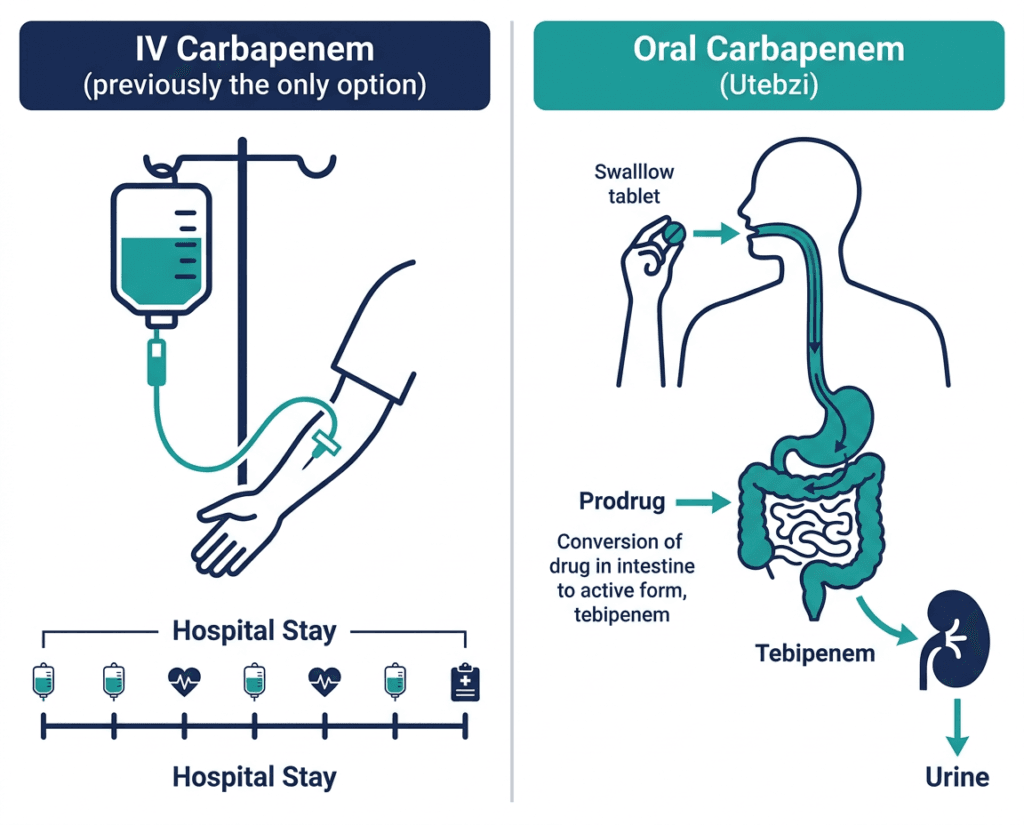
    The reason all previously approved carbapenems required intravenous administration is oral bioavailability. Carbapenem molecules are hydrophilic (water-loving) and polar, characteristics that make them excellent at distributing through aqueous tissues but also make it difficult for them to cross the lipid-rich intestinal epithelium and reach the bloodstream when swallowed. Most carbapenem molecules taken orally would simply pass through the gut without being absorbed.

    Tebipenem pivoxil solves this through a prodrug strategy. “Tebipenem pivoxil” is the prodrug form: the active carbapenem molecule tebipenem is chemically modified with a pivoxil ester group that makes the compound more lipophilic (fat-soluble) and significantly improves oral absorption across the intestinal epithelium. After absorption, intestinal esterases rapidly cleave the pivoxil ester, releasing the active tebipenem molecule into systemic circulation. The active tebipenem then distributes into renal tissue and urine, where it achieves the concentrations needed to kill the causative organisms.

    This prodrug approach is the same chemical strategy used in several other orally administered antibiotics, most notably the cephalosporin prodrugs cefuroxime axetil and cefpodoxime proxetil, where ester modification similarly improves gut absorption of molecules that would otherwise be poorly bioavailable. For carbapenems, engineering this chemistry without compromising the stability of the beta-lactam ring and without producing a molecule with unfavorable pharmacokinetics was a substantial pharmaceutical development challenge.
    Why the pivoxil ester matters beyond oral bioavailability The pivoxil moiety that enables tebipenem’s oral absorption is the same group used in pivampicillin and pivmecillinam, and its hydrolysis releases pivalic acid as a byproduct. Pivalate can conjugate with carnitine and impair carnitine metabolism, particularly with long-term or repeated use. This class effect of pivoxil-containing antibiotics is relevant for patients receiving concurrent carnitine supplementation and for patients with carnitine metabolism disorders. The short course of Utebzi (7 to 10 days) limits this concern in most clinical settings, but it is worth noting as a mechanistic consideration of the prodrug chemistry.

    The PIVOT-PO Trial: Design and Full Results

    Design

    PIVOT-PO (NCT06059846) was a global, randomized, double-blind, non-inferiority Phase 3 trial enrolling 1,690 hospitalized adult patients with cUTI or acute pyelonephritis. The double-blind design was maintained using a double-dummy approach: patients in each arm received both an active oral tablet and a matching IV placebo, or an active IV infusion and a matching oral placebo tablet, maintaining blinding while comparing true oral versus true IV administration.

    Randomization: 1:1 to:

    • Tebipenem pivoxil 600 mg orally (two 300 mg tablets) every 6 hours for 7 to 10 days
    • Imipenem-cilastatin 500 mg intravenously every 6 hours for 7 to 10 days (standard of care comparator)

    Imipenem-cilastatin (Primaxin) was chosen as the comparator because it is a well-established IV carbapenem with robust efficacy data in cUTI, appropriate as the active reference standard for a non-inferiority comparison against an oral carbapenem.

    Primary endpoint: Overall response at the test-of-cure (TOC) visit, defined as a composite of clinical cure plus microbiological eradication in the intent-to-treat (ITT) efficacy cohort.

    The trial was stopped early for efficacy at a planned interim analysis in May 2025, indicating that the pre-specified criteria for early stopping based on demonstrated non-inferiority were met ahead of the planned full enrollment.

    Primary endpoint results

    OutcomeTebipenem pivoxil (oral)Imipenem-cilastatin (IV)Comparison
    Overall response (clinical cure plus microbiological eradication) at TOC58.5% (261/446)60.2% (291/483)Adjusted difference −1.3% (95% CI −7.5% to 4.8%)
    Non-inferiority demonstratedYesReferenceLower CI bound within pre-specified margin

    Source: Spero Therapeutics/GSK press release. GlobeNewswire. June 17, 2026. PIVOT-PO NCT06059846. Presented at IDWeek 2025.

    The adjusted difference of −1.3 percentage points, with a 95% confidence interval ranging from −7.5% to +4.8%, demonstrates that oral tebipenem pivoxil was non-inferior to intravenous imipenem-cilastatin in achieving the composite endpoint of clinical cure plus microbiological eradication. The upper bound of the confidence interval is positive (favoring oral tebipenem in the best-case scenario) and the lower bound remains within whatever non-inferiority margin was pre-specified. This is the evidentiary standard the FDA required to demonstrate that oral tebipenem delivers comparable efficacy to the IV comparator.

    ESBL-producing pathogen subgroup

    In the PIVOT-PO trial, 35.1% of Enterobacterales isolates in the tebipenem arm and 38.9% in the imipenem arm were ESBL producers, reflecting the real-world prevalence of ESBL-producing cUTI in hospitalized patients. Among patients infected with ESBL-producing organisms, the composite response rates at TOC were 52.2% with tebipenem pivoxil and 56.8% with IV imipenem-cilastatin. Comparable response rates were also observed among patients infected with fluoroquinolone-not-susceptible and trimethoprim-sulfamethoxazole-resistant Enterobacterales.

    This subgroup data is clinically important because the ESBL-producing patient population represents precisely the group for whom no oral treatment was previously available. That composite response rates in this resistance-characterized subgroup were broadly consistent with the overall ITT population supports the use of tebipenem pivoxil specifically in these patients.

    Safety in PIVOT-PO

    The safety profile of tebipenem pivoxil was consistent with the carbapenem class. The most common adverse events were diarrhea and headache. Additional adverse events reported included mild to moderate nausea, abdominal pain, transaminase elevations, and Clostridioides difficile-associated diarrhea (CDAD), which is a class effect associated with broad-spectrum antibiotics. No new or unexpected safety signals were identified.


    The Regulatory Backstory: A Prior CRL and the Path to Approval

    The path to Utebzi’s June 2026 approval was not linear. GSK and Spero had submitted an earlier NDA for tebipenem pivoxil for cUTI, supported by a prior Phase 3 trial. That application received a Complete Response Letter from the FDA, which identified deficiencies that needed to be addressed before approval could be granted. The PIVOT-PO trial, which compared oral tebipenem directly against intravenous imipenem-cilastatin (a more demanding head-to-head non-inferiority design than the prior trial), was specifically designed and conducted to address the FDA’s concerns and generate the evidence package required for resubmission.

    GSK filed the NDA resubmission in December 2025, supported by the PIVOT-PO data that had been presented at IDWeek 2025 weeks prior. The PDUFA date was set for June 18, 2026, and the FDA approved one day ahead of the deadline on June 17, 2026.

    The tebipenem pivoxil program has received QIDP (Qualified Infectious Disease Product) designation and Fast Track designation from the FDA, both reflecting the agency’s recognition of the serious unmet need in drug-resistant cUTI.


    Approved Organisms, Dosing, and Critical Prescribing Guidance

    Approved organisms

    Utebzi is approved for cUTI caused by the following susceptible organisms:

    • Escherichia coli
    • Klebsiella pneumoniae
    • Enterobacter cloacae species complex
    • Klebsiella oxytoca
    • Enterococcus faecalis

    Culture and susceptibility testing are essential before prescribing. Utebzi is indicated for organisms confirmed or strongly suspected to be susceptible. It is not effective against CRE (carbapenem-resistant Enterobacterales), and empiric use without culture data should be guided by institutional stewardship protocols and local epidemiology.

    Dosing

    ParameterDetails
    Standard dose600 mg (two 300 mg tablets) orally every 6 hours
    Duration7 to 10 days
    AdministrationWith or without food
    Renal adjustmentRequired for eGFR 15 to below 60 mL/min; consult full prescribing information for specific dose
    eGFR above 150 mL/minUse not recommended (predicted reduced tebipenem exposure may reduce efficacy; if necessary, monitor clinical response closely)
    Not recommendedeGFR below 15 mL/min (end-stage renal disease without dialysis); data insufficient

    The eGFR above 150 mL/min restriction is an unusual and clinically notable prescribing caution. Patients with hyperfiltration (augmented renal clearance), which can occur in younger patients, pregnant patients, and critically ill patients with preserved kidney function, may clear tebipenem faster than typical patients, potentially reducing urinary drug concentrations below the threshold needed for bactericidal activity. This pharmacokinetic consideration is specific to a renally-excreted antibiotic being used for a urinary tract indication and should be considered when prescribing in patients whose renal function is known to be substantially above normal.

    Antibiotic stewardship

    Consistent with antimicrobial stewardship principles, Utebzi should be used only to treat infections proven or strongly suspected to be caused by susceptible bacteria. The approved labeling specifically addresses this: use should follow culture and susceptibility data whenever possible, and empiric use should be reserved for patients with strong clinical suspicion of a resistant organism based on prior culture history, risk factors, or local epidemiology.


    What This Approval Means in Clinical Practice

    Before June 17, 2026, a hospitalized patient with pyelonephritis caused by an ESBL-producing E. coli, who was otherwise stable and could be managed as an outpatient, had essentially no oral option. Every carbapenem required IV access. Sending such a patient home required either arranging home IV infusion (expensive, logistically complex, and uncomfortable for the patient) or keeping them in the hospital longer than their clinical condition strictly required (expensive and exposing them to hospital-acquired infection risk).

    As Dr. Debra L. Fromer, MD, of Hackensack Meridian Health, explained: the advent of an oral carbapenem reduces the strain on the healthcare system by enabling earlier discharge and allowing outpatient treatment of patients who previously required hospitalization or PICC line placement. A pill taken at home every 6 hours is not identical in convenience to a once-daily oral antibiotic, but compared to an IV infusion it is transformative for appropriate patients.

    The key phrase in the approved indication is “limited or no alternative oral treatment options.” Utebzi is not positioned as a first-line or empiric therapy for all cUTIs. It is a targeted option for the resistance gap: patients with culture-confirmed or highly suspected resistant organisms where standard oral agents have failed or are expected to fail. The approved patient population is specific, the culture requirement is clinical standard, and the antibiotic stewardship framing is appropriately conservative.

    For patients with cUTI or recurrent UTI who are managing resistant infections: Utebzi is a prescription medication that requires a clinician experienced in managing complicated UTIs. The starting point for access is a discussion with a urologist, urogynecologist, or infectious disease specialist who can review culture results and determine whether tebipenem pivoxil is appropriate for the specific organism and clinical situation.

    For related HED coverage on other resistant-organism antibiotic approvals in 2026, see our post on Zaynich (cefepime-zidebactam), the first antibiotic combination in which the beta-lactamase inhibitor also independently targets PBP2, approved for drug-resistant cUTI just weeks earlier.


    Sources

    FDA approval / GSK press release: Utebzi (tebipenem pivoxil) approved in the US for adults with complicated urinary tract infections. GSK. June 17, 2026.

    Spero Therapeutics press release: Utebzi (tebipenem pivoxil) approved in the US for adults with complicated urinary tract infections. Spero Therapeutics/GlobeNewswire. June 17, 2026.

    Drugs.com approval news: FDA Approves Utebzi (tebipenem pivoxil) for Adults with Complicated Urinary Tract Infections. drugs.com. June 17, 2026.

    Utebzi approval history: Utebzi FDA Approval History. drugs.com.

    Urology Times clinical coverage (with Dr. Fromer quote): FDA approves tebipenem pivoxil for complicated urinary tract infections. urologytimes.com. June 2026.

    AJMC detailed trial coverage: FDA Approves First Oral Carbapenem Antibiotic for Complicated UTIs. ajmc.com. June 2026.

    Renal and Urology News clinical summary: Utebzi Approved as First Oral Carbapenem Antibiotic for cUTIs. renalandurologynews.com. June 2026.

    Contagion Live detailed coverage: FDA Approves Tebipenem Pivoxil as First Oral Carbapenem For Complicated Urinary Tract Infections. contagionlive.com. June 2026.

    Contemporary OB/GYN clinical coverage: FDA approves tebipenem pivoxil as first oral carbapenem antibiotic for complicated urinary tract infections. contemporaryobgyn.net. June 2026.

    PIVOT-PO trial registration: NCT06059846. ClinicalTrials.gov.

    Complicated UTI overview: Complicated Urinary Tract Infections. StatPearls. NCBI.

    Beta-lactam antibiotics and PBPs: Beta-Lactam Antibiotics. StatPearls. NCBI.

    ESBL and beta-lactamases: Beta-Lactamase Inhibitors. PMC7279573.

    Enterobacterales infections: Gram-Negative Bacterial Infections. StatPearls. NCBI.

    C. diff associated diarrhea: Clostridioides Difficile. StatPearls. NCBI.

    CRE threat designation: Antibiotic Resistance Threats in the United States. CDC.

    Antibiotic stewardship core elements: Core Elements of Antibiotic Stewardship. CDC.

    QIDP and GAIN Act: GAIN Act FAQ. FDA.gov.

    Fast Track designation: Fast Track. FDA.gov.

    CRL overview: FDA Drug Review Process. FDA.gov.

    Utebzi prescribing information: UTEBZI (tebipenem pivoxil) Prescribing Information. GSK. 2026.

    Disclaimer: Health Evidence Digest provides general information about FDA approvals and health research for educational purposes. This content is not a substitute for professional medical advice, diagnosis, or treatment. Utebzi is a prescription antibiotic indicated specifically for adult patients with complicated urinary tract infections caused by susceptible organisms who have limited or no alternative oral treatment options. Antibiotic selection should be guided by culture and susceptibility data and made in consultation with a qualified healthcare provider.
  • If Someone in Your Household Has COVID-19, There Is Now an FDA-Approved Pill to Help Prevent You From Getting It Too.

    If Someone in Your Household Has COVID-19, There Is Now an FDA-Approved Pill to Help Prevent You From Getting It Too.

    The essentials: On May 29, 2026, the FDA approved Xocova (ensitrelvir, Shionogi) for post-exposure prophylaxis (PEP) of COVID-19 in adults and adolescents aged 12 years and older who have been exposed to an individual with COVID-19. This is the first and only oral therapy approved in the United States to help prevent COVID-19 after exposure. No previously approved treatment or prophylaxis option for post-exposure prevention of COVID-19 has existed in the United States. The clinical basis: Phase 3 SCORPIO-PEP trial (NCT05897541), 2,387 participants aged 12 and older, global randomized double-blind placebo-controlled, published in the New England Journal of Medicine on May 14, 2026. Primary endpoint: 67% reduction in risk of symptomatic COVID-19 through day 10 (2.9% ensitrelvir vs. 9.0% placebo; risk ratio 0.33; 95% CI 0.22 to 0.49; p less than 0.0001). High-risk subgroup: 76% relative risk reduction (2.4% vs. 9.9%; RR 0.24). Safety: adverse event rates nearly identical between groups (15.1% vs. 15.5%); no treatment-related dysgeusia (altered taste), which affected many patients on nirmatrelvir-ritonavir (Paxlovid). Dosing: 375 mg (3 tablets) on day 1, then 125 mg (1 tablet) daily on days 2 to 5, initiated within 72 hours of symptom onset in the exposed household contact. Not approved for treatment of active COVID-19 in the U.S. Important context: the prior PEP trials of nirmatrelvir-ritonavir and molnupiravir did not meet their primary endpoints; SCORPIO-PEP is the first and only Phase 3 oral antiviral PEP trial to do so.

    COVID-19 has been a fact of life since 2020. More than five years later, it remains endemic: the CDC estimated between 3.8 million and 12.4 million new COVID-19 cases in the United States between October 2025 and May 2026, resulting in as many as 240,000 hospitalizations and 42,000 deaths. The vaccines changed the acute mortality picture. The antivirals, primarily nirmatrelvir-ritonavir (Paxlovid), changed the treatment picture for high-risk individuals once infected. What has never existed is a tool for the gap between those two interventions: an oral option that someone can take after being exposed to a household member with COVID-19, before they become infected themselves.

    On May 29, 2026, that gap closed. The FDA approved ensitrelvir (Xocova) as the first oral option to help prevent COVID-19 after exposure, for adults and adolescents aged 12 years and older following contact with an individual with COVID-19. The pivotal SCORPIO-PEP trial, the only Phase 3 study of an oral antiviral to meet the primary endpoint of preventing symptomatic COVID-19 following exposure, was published in the New England Journal of Medicine two weeks before the approval.


    What Post-Exposure Prophylaxis Means and Why It Is a Different Goal Than Treatment

    To understand what Xocova does and does not do, it is worth being precise about the concept of post-exposure prophylaxis (PEP).

    Post-exposure prophylaxis is the use of a drug or intervention after confirmed or probable exposure to a pathogen, with the goal of preventing infection or disease before symptoms develop. The classic example is HIV PEP: a combination of antiretroviral drugs taken for 28 days after a potential HIV exposure, which significantly reduces the risk of infection if started promptly. The same principle applies to rabies post-exposure vaccination and to some bacterial infections.

    COVID-19 PEP is conceptually identical but pharmacologically distinct: in this case, the goal is to prevent SARS-CoV-2 from establishing productive infection in the body of someone who has just been exposed to an infected person, by suppressing viral replication in the earliest window before the viral load grows to symptomatic levels.

    What this means for understanding Xocova:

    Xocova is not a treatment for active COVID-19 infection in the United States. It is not taken once you have symptoms. It is taken when you have been exposed and do not yet have symptoms. The timing window is critical: it must be initiated within 72 hours of symptom onset in the index case (the household member with COVID-19), which in practice means within days of knowing that someone in your home is infected.


    What Ensitrelvir Is: The 3CL Protease Mechanism

    Ensitrelvir is a SARS-CoV-2 main protease (3CL protease, or Mpro) inhibitor. This is the same general class of target as nirmatrelvir (the active component of Paxlovid), but ensitrelvir is a chemically distinct molecule developed independently by Shionogi through a research collaboration with Hokkaido University.

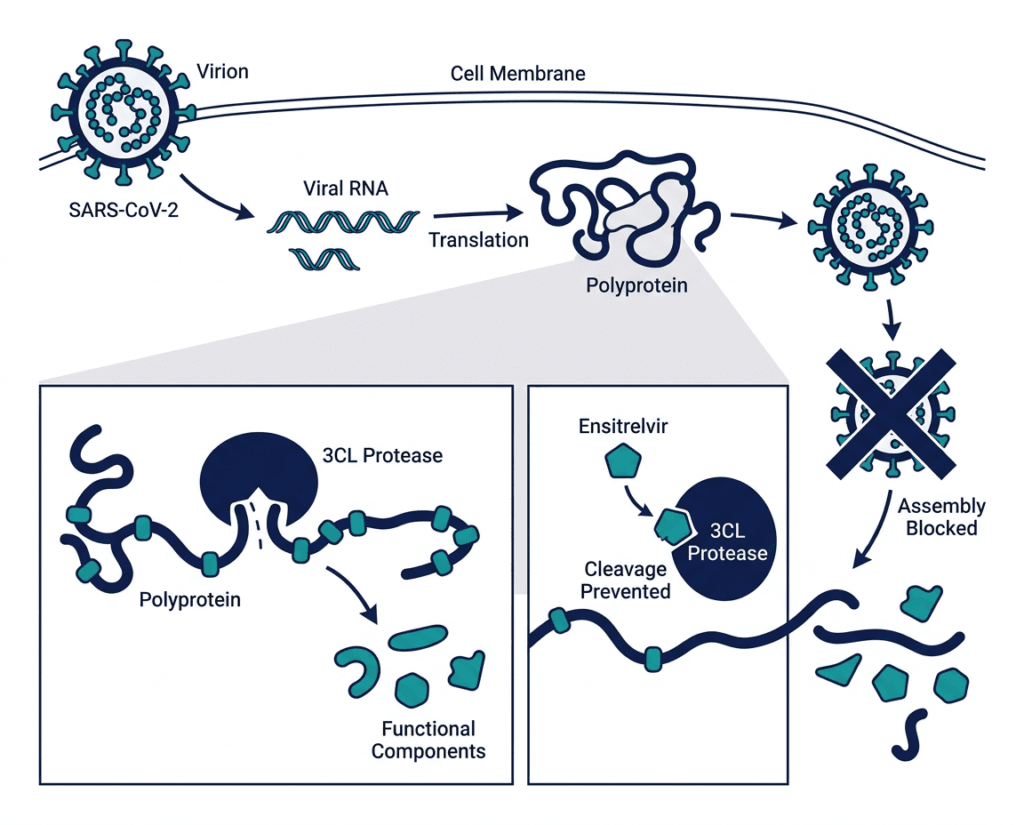
    The SARS-CoV-2 3CL protease is an enzyme that is essential for viral replication. After the virus enters a cell and its RNA is translated into a large polyprotein, the 3CL protease cleaves this polyprotein into the functional viral components needed to assemble new virus particles. Without this cleavage, functional viral replication cannot proceed. By blocking the 3CL protease, ensitrelvir prevents the virus from producing the components it needs to replicate, suppressing the viral load in exposed individuals before it can rise to the level that produces symptoms and transmission.

    How ensitrelvir differs from nirmatrelvir (the active component of Paxlovid) Both ensitrelvir and nirmatrelvir target the 3CL protease, but they are structurally different molecules with different pharmacological profiles. Nirmatrelvir requires co-administration with ritonavir as a pharmacokinetic booster because it is rapidly metabolized by CYP3A4 in the liver; ritonavir inhibits CYP3A4, extending nirmatrelvir’s half-life. This ritonavir requirement creates the significant drug-drug interaction problem that limits Paxlovid use in many patients on common medications. Ensitrelvir does not require a pharmacokinetic booster. It has adequate oral bioavailability and a sufficiently long half-life on its own. This means Xocova does not carry the same extensive drug interaction liability that makes Paxlovid unusable in patients on many common medications (statins, blood thinners, immunosuppressants, anticonvulsants). Ensitrelvir is still a CYP3A4 substrate and inhibitor and has its own drug interaction considerations (discussed in the safety section), but the interaction profile is less extensive than ritonavir-boosted nirmatrelvir.

    The SCORPIO-PEP Trial: Full Results

    Why this trial matters beyond just this approval

    The findings differ from prior postexposure prophylaxis trials of nirmatrelvir-ritonavir and molnupiravir, which did not show statistically significant protection against COVID-19 in household contacts. Understanding why those trials failed contextualizes why SCORPIO-PEP succeeded.

    The nirmatrelvir-ritonavir PEP trial (EPIC-PEP) did not meet its primary endpoint. The molnupiravir PEP trial similarly did not demonstrate statistically significant protection. These failures were attributed in part to late initiation windows (up to 5 days post-exposure rather than 72 hours post-symptom onset), less strict illness definitions, and different patient populations. The SCORPIO-PEP researchers suggested that earlier treatment initiation, within 72 hours following symptom onset in the index patient, along with a stricter illness definition, may have contributed to the observed efficacy.

    Design

    SCORPIO-PEP (NCT05897541) was a global, randomized, double-blind, placebo-controlled Phase 3 trial enrolling participants at sites in the United States, Europe, Asia, and Latin America. The trial enrolled 2,387 participants aged 12 years and older who tested negative for SARS-CoV-2 and had no symptoms at enrollment despite exposure to a household member with symptomatic COVID-19.

    Key eligibility requirements:

    • Age 12 years or older
    • Negative SARS-CoV-2 test at baseline (RT-PCR confirmed at central laboratory)
    • No COVID-19 symptoms at enrollment
    • Household exposure to a member with symptomatic COVID-19
    • Treatment initiated within 72 hours of symptom onset in the index household case

    Primary endpoint definition: Laboratory-confirmed (central PCR) SARS-CoV-2 infection plus at least one of 14 prespecified COVID-19 symptoms lasting at least 48 hours, through day 10.

    Randomization: 1:1 to ensitrelvir or placebo. Participants were randomly assigned to receive ensitrelvir (375 mg on day 1 and 125 mg on days 2 to 5) or placebo, once daily, and began treatment within 72 hours of when the household member with COVID-19 began showing symptoms.

    Primary analysis population: 2,041 participants with laboratory-confirmed negative baseline tests (excluding 346 who tested positive at baseline and were therefore already infected at enrollment).

    Primary endpoint results

    Outcome through Day 10Ensitrelvir (n=1,030)Placebo (n=1,011)Comparison
    Symptomatic COVID-192.9% (30 patients)9.0% (91 patients)
    Risk ratio0.33Reference95% CI 0.22 to 0.49
    Relative risk reduction67%p less than 0.0001

    Source: Hayden FG, Ohmagari N, et al. Ensitrelvir COVID-19 Post-exposure Prophylaxis in Household Contacts. New England Journal of Medicine. Published May 14, 2026. doi:10.1056/NEJMoa2506186. SCORPIO-PEP NCT05897541.

    A 67% relative risk reduction means participants in the ensitrelvir arm were approximately three times less likely to develop symptomatic COVID-19 after household exposure. The absolute risk reduction is 6.1 percentage points (9.0% minus 2.9%), implying that approximately 16 to 17 people would need to receive Xocova to prevent one case of symptomatic COVID-19 from a household exposure.

    High-risk subgroup: the most clinically relevant finding

    The prespecified high-risk subgroup showed a 76% relative risk reduction (2.4% vs. 9.9%; RR 0.24), strengthening the rationale for post-exposure prevention beyond vaccination alone. This subgroup included participants with risk factors for severe COVID-19, the population for whom preventing infection carries the most meaningful clinical consequence. Among participants with risk factors for severe illness, COVID-19 developed in 9 of 382 participants assigned to ensitrelvir and 37 of 374 assigned to placebo.

    The higher relative risk reduction in the high-risk subgroup (76% versus 67% overall) suggests that the drug’s preventive benefit is at least as strong in the people who need it most. This is the group that matters most clinically: older adults, immunocompromised individuals, people with cardiovascular disease or diabetes, and others for whom even a mild COVID-19 infection can trigger worsening of underlying conditions or long COVID.

    Secondary and exploratory findings

    In post-hoc analyses, viral loads and symptom scores appeared lower among ensitrelvir recipients who had infection at baseline or developed infection during the study, suggesting antiviral activity even in those who became infected. This is consistent with the drug’s mechanism, as protease inhibition reduces viral replication regardless of the infection stage.

    Safety

    Xocova was generally well tolerated, with similar rates of adverse events across groups (15.1% in the Xocova group and 15.5% in the placebo group). The most common adverse events (regardless of causality) occurring in greater than or equal to 1% of the Xocova group and at a greater frequency compared to placebo were headache, diarrhea, and cough. There were no reports of altered taste (dysgeusia) attributed to Xocova in the trial.

    The absence of dysgeusia is clinically notable. Altered taste is one of the most commonly reported adverse effects of nirmatrelvir-ritonavir (Paxlovid), affecting a significant proportion of patients and sometimes leading to premature discontinuation. The clean tolerability profile of Xocova in the PEP trial, with adverse events statistically indistinguishable from placebo, supports its suitability for use in asymptomatic or presymptomatic individuals who may have no particular reason to tolerate medication side effects.


    Who Xocova Is and Is Not For

    The approved population

    Xocova is approved for adults and adolescents aged 12 years and older who have been exposed to a person in their household with COVID-19. There is no age cutoff at the upper end, meaning the approval covers older adults, who are among those most likely to benefit from prevention.

    The label says “household contact” specifically. The SCORPIO-PEP trial enrolled household contacts, meaning people living in the same home as an infected person. This reflects the highest-risk exposure scenario (prolonged close contact, shared indoor air space), and this is where the evidence was generated.

    Critical timing requirement

    Xocova must be initiated within 72 hours of the symptom onset of the infected household contact. This is not a treatment taken when you start feeling sick; it is a prevention taken when you learn that someone in your home is sick. The logistics of this matter practically: you will need to have a prescription in advance or be able to obtain one quickly, because the 72-hour window can close rapidly.

    Who should discuss Xocova with their prescriber first

    Several groups have specific considerations before using Xocova:

    Drug interactions: Ensitrelvir is a CYP3A4 substrate and inhibitor. While it does not require ritonavir boosting, it can affect the levels of other CYP3A4-metabolized medications and can have its own levels affected by strong CYP3A4 inducers or inhibitors. Review the full prescribing information or consult a pharmacist before initiating in patients on chronic medications.

    Immunocompromised patients: While this group is among those most likely to benefit, they may also have complex drug regimens that require interaction screening before initiating Xocova.

    Pregnancy and breastfeeding: Safety data in pregnancy is limited. The decision to use Xocova during pregnancy should involve a discussion with a clinician familiar with the patient’s overall situation.

    Patients who have already been vaccinated and boosted: The trial enrolled participants with diverse vaccination backgrounds. Whether current vaccination status meaningfully modifies the incremental benefit of Xocova PEP is not yet established by the trial data. For high-risk patients, particularly those who are immunocompromised and may have blunted vaccine responses, Xocova may provide meaningful additional protection on top of vaccination.

    Who Xocova is not for in the U.S.

    Xocova is not approved in the United States for the treatment of active COVID-19 infection. If you have COVID-19 symptoms, Xocova is not the appropriate option; nirmatrelvir-ritonavir (Paxlovid) or remdesivir (Veklury) are the relevant approved treatments for symptomatic disease. Xocova is specifically for prevention in people who have been exposed but are not yet symptomatic.


    Dosing

    DayDoseNumber of tablets
    Day 1 (loading dose)375 mg3 tablets (125 mg each)
    Days 2 to 5125 mg once daily1 tablet per day
    Total treatment duration5 days
    Timing requirementBegin within 72 hours of symptom onset in the exposed household contact
    AdministrationOral, with or without food

    The Regulatory Context: Japan, Global Status, and the Path to the U.S.

    Ensitrelvir’s regulatory history is global and worth understanding:

    Xocova received emergency regulatory approval in Japan in November 2022 and full approval in March 2024 for the treatment of COVID-19 based on results from SCORPIO-SR, a Phase 3 study conducted in Asia during the Omicron-dominant phase of the pandemic. Ensitrelvir is also approved in Japan and Singapore for post-exposure prophylaxis.

    The approval occurred ahead of the Prescription Drug User Fee Act (PDUFA) action date of June 16, 2026, meaning the FDA completed its review approximately 2.5 weeks before the scheduled deadline. The U.S. approval is specifically and only for post-exposure prophylaxis; treatment of active infection is not approved in the United States. Wockhardt has submitted a Marketing Authorization Application to the European Medicines Agency; regulatory reviews are also ongoing in other jurisdictions.

    This is a meaningful distinction: ensitrelvir has been approved and used in Asia for treatment and prevention; the FDA’s U.S. approval is limited to the PEP indication where the Phase 3 evidence base is strongest and the clinical need is most clearly defined.


    What This Means for COVID-19 Prevention Going Forward

    The approval of Xocova represents a genuine expansion of the COVID-19 prevention toolkit. The current landscape before this approval offered vaccines for prophylaxis and antivirals for treatment, but no pharmacological bridge for the household exposure scenario, which is one of the highest-risk settings for transmission.

    The SCORPIO-PEP data suggests several populations that may benefit most:

    Older adults in congregate settings: COVID-19 disproportionately affects older adults with greater risk for severe illness and death in close-community settings, such as long-term care facilities. When a COVID-19 case is identified in a long-term care facility, Xocova PEP for exposed residents aged 12 and older is now a pharmacologically supported prevention strategy.

    Immunocompromised individuals: Those with impaired vaccine responses, including transplant recipients, patients on immunosuppressive therapy, and patients with hematologic malignancies, have limited protection from vaccination alone. PEP with Xocova provides an additional layer of prevention after household exposure.

    Caregivers of high-risk individuals: A caregiver who lives with and provides daily assistance to an older adult with multiple comorbidities has both personal and protective reasons to prevent becoming a COVID-19 vector. If a household member develops COVID-19, PEP for the caregiver reduces the risk of transmission to the high-risk person they serve.

    Long COVID prevention: People diagnosed with COVID-19 had increased rates of both new and worsening neurologic, cardiovascular, respiratory, and renal conditions during the year following infection. Preventing acute infection prevents the downstream risk of these post-COVID complications for individuals who successfully avoid infection with Xocova.

    For related HED coverage of COVID-19 treatment and prevention developments, see our coverage of nirmatrelvir-ritonavir (Paxlovid) and its drug interaction challenges and our post on Foundayo (orforglipron) and the post-marketing safety requirements for newer antivirals and metabolic drugs for context on how the FDA approaches post-marketing surveillance for novel mechanisms in new populations.


    Sources

    FDA approval / Shionogi press release: Shionogi Announces FDA Approval of XOCOVA (ensitrelvir), the First and Only Oral Option to Help Prevent COVID-19 Following Exposure. businesswire.com. May 31, 2026.

    Drugs.com approval news: FDA Approves Xocova (ensitrelvir), the First and Only Oral Option to Help Prevent COVID-19 Following Exposure. drugs.com. June 1, 2026.

    SCORPIO-PEP primary NEJM publication: Hayden FG, Ohmagari N, et al. Ensitrelvir COVID-19 Post-exposure Prophylaxis in Household Contacts. New England Journal of Medicine. Published May 14, 2026. doi:10.1056/NEJMoa2506186.

    SCORPIO-PEP trial registration: NCT05897541. ClinicalTrials.gov.

    Shionogi NEJM publication announcement: New England Journal of Medicine Publishes Shionogi Study Demonstrating Ensitrelvir Prevents COVID-19 Following Exposure. shionogi.com. May 14, 2026.

    Contagion Live approval coverage: FDA Approves Ensitrelvir as First Oral Post-Exposure Prevention Option for COVID-19. contagionlive.com. May 2026.

    Patient Care Online: FDA Approves Xocova as First Oral COVID-19 Postexposure Prophylaxis Option. patientcareonline.com. June 2026.

    PharmExec coverage: FDA Approves Xocova as First Oral Post-Exposure Covid-19 Prevention Therapy. pharmexec.com. June 2026.

    Pharmacy Times SCORPIO-PEP results: Ensitrelvir Demonstrates Significant COVID-19 Post-Exposure Prophylaxis Efficacy in Phase 3 Trial. pharmacytimes.com. 2026.

    Conexiant clinical summary: Ensitrelvir Reduced COVID After Household Exposure. conexiant.com. June 2026.

    Cardiology Advisor pre-approval coverage: Ensitrelvir Under Review for COVID-19 Postexposure Prophylaxis. thecardiologyadvisor.com. September 2025.

    Xocova prescribing information: XOCOVA (ensitrelvir) Prescribing Information. Shionogi. 2026.

    Paxlovid FDA approval: FDA approves nirmatrelvir-ritonavir (Paxlovid) for treatment of COVID-19. FDA.gov.

    Ensitrelvir mechanism: Ensitrelvir as a SARS-CoV-2 Protease Inhibitor. PMC9941555.

    3CL protease and SARS-CoV-2 replication: SARS-CoV-2 Main Protease Structure. PMC9941555.

    Post-exposure prophylaxis concept: Post-Exposure Prophylaxis. StatPearls. NCBI.

    HIV PEP reference: HIV Post-Exposure Prophylaxis. CDC.

    CYP3A4 drug interactions: CYP3A4. StatPearls. NCBI.

    Patient resources: CDC COVID-19 information | Xocova patient information | CDC COVID-19 treatments and prevention

    Disclaimer: Health Evidence Digest provides general information about FDA approvals and health research for educational purposes. This content is not a substitute for professional medical advice, diagnosis, or treatment. Xocova is a prescription medication approved only for post-exposure prophylaxis (PEP) of COVID-19 and is not approved for the treatment of active COVID-19 infection in the United States. Patients with COVID-19 symptoms should contact their healthcare provider. The 72-hour initiation window after symptom onset in the exposed household contact is a firm requirement.
  • Resistant Gram-Negative UTIs Just Got a New Weapon. Here Is What Zaynich Is and What the ENHANCE-1 Trial Data Shows.

    Resistant Gram-Negative UTIs Just Got a New Weapon. Here Is What Zaynich Is and What the ENHANCE-1 Trial Data Shows.

    📌 The essentials On May 29, 2026, the FDA approved Zaynich (cefepime and zidebactam, Wockhardt) for the treatment of adults with complicated urinary tract infections (cUTI), including pyelonephritis, caused by susceptible Gram-negative pathogens. What makes it mechanistically distinctive: zidebactam is a non-beta-lactam beta-lactamase inhibitor that acts as a beta-lactam enhancer, functioning both as a beta-lactamase inhibitor and as an independent antibacterial agent targeting PBP2. This dual role allows the combination to overcome multiple resistance mechanisms including carbapenem-hydrolyzing metallo-beta-lactamases (MBLs), which no currently approved beta-lactam/beta-lactamase inhibitor combination can address. Approved organisms: Escherichia coli, Klebsiella pneumoniae, Proteus mirabilis, Enterobacter cloacae complex, and Pseudomonas aeruginosa. The clinical basis: Phase 3 ENHANCE-1 trial (NCT04979806), 530 patients, double-blind, randomized 2:1 Zaynich versus meropenem. Primary endpoint: composite clinical cure and microbiologic response rate 89.0% with Zaynich versus 68.4% with meropenem (difference +20.6%; 95% CI 12.3 to 29.5). Non-inferiority and superiority both achieved. Dosing: 3 g (cefepime 2 g plus zidebactam 1 g) intravenous infusion every 8 hours for 7 to 10 days, infused over 1 hour. Dose adjustment required for renal impairment. Regulatory designations: Qualified Infectious Disease Product (QIDP), Fast Track. Global status: also approved in India May 27, 2026; EMA Marketing Authorization Application submitted.

    Complicated urinary tract infections are not the same as the straightforward UTIs that can be treated with a few days of oral antibiotics. They involve the upper urinary tract (pyelonephritis, kidney infection), occur in patients with structural or functional urinary tract abnormalities, affect hospitalized patients or those with indwelling urinary catheters, or are caused by pathogens that resist the antibiotics typically used for uncomplicated infections. In the United States, cUTIs account for more than 600,000 hospitalizations annually, and the proportion caused by multidrug-resistant (MDR) Gram-negative bacteria is growing.

    The antimicrobial resistance crisis in Gram-negative bacteria is not a future problem. It is a present clinical reality. Carbapenem-resistant Enterobacteriaceae (CRE) and carbapenem-resistant Pseudomonas aeruginosa are among the pathogens designated by the CDC as urgent threats. Carbapenems, the last-resort antibiotics for many Gram-negative infections, are failing against an expanding proportion of resistant organisms. New antibiotics that can overcome carbapenem resistance mechanisms, particularly metallo-beta-lactamases, are a clinical priority.

    On May 29, 2026, the FDA approved Zaynich (cefepime and zidebactam), the first approved antibiotic combination in which the beta-lactamase inhibitor component also functions as an independent antibacterial agent. The ENHANCE-1 trial showed not only non-inferiority to meropenem (a carbapenem and the current gold standard for complicated Gram-negative infections) but superiority: a 20.6 percentage point higher composite cure rate. For an antibiotic trial, that is a striking result.


    The Antimicrobial Resistance Context: Why New Gram-Negative Antibiotics Matter

    Antimicrobial resistance in Gram-negative bacteria operates through several distinct mechanisms that have made treatment of serious infections increasingly challenging.

    Beta-lactamase enzymes: the central resistance mechanism

    Beta-lactamases are enzymes produced by bacteria that break down the beta-lactam ring, the core structure of penicillins, cephalosporins, and carbapenems. By hydrolyzing the beta-lactam ring, these enzymes inactivate the antibiotic before it can reach its target (penicillin-binding proteins, or PBPs) on the bacterial cell wall.

    The major beta-lactamase classes relevant to Gram-negative resistance include:

    • Extended-spectrum beta-lactamases (ESBLs): Inactivate most penicillins and cephalosporins. Very common in E. coli and Klebsiella. Previously manageable with carbapenems.
    • KPC-type carbapenemases (Klebsiella pneumoniae carbapenemase): Inactivate carbapenems. Now widespread in Klebsiella, Enterobacter, and other Enterobacterales.
    • Metallo-beta-lactamases (MBLs) including NDM, VIM, and IMP: Also inactivate carbapenems. Critically, unlike serine-based carbapenemases, MBLs use a zinc-dependent mechanism that conventional serine-beta-lactamase inhibitors (clavulanate, tazobactam, avibactam) cannot block.

    The MBL gap is the most clinically urgent. Approved combinations such as ceftazidime-avibactam (Avycaz) and meropenem-vaborbactam (Vabomere) are effective against KPC-producing organisms but cannot inhibit MBL-producing bacteria. For patients with MBL-producing infections, treatment options have been extremely limited.

    Why Pseudomonas aeruginosa is a separate challenge

    Pseudomonas aeruginosa is an intrinsically resistant Gram-negative bacterium that combines multiple resistance mechanisms: it produces beta-lactamases, it can upregulate efflux pumps that expel antibiotics from the cell, and it can downregulate outer membrane porins that antibiotics use to enter. Many standard cephalosporins have limited activity against Pseudomonas; cefepime has historically been among the more active cephalosporins against this pathogen, making it a rational backbone for the Zaynich combination.

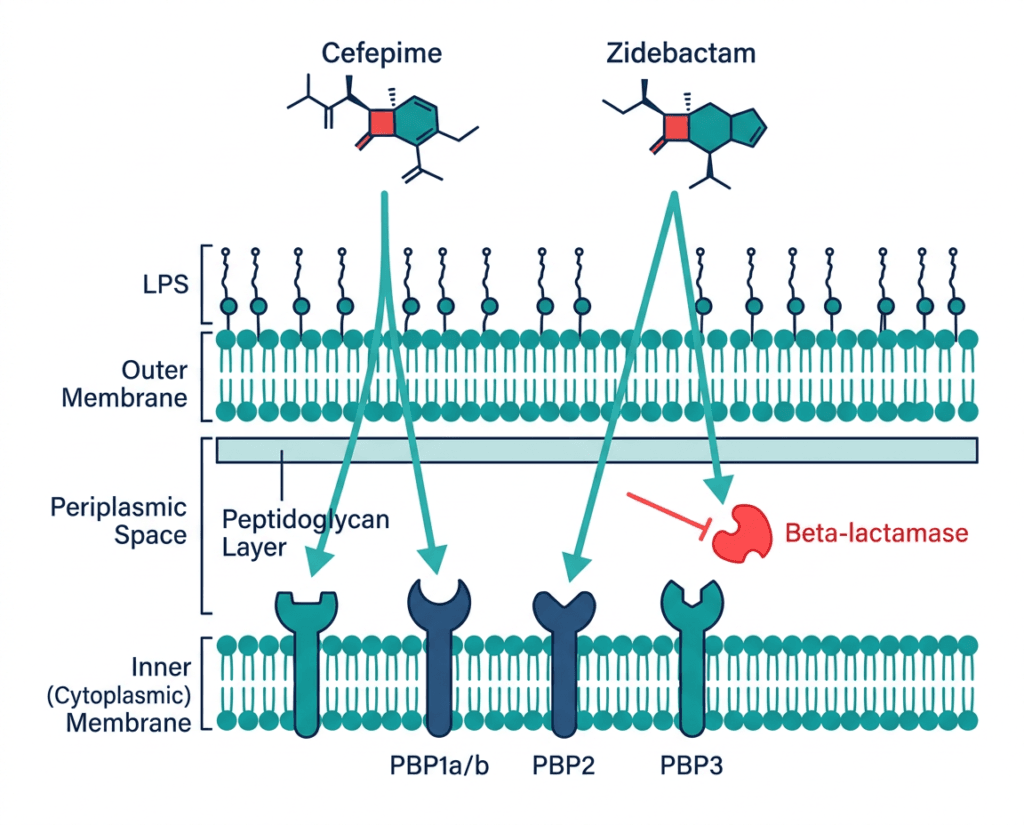
    Why zidebactam is different from all previously approved beta-lactamase inhibitors All previously approved beta-lactamase inhibitors (clavulanate, sulbactam, tazobactam, avibactam, vaborbactam, relebactam) work by inhibiting beta-lactamase enzymes, preventing them from destroying the antibiotic partner. Zidebactam does this too, but it also independently targets PBP2 in Gram-negative bacteria, the same penicillin-binding protein targeted by carbapenems. By directly occupying PBP2, zidebactam restores susceptibility to cefepime in bacteria that have become resistant through beta-lactamase production, because even if some residual beta-lactamase activity breaks down cefepime molecules, zidebactam’s independent PBP2 targeting contributes directly to bacterial cell wall disruption. This beta-lactam enhancer mechanism is what makes Zaynich active against MBL-producing organisms where avibactam-containing combinations fail. Avibactam cannot inhibit MBLs; zidebactam bypasses the need to inhibit them.

    How Zaynich Works: The Dual Mechanism in Detail

    Zaynich combines two drugs that act synergistically through distinct but complementary mechanisms targeting the Gram-negative bacterial cell wall:

    Cefepime: the fourth-generation cephalosporin

    Cefepime is a fourth-generation cephalosporin with good activity against both Gram-negative and some Gram-positive organisms. In Enterobacterales, cefepime primarily targets PBP3 and PBP1a/1b. In Pseudomonas aeruginosa, it targets PBP3. PBP binding inhibits cell wall synthesis, ultimately causing bacterial lysis. Cefepime’s advantage over earlier cephalosporins is its stability against many (but not all) beta-lactamases and its enhanced ability to penetrate Gram-negative outer membranes.

    Zidebactam: the beta-lactam enhancer

    Zidebactam is a novel synthetic molecule classified as a diazabicyclooctane (DBO), structurally similar to avibactam and relebactam. Its two mechanisms work simultaneously:

    As a beta-lactamase inhibitor: Zidebactam inhibits serine-beta-lactamases including Class A (ESBLs, KPC), Class C (AmpC), and Class D (OXA) beta-lactamases, protecting cefepime from enzymatic degradation. Importantly, it is also active against several serine-carbapenemases, extending coverage to KPC-producing organisms.

    As a direct PBP2 targeting agent: Zidebactam binds PBP2 with high affinity in Gram-negative pathogens. This independent bactericidal action contributes to cell wall disruption independent of its beta-lactamase inhibitory role. For MBL-producing organisms (NDM, VIM, IMP), where the MBL enzyme cannot be inhibited by any current serine-targeting inhibitor, zidebactam’s PBP2 binding provides direct antibacterial activity that partially compensates for ongoing cefepime destruction by the MBL. This is the mechanism that gives the combination activity against MBL producers.

    The combined effect is coverage of PBP1a/1b, PBP2, and PBP3 simultaneously in the majority of clinically relevant Gram-negative pathogens, across diverse resistance mechanisms.


    The ENHANCE-1 Trial: Full Results

    Design

    ENHANCE-1 (NCT04979806) was a Phase 3, randomized, double-blind, multicenter, non-inferiority trial. The trial enrolled 530 hospitalized adults at 64 clinical sites in the United States, Europe, Latin America, China, and India.

    Eligible patients: Adults aged 18 and older with a clinical diagnosis of cUTI or acute pyelonephritis, with or without concurrent bacteremia, requiring intravenous antibiotic therapy.

    Randomization: 2:1 to:

    • Zaynich: cefepime 2 g plus zidebactam 1 g (total 3 g) by 1-hour IV infusion every 8 hours for 7 to 10 days (n=352)
    • Meropenem: 1 g by 30-minute IV infusion every 8 hours for 7 to 10 days (n=177)

    Dose adjustments for renal function were specified per protocol for both arms.

    Primary endpoint: Composite of clinical cure and microbiologic response at the test-of-cure (TOC) visit (approximately 7 to 14 days after end of treatment) in the modified microbiological intent-to-treat (mMITT) population.

    Non-inferiority margin: The trial was powered for non-inferiority but also had a pre-specified superiority analysis.

    Primary endpoint results

    Outcome at test-of-cure visitZaynich (n=352)Meropenem (n=177)Treatment difference
    Composite clinical cure and microbiologic response rate89.0%68.4%+20.6% (95% CI 12.3 to 29.5)
    Non-inferiority achievedYesConfidence interval lower bound far above zero
    Superiority achievedYesLower bound of 95% CI (12.3%) above zero

    Source: ENHANCE-1, NCT04979806. Presented at IDSA 2025 Open Forum. Wockhardt press release. June 1, 2026.

    The 20.6 percentage point superiority over meropenem in composite clinical and microbiologic response deserves specific comment. Meropenem is not a weak comparator. It is among the broadest-spectrum, most reliably active intravenous antibiotics available for Gram-negative cUTI, and it was the appropriate comparator given the spectrum of Gram-negative organisms targeted. An antibiotic demonstrating superiority over meropenem in a well-conducted Phase 3 trial is an unusual and clinically meaningful result.

    The likely explanation lies in the patient population and organism mix: a proportion of patients in the trial carried organisms with resistance mechanisms that meropenem could not fully overcome but that Zaynich’s broader mechanism could address. The trial’s global enrollment across geographies with high burdens of ESBL-producing and carbapenem-resistant organisms supports this interpretation.

    Safety

    Zaynich was generally well tolerated in ENHANCE-1. The most common adverse reactions, occurring in at least 2% of Zaynich-treated patients, were diarrhea, hypertension, headache, and hypokalemia. These are consistent with the known safety profiles of the individual components.

    Cefepime-specific safety considerations:

    • Neurotoxicity: cefepime is associated with neurotoxic effects including encephalopathy, myoclonus, and seizures, particularly at high doses or in patients with renal impairment receiving unadjusted doses. The prescribing information specifically warns that serious neurologic adverse reactions have occurred in geriatric patients with renal insufficiency given unadjusted doses of cefepime.
    • Hypersensitivity reactions: including anaphylaxis, consistent with the cephalosporin class.
    • Clostridioides difficile-associated diarrhea (CDAD): as with all antibiotics, C. diff colitis is a risk with broad-spectrum agents.

    Approved Organisms and the Susceptibility Testing Requirement

    Zaynich is approved specifically for cUTI caused by the following susceptible organisms, as determined by appropriate microbiologic testing:

    • Escherichia coli
    • Klebsiella pneumoniae
    • Proteus mirabilis
    • Enterobacter cloacae complex
    • Pseudomonas aeruginosa

    The word “susceptible” is clinically operative. Zaynich should be used when the infecting organism has been confirmed or is strongly suspected to be one of these organisms based on culture and susceptibility data. Empirical use without culture data should follow local epidemiology and institutional antibiotic stewardship guidance.

    The approved coverage does not include Gram-positive organisms, anaerobes, or Acinetobacter species. For patients with polymicrobial infections or suspected Gram-positive co-infection, additional agents may be required.


    Dosing and Administration

    ParameterDetails
    Standard dose3 g (cefepime 2 g plus zidebactam 1 g) IV every 8 hours
    Infusion duration1 hour per infusion
    Treatment duration7 to 10 days
    Renal dose adjustmentRequired for eGFR below 50 mL/min per 1.73m²; see full prescribing information
    Geriatric patientsExtra caution; monitor renal function and adjust dose accordingly given cefepime neurotoxicity risk
    PreparationSterile powder reconstituted per prescribing information instructions before IV infusion

    Regulatory Designations and Context

    Zaynich received two FDA designations reflecting the urgency of the antimicrobial resistance problem it addresses:

    Qualified Infectious Disease Product (QIDP): A designation created by the GAIN Act (Generating Antibiotic Incentives Now) specifically to incentivize development of antibiotics against serious or life-threatening infections, including drug-resistant Gram-negative bacteria. QIDP status provides 5 additional years of market exclusivity, priority review, and fast track eligibility.

    Fast Track designation: Provides more frequent FDA interactions during development and eligibility for rolling review.

    Globally, Zaynich was also approved by the Drugs Controller General of India (DCGI) on May 27, 2026, two days before U.S. approval. Wockhardt has submitted a Marketing Authorization Application (MAA) to the European Medicines Agency (EMA). The drug was made available through expanded access programs in multiple countries before formal approval.


    Where Zaynich Fits in the Antibiotic Landscape for Resistant Gram-Negative cUTI

    The antibiotic options for MDR Gram-negative cUTI have expanded modestly in recent years, with each agent covering a different subset of resistance mechanisms:

    AgentCovers ESBLsCovers KPCCovers MBLs (NDM/VIM/IMP)Covers P. aeruginosa
    Meropenem (carbapenem)YesNo (KPC destroys it)NoYes
    Ceftazidime-avibactam (Avycaz)YesYesNoYes
    Meropenem-vaborbactam (Vabomere)YesYesNoLimited
    Imipenem-cilastatin-relebactam (Recarbrio)YesYesNoYes
    Ceftolozane-tazobactam (Zerbaxa)Yes (limited)NoNoEnhanced P. aeruginosa coverage
    Zaynich (cefepime-zidebactam)YesYesPartial (via PBP2 mechanism)Yes

    The MBL coverage column is the most important for clinical decision-making. For patients with infections confirmed or strongly suspected to be caused by NDM-producing, VIM-producing, or IMP-producing organisms, Zaynich’s PBP2-targeting mechanism provides an option where no previously approved combination is reliably effective. This is the niche where Zaynich represents the most meaningful advance.

    For general ESBL-producing and KPC-producing infections, the clinical choice between Zaynich, ceftazidime-avibactam, meropenem-vaborbactam, or imipenem-relebactam will depend on local susceptibility patterns, institutional formulary decisions, and patient-specific factors.


    Antibiotic Stewardship Considerations

    Zaynich is a broad-spectrum intravenous antibiotic approved for a specific clinical indication. Its role should be guided by antimicrobial stewardship principles:

    • Use based on culture and susceptibility data whenever possible
    • Employ empirically when MDR pathogens are strongly suspected based on prior culture history, recent antibiotic exposure, healthcare-associated acquisition, or local epidemiology
    • De-escalate to narrower-spectrum agents when susceptibility data permit
    • Follow institutional stewardship guidelines and consult infectious disease specialists for complex MDR cases

    For related HED coverage on the regulatory framework that incentivizes antibiotic development and on drug safety monitoring for serious infections, see our post on Hepcludex (bulevirtide) as the first approved treatment for hepatitis delta and our post on Tavneos (avacopan) and the serious liver injury warning in post-market surveillance.


    Sources

    FDA approval / Wockhardt press release: Wockhardt Receives U.S. FDA Approval for ZAYNICH (cefepime and zidebactam). PRNewswire. June 1, 2026.

    Drugs.com approval news: FDA Approves Zaynich (cefepime and zidebactam) for the Treatment of Complicated Urinary Tract Infections. drugs.com. May 30, 2026.

    Urology Times clinical coverage: FDA approves cefepime and zidebactam for complicated UTI. urologytimes.com. May 2026.

    Renal and Urology News: Zaynich Approved for Complicated Urinary Tract Infections in Adults. renalandurologynews.com. June 2026.

    Contemporary OB/GYN: FDA approves cefepime and zidebactam intravenous antibiotic to treat adults with cUTI. contemporaryobgyn.net. June 2026.

    ENHANCE-1 IDSA 2025 Open Forum presentation: Genov P, Mladenov B, Slaitas D, et al. Efficacy of beta-lactam enhancer based zidebactam-cefepime combination (WCK 5222) versus meropenem in adults with cUTI or acute pyelonephritis: global, randomized, double-blind, Phase 3 trial. Open Forum Infectious Diseases. 2026;ofaf695.1402. doi:10.1093/ofid/ofaf695.1402.

    ENHANCE-1 trial registration: NCT04979806. ClinicalTrials.gov.

    Zaynich full prescribing information: ZAYNICH (cefepime and zidebactam) Prescribing Information. Wockhardt. 2026.

    Beta-lactamases and resistance mechanisms: Beta-Lactamase Inhibitors. PMC7279573.

    Complicated UTI overview: Complicated Urinary Tract Infections. StatPearls. NCBI.

    AMR in Gram-negative bacteria: Gram-Negative Bacterial Infections. StatPearls. NCBI.

    Pseudomonas aeruginosa: Pseudomonas aeruginosa Infections. StatPearls. NCBI.

    Cefepime neurotoxicity: Cefepime-Induced Neurotoxicity. PMC7459434.

    Cefepime mechanism: Cefepime. StatPearls. NCBI.

    Cephalosporin hypersensitivity: Cephalosporin Allergy. StatPearls. NCBI.

    C. diff associated diarrhea: Clostridioides Difficile. StatPearls. NCBI.

    CDC AMR urgent threats: CDC Antibiotic Resistance Threats Report. cdc.gov.

    CDC antibiotic stewardship core elements: Core Elements of Antibiotic Stewardship. cdc.gov.

    QIDP and GAIN Act: GAIN Act Frequently Asked Questions. FDA.gov.

    Fast Track designation: Fast Track. FDA.gov.

    Disclaimer: Health Evidence Digest provides general information about FDA approvals and health research for educational purposes. This content is not a substitute for professional medical advice, diagnosis, or treatment. Zaynich is an intravenous antibiotic requiring prescription and clinical oversight. Decisions about antibiotic selection for complicated urinary tract infections should be made by a qualified clinician based on culture and susceptibility data, patient-specific factors including renal function, and institutional antimicrobial stewardship guidelines.

  • The Only Drug Ever Approved in the United States for Hepatitis Delta Is Now Available. Here Is What Hepcludex Is and What the MYR301 Trial Data Shows.

    The Only Drug Ever Approved in the United States for Hepatitis Delta Is Now Available. Here Is What Hepcludex Is and What the MYR301 Trial Data Shows.

    📌 The essentials On May 22, 2026, the FDA approved Hepcludex (bulevirtide-gmod, Gilead Sciences), making it the first and only FDA-approved treatment for chronic hepatitis delta virus (HDV) infection in the United States. HDV has had no approved pharmacologic therapy in the United States for the entire history of its recognition as a disease. Indication: adults with chronic HDV infection without cirrhosis or with compensated cirrhosis. Regulatory pathway: accelerated approval based on a decrease in HDV RNA and alanine aminotransferase (ALT) normalization. Continued approval may be contingent on verification of clinical benefit in a confirmatory trial. Regulatory designations: Breakthrough Therapy Designation, Orphan Drug Designation, Priority Review. The clinical basis: Phase 3 MYR301 trial (NCT03852719), 150 patients with chronic HDV infection, published in the New England Journal of Medicine. Primary endpoint at week 48: combined response rate of 48% with bulevirtide 8.5 mg versus 2% with delayed treatment. Through 144 weeks: undetectable HDV RNA in 50% of treated patients. No treatment resistance detected through the full 144-week treatment period. Critical safety warning: a boxed warning for severe acute exacerbations of hepatitis B and HDV after discontinuation. Do not stop Hepcludex without medical supervision. Dosing: 8.5 mg subcutaneous injection once daily. European status: bulevirtide 2 mg was approved in the European Economic Area in 2020; the 8.5 mg dose used in the U.S. approval was the dose studied in MYR301’s pivotal arm.

    Hepatitis delta virus is the rarest and most severe of the five major viral hepatitis types. It can only infect people who also have hepatitis B, because it is a satellite virus that needs the hepatitis B surface antigen to enter liver cells. In people with this coinfection, liver disease progresses faster, cirrhosis develops earlier, and the risks of liver cancer and liver-related death are substantially higher than with hepatitis B alone.

    Despite this severity, and despite HDV being recognized for decades, there has never been an FDA-approved treatment for it in the United States. Clinicians have managed it with off-label, interferon-based regimens that are effective in a minority of patients, carry significant toxicity, and are not suitable for many patients with advanced liver disease.

    That changed on May 22, 2026, when the FDA approved Hepcludex (bulevirtide-gmod) as the first approved treatment for chronic HDV in the United States. It is a first-in-class entry inhibitor that works through a mechanism unlike anything previously approved for viral hepatitis, and its approval is the culmination of a Phase 3 trial program that has generated eight years of clinical data across multiple dose levels and treatment durations.


    What Hepatitis Delta Is and Why It Has Been So Hard to Treat

    The biology of HDV and its relationship to HBV

    Hepatitis delta virus (HDV) is a defective RNA virus discovered in 1977 by Mario Rizzetto in Italy. It is classified as a satellite virus: it cannot replicate independently. To enter hepatocytes (liver cells), it requires the hepatitis B surface antigen (HBsAg), which sits on the outer envelope of hepatitis B virus (HBV) particles and is also expressed on HDV virions. Without HBsAg, HDV cannot infect new cells.

    This dependency means HDV only infects people who are already HBV-infected, either as a co-infection at the same time as HBV or as a superinfection in a person already chronically infected with HBV. Superinfection is the more clinically dangerous scenario: a person with chronic HBV who becomes superinfected with HDV typically develops accelerated liver disease.

    The HDV genome encodes only one protein: the delta antigen (HDAg), in small and large isoforms. The small form promotes viral RNA replication; the large form suppresses replication and is required for virion assembly. This minimal genome is why HDV replicates so efficiently inside HBV-infected cells without needing to encode its own machinery.

    The clinical consequence of HDV coinfection

    In patients with chronic HBV/HDV coinfection, the presence of HDV dramatically accelerates liver injury. Compared to HBV monoinfection:

    • Cirrhosis develops significantly faster, with some studies showing the median time to cirrhosis cut by half or more
    • Hepatocellular carcinoma (HCC) occurs at 2 to 3 times the rate
    • Liver-related mortality is substantially higher
    • The risk of developing end-stage liver disease requiring transplantation is elevated

    Chronic HDV infection is now recognized as the most severe form of viral hepatitis, carrying a worse prognosis than hepatitis B, C, or other viral types.

    How many people are affected and why it is underrecognized Global prevalence estimates for chronic HDV infection range from 12 million to 72 million people worldwide, reflecting genuine uncertainty in epidemiological data because HDV testing is inconsistently performed. In the United States, estimates suggest approximately 100,000 people are living with chronic HDV infection, though the true number is likely higher because HDV testing is not routinely performed in all HBV-infected patients. HDV disproportionately affects people who inject drugs (where percutaneous transmission is efficient), immigrants from regions with high HBV/HDV endemicity (Mongolia, West Africa, Eastern Europe, the Amazon basin), and people in populations with high HBV prevalence. The gap between actual prevalence and diagnosed cases reflects both under-testing and the relative rarity of the condition in clinical training curricula. Many HBV patients are never tested for HDV despite guidelines recommending HDV testing in high-risk individuals.

    How Bulevirtide Works: The Entry Inhibitor Mechanism

    Bulevirtide is a first-in-class viral entry inhibitor. No previously approved hepatitis drug has worked through this mechanism. Understanding it requires understanding how HBV and HDV enter liver cells.

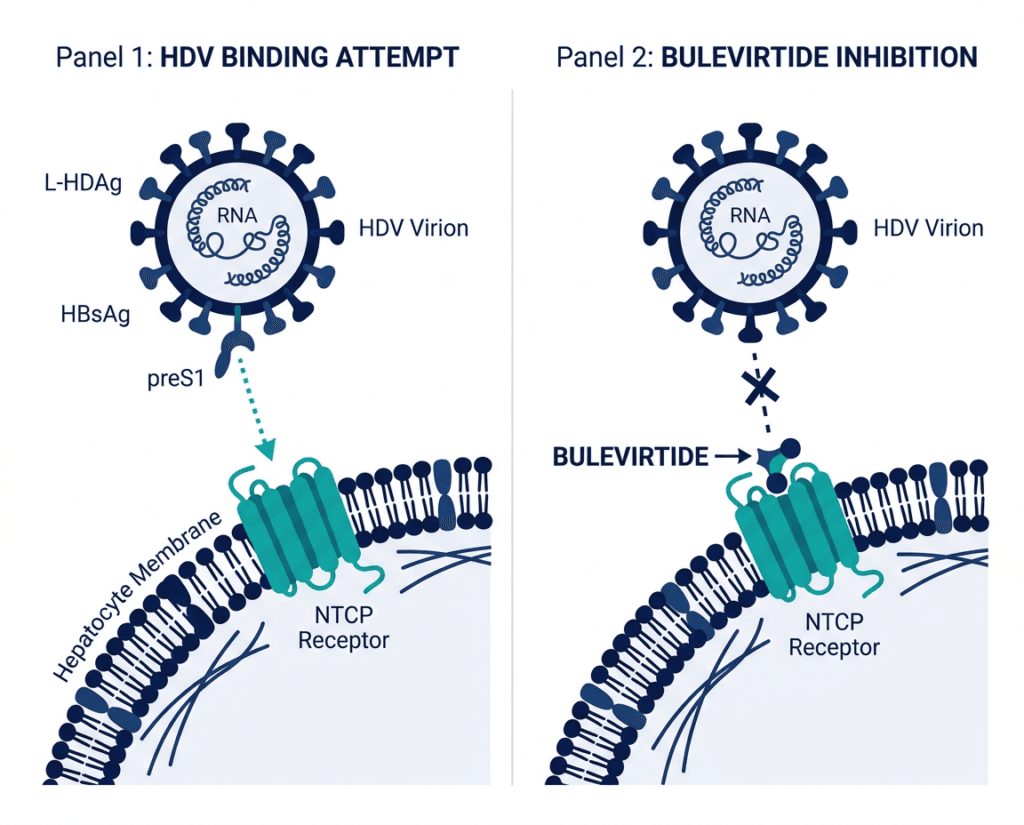
    Both HBV and HDV use the same receptor to enter hepatocytes: sodium taurocholate cotransporting polypeptide (NTCP), a bile acid transporter expressed on the surface of liver cells. The viral entry process begins when a region of the HBV pre-S1 domain on the outer envelope of the virus binds to NTCP with high affinity. This binding triggers the virus to be taken up into the hepatocyte.

    Bulevirtide is a myristoylated synthetic peptide, meaning it is a short chain of amino acids with a fatty acid (myristic acid) attached that anchors the molecule in cell membranes. Its amino acid sequence mimics the pre-S1 region that HBV and HDV use to bind NTCP. By competing with the virus for NTCP binding, bulevirtide prevents both HBV and HDV from entering hepatocytes, reducing the number of infected cells over time.

    This is a mechanistically rational and highly targeted approach. It does not work inside the cell on the viral replication machinery, like nucleoside analogs for HBV. It works outside the cell, at the entry step, blocking new infection events. As old infected hepatocytes naturally die and are replaced, and as new cells are protected from infection, the proportion of HDV-infected hepatocytes in the liver declines.

    Illustration of Hepcludex mechanism of action

    The important implication: bulevirtide must be taken daily on a long-term basis, because stopping the drug removes the competitive blockade of NTCP, allowing HDV and HBV to resume infecting new hepatocytes. This pharmacological characteristic directly explains the boxed warning for severe exacerbation after discontinuation.


    The MYR301 Trial: Design and Full Results

    Design

    MYR301 (NCT03852719) is a multicenter, randomized, open-label, parallel-arm Phase 3 trial evaluating the long-term efficacy and safety of bulevirtide in adults with chronic HDV. The trial enrolled 150 patients who were randomized 1:1:1 to three arms:

    • Bulevirtide 2 mg once daily for 144 weeks (n=49)
    • Bulevirtide 10 mg once daily for 144 weeks, which is approximately equivalent to the 8.5 mg U.S. approved dose (n=50)
    • Delayed treatment: 48-week observational period (no antiviral treatment for HDV) followed by bulevirtide 10 mg once daily for 96 weeks (n=51)

    The delayed treatment arm served as the control for the primary endpoint analysis. After 48 weeks, all delayed-treatment patients crossed over to receive bulevirtide. This design was used because withholding all treatment for 144 weeks in a condition as severe as HDV was not considered ethically appropriate.

    The trial has continued through a 96-week off-treatment follow-up period, generating the longest dataset available for any HDV therapeutic program.

    Primary endpoint: week 48 combined response

    The primary efficacy endpoint was combined response at week 48, defined as both:

    • Undetectable HDV RNA OR a decline in HDV RNA of 2 log10 IU/mL or greater from baseline, AND
    • Normalization of alanine aminotransferase (ALT)
    Outcome at Week 48Bulevirtide (10 mg arm)Delayed treatment (control)
    Combined response rate48%2%
    Undetectable HDV RNA20%0%
    ALT normalizationIncluded in combined responseMinimal improvement
    Statistical significancep less than 0.001Reference

    Source: Wedemeyer H et al. A Phase 3, Randomized Trial of Bulevirtide in Chronic Hepatitis D. New England Journal of Medicine. 2023;389:22-32. doi:10.1056/NEJMoa2213429.

    The 46-percentage-point difference between the active treatment arm (48%) and the delayed treatment arm (2%) is the formal basis for the accelerated approval. The 2% rate in the delayed treatment arm is a direct reflection of HDV’s natural history: without treatment, spontaneous virologic suppression in chronic HDV is extremely rare.

    Deepening response over time: through 144 weeks

    One of the most clinically informative aspects of MYR301 is its long-term follow-up data, which was available to the FDA as part of the approval package.

    Virologic response over timeBulevirtide (immediate treatment arm)
    Undetectable HDV RNA at Week 4820%
    Undetectable HDV RNA at Week 9636%
    Undetectable HDV RNA at Week 14450%
    Combined response at Week 96Improved from Week 48
    Treatment resistance detectedNone through 144 weeks
    Patients with suboptimal early response at Week 24 who achieved virologic response by Week 9643% of non-responders; 82% of partial responders

    Source: Journal of Hepatology 2024. doi:10.1016/j.jhep.2024.05.021. Gilead press release. May 2025.

    The trajectory from 20% undetectable at week 48 to 50% undetectable at week 144 is the central efficacy message of the long-term MYR301 data. Patients who continue on bulevirtide are increasingly likely to achieve complete virologic suppression over time. This deepening response is consistent with the mechanism: as more cycles of hepatocyte replacement occur under entry inhibition, the proportion of infected cells progressively declines.

    The absence of treatment resistance through 144 weeks is a notable finding. In HIV and HBV medicine, selection for resistance mutations under antiviral pressure is a persistent challenge. Bulevirtide’s mechanism as a host-targeting entry inhibitor rather than a direct-acting antiviral targeting viral enzymes may contribute to the absence of resistance.

    Off-treatment durability

    Final data from MYR301, presented in 2025, showed that 90% of patients who had achieved undetectable HDV RNA at the end of treatment (144 weeks) remained undetectable for nearly two years off treatment. This durability after stopping therapy is an important finding for patients who want to understand what long-term treatment success might look like.

    Why combined response (virologic plus biochemical) is the right endpoint for HDV In chronic viral hepatitis, virologic suppression alone does not capture the full clinical picture. ALT normalization reflects reduction in active liver inflammation: elevated ALT indicates ongoing hepatocyte injury, and its normalization suggests that the liver injury driven by active HDV replication is being controlled. The FDA required both components in the primary endpoint because treatment with HDV antivirals can suppress viral replication (virologic response) without fully resolving the inflammatory liver injury (biochemical response), and the combination captures both dimensions of disease activity that matter for long-term liver health. This is why the 48% combined response rate, rather than just the virologic response rate, is the appropriate headline number from MYR301.

    Safety: What the Prescribing Information Covers

    Boxed warning: severe acute exacerbations after discontinuation

    Hepcludex carries a boxed warning for severe acute exacerbations of hepatitis B and HDV after stopping treatment. When bulevirtide is discontinued, NTCP receptors that were competitively blocked by the drug become available again, allowing HBV and HDV to rapidly resume infecting hepatocytes. In some patients, this viral rebound produces a sudden, severe flare of hepatitis that can be clinically dangerous.

    This warning has direct clinical implications for prescribers and patients:

    • Do not stop Hepcludex without discussing a discontinuation plan with your hepatologist
    • If discontinuation is necessary (surgery, tolerability issue, non-adherence), patients require close monitoring of liver function tests and HDV RNA for a minimum of 24 weeks after stopping
    • Patients should be counseled about this risk before starting treatment to ensure informed decision-making about the long-term nature of therapy

    Serious adverse reactions

    • Hypersensitivity reactions including anaphylaxis: Reported with bulevirtide. Monitor for signs of allergic reaction after each injection, especially during the initial treatment period.
    • Bile acid transporter inhibition: Because bulevirtide blocks NTCP, which is a bile acid transporter in addition to being the HBV/HDV entry receptor, it elevates circulating bile acid concentrations in the blood. This is a pharmacological consequence of the mechanism. In MYR301, elevated bile acids were observed and were generally asymptomatic, but the clinical implications of chronic NTCP inhibition with respect to bile acid metabolism are monitored as part of the drug’s safety profile.

    Common adverse reactions

    The most commonly reported adverse reactions in MYR301 were headache, abdominal pain, fatigue, pruritus (itching), and injection site reactions. Adverse events were mostly mild in severity, with no serious adverse events related to bulevirtide reported through 96 weeks of treatment.


    Dosing and Administration

    Approved dose: 8.5 mg as a subcutaneous injection once daily.

    Administration: The drug is supplied as a lyophilized powder for injection. After reconstitution, the solution is administered as a subcutaneous injection. Patients can be trained to self-inject.

    Duration: MYR301 treated patients for up to 144 weeks. The approved label does not specify a fixed treatment duration, consistent with the evolving evidence on long-term response and the expectation that patients who respond well may continue treatment.

    Timing relative to other medications: Because bulevirtide blocks NTCP, it should not be taken simultaneously with medications that depend on NTCP for their hepatic uptake. Notable interactions include teriflunomide and some statins. Review the full prescribing information for the complete drug interaction list before prescribing.

    HBV management: Most patients with HDV are also being managed for HBV with oral antivirals (entecavir, tenofovir). HBV suppression therapy is typically continued alongside bulevirtide; bulevirtide does not replace HBV antiviral management.


    The Regulatory Journey: Why This Took So Long and What Changed

    Bulevirtide has been in development for nearly a decade. It received European Medicines Agency approval for 2 mg use in the European Economic Area in July 2020, making it available to European patients more than five years before U.S. approval. The delay in U.S. approval reflected the FDA’s requirement for robust Phase 3 controlled data from a U.S.-eligible trial, which MYR301 was designed to provide.

    The drug received multiple FDA designations recognizing the seriousness of HDV and the absence of alternatives:

    The accelerated approval was granted on the basis that combined virologic and biochemical response is reasonably likely to predict long-term clinical benefit, specifically a reduction in the risk of cirrhosis, liver failure, and hepatocellular carcinoma. Confirmation of that clinical benefit in a dedicated outcomes trial is required as a post-marketing commitment.


    What This Means for Patients With Chronic HDV Infection

    For patients currently diagnosed with HDV

    Hepcludex is now available in the United States for adults with chronic HDV infection without cirrhosis or with compensated cirrhosis. If you have been diagnosed with chronic HDV coinfection, this is the first FDA-approved therapy you can discuss with your hepatologist.

    The most important questions to raise with your provider:

    • Is my cirrhosis status (absent, compensated, or decompensated) consistent with the approved indication?
    • What is my current HBV management regimen, and how will it interact with bulevirtide?
    • What is my baseline HDV RNA and ALT level, which will serve as the reference point for monitoring treatment response?
    • What is the monitoring schedule for HDV RNA, ALT, and bile acid levels during treatment?
    • What is the plan if I need to stop treatment for any reason?

    For patients who have not yet been tested for HDV

    If you have chronic hepatitis B and have never been tested for HDV, and you fall into any of the higher-risk groups for HDV exposure (history of injection drug use, immigration from or travel to a high-prevalence region, or sexual contact with someone who has HDV), ask your hepatologist or primary care provider about HDV testing. The test is straightforward: an HDV antibody test initially, followed by HDV RNA if the antibody is positive.

    The American Association for the Study of Liver Diseases (AASLD) and the Infectious Diseases Society of America (IDSA) both recommend HDV testing in patients with chronic HBV and risk factors for HDV exposure. Many patients with HDV are currently undiagnosed.

    Patient support

    Gilead’s Support Path program provides resources to help patients and healthcare professionals navigate coverage and financial assistance for Hepcludex. The Hepatitis B Foundation and the American Liver Foundation both maintain patient-facing resources on viral hepatitis management including HDV. The Global Hepatitis Delta Partnership is an international patient advocacy organization specifically focused on HDV.

    For related HED coverage of other liver disease treatment approvals in 2026, see our post on Lynavoy (linerixibat) for cholestatic pruritus in primary biliary cholangitis and our post on Tavneos (avacopan) and the serious liver injury warning that has put the FDA and Amgen at odds.


    Sources

    FDA press announcement: FDA Approves First Treatment for Chronic Hepatitis Delta Virus (HDV) Infection. FDA.gov. May 22, 2026.

    Gilead Sciences press release: FDA Grants Accelerated Approval to Gilead’s Hepcludex (bulevirtide-gmod), the First and Only Approved Treatment for Chronic Hepatitis Delta Virus (HDV). businesswire.com. May 22, 2026.

    Drugs.com approval news: FDA Grants Accelerated Approval to Hepcludex (bulevirtide-gmod) for Chronic Hepatitis Delta Virus (HDV). drugs.com. May 22, 2026.

    MYR301 primary NEJM publication: Wedemeyer H et al. A Phase 3, Randomized Trial of Bulevirtide in Chronic Hepatitis D. New England Journal of Medicine. 2023;389:22-32. doi:10.1056/NEJMoa2213429.

    MYR301 week 96 Journal of Hepatology publication: Wedemeyer H et al. Bulevirtide monotherapy in patients with chronic HDV: Efficacy and safety results through week 96 from a phase III randomized trial. J Hepatol. 2024. doi:10.1016/j.jhep.2024.05.021.

    MYR301 final 144-week data (Gilead press release): Final Data From the Phase 3 MYR301 Study Demonstrated Longer Treatment With Bulevirtide Was Associated With Sustaining Undetectability. gilead.com. May 2025.

    MYR301 trial registration: NCT03852719. ClinicalTrials.gov.

    Pharmacy Times clinical review: FDA Approves Bulevirtide-gmod as First-Ever Treatment for Chronic Hepatitis Delta Virus Infection. pharmacytimes.com. May 2026.

    HCPLive clinical coverage: Bulevirtide Receives Historic First FDA Approval for Chronic Hepatitis Delta. hcplive.com. May 2026.

    Contagion Live approval summary: Bulevirtide Approved as First US Treatment for Chronic Hepatitis Delta Virus. contagionlive.com. May 2026.

    EMA Hepcludex EPAR: Hepcludex: European Public Assessment Report. ema.europa.eu.

    HDV biology overview: Hepatitis Delta Virus. StatPearls. NCBI.

    Bulevirtide mechanism (NTCP): Sodium Taurocholate Cotransporting Polypeptide as a Drug Target. PMC9283099.

    NIDDK hepatitis D overview: Hepatitis D. NIDDK.

    FDA accelerated approval: Accelerated Approval Program. FDA.gov.

    FDA breakthrough therapy: Breakthrough Therapy Designation. FDA.gov.

    FDA orphan drug: Designating an Orphan Product. FDA.gov.

    Hepcludex prescribing information: Hepcludex (bulevirtide-gmod) Prescribing Information. Gilead Sciences. 2026.

    Patient resources: American Association for the Study of Liver Diseases | Hepatitis B Foundation | American Liver Foundation | Global Hepatitis Delta Partnership | Gilead Support Path Program

    Disclaimer: Health Evidence Digest provides general information about FDA approvals and health research for educational purposes. This content is not a substitute for professional medical advice, diagnosis, or treatment. Hepcludex received accelerated approval; continued approval may be contingent on confirmatory trial results. Do not start or stop Hepcludex without guidance from a qualified hepatologist. Treatment decisions for chronic HDV infection should be made in close consultation with a physician experienced in viral hepatitis management.

  • Two Pills Instead of Three, No Tenofovir, No INSTI. The FDA Just Approved a New Way to Maintain HIV Suppression.

    Two Pills Instead of Three, No Tenofovir, No INSTI. The FDA Just Approved a New Way to Maintain HIV Suppression.

    The essentials: On April 20, 2026, the FDA approved Idvynso (doravirine/islatravir, Merck) as a once-daily, two-drug complete HIV-1 treatment regimen for adults who are already virologically suppressed. Available in pharmacies from May 11, 2026. Who qualifies: adults with HIV-1 RNA less than 50 copies/mL on a stable regimen, with no history of virologic treatment failure and no known resistance to doravirine. What makes it clinically distinctive: it is the first non-INSTI, tenofovir-free, complete two-drug regimen to demonstrate non-inferior efficacy versus Biktarvy (bictegravir/emtricitabine/tenofovir alafenamide), the most widely prescribed HIV regimen in the world, in a double-blind head-to-head Phase 3 trial. It also introduces islatravir, the first approved drug in a new antiretroviral class called NRTTIs, into clinical practice. What it is not: a treatment-initiation option for people starting HIV therapy for the first time. It is a switch regimen only. Key contraindications: must not be co-administered with lamivudine (3TC) or emtricitabine (FTC), or strong CYP3A4 inducers including rifampin, carbamazepine, phenytoin, and St. John’s Wort.

    For anyone living with HIV who is currently well-controlled on antiretroviral therapy, the treatment goal is not just viral suppression. It is viral suppression with the least cumulative burden on the body, the fewest side effects, and the simplest possible regimen. Decades of HIV drug development have been moving steadily in that direction: from multiple daily doses of multiple drugs in the 1990s, to once-daily combinations, to single-tablet regimens, to now, two-drug regimens that can maintain suppression without some of the drug classes that current three-drug standards rely on.

    On April 20, 2026, the FDA approved Idvynso (doravirine/islatravir, pronounced ihd-VIHN-so), a once-daily tablet from Merck combining two drugs with distinct mechanisms. It is indicated as a complete treatment regimen to replace current antiretroviral therapy in adults with HIV-1 who are already virologically suppressed. Available in pharmacies from May 11, 2026.

    Idvynso is the first non-INSTI, tenofovir-free, once-daily, two-drug complete regimen to demonstrate non-inferior efficacy versus the current three-drug gold standard, Biktarvy (bictegravir/emtricitabine/tenofovir alafenamide), in a head-to-head Phase 3 trial. It also introduces islatravir, the first drug in a new antiretroviral class, into approved clinical practice.


    Why the Non-INSTI, Tenofovir-Free Distinction Matters

    Most people living with HIV in the United States are on a regimen that includes either an integrase strand transfer inhibitor (INSTI), tenofovir, or both. INSTIs (bictegravir, dolutegravir, cabotegravir) are highly effective and well tolerated by most patients, but they carry a well-documented association with weight gain and metabolic effects in some people. Tenofovir, particularly the older tenofovir disoproxil fumarate (TDF), carries renal and bone density concerns with long-term use, though the newer tenofovir alafenamide (TAF) formulation substantially reduced those risks.

    Idvynso contains neither. Doravirine is a non-nucleoside reverse transcriptase inhibitor (NNRTI) with a clean metabolic profile, established since its approval in 2018 as Pifeltro. Islatravir is an NRTTI, a distinct class that works differently from both NRTIs and INSTIs. For patients who experience weight gain, lipid changes, or bone effects on current regimens, or who have renal concerns that make tenofovir management complex, a non-INSTI, tenofovir-free option backed by head-to-head Phase 3 data represents a meaningful new clinical choice.

    Who qualifies to switch to Idvynso Idvynso is a switch regimen, not a treatment-initiation option. It is approved for adults with HIV-1 who meet all of the following criteria: Currently virologically suppressed, meaning HIV-1 RNA less than 50 copies/mL on a stable antiretroviral regimen; no history of virologic treatment failure; no known resistance substitutions associated with resistance to doravirine. Idvynso is not approved for treatment-naive patients (those starting HIV treatment for the first time) or for patients with prior virologic failure on any regimen. The doravirine resistance requirement specifically means patients with documented NNRTI resistance mutations affecting doravirine are not candidates.

    How Idvynso Works: Two Drugs, Two Distinct Mechanisms

    Doravirine: the established NNRTI

    Doravirine (100 mg) is an NNRTI that noncompetitively binds to and inhibits HIV-1 reverse transcriptase. It has been FDA-approved since 2018, first as Pifeltro (standalone single agent) and then in the three-drug combination Delstrigo (doravirine/lamivudine/tenofovir disoproxil fumarate). Its established safety profile in approved use includes a notably clean metabolic record: minimal effects on fasting lipids, insulin resistance, and body weight in clinical trials, in contrast to some other antiretrovirals.

    Islatravir: the first-in-class NRTTI

    Islatravir (0.25 mg) is a nucleoside reverse transcriptase translocation inhibitor (NRTTI), a new mechanistic class. Like older nucleoside reverse transcriptase inhibitors (NRTIs) such as emtricitabine or tenofovir, islatravir targets the reverse transcriptase enzyme that HIV uses to convert its RNA into DNA. But it works through a different mechanism.

    Older NRTIs work by getting incorporated into the growing viral DNA chain and acting as a chain terminator, stopping DNA synthesis. Islatravir uses this same incorporation mechanism but adds a second layer: after incorporation, its unique 4-ethynyl chemical group physically blocks the reverse transcriptase enzyme from translocating along the template, preventing it from reading the next nucleotide. This dual mechanism, immediate chain termination plus translocation blocking, gives islatravir a higher barrier to resistance than most older NRTIs and a potency-to-dose ratio higher than any currently approved NRTI at comparable concentrations.

    An additional pharmacokinetic advantage: islatravir’s active intracellular form (islatravir-triphosphate) has a long intracellular half-life, meaning drug concentrations remain therapeutic even with once-daily dosing and support the possibility of longer-interval formulations now in development.


    The Phase 3 Trial Data: What Both Studies Showed

    The FDA approval is supported by data from two pivotal Phase 3 trials, both presented at CROI 2025 and CROI 2026, with Week 96 data also available.

    Trial 052 (NCT05630755)Trial 051 (NCT05631093)
    DesignDouble-blind, randomized, active-controlledOpen-label, randomized, active-controlled
    ComparatorBiktarvy (BIC/FTC/TAF)Baseline antiretroviral therapy (bART) of any class
    Participants (n)513 adults on Biktarvy551 adults on various ART regimens
    Age 65 or older in combined trials11% (81 of 708 on Idvynso)Reflects real-world older patient population
    HIV-1 RNA less than 50 copies/mL at Week 4892% (Idvynso) vs. 94% (BIC/FTC/TAF)96% (Idvynso) vs. 92% (bART)
    Virologic failure (RNA 50 c/mL or higher)Non-inferior; difference within 4% marginIdvynso numerically superior; difference 3.6% favoring Idvynso
    CD4+ T-cell countsStable; no clinically meaningful decline at 0.25 mg doseStable in both arms
    Weight change at Week 480.03 kg decrease (Idvynso) vs. 0.28 kg increase (BIC/FTC/TAF)0.94 kg increase (Idvynso) vs. 0.15 kg decrease (bART)
    Fasting lipidsNo clinically meaningful changes vs. comparatorNo clinically meaningful changes vs. comparator
    HOMA-IR (insulin resistance)No clinically meaningful effectNo clinically meaningful effect

    Source: Merck press release April 21, 2026. CROI 2025 and CROI 2026 late-breaking presentations. NCT05630755, NCT05631093.

    The Trial 052 result against Biktarvy is the headline finding. Biktarvy is the most widely prescribed HIV regimen in the world, and demonstrating non-inferiority in a blinded head-to-head trial against it is the most rigorous efficacy test Idvynso could have faced. The 92% vs. 94% suppression rates fall within the pre-specified 4% non-inferiority margin.

    The weight data from Trial 052 is particularly notable. In a trial where the comparator is Biktarvy, a minimal weight change with Idvynso (0.03 kg decrease) compared with a slight weight gain with Biktarvy (0.28 kg increase) is a metabolically favorable result, even if the absolute difference is small. For patients already concerned about INSTI-associated weight gain on existing regimens, this data point may influence switching conversations.

    Merck presented these results across multiple scientific conferences including CROI 2026 and the European AIDS Conference 2025. The lead investigator characterization of the results at those conferences emphasized the combination of non-inferior virologic suppression and favorable metabolic outcomes as the primary clinical value of the regimen.

    The CD4 count history: why the 0.25 mg dose matters Islatravir’s development path was not straightforward. In 2021, the FDA placed clinical holds on several studies of islatravir after decreases in total lymphocyte and CD4+ T-cell counts were observed in some participants. CD4 cells are the immune cells HIV targets, and their count is the primary measure of immune health in people living with HIV. Any drug that reduces CD4 counts independently of HIV control would be clinically unacceptable. Merck’s response was to identify that the CD4 declines occurred at higher doses. The company reformulated the development program around the lower 0.25 mg daily dose used in Idvynso, which in both pivotal trials showed stable CD4 counts comparable to comparator arms. The FDA lifted the holds and the 0.25 mg dose progressed to approval. This history means clinicians prescribing Idvynso should monitor CD4 counts as part of routine follow-up, as specified in the prescribing information. The clinical trial data is reassuring at the approved dose, but ongoing monitoring is appropriate given the earlier signal at higher doses.

    Safety Profile: What Patients and Providers Need to Know

    Skin reaction warning

    Idvynso carries an important precautionary warning regarding severe skin reactions, including Stevens-Johnson syndrome (SJS), toxic epidermal necrolysis (TEN), and DRESS syndrome, based on post-marketing experience with doravirine-containing regimens. This is a standard precautionary warning in the prescribing information, not a boxed warning. These reactions are rare but potentially life-threatening. Patients should contact their provider immediately if any rash develops, and stop taking Idvynso if the rash affects mucous membranes (mouth, eyes, genitals) or is accompanied by fever, fatigue, or body aches.

    Common side effects

    The most common adverse reactions reported in clinical trials are diarrhea, dizziness, fatigue, bloating, headache, and weight gain. Most are low-grade and manageable. The dizziness signal with doravirine is established from prior approvals and is typically mild, occurring most often in the first few weeks of use.

    Key drug interactions and contraindications

    Strong CYP3A4 inducers: Contraindicated because they significantly decrease doravirine plasma concentrations, which could compromise viral suppression. Common examples include rifampin, carbamazepine, phenytoin, and St. John’s Wort. If a strong CYP3A4 inducer must be used, Idvynso cannot be co-administered.

    Lamivudine (3TC) and emtricitabine (FTC): Contraindicated because they significantly decrease islatravir-triphosphate concentrations, directly reducing the antiviral efficacy of the islatravir component. This is a mechanistic interaction: 3TC and FTC compete with islatravir for intracellular phosphorylation.

    Rifabutin: Use with caution. May decrease doravirine concentrations; monitor closely if co-administration is necessary.

    The lamivudine/emtricitabine contraindication has a practical implication: patients currently on any regimen containing 3TC or FTC (which includes most first-line combinations) need to fully switch to Idvynso as their complete regimen, not add it on top of existing therapy. This is the intended use, but it is worth confirming explicitly in clinical practice.


    Dosing, Availability, and Practical Use

    FeatureDetails
    DoseOne tablet (doravirine 100 mg / islatravir 0.25 mg) once daily
    Food requirementCan be taken with or without food
    FormulationSingle-tablet; no generic available
    Available in pharmaciesFrom May 11, 2026
    ManufacturerMerck (MSD outside US/Canada)
    IndicationSwitch regimen for virologically suppressed adults only; not for treatment initiation
    Renal impairmentNo dose adjustment required (unlike tenofovir-containing regimens)
    Hepatic impairmentUse with caution in severe hepatic impairment; see full prescribing information
    PregnancyEnroll in the Antiretroviral Pregnancy Registry; weigh risks and benefits with provider

    Where Idvynso Fits in the HIV Treatment Landscape

    Current two-drug HIV regimens approved in the US include dolutegravir/rilpivirine (Juluca) and dolutegravir/lamivudine (Dovato). Both are INSTI-containing. Idvynso is the first two-drug option for virologically suppressed adults that contains neither an INSTI nor tenofovir.

    For clinicians managing patients with INSTI-associated weight gain or metabolic concerns, or patients with renal considerations where tenofovir management is complex, Idvynso adds a new conversation to the switching discussion. For patients, the availability of a single tablet, taken with or without food, with no tenofovir and no INSTI, backed by head-to-head data against the most widely prescribed HIV regimen in the world, is a meaningful new option.

    Islatravir’s approval as part of Idvynso also opens clinical experience with the NRTTI class that will inform the development of longer-interval formulations. Merck has a monthly oral islatravir program in development and a long-acting injectable combination in earlier stages. The twice-yearly injectable lenacapavir (Sunlenca), approved for heavily treatment-experienced patients, has already demonstrated that very long dosing intervals are achievable in HIV treatment. The trajectory for people with HIV is toward fewer doses, fewer pills, and longer intervals, and Idvynso is one step on that path.

    For context on how the FDA’s CNPV program has been used to accelerate approvals for other conditions in 2026, see our post on the FDA’s fast-tracking of psychedelic drug programs for mental illness and our coverage of the first gene therapy for deafness approved under the same program.


    Are you living with HIV and considering a switch?

    Whether Idvynso is right for you depends on your full treatment history, current regimen, resistance testing results, and individual health considerations. This conversation belongs with an HIV specialist or an infectious disease provider experienced in antiretroviral therapy. The Ryan White HIV/AIDS Program site finder can help connect patients to specialized HIV care. HIV.gov also maintains a testing and care site locator. For complete prescribing information, Merck’s full prescribing information is available here.


    Sources

    FDA approval / Merck press release: FDA Approves Merck’s Once-Daily IDVYNSO (doravirine/islatravir). April 21, 2026.

    Pharmacy Times: FDA Approves Once-Daily HIV Regimen Combining Doravirine and Islatravir. pharmacytimes.com. April 2026.

    Drugs.com approval history: Idvynso (doravirine and islatravir) FDA Approval History. drugs.com.

    Drugs.com drug information: Idvynso: Uses, Dosage, Side Effects and Warnings. drugs.com.

    Merck CROI 2026 data: Merck Announces Late-Breaking Data from Three Phase 3 Trials at CROI 2026. merck.com. February 25, 2026.

    Merck European AIDS Conference data (weight/metabolic): Merck Announces New Data from Phase 3 Trials at European AIDS Conference. merck.com. October 2025.

    PharmExec: FDA Approves Idvynso for Treatment of HIV-1 Infection in Adults. pharmexec.com.

    EATG press release summary: FDA approves Merck’s Once-Daily IDVYNSO (doravirine/islatravir). eatg.org. April 2026.

    Islatravir mechanism (PubMed): Islatravir has a high barrier to resistance and exhibits a differentiated resistance profile. PubMed PMID 35546110.

    Idvynso prescribing information: IDVYNSO (doravirine/islatravir) Full Prescribing Information. Merck. April 2026.

    Trial 052 registration: NCT05630755. A Switch to Doravirine/Islatravir in Participants Virologically Suppressed on BIC/FTC/TAF. ClinicalTrials.gov.

    Trial 051 registration: NCT05631093. A Switch to Doravirine/Islatravir in Participants Virologically Suppressed on ART. ClinicalTrials.gov.

    Disclaimer: Health Evidence Digest provides general information about FDA approvals and health research for educational purposes. This content is not a substitute for professional medical advice. HIV treatment decisions, including switching antiretroviral regimens, should be made in close consultation with a qualified HIV specialist or infectious disease provider familiar with your full treatment history and resistance profile.