| The essentials: On July 31, 2026, the FDA approved Pluvicto (lutetium Lu 177 vipivotide tetraxetan, Novartis) in combination with androgen receptor pathway inhibitor (ARPI) therapy for adults with prostate-specific membrane antigen (PSMA)-positive metastatic androgen pathway modulation-naïve or -sensitive (mAPMN/S) prostate cancer, previously known as metastatic hormone-sensitive prostate cancer (mHSPC). This is the first approval of a radioligand therapy (RLT) in the hormone-sensitive metastatic setting. It is earlier in the disease course than Pluvicto’s two existing indications, which cover PSMA-positive metastatic castration-resistant prostate cancer (mCRPC). PSMA-positive selection required: Patients must be selected for Pluvicto using Locametz (gallium Ga 68 gozetotide) or another approved PSMA PET product confirming PSMA expression. The clinical basis: Phase 3 PSMAddition (NCT04720157), 1,144 patients with PSMA-positive mHSPC, randomized 1:1 to Pluvicto 7.4 GBq (200 mCi) intravenously every 6 weeks for 6 cycles plus ADT plus ARPI versus ADT plus ARPI alone. Presented at ESMO 2025 Presidential Symposium. Primary endpoint (rPFS by BIRC at interim analysis, data cutoff January 13, 2025, median follow-up 23.6 months): HR 0.72 (95% CI 0.58 to 0.90); p=0.002. Median rPFS: not reached in either arm. Overall survival (key secondary): HR 0.84 (95% CI 0.63 to 1.13); p=0.125 — trend toward benefit; not statistically significant. ORR: 85.3% (Pluvicto) versus 80.8% (standard of care). Complete response: 57.1% versus 42.3%. PSA below 0.2 ng/mL at 48 weeks: 87.4% versus 74.9%. Time to mCRPC: HR 0.70 (95% CI 0.58 to 0.84). Time to PSA progression: HR 0.42 (95% CI 0.30 to 0.59). Grade 3 or higher adverse events: 50.7% (Pluvicto arm) versus 43.0% (control). Dry mouth: 41% grade 1 and 5% grade 2 with Pluvicto versus 3.8% total in control. Quality of life: no meaningful difference in FACT-P or EQ-5D between arms. No treatment-related deaths. Important context: an expert at ESMO 2025 raised public concerns about patient selection, overtreatment, and toxicity, noting that no OS improvement was demonstrated and that QoL was numerically lower in the Pluvicto arm. This debate is included in this post because patients and clinicians deserve to know it exists when making treatment decisions. Pluvicto is now the only PSMA-targeted agent approved across both hormone-sensitive and castration-resistant metastatic prostate cancer. |
|---|
Prostate cancer does not kill most men who have it. But for the approximately 35,000 men who die from it annually in the United States, the disease follows a predictable and devastating trajectory: local disease, rising PSA, eventual metastasis, response to androgen deprivation, progression to castration resistance, and death. Every line of therapy that extends the disease-sensitive phase adds time before that trajectory reaches its endpoint.
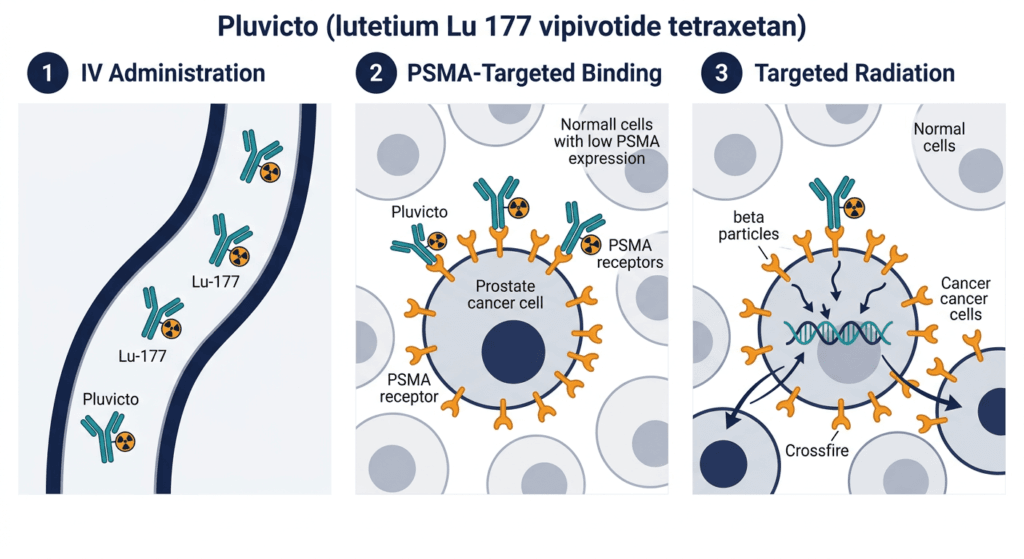
Pluvicto (lutetium Lu 177 vipivotide tetraxetan) is a radioligand therapy: a molecule designed to seek out prostate cancer cells wherever they have spread in the body, bind to a protein on their surface called PSMA, and deliver a targeted dose of beta-particle radiation that kills the cell and its neighbors. When the FDA approved it in March 2022 for metastatic castration-resistant prostate cancer, the VISION trial data showed it reduced the risk of death by 38% and the risk of radiographic progression by 60% in a population that had exhausted nearly all other options.
The July 31, 2026 approval moves Pluvicto upstream into an earlier phase of metastatic disease: hormone-sensitive prostate cancer, where androgen deprivation therapy and ARPIs still have meaningful activity and where the goal is to delay as long as possible the progression to castration resistance and the sharply worse prognosis that follows.
The PSMAddition trial that supported this approval met its primary endpoint. The 28% reduction in risk of radiographic progression is statistically significant and consistent across patient subgroups. Response rates and depth of PSA suppression were meaningfully better with the addition of Pluvicto. And the safety profile was consistent with prior Pluvicto experience.
But there is a clinical debate attached to this approval that a responsible post cannot omit. Overall survival, the endpoint that ultimately matters most, showed a trend toward benefit that did not reach statistical significance (HR 0.84; p=0.125). Grade 3 or higher adverse events were 50.7% with Pluvicto versus 43.0% with standard of care. An expert commentator at the ESMO 2025 Presidential Symposium where the PSMAddition data were presented publicly stated that he would not recommend widespread use of lutetium PSMA in mHSPC given the lack of OS benefit and quality-of-life concerns.
This post covers both sides of that conversation accurately.
What Metastatic Hormone-Sensitive Prostate Cancer Is and Why It Matters
Prostate cancer arises from the prostate gland’s epithelial cells and is the most common non-skin cancer in American men, with approximately 300,000 new diagnoses and 35,000 deaths annually. The vast majority of these diagnoses are localized disease treated with surgery or radiation. But approximately 10 to 15% of men present with or develop distant metastatic disease.
Metastatic hormone-sensitive prostate cancer (the historical term; the FDA’s new terminology is metastatic androgen pathway modulation-naïve or -sensitive, mAPMN/S) is defined by prostate cancer that has spread to distant sites (typically bone, lymph nodes, lung, and liver) in a patient whose cancer still responds to androgen deprivation. The cancer cells require androgen signaling for growth and survival; removing androgen stimulation (through chemical or surgical castration) causes tumor regression and disease control.
Despite this initial responsiveness, the disease is incurable in the metastatic setting. Most patients progress to mCRPC, typically within 20 months. Progression to mCRPC is associated with significantly worse outcomes, including increased patient burden, worse quality of life, and life expectancy of less than two years. Delaying the transition from hormone-sensitive to castration-resistant disease is therefore a meaningful clinical goal.
The modern standard of care in mHSPC
The treatment of mHSPC has evolved substantially over the past decade. Androgen deprivation therapy (ADT, typically LHRH agonist or antagonist) is the backbone. Added to ADT, androgen receptor pathway inhibitors (ARPIs) including abiraterone acetate plus prednisone, enzalutamide, apalutamide, and darolutamide have each demonstrated overall survival benefits in randomized Phase 3 trials and are now considered standard of care as doublet therapy. In high-volume disease, docetaxel chemotherapy plus ADT plus ARPI (triplet therapy) is supported by data from the ARASENS and ENZAMET trials.
The modern first-line standard in mHSPC already produces strong responses: median rPFS of more than 24 months and overall survival benefits of 20 to 40% versus ADT alone in the pivotal ARPI trials. PSMAddition asked whether adding Pluvicto to this already-effective doublet standard provides additional, meaningful benefit.
What PSMA Is and How Radioligand Therapy Works
Prostate-specific membrane antigen (PSMA) is a transmembrane protein expressed on the surface of prostate epithelial cells. In normal prostate tissue, PSMA expression is moderate. In prostate cancer cells, expression is dramatically upregulated, typically 100 to 1,000 times higher than in normal tissue. More than 80% of patients with prostate cancer highly express the PSMA biomarker, making it a promising therapeutic target. Oncodaily
Lutetium Lu 177 vipivotide tetraxetan (Pluvicto) combines two components: a targeting ligand (vipivotide tetraxetan, which binds with high affinity to PSMA) and a radioactive payload (lutetium-177, a beta-particle emitter). After intravenous administration, the targeting ligand circulates through the bloodstream, binds to PSMA-expressing prostate cancer cells wherever they are located in the body, and the lutetium-177 delivers a localized radiation dose that damages DNA in the bound cancer cell and in adjacent cells through the crossfire effect of beta particles.
This “seek and destroy” mechanism is fundamentally different from traditional external beam radiation (which treats a defined anatomic field) or systemic chemotherapy (which damages all rapidly dividing cells). Radioligand therapy delivers radiation specifically to cells expressing the target protein, producing cytotoxic effects at metastatic sites throughout the body while sparing PSMA-negative normal tissues. The primary off-target organs that express PSMA at lower levels, including the salivary glands, lacrimal glands, and kidneys, receive the most significant off-target radiation, explaining the characteristic adverse effects of dry mouth (xerostomia), dry eyes, and the requirement for renal monitoring.
PSMA PET imaging: required for patient selection
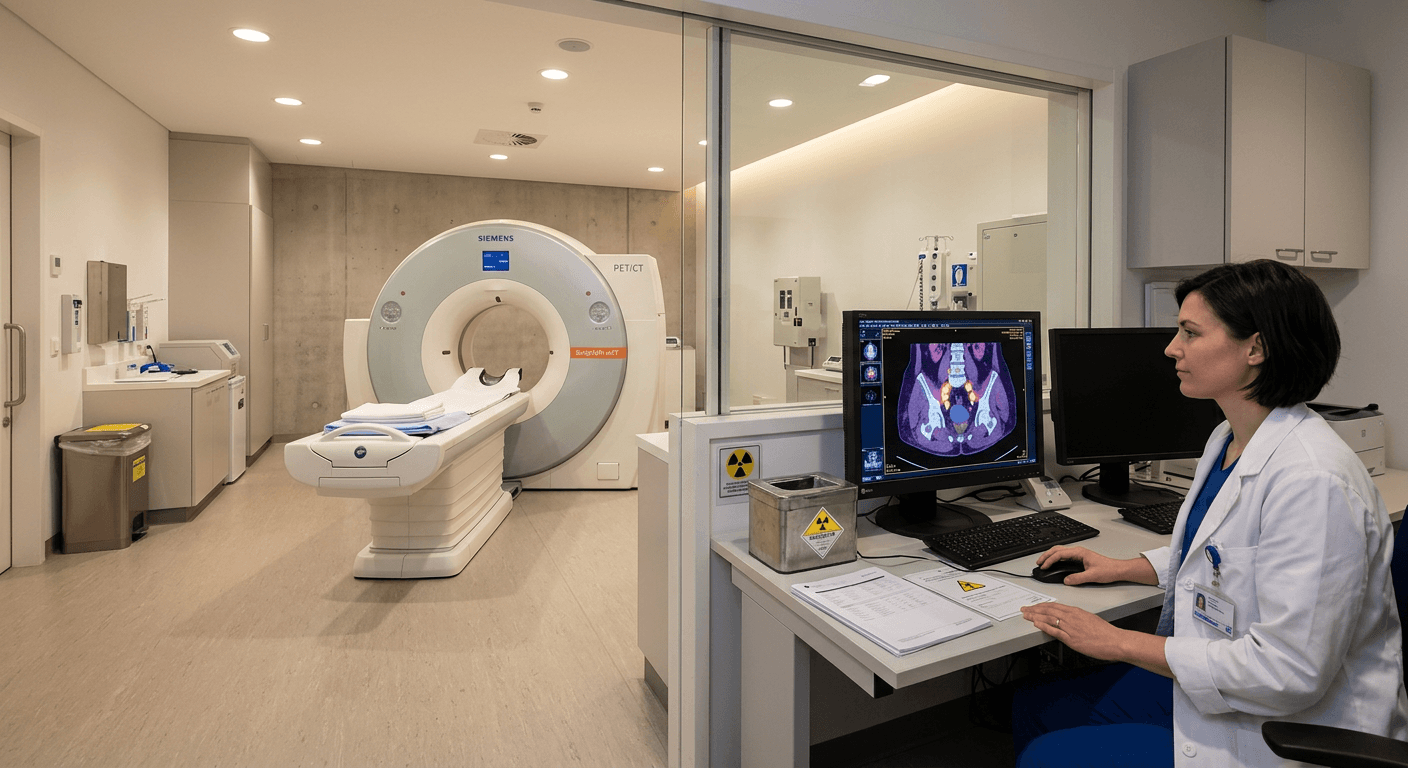
Because the therapeutic benefit of Pluvicto depends on PSMA expression in the tumor, PSMA PET/CT imaging is required before treatment to confirm that the patient’s metastatic lesions express PSMA at adequate levels. The FDA-approved imaging agents for this purpose include Locametz (gallium Ga 68 gozetotide) and Pylarify (piflufolastat F 18), among others. Patients whose tumors do not adequately express PSMA on PET imaging are not appropriate candidates for Pluvicto, as the radioligand would have insufficient target for effective delivery.
Pluvicto’s Clinical Development: The Evidence That Preceded PSMAddition
Understanding the PSMAddition approval requires context from the trials that established Pluvicto’s foundational efficacy in mCRPC.
VISION: The pivotal mCRPC trial (2022 approval)
VISION (NCT03511664) enrolled 831 patients with PSMA-positive mCRPC who had received prior taxane chemotherapy and at least one ARPI. Randomized 2:1 to Pluvicto plus standard of care or standard of care alone. Median OS 15.3 months (Pluvicto) versus 11.3 months (SoC); HR 0.62 (95% CI 0.52 to 0.74). Median rPFS 8.7 months versus 3.4 months; HR 0.40. These results established Pluvicto as a meaningful survival-extending treatment in post-ARPI, post-taxane mCRPC.
PSMAfore: The taxane-naïve mCRPC indication (September 2024 approval)
PSMAfore (NCT04689594) randomized 468 patients with taxane-naïve mCRPC after one prior ARPI to Pluvicto versus a change in ARPI. The primary rPFS HR was 0.41 (95% CI 0.29 to 0.56), more than doubling rPFS. The crossover-adjusted OS HR was 0.80 (95% CI 0.48 to 1.33). This supported the September 2024 approval for the pre-taxane mCRPC setting.
PSMAddition: The mHSPC indication (July 2026 approval)
PSMAddition moves Pluvicto further upstream, before castration resistance develops.
The PSMAddition Trial: Complete Data
Design
PSMAddition (NCT04720157) is a Phase 3, open-label, prospective, multicenter, randomized trial. In total, the PSMAddition trial enrolled 1,144 patients who were randomly assigned to receive 7.4 GBq plus or minus 10% of 177Lu-PSMA-617 for 6 cycles plus ADT and ARPI (n=572) or to ADT and ARPI alone (n=572). Patients were eligible for enrollment if they had untreated or minimally treated mHSPC, an ECOG performance status of 0 to 2, at least 1 PSMA-positive metastatic lesion per 68Ga-PSMA-11 PET/CT imaging, and were appropriate for ADT plus ARPI. Urology Times
The ARPI was selected by the investigator and could include abiraterone, apalutamide, enzalutamide, darolutamide, or another approved ARPI. Patients also received ongoing medical castration or had undergone bilateral orchiectomy.
The primary endpoint was rPFS by blinded independent radiological central review (BIRC), defined as time to radiographic progression by PCWG3-modified RECIST 1.1 or death. OS was the key secondary endpoint.
The data presented here are from the interim analysis with a data cutoff of January 13, 2025, and a median follow-up of 23.6 months. The trial was presented by Dr. Scott Tagawa of Weill Cornell Medicine at the ESMO 2025 Presidential Symposium in Berlin.
Primary and key secondary results
| Endpoint | Pluvicto plus ADT plus ARPI | ADT plus ARPI | Result |
|---|---|---|---|
| Median rPFS (primary, BIRC) | Not reached | Not reached | HR 0.72 (95% CI 0.58 to 0.90); p=0.002 |
| rPFS risk reduction | 28% | Reference | — |
| OS (key secondary) | Not reached | Not reached | HR 0.84 (95% CI 0.63 to 1.13); p=0.125 |
| ORR per RECIST 1.1 | 85.3% (95% CI 79.9% to 89.6%) | 80.8% (95% CI 74.8% to 85.8%) | Favors Pluvicto |
| Complete response | 57.1% | 42.3% | Substantially higher with Pluvicto |
| PSA below 0.2 ng/mL at 48 weeks | 87.4% (95% CI 83.6% to 90.6%) | 74.9% (95% CI 70.3% to 79.1%) | Favors Pluvicto |
| Time to mCRPC | — | — | HR 0.70 (95% CI 0.58 to 0.84) |
| Time to PSA progression | — | — | HR 0.42 (95% CI 0.30 to 0.59) |
| rPFS benefit consistency | Consistent across high/low disease volume, de novo/recurrent disease | — | All subgroups favored Pluvicto |
Sources: UroToday ESMO 2025 coverage. Urology Times PSMAddition full data. OncoDaily PSMAddition summary. NCT04720157.
Safety
| Safety endpoint | Pluvicto arm | Control arm |
|---|---|---|
| Any adverse event | 98.4% | 96.6% |
| Grade 3 or higher adverse events | 50.7% | 43.0% |
| Main grade 3 or higher events | Cytopenias (14%), driven by radioligand myelosuppression | — |
| Dry mouth (xerostomia) | Grade 1: 41%; grade 2: 5% | 3.8% total |
| Treatment-related deaths | None | None |
| Quality of life (FACT-P, EQ-5D) | No meaningful difference between arms | No meaningful difference between arms |
The Clinical Debate: What the ESMO Commentary Said and Why It Matters
Presenting at the ESMO 2025 Presidential Symposium alongside the PSMAddition data, invited discussant Dr. Neeraj Azad of Johns Hopkins University raised pointed concerns about the PSMAddition results that warrant inclusion in any clinical summary of this approval.
Dr. Azad stated: “There is a significant rPFS benefit from treatment, but no improvement in overall survival, and quality of life is numerically lower. The goal of any anticancer treatment ideally should be to make patients live longer and live better. This goal has not been achieved in PSMAddition.” He added that although he would consider using the regimen for certain patients, he “would not recommend widespread use of lutetium PSMA in mHSPC at this stage, particularly as I have concerns about patient selection, overtreatment, and toxicity.” Targeted Oncology
The concerns Dr. Azad raised are legitimate and specific:
No OS benefit demonstrated: The OS hazard ratio of 0.84 (p=0.125) represents a trend in the right direction, but it did not reach statistical significance at the interim analysis. OS is the endpoint that unambiguously demonstrates that patients live longer. In mHSPC, where modern ARPI-based doublet therapy already provides meaningful OS benefit over ADT alone, the bar for adding another agent to that doublet is whether it extends life. PSMAddition has not yet established that it does.
Overtreatment concern: The modern ARPI-based doublet standard of care in mHSPC already produces deep responses in a majority of patients. Adding a radioligand therapy to an already-effective regimen raises the question of whether the added complexity, toxicity, and cost of Pluvicto is justified by the incremental benefit, particularly in patients who might achieve excellent outcomes on doublet therapy alone.
Toxicity: Grade 3 or higher adverse events were higher in the Pluvicto arm (50.7% versus 43.0%), driven primarily by cytopenias from myelosuppression. Dry mouth, a persistent and quality-of-life-affecting toxicity from PSMA expression in salivary glands, affected 46% of Pluvicto-treated patients (41% grade 1, 5% grade 2) versus only 3.8% of control arm patients.
The counterarguments:
These concerns are real, but the full picture is more nuanced. The rPFS benefit (HR 0.72) was statistically significant and consistent across all subgroups including both high- and low-volume disease and de novo and recurrent mHSPC. The complete response rate improvement (57.1% versus 42.3%) and PSA suppression data (87.4% versus 74.9% achieving PSA below 0.2 ng/mL at 48 weeks) suggest meaningfully deeper disease control with the addition of Pluvicto. The time to mCRPC HR of 0.70 means the drug is delaying the transition to the most dangerous phase of the disease. And the OS data are immature: with median OS not yet reached in either arm at 23.6 months of follow-up, there is insufficient data to conclude that Pluvicto does not extend overall survival.
The FDA’s approval reflects a judgment that the rPFS benefit, the consistency of secondary endpoints, and the absence of OS detriment together establish a benefit-risk profile that supports use in selected patients. The expert concerns reflect a judgment that for a disease setting where current standard of care already works well, the evidence of added benefit should include OS to support broad use.
Both positions are reasonable given the available data. This is genuinely an ongoing scientific conversation, not a settled matter.
Pluvicto’s Complete Indication Picture After July 2026
Pluvicto is now the only PSMA-targeted agent approved across the full spectrum of metastatic prostate cancer:
| Indication | Setting | Approval date | Trial support |
|---|---|---|---|
| PSMA-positive mCRPC, after taxane and ARPI | Post-ARPI, post-taxane mCRPC | March 23, 2022 | VISION |
| PSMA-positive mCRPC, before taxane | Post-ARPI, taxane-naïve mCRPC | September 2024 | PSMAfore |
| PSMA-positive mAPMN/S (mHSPC), plus ARPI | Hormone-sensitive metastatic disease | July 31, 2026 | PSMAddition |
The trajectory across all three approvals represents a systematic movement upstream in the disease course: from post-ARPI post-taxane last resort, to pre-taxane ARPI-failed disease, to hormone-sensitive first-line metastatic disease. Novartis is also investigating Pluvicto in the oligometastatic setting (PSMA-DC, NCT05939414), potentially extending its use even earlier.
Safety, Dosing, and Administration Requirements
Pluvicto’s administration in the mHSPC setting uses the same dose and schedule as in mCRPC: 7.4 GBq (200 mCi) intravenously every 6 weeks for 6 cycles.
Warnings (unchanged from prior approvals):
Radiation exposure: Pluvicto is a radioactive therapeutic. Healthcare providers must follow institutional radiation safety protocols. Patients emit radiation after each dose and must limit close contact with others, particularly children and pregnant women, for several days post-treatment. Providers and clinical staff should use appropriate radiation protection measures.
Myelosuppression: Beta-particle radiation from lutetium-177 affects bone marrow function. Grade 3 or higher cytopenias occurred in 14% of PSMAddition Pluvicto-treated patients. CBC monitoring before each cycle is required. Dose modification for clinically significant myelosuppression follows the prescribing information.
Renal toxicity: Kidneys express PSMA at lower levels than prostate cancer cells and receive some radiation dose from Pluvicto. Renal function monitoring (creatinine, eGFR) before and during treatment is required.
Embryo-fetal toxicity and infertility: Radioligand therapy can cause radiation-induced fetal harm and may reduce fertility. Effective contraception is required during treatment and for a specified time after the last dose.
Administration setting: Pluvicto must be prepared and administered at authorized nuclear medicine or radiation oncology facilities with appropriate radiation handling infrastructure. It cannot be administered in a standard oncology infusion center without radiation safety certification.
The PSMA PET imaging requirement before each new course should be incorporated into the patient pathway. Patients must confirm PSMA expression before initiating mHSPC treatment with Pluvicto.
What This Means for Urologic Oncologists and Patients
For urologic oncologists and medical oncologists
The PSMAddition approval provides a new approved option for PSMA-positive mHSPC added to ARPI-based doublet therapy. The treatment decision should incorporate the full data picture, including both the statistically significant rPFS benefit and the absence of statistically significant OS benefit at the interim analysis.
Patient selection will be central to appropriate use. Patients with high PSMA expression on PET, high-volume disease, and tolerance for the added toxicity of a radioligand therapy may be the population for whom adding Pluvicto to doublet therapy is most likely to provide meaningful benefit. The subgroup analyses showed consistent rPFS benefit across disease volume and disease presentation subgroups, which does not clearly identify a subset where benefit is substantially larger.
The requirement for PSMA PET imaging, nuclear medicine administration infrastructure, and radiation safety protocols means this regimen is not operationally straightforward for all practices. Referral to centers experienced with radioligand therapy is appropriate for patients being considered for Pluvicto in the mHSPC setting.
The ongoing OS data from PSMAddition will be a critical piece of evidence as treatment guidelines evolve. Updated analyses with longer follow-up will clarify whether the rPFS benefit translates into survival benefit, which will significantly affect how broadly this approval is incorporated into standard practice.
For patients with newly diagnosed or minimally treated mHSPC
If you have been recently diagnosed with metastatic prostate cancer and your cancer has been confirmed to express PSMA on PET imaging, the July 2026 approval means that adding Pluvicto to your standard doublet therapy is now an FDA-approved option. This is a meaningful expansion of what is available to you.
The conversation with your urologist or medical oncologist should include: your PSMA PET imaging results and the degree of PSMA expression; the overall response your cancer shows to ADT plus ARPI; your performance status and tolerance for the added treatment burden and potential side effects, particularly xerostomia and myelosuppression; the logistics of receiving radioligand therapy at a certified nuclear medicine facility; and the honest acknowledgment that this approval is based on delay of radiographic progression and that overall survival benefit has not yet been statistically confirmed.
For patients who prefer to weigh these considerations carefully before proceeding, waiting for updated OS data from PSMAddition in 2027 or 2028 while receiving effective doublet therapy is a legitimate approach, and the ESMO expert commentary supports this individualized decision-making.
For related HED coverage on prostate cancer and radioligand therapy, see our broader oncology post series, and for context on the PSMA imaging requirement, the Urology Care Foundation (urologyhealth.org; 1-800-828-7866) and the Prostate Cancer Foundation (pcf.org) maintain current patient resources on PSMA-targeted therapy, PSMA PET imaging access, and prostate cancer treatment decision-making.
Sources
FDA approval announcement: FDA approves lutetium Lu 177 vipivotide tetraxetan with androgen receptor pathway inhibitor therapy for metastatic androgen pathway modulation-naïve or -sensitive prostate cancer. FDA.gov. July 31, 2026.
Novartis FDA approval press release: FDA approves Pluvicto for PSMA+ metastatic hormone-sensitive prostate cancer (mHSPC), advancing potential new standard of care across metastatic disease. GlobeNewswire. July 31, 2026.
Novartis US press release: FDA approves Pluvicto for PSMA+ metastatic hormone-sensitive prostate cancer. Novartis US. July 31, 2026.
Drugs.com approval news: FDA Approves Pluvicto for PSMA+ Metastatic Hormone-Sensitive Prostate Cancer (mHSPC). drugs.com. July 31, 2026.
Urology Times (full PSMAddition data including all secondary endpoints, complete safety table): FDA approves lutetium Lu 177 vipivotide tetraxetan for PSMA-positive mHSPC. urologytimes.com. July 2026. and PSMAddition: Adding 177Lu-PSMA-617 to ADT plus ARPI extends rPFS in mHSPC.
UroToday (ESMO 2025 Presidential Symposium, complete endpoint table, QoL data): ESMO 2025: Phase III Trial of PSMAddition. urotoday.com. October 2025.
OncoDaily (full PSMAddition data summary including ARPI options, AUO meeting PSA data): FDA Approved Pluvicto Plus ARPI for PSMA-Positive mAPMN/S Prostate Cancer. oncodaily.com. July 2026.
Oncology News Central (Dr. Azad ESMO 2025 commentary and full concern statement): Despite Positive Data From the PSMAddition Trial, Expert at ESMO 2025 Raises Concerns. oncologynewscentral.com. October 2025.
OncoDaily PSMAddition clinical summary (HR, CI, all secondary endpoint data): PSMAddition: 177Lu-PSMA-617 Extends PFS in mHSPC. oncodaily.com.
Targeted Oncology (benefit consistency, positioning as potential new standard): 177Lu PSMA-617 Improves rPFS in mHSPC: PSMAddition Trial. targetedonc.com.
PSMAddition trial registration: NCT04720157. ClinicalTrials.gov.
Novartis PSMAddition positive announcement (May 2026 PSA analysis): PSMAddition data show Novartis Pluvicto delays progression to end-stage prostate cancer. novartis.com.
PSMAfore data (prior PSMAfore approval context): Novartis Pluvicto shows clinically meaningful and highly statistically significant rPFS benefit in taxane-naive mCRPC. novartis.com.
Prostate cancer overview: Prostate Cancer. StatPearls. NCBI.
Pluvicto prescribing information: PLUVICTO (lutetium Lu 177 vipivotide tetraxetan) Prescribing Information. Novartis Pharmaceuticals Corporation. 2026.
Pluvicto approval history: Pluvicto FDA Approval History. drugs.com.
Patient resources: Prostate Cancer Foundation | Urology Care Foundation: 1-800-828-7866 | ZERO Prostate Cancer | Novartis Pluvicto patient support | ClinicalTrials.gov: search lutetium prostate cancer
| Disclaimer: Health Evidence Digest provides general information about FDA approvals and health research for educational purposes. This content is not a substitute for professional medical advice. The PSMAddition trial met its primary endpoint of radiographic progression-free survival; overall survival data were immature at the interim analysis and showed a trend toward benefit that did not reach statistical significance. Expert debate exists about the appropriate patient selection for Pluvicto in the mHSPC setting given the absence of a statistically significant OS benefit and higher grade 3 or higher adverse event rates versus standard of care alone. Pluvicto is a radioactive therapeutic requiring administration at certified nuclear medicine facilities with appropriate radiation safety infrastructure. PSMA PET imaging confirmation of PSMA expression is required before initiating treatment. All treatment decisions for metastatic prostate cancer should be made in close collaboration with a board-certified urologic oncologist or medical oncologist with expertise in advanced prostate cancer and radioligand therapy. |
|---|
Leave a Reply