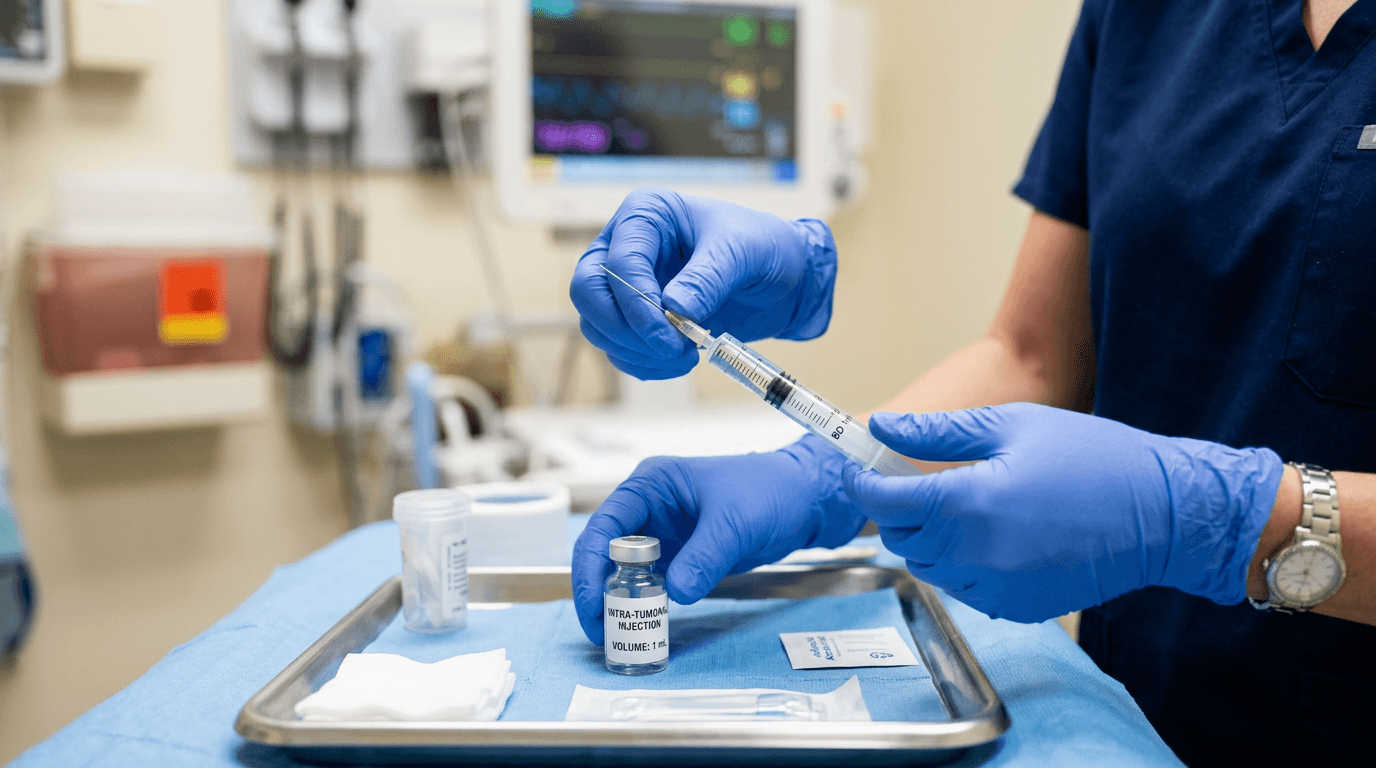
| The essentials: On August 6, 2026, the FDA granted accelerated approval to Tudriqev (vusolimogene oderparepvec-wtpg, Replimune Group) in combination with nivolumab for adult patients with unresectable advanced cutaneous melanoma who experienced disease progression on a programmed death receptor-1 (PD-1)-blocking antibody-based regimen. Tudriqev is a genetically modified herpes simplex virus type 1 (HSV-1) oncolytic viral therapy, injected directly into accessible tumors. It is the first oncolytic viral immunotherapy approved in the United States since talimogene laherparepvec (Imlygic) in 2015, and the first approved specifically for patients who have already progressed on anti-PD-1 therapy, one of the most poorly served populations in advanced melanoma. The regulatory path: the application received two Complete Response Letters before this approval: CRL 1 in July 2025 and CRL 2 in April 2026. The trial design did not change across submissions. On July 30, 2026, the FDA’s Cellular, Tissue, and Gene Therapies Advisory Committee voted 10 to 3 that the efficacy data were evaluable and clinically meaningful. Accelerated approval followed one week later. The clinical basis: IGNYTE trial (single-arm, open-label, n=140 enrolled; 91-patient efficacy-evaluable population comprising those with at least one non-injected lesion). Objective response rate: 24.2%. Median duration of response: 14.1 months. The efficacy-evaluable population included 80% with Stage IV disease and 13% with prior anti-PD-1 treatment plus ipilimumab. Approval is based on ORR and DOR as surrogate endpoints. Continued approval may be contingent on verification of clinical benefit in the confirmatory Phase 3 IGNYTE-3 trial (NCT06264180), which is ongoing and randomizes patients to Tudriqev plus nivolumab versus physician’s choice (nivolumab plus relatlimab, anti-PD-1 rechallenge, or single-agent chemotherapy), with overall survival as the primary endpoint. What the drug is: an HSV-1 oncolytic virus engineered with three genetic modifications: deletion of ICP34.5 (reduces neurovirulence and promotes tumor-selective replication); deletion of ICP47 (restores antigen presentation to immune cells); insertion of GALV-GP-R minus (a fusogenic glycoprotein that enhances tumor killing through cell-to-cell fusion and immunogenic death); and insertion of GM-CSF (a cytokine that recruits dendritic cells and macrophages to the tumor site to amplify the systemic immune response). Administration: intratumoral injection at accessible lesions every 2 weeks for 8 doses. First dose at lower concentration; subsequent 7 doses at higher concentration. Volume per injection determined by lesion size. Regulatory designations: Breakthrough Therapy Designation; Priority Review. Adverse reactions: mild; included fatigue, pyrexia, infections, chills, musculoskeletal pain, nausea, and diarrhea. No treatment-related deaths in IGNYTE. IGNYTE-3 for confirmatory OS data is the key post-approval milestone. |
|---|
Anti-PD-1 therapy, the checkpoint inhibitor approach that transformed advanced melanoma over the past decade, does not work for everyone. The patients it does not work for, those who progress despite pembrolizumab or nivolumab, face a clinical situation where options narrow sharply. Ipilimumab can provide benefit in some, as can BRAF/MEK inhibition for patients with BRAF-mutant disease. But the population that has progressed on PD-1 blockade and exhausted or is ineligible for these alternatives has historically had few good options, and the available data on clinical outcomes in this setting are sobering.
Anti-PD-1 refractory melanoma is a type of advanced skin cancer that no longer responds to immune checkpoint blockade, which is a common component of standard-of-care treatment. Despite ongoing therapy, tumors in this population can continue to grow through mechanisms that help them evade immune detection, leaving clinicians with few effective options.
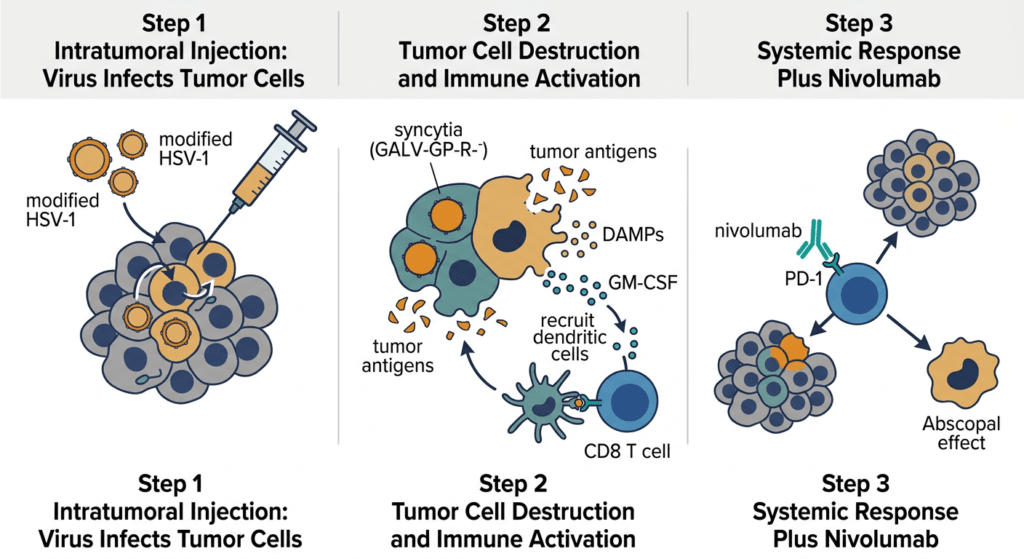
Tudriqev (vusolimogene oderparepvec-wtpg, Replimune) is a genetically engineered herpes simplex virus injected directly into accessible melanoma tumors. It does not travel to the tumor through the bloodstream. It is placed there by a physician. Once there, it selectively infects and destroys tumor cells, triggers immunogenic cell death, and activates a systemic immune response against tumor antigens that the dying cells release. Combined with nivolumab, it aims to reactivate the anti-PD-1 mechanism in a tumor microenvironment that had previously become resistant to it.
The approval arrived after a genuinely unusual regulatory journey: two complete response letters spanning 13 months, a third resubmission using the same underlying trial data, a 10 to 3 advisory committee vote supporting the clinical meaningfulness of the evidence, and accelerated approval one week after that vote. The trial design never changed. What changed was how the reviewing agency chose to treat the same evidence.
The result is a drug with a 24.2% objective response rate and 14.1-month median duration of response in patients who had already failed PD-1 blockade, the primary framework on which modern advanced melanoma care is built, delivering an approval whose clinical significance and whose regulatory sustainability through the confirmatory IGNYTE-3 trial will both become clearer over the next two to three years.
What Advanced Cutaneous Melanoma Is and Why Post-PD-1 Failure Is So Difficult
Cutaneous melanoma arises from the melanocytes of the skin and is the most dangerous form of skin cancer. In 2026, approximately 100,640 Americans will be diagnosed with melanoma and approximately 8,290 will die from it. The vast majority of early-stage melanomas are cured with surgical excision. The challenge is metastatic disease.
The treatment of advanced melanoma has been transformed twice in the past 15 years: first by BRAF/MEK inhibitor combinations (for the approximately 40 to 50% of melanomas with BRAF V600 mutations), and then by immune checkpoint inhibitors targeting PD-1 and CTLA-4. Anti-PD-1 agents (pembrolizumab, nivolumab) produce durable responses in approximately 30 to 40% of patients with advanced melanoma, and the combination of nivolumab plus ipilimumab achieves even higher response rates. For patients who respond, the responses can be remarkably durable, lasting years.
But a meaningful proportion of patients either do not respond to anti-PD-1 therapy at all (primary resistance) or respond initially and then progress (acquired resistance). The mechanisms of PD-1 resistance in melanoma involve tumor cell-intrinsic immune evasion strategies including downregulation of MHC class I antigen presentation (making tumor cells invisible to CD8 T cells), upregulation of alternative immune checkpoints (LAG-3, TIM-3, TIGIT), and creation of an immunosuppressive tumor microenvironment that physically excludes T cells or neutralizes their function.
For this population, which represents a substantial unmet need, subsequent options include:
- Nivolumab plus relatlimab (LAG-3 plus PD-1 dual blockade) in patients not previously treated with this combination
- BRAF/MEK inhibitors for BRAF-mutant disease not previously treated with targeted therapy
- Ipilimumab as a CTLA-4 checkpoint alternative
- Cytotoxic chemotherapy (dacarbazine, carboplatin/paclitaxel) with modest and typically brief responses
- Clinical trials
Tudriqev in combination with nivolumab is now the first FDA-approved regimen specifically for patients who have progressed on anti-PD-1 therapy, representing a new mechanistic approach to overcoming PD-1 resistance through intratumoral oncolytic viral therapy.
What Vusolimogene Oderparepvec Is: The Engineered HSV-1 Mechanism
Tudriqev is a genetically modified herpes simplex virus type 1 (HSV-1) engineered for selective tumor-killing and immune activation. HSV-1 was chosen as the oncolytic backbone because of its natural tropism for actively dividing cells, its well-characterized biology, and the decades of experience with HSV-1-based oncolytic agents including the predecessor talimogene laherparepvec (Imlygic, approved 2015).
The four genetic modifications incorporated into vusolimogene oderparepvec are:
Deletion of ICP34.5 (neurovirulence factor): ICP34.5 is a HSV-1 protein that prevents the antiviral PKR pathway from shutting down viral replication in infected cells. Its deletion makes the virus unable to replicate efficiently in normal, non-dividing cells that have intact antiviral defenses, while allowing replication in tumor cells where antiviral pathways are often defective. This creates the tumor selectivity that distinguishes oncolytic viruses from unmodified pathogens.
Deletion of ICP47 (antigen presentation inhibitor): ICP47 normally helps HSV-1 evade immune detection by blocking MHC class I antigen presentation, the mechanism by which infected cells display viral (and tumor) antigens to CD8 T cells. Deleting ICP47 allows tumor cells infected by vusolimogene oderparepvec to present both viral antigens and tumor-associated neoantigens to the immune system, enhancing the adaptive immune response against the tumor.
Insertion of GALV-GP-R minus (fusogenic glycoprotein): This is the most mechanistically distinctive modification in Tudriqev compared to Imlygic. GALV-GP-R minus is a modified gibbon ape leukemia virus envelope glycoprotein that promotes cell-to-cell fusion: infected tumor cells expressing this protein fuse with adjacent tumor cells, creating large multinucleated syncytia that die through a particularly immunogenic form of cell death. This syncytial killing increases the release of tumor antigens and damage-associated molecular patterns (DAMPs) that amplify the immune response, and allows the killing effect to spread beyond directly infected cells.
Insertion of GM-CSF (granulocyte-macrophage colony-stimulating factor): GM-CSF expressed by the infected tumor cells recruits dendritic cells and macrophages to the tumor site, promoting antigen uptake, processing, and presentation to T cells in the tumor-draining lymph nodes. This bridges the innate response (tumor cell killing) to the adaptive response (systemic T cell activation against tumor neoantigens).
The combination of these four modifications is intended to produce a multi-mechanism immune activation: direct lysis of injected tumor cells, spreading syncytial killing to adjacent cells, release of tumor antigens in a highly immunogenic context, and recruitment of the immune cells needed to generate a systemic anti-tumor response that can attack both the injected tumor and non-injected metastatic lesions elsewhere in the body.
The rationale for combining vusolimogene oderparepvec with nivolumab is precisely this systemic response: the oncolytic virus generates the tumor-reactive T cells, and nivolumab removes the PD-1 brake that would otherwise prevent those T cells from remaining active at tumor sites. Together, they aim to create the immune response that PD-1 blockade alone could not sustain in a resistant tumor.
The IGNYTE Trial: The Pivotal Evidence
Design
The IGNYTE trial was a single-arm, open-label, multicenter study enrolling 140 adults with unresectable advanced cutaneous melanoma who had experienced disease progression on a PD-1-blocking antibody-based regimen. Patients received vusolimogene oderparepvec via intratumoral injection every 2 weeks for 8 doses, combined with nivolumab 480 mg intravenously every 4 weeks.
The administration protocol for Tudriqev: the first injection is given at a lower concentration, and all subsequent 7 injections are given at the higher concentration. Injection volume is determined by the size of the lesion being injected, with larger lesions receiving larger volumes, according to the prescribing information table.
Efficacy population and results
The FDA’s efficacy analysis was conducted in the 91-patient subset of the 140 enrolled who had at least one non-injected lesion. This subset is clinically and analytically important: it specifically captures patients in whom a systemic response can be assessed, meaning the virus and immune activation at the injected site produced a response in lesions that never received the virus. This “abscopal” or “bystander” effect is the central clinical claim of oncolytic viral immunotherapy, and restricting the efficacy analysis to patients with measurable non-injected disease allows it to be evaluated rigorously.
| Endpoint | Result |
|---|---|
| Efficacy-evaluable population | 91 patients with at least one non-injected lesion |
| Objective response rate (ORR) | 24.2% |
| Median duration of response (DOR) | 14.1 months |
| Stage IV disease | 80% of evaluable population |
| Prior anti-PD-1 treatment plus ipilimumab | 13% of evaluable population |
Sources: FDA accelerated approval announcement. FDA.gov. August 6, 2026. Replimune press release. August 6, 2026. BioPharm International IGNYTE analysis. IGNYTE trial.
A 24.2% response rate in a post-anti-PD-1 population with predominantly Stage IV disease is a meaningful finding in a setting where most available options produce response rates in the 10 to 15% range and typically shorter durations. The 14.1-month median duration of response compares favorably with chemotherapy-based alternatives and is consistent with the immunological basis of the response: T cell-mediated responses, once established, can be more durable than cytotoxic responses.
The single-arm design, without a concurrent control arm, is the most significant analytical limitation of the IGNYTE trial and is the underlying reason the FDA issued two CRLs before this approval. In a single-arm trial, it is not possible to determine how much of the observed response represents the benefit of the treatment versus the natural selection of patients who remain healthy enough to enroll and complete the trial. The advisory committee’s 10 to 3 vote in favor of clinical meaningfulness reflected a majority view that the ORR and DOR data, in a population with documented prior PD-1 failure, were sufficient to support accelerated approval despite this limitation. The 3 dissenting votes reflected skepticism about whether a single-arm study with a selected efficacy-evaluable subpopulation provides adequate evidence of clinical benefit.
The Regulatory Path: Two CRLs, Three Submissions, One Approval
The history of this approval is worth understanding specifically because it illustrates how the FDA’s evaluation of the same underlying evidence can shift, and because it defines the post-approval expectations for Replimune.
July 2025: CRL 1. The FDA issued the first complete response letter, citing concerns with the submitted trial design and the evidence of effectiveness.
April 2026: CRL 2. Following resubmission, the FDA issued a second complete response letter raising similar concerns about the evidence base. The trial design had not changed between submissions.
July 30, 2026: Advisory committee. The FDA convened the Cellular, Tissue, and Gene Therapies Advisory Committee to review the third submission. The committee voted 10 to 3 that the data were evaluable and clinically meaningful.
August 6, 2026: Accelerated approval. One week after the advisory committee vote, the FDA granted accelerated approval. The IGNYTE trial data, the same data that had generated two CRLs over 13 months, supported this approval.
The trial design never changed. What changed was how the reviewing agency chose to treat the same evidence. This is an unusual regulatory outcome, and it creates an interpretive question about what threshold the FDA is now applying to single-arm trials in post-checkpoint refractory settings. It also underscores that the accelerated approval framework places significant weight on post-approval confirmation: the drug’s continued marketing authorization is explicitly contingent on IGNYTE-3 demonstrating clinical benefit.
The Confirmatory Commitment: IGNYTE-3
IGNYTE-3 (NCT06264180) is a Phase 3, randomized, open-label trial enrolling approximately 400 patients with advanced melanoma who have progressed on anti-PD-1 therapy, randomized 1:1 to vusolimogene oderparepvec plus nivolumab versus physician’s choice (nivolumab plus relatlimab, anti-PD-1 rechallenge, or single-agent chemotherapy). The primary endpoint is overall survival. This trial is the regulatory commitment that must be met to convert accelerated approval to full traditional approval. As with all accelerated approvals, continued marketing authorization may be contingent on this confirmatory data.
The OS endpoint in IGNYTE-3 will be the definitive clinical answer to the mechanistic promise of Tudriqev. If the survival curves separate meaningfully in favor of the combination, it will establish that the oncolytic viral immunotherapy approach produces real and lasting clinical benefit for patients who have few other options. If they do not, the accelerated approval will face the same withdrawal pressure that has been applied to other drugs where confirmatory trials failed to verify clinical benefit.
Safety: What the IGNYTE Data and Prescribing Information Cover
The safety profile of Tudriqev in combination with nivolumab was generally favorable in IGNYTE, with adverse events predominantly mild and consistent with the known profiles of both the oncolytic virus and nivolumab.
Most common adverse reactions (from the prescribing information and IGNYTE safety data): fatigue, pyrexia (fever), infections, chills, musculoskeletal pain, nausea, and diarrhea. Adverse reactions reported with use of Tudriqev were mild and included fatigue, fever (pyrexia), infections, chills, musculoskeletal pain, nausea, and diarrhea. No treatment-related deaths were reported in IGNYTE.
The fever, chills, and fatigue pattern is characteristic of oncolytic viral therapy: the immune activation triggered by the intratumoral injection produces a systemic inflammatory response in many patients, typically in the hours to days following each injection. This is expected and generally manageable with supportive care.
Injection site reactions: Local reactions at the injection site, including pain, erythema, and swelling, are expected with intratumoral administration and were reported in the IGNYTE trial.
Biosafety considerations: Because Tudriqev is an HSV-1-based therapy, there are specific requirements around handling and potential viral transmission. Healthcare providers administering Tudriqev should wear appropriate protective equipment. Patients should be counseled about the potential for viral shedding at the injection site and surrounding area, and about wound care to minimize exposure risk to immunocompromised household contacts or individuals who have not been previously exposed to HSV-1.
Nivolumab immune-mediated adverse events: The combination regimen carries all the immune-mediated adverse event risks associated with nivolumab: pneumonitis, colitis, hepatitis, endocrinopathies, nephritis, and other immune-related reactions. Standard pembrolizumab and nivolumab immune-related adverse event monitoring and management protocols apply.
What This Means for Oncologists and Patients
For melanoma specialists and oncologists
Tudriqev fills a specific and poorly served clinical niche: patients with unresectable advanced cutaneous melanoma who have progressed on PD-1 blockade and have accessible lesions for intratumoral injection. For this population, a 24.2% ORR with 14.1-month median DOR represents a meaningful clinical signal in a setting where most available options produce shorter and less durable responses.
The practical requirement is the accessibility of injectable lesions. Tudriqev is administered directly into cutaneous, subcutaneous, or nodal lesions accessible by direct injection or ultrasound guidance. Patients with disease exclusively in visceral or deep anatomic sites that are not accessible for injection are not candidates for this treatment. The systemic bystander response that Tudriqev is intended to generate against non-injected lesions requires the intratumoral administration of the virus into at least one accessible site.
The combination with nivolumab is built into the approved regimen. Patients who progress on PD-1 therapy and then receive Tudriqev are continuing nivolumab as part of the approved combination, which represents a continued PD-1 re-challenge alongside the oncolytic viral therapy. This is a recognized and studied approach to PD-1 resistance: providing an immune activation event (oncolytic virus) to sensitize the tumor microenvironment to continued checkpoint inhibition.
The accelerated approval status and the pending IGNYTE-3 OS data are relevant context for shared decision-making. Patients starting Tudriqev under accelerated approval should understand that continued marketing authorization depends on confirmatory survival data, and that the clinical benefit demonstrated in IGNYTE, while promising, is based on single-arm ORR and DOR data.
For patients with advanced melanoma
If you have unresectable advanced cutaneous melanoma that has progressed on pembrolizumab or nivolumab and you have accessible tumors that can be injected, Tudriqev in combination with nivolumab is now an FDA-approved option. It is administered at qualified treatment centers with experience in intratumoral injection and oncolytic viral therapy.
Replimune has launched a patient support program called ReplimuneConnect Plus, covering access, reimbursement navigation, and financial assistance for eligible patients. Information is available through the Tudriqev website.
For patients interested in clinical trial participation as an alternative or in addition to approved therapy, ClinicalTrials.gov is the most current source for open enrollment studies. Searching “melanoma nivolumab oncolytic” or “IGNYTE-3” will return active trial listings.
For related HED coverage on melanoma and immunotherapy, see our post on Keytruda (pembrolizumab) and Keytruda Qlex receiving their new first-line TNBC combination indications with Trodelvy, which covers the checkpoint inhibitor mechanism in detail, and our post on Jideytro (zidesamtinib) for ROS1-positive NSCLC for context on other targeted oncology approvals in August 2026.
The Melanoma Research Foundation (melanoma.org; 1-800-673-1290) and the Melanoma Research Alliance (curemelanoma.org) maintain current patient resources on treatment options, clinical trials, and financial assistance for patients with advanced melanoma.
Sources
FDA accelerated approval announcement: FDA grants accelerated approval to vusolimogene oderparepvec-wtpg in combination with nivolumab for melanoma. FDA.gov. August 6, 2026.
Replimune approval press release: Replimune Announces FDA Accelerated Approval of TUDRIQEV in Combination with Nivolumab for Unresectable Advanced Cutaneous Melanoma After Progression on an anti-PD-1 Based Regimen. ir.replimune.com. August 6, 2026.
FDA/GlobeNewswire approval announcement: FDA Approves New Engineered Viral Immunotherapy for Patients with Treatment-Resistant Advanced Melanoma. GlobeNewswire. August 6, 2026.
Drugs.com approval news: FDA Grants Accelerated Approval to Tudriqev in Combination with Nivolumab for Unresectable Advanced Cutaneous Melanoma. drugs.com. August 6, 2026.
Pharmacy Times (two CRL history, advisory committee vote, complete molecular description): After 2 CRLs, FDA Approves Vusolimogene Oderparepvec With Nivolumab for Advanced Melanoma. pharmacytimes.com. August 2026.
BioPharm International (ORR 24.2%, DOR 14.1 months, 91-patient efficacy population, IGNYTE-3 description): FDA Grants Accelerated Approval to Replimune’s Tudriqev Plus Nivolumab for Advanced Melanoma. biopharminternational.com. August 2026.
Healio (two prior rejections context, regulatory timeline): FDA OKs accelerated approval to twice-rejected Tudriqev with Opdivo for advanced melanoma. healio.com. August 2026.
Morning Glory Sciences analytical deep-dive (regulatory trajectory analysis, advisory committee vote, IGNYTE-3 OS primary): Oncology Drug Approval News Flash: FDA Approves Vusolimogene Oderparepvec Plus Nivolumab for Anti-PD-1-Refractory Advanced Melanoma. morningglorysciences.com. August 2026.
PharmTech (Breakthrough Therapy Designation, advisory committee meeting, safety profile): The FDA Gives Accelerated Approval to Melanoma Treatment. pharmtech.com. August 2026.
VJ Neurology (second oncolytic virus approval since Imlygic 2015, patient support program): FDA approves vusolimogene oderparepvec for the treatment of advanced melanoma. vjneurology.com. August 2026.
IGNYTE-3 trial registration: NCT06264180. ClinicalTrials.gov.
Cutaneous melanoma overview: Melanoma, Cutaneous. StatPearls. NCBI.
Tudriqev prescribing information: TUDRIQEV (vusolimogene oderparepvec-wtpg) Prescribing Information. Replimune Group Inc. 2026.
Tudriqev approval history: Tudriqev FDA Approval History. drugs.com.
Patient resources: Melanoma Research Foundation: 1-800-673-1290 | Melanoma Research Alliance | AIM at Melanoma Foundation | ReplimuneConnect Plus patient support | ClinicalTrials.gov: search melanoma nivolumab oncolytic
| Disclaimer: Health Evidence Digest provides general information about FDA approvals and health research for educational purposes. This content is not a substitute for professional medical advice. Tudriqev (vusolimogene oderparepvec-wtpg) received accelerated approval based on objective response rate and duration of response; continued approval may be contingent on verification of clinical benefit in the confirmatory IGNYTE-3 Phase 3 trial. Tudriqev requires intratumoral injection by a qualified healthcare provider at a facility equipped for oncolytic viral therapy administration. All treatment decisions for advanced cutaneous melanoma should be made in close collaboration with a board-certified medical oncologist or dermatologic oncologist experienced in the management of advanced melanoma and immunotherapy. |
|---|
Leave a Reply