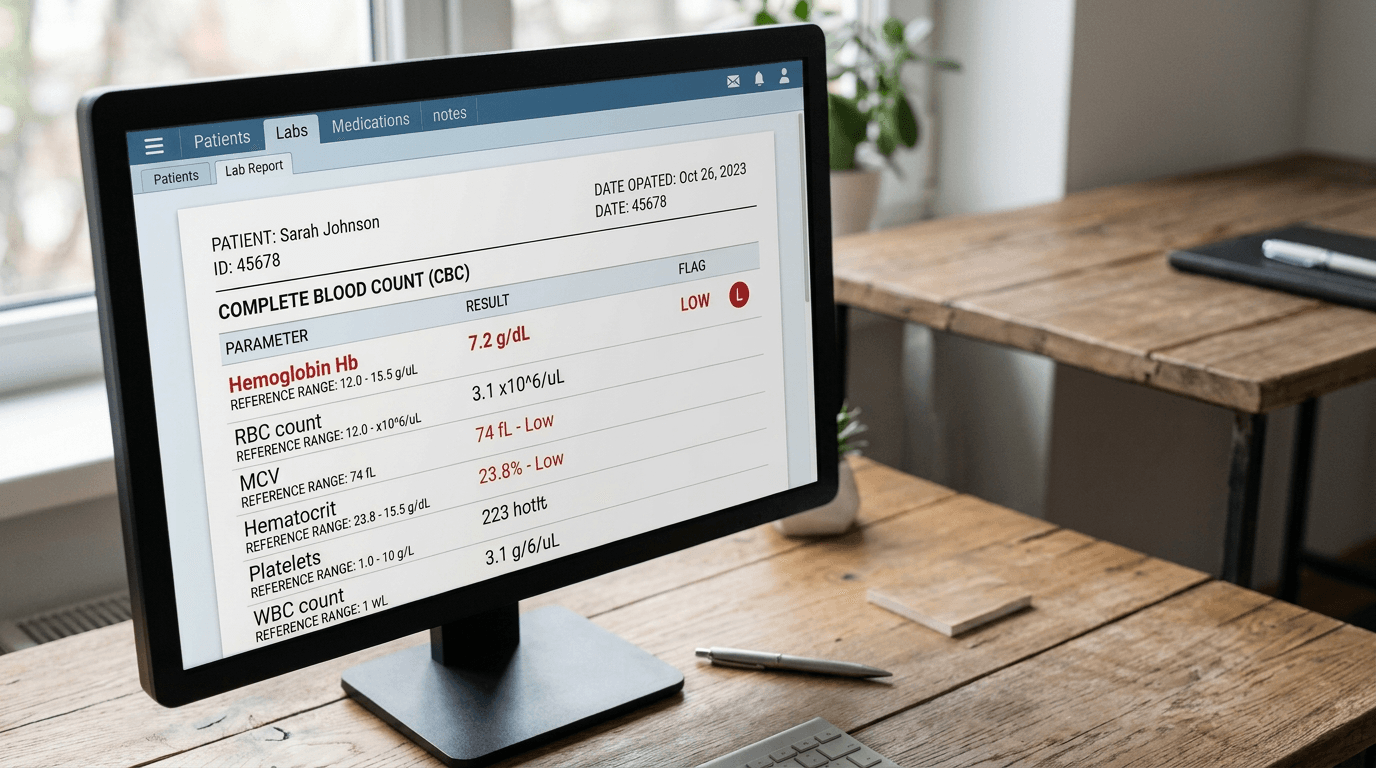
| The essentials: On August 24, 2026, the FDA approved a new indication for Imaavy (nipocalimab-aahu, Johnson and Johnson) for the treatment of warm autoimmune hemolytic anemia (wAIHA) in adults and pediatric patients aged 12 years and older who are currently or previously treated with corticosteroids. This is the first time any therapy has been proven safe and effective specifically for wAIHA. No FDA-approved treatment for wAIHA has existed before this date. Imaavy was originally approved on April 29, 2025 for generalized myasthenia gravis (gMG). The wAIHA approval is its second indication. What wAIHA is: a rare, life-threatening autoimmune disease in which immunoglobulin G (IgG) autoantibodies attach to the surface of red blood cells and mark them for destruction, causing severe hemolytic anemia. The condition affects approximately 1 to 3 per 100,000 people per year. Prior standard of care relied on corticosteroids and non-specific immunosuppressants, which suppress the entire immune system rather than targeting the IgG autoantibodies driving the disease. What nipocalimab is: an immunoselective neonatal Fc receptor (FcRn) blocker. The FcRn receptor normally recycles IgG antibodies, extending their circulating half-life. By blocking FcRn, nipocalimab accelerates IgG degradation across all IgG subclasses, selectively reducing the pathogenic IgG autoantibodies that destroy red blood cells, while preserving B-cell function. The clinical basis: Phase 2/3 ENERGY trial (NCT04119050), multicenter, randomized, double-blind, placebo-controlled. 115 adults with wAIHA randomized approximately 1:1:1 to nipocalimab 30 mg/kg IV every 4 weeks, 15 mg/kg IV every 4 weeks, or placebo every 4 weeks. Approved dose: 30 mg/kg IV every 4 weeks. Primary endpoint: durable hemoglobin response, defined as achieving hemoglobin above 10 g/dL and an increase of at least 2 g/dL from baseline for at least 28 days without the need for rescue therapy. Result: approximately 3 times as many patients in the 30 mg/kg arm achieved durable hemoglobin response versus placebo by week 24; p value met statistical significance. Onset: mean hemoglobin improvement of at least 1 g/dL at week 1 (first post-baseline assessment) in the 30 mg/kg arm. Key secondary endpoint: FACIT-Fatigue score at week 24: mean difference 3.51 points (95% CI 0.64 to 6.39) in the 30 mg/kg arm versus placebo (higher scores indicate less fatigue). Corticosteroid reduction: 15% mean reduction from baseline CS dose in the nipocalimab arm versus 4% in placebo at week 24. Regulatory designations: Priority Review. Safety in ENERGY: consistent with the established safety profile from the gMG program. |
|---|
This analysis was recently featured by Hemostasis Today in their weekly roundup of notable hematology posts. Read the feature: https://hemostasistoday.com/blog/10-posts-80305
Warm autoimmune hemolytic anemia does not announce itself with drama. It arrives the way most forms of anemia do: fatigue, pallor, shortness of breath with minimal exertion, a feeling of heaviness and exhaustion that does not resolve with rest. What distinguishes wAIHA from other anemias is its mechanism. The red blood cells are not being produced inadequately. The bone marrow is working. The problem is that the body’s own immune system has turned against its own red blood cells, producing IgG antibodies that bind to the cell surface and mark the cells for destruction in the spleen and liver. The red blood cells are being manufactured and destroyed in parallel, with destruction eventually outpacing production.
For decades, the therapeutic answer to wAIHA has been blunt: suppress the immune system broadly with corticosteroids, add more non-specific immunosuppressants if steroids fail, or remove the spleen to reduce the site of red cell destruction. These approaches work imperfectly. They carry substantial toxicity. They do not specifically target the IgG autoantibodies that are driving the disease. And until August 24, 2026, not a single one of them had been FDA-approved specifically for wAIHA. Every prescribing decision for wAIHA was being made off-label, without the regulatory framework of a purpose-built approval.
Imaavy (nipocalimab-aahu, Johnson and Johnson) changes that. The ENERGY trial demonstrated, in a randomized placebo-controlled study, that blocking the FcRn receptor reduces circulating IgG autoantibodies, raises hemoglobin to clinically meaningful levels, and reduces fatigue in patients with wAIHA whose disease had required corticosteroid management. The primary endpoint was not merely a laboratory improvement. It required hemoglobin above 10 g/dL, at least 2 g/dL above baseline, sustained for at least 28 days, without rescue therapy. Approximately three times as many nipocalimab patients met this stringent standard compared to placebo by week 24.
What Warm Autoimmune Hemolytic Anemia Is: The Immunology and the Clinical Burden
Autoimmune hemolytic anemia (AIHA) is classified by the temperature at which the responsible autoantibodies are most active. Warm AIHA, which accounts for approximately 70 to 80% of all AIHA cases, is driven by IgG autoantibodies that are most active at body temperature (37°C). Cold AIHA is driven by IgM antibodies active at lower temperatures.
In wAIHA, pathogenic IgG autoantibodies bind to antigens on the surface of red blood cells. The most commonly targeted antigens are components of the Rh blood group system. Once the red cell is coated with IgG, macrophages in the spleen and liver recognize the IgG Fc regions through Fc gamma receptors (FcγR) and engulf or partially consume the coated cells, removing them from circulation faster than the bone marrow can replace them. The resulting hemolytic anemia produces:
Anemia symptoms: Fatigue, weakness, pallor, dyspnea on exertion, and palpitations reflecting reduced oxygen-carrying capacity. Severe hemolysis can be life-threatening.
Hemolysis markers: Elevated lactate dehydrogenase (LDH), elevated indirect bilirubin (from heme degradation), low haptoglobin (which binds free hemoglobin released from destroyed red cells), and elevated reticulocytes (immature red cells reflecting bone marrow compensatory response).
Variable course: Approximately 1 to 3 new people per 100,000 are affected by wAIHA per year. The disease can be primary (idiopathic) or secondary to another condition including lymphoma, lupus, or other autoimmune diseases. It can be acute or chronic, with chronic relapsing disease representing the most clinically challenging form. Johnson & Johnson
The clinical burden of wAIHA is disproportionate to its apparent rarity. Fatigue in wAIHA is profound: patients with hemoglobin chronically in the 7 to 9 g/dL range have severely curtailed exercise tolerance, impaired cognitive function, and quality of life that matches or exceeds the burden of other chronic serious conditions. Hospitalizations for acute hemolytic crises, transfusions, and the side effects of chronic immunosuppression collectively produce a disease burden that is poorly captured by incidence numbers alone.
Why No Approved Treatment Has Existed: The Standard-of-Care Gap
The absence of an FDA-approved wAIHA treatment until August 2026 is not because the disease was unknown or because no effective approaches existed. It is because the drugs used to manage it, corticosteroids and immunosuppressants, are generic, widely available, and never received dedicated approval for wAIHA specifically. The clinical evidence base for these approaches is built from observational studies, case series, and small uncontrolled trials rather than the randomized placebo-controlled trials that form the basis of FDA approval.
The treatment algorithm prior to the Imaavy approval:
First line: corticosteroids (prednisone). Prednisone at 1 mg/kg/day produces response in approximately 70 to 80% of patients, but durable complete responses are achieved in only 20 to 30%. Most patients who respond to steroids relapse when steroids are tapered and require ongoing immunosuppression or additional therapy.
Second line options (all off-label): Rituximab (anti-CD20 antibody depleting B cells, the most commonly used second-line agent), splenectomy, azathioprine, mycophenolate mofetil, cyclophosphamide, and cyclosporine. Each of these approaches broadly suppresses immune function rather than specifically targeting the pathogenic IgG that drives the disease.
Previously, available treatment options only included corticosteroids and immunosuppressants — therapies that suppress the entire immune system without specifically targeting the IgG autoantibodies driving the disease. Lifesciencehistory
The clinical consequences of this non-specific immunosuppression include elevated infection risk, corticosteroid-induced hyperglycemia, osteoporosis, adrenal suppression, and the cumulative toxicity of long-term rituximab or other agents. For patients with chronic relapsing wAIHA requiring ongoing immunosuppression for years, this toxicity burden is substantial.
How Nipocalimab Works: FcRn Blockade and Selective IgG Reduction
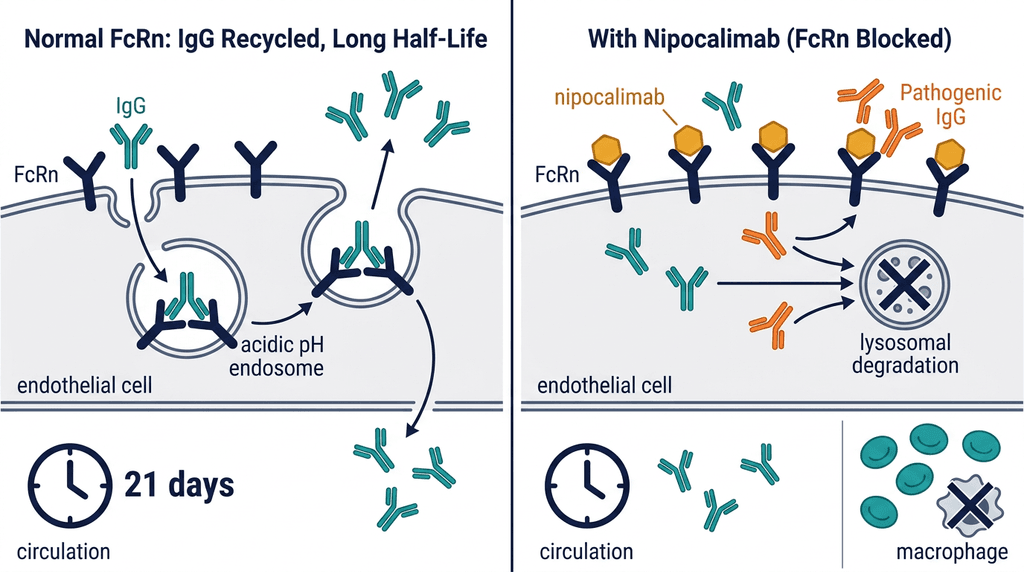
Nipocalimab works through the neonatal Fc receptor (FcRn), a salvage receptor that plays a critical role in maintaining the circulating half-life of IgG antibodies. Understanding this mechanism requires understanding what FcRn normally does and what happens when it is blocked.
The FcRn salvage pathway
IgG antibodies, like all proteins, are naturally cleared from the circulation through degradation in lysosomes. In the absence of any protective mechanism, IgG would have a relatively short half-life. FcRn prevents this rapid clearance through a recycling mechanism: as IgG molecules are taken up by endothelial and immune cells through pinocytosis, they encounter FcRn in the acidic environment of early endosomes. The IgG Fc region binds to FcRn at acidic pH and the receptor-antibody complex is recycled back to the cell surface, where the neutral pH of the extracellular environment causes the IgG to dissociate and return to circulation. This recycling extends the normal half-life of IgG to approximately 21 days.
What FcRn blockade does
By binding to FcRn and blocking IgG from accessing the recycling pathway, nipocalimab prevents IgG from being rescued from lysosomal degradation. Without recycling, IgG antibodies, including the pathogenic IgG autoantibodies that drive wAIHA, are degraded at their natural rate without the FcRn salvage mechanism extending their half-life. Total IgG levels fall substantially across all IgG subclasses.
The pharmacological result in wAIHA: with fewer circulating pathogenic IgG autoantibodies available to bind red blood cell surfaces, fewer red cells are marked for destruction, hemolysis slows, hemoglobin levels rise, and the disease burden decreases.
The key pharmacological distinction from non-specific immunosuppressants: nipocalimab does not destroy B cells, does not suppress T cell function, and does not broadly impair immune surveillance. It selectively reduces IgG antibody levels through accelerated degradation. The manufacturer describes nipocalimab as immunoselective specifically to capture this distinction from broad immunosuppression. B-cell function is preserved, meaning the adaptive immune system’s long-term memory and other B-cell-mediated functions remain intact.
This same FcRn blocking mechanism is the basis of nipocalimab’s approved gMG indication: in myasthenia gravis, pathogenic IgG antibodies targeting the acetylcholine receptor (or MuSK) at the neuromuscular junction drive neuromuscular blockade, and reducing those IgG autoantibodies through FcRn blockade improves neuromuscular function.
The ENERGY Trial: Complete Data
Design
ENERGY (NCT04119050) is a multicenter, randomized, double-blind, placebo-controlled Phase 2/3 study evaluating the efficacy and safety of nipocalimab compared with placebo, followed by an open-label extension period, in adults living with warm autoimmune hemolytic anemia. 115 adults were randomized approximately 1:1:1 to receive nipocalimab at two different doses or placebo: nipocalimab 30 mg/kg IV every 4 weeks (the approved dose), nipocalimab 15 mg/kg IV every 4 weeks, or placebo IV every 4 weeks. The trial required participants to be currently or previously treated with corticosteroids, consistent with the approved indication.
The primary endpoint was the stringent durable hemoglobin response: achieving hemoglobin above 10 g/dL and an increase of at least 2 g/dL from baseline for at least 28 consecutive days, without the need for rescue therapy during the 24-week treatment period.
This primary endpoint definition is clinically demanding in a way that deserves explicit acknowledgment. Requiring hemoglobin above 10 g/dL (not just any improvement), at least 2 g/dL above baseline (a meaningful clinical increment), sustained for at least 28 days (not a transient response), and without rescue therapy (confirming the improvement is drug-driven rather than rescue-supported) sets a threshold that reflects genuine clinical hemolysis control rather than a marginal laboratory change.
Efficacy results at week 24
| Endpoint | Nipocalimab 30 mg/kg (approved dose) | Placebo | Result |
|---|---|---|---|
| Durable hemoglobin response (primary) | Approximately 3x more patients achieved durable Hgb response | Reference | p value met statistical significance |
| Mean hemoglobin change at week 1 | Plus 1 g/dL | Reference | Rapid onset of effect at first post-baseline assessment |
| FACIT-Fatigue score at week 24 (key secondary) | Mean difference 3.51 points (95% CI 0.64 to 6.39) versus placebo | Reference | Descriptive per pre-specified statistical analysis plan |
| Mean CS dose reduction at week 24 | 15% reduction from baseline | 4% reduction | Numerically higher with nipocalimab |
Sources: J&J August 24, 2026 approval press release. ENERGY Phase 2/3 EHA 2026 data presentation. NCT04119050.
The approximately threefold improvement in durable hemoglobin response rate represents a clinically meaningful separation between nipocalimab and placebo on the most stringent available measure of hemolysis control. The week 1 hemoglobin improvement of 1 g/dL is notable: FcRn blockade reduces circulating IgG rapidly as the salvage recycling pathway is interrupted, and the speed of IgG reduction translates into measurable early hemoglobin improvement.
The FACIT-Fatigue improvement of 3.51 points at week 24 reflects the quality-of-life dimension of wAIHA that laboratory hemoglobin values alone do not capture. Fatigue is the most debilitating symptom reported by most wAIHA patients, and improvement in a validated patient-reported fatigue measure alongside hemoglobin improvement confirms that the laboratory benefit translates into patient-experienced benefit.
The corticosteroid reduction data (15% mean dose reduction with nipocalimab versus 4% with placebo at week 24) provides early evidence of the steroid-sparing potential of nipocalimab. Patients were required to taper corticosteroids when they achieved durable hemoglobin response (reducing by 10% of baseline dose every 2 weeks, provided hemoglobin did not decline by 1 g/dL or more). The greater dose reduction in the nipocalimab arm reflects the higher rate of hemoglobin response enabling steroid taper.
Imaavy’s Two-Indication Profile After August 2026
Nipocalimab is now approved for two distinct IgG-autoantibody-driven diseases, both of which share the mechanistic common ground of pathogenic IgG causing organ or tissue damage that is ameliorated by reducing IgG levels through FcRn blockade:
| Indication | Disease mechanism | Approval date | Population |
|---|---|---|---|
| Generalized myasthenia gravis (gMG) | IgG autoantibodies against AChR or MuSK at neuromuscular junction | April 29, 2025 | Adults |
| Warm autoimmune hemolytic anemia (wAIHA) | IgG autoantibodies against red blood cell surface antigens | August 24, 2026 | Adults and pediatric patients aged 12 and older |
The logic of both approvals is identical: the disease is driven by pathogenic IgG, reducing IgG through FcRn blockade reduces the pathogenic antibody driving the disease, and clinical benefit follows from reduced autoantibody-mediated tissue destruction. Nipocalimab is becoming a platform therapy for IgG-autoantibody-mediated diseases, analogous to how rituximab has become a platform therapy for B-cell-mediated conditions across multiple indications.
Johnson and Johnson has additional FcRn-mediated conditions in the nipocalimab clinical development pipeline, including hemolytic disease of the fetus and newborn (HDFN, where maternal IgG crosses the placenta and destroys fetal red blood cells), pemphigus vulgaris, and other IgG-mediated disorders. The breadth of the mechanistic applicability reflects the central role of FcRn in maintaining IgG levels across all autoimmune diseases driven by IgG autoantibodies.
Safety: What the ENERGY Data and Prescribing Information Cover
The safety profile of nipocalimab in the ENERGY wAIHA trial was consistent with the established safety profile from the gMG program, the most comprehensive nipocalimab safety database.
Class-level consideration: reduced IgG and infection risk. By reducing circulating IgG levels, FcRn blockade impairs one component of humoral immune defense. The most clinically relevant consequence is a potential increase in susceptibility to certain infections, particularly encapsulated bacteria and infections where IgG antibody titers provide primary immune protection. Patients should be counseled about infection risk, and patients with active serious infections should not initiate nipocalimab.
Immunization: Live vaccines should be avoided during nipocalimab treatment due to the potential for reduced vaccine efficacy from reduced IgG and the theoretical risk of infection from live attenuated organisms. Inactivated vaccines may be given but may produce lower antibody responses than in untreated patients.
IgG monitoring: Serum IgG levels should be monitored periodically during treatment. Clinically significant hypogammaglobulinemia (IgG below the lower limit of normal) may require dose interruption or discontinuation.
Pregnancy: Nipocalimab can cause fetal harm through IgG transport across the placenta (ironically, the same FcRn mechanism that nipocalimab blocks is responsible for normal maternal IgG transfer to the fetus during pregnancy). Women of reproductive potential should use effective contraception during treatment and for a specified period after the last dose.
Common adverse reactions in the ENERGY trial: consistent with the gMIg indication experience. The prescribing information will provide the complete adverse reaction listing from the ENERGY trial data.
Dosing and Administration
The approved dose for wAIHA is nipocalimab 30 mg/kg administered intravenously every 4 weeks (once monthly). This is the higher of the two doses tested in ENERGY and the dose that achieved statistical significance on the primary endpoint.
The IV infusion is administered over a specified infusion duration at qualified healthcare facilities. Unlike some autoimmune therapies where home administration is being explored, the current administration framework for nipocalimab requires a healthcare setting.
For pediatric patients aged 12 to 17: the indication covers this population based on the wAIHA approval; specific pediatric dosing considerations should be reviewed in the prescribing information, as pharmacokinetic differences between adults and adolescents may apply.
What This Means for Hematologists and wAIHA Patients
For hematologists
The wAIHA approval gives hematologists the first FDA-approved treatment specifically validated for this condition, with a mechanism that addresses the actual driver of the disease (pathogenic IgG) rather than broadly suppressing immune function.
The approved indication (patients currently or previously treated with corticosteroids) positions Imaavy as an option for patients beyond the initial steroid-only phase of management, which captures the population with the greatest unmet need: those with steroid-dependent or steroid-refractory disease who would otherwise cycle through non-specific immunosuppressants without a purpose-built approved option.
The corticosteroid reduction signal from ENERGY is clinically meaningful in a population for whom chronic steroid exposure is a significant morbidity concern. Whether nipocalimab can enable sustained steroid-free remission in a substantial proportion of patients is a question that longer-term follow-up from the ENERGY open-label extension will address.
As Dr. David Kuter, Director of the Center for Hematology, Massachusetts General Hospital, and a principal ENERGY investigator, noted: wAIHA is an underserved patient population that has long needed a treatment option specifically designed for this disease. This approval addresses a real clinical gap.
For patients with wAIHA
If you have been managing warm autoimmune hemolytic anemia with prednisone, rituximab, or other immunosuppressants and your disease has not been adequately controlled, or if the side effects of your current regimen have been burdensome, Imaavy is now an FDA-approved option to discuss with your hematologist.
The therapy requires monthly IV infusions at a healthcare facility. The clinical evidence shows rapid onset of hemoglobin improvement (beginning within the first week of treatment) and sustained improvement in both red blood cell counts and fatigue over the 24-week trial period.
The Hemolytic Anemia Initiative and the American Society of Hematology (hematology.org) maintain current resources on AIHA treatment and specialist referral for patients navigating this diagnosis.
For related HED coverage on IgG-autoantibody-mediated diseases and FcRn biology, note that Imaavy’s original gMG approval in April 2025 predates this session; the wAIHA approval is the drug’s second indication and the first to cover this specific disease. For coverage of other autoimmune hematologic conditions, see our post on Trutakna (atacicept-vymj) for IgA nephropathy, which covers the BAFF/APRIL cytokine axis that drives IgA production.
Sources
FDA approval announcement: FDA approves nipocalimab-aahu for warm autoimmune hemolytic anemia. FDA.gov. August 24, 2026.
J&J FDA approval press release: FDA approves IMAAVY (nipocalimab-aahu) as first-ever treatment for warm autoimmune hemolytic anemia (wAIHA). jnj.com. August 24, 2026.
BioSpace press release: FDA approves IMAAVY (nipocalimab-aahu) as first-ever treatment for wAIHA. biospace.com. August 24, 2026.
Drugs.com approval news: FDA Approves Imaavy (nipocalimab-aahu) as First-Ever Treatment for Warm Autoimmune Hemolytic Anemia. drugs.com. August 24, 2026.
BioPharm International (Priority Review, pediatric 12 and older population, first proven effective therapy context): FDA Approves J&J’s IMAAVY as First Treatment for Warm Autoimmune Hemolytic Anemia. biopharminternational.com. August 2026.
LifeScienceHistory (full mechanism, FACIT-Fatigue data, 3x durable Hgb response rate, safety profile from gMG consistency): FDA approves J&J’s IMAAVY as first-ever treatment for wAIHA. lifesciencehistory.com. August 2026.
J&J sBLA submission press release (February 2026, primary endpoint definition, FACIT-Fatigue secondary endpoint, Dr. Fattizzo quote): Johnson and Johnson seeks FDA approval of IMAAVY as first-ever FDA-approved treatment for wAIHA. jnj.com. February 24, 2026.
J&J EHA 2026 data presentation (exact FACIT-Fatigue data, 15% CS dose reduction, week 1 Hgb data, 1:1:1 randomization, 115 adults): IMAAVY demonstrates durable hemoglobin response in pivotal Phase 2/3 study in wAIHA. jnj.com. June 11, 2026.
ENERGY trial registration: NCT04119050. ClinicalTrials.gov.
AIHA overview: Autoimmune Hemolytic Anemia. StatPearls. NCBI.
Imaavy prescribing information: IMAAVY (nipocalimab-aahu) Prescribing Information. Janssen/Johnson and Johnson. 2026.
Imaavy approval history: Imaavy FDA Approval History. drugs.com.
Patient resources: Hemolytic Anemia Initiative | American Society of Hematology patient resources | NORD (National Organization for Rare Disorders) AIHA resources | J&J Imaavy patient support
| Disclaimer: Health Evidence Digest provides general information about FDA approvals and health research for educational purposes. This content is not a substitute for professional medical advice. Imaavy (nipocalimab-aahu) reduces circulating IgG antibody levels through FcRn blockade; patients should be counseled about infection risk, the need to avoid live vaccines during treatment, and monitoring of IgG levels during therapy. The FACIT-Fatigue secondary endpoint at week 24 is considered descriptive per the pre-specified statistical analysis plan. Decisions about initiating Imaavy for wAIHA should be made in close collaboration with a board-certified hematologist experienced in the management of autoimmune hemolytic anemia. |
|---|
Leave a Reply