Author: Melina Rodriguez, CST/CMA/CCA

  • High Blood Pressure That Won’t Budge on Multiple Medications Just Got Its First New Drug Class in Decades. Here Is What Baxfendy Is and What the BaxHTN Data Shows.

    High Blood Pressure That Won’t Budge on Multiple Medications Just Got Its First New Drug Class in Decades. Here Is What Baxfendy Is and What the BaxHTN Data Shows.

    📌 The essentials On May 18, 2026, the FDA approved Baxfendy (baxdrostat, AstraZeneca) as the first and only aldosterone synthase inhibitor (ASI) for the treatment of hypertension. Baxfendy is the first drug in an entirely new pharmacological class to be approved for high blood pressure in decades. Indication: in combination with other antihypertensive drugs, to lower blood pressure in adults who are not adequately controlled on other agents. This is an add-on therapy, not a replacement for existing medications. Dosing: 2 mg orally once daily (recommended dose); 1 mg once daily for patients at increased risk of hyperkalemia or hyponatremia. Available: expected early June 2026. The clinical basis: Phase 3 BaxHTN trial (NCT06034743), published in the New England Journal of Medicine on August 30, 2025, enrolling 796 patients across 214 sites in 29 countries. Key result: placebo-adjusted systolic blood pressure reduction of 9.8 mmHg (2 mg dose) and 8.7 mmHg (1 mg dose) at 12 weeks (p less than 0.001 for both). Key safety warnings: hyperkalemia (elevated potassium) and hyponatremia (low sodium). Monitor electrolytes. Important caveat: the approval is based on blood pressure reduction as a surrogate endpoint, not on direct cardiovascular outcomes data. A cardiovascular outcomes trial is expected to follow.

    Hypertension affects an estimated 1.4 billion people worldwide and approximately 119 million adults in the United States. It is the single largest modifiable risk factor for stroke, myocardial infarction, heart failure, and chronic kidney disease. And yet, despite a treatment landscape that includes a dozen established drug classes and hundreds of individual medications, approximately 50% of patients on multiple antihypertensive treatments still do not have their blood pressure adequately controlled.

    The patients in that 50% are not failing treatment through non-compliance alone. Many of them have a biological reason their blood pressure is hard to control, namely elevated or dysregulated aldosterone, a hormone that promotes sodium and water retention and raises blood pressure through mechanisms that existing drug classes do not directly address. Recognizing that aldosterone dysregulation is far more prevalent in difficult-to-control hypertension than previously understood is part of what makes Baxfendy’s approval a meaningful scientific development rather than just an incremental addition to a crowded market.

    On May 18, 2026, the FDA approved Baxfendy (baxdrostat), the first aldosterone synthase inhibitor ever approved for hypertension. It targets the production of aldosterone itself, a mechanistic approach no approved drug has taken before in this indication.


    What Aldosterone Is and Why Inhibiting Its Production Is a New Idea

    To understand what makes Baxfendy mechanistically distinct, it helps to understand both what aldosterone does and why existing treatments have not addressed its overproduction directly.

    Aldosterone is a steroid hormone produced by the adrenal glands, specifically in a region called the zona glomerulosa. Its primary role is to regulate sodium and potassium balance in the kidneys. When aldosterone is elevated, the kidneys retain more sodium and water, increasing blood volume and raising blood pressure. Aldosterone also promotes potassium excretion, which is why elevated aldosterone is often associated with low potassium levels.

    The enzyme responsible for producing aldosterone in the zona glomerulosa is called aldosterone synthase (CYP11B2). There is a closely related enzyme, cortisol synthase (CYP11B1), that makes cortisol in a neighboring region of the adrenal gland. Earlier attempts to develop aldosterone synthase inhibitors failed because they could not distinguish between CYP11B2 and CYP11B1 well enough: blocking both suppresses not only aldosterone but also cortisol, which is essential for the stress response and metabolic regulation. The side effects of cortisol suppression at therapeutic doses were unacceptable.

    Baxdrostat is designed to solve this problem. It is described as a highly selective inhibitor of CYP11B2 that spares CYP11B1. In the BaxHTN trial, cortisol levels were monitored and remained stable, with no clinically meaningful cortisol suppression detected.

    How existing drug classes compare mechanistically

    Existing antihypertensive classes target aldosterone’s effects downstream rather than its production:

    • ACE inhibitors and ARBs block the renin-angiotensin-aldosterone system (RAAS) at earlier steps, reducing angiotensin II signaling that drives aldosterone secretion. But in many patients, aldosterone eventually “escapes” this inhibition through angiotensin-independent pathways.
    • Mineralocorticoid receptor antagonists (MRAs) like spironolactone and eplerenone block the aldosterone receptor in the kidney rather than reducing aldosterone itself. They are effective in resistant hypertension but carry a significant hyperkalemia risk, limiting their use in patients with chronic kidney disease.
    • Diuretics reduce blood volume directly, addressing one consequence of aldosterone excess without reducing aldosterone levels.

    Baxdrostat is the first approved drug to work at the top of this pathway, reducing aldosterone production in the adrenal gland before it reaches the circulation. Whether this upstream approach ultimately produces better clinical outcomes than MRAs in head-to-head comparison is not yet established by trial data.


    The BaxHTN Trial: Design and Full Results

    Trial design

    The BaxHTN Phase 3 trial (NCT06034743) was a multinational, randomized, double-blind, placebo-controlled study conducted at 214 clinical sites across 29 countries. Results were presented at the European Society of Cardiology Congress 2025 in Madrid in August 2025 and simultaneously published in the New England Journal of Medicine.

    Eligibility:

    • Seated systolic blood pressure (SBP) of 140 mmHg or higher and less than 170 mmHg
    • Receiving stable treatment with at least 2 antihypertensive medications of different classes, one of which was a diuretic (uncontrolled hypertension group), or at least 3 antihypertensive medications including a diuretic (resistant hypertension group)
    • Estimated glomerular filtration rate (eGFR) of 45 mL/min/1.73m² or higher
    • Serum potassium within acceptable range at baseline

    Enrollment: 796 patients total across uncontrolled and resistant hypertension subgroups.

    Design structure: After a placebo run-in period, the trial had four sequential phases: a 12-week double-blind, placebo-controlled period (the primary analysis period); a 12-week open-label extension; an 8-week randomized withdrawal period to assess persistence of effect; and a 20-week open-label safety assessment.

    Primary endpoint results

    Outcome at 12 weeksBaxdrostat 2 mgBaxdrostat 1 mgPlacebo
    Mean seated SBP reduction from baseline15.7 mmHg (95% CI 13.7 to 17.6)14.6 mmHgApproximately 5.9 mmHg
    Placebo-adjusted SBP reduction9.8 mmHg (95% CI 7.0 to 12.6)8.7 mmHg (95% CI 6.0 to 11.4)Reference
    p-valuep less than 0.001p less than 0.001
    Cortisol levelsNo clinically meaningful changeNo clinically meaningful change
    Aldosterone reductionSignificantSignificantNo change

    Source: Efficacy and Safety of Baxdrostat in Uncontrolled and Resistant Hypertension. New England Journal of Medicine. Published August 30, 2025. doi:10.1056/NEJMoa2507109. BaxHTN NCT06034743.

    The 9.8 mmHg placebo-adjusted SBP reduction at the 2 mg dose is clinically significant in context. Epidemiological data consistently show that a 10 mmHg reduction in systolic blood pressure is associated with approximately a 20% lower risk of serious cardiovascular events. In a population already on two or more antihypertensive medications, achieving nearly 10 mmHg additional reduction from one add-on pill is a meaningful result.

    The randomized withdrawal period confirmed that blood pressure rose when baxdrostat was stopped and returned to target when it was reintroduced, confirming that the drug’s effect was causal rather than incidental.

    The Bax24 trial: 24-hour ambulatory blood pressure

    A separate Phase 3 study, Bax24 (NCT06168409), evaluated baxdrostat specifically in resistant hypertension using 24-hour ambulatory blood pressure monitoring (ABPM) rather than seated office measurements. Ambulatory blood pressure is considered a more reliable predictor of cardiovascular outcomes than clinic-based readings because it captures average pressure across the full daily cycle including nighttime.

    Presented at the American Heart Association Scientific Sessions 2025 and published in The Lancet in March 2026, Bax24 showed a placebo-adjusted reduction of 14.0 mmHg in 24-hour average systolic blood pressure (p less than 0.0001) in patients with resistant hypertension. Nighttime systolic blood pressure was reduced by 13.9 mmHg (placebo-adjusted). Notably, 71% of baxdrostat-treated patients achieved a 24-hour average SBP below 130 mmHg compared with 17% of placebo-treated patients.

    The Bax24 findings are not part of the current FDA approval label, but they are relevant context for understanding how comprehensively baxdrostat controls blood pressure across the full daily cycle in the most difficult-to-treat patients.

    The uncontrolled vs. resistant hypertension distinction The BaxHTN trial enrolled two overlapping but distinct populations. Uncontrolled hypertension is defined as blood pressure that remains above target despite the use of two antihypertensive medications. Resistant hypertension is a more stringent category: blood pressure that remains above target despite three antihypertensive agents including a diuretic, or that requires four or more agents to achieve control. Resistant hypertension is estimated to affect 10 to 15% of all hypertension patients and carries a substantially higher risk of end-organ damage, including left ventricular hypertrophy, kidney disease, and stroke. Both groups were included in BaxHTN because elevated aldosterone has been implicated in both, though the biological rationale is strongest in resistant hypertension where aldosterone escape from RAAS therapy is well-documented.

    Safety: What the Label Covers

    Baxdrostat was generally well tolerated in the BaxHTN trial, with no unexpected safety findings reported. The most clinically significant warnings in the prescribing information are:

    Hyperkalemia (elevated potassium): The most important class-related concern. Aldosterone promotes potassium excretion in the kidney. Inhibiting aldosterone synthesis reduces that excretion, which can raise serum potassium. The risk is greatest in patients with chronic kidney disease or those on other drugs that raise potassium, including ACE inhibitors, ARBs, MRAs, and potassium-sparing diuretics. The 1 mg starting dose is specifically recommended for patients at increased risk of hyperkalemia. Baseline and periodic electrolyte monitoring is essential.

    Hyponatremia (low sodium): Less common than hyperkalemia but present in the trial data. Monitor sodium, particularly in older patients or those at risk for volume-related sodium shifts.

    Adrenal function: Despite the selective mechanism, monitoring for signs of adrenal insufficiency is prudent in patients undergoing physiological stress such as illness or surgery, given the proximity of the drug’s mechanism to cortisol synthesis.

    Common adverse events from the trial included headache, dizziness, and fatigue. Rates of these were generally comparable between baxdrostat and placebo.

    Drug interactions to know: Because baxdrostat reduces aldosterone, its combination with MRAs (spironolactone, eplerenone, finerenone) produces additive aldosterone-lowering effects and substantially increases the risk of hyperkalemia. The prescribing information addresses this interaction specifically. Clinicians should review the full prescribing information before initiating.


    What This Means for Patients and Clinicians

    Who is this drug for?

    Baxfendy is approved as add-on therapy for adults with hypertension that is not adequately controlled on other agents. The typical candidate based on the BaxHTN enrollment criteria is a patient who:

    • Has systolic blood pressure of 140 mmHg or higher despite being on at least 2 established antihypertensive medications
    • Is already taking a diuretic as part of their regimen
    • Has adequate kidney function (eGFR of 45 or higher)
    • Does not have a potassium level that contraindicates further aldosterone suppression

    It is not approved as monotherapy or as initial hypertension treatment. Patients already well-controlled on existing medications have no indication to switch.

    Who should discuss this with their cardiologist or hypertension specialist?

    Patients with documented uncontrolled or resistant hypertension who have cycled through ACE inhibitors, ARBs, calcium channel blockers, and diuretics without achieving target blood pressure are the population this drug was designed for. The mechanism is specifically compelling for patients suspected to have elevated aldosterone as a driver, including those with primary aldosteronism or confirmed aldosterone excess, though the approval does not require this testing.

    What is still unknown

    The current FDA approval is based on blood pressure reduction as a surrogate endpoint, not on direct demonstration that baxdrostat reduces heart attacks, strokes, kidney disease progression, or death. In antihypertensive drug development, this is standard and accepted: the FDA has long approved blood pressure medications based on surrogate blood pressure endpoints given the overwhelming prior evidence that blood pressure reduction reduces cardiovascular events across drug classes.

    That said, a cardiovascular outcomes trial is expected to follow. The results of that trial will be important for fully establishing Baxfendy’s place in the treatment hierarchy and for understanding whether aldosterone-specific lowering produces benefits beyond what is predicted by the blood pressure reduction alone. AstraZeneca has also announced trials in primary aldosteronism, chronic kidney disease with hypertension, and heart failure prevention, as well as a combination development program with dapagliflozin.


    The Bigger Picture: A New Mechanism in a Disease That Has Needed One

    Hypertension’s pharmacological armamentarium has not seen a genuinely new mechanism in a long time. Most drug classes currently prescribed for hypertension were developed between the 1950s and 1990s. Baxfendy’s approval is notable precisely because it represents a new biological angle on a very old problem.

    The recognition that aldosterone dysregulation is far more prevalent in treatment-resistant hypertension than the classical primary aldosteronism diagnosis would suggest has been building in the cardiology literature for more than a decade. Studies using more sensitive aldosterone assays have found that a significant proportion of patients with resistant hypertension have inappropriately elevated aldosterone relative to their sodium and volume status, even without the discrete aldosterone-secreting adenomas that define classical primary aldosteronism. BaxHTN’s results are consistent with this evolving understanding: the magnitude of blood pressure reduction seen suggests that the drug is addressing a real and prevalent biological driver of difficult-to-control hypertension, not just an edge-case mechanism.

    For patients whose blood pressure has resisted years of medication escalation, having a drug that works through a pathway none of their existing medications addresses is clinically meaningful, independent of where it eventually lands in outcome trials.

    For related coverage of advances in cardiovascular and metabolic drug development, see our post on the first generic dapagliflozin, which covers the SGLT2 inhibitor class and its now-expanding role from blood sugar management to cardiovascular and kidney protection, and our post on Awiqli, the first once-weekly basal insulin for type 2 diabetes.


    Sources

    AstraZeneca FDA approval press release: BAXFENDY approved in the US as the first and only aldosterone synthase inhibitor treatment for adults with hypertension. AstraZeneca. May 18, 2026.

    AstraZeneca US press release: FDA Approves Baxfendy (baxdrostat) as the First Aldosterone Synthase Inhibitor Treatment for Adults with Hypertension. businesswire.com. May 18, 2026.

    BaxHTN primary NEJM publication: Efficacy and Safety of Baxdrostat in Uncontrolled and Resistant Hypertension. New England Journal of Medicine. August 30, 2025. doi:10.1056/NEJMoa2507109.

    BaxHTN trial registration: NCT06034743. ClinicalTrials.gov.

    Bax24 primary Lancet publication: Azizi M et al. Effect of baxdrostat on ambulatory blood pressure in patients with resistant hypertension (Bax24). The Lancet. 2026 Mar 7;407(10532):988-999.

    Bax24 trial registration: NCT06168409. ClinicalTrials.gov.

    BaxHTN Phase 3 design paper: Flack JM et al. Baxdrostat for uncontrolled and resistant hypertension: rationale and design of the Phase 3 clinical trials BaxHTN, BaxAsia, and Bax24. Hypertension Research. 2025. doi:10.1038/s41440-025-02297-7.

    BioPharma Dive approval coverage: AstraZeneca wins US approval for Baxfendy hypertension drug. biopharmadive.com. May 18, 2026.

    Cardiology Advisor approval coverage: Baxfendy Earns FDA Nod as First-in-Class Hypertension Treatment. thecardiologyadvisor.com. May 2026.

    PharmExec coverage: FDA Approves Baxdrostat for Uncontrolled Hypertension in First-in-Class Entry. pharmexec.com. May 2026.

    HCPLive approval coverage: FDA Approves Baxdrostat for Uncontrolled Hypertension on Background Therapy. hcplive.com. May 2026.

    ESC Congress 2025 presentation: BaxHTN top-line data presented at ESC Congress 2025, Madrid, August 30, 2025.

    AHA Scientific Sessions 2025 (Bax24): Bax24 Phase III trial full results presented at AHA Scientific Sessions 2025.

    Drugs.com approval news: FDA Approves Baxfendy (baxdrostat) as the First Aldosterone Synthase Inhibitor Treatment for Adults with Hypertension. drugs.com. May 18, 2026.

    Aldosterone biology: Aldosterone. StatPearls. NCBI.

    Aldosterone synthase selectivity: CYP11B2 and CYP11B1 selectivity in aldosterone synthase inhibitors. PMC6116014.

    ACE inhibitors and ARBs: ACE Inhibitors. StatPearls. NCBI.

    MRAs in hypertension: Mineralocorticoid Receptor Antagonists. StatPearls. NCBI.

    Diuretics in hypertension: Diuretics. StatPearls. NCBI.

    NHLBI hypertension overview: High Blood Pressure. National Heart, Lung, and Blood Institute.

    Patient resources: American Heart Association: High Blood Pressure | National Hypertension Control Initiative | AstraZeneca Baxfendy information

    Disclaimer: Health Evidence Digest provides general information about FDA approvals and health research for educational purposes. This content is not a substitute for professional medical advice, diagnosis, or treatment. Baxfendy is approved as add-on therapy and should only be initiated and monitored by a qualified healthcare provider. Blood pressure management requires individualized care; do not stop or change antihypertensive medications without consulting your prescriber.
  • A Child’s Legs Grow Stiffer Every Year. For Decades, Nothing Could Stop It. The FDA Just Approved the First Drug That Addresses Why.

    A Child’s Legs Grow Stiffer Every Year. For Decades, Nothing Could Stop It. The FDA Just Approved the First Drug That Addresses Why.

    📌  The essentials Drug: Loargys (pegzilarginase-nbln) — a PEGylated recombinant human arginase-1 enzyme. FDA approval type: Accelerated approval, February 23, 2026. Based on reduction of plasma arginine as a surrogate endpoint. Continued approval may depend on confirmatory trial results. Developer: Immedica Pharma (Stockholm/Chicago). Indication: Treatment of hyperargininemia in adult and pediatric patients 2 years of age and older with Arginase 1 Deficiency (ARG1-D), in conjunction with dietary protein restriction. What makes it first-in-class: First and only FDA-approved therapy proven to lower arginine levels in ARG1-D. Prior management was symptomatic only — dietary restriction and ammonia scavengers. Neither addressed endogenous arginine production. Key trial results (PEACE, n=32): 90.5% of pegzilarginase patients normalized plasma arginine at 24 weeks vs 0% on placebo. Mean plasma arginine reduced from 354 to 86 μmol/L (72% reduction, p<0.0001). Administration: Intravenous infusion once weekly, administered in a healthcare setting. Subcutaneous administration was offered in the long-term extension. Critical warning: Boxed warning for life-threatening hypersensitivity reactions including anaphylaxis. Requires administration under direct healthcare supervision with emergency support available. Availability: Estimated available in the U.S. from April 2026. Patient support: There for Rare program (Immedica).

    The parents of a child with Arginase 1 Deficiency learn quickly that the disease does not announce itself with a dramatic crisis. There is no sudden collapse. There is no dramatic fever. Instead, something subtler and harder to name: the child who was walking begins to walk differently. The legs become stiffer. The gait changes. Developmental milestones come later than expected, or not at all. The child who could run begins to struggle with stairs.

    Many of these families spent years before diagnosis being told it was cerebral palsy, or hereditary spastic paraplegia, or developmental delay without a clear cause. The correct diagnosis, when it finally came, offered a name for what was happening but not a way to stop it. Management meant strict dietary protein restriction, which is genuinely difficult to maintain in a young child, and ammonia scavenger drugs that addressed one downstream consequence of the disease without touching the core problem: too much arginine in the blood, accumulating every day, slowly damaging the nervous system.

    On February 23, 2026, the FDA granted accelerated approval to Loargys (pegzilarginase-nbln) for the treatment of hyperargininemia in patients aged 2 and older with Arginase 1 Deficiency. It is the first drug approved that directly addresses the underlying biochemical defect — replacing the missing enzyme, lowering arginine, and in long-term studies, improving the very spasticity that defines this disease.

    What Is Arginase 1 Deficiency and Why Does Arginine Damage the Nervous System?

    The urea cycle is the biochemical pathway the liver uses to convert ammonia, a toxic byproduct of protein metabolism, into urea for excretion. The cycle involves eight enzymes working in sequence. Arginase 1 is the final enzyme in the cycle: it cleaves the amino acid arginine into urea and ornithine, the last step before ammonia-derived waste leaves the body.

    In ARG1-D, both copies of the ARG1 gene are mutated (autosomal recessive inheritance), and arginase-1 enzyme activity is severely reduced or absent. Arginine, which cannot be cleared, accumulates persistently in the blood and cerebrospinal fluid. Normal plasma arginine is below 100 micromolar (μmol/L). Patients with ARG1-D typically present with levels of 300 to 500 μmol/L. It is this chronic arginine elevation, and the accumulation of arginine’s toxic metabolites including guanidino compounds, that causes progressive neurological damage.

    Unlike most other urea cycle disorders, ARG1-D is not primarily characterized by hyperammonemia crises. Ammonia levels are often near-normal, because the blocked urea cycle step is at the end of the pathway. This is part of why the disease is different from other urea cycle disorders and why managing ammonia does not meaningfully control ARG1-D.

    How ARG1-D typically presents and why it is so often misdiagnosed Clinical manifestations in ARG1-D are typically absent in the newborn period and early infancy, despite the metabolic defect being present from birth. Symptoms usually first appear between ages 1 and 3 years. The most common initial presentation is spasticity of the lower limbs, followed by developmental delay and loss of previously acquired motor milestones. Because spasticity and gait abnormalities in young children are common features of cerebral palsy and hereditary spastic paraplegia, ARG1-D is frequently misdiagnosed as one of these conditions. A systematic review found that diagnostic delays are common, driven by limited disease awareness, the absence of hyperammonemic crises (which would more immediately suggest a urea cycle disorder), and inconsistent availability of newborn screening programs that could detect elevated arginine at birth. ARG1-D is listed on the Recommended Uniform Screening Panel (RUSP) for U.S. newborn screening, but inclusion varies by state, and the sensitivity of screening for ARG1-D using standard amino acid profiling has been debated. For families who receive a diagnosis late, the neurological damage that has already accumulated during the years of missed diagnosis is not fully reversible. This is the clinical argument for early diagnosis and early treatment.

    How Loargys Works: Replacing the Enzyme, Not Just Managing Its Absence

    Pegzilarginase is a recombinant human arginase-1 enzyme produced using genetic engineering, then modified by attaching polyethylene glycol (PEG) chains to its surface. This PEGylation serves two purposes: it extends the enzyme’s half-life in the bloodstream, making once-weekly dosing sufficient, and it reduces immunogenicity, lowering the risk that the immune system will produce antibodies that neutralize the enzyme.

    When pegzilarginase is administered intravenously, it acts as an exogenous source of the arginase-1 activity the patient’s own cells cannot provide. It circulates in the blood and catalyzes the conversion of arginine to ornithine and urea, just as endogenous arginase-1 would in a person without the deficiency. This directly lowers plasma arginine levels toward the normal range.

    This mechanism addresses the fundamental limitation of dietary protein restriction: even with strict dietary control, the body continues to produce arginine endogenously through the first part of the urea cycle. Restricting dietary protein reduces the amount of arginine coming in from food, but it cannot stop the liver from producing arginine from within. Pegzilarginase clears both sources.

    The PEACE Trial: What the Clinical Data Shows

    Trial design

    The PEACE trial (NCT03921541) was a Phase 3, randomized, double-blind, placebo-controlled study conducted at 19 sites in 7 countries (United States, Canada, United Kingdom, Austria, France, Germany, and Italy). It enrolled 32 patients aged 2 years and older with genetically confirmed ARG1-D. Patients were randomized 2:1 to receive IV pegzilarginase (n=21) or matched placebo (n=11) once weekly for 24 weeks. Patients continued their existing individualized disease management (dietary restriction, ammonia scavengers) throughout.

    A sample size of 32 in a randomized controlled trial is small by conventional standards. It is large for a disease with a median prevalence of 1 in 1,000,000. The PEACE trial enrolled what was, at the time, the largest prospectively studied ARG1-D cohort ever assembled, and it is the first randomized, blinded, placebo-controlled clinical trial ever conducted in this disease.

    Primary endpoint: plasma arginine reduction

    MeasurePegzilarginasePlacebo
    Plasma arginine at baseline354.0 μmol/L (geometric mean)464.7 μmol/L
    Plasma arginine at week 2486.4 μmol/L426.6 μmol/L
    Mean percent reduction72% (p<0.0001)No meaningful change
    Mean absolute reduction−312 μmol/L (95% CI −384 to −239)
    Patients reaching target (<200 μmol/L)90.5%0%
    Patients reaching normal levels (<100 μmol/L)90.5%0%

    Source: PEACE trial, eClinicalMedicine (Lancet). 2024;68:102400. doi:10.1016/j.eclinm.2023.102400. NCT03921541.

    The 90.5% versus 0% normalization rate is the most arresting number in the entire dataset. No patient on placebo brought their plasma arginine into the normal range; nearly all patients on pegzilarginase did. The clinical trial design, in which dietary management continued in both arms, means this difference is attributable specifically to the enzyme replacement therapy, not to dietary changes.

    Mobility outcomes: secondary endpoints and long-term extension data

    The primary endpoint of the PEACE trial was plasma arginine reduction, the surrogate measure on which accelerated approval was granted. Secondary endpoints examined functional mobility using validated instruments: the Gross Motor Function Measure (GMFM-D and GMFM-E subscales), timed walk tests, and the 6-minute walk test. These endpoints showed a positive trend in the pegzilarginase arm during the 24-week trial period.

    The more clinically compelling functional data comes from the long-term extension (LTE) studies, which followed patients receiving pegzilarginase for up to 5 years. Published in 2025, these combined results from Study 102A (n=14, up to 5 years) and the PEACE LTE (n=31, up to 3 years) showed:

    • Spasticity improved in 84% of patients, as measured by the Modified Ashworth Scale (MAS).
    • 12 patients achieved MAS 0, meaning no detectable spasticity at all.
    • Six-minute walk test (6MWT) distances improved across the cohort, reflecting real-world functional mobility gains.
    • Gross Motor Function Measure scores improved in the D and E subscales (standing and walking/running/jumping), which are the most clinically relevant for patients with ARG1-D.
    • Plasma arginine remained suppressed at normal or near-normal levels throughout the extension period.
    • An Italian real-world case series also documented that when treatment was interrupted for 13 months after the trial concluded, arginine levels returned and spasticity worsened; when treatment was restarted, benefits resumed. This discontinuation-rechallenge observation is the strongest indirect evidence that the biochemical normalization drives the functional improvement.
    Why this is accelerated approval and what that means The FDA approved Loargys under the accelerated approval pathway, which allows earlier access to drugs for serious conditions based on a surrogate endpoint reasonably likely to predict clinical benefit. For Loargys, the surrogate is plasma arginine reduction. The rationale is well-established in the ARG1-D literature: persistent arginine elevation is the proximal driver of neurological damage in this disease. Normalizing arginine is mechanistically sound as a predictor of clinical benefit. Continued approval may depend on confirmatory trial results demonstrating actual clinical benefit such as improved functional outcomes. The long-term extension data described above, while not the confirmatory trial, provides the strongest available evidence that arginine normalization does translate into meaningful spasticity reduction and mobility improvement. For families: accelerated approval means the FDA has determined the drug works on a meaningful surrogate and that the benefit outweighs the risk given the severity of the disease. It does not mean clinical benefit is fully confirmed. The full evidence picture will emerge from the confirmatory studies.

    Safety: The Anaphylaxis Warning That Requires In-Clinic Administration

    Boxed warning: hypersensitivity reactions including anaphylaxis

    Loargys carries a boxed warning for life-threatening hypersensitivity reactions, including anaphylaxis. This risk is the primary reason the drug must be administered under direct supervision in a healthcare setting with emergency support immediately available. Reactions can occur during or after infusion. For this reason, Loargys is not a self-administered home therapy — every dose requires a scheduled clinic or infusion center visit.

    Signs of a hypersensitivity reaction that require immediate intervention include hives, difficulty breathing, swelling of the face or throat, rapid or irregular heartbeat, dizziness, and loss of consciousness. Patients and families should be counseled on these symptoms before each infusion.

    Other adverse reactions

    The most common adverse reactions in the PEACE trial were vomiting, pyrexia (fever), infusion-associated reactions, and constipation. These are manageable in most cases. The real-world Italian case series, following three pediatric patients over years of treatment, did not report serious safety events apart from infusion reactions. The prescribing information also includes a precaution for embryo-fetal toxicity, relevant for patients of reproductive age.

    Practical Details: Dosing, Administration, and Patient Support

    FeatureDetails
    RouteIntravenous infusion (30 minutes)
    FrequencyOnce weekly
    SettingHealthcare setting with direct supervision; emergency support required
    Available formulationsSingle-dose vials: 2 mg/0.4 mL and 5 mg/1 mL
    Subcutaneous optionAvailable in long-term extension phase; ask treating metabolic specialist about current access
    Used alongsideDietary protein restriction (required); ammonia scavengers if applicable
    AvailabilityEstimated available in U.S. from April 2026
    Patient supportThere for Rare program (Immedica): financial assistance and nonmedical education support
    ContraindicationsKnown hypersensitivity to pegzilarginase or excipients
    Pediatric useApproved from age 2 years; most clinical trial participants were pediatric or young adults

    What This Means for Families Affected by ARG1-D

    For a disease affecting roughly 1 in 1,000,000 people, ARG1-D has generated a disproportionate amount of research attention over the past decade, driven substantially by patient advocacy. The Arginase 1 Deficiency Foundation, established by families directly affected by the disease, has been one of the forces accelerating clinical development and raising the standard of care expectations for this patient community.

    The clinical significance of this approval should be understood in its proper context. Most patients diagnosed with ARG1-D today are children or young adults who have already accumulated some neurological damage before treatment can begin, because diagnosis often comes late. Loargys does not reverse established neurological damage. What the long-term extension data shows is that it can halt or reduce ongoing spasticity progression and improve functional mobility in patients who begin treatment. The most meaningful benefit likely comes with early treatment, before accumulated damage is severe.

    For newly diagnosed patients identified through newborn screening or early clinical presentation, Loargys represents the possibility of intervening before significant neurological damage accumulates. For older patients who have been managing on dietary restriction and ammonia scavengers alone, it represents the first drug that can actually bring arginine to normal levels and the only approved therapy with evidence of functional benefit.

    The weekly infusion requirement is a real burden for families, many of whom already manage complex dietary protocols and multiple specialist appointments. The availability of subcutaneous administration in the extension period, if it eventually becomes part of the approved label, would substantially reduce that burden. This is worth monitoring as post-marketing data accumulates.

    Resources for families and clinicians

    For families navigating an ARG1-D diagnosis, the Arginase 1 Deficiency Foundation (a1d.org) provides patient and family support resources, clinical trial information, and a community of families with direct experience of this disease. The National Urea Cycle Disorders Foundation (nucdf.org) covers the full spectrum of urea cycle disorders and maintains a specialist referral directory. For Loargys access and patient support, the There for Rare program is available through immedicaus.com.

    Sources

    FDA accelerated approval announcement: FDA grants accelerated approval to pegzilarginase-nbln (Loargys) for treatment of hyperargininemia in patients with ARG1-D. FDA.gov. February 23, 2026.

    Immedica press release: U.S. FDA has granted accelerated approval of Loargys (pegzilarginase-nbln) for treatment of hyperargininemia in patients 2 years and older with Arginase 1 Deficiency. Immedica Pharma. February 23, 2026.

    Endocrinology Advisor: FDA Grants Accelerated Approval to Loargys for Arginase 1 Deficiency. endocrinologyadvisor.com. February 25, 2026.

    Drugs.com history: Loargys (pegzilarginase-nbln) FDA Approval History. drugs.com.

    PEACE trial primary publication (eClinicalMedicine): Efficacy and safety of pegzilarginase in arginase 1 deficiency (PEACE): a phase 3, randomized, double-blind, placebo-controlled, multi-centre trial. eClinicalMedicine (The Lancet). 2024;68:102400. doi:10.1016/j.eclinm.2023.102400. PMC10825663.

    Long-term extension study: Long-Term Efficacy and Tolerability of Pegzilarginase in Arginase 1 Deficiency: Results of Two International Multicentre Open-Label Extension Studies. PubMed PMID 40714964.

    Italian real-world case series (MDPI): Pegzilarginase in Arginase 1 Deficiency: Clinical and Biochemical Effects of Treatment Initiation, Discontinuation and Re-Initiation. MDPI Children. 2026;13(5):610.

    ARG1-D systematic review (prevalence/diagnosis): Epidemiology, methods of diagnosis, and clinical management of patients with ARG1-D: A systematic review. PubMed PMID 36049366.

    Natural history systematic review: Natural history of arginase 1 deficiency and the unmet needs of patients: A systematic review of case reports. JIMD Reports. PMC9259395.

    Misdiagnosis/clinical review (PMC): Arginase 1 deficiency: a treatable form of spastic paraplegia. PMC12394256.

    Trial registration: PEACE: A Phase 3 Study of Pegzilarginase in Patients With Arginase 1 Deficiency. NCT03921541. clinicaltrials.gov.

    Patient resources: Arginase 1 Deficiency Foundation: a1d.org; National Urea Cycle Disorders Foundation: nucdf.org; Immedica patient support: immedicaus.com

    Disclaimer: Health Evidence Digest provides general information about FDA approvals and health research for educational purposes. This content is not a substitute for professional medical advice. Loargys is approved under the accelerated approval pathway, and continued approval may depend on confirmatory trial results. Treatment decisions for ARG1-D should be made in consultation with a metabolic specialist or biochemical geneticist experienced in urea cycle disorders.
  • Enhertu Is Now FDA-Approved for HER2-Positive Early Breast Cancer Before and After Surgery. Here Is What the DESTINY-Breast11 and DESTINY-Breast05 Data Shows.

    Enhertu Is Now FDA-Approved for HER2-Positive Early Breast Cancer Before and After Surgery. Here Is What the DESTINY-Breast11 and DESTINY-Breast05 Data Shows.

    ✅ Updated May 19, 2026: FDA Approval Confirmed On May 15, 2026, the FDA approved two new indications for Enhertu (fam-trastuzumab deruxtecan-nxki, T-DXd) in adults with HER2-positive early-stage breast cancer. This post has been updated throughout to reflect both approvals. For related coverage of Enhertu’s approved indications in metastatic HER2-positive and HER2-low breast cancer, and how this new approval extends Enhertu into the curative-intent setting, see our companion post on Dato-DXd in triple-negative breast cancer for context on the broader ADC landscape.
    📌 The essentials: Two approvals, two different clinical situations Indication 1: Neoadjuvant (before surgery) FDA approved Enhertu followed by THP (taxane, trastuzumab, pertuzumab) for adults with HER2-positive (IHC 3+ or ISH+) stage II or III breast cancer before surgery. Dose: 5.4 mg/kg IV every 3 weeks for 4 cycles, then THP for 4 cycles, then surgery. Clinical basis: DESTINY-Breast11 (NCT05113251): pCR rate 67.3% with T-DXd plus THP versus 56.3% with standard anthracycline-based ddAC-THP (absolute improvement +11.2%; p=0.003). Indication 2: Adjuvant (after surgery, for residual disease) FDA approved Enhertu for adults with HER2-positive (IHC 3+ or ISH+) breast cancer who have residual invasive disease after neoadjuvant HER2-targeted treatment. Dose: 5.4 mg/kg IV every 3 weeks for a maximum of 14 cycles. Clinical basis: DESTINY-Breast05 (NCT04622319): T-DXd reduced the risk of invasive disease recurrence or death by 53% versus T-DM1 (Kadcyla) (HR 0.47; 95% CI 0.34 to 0.66; p less than 0.0001). Three-year invasive disease-free survival (iDFS): 92.4% versus 83.7%. Key safety note: the label carries a boxed warning for interstitial lung disease (ILD) and pneumonitis. ILD rate was 4.4% in DESTINY-Breast11 and approximately 10% in DESTINY-Breast05. Additional warnings: neutropenia and left ventricular dysfunction.

    When a woman is diagnosed with HER2-positive breast cancer, the weeks between diagnosis and surgery are not a waiting period. They are a treatment window, one that oncologists have spent decades trying to use more aggressively and more effectively. The drugs given before surgery, in the neoadjuvant setting, have the opportunity to shrink the tumor, treat any cancer that may have spread to lymph nodes or beyond, and ideally produce an outcome that changes what surgery looks like and what long-term prognosis looks like.

    That neoadjuvant window has been anchored to anthracycline-containing chemotherapy regimens for more than a decade. Anthracyclines work, but they carry a burden: cardiac toxicity, hematologic toxicity, significant treatment interruptions. The question oncologists have been asking is whether something better is now available.

    On May 18, 2026, the FDA is expected to rule on exactly that question. The drug at the center of the decision is Enhertu (trastuzumab deruxtecan, T-DXd), an antibody-drug conjugate that has already redefined outcomes in metastatic breast cancer. The clinical trial behind the application, DESTINY-Breast11, is the first positive global registrational trial for a new neoadjuvant agent in HER2-positive early breast cancer in over a decade. The data makes a compelling case. Understanding what it actually shows, and what it doesn’t yet tell us, is what this post is for.


    HER2-Positive Breast Cancer and the Neoadjuvant Treatment Window

    HER2 (human epidermal growth factor receptor 2) is a protein that promotes cell growth. In approximately 15 to 20% of breast cancers, the HER2 gene is amplified, producing too many HER2 receptors on tumor cell surfaces and driving aggressive cancer growth. HER2-positive breast cancer tends to grow faster than hormone receptor-positive cancer but is also more sensitive to HER2-targeted therapies.

    Neoadjuvant therapy refers to systemic treatment given before surgery. This is different from adjuvant therapy, which is given after surgery to reduce recurrence risk. In HER2-positive early breast cancer, neoadjuvant treatment serves several purposes:

    • It may downstage the tumor, reducing its size and lymph node involvement, potentially enabling less extensive surgery
    • It allows oncologists to observe the tumor’s response to treatment in real time
    • It provides important prognostic information that guides post-surgery treatment decisions
    • Most critically: it creates the opportunity for pathologic complete response, the most meaningful outcome measure in this setting
    What is a pathologic complete response (pCR) and why does it matter? A pathologic complete response (pCR) means that when the removed tumor and lymph nodes are examined under a microscope after surgery, no viable invasive cancer cells are found. In DESTINY-Breast11, the pCR definition used was ypT0/is ypN0, meaning no residual invasive cancer in the breast (with allowance for non-invasive in-situ disease) and no cancer in the lymph nodes. pCR is one of the most important prognostic markers in HER2-positive breast cancer. Patients who achieve pCR have substantially lower rates of cancer recurrence and significantly better long-term survival than those with residual disease. The relationship between pCR and survival is why the FDA accepts it as a surrogate endpoint for approval in the neoadjuvant setting. The clinical decision implications extend beyond prognosis. Patients who achieve pCR typically continue with standard adjuvant therapy and may be candidates for less extensive surgery. Patients who do NOT achieve pCR are typically offered additional targeted therapy after surgery (currently, T-DM1/Kadcyla is the standard for residual HER2+ disease) to try to reduce their recurrence risk. Understanding pCR rates is therefore both a survival question and a treatment-planning question.

    What Enhertu Is and How It Works

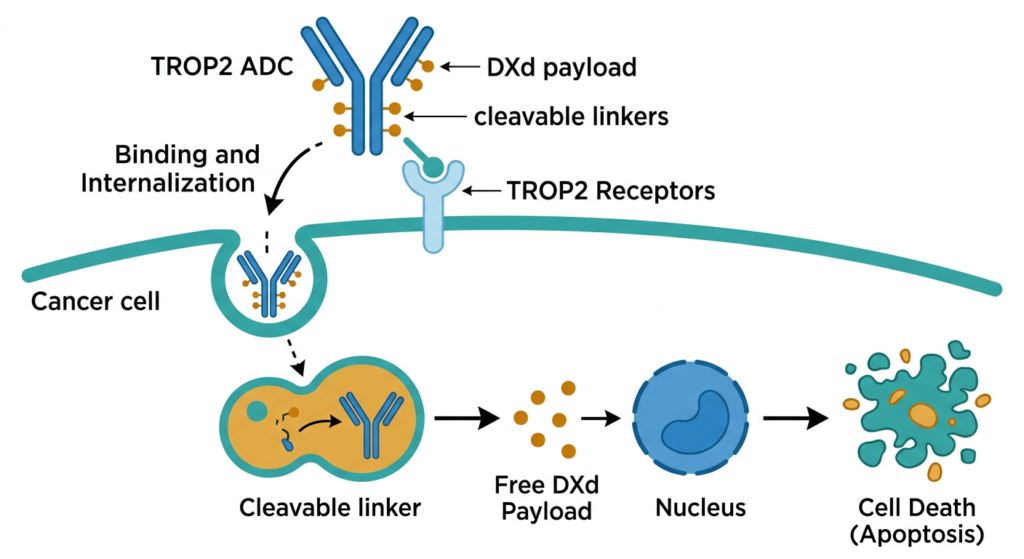
    Enhertu (trastuzumab deruxtecan, T-DXd) is an antibody-drug conjugate (ADC), a category of targeted therapy that links a cancer-targeting antibody to a chemotherapy payload. The antibody component is trastuzumab, which has been a cornerstone of HER2-positive breast cancer treatment for decades. The payload is deruxtecan, a topoisomerase I inhibitor chemotherapy. The linker between them is designed to be stable in the bloodstream but cleaved inside tumor cells.

    The mechanism creates a guided delivery system. Trastuzumab finds tumor cells expressing HER2 on their surface and binds to them. The ADC is then internalized into the cell, where the linker is cleaved and the deruxtecan payload is released directly inside the cancer cell, causing it to die. A key additional property of T-DXd’s payload is what’s called a bystander effect: some of the released chemotherapy can diffuse into neighboring cancer cells, including those that may not strongly express HER2. This may help explain T-DXd’s activity even in heterogeneous tumors.

    T-DXd already has FDA approvals for:

    If the May 18 decision is favorable, the neoadjuvant HER2-positive early breast cancer indication would be added to this list. For context on how ADC technology works in a related breast cancer setting, see our detailed coverage of Dato-DXd and TROPION-Breast02 in triple-negative breast cancer.


    The DESTINY-Breast11 Trial: Design and Results

    Design

    DESTINY-Breast11 (NCT05113251) was a global, multicenter, randomized, open-label Phase 3 trial conducted at 147 sites across 18 countries. It enrolled adults with previously untreated, high-risk HER2-positive early breast cancer, defined as tumors that were either T3 or larger with any nodal status, or any T stage with N1 to N3 nodal involvement (node-positive disease), including inflammatory breast cancer. The HER2-positive definition required either IHC 3+ or positive in situ hybridization. Patients were randomized in a 1:1:1 design across three arms:

    • T-DXd monotherapy arm: T-DXd 5.4 mg/kg every 3 weeks for 8 cycles (n=286), closed early
    • T-DXd-THP arm: T-DXd 5.4 mg/kg every 3 weeks for 4 cycles, then paclitaxel plus trastuzumab plus pertuzumab (THP) for 4 cycles (n=321)
    • ddAC-THP (control arm): Dose-dense doxorubicin plus cyclophosphamide every 2 weeks for 4 cycles, then THP for 4 cycles (n=320)

    The T-DXd monotherapy arm was closed early in March 2024, following an Independent Data Monitoring Committee recommendation based on lower pCR rates than the combination arms and low likelihood of demonstrating superiority. This was a pre-specified adaptive design decision, not a safety signal.

    Primary endpoint: pCR results

    OutcomeT-DXd plus THP (n=321)ddAC plus THP (n=320)
    pCR rate (ypT0/is ypN0)67.3%56.3%
    Absolute difference in pCR+11.0 percentage points
    p-value0.003
    Patients proceeding to surgery97.2%Comparable
    EFS HR (immature, 4.5% events)0.56 (95% CI 0.26 to 1.17)Reference

    Source: Harbeck N et al. Annals of Oncology. 2025. doi:10.1016/S0923-7534(25)04968-3. Presented at ESMO Congress 2025, Berlin. Abstract 291O.

    The 11-point improvement in pCR rate is clinically meaningful by any standard in this disease. To put it in context: with existing standard-of-care regimens, pCR rates in high-risk HER2-positive disease range from approximately 39 to 64% depending on population characteristics and regimen. The DESTINY-Breast11 control arm (56.3%) sits in the middle of that range, reflecting an appropriately representative benchmark. The T-DXd-THP arm’s 67.3% is at the top of and above that historical range.

    The benefit was consistent across pre-specified subgroups, including both hormone receptor-positive and hormone receptor-negative tumors, an important finding because HER2+/HR+ tumors historically have lower pCR rates and represent a more challenging treatment population.

    What about long-term survival?

    The EFS (event-free survival) hazard ratio of 0.56 suggests a 44% reduction in the rate of recurrence or death events in favor of T-DXd-THP numerically. However, EFS data maturity was only 4.5% at the time of the analysis, meaning very few events had occurred. The confidence interval (0.26 to 1.17) crosses 1.0, meaning the survival benefit is directionally promising but not yet statistically confirmed.

    This is expected and appropriate for a neoadjuvant trial in early-stage cancer: these patients were diagnosed at a potentially curable stage, and survival events take years to accumulate. The FDA’s precedent for accepting pCR as a surrogate endpoint in the neoadjuvant setting means approval does not require mature survival data. More mature EFS and overall survival data from DESTINY-Breast11 will emerge over subsequent years and will be critical for confirming the long-term value of the pCR benefit.


    Safety: Better Tolerability Than the Current Standard, With One Key Signal to Monitor

    One of the most striking findings in DESTINY-Breast11 is not the efficacy. It is the safety comparison. The T-DXd-THP arm had substantially fewer severe adverse events than the anthracycline-based control.

    Safety MetricT-DXd plus THPddAC plus THP
    Grade 3 or higher adverse events37.5%55.8%
    Serious adverse events10.6%20.2%
    Treatment interruptions37.8%54.5%
    Left ventricular dysfunction (all grade)1.3%6.1%
    ILD/pneumonitis (all grade)4.4%5.1%
    Grade 3/4 ILD events15
    Grade 5 (fatal) ILD events11
    Treatment-related deaths (all causes)1 (0.3%)2 (0.6%)
    Most common Grade 3 or higher AENeutropenia (13.8%)Hematologic toxicity predominant
    Fatigue (all grade)41.3%54.8%

    The cardiac finding warrants specific emphasis. Doxorubicin (the “A” in AC chemotherapy) is associated with dose-dependent cardiotoxicity, including cardiomyopathy and heart failure, that can emerge during treatment and persist or worsen years later. The 6.1% rate of left ventricular dysfunction in the control arm versus 1.3% in the T-DXd-THP arm represents a clinically important difference in a population that will be living with the long-term consequences of treatment for decades.

    The ILD signal: the key safety consideration for T-DXd Interstitial lung disease (ILD), inflammation and scarring of lung tissue, is the most important safety concern with T-DXd across all its indications. In DESTINY-Breast11, the all-grade ILD rate was 4.4% in the T-DXd-THP arm and 5.1% in the control arm, which are comparable. Most events were Grade 1 or 2 and manageable with dose modification and corticosteroids. However, there was one Grade 5 (fatal) ILD event in each arm, with the independent adjudication committee attributing one death in the T-DXd-THP arm to drug-related pneumonitis. This is not a reason to avoid the drug; one in each arm is a roughly comparable rate at this sample size. But ILD monitoring is a critical clinical requirement for T-DXd in practice. Current guidance requires baseline pulmonary assessment before starting T-DXd, prompt evaluation of any new or worsening respiratory symptoms (dyspnea, cough, fever), immediate T-DXd interruption if ILD is suspected, and corticosteroid treatment for confirmed cases. Providers switching to this regimen must be familiar with ILD surveillance protocols.

    What This Means for Patients Navigating Treatment Right Now

    If you have been diagnosed with HER2-positive breast cancer at stage II or III and are at the stage of discussing neoadjuvant treatment options with your oncologist, this FDA decision is directly relevant to your care.

    If the FDA approves on May 18

    • T-DXd followed by THP would become an FDA-approved option for high-risk (stage II/III) HER2-positive early breast cancer, specifically for patients with node-positive disease (N1 to N3) or large tumors (T3 or larger).
    • Your oncologist may recommend this regimen over the current anthracycline-based standard, particularly if your tumor characteristics suggest high risk and you have cardiovascular risk factors that make doxorubicin’s cardiac effects a concern.
    • The treatment involves 4 cycles of T-DXd (intravenous, every 3 weeks), followed by 4 cycles of paclitaxel plus trastuzumab plus pertuzumab, then surgery. Post-surgery treatment depends on whether you achieved pCR.
    • If you have already started a neoadjuvant regimen: do not switch without discussion with your oncologist. Mid-treatment changes are complex and require careful individual assessment.

    The treatment pathway after surgery

    pCR does not mean treatment is finished. Patients who achieve pCR after neoadjuvant therapy typically continue with adjuvant trastuzumab with or without pertuzumab, and those with HR+ disease also receive endocrine therapy. Patients who do NOT achieve pCR currently receive adjuvant ado-trastuzumab emtansine (T-DM1/Kadcyla) to address the residual disease that proved resistant to neoadjuvant treatment.

    A higher pCR rate means more patients entering that post-surgery phase in the most favorable prognostic position. For patients who still have residual disease, the adjuvant escalation pathway remains unchanged by this approval.

    For related context on ADC mechanisms and how different ADCs work across breast cancer subtypes, see our post on vepdegestrant and the PROTAC mechanism in ESR1-mutated ER+ breast cancer and our analysis of Dato-DXd in triple-negative breast cancer.


    Reading This Honestly: Context and Limitations

    Survival data is immature

    At 4.5% EFS maturity, we do not yet have confirmatory evidence that the pCR improvement translates into longer survival. The FDA’s precedent allows pCR as a surrogate, and the EFS directional signal (HR 0.56) is encouraging, but it is not yet proven. Patients and oncologists making decisions now are extrapolating from a strong surrogate, not from confirmed survival benefit. The maturing EFS and OS data from DESTINY-Breast11 will be the most important data to watch over the next several years.

    Representation limitations

    The published trial report specifically notes under-representation of Black or African American patients. This is a meaningful limitation in a disease where Black women are more likely to be diagnosed with aggressive subtypes and at advanced stages, and where outcomes disparities are well documented. Whether the pCR and safety results generalize fully to this population requires additional study and real-world evidence.

    The monotherapy arm closed early

    T-DXd monotherapy (without the THP sequence) achieved pCR rates of 43 to 51%, which is numerically inferior to both the combination arm and the control arm. The IDMC closed enrollment in that arm based on this finding. The approved regimen, if cleared, will be T-DXd followed by THP, not T-DXd alone. This distinction matters for clinical implementation.


    What Happens on and After May 18

    The PDUFA date is May 18, 2026. This is the deadline by which the FDA must complete its review. Decisions can come on or before this date.

    If approved, T-DXd followed by THP would immediately be available to prescribers as the first ADC-based neoadjuvant regimen for HER2-positive early breast cancer. NCCN guideline updates and payer coverage decisions typically follow relatively quickly for priority FDA approvals, though individual insurance authorization timelines vary.

    China has already approved this regimen based on the same DESTINY-Breast11 data. The European Medicines Agency review is ongoing. Regulatory validation across multiple agencies, if it follows, will strengthen the evidence base further.

    We will update this post when the FDA’s ruling is announced.


    Are you or a family member navigating a HER2-positive breast cancer diagnosis?

    Treatment decisions in early breast cancer are among the most consequential and time-sensitive in oncology. If you have been recently diagnosed with HER2-positive stage II or III breast cancer, the most important step is consultation with a breast oncologist at a cancer center with expertise in HER2-directed therapies and access to current clinical trial data. The NCI-Designated Cancer Centers directory maintains a searchable list of specialized breast oncology programs. Susan G. Komen and the Metastatic Breast Cancer Alliance maintain patient navigation resources. We will continue tracking the FDA’s decision and the maturing DESTINY-Breast11 survival data as both become available.


    Sources

    Primary trial publication: Harbeck N et al. Neoadjuvant trastuzumab deruxtecan alone or followed by paclitaxel, trastuzumab, and pertuzumab for high-risk HER2-positive early breast cancer (DESTINY-Breast11): a randomised, open-label, multicentre, phase III trial. Annals of Oncology. 2025. doi:10.1016/S0923-7534(25)04968-3

    PubMed: Harbeck N et al. DESTINY-Breast11. PubMed. PMID: 41130363.

    ESMO 2025 abstract: Harbeck N et al. DESTINY-Breast11: Neoadjuvant T-DXd alone or followed by THP vs SOC for high-risk HER2+ eBC. ESMO Congress 2025. Abstract 291O.

    DESTINY-Breast11 trial registration: NCT05113251. ClinicalTrials.gov.

    AstraZeneca/Daiichi Sankyo press release: Enhertu followed by THP before surgery resulted in a pathologic complete response in 67% of patients in DESTINY-Breast11 Phase III trial. astrazeneca.com. October 18, 2025.

    Targeted Oncology trial coverage: DESTINY-Breast11: Neoadjuvant T-DXd/THP Improves pCR in High-Risk HER2+ BC. targetedonc.com. October 2025.

    FDA surrogate endpoint resource: Surrogate Endpoint Resources for Drug and Biologic Development. FDA.gov.

    T-DM1 FDA approval: FDA approves ado-trastuzumab emtansine for HER2-positive breast cancer. FDA.gov.

    Patient resources: NCI Cancer Center directory | Susan G. Komen | MBC Alliance | NCCN Breast Cancer Guidelines

    Disclaimer: Health Evidence Digest provides general information about clinical trials and FDA regulatory processes for educational purposes. This content is not a substitute for professional medical advice, diagnosis, or treatment. Decisions about breast cancer treatment, including neoadjuvant therapy, should be made in close consultation with a qualified oncologist who can account for your individual diagnosis, tumor characteristics, and health status.
  • The First BCL-2 Inhibitor Specifically Approved for Mantle Cell Lymphoma Just Received FDA Clearance. Here Is What the Data Shows.

    The First BCL-2 Inhibitor Specifically Approved for Mantle Cell Lymphoma Just Received FDA Clearance. Here Is What the Data Shows.

    📌  The essentials Drug: Beqalzi (sonrotoclax) — a next-generation, highly selective BCL-2 inhibitor. FDA approval type: Accelerated approval on May 13, 2026. Continued approval may depend on confirmatory clinical trial results. Developer: BeOne Medicines USA, Inc. (formerly BeiGene). Indication: Adults with relapsed or refractory mantle cell lymphoma (MCL) after at least two prior lines of systemic therapy, including a Bruton’s tyrosine kinase (BTK) inhibitor. What makes it first-in-class: First and only BCL-2 inhibitor specifically approved for MCL. Venetoclax (Venclexta) is approved for CLL and AML but not MCL. Key trial results (BGB-11417-201, n=103): ORR 52% (95% CI 42–62%), median duration of response 15.8 months, median time to response 1.9 months. Dosing: Oral tablet, once daily with food, following a 4-week dose ramp-up schedule. Target dose: 320 mg once daily. Critical warning: Tumor lysis syndrome (TLS) — potentially life-threatening. Requires risk assessment, prophylaxis, and close monitoring throughout the ramp-up phase. Regulatory designations: Breakthrough Therapy, Fast Track, Orphan Drug, Priority Review. Reviewed under Project Orbis.

    Mantle cell lymphoma does not follow the forgiving course of many lymphoma subtypes. It is aggressive. It responds to first-line therapy in many patients, but it almost always comes back. After a first relapse on BTK inhibitor therapy, which has been the most important treatment advance in MCL over the past decade, options narrow considerably. Response rates with available agents are often modest. Duration of response can be brief. A population of patients with limited alternatives and deteriorating disease has been waiting for something new to try.

    On May 13, 2026, the FDA granted accelerated approval to Beqalzi (sonrotoclax) for adults with relapsed or refractory MCL after at least two prior lines of therapy including a BTK inhibitor. Beqalzi is a BCL-2 inhibitor, and it is the first drug in that class specifically approved for mantle cell lymphoma. The pivotal trial in 103 patients showed a 52% overall response rate and a median duration of response of 15.8 months, with a notably high response rate in TP53-mutant patients who typically fare poorly with existing options.

    Mantle Cell Lymphoma: Why Post-BTK Relapse Is Such a Difficult Problem

    Mantle cell lymphoma (MCL) is a rare, aggressive B-cell non-Hodgkin lymphoma that originates in the mantle zone of the lymph node. It accounts for approximately 5% of non-Hodgkin lymphoma cases globally, with roughly 3,300 new diagnoses annually in the United States. The median age at diagnosis is approximately 65, and the disease is more common in men.

    MCL is characterized biologically by the t(11;14) chromosomal translocation, which places the CCND1 gene encoding cyclin D1 under the control of an immunoglobulin heavy chain promoter, driving overexpression of cyclin D1 and uncontrolled cell proliferation. Most MCL tumors also dysregulate the BCL-2 anti-apoptotic pathway, which helps cancer cells survive even when they should die. These two biological features, the proliferative driver and the survival mechanism, are both targets for therapy.

    BTK inhibitors (ibrutinib, acalabrutinib, zanubrutinib) transformed the treatment of MCL at first and second relapse, producing high response rates in the 70-80% range. But responses are not permanent. Most patients eventually progress on BTK inhibitor therapy. At that point, the disease has developed resistance mechanisms, the patient has typically accumulated treatment-related organ stress, and available next-line options have produced response rates in the 20-40% range with short durations.

    TP53 mutations: the highest-risk subgroup in MCL TP53 encodes p53, the tumor suppressor protein that normally triggers cell death when DNA damage occurs. TP53 mutations are present in approximately 20–30% of MCL patients and are strongly associated with chemotherapy resistance, shorter remission durations, and worse overall survival. Patients with TP53-mutant MCL represent one of the highest-unmet-need populations in hematologic oncology. Standard chemotherapy regimens, which work partly through DNA damage that requires functional p53 to trigger apoptosis, are less effective when p53 is mutated. In the BGB-11417-201 trial supporting Beqalzi’s approval, the TP53-mutant subgroup achieved an ORR of 59.1%, numerically higher than the 52% overall population response rate. This is the opposite of what is typically seen with chemotherapy-based regimens in this subgroup, and it supports the mechanistic hypothesis that BCL-2 inhibition can bypass p53-dependent pathways to induce cancer cell death.

    How BCL-2 Inhibition Works and What Makes Sonrotoclax Different from Venetoclax

    BCL-2 (B-cell lymphoma 2) is a protein that promotes cell survival by blocking apoptosis, the programmed cell death process that the body uses to eliminate damaged, aged, or abnormal cells. In normal cells, BCL-2 is part of a balanced system of pro- and anti-apoptotic proteins. In many B-cell malignancies, BCL-2 is overexpressed, tipping the balance toward survival and allowing cancer cells to accumulate rather than die.

    BCL-2 inhibitors work by occupying the BH3-binding groove of the BCL-2 protein and displacing the pro-apoptotic proteins it normally sequesters. When these pro-apoptotic proteins are released, they activate the mitochondrial apoptosis cascade, triggering cell death. This mechanism is independent of TP53 function, which explains why BCL-2 inhibitors can be active in TP53-mutant tumors that resist DNA-damaging chemotherapy.

    Sonrotoclax versus venetoclax

    Venetoclax (Venclexta) is the established BCL-2 inhibitor in the market, approved for chronic lymphocytic leukemia (CLL) and acute myeloid leukemia (AML). It has been used off-label in MCL with modest activity. Sonrotoclax was engineered with greater potency and selectivity for BCL-2 compared to venetoclax, targeting BCL-2 more precisely while having less activity against the related BCL-XL protein.

    FeatureSonrotoclax (Beqalzi)Venetoclax (Venclexta)
    BCL-2 selectivityHigher selectivity for BCL-2; reduced BCL-XL activityBCL-2 selective; BCL-XL activity also noted
    FDA-approved for MCLYes — May 13, 2026 (accelerated)No — approved for CLL and AML only
    Approved indicationsR/R MCL after ≥2 lines including BTK inhibitorCLL (with obinutuzumab or ibrutinib), R/R AML (with azacitidine or decitabine)
    Target dose320 mg once daily (after 4-week ramp-up)400 mg once daily (after 5-week ramp-up for CLL)
    Tumor lysis syndrome riskYes — requires ramp-up and prophylaxisYes — requires ramp-up and prophylaxis
    RouteOral, once daily with foodOral, once daily with food

    The BGB-11417-201 Trial: Design and Results

    Trial design

    BGB-11417-201 (NCT05471843) is a single-arm, multicenter, open-label Phase 1/2 trial. Part 1 established the safety, tolerability, and recommended Phase 2 dose (RP2D) of sonrotoclax through dose escalation. No dose-limiting toxicities were observed during this phase, and 320 mg once daily was identified as the RP2D. Part 2 evaluated sonrotoclax at the 320 mg RP2D following a 4-week dose ramp-up schedule in patients with relapsed or refractory MCL.

    Eligibility for the efficacy-evaluable population required: histologically confirmed MCL, at least one prior anti-CD20-based therapy, at least one prior BTK inhibitor, ECOG performance status 0-2, adequate organ function, and no prior BCL-2 inhibitor therapy.

    Efficacy results

    EndpointResult
    Study population (Part 2)103 adults with R/R MCL; median age 68; all received prior anti-CD20 and BTK inhibitor
    Prior lines of therapy (median)3 (range 2–9)
    Overall response rate (ORR)52% (95% CI 42–62%; 1-sided p<0.0001)
    Complete response (CR) rate15.5% (95% CI 9.1–24.0%)
    Partial response (PR) rate36.9%
    Median time to first response1.9 months (range 1.6–6.2 months)
    Median duration of response (DOR)15.8 months (95% CI 7.4 months to not estimable)
    Median follow-up (efficacy analysis)11.9 months (per IRC) / 14.2 months (per Targeted Oncology)
    TP53-mutant subgroup ORR59.1%
    Assessment methodIndependent review committee (IRC) using Lugano criteria

    Source: FDA press release May 13, 2026. AJMC, ASCO Post, CancerNetwork, Targeted Oncology. BGB-11417-201, NCT05471843.

    A 52% ORR in a heavily pre-treated population, many of whom had BTK inhibitor-resistant disease after a median of three prior lines of therapy, is a meaningful result. The 15.8-month median DOR is also notable in a disease where post-BTK responses often last only a few months. The upper bound of the DOR confidence interval (not estimable) at a median follow-up of approximately 12 months suggests that a proportion of responses were still ongoing at the time of analysis.

    The TP53-mutant subgroup ORR of 59.1% is the most clinically significant finding for oncologists. Standard chemotherapy regimens are typically less effective in TP53-mutant MCL, and a response rate numerically higher in this subgroup than in the overall population suggests that BCL-2 inhibition may offer the most value precisely where current options are least effective.

    What accelerated approval means for this drug The FDA’s accelerated approval pathway allows earlier approval of drugs for serious conditions based on a surrogate endpoint (in this case, ORR and DOR) that is reasonably likely to predict clinical benefit, while requiring the sponsor to conduct confirmatory trials demonstrating actual clinical benefit such as overall survival. For Beqalzi, continued approval may depend on the results of confirmatory studies. BeOne Medicines is conducting a broader clinical program for sonrotoclax, including combination studies with BTK inhibitors (notably zanubrutinib, also a BeOne Medicine product) in MCL and other B-cell malignancies. If those studies demonstrate clinical benefit, the accelerated approval pathway to full approval becomes available. For patients with relapsed or refractory MCL who have exhausted prior lines of therapy, accelerated approval provides access to an investigational drug that has demonstrated meaningful activity now, rather than waiting for the confirmatory trial to complete. This is the intended purpose of the pathway for serious, life-threatening conditions.

    Safety: The TLS Warning That Requires Proactive Management

    Tumor lysis syndrome: the primary safety concern

    Tumor lysis syndrome is the most serious safety concern for Beqalzi, shared with venetoclax and other potent agents that rapidly kill large numbers of cancer cells. When cancer cells die quickly, they release their contents into the bloodstream: potassium, phosphate, nucleic acids, and uric acid. The kidneys may not be able to clear this influx quickly enough, leading to a metabolic emergency that can cause kidney failure, life-threatening cardiac arrhythmias, seizures, and death.

    Beqalzi’s prescribing information requires the following TLS management steps:

    • Pre-treatment risk assessment: Evaluate the patient’s baseline risk of TLS based on tumor bulk, renal function, and uric acid levels before starting Beqalzi.
    • Prophylactic hydration: Patients should drink 6 to 8 glasses (approximately 1.5 to 2 liters) of water daily starting 1 to 2 days before the first dose, on the day of the first dose, on any day the dose is increased, and when restarting treatment.
    • Anti-hyperuricemic agents: Healthcare providers may prescribe allopurinol or rasburicase before and during the dose ramp-up to reduce uric acid levels.
    • Blood monitoring: Blood tests for TLS markers (potassium, phosphate, uric acid, creatinine) are required before and during treatment, especially during the 4-week ramp-up.
    • 4-week ramp-up schedule: Doses are increased stepwise over 4 weeks to reach the 320 mg target dose, reducing the rate of cell death at any one time and lowering TLS risk. Strong CYP3A inhibitors are contraindicated during the ramp-up phase as they increase sonrotoclax exposure.

    Other important safety findings from the trial

    Serious adverse reactions occurred in 37% of patients in the trial, with pneumonia the most common serious adverse reaction at 10%. Grade 3 or 4 laboratory abnormalities occurring in at least 15% of patients included decreased lymphocyte counts and decreased neutrophil counts. The most common adverse reactions overall were pneumonia, fatigue, edema, diarrhea, and upper respiratory tract infection.

    The prescribing information also carries warnings for serious infections (including fatal infections) and neutropenia, both of which require monitoring. Patients on Beqalzi who develop fever, chills, or other signs of infection should contact their oncology team promptly.

    Beqalzi carries an embryo-fetal toxicity warning. Women of childbearing potential and male patients with female partners who could become pregnant must use effective contraception during treatment and for one week after the last dose.

    Dosing and Administration: The 4-Week Ramp-Up Schedule

    Ramp-up weekDaily doseKey requirement
    Week 1 (days 1–7)20 mg once dailyTLS monitoring; avoid strong CYP3A inhibitors
    Week 2 (days 8–14)80 mg once dailyTLS monitoring; hydration continued
    Week 3 (days 15–21)160 mg once dailyBlood tests for TLS markers
    Week 4 (days 22–28)240 mg once dailyContinue monitoring
    Week 5 onward320 mg once dailyTarget dose reached; once-daily dosing with food continues

    Beqalzi tablets are available in four strengths (1 mg, 5 mg, 20 mg, and 80 mg) to allow precise dosing throughout the ramp-up schedule. All doses should be taken with food. If a dose is missed and it is more than 8 hours since the scheduled time, skip that dose and take the next scheduled dose at the regular time.

    The CYP3A inhibitor contraindication during ramp-up: a clinically important interaction Sonrotoclax is metabolized by CYP3A4. Strong CYP3A inhibitors, including azole antifungals (fluconazole, voriconazole, itraconazole), certain macrolide antibiotics (clarithromycin), and HIV protease inhibitors, significantly increase sonrotoclax exposure. This dramatically increases TLS risk during the ramp-up phase when doses are already being escalated. Starting Beqalzi or increasing the dose while a patient is taking a strong CYP3A inhibitor is contraindicated. Moderate CYP3A inhibitors require dose reduction. Patients and prescribers should review all concomitant medications carefully before initiating and during the ramp-up phase. If a patient needs to restart Beqalzi after a treatment break, the full ramp-up schedule must be repeated. This is an important point for patients who interrupt treatment due to adverse events or procedures.
    🔗  Also on HED: The FDA’s Real-Time Clinical Trials Initiative: AstraZeneca’s TRAVERSE Trial Involves the Same Drug Class Our post on the FDA’s April 2026 real-time clinical trials pilot covers the TRAVERSE trial, which studies acalabrutinib + venetoclax + rituximab in treatment-naive MCL at MD Anderson and UPenn. The combination of BTK inhibition and BCL-2 inhibition in the same patient population where Beqalzi is now approved for later lines illustrates how the MCL treatment landscape is being built out.

    What This Means for Patients with Relapsed Mantle Cell Lymphoma

    Beqalzi is specifically for patients who have already received at least two prior lines of therapy including a BTK inhibitor. It is not a first-line or second-line therapy. For patients currently in earlier stages of MCL treatment, this approval does not change the immediate treatment path.

    For patients who have received both a chemoimmunotherapy regimen and a BTK inhibitor and whose disease has progressed, Beqalzi now provides an FDA-approved BCL-2 inhibitor option with a 52% response rate and a median response duration of 15.8 months in a clinical trial population that closely reflects this setting.

    Questions to discuss with your hematologist or oncologist if you or a family member is in this situation:

    • Am I eligible for Beqalzi based on my treatment history? The requirement is at least two prior lines including a BTK inhibitor, with no prior BCL-2 inhibitor.
    • What is my TLS risk profile, and what monitoring and prophylaxis will I need before and during the ramp-up?
    • Are there clinical trials of sonrotoclax in combination with other agents that might be appropriate for my specific situation?
    • Are there confirmatory trials I could participate in that would contribute to the evidence base for this drug?

    Resources for patients with mantle cell lymphoma

    For patients navigating MCL treatment decisions, the Lymphoma Research Foundation maintains patient education resources on MCL specifically, including information on clinical trial participation. The NCI’s Cancer Center directory can help identify centers with dedicated lymphoma programs and access to the newest approved therapies. For Beqalzi specifically, BeOne Medicines’ patient support program information will be available through the treating oncologist or hematologist at prescribing.

    Sources

    FDA accelerated approval announcement: FDA grants accelerated approval to sonrotoclax (Beqalzi) for relapsed or refractory mantle cell lymphoma. FDA.gov. May 13, 2026.

    AJMC coverage: Sonrotoclax Granted Accelerated Approval for R/R Mantle Cell Lymphoma. ajmc.com. May 13, 2026.

    Hematology Advisor: FDA Grants Accelerated Approval to Beqalzi for R/R Mantle Cell Lymphoma. hematologyadvisor.com. May 2026.

    OncLive: FDA Approves Sonrotoclax for Relapsed/Refractory Mantle Cell Lymphoma. onclive.com. May 13, 2026.

    CancerNetwork: FDA Approves Sonrotoclax in Relapsed/Refractory Mantle Cell Lymphoma. cancernetwork.com. May 2026.

    Targeted Oncology: FDA Approves Next-Gen BCL2 Inhibitor Sonrotoclax for R/R Mantle Cell Lymphoma. targetedonc.com. May 2026.

    CURE Today: FDA Approves Beqalzi for Relapsed Mantle Cell Lymphoma. curetoday.com. May 2026.

    ASCO Post: Sonrotoclax Receives Accelerated Approval in Relapsed or Refractory MCL. ascopost.com. May 2026.

    Oncology Nursing News: FDA Approves Sonrotoclax for R/R Mantle Cell Lymphoma. oncnursingnews.com. May 2026.

    Drugs.com drug information: Beqalzi (sonrotoclax): Uses, Dosage, Side Effects, Warnings. drugs.com.

    Trial registration: BGB-11417-201. A Study of Sonrotoclax (BGB-11417) in Participants With B-Cell Malignancies. NCT05471843. clinicaltrials.gov.

    Patient resources: Lymphoma Research Foundation: lymphoma.org; NCI Cancer Centers: cancer.gov/research/nci-role/cancer-centers

    Disclaimer: Health Evidence Digest provides general information about FDA approvals and health research for educational purposes. This content is not a substitute for professional medical advice. Beqalzi is approved under the accelerated approval pathway, and continued approval may depend on confirmatory trial results. All treatment decisions for mantle cell lymphoma should be made in close consultation with a qualified hematologist or oncologist.
  • Another Interchangeable Basal Insulin Just Received FDA Approval. Here Is What Langlara Is, Who It Is For, and What the Access Conversation Still Needs.

    Another Interchangeable Basal Insulin Just Received FDA Approval. Here Is What Langlara Is, Who It Is For, and What the Access Conversation Still Needs.

    The essentials: On April 29, 2026, the FDA approved Langlara (insulin glargine-aldy), a biosimilar to Lantus (insulin glargine, Sanofi) developed by Lannett Company and its subsidiary Lanexa Biologics in partnership with Sunshine Lake Pharma. It is the third interchangeable insulin glargine biosimilar approved in the United States, after Semglee (2021) and Rezvoglar (2022). Interchangeable designation: pharmacists may substitute Langlara for a Lantus prescription without calling the prescriber first, subject to state pharmacy laws. Approved populations: adults and pediatric patients with type 1 diabetes, and adults with type 2 diabetes. Clinical basis: a comprehensive analytical, preclinical, and clinical program including Phase 1 PK/PD study NCT05248841 comparing insulin glargine-aldy to insulin glargine in healthy adults. Important caveat: pricing and launch date have not been publicly announced. Whether Langlara improves real-world access for patients who currently ration insulin depends almost entirely on pricing and formulary decisions not yet made.

    Approximately 8.4 million Americans require insulin to survive or to manage their diabetes. For many of them, affording that insulin is not straightforward. Lantus, the most prescribed basal insulin in the world, carries a list price of several hundred dollars per month without insurance. Published surveys estimate that 1 in 4 people with diabetes in the United States reports rationing or skipping doses because of cost.

    On April 29, 2026, the FDA approved Langlara (insulin glargine-aldy), a biosimilar to Lantus developed by Lannett Company and its subsidiary Lanexa Biologics in partnership with Sunshine Lake Pharma. The approval carries an interchangeable designation, meaning pharmacists may substitute it for Lantus at the counter without contacting the prescriber first, in states that permit such substitution.

    Langlara is the third interchangeable insulin glargine biosimilar approved in the United States, after Semglee (insulin glargine-yfgn) in 2021 and Rezvoglar (insulin glargine-aglr) in 2022. Whether a third entry meaningfully improves access for patients depends almost entirely on pricing and formulary decisions that have not yet been publicly announced.


    What Insulin Glargine Is and Why Basal Insulin Matters

    Insulin glargine is a long-acting insulin analog engineered to provide steady, predictable background insulin coverage over approximately 24 hours. The body requires two types of insulin coverage: basal, which suppresses the liver’s continuous glucose output between meals and overnight, and bolus, which handles the glucose spike that follows eating. People with type 1 diabetes produce no insulin at all and require both. Many people with type 2 diabetes eventually require basal insulin when oral medications and lifestyle changes no longer provide adequate glycemic control.

    Insulin glargine (Lantus) was the first long-acting analog approved to replace older NPH insulin, which had a pronounced peak effect and required twice-daily dosing in many patients. Lantus’s flat, peakless 24-hour profile allowed once-daily dosing with lower rates of nocturnal hypoglycemia. Since its original approval in 2000, it became the most widely prescribed basal insulin in the world.

    Why insulin was reclassified as a biologic, and why that matters for biosimilars Until 2020, insulin in the United States was regulated as a drug under the Federal Food, Drug, and Cosmetic Act rather than as a biologic. This meant insulin could not be approved via the biosimilar pathway under the Biologics Price Competition and Innovation Act (BPCIA), the legal framework that allows biosimilars to enter the market and compete with reference products. In March 2020, all insulin products were transitioned to biologic status under the BPCIA. This opened the regulatory pathway for true interchangeable biosimilar approvals for insulin products, with the potential for pharmacy-level substitution. Semglee became the first interchangeable insulin biosimilar in July 2021, followed by Rezvoglar, and now Langlara. The transition also means that the FDA interchangeability standard, which requires switching studies demonstrating no loss of efficacy or increase in adverse events when alternating between the biosimilar and the reference product, now applies to insulin biosimilars.

    Biosimilar Versus Interchangeable: A Distinction That Matters at the Pharmacy Counter

    Not all biosimilars are interchangeable, and the distinction has real consequences for how patients access the product.

    Biosimilar onlyInterchangeable biosimilar
    FDA standardHighly similar to reference product; no clinically meaningful differences in safety, purity, or potencyAll biosimilar standards plus: switching studies showing no greater risk than reference product when alternating
    Pharmacy substitutionCannot be substituted automatically; requires new prescription or prescriber authorization in most statesPharmacist may substitute for the reference product without calling the prescriber, subject to state law
    Patient impactAccess depends on prescriber writing specifically for the biosimilar or insurer mandating itPatient may receive the biosimilar on a Lantus prescription without any additional action from their doctor
    Langlara statusYesYes, interchangeable designation granted April 29, 2026

    The interchangeable designation requires manufacturers to conduct switching studies in which patients alternate between the biosimilar and the reference product at least three times, to confirm there is no loss of efficacy or increase in adverse events from switching. For Langlara, the approval was based on a comprehensive analytical, preclinical, and clinical program including Phase 1 PK/PD study NCT05248841, comparing insulin glargine-aldy to insulin glargine in healthy adults, along with the broader analytical and preclinical data package.


    The Insulin Glargine Landscape: Three Interchangeable Biosimilars, One Reference Product

    ProductMakerFDA approvedStatus
    Lantus (insulin glargine)Sanofi2000Reference product
    Basaglar (insulin glargine-aglr)Eli Lilly2015Biosimilar only (not interchangeable); launched 2016
    Semglee (insulin glargine-yfgn)Biocon/Viatris2021First interchangeable insulin biosimilar; launched at approximately $148 per 5-pack vs. Lantus approximately $340 to $520 per month
    Rezvoglar (insulin glargine-aglr)Eli Lilly2022Second interchangeable biosimilar; launched April 2023 at $92 per 5-pack (77% below Lantus list price)
    Langlara (insulin glargine-aldy)Lannett/Lanexa/Sunshine LakeApril 29, 2026Third interchangeable biosimilar; pricing and launch date not yet announced

    The competitive pricing history of this space is instructive. When Semglee launched as the first interchangeable biosimilar in 2021, it priced at a wholesale acquisition cost of approximately $148 per package of five prefilled pens, compared with $340 to $520 per month for Lantus without insurance. Eli Lilly’s Rezvoglar entered in April 2023 at $92 per 5-pack, setting a new low-price benchmark. Whether Langlara will compete at or below these levels has not been disclosed.

    For context on how the biosimilar market is evolving in another drug class, see our post on PONLIMSI and the crowded denosumab biosimilar landscape, where 19 FDA approvals have produced only modest savings for patients due to the same rebate dynamics described below.

    For related coverage of what is changing in the broader insulin landscape, see our post on Awiqli, the first once-weekly basal insulin approved for type 2 diabetes in 2026.


    The Access Question: Why Regulatory Approval Is Not the Same as Affordable Access

    An FDA approval of an interchangeable biosimilar is a necessary condition for improved insulin access. It is not, on its own, sufficient. The history of insulin biosimilars in the United States illustrates the gap.

    Semglee launched in 2021 with a list price meaningfully below Lantus. But list prices are not what most insured patients pay: pharmacy benefit managers (PBMs) negotiate rebates with manufacturers, and those rebate arrangements often favor the originator product on formulary even when a biosimilar carries a lower list price. The result is that biosimilar insulin market penetration in the United States has grown more slowly than in Europe, where national procurement systems and institutional substitution policies have driven biosimilar adoption rates above 90% in some countries.

    California’s CalRx Biosimilar Insulin Initiative offers a different model. As of January 1, 2026, CalRx-branded insulin glargine pens became available to California residents at $55 for a five-pack through a state partnership with Civica Rx and Biocon Biologics, regardless of insurance status. That price point, enabled by state procurement rather than commercial market dynamics, illustrates what becomes possible when the insulin access question is addressed as a public health problem rather than a market competition question.

    For Langlara specifically, Lanexa Biologics has stated its intention to pursue broad formulary placement across all commercial channels. Whether that translates to meaningful out-of-pocket savings for the 1 in 4 diabetes patients who report difficulty affording insulin will depend on the specific list price set at launch and the formulary tier negotiations that follow.

    What patients transitioning to any insulin glargine biosimilar should know No dose conversion is required when switching between interchangeable insulin glargine products. The biosimilar delivers the same clinical effect at the same dose as Lantus. Blood glucose monitoring is still recommended during any transition period, as individual insulin requirements can vary based on factors unrelated to the product switch itself. Device differences matter. Langlara is supplied as a prefilled pen. Lantus is available in both a prefilled pen and a vial. If your current regimen uses a vial and your pharmacy substitutes a prefilled pen, confirm the administration steps with your pharmacist or diabetes care team. If your pharmacist has substituted a biosimilar for Lantus, they are required by law to notify you and your prescriber of the substitution in states with such requirements. Ask your pharmacist about the specific rules in your state. If you have concerns about a substitution, you or your prescriber can request that a specific product be dispensed by noting “dispense as written” on the prescription.

    Safety Profile: Consistent With the Insulin Glargine Class

    As an interchangeable biosimilar, Langlara is expected to have the same clinical profile as Lantus. Warnings, precautions, and adverse reactions apply to the insulin glargine class as a whole.

    • Hypoglycemia: The most clinically important risk of any insulin therapy. Severe hypoglycemia can be life-threatening. Risk increases with missed meals, excessive exercise, alcohol use, renal impairment, and co-administration with other glucose-lowering agents including sulfonylureas.
    • Medication errors: Insulin concentration errors are a documented source of patient harm. Langlara is U-100 (100 units per mL). Never use U-100 insulin in a syringe designed for a different concentration. Do not mix insulin glargine with other insulins.
    • Hypokalemia: Insulin drives potassium into cells. Monitoring of potassium is important in patients at risk, including those with renal disease or on medications that lower potassium.
    • Hypersensitivity: Severe or life-threatening hypersensitivity reactions, including anaphylaxis, have been reported with insulin products. Discontinue and seek emergency care if systemic hypersensitivity occurs.
    • Thiazolidinediones (TZDs): Pioglitazone and similar drugs used alongside insulin can cause fluid retention and increase the risk of heart failure. Patients on both should be monitored for signs of fluid retention.
    • Injection site reactions: Lipodystrophy (skin thickening or pitting at injection sites) can develop with repeated injections at the same site. Rotate injection sites within the recommended areas (abdomen, thigh, deltoid).

    What This Approval Means in Practice

    Langlara’s approval adds a third interchangeable insulin glargine biosimilar to the U.S. market. The interchangeable designation is meaningful: it allows pharmacy-level substitution without a new prescription, which reduces one logistical barrier to biosimilar uptake. Whether it reduces the financial barrier depends on what Lanexa Biologics announces for pricing and formulary positioning at launch.

    For patients currently on Lantus or another insulin glargine product, the most useful resources while commercial pricing evolves are the American Diabetes Association, which maintains current guidance on insulin assistance programs and state programs, and InsulinHelp.org, a nonprofit directory of insulin access resources. The JDRF also maintains updated insulin affordability resources specifically for people with type 1 diabetes.

    For more on how biosimilar approvals interact with real-world access, and why regulatory clearance does not automatically translate to patient savings in the U.S. market, see our post on PONLIMSI and the denosumab biosimilar landscape.


    Sources

    Lannett/Lanexa/Sunshine Lake press release: Lannett Company, Lanexa Biologics and Sunshine Lake Pharma announce FDA Approval of LANGLARA (insulin glargine-aldy). BioSpace. May 4, 2026.

    Drugs.com approval history: Langlara (insulin glargine-aldy) FDA Approval History. drugs.com.

    Drug Topics: FDA Approves Langlara as Interchangeable Biosimilar to Insulin Glargine. drugtopics.com. May 2026.

    Pharmacy Times: FDA Approves New Interchangeable Biosimilar of Insulin Glargine. pharmacytimes.com. May 2026.

    Endocrinology Advisor: Langlara Receives FDA Nod as Interchangeable Lantus Alternative. endocrinologyadvisor.com. May 2026.

    Contemporary Pediatrics: FDA approves interchangeable insulin glargine-aldy for type 1 and type 2 diabetes. contemporarypediatrics.com. May 2026.

    FDA prescribing information: LANGLARA (insulin glargine-aldy) Prescribing Information. BLA 761412. FDA.gov. 2026.

    Phase 1 PK/PD study registration: NCT05248841. A Study to Assess the Pharmacokinetics and Pharmacodynamics of Insulin Glargine-ALDY Versus Insulin Glargine. ClinicalTrials.gov.

    Semglee FDA approval: FDA approves Semglee, first interchangeable biosimilar insulin. FDA.gov. 2021.

    Rezvoglar FDA approval: FDA approves insulin glargine-aglr (Rezvoglar). FDA.gov. 2022.

    CalRx Biosimilar Insulin Initiative: CalRx. $55 per 5-pack prefilled pen. calrx.ca.gov. January 2026.

    Biosimilar insulin market context: Breaking Barriers With Basal Insulin Biosimilars in Type 2 Diabetes. PMC. doi:10.18553/jmcp.2021.21253.

    FDA interchangeable biosimilars: Biosimilar and Interchangeable Products. FDA.gov.

    FDA BPCIA framework: Biosimilar Development, Review, and Approval. FDA.gov.

    PBM market structure: Pharmacy Benefit Managers. PMC7748166.

    Patient resources: American Diabetes Association | InsulinHelp.org | JDRF insulin affordability resources | CalRx insulin program

    Disclaimer: Health Evidence Digest provides general information about FDA approvals and health research for educational purposes. This content is not a substitute for professional medical advice. All insulin therapy decisions, including switching between products, should be made in consultation with your diabetes care provider or endocrinologist.
  • Two Pills Instead of Three, No Tenofovir, No INSTI. The FDA Just Approved a New Way to Maintain HIV Suppression.

    Two Pills Instead of Three, No Tenofovir, No INSTI. The FDA Just Approved a New Way to Maintain HIV Suppression.

    The essentials: On April 20, 2026, the FDA approved Idvynso (doravirine/islatravir, Merck) as a once-daily, two-drug complete HIV-1 treatment regimen for adults who are already virologically suppressed. Available in pharmacies from May 11, 2026. Who qualifies: adults with HIV-1 RNA less than 50 copies/mL on a stable regimen, with no history of virologic treatment failure and no known resistance to doravirine. What makes it clinically distinctive: it is the first non-INSTI, tenofovir-free, complete two-drug regimen to demonstrate non-inferior efficacy versus Biktarvy (bictegravir/emtricitabine/tenofovir alafenamide), the most widely prescribed HIV regimen in the world, in a double-blind head-to-head Phase 3 trial. It also introduces islatravir, the first approved drug in a new antiretroviral class called NRTTIs, into clinical practice. What it is not: a treatment-initiation option for people starting HIV therapy for the first time. It is a switch regimen only. Key contraindications: must not be co-administered with lamivudine (3TC) or emtricitabine (FTC), or strong CYP3A4 inducers including rifampin, carbamazepine, phenytoin, and St. John’s Wort.

    For anyone living with HIV who is currently well-controlled on antiretroviral therapy, the treatment goal is not just viral suppression. It is viral suppression with the least cumulative burden on the body, the fewest side effects, and the simplest possible regimen. Decades of HIV drug development have been moving steadily in that direction: from multiple daily doses of multiple drugs in the 1990s, to once-daily combinations, to single-tablet regimens, to now, two-drug regimens that can maintain suppression without some of the drug classes that current three-drug standards rely on.

    On April 20, 2026, the FDA approved Idvynso (doravirine/islatravir, pronounced ihd-VIHN-so), a once-daily tablet from Merck combining two drugs with distinct mechanisms. It is indicated as a complete treatment regimen to replace current antiretroviral therapy in adults with HIV-1 who are already virologically suppressed. Available in pharmacies from May 11, 2026.

    Idvynso is the first non-INSTI, tenofovir-free, once-daily, two-drug complete regimen to demonstrate non-inferior efficacy versus the current three-drug gold standard, Biktarvy (bictegravir/emtricitabine/tenofovir alafenamide), in a head-to-head Phase 3 trial. It also introduces islatravir, the first drug in a new antiretroviral class, into approved clinical practice.


    Why the Non-INSTI, Tenofovir-Free Distinction Matters

    Most people living with HIV in the United States are on a regimen that includes either an integrase strand transfer inhibitor (INSTI), tenofovir, or both. INSTIs (bictegravir, dolutegravir, cabotegravir) are highly effective and well tolerated by most patients, but they carry a well-documented association with weight gain and metabolic effects in some people. Tenofovir, particularly the older tenofovir disoproxil fumarate (TDF), carries renal and bone density concerns with long-term use, though the newer tenofovir alafenamide (TAF) formulation substantially reduced those risks.

    Idvynso contains neither. Doravirine is a non-nucleoside reverse transcriptase inhibitor (NNRTI) with a clean metabolic profile, established since its approval in 2018 as Pifeltro. Islatravir is an NRTTI, a distinct class that works differently from both NRTIs and INSTIs. For patients who experience weight gain, lipid changes, or bone effects on current regimens, or who have renal concerns that make tenofovir management complex, a non-INSTI, tenofovir-free option backed by head-to-head Phase 3 data represents a meaningful new clinical choice.

    Who qualifies to switch to Idvynso Idvynso is a switch regimen, not a treatment-initiation option. It is approved for adults with HIV-1 who meet all of the following criteria: Currently virologically suppressed, meaning HIV-1 RNA less than 50 copies/mL on a stable antiretroviral regimen; no history of virologic treatment failure; no known resistance substitutions associated with resistance to doravirine. Idvynso is not approved for treatment-naive patients (those starting HIV treatment for the first time) or for patients with prior virologic failure on any regimen. The doravirine resistance requirement specifically means patients with documented NNRTI resistance mutations affecting doravirine are not candidates.

    How Idvynso Works: Two Drugs, Two Distinct Mechanisms

    Doravirine: the established NNRTI

    Doravirine (100 mg) is an NNRTI that noncompetitively binds to and inhibits HIV-1 reverse transcriptase. It has been FDA-approved since 2018, first as Pifeltro (standalone single agent) and then in the three-drug combination Delstrigo (doravirine/lamivudine/tenofovir disoproxil fumarate). Its established safety profile in approved use includes a notably clean metabolic record: minimal effects on fasting lipids, insulin resistance, and body weight in clinical trials, in contrast to some other antiretrovirals.

    Islatravir: the first-in-class NRTTI

    Islatravir (0.25 mg) is a nucleoside reverse transcriptase translocation inhibitor (NRTTI), a new mechanistic class. Like older nucleoside reverse transcriptase inhibitors (NRTIs) such as emtricitabine or tenofovir, islatravir targets the reverse transcriptase enzyme that HIV uses to convert its RNA into DNA. But it works through a different mechanism.

    Older NRTIs work by getting incorporated into the growing viral DNA chain and acting as a chain terminator, stopping DNA synthesis. Islatravir uses this same incorporation mechanism but adds a second layer: after incorporation, its unique 4-ethynyl chemical group physically blocks the reverse transcriptase enzyme from translocating along the template, preventing it from reading the next nucleotide. This dual mechanism, immediate chain termination plus translocation blocking, gives islatravir a higher barrier to resistance than most older NRTIs and a potency-to-dose ratio higher than any currently approved NRTI at comparable concentrations.

    An additional pharmacokinetic advantage: islatravir’s active intracellular form (islatravir-triphosphate) has a long intracellular half-life, meaning drug concentrations remain therapeutic even with once-daily dosing and support the possibility of longer-interval formulations now in development.


    The Phase 3 Trial Data: What Both Studies Showed

    The FDA approval is supported by data from two pivotal Phase 3 trials, both presented at CROI 2025 and CROI 2026, with Week 96 data also available.

    Trial 052 (NCT05630755)Trial 051 (NCT05631093)
    DesignDouble-blind, randomized, active-controlledOpen-label, randomized, active-controlled
    ComparatorBiktarvy (BIC/FTC/TAF)Baseline antiretroviral therapy (bART) of any class
    Participants (n)513 adults on Biktarvy551 adults on various ART regimens
    Age 65 or older in combined trials11% (81 of 708 on Idvynso)Reflects real-world older patient population
    HIV-1 RNA less than 50 copies/mL at Week 4892% (Idvynso) vs. 94% (BIC/FTC/TAF)96% (Idvynso) vs. 92% (bART)
    Virologic failure (RNA 50 c/mL or higher)Non-inferior; difference within 4% marginIdvynso numerically superior; difference 3.6% favoring Idvynso
    CD4+ T-cell countsStable; no clinically meaningful decline at 0.25 mg doseStable in both arms
    Weight change at Week 480.03 kg decrease (Idvynso) vs. 0.28 kg increase (BIC/FTC/TAF)0.94 kg increase (Idvynso) vs. 0.15 kg decrease (bART)
    Fasting lipidsNo clinically meaningful changes vs. comparatorNo clinically meaningful changes vs. comparator
    HOMA-IR (insulin resistance)No clinically meaningful effectNo clinically meaningful effect

    Source: Merck press release April 21, 2026. CROI 2025 and CROI 2026 late-breaking presentations. NCT05630755, NCT05631093.

    The Trial 052 result against Biktarvy is the headline finding. Biktarvy is the most widely prescribed HIV regimen in the world, and demonstrating non-inferiority in a blinded head-to-head trial against it is the most rigorous efficacy test Idvynso could have faced. The 92% vs. 94% suppression rates fall within the pre-specified 4% non-inferiority margin.

    The weight data from Trial 052 is particularly notable. In a trial where the comparator is Biktarvy, a minimal weight change with Idvynso (0.03 kg decrease) compared with a slight weight gain with Biktarvy (0.28 kg increase) is a metabolically favorable result, even if the absolute difference is small. For patients already concerned about INSTI-associated weight gain on existing regimens, this data point may influence switching conversations.

    Merck presented these results across multiple scientific conferences including CROI 2026 and the European AIDS Conference 2025. The lead investigator characterization of the results at those conferences emphasized the combination of non-inferior virologic suppression and favorable metabolic outcomes as the primary clinical value of the regimen.

    The CD4 count history: why the 0.25 mg dose matters Islatravir’s development path was not straightforward. In 2021, the FDA placed clinical holds on several studies of islatravir after decreases in total lymphocyte and CD4+ T-cell counts were observed in some participants. CD4 cells are the immune cells HIV targets, and their count is the primary measure of immune health in people living with HIV. Any drug that reduces CD4 counts independently of HIV control would be clinically unacceptable. Merck’s response was to identify that the CD4 declines occurred at higher doses. The company reformulated the development program around the lower 0.25 mg daily dose used in Idvynso, which in both pivotal trials showed stable CD4 counts comparable to comparator arms. The FDA lifted the holds and the 0.25 mg dose progressed to approval. This history means clinicians prescribing Idvynso should monitor CD4 counts as part of routine follow-up, as specified in the prescribing information. The clinical trial data is reassuring at the approved dose, but ongoing monitoring is appropriate given the earlier signal at higher doses.

    Safety Profile: What Patients and Providers Need to Know

    Skin reaction warning

    Idvynso carries an important precautionary warning regarding severe skin reactions, including Stevens-Johnson syndrome (SJS), toxic epidermal necrolysis (TEN), and DRESS syndrome, based on post-marketing experience with doravirine-containing regimens. This is a standard precautionary warning in the prescribing information, not a boxed warning. These reactions are rare but potentially life-threatening. Patients should contact their provider immediately if any rash develops, and stop taking Idvynso if the rash affects mucous membranes (mouth, eyes, genitals) or is accompanied by fever, fatigue, or body aches.

    Common side effects

    The most common adverse reactions reported in clinical trials are diarrhea, dizziness, fatigue, bloating, headache, and weight gain. Most are low-grade and manageable. The dizziness signal with doravirine is established from prior approvals and is typically mild, occurring most often in the first few weeks of use.

    Key drug interactions and contraindications

    Strong CYP3A4 inducers: Contraindicated because they significantly decrease doravirine plasma concentrations, which could compromise viral suppression. Common examples include rifampin, carbamazepine, phenytoin, and St. John’s Wort. If a strong CYP3A4 inducer must be used, Idvynso cannot be co-administered.

    Lamivudine (3TC) and emtricitabine (FTC): Contraindicated because they significantly decrease islatravir-triphosphate concentrations, directly reducing the antiviral efficacy of the islatravir component. This is a mechanistic interaction: 3TC and FTC compete with islatravir for intracellular phosphorylation.

    Rifabutin: Use with caution. May decrease doravirine concentrations; monitor closely if co-administration is necessary.

    The lamivudine/emtricitabine contraindication has a practical implication: patients currently on any regimen containing 3TC or FTC (which includes most first-line combinations) need to fully switch to Idvynso as their complete regimen, not add it on top of existing therapy. This is the intended use, but it is worth confirming explicitly in clinical practice.


    Dosing, Availability, and Practical Use

    FeatureDetails
    DoseOne tablet (doravirine 100 mg / islatravir 0.25 mg) once daily
    Food requirementCan be taken with or without food
    FormulationSingle-tablet; no generic available
    Available in pharmaciesFrom May 11, 2026
    ManufacturerMerck (MSD outside US/Canada)
    IndicationSwitch regimen for virologically suppressed adults only; not for treatment initiation
    Renal impairmentNo dose adjustment required (unlike tenofovir-containing regimens)
    Hepatic impairmentUse with caution in severe hepatic impairment; see full prescribing information
    PregnancyEnroll in the Antiretroviral Pregnancy Registry; weigh risks and benefits with provider

    Where Idvynso Fits in the HIV Treatment Landscape

    Current two-drug HIV regimens approved in the US include dolutegravir/rilpivirine (Juluca) and dolutegravir/lamivudine (Dovato). Both are INSTI-containing. Idvynso is the first two-drug option for virologically suppressed adults that contains neither an INSTI nor tenofovir.

    For clinicians managing patients with INSTI-associated weight gain or metabolic concerns, or patients with renal considerations where tenofovir management is complex, Idvynso adds a new conversation to the switching discussion. For patients, the availability of a single tablet, taken with or without food, with no tenofovir and no INSTI, backed by head-to-head data against the most widely prescribed HIV regimen in the world, is a meaningful new option.

    Islatravir’s approval as part of Idvynso also opens clinical experience with the NRTTI class that will inform the development of longer-interval formulations. Merck has a monthly oral islatravir program in development and a long-acting injectable combination in earlier stages. The twice-yearly injectable lenacapavir (Sunlenca), approved for heavily treatment-experienced patients, has already demonstrated that very long dosing intervals are achievable in HIV treatment. The trajectory for people with HIV is toward fewer doses, fewer pills, and longer intervals, and Idvynso is one step on that path.

    For context on how the FDA’s CNPV program has been used to accelerate approvals for other conditions in 2026, see our post on the FDA’s fast-tracking of psychedelic drug programs for mental illness and our coverage of the first gene therapy for deafness approved under the same program.


    Are you living with HIV and considering a switch?

    Whether Idvynso is right for you depends on your full treatment history, current regimen, resistance testing results, and individual health considerations. This conversation belongs with an HIV specialist or an infectious disease provider experienced in antiretroviral therapy. The Ryan White HIV/AIDS Program site finder can help connect patients to specialized HIV care. HIV.gov also maintains a testing and care site locator. For complete prescribing information, Merck’s full prescribing information is available here.


    Sources

    FDA approval / Merck press release: FDA Approves Merck’s Once-Daily IDVYNSO (doravirine/islatravir). April 21, 2026.

    Pharmacy Times: FDA Approves Once-Daily HIV Regimen Combining Doravirine and Islatravir. pharmacytimes.com. April 2026.

    Drugs.com approval history: Idvynso (doravirine and islatravir) FDA Approval History. drugs.com.

    Drugs.com drug information: Idvynso: Uses, Dosage, Side Effects and Warnings. drugs.com.

    Merck CROI 2026 data: Merck Announces Late-Breaking Data from Three Phase 3 Trials at CROI 2026. merck.com. February 25, 2026.

    Merck European AIDS Conference data (weight/metabolic): Merck Announces New Data from Phase 3 Trials at European AIDS Conference. merck.com. October 2025.

    PharmExec: FDA Approves Idvynso for Treatment of HIV-1 Infection in Adults. pharmexec.com.

    EATG press release summary: FDA approves Merck’s Once-Daily IDVYNSO (doravirine/islatravir). eatg.org. April 2026.

    Islatravir mechanism (PubMed): Islatravir has a high barrier to resistance and exhibits a differentiated resistance profile. PubMed PMID 35546110.

    Idvynso prescribing information: IDVYNSO (doravirine/islatravir) Full Prescribing Information. Merck. April 2026.

    Trial 052 registration: NCT05630755. A Switch to Doravirine/Islatravir in Participants Virologically Suppressed on BIC/FTC/TAF. ClinicalTrials.gov.

    Trial 051 registration: NCT05631093. A Switch to Doravirine/Islatravir in Participants Virologically Suppressed on ART. ClinicalTrials.gov.

    Disclaimer: Health Evidence Digest provides general information about FDA approvals and health research for educational purposes. This content is not a substitute for professional medical advice. HIV treatment decisions, including switching antiretroviral regimens, should be made in close consultation with a qualified HIV specialist or infectious disease provider familiar with your full treatment history and resistance profile.
  • The FDA Just Launched Real-Time Clinical Trials. Here Is What That Means, Why It Matters, and What Could Go Wrong.

    The FDA Just Launched Real-Time Clinical Trials. Here Is What That Means, Why It Matters, and What Could Go Wrong.

    It takes an average of 10 to 12 years to bring a new drug from discovery to approval in the United States. A significant portion of that time is not active research. It is waiting. Waiting for data from trial sites to reach sponsors. Waiting for sponsors to analyze and compile that data. Waiting for the FDA to receive a package, assign reviewers, and begin their assessment. Then waiting again, between phases, while the next study design is written and the next application is prepared.

    FDA Commissioner Marty Makary put a number on it on April 28, 2026: 45 percent of drug development time is dead time. Not failed experiments or necessary science. Just administrative and logistical lag built into a sequential, phase-based system that has operated largely the same way for 60 years.

    On that same date, the FDA announced the launch of real-time clinical trials (RTCT), a new model in which the agency receives safety signals and efficacy data from ongoing trials as they are generated, rather than months or years after the fact. Two cancer drug trials are already live under the program. A broader pilot is scheduled for summer 2026. If the approach works at scale, it could be the most significant structural change to drug development in a generation.

    The Problem Being Solved: 60 Years of Sequential Waiting

    To understand why real-time clinical trials are significant, it helps to understand exactly how the current system works and where the time goes.

    In the traditional model, clinical trial data flows in one direction and at structured intervals. Trial sites collect patient data. That data is periodically uploaded to a sponsor’s database. The sponsor’s biostatistics team analyzes the accumulated data. The analysis is compiled into a formal submission. That submission travels to the FDA. Reviewers are assigned. Review begins. If there is a safety signal, it might be weeks or months old by the time the FDA first sees it. If a Phase 1 trial shows promising efficacy, a new Phase 2 protocol must be written and approved before the next patient is enrolled, with a hiatus in between.

    The FDA’s own description of the problem is direct: early-phase trials are characterized by high uncertainty, limited patient populations, and inefficient decision-making processes. Data signals that could immediately inform a dose adjustment, an enrollment modification, or a go/no-go decision sit in a pipeline, aging, while administrative processes catch up.

    What 45% dead time actually means in practice Commissioner Makary’s statement that 45% of drug development time is dead time refers to the gaps and lags built into the sequential phase structure. This includes the interval between Phase 1 completion and Phase 2 initiation, the time between Phase 2 data lock and NDA submission, and the review clock itself. For a drug with a 10-year development timeline, that is roughly 4.5 years that could theoretically be reduced or eliminated if data moved faster and decisions could be made in real time. Even a 20% reduction would translate to approximately 2 years off the development clock for a single drug. The downstream implication for patients is concrete: if promising therapies reach Phase 3 faster, reach the market faster, or are abandoned faster (freeing resources for the next candidate), the aggregate effect on the drug pipeline is substantial. The question is whether real-time data access changes the speed of regulatory decisions, not just the speed of data transfer.

    How Real-Time Clinical Trials Actually Work

    The technical infrastructure enabling the RTCT model is built around direct, continuous data connections between trial sites, sponsors, and the FDA, replacing the current batch-submission process with a live data pipeline.

    The Paradigm Health SPIRE platform

    All trials in the RTCT program use Paradigm Health’s SPIRE platform (Scalable Platform for Integrated Research and Evidence). The platform’s Study Conduct component automates data collection from trial sites and applies AI analysis to identify key safety and efficacy signals. Rather than waiting for the sponsor to run their own analysis and prepare a submission, SPIRE identifies predefined signal thresholds and transmits them to both the sponsor and the FDA as they occur, in days rather than months.

    The FDA and each sponsor pre-agree on what constitutes a reportable signal for that specific trial. The criteria are trial-specific and established collaboratively before the trial begins. When the platform detects a signal meeting those criteria, it is transmitted automatically. This means the FDA sees the same data the sponsor sees, at the same time, rather than weeks or months later.

    Traditional model versus real-time model

    StepTraditional modelReal-time model
    Data collectionSites collect periodically; upload on scheduleSites collect continuously; automated upload in near-real time
    Signal detectionSponsor runs periodic analyses; prepares formal reportAI platform detects predefined signals immediately
    FDA accessMonths to years after data generatedDays after signal detected; same time as sponsor
    Safety responseDelayed; based on lagged submissionsFaster; FDA can engage sponsor within days
    Phase transitionHiatus between phases; new protocol requiredPotential for continuous development; smoother transitions
    Dose decisionsBased on batch data; slow iterationNear-real-time signal allows faster dose optimization

    The Two Live Trials: What Is Being Studied and Why Each Was Chosen

    TRAVERSE: AstraZeneca, mantle cell lymphoma

    The TRAVERSE trial is a Phase 2, multi-site study being conducted by AstraZeneca in patients with treatment-naive mantle cell lymphoma (MCL), an aggressive B-cell blood cancer. The trial evaluates a combination of three targeted agents: acalabrutinib (Calquence, a BTK inhibitor), venetoclax (Venclexta, a BCL-2 inhibitor), and rituximab (an anti-CD20 monoclonal antibody). Sites include The University of Texas MD Anderson Cancer Center and the University of Pennsylvania.

    This trial is already live with real-time data flowing to the FDA. Paradigm Health’s platform has received and validated signals from TRAVERSE, establishing that the technical framework works end-to-end in a real clinical trial environment. This proof-of-concept validation is the most concrete achievement in the April 28 announcement: it is not theoretical anymore.

    STREAM-SCLC: Amgen, small cell lung cancer

    Amgen’s STREAM-SCLC is a Phase 1b study of tarlatamab (Imdelltra), a bispecific T-cell engager targeting DLL3, in patients with limited-stage small cell lung carcinoma. Tarlatamab already has FDA approval for extensive-stage SCLC; this trial is studying the drug in limited-stage disease, which has a more favorable baseline prognosis. Site selection for STREAM-SCLC is still in process, making it slightly behind TRAVERSE in the pilot timeline.

    Amgen Chief Medical Officer Paul Burton described the approach at the FDA press conference: the new model sits alongside traditional randomized study approaches rather than replacing them. The STREAM-SCLC trial’s value in the pilot is demonstrating that real-time data transmission works for a Phase 1b study involving a novel mechanism in a disease where dose optimization and safety monitoring are particularly important.

    “For 60 years, we’ve been conducting clinical trials in the same way, where key data signals can take years to reach the FDA. The lag time can delay regulatory decisions unnecessarily and slow down the drug development timeline.” — FDA Commissioner Marty Makary, MD, MPH. April 28, 2026.

    The Broader Pilot: Timeline, Scope, and Who Can Participate

    Beyond the two live proof-of-concept trials, the FDA published a Request for Information (RFI) in the Federal Register titled “AI-enabled optimization of early-phase clinical trials pilot program.” This invites sponsors, contract research organizations (CROs), and trial sites to propose studies for inclusion in a broader RTCT program.

    MilestoneDate or detail
    RFI comment deadlineMay 29, 2026
    Final selection criteria publishedJuly 2026
    Pilot selections completeAugust 2026
    Pilot program launchSummer 2026
    Platform requirementAll participating trials must use Paradigm Health’s SPIRE platform
    Priority areas for next cohortEarly-phase oncology, neurology, and rare disease programs
    Projected benefit20 to 40% reduction in overall clinical trial duration

    The RFI specifies that the FDA is looking for sponsors with active early-phase programs in oncology, neurology, and rare diseases. These areas share the characteristic of small patient populations, high medical need, and decision points where real-time data access could most meaningfully accelerate go/no-go decisions. The requirement to use Paradigm Health’s platform creates a standardized data architecture across the pilot, which is essential for the FDA to build operational experience with the model.

    What This Means for Patients in Clinical Trials and Patients Waiting for New Treatments

    Faster safety response

    The most immediate patient-facing benefit of real-time data is faster safety monitoring. In the current model, a safety signal that emerges in week 6 of a trial may not reach the FDA until the next data package is submitted, potentially weeks or months later. Under the RTCT model, that same signal reaches the FDA within days. This means the agency can engage with the sponsor, request a dose modification, or recommend a protocol change much faster than the current system allows. For patients currently enrolled in a trial, this is a direct safety benefit.

    Faster development timelines

    If the projected 20 to 40% reduction in trial duration holds at scale, the average drug development timeline could compress from 10 to 12 years to somewhere closer to 7 to 9 years. For patients with serious or life-threatening conditions, that difference is not abstract. Every year of acceleration means earlier access to treatments that could change outcomes.

    Earlier termination of failing trials

    Accelerating development is not only about getting promising drugs to market faster. It also means identifying drugs that are not working or are causing unexpected harm and stopping those trials sooner. In the current model, a drug that is failing may consume years of patient enrollment and sponsor resources before the signal becomes clear enough to act on. Real-time data makes that signal visible earlier.

    The Legitimate Questions This Initiative Still Needs to Answer

    The RTCT initiative is genuinely promising, and the proof-of-concept success with TRAVERSE is a meaningful milestone. It also raises several questions that the field will need to work through as the program expands.

    • Single-platform dependency. Requiring all pilot participants to use Paradigm Health’s SPIRE platform creates a bottleneck of a different kind. If the program expands to dozens or hundreds of trials, a single-vendor infrastructure carries concentration risk. What happens when the platform experiences downtime? Who audits the AI signal detection algorithms for accuracy? These are operational questions the summer 2026 pilot will need to begin answering.
    • Data integrity and pre-specified signals. The system works by pre-agreeing on signal definitions before the trial begins. This is scientifically sound but also means the power of real-time data is limited to what sponsors and the FDA anticipated in advance. Unexpected safety signals that do not fit the pre-specified criteria may still be delayed. The governance framework for handling off-protocol signals needs to be explicit.
    • Regulatory precedent and legal framework. The traditional clinical trial submission process is embedded in decades of regulation, guidance, and legal precedent. Real-time data sharing between sponsors and the FDA raises questions about whether pre-submission access changes the legal standard for what constitutes a formal submission, how disagreements between the FDA’s real-time assessment and the sponsor’s formal analysis are adjudicated, and what happens to expedited review timelines when continuous data is already available.
    • Equity in access to the program. The requirement to use a specific third-party platform adds cost and technical infrastructure requirements that may favor large pharmaceutical companies over smaller sponsors, academic medical centers, and nonprofits. If the program expands with the same single-platform requirement, it risks becoming a tool that primarily accelerates development for companies with the resources to meet the infrastructure bar.
    • What “45% dead time” actually includes. Commissioner Makary’s figure is striking, but dead time is not uniformly distributed across drug development. Some of it is genuine administrative lag that faster data pipelines can address. Some of it is necessary scientific deliberation, protocol revision, and peer review that should not be rushed. The 20 to 40% projected time reduction needs to be validated against actual pilot data before it becomes a planning assumption.

    Where This Fits in the Broader FDA Modernization Story

    The real-time clinical trials initiative did not emerge in isolation. It is part of a pattern of FDA actions in 2025 and 2026 aimed at using artificial intelligence and improved data infrastructure to accelerate drug development without reducing evidence standards. Other pieces of the same picture include the Commissioner’s National Priority Voucher program, which compressed review timelines for priority applications from 10 to 12 months to under 60 days in some cases, and the expansion of the FDA’s AI use in its own review processes.

    The RTCT initiative targets a different part of the pipeline than the CNPV program. CNPVs compress the review clock after an NDA is submitted. RTCT aims to compress the development clock before the NDA even exists. Together, they represent a coherent strategy to attack both ends of the 10 to 12 year timeline simultaneously.

    What happens next

    The May 29, 2026 deadline for RFI comments will be the first public input into how the broader pilot is structured. FDA plans to finalize selection criteria in July and make pilot selections in August. The summer 2026 cohort will be the real test of whether RTCT works at scale across multiple sponsors and disease areas, not just in two carefully chosen proof-of-concept trials.

    For patients following drug development in cancer, rare disease, or neurology, the practical upshot is this: if the projected timeline reductions are real, drugs currently in Phase 1 trials could reach Phase 3, or even approval, years sooner than the current system would deliver them. That is a meaningful promise. Whether it holds depends on execution, governance, and the operational questions the next two years of piloting will need to answer. HED will continue tracking the program as the summer 2026 pilot takes shape.

    Sources

    FDA press announcement: FDA Announces Major Steps to Implement Real-Time Clinical Trials. FDA.gov. April 28, 2026.

    HHS announcement: WTAS: FDA Announces Major Steps to Implement Real-Time Clinical Trials. HHS.gov. April 28, 2026.

    STAT News (paywalled): FDA testing speedier drug development with real-time clinical trials. STAT News. April 28, 2026. By Lizzy Lawrence.

    Fierce Biotech: FDA unveils plan for real-time review of clinical trial data, with AstraZeneca and Amgen already on board. fiercebiotech.com. April 28, 2026.

    pharmaphorum: Amgen, AZ will pilot FDA’s real-time clinical trial plan. pharmaphorum.com. April 28, 2026.

    Nextgov/FCW: FDA to pilot real-time clinical drug trials through cloud and AI. nextgov.com. April 28, 2026.

    Clinical Trials Arena: FDA launches pilot for real-time clinical trials. clinicaltrialsarena.com.

    HLTH: FDA Launches Real-Time Clinical Trials Pilot with AstraZeneca and Amgen. hlth.com.

    Becaris Publishing: FDA sets out plans for real-time clinical trials, aiming to streamline evidence generation. becarispublishing.com.

    Paradigm Health SPIRE platform: Paradigm Health. SPIRE: Scalable Platform for Integrated Research and Evidence. paradigmhealth.ai.

    WinBuzzer summary with pilot details: FDA Begins Real-Time AI Trial Pilot with AstraZeneca, Amgen. winbuzzer.com. May 2, 2026.

    Disclaimer: Health Evidence Digest provides general information about FDA regulatory developments and health policy for educational purposes. This content is not a substitute for professional medical advice. The real-time clinical trials program is in an early pilot stage; outcomes, timelines, and program structure are subject to change as the pilot progresses.

  • A New Device for Detecting Uterine Cancer in the Doctor’s Office Just Received FDA Clearance. Here Is Who Should Know About It.

    A New Device for Detecting Uterine Cancer in the Doctor’s Office Just Received FDA Clearance. Here Is Who Should Know About It.

    Uterine cancer is the most common gynecologic malignancy in the United States. This year, an estimated 68,270 women will receive a new diagnosis of endometrial carcinoma, the most common type. Death rates from the disease have been rising steadily since 1997, and the gap between early-stage survival (up to 95%) and late-stage survival (below 20%) is among the widest of any cancer. The difference between those two outcomes often comes down to whether the cancer was caught before it spread.

    Unlike cervical cancer, which has a well-established routine screening test (the Pap smear), endometrial cancer has no recommended population-level screening for average-risk women. Diagnosis depends on evaluating symptoms, primarily abnormal uterine bleeding, and performing an endometrial biopsy when warranted. The current standard device for that biopsy is the Pipelle sampler, a thin plastic catheter that has not fundamentally changed in decades.

    On April 22, 2026, Utepreva LLC announced FDA 510(k) clearance for the Utepreva Endometrial Sampler, a redesigned single-use device that combines three collection mechanisms in one instrument and supports cytologic, histopathologic, and molecular testing from a single sample. The company says the procedure takes about 20 seconds and requires no dilation, sedation, or operating room. Providers can order it beginning in October 2026.

    Endometrial Cancer: The Disease Most Women Know Least About

    The endometrium is the inner lining of the uterus. Each month during a woman’s reproductive years, it thickens in preparation for a potential pregnancy and sheds if conception does not occur. When cells in this lining undergo malignant transformation, the result is endometrial carcinoma, the most common uterine cancer by far.

    Most endometrial cancers are diagnosed because a woman reports abnormal uterine bleeding to her gynecologist. In postmenopausal women, any vaginal bleeding is considered abnormal and warrants evaluation. Because this symptom tends to appear when the cancer is still localized to the uterus, endometrial cancer is frequently caught at stage I, when surgical removal is usually curative. The problem is the proportion of women who either dismiss the bleeding, delay seeking care, or are told it is nothing to worry about before receiving a proper evaluation.

    The racial disparity in endometrial cancer outcomes Non-Hispanic Black women have the highest mortality rate from uterine cancer of any racial or ethnic group in the United States, and the gap has been widening. Black women are more likely to be diagnosed with aggressive non-endometrioid histologic subtypes (Type II tumors), which account for a disproportionate share of deaths despite representing a minority of total cases. Barriers to timely evaluation, lower rates of specialist access, and differences in tumor biology all contribute. Any advance in detection infrastructure that makes endometrial evaluation faster, less costly, and more accessible in office-based settings has equity implications as well as clinical ones.

    Who Is at Risk: A Practical Guide to Endometrial Cancer Risk Factors

    Most endometrial cancer risk comes down to one underlying mechanism: prolonged exposure of the uterine lining to estrogen without the counterbalancing effect of progesterone. Conditions that increase this “unopposed estrogen” exposure elevate endometrial cancer risk. Here is what that looks like in practice.

    Risk factorWhat it means clinically
    Postmenopausal bleedingThe most actionable symptom. Any vaginal bleeding after menopause requires evaluation. This alone is an indication for endometrial sampling regardless of other risk factors.
    Obesity (BMI 30 or above)The strongest modifiable risk factor. Excess body fat increases peripheral conversion of androgens to estrogen. Nearly 70% of early-stage endometrial cancer patients are obese.
    Estrogen therapy without progestogenWomen with a uterus taking estrogen-only hormone therapy have significantly elevated risk. Combination (estrogen plus progestogen) therapy does not carry the same risk.
    Tamoxifen useTamoxifen, used in breast cancer treatment and prevention, acts as an estrogen agonist in the uterus even while blocking estrogen in breast tissue. Women on tamoxifen who develop any abnormal uterine bleeding should be evaluated promptly.
    Lynch syndrome (hereditary)Lynch syndrome carriers have a lifetime endometrial cancer risk of 13 to 60%, depending on the gene mutation (MLH1, MSH2, MSH6, PMS2). This is often higher than their colorectal cancer risk. All women with Lynch syndrome should discuss surveillance with their gynecologist.
    Nulliparity and late menopauseWomen who have never been pregnant and those who experienced menopause after age 55 have had longer cumulative estrogen exposure.
    Diabetes and metabolic syndromeHyperinsulinemia and insulin resistance promote endometrial cell proliferation independently of estrogen levels.
    Age 50 to 70Incidence peaks in this age range, coinciding with the postmenopausal transition and its associated hormonal changes.
    Family historyA first-degree relative with endometrial or colorectal cancer warrants discussion about Lynch syndrome testing even if the patient does not meet formal criteria.

    Sources: AAFP (Am Fam Physician. 2025;111(6):526-531), StatPearls Endometrial Cancer, StatPearls Postmenopausal Bleeding.

    How Endometrial Cancer Is Currently Diagnosed

    When a woman presents with postmenopausal bleeding or other concerning symptoms, the standard evaluation pathway begins with a pelvic examination and often a transvaginal ultrasound to measure endometrial thickness. An endometrial stripe of more than 4 mm in a postmenopausal woman with bleeding is an indication for tissue sampling. Even a stripe below that threshold does not rule out malignancy if bleeding is persistent.

    Tissue sampling is performed with an endometrial sampler inserted through the cervix into the uterine cavity. The Pipelle sampler, introduced in the 1980s, remains the most commonly used device in the United States. It is a thin plastic catheter that uses a retractable piston to create suction and aspirate endometrial tissue. It works well in straightforward cases but has documented limitations: it samples a fraction of the uterine cavity, may produce insufficient tissue in certain uterine configurations, and cannot collect the range of sample types (cytologic, histopathologic, molecular) from a single pass that modern testing increasingly requires.

    When the Pipelle yields insufficient tissue, or when a focal lesion is suspected, the next step is dilation and curettage (D&C) under sedation or general anesthesia, with or without hysteroscopy. This requires operating room resources, carries anesthesia risk, and adds cost and scheduling delay.

    🔗  Also on HED: Vaginal Estrogen Safety in Endometrial Cancer Survivors Our previous post covered a landmark 2,824-patient matched cohort study and the FDA’s February 2026 removal of the boxed warning for vaginal estrogen in endometrial cancer survivors. Relevant background for anyone following uterine cancer care
    https://healthevidencedigest.com/vaginal-estrogen-therapy-not-linked-to-cancer-recurrence-in-younger-survivors-of-endometrial-cancer/

    What the Utepreva Endometrial Sampler Is and How It Works

    The Utepreva Endometrial Sampler (510(k) clearance K240595) is a single-use, patented device that combines three distinct tissue collection mechanisms in one instrument, intended to be performed as a single-pass sampling procedure.

    The three mechanisms

    • Tissue disruption (brush): A brush component at the device tip physically disrupts the endometrial surface to loosen tissue, similar in concept to how a cervical brush works in a Pap smear.
    • Suction (plunger-driven aspiration): A plunger inside the sheath generates suction that aspirates dislodged cells and tissue into the collection channel, preventing sample loss. This replaces the piston-retraction mechanism of the Pipelle with a more controlled aspiration system.
    • Sponge absorption: A sponge tip at the device end absorbs fluid and cells from the uterine cavity. This captures material that would not be collected by suction alone, including cells suspended in uterine fluid rather than adherent to the wall.

    The device features a slim-profile wand and an integrated cervical guard to prevent over-insertion. The company states the procedure is completed in approximately 20 seconds, requires no cervical dilation, no sedation, and no operating room.

    What types of testing the sample supports

    Because the device collects tissue through three complementary mechanisms, the resulting sample supports three categories of laboratory analysis from a single collection pass:

    • Cytologic analysis: examination of individual cells and cell clusters under a microscope, comparable to cervical cytology in a Pap smear.
    • Histopathologic analysis: examination of tissue architecture and cell morphology in the standard endometrial biopsy format, allowing diagnosis of endometrial hyperplasia, atypical hyperplasia, and carcinoma.
    • Molecular analysis: biomarker testing including mismatch repair protein immunohistochemistry, Lynch syndrome screening, and other emerging molecular markers that increasingly inform endometrial cancer subtyping and treatment planning.

    Artera notes that results are available within one to two days and that the test produces no inconclusive results based on insufficient tissue, which is a relevant distinction: one of the main failpoints of the current Pipelle is producing an insufficient sample that requires a return visit or D&C.

    The Preclinical Evidence: What Testing Showed

    The FDA clearance was supported by preclinical and design verification testing conducted by Medical Murray, a medical device manufacturer. Testing compared the Utepreva device against a commercially available endometrial sampler using a standardized model of simulated endometrial tissue under controlled conditions.

    Under those conditions, the Utepreva device captured a greater volume of simulated tissue and demonstrated more uniform disruption across the sampling surface. The difference in tissue capture was statistically significant. The company has presented the device at the American College of Obstetricians and Gynecologists Annual Clinical and Scientific Meeting in May 2026.

    What the clearance pathway tells us about the evidence standard The FDA cleared Utepreva through the 510(k) pathway, which permits clearance of a medical device if it is substantially equivalent to an already legally marketed device. The Utepreva Endometrial Sampler is substantially equivalent to existing endometrial sampling devices, cleared for the same intended use, which is obtaining endometrial tissue samples for laboratory analysis. 510(k) clearance does not require the same level of clinical efficacy evidence as a PMA (premarket approval) or a drug NDA. The supporting data is preclinical bench testing, not randomized clinical trials in patients. This means the device’s performance in real clinical settings, across diverse patient populations and uterine anatomies, will need to be established through post-clearance use and publication. The absence of peer-reviewed clinical trial data at the time of clearance is a standard feature of most new medical device clearances, not a red flag specific to Utepreva. It is, however, a limitation worth naming clearly for anyone following this device’s evidence trajectory.

    What Patients Should Know: Who Needs Endometrial Evaluation and When

    There is no routine screening test for average-risk women

    Current guidelines from AAFP, ACOG, and the American Cancer Society do not recommend routine endometrial cancer screening in asymptomatic women at average risk. No Pap smear equivalent exists for the endometrium. This means that for most women, the pathway to early diagnosis runs through symptom recognition and timely evaluation, not through a scheduled test.

    Report any postmenopausal bleeding promptly

    Postmenopausal bleeding is the reason for approximately two-thirds of all gynecologic office visits in postmenopausal women, and it is the single most important early symptom of endometrial cancer. Any bleeding after 12 consecutive months without a period warrants a same-cycle evaluation rather than a wait-and-see approach. Even a single episode of light spotting should be discussed with a gynecologist.

    Special situations that warrant proactive discussion

    • Women with Lynch syndrome should discuss an individualized surveillance plan with their gynecologist. Annual endometrial sampling beginning at age 30 to 35 is considered for Lynch carriers in some guidelines, though the evidence base for specific protocols remains limited.
    • Women taking tamoxifen should be counseled on endometrial cancer symptoms at each follow-up visit. Any abnormal uterine bleeding should trigger evaluation, even if the ovaries are still functioning.
    • Women with obesity who are approaching or in the menopause transition have enough baseline risk that any menstrual irregularity outside a normal perimenopause pattern warrants discussion with a provider rather than dismissal.

    When will Utepreva be available?

    Utepreva LLC has announced the device will be available to healthcare providers beginning in October 2026. Patients will not purchase or use it directly. If your gynecologist performs endometrial sampling in the office, you can ask whether they will be adopting the new device. For now, the Pipelle and similar existing samplers remain the standard of care for in-office endometrial biopsy.

    The bottom line

    Endometrial cancer is the most common gynecologic cancer in the United States, and it is one where early detection reliably leads to good outcomes. The current diagnostic infrastructure relies on a device that has not been meaningfully updated in decades, and on patients and providers taking postmenopausal bleeding seriously at first presentation. The Utepreva Endometrial Sampler does not change who needs evaluation or when. What it offers, if its preclinical performance translates to clinical practice, is a more comprehensive tissue sample from a single office procedure. Real-world clinical data after the October 2026 launch will determine whether the promise holds. For patients and providers navigating this space today, the most useful resources remain ACOG’s clinical practice guidelines on endometrial cancer evaluation and the American Cancer Society’s endometrial cancer overview.

    Sources

    Utepreva press release (PR Newswire): Utepreva Introduces FDA 510(k)-Cleared Endometrial Sampler Designed to Support Early Detection of Endometrial Cancer. April 22, 2026.

    Contemporary OB/GYN: Utepreva Launches FDA-Cleared Endometrial Sampler to Support Endometrial Cancer Detection. contemporaryobgyn.net. April 2026.

    Clinical Lab Products: New Endometrial Sampling Device Receives FDA Clearance for Cancer Detection. clpmag.com. April 2026.

    BioSpace: Utepreva Introduces FDA 510(k)-Cleared Endometrial Sampler. biospace.com. April 22, 2026.

    FDA 510(k) clearance record: Utepreva Endometrial Sampler (UP01), K240595. FDA.gov.

    AAFP Rapid Evidence Review: Endometrial Cancer. Am Fam Physician. 2025;111(6):526-531.

    StatPearls (endometrial cancer): Endometrial Cancer. StatPearls. NCBI Bookshelf. Updated 2024.

    StatPearls (postmenopausal bleeding): Postmenopausal Bleeding. StatPearls. NCBI Bookshelf. Updated January 2025.

    Medscape: Endometrial Carcinoma: Background, Etiology, Epidemiology. emedicine.medscape.com.

    ACS uterine cancer statistics: Key Statistics for Uterine Cancer. cancer.org.

    HED internal: Vaginal Estrogen Safety in Endometrial Cancer Survivors and the FDA February 2026 Boxed Warning Removal. Health Evidence Digest.

    Disclaimer: Health Evidence Digest provides general information about medical devices and health research for educational purposes. This content is not a substitute for professional medical advice. The Utepreva Endometrial Sampler is a cleared medical device, not a diagnostic test or treatment. All decisions about endometrial evaluation and cancer screening should be made in consultation with a qualified gynecologist or healthcare provider.
  • A New AI Tool Can Help Predict Which Breast Cancer Patients Can Skip Chemotherapy. The FDA Just Cleared It.

    A New AI Tool Can Help Predict Which Breast Cancer Patients Can Skip Chemotherapy. The FDA Just Cleared It.

    Chemotherapy works. For many women with breast cancer, it meaningfully reduces the risk that cancer will return. But chemotherapy also causes real harm: nausea, fatigue, increased infection risk, potential cardiac effects, nerve damage, and in some cases long-term consequences that persist years after treatment ends. For decades, oncologists have known that some women with early-stage breast cancer receive chemotherapy even though their tumor biology would never have threatened them with a recurrence. They endure months of treatment and its side effects for a benefit that, statistically, would not have materialized.

    The challenge has always been identifying those women reliably, at the time of diagnosis, before any treatment has started. Existing tools like Oncotype DX and MammaPrint already attempt this, but they require separate molecular testing, come with turnaround times of several days, and cost thousands of dollars. The question the field has been working toward: can AI read a standard pathology slide, combine that with basic clinical data, and produce reliable risk stratification at the point of diagnosis, using materials that already exist?

    On May 6, 2026, the FDA cleared ArteraAI Breast (Artera) for exactly that purpose. It is the first FDA-cleared digital pathology-based risk stratification tool for breast cancer. The answer, based on validated clinical trial data, is yes.

    🔗  Also on HED: AI-Supported Mammography Just Got Its Strongest Evidence Yet This post is part of an ongoing HED series on artificial intelligence in women’s cancer care. Our previous post covered the landmark MASAI trial, which showed AI-supported mammography detected more cancers with no increase in false positives in a 105,000-woman randomized controlled trial.

    Who ArteraAI Breast Is For

    ArteraAI Breast is cleared for patients with early-stage, hormone receptor-positive (HR+), HER2-negative invasive breast cancer. This is the most common breast cancer subtype, accounting for approximately 70% of all breast cancer diagnoses. The HR+/HER2- designation means the tumor is driven by estrogen or progesterone signaling and does not overexpress HER2. Standard treatment for early-stage disease in this group includes surgery, radiation, endocrine therapy (hormonal treatment), and, depending on risk, chemotherapy.

    The decision about whether to add chemotherapy to endocrine therapy is the key clinical question for most of these patients. Women with clearly high-risk tumors, based on size, lymph node involvement, and grade, typically receive chemotherapy. Women with clearly low-risk disease typically receive endocrine therapy alone. But a substantial middle group sits in ambiguous territory, where the right answer is not obvious from standard pathological features alone. This is precisely the population ArteraAI Breast is designed to help.

    How ArteraAI Breast Works

    The tool uses multimodal artificial intelligence (MMAI), a term that describes AI systems that combine multiple types of data rather than analyzing a single input. In this case, the two inputs are a digitized histopathology image and patient clinical variables.

    The pathology slide input

    When a breast tumor is surgically removed, tissue samples are processed, embedded in paraffin wax, sliced very thin, stained with standard dyes (hematoxylin and eosin, or H&E), and placed on glass slides. A pathologist reviews these slides under a microscope to assess tumor grade, cell type, and other features. For ArteraAI Breast, the same slides are digitally scanned at high resolution, creating whole-slide images that the AI analyzes. No additional staining, no additional tissue processing, and no additional cost for sample preparation.

    The clinical variables input

    Alongside the digitized image, the system incorporates standard patient clinical data such as age, tumor size, nodal status, and grade. This multimodal approach allows the AI to recognize patterns across both the visual features of the tumor tissue and the clinical context, producing a composite risk score that neither input alone could generate as accurately.

    The output

    ArteraAI Breast generates a numerical risk score that provides prognostic information on the likelihood of distant metastasis. Using a predefined risk score cutoff, patients are stratified into low-risk and high-risk groups. Artera reports that results are available within one to two days of receiving the digitized sample, and the test produces no inconclusive results based on insufficient tissue, which is a meaningful practical advantage over some existing molecular assays.

    How does this differ from Oncotype DX and MammaPrint? Oncotype DX (Genomic Health/Exact Sciences) and MammaPrint (Agendia) are the two most widely used molecular risk stratification tests for early-stage HR+/HER2- breast cancer. Both analyze gene expression patterns in tumor tissue and generate recurrence risk scores. Both are validated in large clinical trials (TAILORx for Oncotype DX, MINDACT for MammaPrint) and incorporated into NCCN and ASCO guidelines. The key practical differences with ArteraAI Breast are the input type and the infrastructure required. Oncotype DX and MammaPrint require tumor tissue to be processed with specialized molecular assays, shipped to central laboratories, and analyzed using RNA extraction and gene expression profiling. This adds cost, processing time, and requires specific tissue handling. ArteraAI Breast uses the standard H&E pathology slides that every pathology laboratory already produces as part of routine diagnosis, digitized on equipment increasingly common in pathology labs. ArteraAI Breast does not yet have the decades of clinical validation data behind Oncotype DX and MammaPrint. The tools serve complementary rather than competing roles in the current clinical framework. As the evidence base for ArteraAI grows, the field will develop clearer guidance on how these tools should be used together or sequentially.

    The Clinical Trial Data Behind the Clearance

    The FDA clearance is supported by data from two clinical trials, both presented at the 2025 San Antonio Breast Cancer Symposium (SABCS).

    ABCSG 8 trial: postmenopausal patients, 10-year outcomes

    In a presentation evaluating postmenopausal patients from the ABCSG 8 trial (NCT00291759), the MMAI platform stratified patients into three risk groups with the following 10-year distant metastasis-free survival rates:

    Risk group10-year DMFSClinical meaning
    Low riskApproximately 95%Very low likelihood of cancer spreading to distant organs within 10 years
    Intermediate riskApproximately 89%Moderate likelihood; additional therapy discussion warranted
    High riskApproximately 77%Substantially elevated risk; chemotherapy benefit more likely to outweigh harm

    NSABP B-20 trial: chemotherapy benefit in high-risk patients

    A separate presentation evaluated patients with node-negative, HR-positive disease from the NSABP B-20 trial. In the subset of patients the MMAI tool classified as high-risk, chemotherapy produced a 52% relative decrease in 10-year distant metastasis rates compared with no chemotherapy. This is the predictive component of the tool: not just identifying who has high recurrence risk, but identifying who actually benefits from adding chemotherapy.

    The 52% figure is clinically significant. It suggests the AI is not merely sorting patients by overall risk level but identifying the biologically distinct group for whom chemotherapy’s mechanism of action provides substantial additional protection beyond endocrine therapy alone.

    Both datasets were presented at SABCS 2025 rather than published in a peer-reviewed journal at the time of FDA clearance. Peer-reviewed publication of the full analyses will be an important milestone for establishing this tool’s position in clinical guidelines.

    “Patients and clinicians need to understand their risks for recurrence and decide which treatments will be the most effective, thereby avoiding both undertreatment and overtreatment.” — Calvin Chao, MD, Vice President of Medical Science, Artera. Medical News Today, May 2026.

    The Bigger Picture: AI Is Changing How Oncologists Make Treatment Decisions

    ArteraAI Breast is part of a broader pattern in oncology: artificial intelligence tools are moving from research into regulated clinical practice, with specific cleared or approved uses that change how clinicians gather and act on diagnostic information. The FDA clearance for ArteraAI Breast came in the same month as several other landmark AI decisions in women’s health, reflecting a maturation of the regulatory pathway for these tools.

    The clinical and societal significance of AI in this specific context is worth stating plainly. Approximately 300,000 women are diagnosed with breast cancer in the United States each year. A substantial fraction have early-stage HR+/HER2- disease, the exact population for whom the chemotherapy decision is genuinely uncertain. Any tool that reliably identifies the women who can safely avoid chemotherapy reduces harm at scale, not just for individual patients.

    The challenge the field now faces is integration. Hospitals need digital pathology scanning infrastructure. Clinicians need to understand what the score means and how to incorporate it alongside existing tools. Guidelines from NCCN, ASCO, and other bodies will need to address how ArteraAI fits alongside Oncotype DX and MammaPrint in clinical decision-making. None of this happens automatically after FDA clearance.

    What Patients with Early-Stage HR+/HER2- Breast Cancer Should Know

    Is this tool available at my hospital?

    ArteraAI Breast received FDA clearance on May 6, 2026. Commercial availability is being rolled out now. Not every hospital or pathology laboratory will have access immediately. Availability depends on whether the institution has digital pathology scanning capability and whether they have contracted with Artera. It is reasonable to ask your oncologist or breast surgeon whether their center uses ArteraAI or a similar digital pathology tool.

    Does this replace Oncotype DX or other genomic tests?

    Not currently. Oncotype DX and MammaPrint have more extensive published evidence and are incorporated into major clinical guidelines. ArteraAI Breast is a new cleared tool with promising validation data. The two types of tests are based on different biological signals and may provide complementary information. Your oncologist will determine which risk stratification approach is most appropriate for your specific situation.

    What does a low-risk result mean in practice?

    A low-risk score from ArteraAI Breast indicates that the tumor’s pathological features and your clinical characteristics, as analyzed by the AI, suggest a low probability of distant metastasis. It does not guarantee that cancer will not return. What it does provide is additional evidence that can inform the conversation with your oncologist about whether chemotherapy is likely to offer you a meaningful benefit. That conversation still requires individual clinical judgment, not just a test result.

    What limitations exist?

    • The supporting data was presented at a conference, not yet published in a peer-reviewed journal. Peer-reviewed publication with full methodology and statistical detail is the standard against which tools are evaluated by guidelines committees. This is expected to follow, and the FDA clearance was granted on the basis of this data, but it is a relevant caveat.
    • The tool stratifies into low and high risk, not a single continuous recurrence score. Some other tools provide a continuous score with a range of risk thresholds. The binary or three-tier stratification provides clear decision support but may not capture the full spectrum of risk for every individual patient.
    • Long-term prospective data specifically tracking ArteraAI-guided treatment decisions and their outcomes does not yet exist. The existing validation uses retrospective data from prior trials. Prospective evidence that patients guided by ArteraAI scores have better outcomes than those guided by standard assessment alone will take time to accumulate.

    The bottom line

    For a large number of women with early-stage HR+/HER2- breast cancer, chemotherapy is a treatment they could safely skip. Identifying those women reliably at diagnosis has always been the challenge. ArteraAI Breast is a new, FDA-cleared tool that uses the pathology slide already generated during standard cancer diagnosis to produce a risk score within one to two days, with no additional tissue processing required. The clinical trial data supporting the clearance is promising, particularly the 52% reduction in distant metastasis with chemotherapy in the tool’s high-risk group. The limitations around peer-reviewed publication and prospective outcome data are real and worth tracking. For patients currently navigating a breast cancer diagnosis, the most useful next step is a conversation with a breast oncologist about which risk stratification tools are appropriate for your specific tumor and clinical profile. The National Cancer Institute Cancer Center directory and the Susan G. Komen helpline are strong starting points for connecting with specialized breast oncology care.

    Sources

    Artera FDA clearance press release: Artera Receives U.S. FDA Clearance for ArteraAI Breast, Expanding Its AI Platform to Breast Cancer. May 6, 2026.

    CancerNetwork: FDA Clears AI Stratification Tool in HR+/HER2- Invasive Breast Cancer. CancerNetwork. May 2026.

    ITN Online: FDA Clears AI Digital Pathology Risk Stratification Tool in Breast Cancer. Imaging Technology News. May 6, 2026.

    Femtech Insider: Artera Receives FDA Clearance for AI-Powered Breast Cancer Risk Stratification Tool. Femtech Insider. 2026.

    Medical News Today: FDA-cleared AI risk tool could help guide breast cancer therapy. Medical News Today. May 2026.

    Medical Device Network: Artera hits US first with pathology-based breast cancer risk tool’s clearance. May 2026.

    BusinessWire: Artera Receives U.S. FDA Clearance for ArteraAI Breast. BusinessWire. May 6, 2026.

    LabMedica: FDA Clears AI Digital Pathology Tool for Breast Cancer Risk Stratification. LabMedica. 2026.

    ABCSG 8 trial: Austrian Breast and Colorectal Cancer Study Group Trial 8 (NCT00291759).

    NSABP B-20 trial: National Surgical Adjuvant Breast and Bowel Project B-20. ClinicalTrials.gov.

    HED internal post (MASAI): AI-Supported Mammography Just Got Its Strongest Evidence Yet. Health Evidence Digest.

    Disclaimer: Health Evidence Digest provides general information about FDA clearances and health research for educational purposes. This content is not a substitute for professional medical advice. ArteraAI Breast is a risk stratification aid and is not intended to replace clinical judgment. All treatment decisions for breast cancer should be made in consultation with a qualified oncologist.
  • AI-Supported Mammography Just Got Its Strongest Evidence Yet. Here Is What the Landmark MASAI Trial Found.

    AI-Supported Mammography Just Got Its Strongest Evidence Yet. Here Is What the Landmark MASAI Trial Found.

    📌 The essentials The MASAI (Mammography Screening with Artificial Intelligence) trial, published in The Lancet on January 31, 2026, is the largest randomized controlled trial of AI in any cancer screening program ever conducted. In 105,934 women across Sweden, AI-supported mammography improved screening sensitivity from 73.8% to 80.5% (p=0.031) while specificity remained identical at 98.5% in both groups (p=0.88). The interval cancer rate, the gold standard measure of missed cancers between screenings, was lower in the AI group: 1.55 versus 1.76 per 1,000 women screened. AI reduced aggressive and advanced interval cancers specifically, including fewer non-luminal A (more aggressive) tumors in the AI group (43 versus 59). And AI triaged 44% of scans to single-reader review without loss of accuracy, directly addressing radiologist workforce constraints. This post covers what the trial measured, how the AI worked, what the numbers mean in practice, and what remains open.

    Every year in the United States, roughly 40 million mammograms are performed. Each one is read by at least one radiologist, and in many countries including Sweden, by two. Reading is time-consuming, cognitively demanding, and subject to the same variation in judgment that affects every human visual task. Radiologists miss some cancers. They also flag some findings as suspicious that turn out to be benign, sending women back for additional imaging or biopsies they did not need.

    The promise of artificial intelligence in mammography is that it could do better on at least one of those problems without making the other worse. Catch more cancers while generating no more unnecessary callbacks. Or reduce the reading burden on an overstretched radiologist workforce while maintaining safety. Ideally, both.

    The MASAI trial, published in The Lancet on January 31, 2026, is the first and largest randomized controlled trial of AI in any cancer screening program. It enrolled over 105,000 women in Sweden and ran from April 2021 to December 2022. The full results answer the central questions directly: AI-supported mammography caught more cancers and produced no increase in false positives.


    The Measure That Matters Most: What Is an Interval Cancer?

    Before getting into the numbers, it helps to understand what the MASAI trial was primarily designed to measure. The primary endpoint was not detection rate during screening. It was the interval cancer rate.

    An interval cancer is a breast cancer diagnosed between scheduled screening rounds, meaning after a mammogram that came back negative. These are the cancers the screening missed. A woman left the screening appointment with a clean bill of health and developed a symptomatic cancer before her next scheduled appointment. Interval cancers tend to be more aggressive than screen-detected cancers because aggressive tumors grow faster and are more likely to become apparent between screening rounds rather than at the next scheduled scan.

    Reducing the interval cancer rate is the gold standard test of whether a screening program improvement is real. It means the test is catching more of the dangerous cancers before they become symptomatic, not just generating more detections of indolent findings that would never have harmed the patient.


    The MASAI Trial: Design and What AI Was Actually Doing

    The MASAI (Mammography Screening with Artificial Intelligence) trial (NCT04666026) was a randomized, controlled, single-blinded, population-based screening accuracy trial conducted across three regions in Sweden. Enrollment ran from April 2021 through December 2022. A total of 105,934 women were randomly assigned, with 105,915 eligible for the final analysis: 53,043 in the AI-supported group and 52,872 in the standard double-reading group.

    The median age in both groups was approximately 54 years, consistent with a population-based screening program. Sweden screens eligible women every 1.5 to 2 years, or annually for those at higher risk.

    How the AI worked in this trial

    The AI system played two roles in the intervention arm. First, it triaged each mammogram scan for single or double reading by radiologists. Scans the AI assessed as lower risk were forwarded to a single radiologist read rather than the standard two-reader process. Scans assessed as higher risk received double reading with AI detection support. Second, in double-read cases, the AI highlighted suspicious areas on the images to assist the radiologists reviewing the scan.

    The AI system used in MASAI was trained, validated, and tested on over 200,000 mammography scans before deployment. The control arm received standard double reading by two radiologists without any AI involvement.


    The Results: What the Trial Found

    OutcomeAI-supportedStandard double-read
    Sensitivity80.5% (95% CI 76.4 to 84.2%)73.8% (95% CI 68.9 to 78.3%)
    p-value for sensitivityp=0.031Reference
    Specificity98.5% (95% CI 98.4 to 98.6%)98.5% (95% CI 98.4 to 98.6%)
    p-value for specificityp=0.88 (no difference)Reference
    Interval cancer rate (per 1,000)1.55 (95% CI 1.23 to 1.92)1.76 (95% CI 1.42 to 2.15)
    Invasive interval cancers7589
    T2+ stage interval cancers3848
    Non-luminal A interval cancers4359
    Reduction in radiologist workload44% of scans routed to single-readAll scans double-read

    Source: Gommers J et al. The Lancet. 2026;407(10527):505-514. doi:10.1016/S0140-6736(25)02464-X. PubMed PMID: 41620232.

    The specificity finding is the critical reassurance

    Sensitivity is the ability to detect cancer when it is present. Specificity is the ability to correctly clear patients who do not have cancer. The two are often in tension: systems designed to catch more cancers tend to generate more false alarms. The MASAI finding that specificity was identical at 98.5% in both groups (p=0.88) is therefore one of the most important numbers in the entire dataset. AI caught more cancers without generating more unnecessary callbacks or biopsies. That is the combination the field has been working toward.

    What the interval cancer characteristics tell us

    The numbers behind the 12% reduction in interval cancers are worth examining carefully. Women in the AI-supported group had fewer interval cancers that were invasive (75 versus 89), fewer that had reached T2 or larger size (38 versus 48), and fewer that were non-luminal A subtype (43 versus 59). Non-luminal A tumors are the more aggressive breast cancer subtypes, including triple-negative and HER2-positive cancers. Their reduction is particularly meaningful because these are the cancers where early detection makes the biggest difference to survival.

    The lead author of the MASAI trial, Dr. Kristina Lang of Lund University’s Division of Diagnostic Radiology, noted in the published report that the trial found AI-supported screening improves the early detection of clinically relevant breast cancers, reducing aggressive and advanced cancers diagnosed in between screenings. She also noted at the time of publication that AI adoption must be done carefully, with tested tools and continuous monitoring.


    A Second 2026 Study in Nature Cancer: AI Increased Detection From 7.54 to 9.33 Per 1,000 Women

    The MASAI results are part of a broader pattern of evidence building in 2026. A separate study published in Nature Cancer reported that AI-supported mammography increased cancer detection from 7.54 to 9.33 per 1,000 women screened. That translates to roughly 1.8 additional cancers detected per 1,000 women in a given screening round, or about 1 in 556 women screened gaining a detection they would have missed under standard reading.

    The two studies use different endpoints and populations, so direct numerical comparison is limited. Together, they strengthen the evidence that AI-supported mammography reading improves cancer yield in real-world screening settings, not just in retrospective analyses of selected image archives.


    What This Means for Patients Who Get Mammograms Today

    Is AI reading my mammogram now?

    Possibly. Several FDA-cleared AI systems for mammography assistance are in use at imaging centers and hospitals across the United States, including Transpara (ScreenPoint Medical) and iCAD. The specific AI tool used in the MASAI trial is not the only one commercially available, and the evidence base for individual products varies. The MASAI trial result tells us that when a well-validated AI system is integrated into a structured screening workflow, the combined result outperforms standard double reading. It does not automatically apply to every AI product on every platform.

    Does AI replace the radiologist?

    No. In the MASAI trial design, AI triaged scans to single or double reading by radiologists and highlighted suspicious areas for radiologist review. A radiologist made every final read. The AI reduced how many scans required two radiologists’ time and provided detection support to the reader who reviewed each case. The result was a 44% reduction in the portion of radiologist reading time devoted to double reads, without loss of accuracy.

    This matters for healthcare systems facing radiologist workforce shortages. The United States and many European countries have a well-documented shortage of breast imaging specialists. A technology that allows the same number of radiologists to safely read more scans without reducing quality addresses a real structural problem in cancer screening infrastructure.

    Will AI increase false alarms?

    The MASAI trial specifically answers this. Specificity was 98.5% in both groups and the difference was not statistically significant (p=0.88). This is a reassurance, not a trivial finding. An AI system that drove up the recall rate would expose women to unnecessary imaging anxiety and follow-up procedures. Maintaining specificity while improving sensitivity is the combination that makes AI integration clinically viable rather than just mathematically impressive.

    What interval cancers found in the study tell us about AI and aggressive tumors The 12% reduction in interval cancers in the AI arm is the most clinically meaningful finding for patients who actually get mammograms. Interval cancers are the ones that grow between screenings and become symptomatic before the next scheduled appointment. They tend to be more aggressive precisely because aggressive tumors grow faster. The MASAI data specifically showed the AI arm had fewer T2-or-larger interval cancers (38 versus 48) and fewer non-luminal A tumors (43 versus 59). Non-luminal A cancers are the harder-to-treat subtypes, including triple-negative and HER2-positive disease. Reducing the interval rate for these subtypes, not just for all cancers in aggregate, is what the trial’s authors describe as clinically relevant improvement. The benefit of higher sensitivity was consistent across age groups and breast density categories. Women with dense breast tissue, who are often told that mammography is less reliable for them, saw the same relative benefit from AI support as women with non-dense tissue.

    What the Study Does Not Tell Us

    The MASAI results are strong and the trial design is rigorous. Honest presentation of the evidence also requires naming what remains open.

    This trial used one specific AI system. The results apply to the validated tool used in MASAI. There are multiple AI mammography products on the market with varying levels of clinical evidence behind them. FDA clearance for a device does not automatically mean its performance matches the MASAI AI system in this structured workflow.

    Long-term survival data is not yet reported. The trial measured interval cancer rates and tumor characteristics, not survival outcomes. Whether the improved early detection translates into reduced breast cancer mortality over 10 to 20 years is the most important unanswered question. Based on what we know about how interval cancer rates relate to mortality in breast screening, the expectation is that it does, but long-term data from this cohort will be needed to confirm.

    The trial was conducted in Sweden. Sweden has a national, population-based screening program with standardized protocols. Results may differ in healthcare systems with more fragmented screening delivery, different population characteristics, or different baseline double-reading rates.

    Not all AI reads improve on human performance equally. A secondary analysis of the trial noted that the sensitivity improvement applied to invasive cancers but not to in-situ cancers specifically. Understanding which cancer types AI improves detection for, and which it does not, matters for interpreting the clinical impact.


    Practical Guidance for People Due for a Mammogram

    • If you are due for a mammogram and have been putting it off, this study does not change the recommendation to screen. It strengthens it. Current American Cancer Society guidelines recommend annual mammograms starting at age 40 for average-risk women.
    • If your imaging center uses AI-assisted reading, it is reasonable to ask which system they use and whether it has been prospectively validated in clinical trials, not just retrospective analyses.
    • If you receive a callback for additional imaging after a mammogram, that is not necessarily a sign something went wrong. Recall rates remained the same under AI-supported reading in this trial. Most callbacks do not result in a cancer diagnosis.
    • For women with dense breast tissue who have been told mammography is less sensitive for them: the MASAI data showed the AI benefit was consistent across breast density categories. That is an encouraging finding, though supplemental screening options remain a separate conversation to have with your provider.
    • Screening intervals have not changed based on this evidence. The MASAI results strengthen the case for regular mammography participation, not for altering how often you screen.

    For related women’s health coverage on Health Evidence Digest, see our post on new 2026 cervical cancer screening guidelines that now allow self-collection for HPV testing, as well as our coverage of pembrolizumab becoming the first approved immunotherapy for ovarian cancer.


    Sources

    Primary publication: Gommers J, Hernstrom V, Josefsson V, et al. Interval cancer, sensitivity, and specificity comparing AI-supported mammography screening with standard double reading without AI in the MASAI study. The Lancet. 2026;407(10527):505-514. doi:10.1016/S0140-6736(25)02464-X. PubMed PMID: 41620232.

    MASAI trial registration: NCT04666026. ClinicalTrials.gov.

    ASCO Post coverage: Randomized Trial Shows AI-Supported Mammography Improves Sensitivity and Lowers Interval Cancer Rate. The ASCO Post. February 2, 2026.

    EurekAlert/Lancet press release: AI-supported mammography screening results in fewer aggressive and advanced breast cancers, finds full results from first randomized controlled trial. EurekAlert. January 29, 2026.

    AJMC coverage: AI-Supported Mammography Caught More Cancers During Screening. AJMC. 2026.

    Lund University press release: AI support in breast cancer screening: Fewer missed cancer cases. Lund University. January 30, 2026.

    MASAI interim safety results (2023): Lång K et al. Artificial intelligence-supported screen reading versus standard double reading in the Mammography Screening with Artificial Intelligence trial (MASAI): a clinical safety analysis of a randomised, controlled, non-inferiority, single-blinded, screening accuracy study. The Lancet Oncology. 2023;24(8):936-944.

    MASAI AI detection analysis (2024): Lång K et al. Identifying normal mammograms in a large screening population using artificial intelligence. Lancet Digital Health. 2024. doi:10.1016/S2589-7500(24)00267-X

    Patient resources: American Cancer Society mammography guidelines | National Cancer Institute | Dense Breast Info

    Disclaimer: Health Evidence Digest provides general information about health research for educational purposes. This content does not constitute medical advice and is not a substitute for consultation with a qualified healthcare provider. Mammography screening recommendations should be discussed with your physician based on your individual health history and risk factors.
    Disclaimer: Health Evidence Digest provides general information about health research for educational purposes. This content does not constitute medical advice and is not a substitute for consultation with a qualified healthcare provider. Mammography screening recommendations should be discussed with your physician based on your individual health history and risk factors.