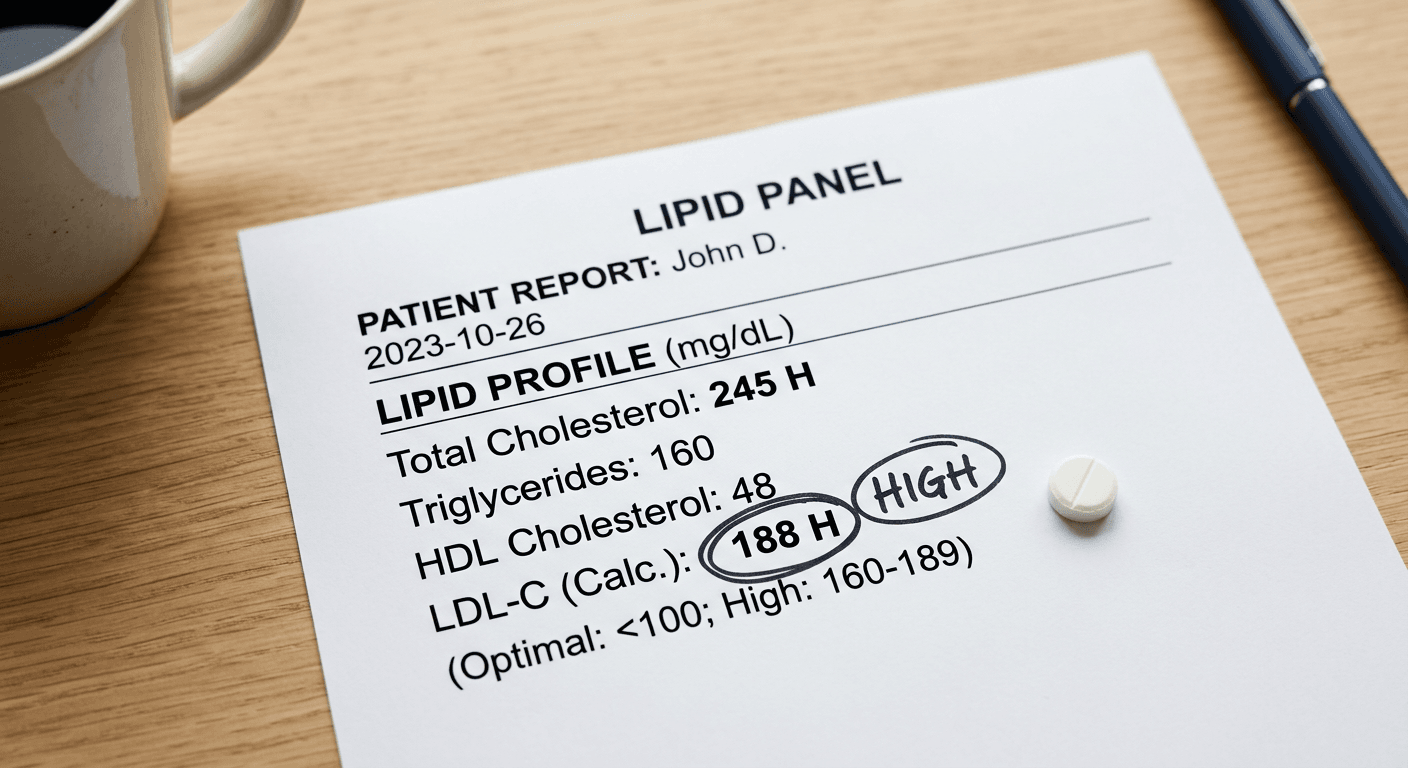
| The essentials: On July 16, 2026, the FDA approved Lipfendra (enlicitide, Merck) 20 mg tablets as an adjunct to diet and exercise to reduce low-density lipoprotein cholesterol (LDL-C) in adults with hypercholesterolemia, including heterozygous familial hypercholesterolemia (HeFH). Lipfendra is the first FDA-approved oral PCSK9 inhibitor in history. Every other approved PCSK9 inhibitor is administered by subcutaneous injection (evolocumab/Repatha, alirocumab/Praluent) or intravenous infusion (inclisiran/Leqvio). What enlicitide is: a novel macrocyclic peptide that binds directly to PCSK9 and prevents it from binding to LDL receptors on liver cells, allowing more LDL receptors to remain on the cell surface and remove more LDL-C from the blood. The macrocyclic peptide format is what enables oral bioavailability that conventional peptide PCSK9 inhibitors cannot achieve. Dosing: 20 mg once daily by mouth. No food restriction, no injection, no clinic visit required for administration. The clinical basis: two pivotal Phase 3 trials. CORALreef Lipids (NCT05952856, n=2,912, adults with hypercholesterolemia at elevated ASCVD risk on stable statin therapy): placebo-adjusted LDL-C reduction of 55.8% at week 24 (95% CI minus 60.9 to minus 50.7; p less than 0.001); reduction sustained at 47.6 percentage points versus placebo at week 52. 70.3% of patients achieved LDL-C below 70 mg/dL with at least 50% reduction; 67.5% achieved LDL-C below 55 mg/dL with at least 50% reduction. Broad lipid benefits: non-HDL-C down 53.4 percentage points; apolipoprotein B (ApoB) down 50.3 percentage points; lipoprotein(a) down 28.2 percentage points (median) versus placebo at week 24. CORALreef HeFH (NCT05952869, n=303, adults with HeFH on stable statin therapy): placebo-adjusted LDL-C reduction of 59% at week 24. Mean baseline LDL-C 119 mg/dL. Safety: in CORALreef Lipids, adverse event frequency was similar between enlicitide and placebo. In CORALreef HeFH, the most common adverse reactions occurring at higher frequencies than placebo were diarrhea (7% versus 2%) and dizziness (9% versus 4%). Adherence in both trials: 97% adherence to study intervention; 96% adherence to dosing instructions, among the highest adherence rates reported in any cardiovascular outcomes trial program. The critical unanswered question: cardiovascular outcomes. Does LDL-C lowering with enlicitide reduce heart attacks, strokes, and cardiovascular death? The large CORALreef Outcomes trial (NCT06008756, over 14,500 patients enrolled, projected completion December 2029) will answer this. Without those data, the cardiovascular event reduction benefit is inferred from the class effect of injectable PCSK9 inhibitors rather than directly demonstrated for enlicitide. |
|---|
The injectable PCSK9 inhibitor story has been one of the most impressive in cardiovascular medicine to treat low-density lipoprotein cholesterol. When evolocumab and alirocumab received FDA approval in 2015, they produced LDL-C reductions in the range of 50 to 60% on top of maximally tolerated statin therapy, far exceeding what any other oral lipid-lowering agent could achieve. The subsequent cardiovascular outcomes trials, FOURIER for evolocumab and ODYSSEY OUTCOMES for alirocumab, confirmed that these LDL reductions translated into meaningful reductions in heart attacks, strokes, and cardiovascular death. The mechanism worked exactly as predicted.
But the drugs required injections. Subcutaneous self-injection every two weeks for evolocumab and alirocumab, or an intravenous infusion every six months for inclisiran. For many of the patients who would benefit most from PCSK9 inhibition, including patients already managing complex medication regimens for established cardiovascular disease, this route-of-administration requirement was the primary reason they were not using the drug. Studies of real-world PCSK9 inhibitor prescribing consistently showed that injection burden, needle anxiety, and the practical difficulty of adding a biologic self-injection routine to an already complex daily regimen contributed to low adoption in eligible populations.
Lipfendra (enlicitide, Merck) is the first oral PCSK9 inhibitor. Not a modified injectable. Not a new small-molecule working through a different mechanism. A once-daily tablet that directly inhibits PCSK9 with the same mechanism as the approved injectables, producing LDL-C reductions of 56 to 59% in Phase 3 trials, and doing so with an adverse event profile that was essentially indistinguishable from placebo in the large general population trial.
The most important limitation is the one that matters most: cardiovascular outcomes data. Whether enlicitide reduces heart attacks and strokes has not yet been established in a completed randomized trial. The LDL-C reduction is real, large, and consistent. Whether it translates into event reduction, as the class effect strongly predicts it should, will be confirmed by CORALreef Outcomes in 2029.
What LDL Cholesterol Is and Why Reducing It Matters
Low-density lipoprotein cholesterol is the primary atherogenic lipoprotein in human blood. LDL particles carry cholesterol from the liver to peripheral tissues, and when LDL-C levels are elevated, excess LDL particles deposit in arterial walls, where they are oxidized and trigger the inflammatory cascade that drives plaque formation. This atherosclerotic process underlies the most common causes of heart attack and stroke, collectively known as atherosclerotic cardiovascular disease (ASCVD).
The relationship between LDL-C and ASCVD risk is one of the most robust dose-response relationships in medicine, established through decades of Mendelian randomization studies, statin trials, and PCSK9 inhibitor outcomes trials. The Cholesterol Treatment Trialists’ Collaboration meta-analysis of over 170,000 participants in statin trials found that each 1 mmol/L (approximately 38.7 mg/dL) reduction in LDL-C reduces the risk of major vascular events by approximately 22%. Lower is better, with no observed threshold at which further LDL-C reduction stops providing benefit.
Current cardiovascular guidelines from the American College of Cardiology and American Heart Association define LDL-C targets based on individual ASCVD risk: below 70 mg/dL for patients with established ASCVD, and below 55 mg/dL for very high-risk patients including those with multiple ASCVD events or ASCVD plus additional high-risk features. Many patients on maximally tolerated statin therapy do not reach these targets, particularly those with familial hypercholesterolemia or those who are statin-intolerant.
What PCSK9 Is and How Inhibiting It Works
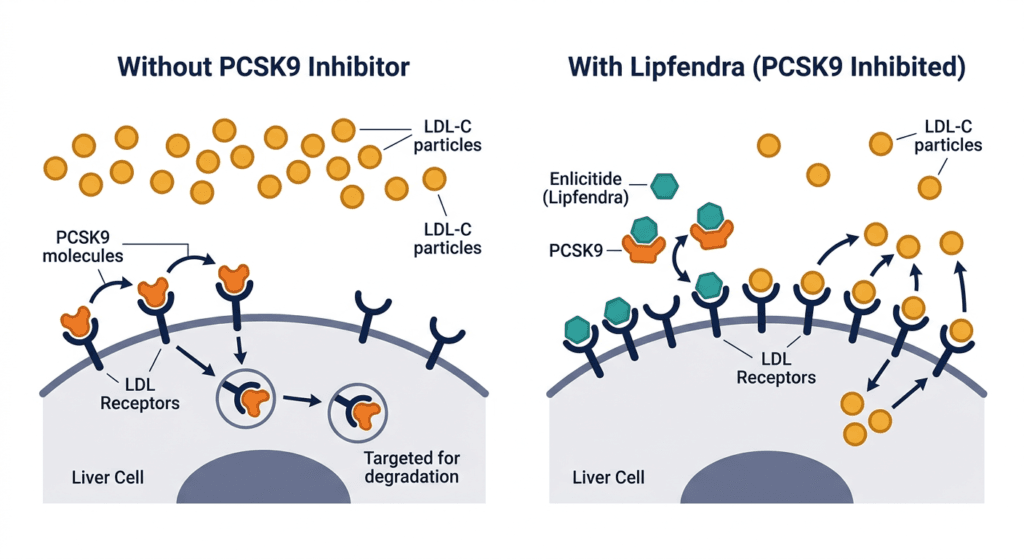
PCSK9 (proprotein convertase subtilisin/kexin type 9) is a liver-produced protein that serves as a natural regulator of LDL receptors. LDL receptors sit on the surface of liver cells and capture circulating LDL-C particles, drawing them inside the cell for processing. PCSK9 binds to LDL receptors and directs them to be degraded inside the cell rather than recycled back to the cell surface. When PCSK9 levels are high, fewer LDL receptors are available to clear LDL-C, so blood LDL-C levels rise. When PCSK9 is blocked, more LDL receptors return to the cell surface, LDL-C clearance increases, and blood LDL-C levels fall substantially.
The importance of PCSK9 in LDL-C regulation was first recognized through the discovery of gain-of-function mutations in the PCSK9 gene that cause severe familial hypercholesterolemia, and loss-of-function mutations that produce lifelong LDL-C levels 28% lower than average and a corresponding 88% reduction in coronary heart disease risk over a lifetime. Human genetics established the principle; the therapeutic agents confirmed it at scale.
The approved injectable PCSK9 inhibitors, evolocumab and alirocumab, are large monoclonal antibody proteins that bind to PCSK9 in the bloodstream and prevent it from interacting with LDL receptors. Inclisiran is an RNA interference agent that reduces PCSK9 production in the liver. All three require non-oral administration because of their molecular size or chemistry.
Enlicitide takes a fundamentally different approach at the molecular level, and that difference is what makes oral delivery possible.
What a Macrocyclic Peptide Is and Why It Changes Everything
The challenge with making a PCSK9 inhibitor orally available is the same challenge that has historically prevented oral biologics: large molecules are degraded in the gastrointestinal tract before they can be absorbed into the bloodstream, and even when absorption occurs, the efficiency is too low to achieve therapeutic concentrations.
Enlicitide is a macrocyclic peptide, a specific class of molecules that occupies a chemical space between conventional small molecules and large biologics. Macrocyclic peptides are larger than typical small-molecule drugs but far smaller than monoclonal antibodies. Their defining feature is a cyclic (ring) structure: the ends of the peptide chain are connected to each other, creating a closed loop rather than an open linear chain.
This cyclic architecture is what enables oral bioavailability for a PCSK9 binding agent. The ring structure provides several properties that linear peptides lack:
The cyclic conformation is more rigid and compact, reducing the peptide’s surface area exposure to the digestive enzymes that would otherwise rapidly cleave it. The ring also reduces the number of exposed hydrogen bond donors and acceptors, which improves membrane permeability and allows the molecule to cross intestinal epithelial cells more efficiently. And the specific chemical modifications incorporated into enlicitide’s structure (it is supplied as enlicitide decanoate, meaning a fatty acid ester modification that further improves oral absorption) optimize the pharmacokinetic profile for once-daily dosing.
The result is a molecule that, despite binding the same PCSK9 protein target as the large injectable antibodies, is small enough and chemically stable enough to survive gastric acid, be absorbed through the intestinal wall, and achieve blood concentrations sufficient to meaningfully inhibit PCSK9 activity throughout a 24-hour dosing interval.
As Merck’s president of Research Laboratories, Dr. Dean Y. Li, described it: enlicitide was designed to deliver antibody-like efficacy in the form of a once-daily oral tablet, leveraging macrocyclic peptide technology to achieve what conventional peptide chemistry could not.
The CORALreef Trials: Complete Data
CORALreef Lipids (NCT05952856): The Primary Pivotal Trial
CORALreef Lipids was a Phase 3, multicenter, randomized, double-blind, placebo-controlled trial conducted across 168 sites in 14 countries. It enrolled 2,912 adults aged 18 years and older with hypercholesterolemia and either a history of a major ASCVD event (with LDL-C at or above 55 mg/dL) or intermediate-to-high risk for a first ASCVD event (with LDL-C at or above 70 mg/dL). All patients were required to be on stable lipid-lowering therapy including at least a moderate- or high-intensity statin, or have documented statin intolerance.
Participants were randomized 2:1 to enlicitide 20 mg orally once daily (n=1,942) or placebo (n=970) for 52 weeks. The primary endpoint was mean percent change in LDL-C from baseline at week 24. The primary results were published in the New England Journal of Medicine in 2026.
| Endpoint | Enlicitide | Placebo | Difference/result |
|---|---|---|---|
| Mean percent change in LDL-C at week 24 (primary) | Approximately minus 57% from baseline | Approximately minus 1% from baseline | Placebo-adjusted minus 55.8 percentage points (95% CI minus 60.9 to minus 50.7); p less than 0.001 |
| Mean percent change in LDL-C at week 52 | Sustained | Sustained | Placebo-adjusted minus 47.6 percentage points; p less than 0.001 |
| Non-HDL-C change at week 24 | — | — | Placebo-adjusted minus 53.4 percentage points |
| ApoB change at week 24 | — | — | Placebo-adjusted minus 50.3 percentage points |
| Lipoprotein(a) change at week 24 | — | — | Placebo-adjusted minus 28.2 percentage points (median) |
| LDL-C below 70 mg/dL plus at least 50% reduction at week 24 | 70.3% | — | Guideline goal achievement (ACC/AHA secondary prevention target) |
| LDL-C below 55 mg/dL plus at least 50% reduction at week 24 | 67.5% | — | Guideline goal achievement (very high risk target) |
| Treatment adherence | 97% | 97% | Comparable, exceptionally high |
Source: CORALreef Lipids NEJM 2026 publication; Merck press release November 8, 2025.
The 55.8 percentage-point placebo-adjusted LDL-C reduction at 24 weeks is clinically comparable to the LDL-C reductions achieved by injectable PCSK9 inhibitors in their pivotal trials (evolocumab reduced LDL-C by approximately 59% in FOURIER; alirocumab by approximately 62% in ODYSSEY OUTCOMES). Achieving this magnitude of reduction from an oral daily tablet represents a genuine pharmacological advance.
The guideline goal attainment numbers are particularly meaningful. More than two-thirds of patients (67.5%) on enlicitide achieved both LDL-C below 55 mg/dL and at least a 50% reduction from baseline, meeting the most stringent ACC/AHA guideline target for very high-risk patients. This degree of goal attainment is not achievable with statins alone in most high-risk patients and has historically required injectable PCSK9 inhibitors to reach reliably.
The week 52 data (47.6 percentage-point reduction versus placebo) shows some attenuation from the week 24 peak, a common finding in lipid-lowering trials that reflects a combination of regression to the mean and possibly some pharmacokinetic variability over extended follow-up. The reduction remains clinically substantial at one year.
CORALreef HeFH (NCT05952869): The Familial Hypercholesterolemia Trial
CORALreef HeFH was a Phase 3, randomized, double-blind, placebo-controlled trial enrolling 303 adults with heterozygous familial hypercholesterolemia who had a history of or were at risk for major ASCVD events, on stable background statin therapy. Patients were randomized 2:1 to enlicitide 20 mg daily or placebo. The mean baseline LDL-C was 119 mg/dL, reflecting the high residual LDL-C burden that persists in HeFH patients despite maximally tolerated statin therapy.
| Endpoint | Result |
|---|---|
| Placebo-adjusted LDL-C change at week 24 (primary) | Minus 59% |
| LDL-C change at week 52 | Statistically significant (maintained) |
| Non-HDL-C, ApoB, Lp(a) at week 24 | Statistically significant improvements (all secondary endpoints met) |
| Treatment adherence | 97% |
The 59% LDL-C reduction in HeFH patients on top of existing statin therapy represents a clinically transformative magnitude of effect for this population. HeFH, caused by loss-of-function mutations in the LDL receptor gene or other genes in the LDL-C clearance pathway, drives markedly elevated LDL-C from birth and substantially increases the lifetime risk of premature ASCVD events. Many HeFH patients cannot achieve guideline-recommended LDL-C targets even on high-intensity statins plus ezetimibe, and have historically required injectable PCSK9 inhibitors to do so. An oral once-daily alternative that produces comparable LDL-C reduction is a meaningful practical advance for this population.
The PCSK9 Inhibitor Landscape After July 2026
| Drug | Company | Mechanism | Route | Dosing frequency | LDL-C reduction |
|---|---|---|---|---|---|
| Repatha (evolocumab) | Amgen | Anti-PCSK9 monoclonal antibody | SC injection | Every 2 weeks or monthly | Approximately 59% |
| Praluent (alirocumab) | Sanofi/Regeneron | Anti-PCSK9 monoclonal antibody | SC injection | Every 2 weeks or monthly | Approximately 62% |
| Leqvio (inclisiran) | Novartis | siRNA targeting PCSK9 mRNA | SC injection (clinician-administered) | Twice yearly | Approximately 50 to 52% |
| Lipfendra (enlicitide) | Merck | Macrocyclic peptide binding PCSK9 | Oral tablet | Once daily | Approximately 56 to 59% |
Lipfendra is not more effective than the injectable PCSK9 inhibitors by LDL-C reduction alone. The magnitude of LDL-C lowering is comparable across the class. What Lipfendra provides is route-of-administration convenience that fundamentally changes the accessibility and scalability of PCSK9 inhibition.
The Unanswered Question: Cardiovascular Outcomes
The most important clinical limitation of the July 16, 2026 approval is the one that cannot yet be answered: whether LDL-C reduction with enlicitide translates into fewer heart attacks, strokes, and cardiovascular deaths.
For the injectable PCSK9 inhibitors, this question has been answered:
The FOURIER trial (evolocumab, n=27,564) showed a 15% relative risk reduction in the composite primary endpoint of cardiovascular death, heart attack, stroke, hospitalization for unstable angina, or coronary revascularization (HR 0.85; 95% CI 0.79 to 0.92; p less than 0.001).
The ODYSSEY OUTCOMES trial (alirocumab, n=18,924) showed a 15% relative risk reduction in the primary composite endpoint of death from coronary heart disease, nonfatal heart attack, ischemic stroke, or unstable angina requiring hospitalization (HR 0.85; 95% CI 0.78 to 0.93; p less than 0.001).
Both trials also showed dose-dependent mortality benefits in certain high-risk subgroups with very high baseline LDL-C.
Enlicitide does not have this data yet. The CORALreef Outcomes trial (NCT06008756), with over 14,500 participants enrolled, is the ongoing cardiovascular outcomes study. It has a projected completion date of December 2029. Until those data are available, the cardiovascular event reduction benefit of enlicitide is inferred from the class effect of PCSK9 inhibition and from the known relationship between LDL-C reduction and ASCVD event reduction, both of which are scientifically robust. But they are inferences, not demonstrated outcomes for this specific drug.
As the AJMC noted in coverage of the approval, the degree to which the reduction in LDL cholesterol levels with enlicitide will translate into a reduction in cardiovascular events is being tested in the ongoing CORALreef Outcomes trial, with a projected completion date of December 2029.
For patients and prescribers making treatment decisions now: the LDL-C reduction is established and clinically comparable to the injectable class. The cardiovascular outcomes evidence is pending but scientifically predicted. The FDA’s approval of enlicitide based on LDL-C reduction as the primary efficacy endpoint, while CORALreef Outcomes completes, follows the same standard applied to the injectable PCSK9 inhibitors at their initial approvals.
Safety: What the CORALreef Data Shows
The safety profile of enlicitide in the pivotal trials is one of the most favorable features of the approval. In CORALreef Lipids, the large general population trial, adverse event frequency was essentially identical between enlicitide and placebo. Discontinuation due to adverse events was similar across arms. No class-level safety concern emerged from this 2,912-patient, 52-week dataset.
In CORALreef HeFH, the HeFH-specific trial, two adverse reactions occurred at modestly higher frequencies with enlicitide than placebo:
- Diarrhea: 7% (enlicitide) versus 2% (placebo)
- Dizziness: 9% (enlicitide) versus 4% (placebo)
Both were predominantly mild in severity, and discontinuation rates due to adverse events were similar between groups despite the higher rate of these events. The mechanism underlying the diarrhea and dizziness signals in the HeFH population but not the general population trial is not fully characterized; it may reflect the smaller sample size of CORALreef HeFH making individual adverse event comparisons more variable, or it may reflect the HeFH population’s distinct disease and comorbidity profile.
No hepatotoxicity signal, no significant renal signal, no immune-mediated adverse events, and no injection site reactions (because there are no injections) were reported. The oral route eliminates the local tolerability issues that affect a proportion of patients on subcutaneous injectable PCSK9 inhibitors.
Key safety information from the Lipfendra prescribing information:
No boxed warning. The prescribing information requires disclosure of the most common adverse reactions occurring at higher rates than placebo (diarrhea and dizziness, from the HeFH trial). The absence of a boxed warning and the favorable adverse event profile in the large general population trial reflect a genuinely clean safety signal across 52 weeks in nearly 3,000 patients.
Embryo-fetal toxicity language is included in the label because all lipid-lowering therapies carry a contraindication in pregnancy due to the theoretical risk from lipid pathway perturbation and the known safety of discontinuing lipid-lowering therapy for the duration of pregnancy in most patients.
What This Means for Patients and Prescribers
For patients with high LDL-C who have not been prescribed a PCSK9 inhibitor
Several well-established barriers have limited PCSK9 inhibitor prescribing despite their efficacy. Insurance prior authorization requirements have been restrictive and time-consuming. Injection anxiety and the practical burden of self-injection have deterred many patients. And in some cases, the specialty pharmacy workflow required for injectable biologics has added friction to prescribing.
Lipfendra is a tablet. It does not require a specialty pharmacy in the same way. It does not require injection training. It can be prescribed by a primary care physician without the same hurdles as a biologic self-injection device. Whether these practical advantages translate into substantially higher PCSK9 inhibitor uptake in eligible patients will depend heavily on formulary placement, prior authorization criteria, and pricing, none of which have been fully established at the time of writing.
For patients already on injectable PCSK9 inhibitors who are satisfied with their treatment and tolerating their regimen well: the LDL-C reduction with enlicitide is comparable but not superior. There is no clinical imperative to switch for efficacy reasons. Patients who have struggled with injections, have injection site reactions, or who have found the biologic self-injection workflow burdensome are candidates for a conversation about switching.
For patients with HeFH
HeFH is a genetic condition affecting approximately 1 in 250 people, yet the majority of affected individuals are undiagnosed, and among those who are diagnosed and treated, many do not reach guideline-recommended LDL-C targets on statins alone. The 59% LDL-C reduction from enlicitide on top of stable statin therapy brings most HeFH patients to within or near guideline targets with a once-daily pill, a meaningful practical change from the every-2-week or monthly self-injection schedule of injectable PCSK9 inhibitors.
For prescribers
The conversation about PCSK9 inhibitor therapy for eligible patients is now different. The oral option removes several of the friction points that have historically limited uptake. The LDL-C reduction magnitude is comparable to the injectable class. The safety profile through 52 weeks is favorable. The cardiovascular outcomes data are pending but the class effect is established.
The CORALreef Outcomes results, expected around 2029, will be one of the most closely watched trials in cardiovascular medicine. If the event reduction mirrors what was seen with evolocumab in FOURIER and alirocumab in ODYSSEY OUTCOMES, the case for wide uptake of oral PCSK9 inhibition will be definitive.
Dr. Ann Marie Navar, a cardiologist at UT Southwestern Medical Center, noted that for the first time, patients have an oral PCSK9 inhibitor for LDL lowering, a significant development for a class that has struggled with adoption despite proven efficacy.
For related HED coverage on cardiovascular risk and lipid management, see our post on Awiqli (insulin icodec-abae), the first once-weekly basal insulin approved for adults with type 2 diabetes and our coverage of the daraxonrasib RASolute 302 data from ASCO 2026 showing a 60% reduction in risk of death in previously treated metastatic pancreatic cancer.
Sources
FDA approval announcement: FDA approves first oral therapy that inhibits proprotein convertase subtilisin/kexin type 9 (PCSK9) to lower bad cholesterol in adults with high cholesterol. FDA.gov. July 16, 2026.
Merck FDA approval press release: Merck’s Lipfendra (enlicitide) is the First and Only Once-Daily Oral PCSK9 Inhibitor Approved by the U.S. FDA to Reduce LDL-C in Adults with Hypercholesterolemia. Merck. July 16, 2026.
Drugs.com approval news: FDA Approves Lipfendra (enlicitide) Oral PCSK9 Inhibitor to Reduce LDL-C in Adults with Hypercholesterolemia. drugs.com. July 16, 2026.
AJMC competitive landscape and Dr. Navar quote: FDA Approves Enlicitide, First Oral PCSK9 for High Cholesterol. ajmc.com. July 2026.
AJMC CORALreef Lipids detailed data: Oral PCSK9 Inhibitor Enlicitide Lowers LDL by 57% at 24 Weeks. ajmc.com.
Patient Care Online (HeFH baseline LDL-C, adverse reactions): FDA Approves First Oral PCSK9 Inhibitor to Reduce LDL-C in Adults With Hypercholesterolemia. patientcareonline.com. July 2026.
Pharmacy Times (CORALreef Lipids full data, mechanism detail): Enlicitide Meaningfully Lowers LDL-C at 24 Weeks in Patients At Risk for ASCVD Events. pharmacytimes.com.
Biopharma News / AppliedXL (CORALreef design, 2:1 randomization, 168 sites): FDA approves Merck’s oral PCSK9 inhibitor Lipfendra for high cholesterol. appliedxl.com. July 2026.
Merck CORALreef Lipids data press release (November 8, 2025): Merck’s Enlicitide Decanoate Significantly Reduced LDL-C in Phase 3 CORALreef Lipids Trial. BusinessWire. November 8, 2025.
Merck CORALreef HeFH data press release (November 9, 2025): Merck’s Enlicitide Decanoate Significantly Reduced LDL-C in Adults with HeFH in Phase 3 CORALreef HeFH Trial. Merck. November 9, 2025.
The Cardiology Advisor (macrocyclic peptide mechanism detail): Oral PCSK9 Inhibitor Enlicitide Reduces LDL-C in Adults With Hypercholesterolemia. thecardiologyadvisor.com.
FCS Hematology Oncology Review (goal attainment data detail): CORALreef Lipids data table.
Family Heart Foundation (HeFH patient resources): FDA Approves Merck’s LIPFENDRA as First Once-Daily Oral PCSK9 Inhibitor. familyheart.org. July 2026.
CORALreef Lipids trial registration: NCT05952856. ClinicalTrials.gov.
CORALreef HeFH trial registration: NCT05952869. ClinicalTrials.gov.
CORALreef Outcomes trial registration: NCT06008756. ClinicalTrials.gov.
CORALreef Lipids primary NEJM publication: CORALreef Lipids. New England Journal of Medicine. 2026.
FOURIER cardiovascular outcomes trial (evolocumab): Sabatine MS et al. Evolocumab and Clinical Outcomes in Patients with Cardiovascular Disease. NEJM. 2017;376(18):1713-1722.
ODYSSEY OUTCOMES trial (alirocumab): Schwartz GG et al. Alirocumab and Cardiovascular Outcomes after Acute Coronary Syndrome. NEJM. 2018;379(22):2097-2107.
PCSK9 biology overview: PCSK9 and LDL Receptor Regulation. PMC9290282.
ACC/AHA Cholesterol Guidelines (LDL targets): Grundy SM et al. 2018 AHA/ACC/AACVPR/AAPA/ABC/ACPM/ADA/AGS/APhA/ASPC/NLA/PCNA Guideline on the Management of Blood Cholesterol. JACC. 2019.
LDL-C and ASCVD risk (NHLBI): LDL Cholesterol. NHLBI.
Lipfendra prescribing information: LIPFENDRA (enlicitide) Prescribing Information. Merck Sharp and Dohme LLC. 2026.
Lipfendra approval history: Lipfendra FDA Approval History. drugs.com.
Patient resources: American Heart Association: Know Your Numbers | Family Heart Foundation (HeFH resources) | National Lipid Association | Merck Lipfendra patient support
| Disclaimer: Health Evidence Digest provides general information about FDA approvals and health research for educational purposes. This content is not a substitute for professional medical advice. Lipfendra (enlicitide) is approved to reduce LDL-C; it has not yet been established in a completed randomized trial that enlicitide reduces cardiovascular events such as heart attacks and strokes. The CORALreef Outcomes cardiovascular trial is ongoing with results expected around 2029. All decisions about lipid-lowering therapy should be made in consultation with a qualified healthcare provider who can evaluate individual ASCVD risk, lipid levels, current medications, and treatment goals. |
|---|
Leave a Reply