Category: FDA Approvals

This category focuses on FDA approvals for drugs, biologics, and devices. Here you will find clear summaries of each decision, the data behind it, and the clinical context that helps make sense of what the approval means in real world care.

  • The Only Drug Ever Approved in the United States for Hepatitis Delta Is Now Available. Here Is What Hepcludex Is and What the MYR301 Trial Data Shows.

    The Only Drug Ever Approved in the United States for Hepatitis Delta Is Now Available. Here Is What Hepcludex Is and What the MYR301 Trial Data Shows.

    📌 The essentials On May 22, 2026, the FDA approved Hepcludex (bulevirtide-gmod, Gilead Sciences), making it the first and only FDA-approved treatment for chronic hepatitis delta virus (HDV) infection in the United States. HDV has had no approved pharmacologic therapy in the United States for the entire history of its recognition as a disease. Indication: adults with chronic HDV infection without cirrhosis or with compensated cirrhosis. Regulatory pathway: accelerated approval based on a decrease in HDV RNA and alanine aminotransferase (ALT) normalization. Continued approval may be contingent on verification of clinical benefit in a confirmatory trial. Regulatory designations: Breakthrough Therapy Designation, Orphan Drug Designation, Priority Review. The clinical basis: Phase 3 MYR301 trial (NCT03852719), 150 patients with chronic HDV infection, published in the New England Journal of Medicine. Primary endpoint at week 48: combined response rate of 48% with bulevirtide 8.5 mg versus 2% with delayed treatment. Through 144 weeks: undetectable HDV RNA in 50% of treated patients. No treatment resistance detected through the full 144-week treatment period. Critical safety warning: a boxed warning for severe acute exacerbations of hepatitis B and HDV after discontinuation. Do not stop Hepcludex without medical supervision. Dosing: 8.5 mg subcutaneous injection once daily. European status: bulevirtide 2 mg was approved in the European Economic Area in 2020; the 8.5 mg dose used in the U.S. approval was the dose studied in MYR301’s pivotal arm.

    Hepatitis delta virus is the rarest and most severe of the five major viral hepatitis types. It can only infect people who also have hepatitis B, because it is a satellite virus that needs the hepatitis B surface antigen to enter liver cells. In people with this coinfection, liver disease progresses faster, cirrhosis develops earlier, and the risks of liver cancer and liver-related death are substantially higher than with hepatitis B alone.

    Despite this severity, and despite HDV being recognized for decades, there has never been an FDA-approved treatment for it in the United States. Clinicians have managed it with off-label, interferon-based regimens that are effective in a minority of patients, carry significant toxicity, and are not suitable for many patients with advanced liver disease.

    That changed on May 22, 2026, when the FDA approved Hepcludex (bulevirtide-gmod) as the first approved treatment for chronic HDV in the United States. It is a first-in-class entry inhibitor that works through a mechanism unlike anything previously approved for viral hepatitis, and its approval is the culmination of a Phase 3 trial program that has generated eight years of clinical data across multiple dose levels and treatment durations.


    What Hepatitis Delta Is and Why It Has Been So Hard to Treat

    The biology of HDV and its relationship to HBV

    Hepatitis delta virus (HDV) is a defective RNA virus discovered in 1977 by Mario Rizzetto in Italy. It is classified as a satellite virus: it cannot replicate independently. To enter hepatocytes (liver cells), it requires the hepatitis B surface antigen (HBsAg), which sits on the outer envelope of hepatitis B virus (HBV) particles and is also expressed on HDV virions. Without HBsAg, HDV cannot infect new cells.

    This dependency means HDV only infects people who are already HBV-infected, either as a co-infection at the same time as HBV or as a superinfection in a person already chronically infected with HBV. Superinfection is the more clinically dangerous scenario: a person with chronic HBV who becomes superinfected with HDV typically develops accelerated liver disease.

    The HDV genome encodes only one protein: the delta antigen (HDAg), in small and large isoforms. The small form promotes viral RNA replication; the large form suppresses replication and is required for virion assembly. This minimal genome is why HDV replicates so efficiently inside HBV-infected cells without needing to encode its own machinery.

    The clinical consequence of HDV coinfection

    In patients with chronic HBV/HDV coinfection, the presence of HDV dramatically accelerates liver injury. Compared to HBV monoinfection:

    • Cirrhosis develops significantly faster, with some studies showing the median time to cirrhosis cut by half or more
    • Hepatocellular carcinoma (HCC) occurs at 2 to 3 times the rate
    • Liver-related mortality is substantially higher
    • The risk of developing end-stage liver disease requiring transplantation is elevated

    Chronic HDV infection is now recognized as the most severe form of viral hepatitis, carrying a worse prognosis than hepatitis B, C, or other viral types.

    How many people are affected and why it is underrecognized Global prevalence estimates for chronic HDV infection range from 12 million to 72 million people worldwide, reflecting genuine uncertainty in epidemiological data because HDV testing is inconsistently performed. In the United States, estimates suggest approximately 100,000 people are living with chronic HDV infection, though the true number is likely higher because HDV testing is not routinely performed in all HBV-infected patients. HDV disproportionately affects people who inject drugs (where percutaneous transmission is efficient), immigrants from regions with high HBV/HDV endemicity (Mongolia, West Africa, Eastern Europe, the Amazon basin), and people in populations with high HBV prevalence. The gap between actual prevalence and diagnosed cases reflects both under-testing and the relative rarity of the condition in clinical training curricula. Many HBV patients are never tested for HDV despite guidelines recommending HDV testing in high-risk individuals.

    How Bulevirtide Works: The Entry Inhibitor Mechanism

    Bulevirtide is a first-in-class viral entry inhibitor. No previously approved hepatitis drug has worked through this mechanism. Understanding it requires understanding how HBV and HDV enter liver cells.

    Both HBV and HDV use the same receptor to enter hepatocytes: sodium taurocholate cotransporting polypeptide (NTCP), a bile acid transporter expressed on the surface of liver cells. The viral entry process begins when a region of the HBV pre-S1 domain on the outer envelope of the virus binds to NTCP with high affinity. This binding triggers the virus to be taken up into the hepatocyte.

    Bulevirtide is a myristoylated synthetic peptide, meaning it is a short chain of amino acids with a fatty acid (myristic acid) attached that anchors the molecule in cell membranes. Its amino acid sequence mimics the pre-S1 region that HBV and HDV use to bind NTCP. By competing with the virus for NTCP binding, bulevirtide prevents both HBV and HDV from entering hepatocytes, reducing the number of infected cells over time.

    This is a mechanistically rational and highly targeted approach. It does not work inside the cell on the viral replication machinery, like nucleoside analogs for HBV. It works outside the cell, at the entry step, blocking new infection events. As old infected hepatocytes naturally die and are replaced, and as new cells are protected from infection, the proportion of HDV-infected hepatocytes in the liver declines.

    Illustration of Hepcludex mechanism of action

    The important implication: bulevirtide must be taken daily on a long-term basis, because stopping the drug removes the competitive blockade of NTCP, allowing HDV and HBV to resume infecting new hepatocytes. This pharmacological characteristic directly explains the boxed warning for severe exacerbation after discontinuation.


    The MYR301 Trial: Design and Full Results

    Design

    MYR301 (NCT03852719) is a multicenter, randomized, open-label, parallel-arm Phase 3 trial evaluating the long-term efficacy and safety of bulevirtide in adults with chronic HDV. The trial enrolled 150 patients who were randomized 1:1:1 to three arms:

    • Bulevirtide 2 mg once daily for 144 weeks (n=49)
    • Bulevirtide 10 mg once daily for 144 weeks, which is approximately equivalent to the 8.5 mg U.S. approved dose (n=50)
    • Delayed treatment: 48-week observational period (no antiviral treatment for HDV) followed by bulevirtide 10 mg once daily for 96 weeks (n=51)

    The delayed treatment arm served as the control for the primary endpoint analysis. After 48 weeks, all delayed-treatment patients crossed over to receive bulevirtide. This design was used because withholding all treatment for 144 weeks in a condition as severe as HDV was not considered ethically appropriate.

    The trial has continued through a 96-week off-treatment follow-up period, generating the longest dataset available for any HDV therapeutic program.

    Primary endpoint: week 48 combined response

    The primary efficacy endpoint was combined response at week 48, defined as both:

    • Undetectable HDV RNA OR a decline in HDV RNA of 2 log10 IU/mL or greater from baseline, AND
    • Normalization of alanine aminotransferase (ALT)
    Outcome at Week 48Bulevirtide (10 mg arm)Delayed treatment (control)
    Combined response rate48%2%
    Undetectable HDV RNA20%0%
    ALT normalizationIncluded in combined responseMinimal improvement
    Statistical significancep less than 0.001Reference

    Source: Wedemeyer H et al. A Phase 3, Randomized Trial of Bulevirtide in Chronic Hepatitis D. New England Journal of Medicine. 2023;389:22-32. doi:10.1056/NEJMoa2213429.

    The 46-percentage-point difference between the active treatment arm (48%) and the delayed treatment arm (2%) is the formal basis for the accelerated approval. The 2% rate in the delayed treatment arm is a direct reflection of HDV’s natural history: without treatment, spontaneous virologic suppression in chronic HDV is extremely rare.

    Deepening response over time: through 144 weeks

    One of the most clinically informative aspects of MYR301 is its long-term follow-up data, which was available to the FDA as part of the approval package.

    Virologic response over timeBulevirtide (immediate treatment arm)
    Undetectable HDV RNA at Week 4820%
    Undetectable HDV RNA at Week 9636%
    Undetectable HDV RNA at Week 14450%
    Combined response at Week 96Improved from Week 48
    Treatment resistance detectedNone through 144 weeks
    Patients with suboptimal early response at Week 24 who achieved virologic response by Week 9643% of non-responders; 82% of partial responders

    Source: Journal of Hepatology 2024. doi:10.1016/j.jhep.2024.05.021. Gilead press release. May 2025.

    The trajectory from 20% undetectable at week 48 to 50% undetectable at week 144 is the central efficacy message of the long-term MYR301 data. Patients who continue on bulevirtide are increasingly likely to achieve complete virologic suppression over time. This deepening response is consistent with the mechanism: as more cycles of hepatocyte replacement occur under entry inhibition, the proportion of infected cells progressively declines.

    The absence of treatment resistance through 144 weeks is a notable finding. In HIV and HBV medicine, selection for resistance mutations under antiviral pressure is a persistent challenge. Bulevirtide’s mechanism as a host-targeting entry inhibitor rather than a direct-acting antiviral targeting viral enzymes may contribute to the absence of resistance.

    Off-treatment durability

    Final data from MYR301, presented in 2025, showed that 90% of patients who had achieved undetectable HDV RNA at the end of treatment (144 weeks) remained undetectable for nearly two years off treatment. This durability after stopping therapy is an important finding for patients who want to understand what long-term treatment success might look like.

    Why combined response (virologic plus biochemical) is the right endpoint for HDV In chronic viral hepatitis, virologic suppression alone does not capture the full clinical picture. ALT normalization reflects reduction in active liver inflammation: elevated ALT indicates ongoing hepatocyte injury, and its normalization suggests that the liver injury driven by active HDV replication is being controlled. The FDA required both components in the primary endpoint because treatment with HDV antivirals can suppress viral replication (virologic response) without fully resolving the inflammatory liver injury (biochemical response), and the combination captures both dimensions of disease activity that matter for long-term liver health. This is why the 48% combined response rate, rather than just the virologic response rate, is the appropriate headline number from MYR301.

    Safety: What the Prescribing Information Covers

    Boxed warning: severe acute exacerbations after discontinuation

    Hepcludex carries a boxed warning for severe acute exacerbations of hepatitis B and HDV after stopping treatment. When bulevirtide is discontinued, NTCP receptors that were competitively blocked by the drug become available again, allowing HBV and HDV to rapidly resume infecting hepatocytes. In some patients, this viral rebound produces a sudden, severe flare of hepatitis that can be clinically dangerous.

    This warning has direct clinical implications for prescribers and patients:

    • Do not stop Hepcludex without discussing a discontinuation plan with your hepatologist
    • If discontinuation is necessary (surgery, tolerability issue, non-adherence), patients require close monitoring of liver function tests and HDV RNA for a minimum of 24 weeks after stopping
    • Patients should be counseled about this risk before starting treatment to ensure informed decision-making about the long-term nature of therapy

    Serious adverse reactions

    • Hypersensitivity reactions including anaphylaxis: Reported with bulevirtide. Monitor for signs of allergic reaction after each injection, especially during the initial treatment period.
    • Bile acid transporter inhibition: Because bulevirtide blocks NTCP, which is a bile acid transporter in addition to being the HBV/HDV entry receptor, it elevates circulating bile acid concentrations in the blood. This is a pharmacological consequence of the mechanism. In MYR301, elevated bile acids were observed and were generally asymptomatic, but the clinical implications of chronic NTCP inhibition with respect to bile acid metabolism are monitored as part of the drug’s safety profile.

    Common adverse reactions

    The most commonly reported adverse reactions in MYR301 were headache, abdominal pain, fatigue, pruritus (itching), and injection site reactions. Adverse events were mostly mild in severity, with no serious adverse events related to bulevirtide reported through 96 weeks of treatment.


    Dosing and Administration

    Approved dose: 8.5 mg as a subcutaneous injection once daily.

    Administration: The drug is supplied as a lyophilized powder for injection. After reconstitution, the solution is administered as a subcutaneous injection. Patients can be trained to self-inject.

    Duration: MYR301 treated patients for up to 144 weeks. The approved label does not specify a fixed treatment duration, consistent with the evolving evidence on long-term response and the expectation that patients who respond well may continue treatment.

    Timing relative to other medications: Because bulevirtide blocks NTCP, it should not be taken simultaneously with medications that depend on NTCP for their hepatic uptake. Notable interactions include teriflunomide and some statins. Review the full prescribing information for the complete drug interaction list before prescribing.

    HBV management: Most patients with HDV are also being managed for HBV with oral antivirals (entecavir, tenofovir). HBV suppression therapy is typically continued alongside bulevirtide; bulevirtide does not replace HBV antiviral management.


    The Regulatory Journey: Why This Took So Long and What Changed

    Bulevirtide has been in development for nearly a decade. It received European Medicines Agency approval for 2 mg use in the European Economic Area in July 2020, making it available to European patients more than five years before U.S. approval. The delay in U.S. approval reflected the FDA’s requirement for robust Phase 3 controlled data from a U.S.-eligible trial, which MYR301 was designed to provide.

    The drug received multiple FDA designations recognizing the seriousness of HDV and the absence of alternatives:

    The accelerated approval was granted on the basis that combined virologic and biochemical response is reasonably likely to predict long-term clinical benefit, specifically a reduction in the risk of cirrhosis, liver failure, and hepatocellular carcinoma. Confirmation of that clinical benefit in a dedicated outcomes trial is required as a post-marketing commitment.


    What This Means for Patients With Chronic HDV Infection

    For patients currently diagnosed with HDV

    Hepcludex is now available in the United States for adults with chronic HDV infection without cirrhosis or with compensated cirrhosis. If you have been diagnosed with chronic HDV coinfection, this is the first FDA-approved therapy you can discuss with your hepatologist.

    The most important questions to raise with your provider:

    • Is my cirrhosis status (absent, compensated, or decompensated) consistent with the approved indication?
    • What is my current HBV management regimen, and how will it interact with bulevirtide?
    • What is my baseline HDV RNA and ALT level, which will serve as the reference point for monitoring treatment response?
    • What is the monitoring schedule for HDV RNA, ALT, and bile acid levels during treatment?
    • What is the plan if I need to stop treatment for any reason?

    For patients who have not yet been tested for HDV

    If you have chronic hepatitis B and have never been tested for HDV, and you fall into any of the higher-risk groups for HDV exposure (history of injection drug use, immigration from or travel to a high-prevalence region, or sexual contact with someone who has HDV), ask your hepatologist or primary care provider about HDV testing. The test is straightforward: an HDV antibody test initially, followed by HDV RNA if the antibody is positive.

    The American Association for the Study of Liver Diseases (AASLD) and the Infectious Diseases Society of America (IDSA) both recommend HDV testing in patients with chronic HBV and risk factors for HDV exposure. Many patients with HDV are currently undiagnosed.

    Patient support

    Gilead’s Support Path program provides resources to help patients and healthcare professionals navigate coverage and financial assistance for Hepcludex. The Hepatitis B Foundation and the American Liver Foundation both maintain patient-facing resources on viral hepatitis management including HDV. The Global Hepatitis Delta Partnership is an international patient advocacy organization specifically focused on HDV.

    For related HED coverage of other liver disease treatment approvals in 2026, see our post on Lynavoy (linerixibat) for cholestatic pruritus in primary biliary cholangitis and our post on Tavneos (avacopan) and the serious liver injury warning that has put the FDA and Amgen at odds.


    Sources

    FDA press announcement: FDA Approves First Treatment for Chronic Hepatitis Delta Virus (HDV) Infection. FDA.gov. May 22, 2026.

    Gilead Sciences press release: FDA Grants Accelerated Approval to Gilead’s Hepcludex (bulevirtide-gmod), the First and Only Approved Treatment for Chronic Hepatitis Delta Virus (HDV). businesswire.com. May 22, 2026.

    Drugs.com approval news: FDA Grants Accelerated Approval to Hepcludex (bulevirtide-gmod) for Chronic Hepatitis Delta Virus (HDV). drugs.com. May 22, 2026.

    MYR301 primary NEJM publication: Wedemeyer H et al. A Phase 3, Randomized Trial of Bulevirtide in Chronic Hepatitis D. New England Journal of Medicine. 2023;389:22-32. doi:10.1056/NEJMoa2213429.

    MYR301 week 96 Journal of Hepatology publication: Wedemeyer H et al. Bulevirtide monotherapy in patients with chronic HDV: Efficacy and safety results through week 96 from a phase III randomized trial. J Hepatol. 2024. doi:10.1016/j.jhep.2024.05.021.

    MYR301 final 144-week data (Gilead press release): Final Data From the Phase 3 MYR301 Study Demonstrated Longer Treatment With Bulevirtide Was Associated With Sustaining Undetectability. gilead.com. May 2025.

    MYR301 trial registration: NCT03852719. ClinicalTrials.gov.

    Pharmacy Times clinical review: FDA Approves Bulevirtide-gmod as First-Ever Treatment for Chronic Hepatitis Delta Virus Infection. pharmacytimes.com. May 2026.

    HCPLive clinical coverage: Bulevirtide Receives Historic First FDA Approval for Chronic Hepatitis Delta. hcplive.com. May 2026.

    Contagion Live approval summary: Bulevirtide Approved as First US Treatment for Chronic Hepatitis Delta Virus. contagionlive.com. May 2026.

    EMA Hepcludex EPAR: Hepcludex: European Public Assessment Report. ema.europa.eu.

    HDV biology overview: Hepatitis Delta Virus. StatPearls. NCBI.

    Bulevirtide mechanism (NTCP): Sodium Taurocholate Cotransporting Polypeptide as a Drug Target. PMC9283099.

    NIDDK hepatitis D overview: Hepatitis D. NIDDK.

    FDA accelerated approval: Accelerated Approval Program. FDA.gov.

    FDA breakthrough therapy: Breakthrough Therapy Designation. FDA.gov.

    FDA orphan drug: Designating an Orphan Product. FDA.gov.

    Hepcludex prescribing information: Hepcludex (bulevirtide-gmod) Prescribing Information. Gilead Sciences. 2026.

    Patient resources: American Association for the Study of Liver Diseases | Hepatitis B Foundation | American Liver Foundation | Global Hepatitis Delta Partnership | Gilead Support Path Program

    Disclaimer: Health Evidence Digest provides general information about FDA approvals and health research for educational purposes. This content is not a substitute for professional medical advice, diagnosis, or treatment. Hepcludex received accelerated approval; continued approval may be contingent on confirmatory trial results. Do not start or stop Hepcludex without guidance from a qualified hepatologist. Treatment decisions for chronic HDV infection should be made in close consultation with a physician experienced in viral hepatitis management.

  • Datroway Is Now FDA-Approved for Immunotherapy-Ineligible Metastatic TNBC. Here Is What the TROPION-Breast02 Data Shows and What the Accelerated Approval Means.

    Datroway Is Now FDA-Approved for Immunotherapy-Ineligible Metastatic TNBC. Here Is What the TROPION-Breast02 Data Shows and What the Accelerated Approval Means.

    Updated May 26, 2026: FDA Approval Confirmed On May 22, 2026, the FDA approved Datroway (datopotamab deruxtecan-dlnk, AstraZeneca/Daiichi Sankyo) for adults with unresectable or metastatic triple-negative breast cancer (TNBC) who are not candidates for PD-1/PD-L1 inhibitor therapy. This is the first TROP2-directed ADC approved in this setting and the first targeted therapy to demonstrate a statistically significant overall survival advantage over chemotherapy in first-line immunotherapy-ineligible metastatic TNBC. Important regulatory note: this indication was approved under accelerated approval based on objective response rate (63% vs. 29%) and duration of response (12.3 vs. 7.1 months) as the regulatory basis. Continued approval for this indication may be contingent upon verification and description of clinical benefit in the confirmatory trial. The PFS and OS data from TROPION-Breast02 (detailed below) provide the broader efficacy context but are not the formal basis of this particular approval. NCCN update: Following the approval, Datroway was added to the NCCN Clinical Practice Guidelines as a Category 1 preferred first-line treatment option for metastatic TNBC patients who are not candidates for immunotherapy. Global status: As of May 22, 2026, regulatory reviews are ongoing in the EU, China, Japan, Australia, Canada, Singapore, and Switzerland. Datroway’s full approved indication list now includes: HR-positive, HER2-negative metastatic breast cancer (approved January 2025); EGFR-mutated NSCLC after prior EGFR-directed therapy and platinum chemotherapy (accelerated approval); and metastatic TNBC ineligible for PD-1/PD-L1 inhibitor therapy (approved May 22, 2026, accelerated approval).

    Triple-negative breast cancer is defined by what it lacks: no estrogen receptor, no progesterone receptor, no HER2 amplification. Those absences mean that the targeted therapies which have transformed outcomes in other breast cancer subtypes do not apply here. For decades, chemotherapy was the only systemic option. Then, in 2020, immunotherapy arrived for patients whose tumors expressed the PD-L1 protein. A meaningful advance for those patients. But not everyone qualifies.

    Patients with metastatic TNBC who are ineligible for immunotherapy have historically had the fewest options and the worst outcomes of any breast cancer population. Their first-line treatment has remained standard cytotoxic chemotherapy, with all the toxicity that entails and a median overall survival below two years.

    Datopotamab deruxtecan (Dato-DXd, brand name Datroway) is now seeking to change that. Developed by AstraZeneca and Daiichi Sankyo, the drug already received FDA approval in January 2025 for a different breast cancer subtype (HR-positive, HER2-negative). Now it has Priority Review for a new indication: first-line treatment of metastatic TNBC in patients who are not candidates for immunotherapy. The PDUFA date falls in Q2 2026. The Phase 3 TROPION-Breast02 trial, published in the Annals of Oncology in April 2026, produced results that oncologists are calling a potential new standard of care.

    Triple-Negative Breast Cancer: The Biology, the Burden, and the Disparities

    Triple-negative breast cancer accounts for approximately 15% of all breast cancer diagnoses in the United States, roughly 35,000 new cases per year. Despite representing a minority of breast cancer cases, it accounts for a disproportionate share of breast cancer deaths because of its aggressive biology, its relative resistance to treatment, and its tendency to be diagnosed at younger ages and at more advanced stages.

    The racial disparities in TNBC are well documented and clinically significant. Black women are diagnosed with TNBC at roughly twice the rate of white women. They are more likely to be diagnosed at younger ages and more advanced stages. And despite these higher incidence rates, access to specialist oncology care and novel therapies has historically been unequal. Any advance in TNBC outcomes is therefore not just an oncologic milestone but a health equity issue.

    Who is ineligible for immunotherapy in TNBC, and why this population matters Since 2020 and 2021, PD-L1 checkpoint inhibitors (atezolizumab and then pembrolizumab) have been approved as first-line options for metastatic TNBC. Pembrolizumab with chemotherapy is now the standard of care for PD-L1-positive metastatic TNBC, and it produces a meaningful survival benefit in that population. However, PD-L1 positivity is not universal in TNBC. Depending on the assay and scoring method used, approximately 40 to 60 percent of metastatic TNBC patients have PD-L1-positive tumors. The remainder, along with patients who cannot receive immunotherapy due to autoimmune disease, organ transplant status, or other contraindications, fall into the immunotherapy-ineligible category. TROPION-Breast02 enrolled specifically and exclusively these patients. This is the population for which first-line treatment has remained unchanged at standard chemotherapy for decades, and the population for which Dato-DXd is seeking approval.

    What Is Dato-DXd and How Does It Work?

    Datopotamab deruxtecan is an antibody-drug conjugate, part of the same drug class as trastuzumab deruxtecan (Enhertu/T-DXd) and sacituzumab govitecan (Trodelvy). All ADCs share the same general architecture: an antibody that recognizes a target protein on cancer cell surfaces, linked to a chemotherapy payload. The antibody finds the cancer cell, binds to it, is internalized, and releases the payload inside the cell.

    Dato-DXd’s target is TROP2 (trophoblast cell-surface antigen 2), a protein expressed at high levels on the surface of many solid tumors, including the majority of TNBC tumors. The payload is DXd, a topoisomerase I inhibitor derived from exatecan. When the ADC is internalized into TROP2-expressing tumor cells, the linker is cleaved and DXd is released inside the cell, interfering with DNA replication and causing cancer cell death.

    The linker technology is an important distinguishing feature. The cleavable tetrapeptide-based linker used in Dato-DXd is designed to be stable in the bloodstream but cleaved efficiently inside cells. This stability reduces off-target payload release in circulation, which contributes to a lower rate of hematologic toxicity compared to some earlier ADC platforms. The same DXd payload and linker technology is used in T-DXd (Enhertu), which explains the shared class safety signal of interstitial lung disease and stomatitis across both drugs.

    Dato-DXd versus sacituzumab govitecan (Trodelvy): both target TROP2, but differently Sacituzumab govitecan (Trodelvy) is the other FDA-approved TROP2-directed ADC in breast cancer. It is approved for previously treated metastatic TNBC and for HR-positive HER2-negative metastatic breast cancer. Both it and Dato-DXd target TROP2, but they use different antibodies, different payloads (SN-38 for sacituzumab vs. DXd for datopotamab), and different linker technologies. The practical difference shows up in the safety profile: sacituzumab govitecan has higher rates of hematologic toxicity (neutropenia, diarrhea) while Dato-DXd’s signature toxicities are stomatitis and ocular surface events. Neither has been compared head-to-head in TNBC. They occupy different approved settings, and the question of how to sequence them in the metastatic TNBC treatment landscape is one the field will need to work out as approvals evolve. The panel discussion at OncLive noted that differences in linker technology and payload between the two drugs may influence clinical outcomes, but no definitive comparative data exists. Clinicians should be familiar with both safety profiles to counsel patients appropriately.

    TROPION-Breast02: Design and Full Results

    Trial design

    TROPION-Breast02 (NCT05374512) was a randomized, open-label, international Phase 3 trial conducted across multiple countries. Between May 2022 and June 2024, 644 patients with previously untreated, locally recurrent inoperable or metastatic TNBC who were not candidates for PD-1/PD-L1 inhibitors were randomized 1:1 to Dato-DXd (6 mg/kg intravenously every 3 weeks, n=323) or investigator’s choice of chemotherapy (ICC, n=321). ICC options included paclitaxel, nab-paclitaxel, carboplatin, capecitabine, or eribulin mesylate. Randomization was stratified by geographic region, disease-free interval, and PD-L1 status.

    The trial had dual primary endpoints: progression-free survival by blinded independent central review (BICR) per RECIST 1.1, and overall survival. Both primary endpoints were required to demonstrate statistical significance for the trial to be considered successful. Achieving both is a notable distinction in a disease setting where OS data is often immature at the time of initial analysis.

    Efficacy results

    Efficacy endpointDato-DXd (n=323)Chemotherapy (n=321)
    Median PFS (BICR)10.8 months (95% CI 8.6–13.0)5.6 months (95% CI 5.0–7.0)
    PFS hazard ratio0.57 (95% CI 0.47–0.69; p<0.0001)Reference
    Risk reduction in progression/death43%Reference
    12-month PFS rate45.6%25.6%
    18-month PFS rate32.7%16.8%
    Median OS23.7 months18.7 months
    OS hazard ratio0.79 (21% reduction in risk of death; p<0.05)Reference
    Median treatment duration6.7 months4.1 months
    Patients on treatment at data cutoffLonger than chemo armShorter duration

    Source: Dent RA et al. Annals of Oncology. 2026 Apr 3. doi:10.1016/j.annonc.2026.03.008. Presented at ESMO Congress 2025, Berlin (Abstract LBA21).

    The PFS result is the most striking number: 10.8 versus 5.6 months is a near doubling of the time to disease progression or death. The 12-month PFS rates tell a related story: at one year, 45.6% of patients on Dato-DXd were progression-free, compared to 25.6% on chemotherapy. At 18 months, those rates were 32.7% versus 16.8%.

    The OS result of 23.7 versus 18.7 months represents approximately five additional months of survival, with a statistically significant hazard ratio of 0.79. Having both PFS and OS meet statistical significance in the same trial is an important finding. Many oncology trials achieve PFS endpoints but fail to translate that into an OS benefit, sometimes because subsequent therapies after disease progression equalize outcomes across arms. TROPION-Breast02 demonstrated both.

    The 6.7 versus 4.1 month median treatment duration favoring Dato-DXd is an indirect measure of tolerability: patients stayed on the experimental treatment longer, suggesting the drug was manageable enough to continue. That observation is supported by the safety data.

    For patients with ER-positive disease, a separate PROTAC-based therapy is simultaneously under FDA review. Read about it here.

    Safety: A Different Toxicity Profile Than Chemotherapy

    Dato-DXd does not look like chemotherapy in its safety profile. Where chemotherapy predominantly causes hematologic toxicity (neutropenia, anemia, febrile neutropenia), Dato-DXd’s characteristic adverse effects are mucosal (stomatitis) and ocular. This difference matters for patient counseling and clinical management.

    Safety metricDato-DXdChemotherapy (ICC)
    Any treatment-related adverse event93%83%
    Grade 3 or higher TRAEs33%29%
    Serious treatment-related AEs9%8%
    Discontinuation due to TRAEs4%7%
    Treatment-related deaths00
    Stomatitis (all grade)57%Lower
    Nausea (all grade)45%Lower
    Alopecia (all grade)41%21%
    Ocular surface events (grade 1, dry eye/keratitis)24%3%
    ILD/pneumonitis (drug-related, adjudicated)Less than 1%Less than 1%
    Hematologic toxicity (neutropenia, anemia)Lower than chemo armPredominant toxicity

    Several aspects of this safety data are worth emphasizing for clinical context. First, discontinuation due to treatment-related adverse events was actually lower with Dato-DXd (4%) than with chemotherapy (7%). This means patients on the experimental arm were less likely to stop treatment because of toxicity despite the higher overall rate of any adverse event. The profile is different, not simply worse.

    Second, stomatitis at 57% is high in absolute terms but predominantly low-grade. The OncLive panel reviewing these results noted that proactive oral care management, including steroid-based mouthwash protocols (expanded from the SWISH trial experience with everolimus), can substantially reduce the incidence and severity of high-grade stomatitis. Institutions implementing Dato-DXd will need nursing education focused on stomatitis prevention and grading.

    Third, ocular surface events (dry eye, keratitis) at 24% are almost entirely grade 1 and manageable with lubricating eye drops and ophthalmologic monitoring. The ILD rate of less than 1% is consistent with the known Dato-DXd class signal, lower than what is seen with T-DXd at current doses. ILD monitoring, prompt evaluation of respiratory symptoms, and early intervention with corticosteroids for confirmed cases remain important clinical requirements.

    Context: How This Fits Into the TNBC Treatment Landscape

    If approved, Dato-DXd would become the first non-chemotherapy, non-immunotherapy first-line option for metastatic TNBC patients who cannot receive checkpoint inhibitors. The treatment landscape for this population would shift in two meaningful ways.

    First, the starting line for subsequent treatment sequencing changes. Patients who progress on first-line Dato-DXd will have had an ADC with a specific toxicity profile and resistance pattern. How sacituzumab govitecan (Trodelvy), currently approved in previously treated metastatic TNBC, performs after Dato-DXd progression is not established. This sequencing question will drive post-approval research.

    Second, the ADC revolution in breast cancer treatment is now reaching the TNBC immunotherapy-ineligible population specifically. T-DXd reshaped HER2-positive and HER2-low metastatic breast cancer. Sacituzumab govitecan improved outcomes in previously treated TNBC. Dato-DXd, if approved, would extend ADC-based first-line treatment into a subgroup previously limited to cytotoxic chemotherapy.

    What the TROPION-Breast01 trial (HR+/HER2- breast cancer) can teach us here Dato-DXd’s January 2025 FDA approval for HR-positive, HER2-negative metastatic breast cancer came from the TROPION-Breast01 trial. That trial met its primary PFS endpoint but did not achieve statistical significance on OS. The explanation offered by investigators was that subsequent ADC treatment in the control arm after disease progression may have equalized survival outcomes. TROPION-Breast02 in TNBC is different in a clinically important way: it achieved statistical significance on both PFS and OS. This distinction matters for the regulatory submission and for clinician confidence. When a trial achieves the survival endpoint and not just the surrogate, the benefit-risk assessment is on firmer ground. The difference in OS outcomes between the two trials also highlights how patient population and available subsequent therapies shape survival data. TNBC patients in TROPION-Breast02 had fewer subsequent treatment options after progression compared to HR+ patients, which may have allowed the OS benefit to emerge more clearly in this trial.

    What to Discuss With Your Oncologist Now

    What This Approval Means for Patients With Immunotherapy-Ineligible Metastatic TNBC

    Datroway is now FDA-approved and available for this population

    Datroway (datopotamab deruxtecan-dlnk) is now an FDA-approved first-line option for adults with unresectable or metastatic TNBC who are not candidates for PD-1/PD-L1 inhibitor therapy. It is the first and only targeted therapy approved in this setting and the first to demonstrate a statistically significant OS advantage over chemotherapy in this population.

    NCCN guidelines have been updated following the approval: Datroway is now listed as a Category 1 preferred first-line treatment option for immunotherapy-ineligible metastatic TNBC. Oncologists at NCCN member institutions will begin prescribing based on this recommendation immediately.

    Understanding the accelerated approval pathway

    The FDA approved the TNBC indication under accelerated approval, using objective response rate (ORR) and duration of response as the regulatory endpoints. The ORR with Datroway was 63% versus 29% with chemotherapy, and median duration of response was 12.3 versus 7.1 months. These are the formal bases for the approval.

    This is important context for patients and clinicians. Accelerated approval means the FDA determined that the ORR and duration of response data were sufficiently compelling to authorize use now, while a confirmatory trial verifies long-term clinical benefit. The PFS (10.8 vs. 5.6 months) and OS (23.7 vs. 18.7 months) data from TROPION-Breast02 strongly support the treatment’s value but are not the formal regulatory basis for this approval.

    Continued approval may be contingent upon the outcome of the confirmatory trial. This does not mean the drug will be removed from the market; it means AstraZeneca and Daiichi Sankyo must verify the clinical benefit findings as the follow-up matures.

    What to discuss with your oncologist now

    • Has your tumor been tested for PD-L1 expression? If your tumor is PD-L1 positive and you have no contraindications to immunotherapy, pembrolizumab plus chemotherapy remains the approved standard of care.
    • If you are not a PD-1/PD-L1 candidate, Datroway is now an FDA-authorized first-line option you can discuss with your oncologist as an alternative to standard cytotoxic chemotherapy.
    • Ask about stomatitis prevention protocols and ocular monitoring, which are the key toxicity management considerations with Datroway.
    • Ask whether your oncology center has experience with Datroway from the TROPION-Breast02 trial enrollment or from the HR+/HER2- TNBC approval earlier in 2025.
    • If you are enrolled in or considering a clinical trial involving Datroway, discuss how this approval affects your options with your treating oncologist.

    Global availability

    For patients outside the United States: Datroway has not yet been approved by the EMA, Health Canada, PMDA (Japan), or TGA (Australia) for the TNBC indication. Regulatory submissions are under review in multiple markets. Check the most current status with your oncologist or the national regulatory authority in your country.

    For patients and families navigating a TNBC diagnosis, the Triple Negative Breast Cancer Foundation, Susan G. Komen, and the National Cancer Institute Cancer Center directory continue to be the best starting points for treatment resources, clinical trial information, and support programs.


    Sources

    Primary publication: Dent RA, Shao Z, Schmid P, et al. Datopotamab deruxtecan in patients with untreated, advanced triple-negative breast cancer (TROPION-Breast02): a randomised, open-label, international, phase III trial. Annals of Oncology. 2026 Apr 3. doi:10.1016/j.annonc.2026.03.008. PubMed PMID: 41937088.

    OncLive Phase 3 results: TROPION-Breast02 Data Support Dato-DXd as New First-Line SOC in Triple-Negative Breast Cancer. OncLive. April 2026.

    OncLive Priority Review: FDA Grants Priority Review to Frontline Dato-DXd for Metastatic TNBC Ineligible for Immunotherapy. OncLive. 2026.

    OncLive panel discussion: Findings for Frontline Dato-DXd From TROPION-Breast02 in Immunotherapy-Ineligible TNBC. OncLive. May 2026.

    OncoDaily safety summary: Datopotamab Deruxtecan Improves PFS and OS in First-Line Advanced TNBC in TROPION-Breast02. OncoDaily. April 2026.

    Cancer Nursing Today: Datopotamab Deruxtecan Expands First-Line Treatment Options in Metastatic TNBC. May 2026.

    CancerNetwork overview: How Dato-DXd and the TROPION Trials Are Transforming Solid Tumor Research. CancerNetwork. May 2026.

    AstraZeneca Priority Review announcement: DATROWAY granted Priority Review in the US as 1st-line treatment for patients with metastatic TNBC who are not candidates for immunotherapy. AstraZeneca. 2026.

    TROPION-Breast01 context: FDA approves datopotamab deruxtecan for HR+/HER2- breast cancer. FDA.gov. January 2025.

    Patient resources: NCI Cancer Center directory | Susan G. Komen | TNBC Foundation

    FDA approval announcement: FDA approves datopotamab deruxtecan-dlnk for unresectable or metastatic triple-negative breast cancer. FDA.gov. May 22, 2026.

    AstraZeneca/Daiichi Sankyo press release: DATROWAY approved in the US as first TROP2-directed ADC for 1st-line treatment of patients with metastatic TNBC. businesswire.com. May 22, 2026.

    PharmExec approval coverage: FDA Approves Datroway for Patients with Metastatic Triple-Negative Breast Cancer Who Are Not PD-1/PD-L1 Inhibitor Candidates. pharmexec.com. May 2026.

    AJMC approval coverage: Datopotamab Deruxtecan Wins First-Line FDA Approval for Immunotherapy-Ineligible Triple-Negative Breast Cancer. ajmc.com. May 2026.

    Healio approval coverage: Datroway nabs FDA approval for immunotherapy-ineligible triple-negative breast cancer. healio.com. May 2026.

    Disclaimer: Health Evidence Digest provides general information about FDA approvals and health research for educational purposes. This content is not a substitute for professional medical advice. The TNBC indication for Datroway was approved under accelerated approval; continued approval may be contingent upon confirmatory trial results. Treatment decisions for metastatic TNBC should be made in close consultation with a qualified oncologist who can account for your individual diagnosis, treatment history, and tumor biology.

  • The Combination Acne Gel Dermatologists Have Prescribed for 15 Years Is Now Available Without a Prescription.

    The Combination Acne Gel Dermatologists Have Prescribed for 15 Years Is Now Available Without a Prescription.

    📌 The essentials On May 22, 2026, the FDA approved Differin Epiduo Acne Gel (adapalene 0.1% and benzoyl peroxide 2.5%, Galderma) for over-the-counter (OTC) use in adults and adolescents aged 12 years and older for the treatment of acne. This is a prescription-to-OTC switch. The product was previously available only with a dermatologist prescription. Retail availability: most major retailers including Walmart, Ulta, Target, and Amazon, beginning summer 2026. The clinical basis: more than 10 randomized, controlled Phase 3 clinical trials involving over 3,200 patients, plus more than 15 years of real-world prescription use. The combination gel consistently outperformed adapalene alone, benzoyl peroxide alone, and vehicle gel across inflammatory lesions, noninflammatory lesions, total lesion counts, and Investigator Global Assessment success rates. Inflammatory lesion reductions observed as early as week 1; up to 70.3% reduction in inflammatory lesions by week 12. Sustained efficacy demonstrated through 12 months of use. What makes this a meaningful access change: adapalene 0.1% plus benzoyl peroxide 2.5% is a guideline-recommended, first-line acne combination. Access was previously limited to patients with insurance coverage or the ability to afford a dermatology visit. This switch removes that barrier.

    Acne vulgaris is not a minor skin concern. It affects approximately 85% of people between ages 12 and 24 in the United States and persists into adulthood for a significant proportion. Beyond the physical manifestations, acne carries a well-documented psychological burden: studies consistently link moderate to severe acne with depression, anxiety, and reduced quality of life, particularly in adolescents and young adults. And yet, first-line prescription acne treatments have historically required an appointment with a dermatologist, a specialist with a median wait time of more than 30 days in many U.S. markets.

    The gap between when patients want treatment and when they can access effective treatment has been one of the persistent frustrations of acne care.

    On May 22, 2026, the FDA addressed one piece of that gap: it approved Differin Epiduo Acne Gel (adapalene 0.1% and benzoyl peroxide 2.5%) for over-the-counter use in patients aged 12 and older, making a combination that dermatologists have been prescribing for more than 15 years available at the drugstore without a visit to a clinic.

    This is not a watered-down consumer version of an effective drug. It is the same formulation, the same concentrations, and the same once-daily application that generated more than 10 randomized controlled trials and millions of prescriptions. The only thing that changed is that you no longer need a prescription to buy it.


    What Makes This Combination Different From Standard OTC Acne Products

    The drugstore acne aisle is full of products. Most of them contain one of three active ingredients: benzoyl peroxide, salicylic acid, or adapalene 0.1% (which became OTC in the United States in 2016). Understanding why the combination of adapalene and benzoyl peroxide is a step above either alone requires understanding what causes acne and what each ingredient addresses.

    The four drivers of acne vulgaris

    Acne is a multifactorial disease driven by four interconnected processes:

    Excess sebum production: The sebaceous glands produce more oil than the skin can manage, creating an environment that supports the growth of acne-causing bacteria.

    Follicular hyperkeratinization: Dead skin cells inside the hair follicle do not shed normally, causing the cells to accumulate and block the pore. This is what produces a comedone (clogged pore), which is the precursor to both whiteheads (closed comedones) and blackheads (open comedones).

    Propionibacterium acnes (now reclassified as Cutibacterium acnes) overgrowth: The bacteria that live on skin and inside follicles proliferate in the sebum-rich, low-oxygen environment of a blocked pore, triggering inflammatory responses.

    Inflammation: The immune system’s response to bacterial antigens inside the follicle produces the characteristic redness, swelling, and pain of inflammatory acne lesions (papules, pustules, nodules).

    No single-ingredient product addresses all four of these processes. This is precisely why dermatology guidelines have long recommended combination therapy as the standard of care.

    What adapalene does

    Adapalene is a third-generation synthetic retinoid developed by Galderma specifically to address the stability and tolerability limitations of earlier topical retinoids like tretinoin. Unlike tretinoin, adapalene is photostable and chemically stable, which matters for formulation: it can be combined with other active ingredients (including benzoyl peroxide) in a single product without degrading.

    Adapalene works at the cellular level by binding to specific retinoic acid receptors (RARs) in skin cells. By modulating gene expression in keratinocytes (the cells that line follicles), it normalizes the keratinization process, preventing the follicular plugging that leads to comedones. It also has direct anti-inflammatory activity. Adapalene is widely regarded as the best-tolerated topical retinoid available: it causes significantly less dryness, peeling, and redness than tretinoin at comparable efficacy, particularly early in treatment.

    What benzoyl peroxide does

    Benzoyl peroxide (BPO) is an oxidizing agent that releases free radicals in the skin, directly killing Cutibacterium acnes bacteria by degrading their cell membranes. It has been a cornerstone of acne therapy for decades. Critically, BPO does not cause bacterial resistance, unlike topical antibiotics such as clindamycin, where resistance has become a significant clinical problem. At 2.5%, the concentration in Differin Epiduo, research has shown comparable antibacterial efficacy to higher concentrations (5% and 10%) with a substantially better tolerability profile.

    Why the combination outperforms either ingredient alone

    The synergy between adapalene and BPO is mechanistic and well-documented. Adapalene normalizes follicular keratinization and reduces inflammation, creating a less obstructed skin environment. BPO eliminates the bacteria that drive inflammatory lesion development. Together, they address both the comedonal (non-inflammatory) and inflammatory components of acne through independent and complementary pathways.

    In multiple randomized controlled trials comparing adapalene/BPO gel to adapalene monotherapy, BPO monotherapy, and vehicle gel, the combination consistently outperformed all three comparators on every efficacy measure: inflammatory lesions, noninflammatory lesions, total lesions, and IGA success rates. The combination also produced faster onset, with lesion reductions detectable as early as week 1 of treatment.

    What the Investigator Global Assessment (IGA) measures The Investigator Global Assessment is the standard five-point scale used in acne clinical trials to assess overall acne severity: 0 = clear, 1 = almost clear, 2 = mild, 3 = moderate, 4 = severe. In clinical trials, an “IGA success” is typically defined as achieving a score of 0 (clear) or 1 (almost clear) with at least a 2-grade improvement from baseline. For most patients entering trials at IGA 3 (moderate), IGA success means moving from moderate acne to clear or almost-clear skin. This endpoint captures what patients actually care about: overall appearance, not just lesion counts. The combination adapalene/BPO gel achieved higher IGA success rates in pivotal trials than adapalene or BPO alone.

    The Clinical Evidence: More Than 10 Trials and 3,200 Patients

    The FDA’s approval of Differin Epiduo for OTC use is supported by one of the most extensive clinical evidence packages ever assembled for an acne product. Galderma cited more than ten Galderma-sponsored randomized controlled Phase 3 studies involving more than 3,200 patients, plus substantial third-party research, covering a wide range of ages, skin tones, and acne severity levels.

    The core efficacy story from that dataset:

    OutcomeResult (adapalene/BPO vs. vehicle)
    Inflammatory lesion reduction by week 12Up to 70.3% with combination vs. substantially lower with vehicle
    Noninflammatory lesion reduction by week 12Significant superiority over both monotherapies and vehicle
    IGA success rate (clear or almost clear)Higher with combination than adapalene alone, BPO alone, or vehicle
    Onset of efficacyDetectable as early as week 1
    DurabilitySustained efficacy demonstrated through 12 months
    Combination vs. adapalene aloneSuperior on inflammatory lesions, IGA success, total lesion count
    Combination vs. BPO aloneSuperior on noninflammatory lesions, IGA success, total lesion count

    Source: Galderma Phase 3 clinical program. Thiboutot DM et al. J Am Acad Dermatol. 2007. Multiple published trials. Presented by Galderma at FDA NDA and OTC switch submissions.

    The 70.3% reduction in inflammatory lesions at week 12 is a clinically significant number. Inflammatory lesions (papules, pustules) are the acne manifestations that cause pain, scarring risk, and the greatest psychosocial impact. Reducing them by nearly three-quarters over 12 weeks of once-daily application, at a concentration that is well tolerated, is what established this product as a first-line agent in dermatology practice.

    The long-term data through 12 months is particularly relevant for the OTC setting, where sustained use without continued prescriber oversight is the norm. The evidence indicates that the efficacy is maintained over months of use, not just in the initial weeks.


    Why Guideline-Concordant Acne Treatment Has Been Inaccessible

    The American Academy of Dermatology (AAD) guidelines for acne and the Global Alliance to Improve Outcomes in Acne both recommend topical retinoid plus benzoyl peroxide combinations as a first-line, guideline-preferred approach for mild to moderate acne. Adapalene/BPO is specifically named in clinical guidelines as a preferred dual-active regimen.

    Despite this guideline support, the combination has been behind the prescription barrier until now. This matters for several overlapping reasons.

    Dermatologist access: An estimated one-third of Americans lack access to a dermatologist within a reasonable distance from their home. Rural and underserved urban areas are particularly affected. Patients in these areas have historically been limited to products available OTC, which until this approval did not include a retinoid/BPO combination at guideline-recommended concentrations.

    Cost of care: A dermatology visit for acne, without insurance coverage, typically runs $100 to $250 for an initial consultation. For uninsured or underinsured adolescents and young adults, this is a significant barrier. Prescription co-pays for Epiduo with insurance have historically ranged widely, and without insurance, the prescription price could run over $200 per tube.

    Prescription gap for patients who improve: Even patients who see a dermatologist and get a prescription face ongoing friction: refill appointments, pharmacy trips, and the possibility of insurance changes affecting coverage. OTC availability removes these recurring barriers for sustained use.

    The skin tone gap in acne care: Post-inflammatory hyperpigmentation (PIH), the dark marks left after acne lesions resolve, is more prevalent and more severe in patients with darker skin tones. Adapalene has documented evidence of reducing PIH as part of its normalization of cell turnover, making consistent access to a retinoid-containing product particularly meaningful for patients with skin of color who experience this complication disproportionately.


    The Prescription-to-OTC Switch Process: What the FDA Reviews

    A prescription-to-OTC switch is not simply a label change. It requires a separate FDA regulatory review demonstrating that:

    • The drug can be used safely and effectively by consumers without physician supervision
    • The indication, dosing instructions, and labeling are understandable to lay consumers
    • The drug’s benefits outweigh its risks in the self-use context
    • Long-term safety data support unsupervised use

    The FDA’s review of the Differin Epiduo OTC switch drew on more than 15 years of prescription use safety data, a global safety database including millions of prescriptions, and the consumer use clinical program. The approval for ages 12 and older reflects confidence that the product can be used safely and effectively by adolescents as well as adults in a self-directed context.


    How to Use Differin Epiduo: What the Label Covers

    Differin Epiduo Acne Gel is intended for once-daily use, applied as a thin layer to the entire acne-affected area, not just to individual spots. This is an important and commonly misunderstood instruction: spot-treating active lesions misses the comedonal component of acne developing just below the surface.

    Key application instructions:

    • Apply a thin layer to the affected area once daily in the evening, after washing and gently drying the skin
    • Use your fingertips to apply a pea-sized amount for the entire face; a larger amount for the back, chest, or other areas
    • Wash hands immediately after applying
    • Allow to dry completely before applying moisturizer or other products on top
    • Avoid contact with eyes, lips, and mucous membranes; if contact occurs, rinse thoroughly with water

    What to expect:

    Weeks 1 to 4 often bring a temporary “adjustment period” of mild skin dryness, redness, or peeling as the skin adapts to retinoid use. This is normal and typically resolves with continued use. Starting with every-other-day application for the first 1 to 2 weeks can reduce early irritation.

    Sun protection: Adapalene-containing products increase photosensitivity. Use broad-spectrum SPF 30 or higher sunscreen daily during treatment and limit sun exposure. Do not apply immediately before sun exposure.

    Moisturizer: Using a non-comedogenic moisturizer daily helps manage dryness and improve tolerability, especially during the adjustment period.

    Warnings and who should not use it

    • Do not use if you are allergic to adapalene or benzoyl peroxide
    • Avoid contact with bleachable fabrics (towels, pillowcases, clothing): benzoyl peroxide bleaches fabric
    • Discontinue and consult a healthcare provider if severe irritation, allergic reaction, or significant worsening occurs
    • Pregnancy: adapalene is in FDA pregnancy category C for topical use. Animal data suggests potential risk. The systemic absorption from topical application is minimal, but out of an abundance of caution, consult a healthcare provider before use during pregnancy or breastfeeding
    • For the youngest eligible users (ages 12 to 15): a parent or guardian should supervise initial use to ensure correct application technique and sun protection compliance

    Where Differin Epiduo Fits in the OTC Acne Landscape

    Until this approval, the OTC landscape for combination acne therapy was limited. Here is how Differin Epiduo compares to what was already available:

    OTC product typeActive ingredientsMechanismGuideline status
    Benzoyl peroxide alone (2.5%, 5%, 10%)BPOAntimicrobialGuideline-recommended; available OTC for decades
    Salicylic acid (0.5% to 2%)Beta-hydroxy acidMild keratolyticUseful for mild comedonal acne; less evidence for inflammatory lesions
    Adapalene 0.1% gel (Differin)AdapaleneRetinoidGuideline-recommended; OTC since 2016
    Differin Epiduo Acne Gel (new)Adapalene 0.1% plus BPO 2.5%Retinoid plus antimicrobialGuideline-recommended first-line combination; now OTC

    The arrival of the combination gel completes the adapalene-based OTC acne care ladder: monotherapy adapalene 0.1% for mild comedonal acne, combination adapalene/BPO 0.1/2.5% for mild to moderate inflammatory and mixed acne, and a dermatologist pathway for severe, nodular, or treatment-resistant disease.


    For Patients: Practical Guidance

    This product is appropriate for:

    • Adults and adolescents aged 12 and older with mild to moderate acne, including both inflammatory (red, swollen pimples) and non-inflammatory (blackheads, whiteheads) lesions
    • People who have not had success with single-ingredient products
    • People who previously used Epiduo by prescription and want to continue without the prescription barrier
    • People who want a guideline-concordant first-line treatment without a clinic visit

    This product is not appropriate as a standalone treatment for:

    • Nodular or cystic acne (large, deep, painful lesions), which requires dermatologist care
    • Severe acne with significant scarring risk
    • Acne unresponsive to OTC treatment after 12 weeks of consistent use

    When to see a dermatologist: If your acne has not improved after 12 weeks of consistent daily use, if you develop nodules or cysts, if you have significant post-inflammatory dark marks (hyperpigmentation) that are not improving, or if your acne is causing significant psychological distress, a dermatology consultation is appropriate. The AAD’s Find a Dermatologist tool can help locate a board-certified dermatologist. For those with limited access to in-person care, several telehealth dermatology platforms provide prescription acne treatment via video or asynchronous consultation.

    For a related HED post covering the icotrokinra (ICOTYDE) approval as another step toward effective skin condition treatment options, see our post on the first oral IL-23 receptor blocker for psoriasis.


    Sources

    FDA approval news: FDA Approves Differin Epiduo Acne Gel (adapalene/benzoyl peroxide) for Nonprescription Use in the Treatment of Acne. Drugs.com. May 24, 2026.

    Galderma press release: Galderma Receives U.S. FDA Approval for Differin Epiduo Acne Gel Prescription-to-OTC Switch. businesswire.com. May 22, 2026.

    Galderma website announcement: Galderma Receives U.S. FDA Approval for Differin Epiduo Acne Gel Prescription-to-OTC Switch. galderma.com. May 22, 2026.

    Practical Dermatology clinical coverage: FDA Approves OTC Switch for Galderma’s Differin Epiduo Acne Gel. practicaldermatology.com. May 2026.

    The Dermatology Digest clinical coverage: US FDA Approves Prescription-to-OTC Switch for Differin Epiduo Acne Gel. thedermdigest.com. May 2026.

    Drugs.com approval history: Differin Epiduo Acne Gel FDA Approval History. drugs.com.

    Pivotal combination trial (JAAD 2007): Thiboutot DM et al. Adapalene-benzoyl peroxide, a fixed-dose combination for the treatment of acne vulgaris: Results of a multicenter, randomized double-blind, controlled study. J Am Acad Dermatol. 2007.

    AAD acne guidelines: American Academy of Dermatology. Guidelines of care for the management of acne vulgaris. aad.org.

    Acne biology and pathophysiology: Acne Vulgaris. StatPearls. NCBI.

    Adapalene mechanism: Adapalene. StatPearls. NCBI.

    Benzoyl peroxide mechanism: Benzoyl Peroxide. StatPearls. NCBI.

    Retinoid receptor biology: Retinoids in Dermatology. PMC4756869.

    IGA scale validation: Investigator Global Assessment in Acne. PMC5300780.

    Global Alliance acne guidelines: Global Alliance to Improve Outcomes in Acne. PMC7374761.

    Patient resources: AAD: What Is Acne? | AAD Find a Dermatologist | National Eczema Association (for skin barrier support)

    Disclaimer: Health Evidence Digest provides general information about FDA approvals and health research for educational purposes. This content is not a substitute for professional medical advice, diagnosis, or treatment. Patients with severe, nodular, or cystic acne, those who are pregnant or breastfeeding, and those whose acne does not respond to OTC treatment after 12 weeks should consult a board-certified dermatologist.
  • AML in Older Adults Has Been Treated With IV Infusions for Years. The FDA Just Approved the First All-Oral Alternative.

    AML in Older Adults Has Been Treated With IV Infusions for Years. The FDA Just Approved the First All-Oral Alternative.

    📌 The essentials On May 13, 2026, the FDA approved Inqovi (decitabine and cedazuridine, Taiho Oncology) in combination with venetoclax for adults with newly diagnosed acute myeloid leukemia (AML) who are 75 years or older, or who have comorbidities that preclude intensive induction chemotherapy. This is Inqovi’s third FDA-approved indication, joining myelodysplastic syndromes (MDS) and chronic myelomonocytic leukemia (CMML), both approved in 2020. What makes it first-in-class: Inqovi plus venetoclax is the first and only all-oral hypomethylating agent (HMA) plus BCL-2 inhibitor combination approved in any cancer setting. The previous standard of care for this population, azacitidine plus venetoclax (Venclexta), requires intravenous or subcutaneous azacitidine injections. The clinical basis: Phase 2b ASCERTAIN-V trial (NCT04657081), 101 adults with newly diagnosed AML ineligible for intensive chemotherapy. CR rate: 46.5% (95% CI 36.5 to 56.7%). CR/CRi rate: 63.4%. Median time to CR: 2.4 months. 75.3% of CR patients maintained remission at 12 months. Median OS: 15.5 months (95% CI 7.6 to not estimable). Safety: Grade 3 or higher adverse events in 98% of patients, consistent with known HMA/BCL-2 inhibitor class profile; febrile neutropenia, anemia, and neutropenia most frequent; no new drug-drug interaction signals. Dosing: Inqovi (35 mg decitabine / 100 mg cedazuridine) orally on days 1 to 5 of each 28-day cycle, with venetoclax 400 mg daily after cycle 1 ramp-up. All oral. No clinic infusion required.

    Acute myeloid leukemia is among the most challenging blood cancers to treat. It is diagnosed in an estimated 22,720 Americans in 2026, and it has an uncomfortable demographic reality: it predominantly affects older adults, with a median diagnosis age of approximately 68 years. The same patients who are most likely to develop AML are often the least able to tolerate the treatment that offers the best chance of remission, intensive induction chemotherapy involving days of hospitalization, profound bone marrow suppression, and significant mortality risk even when the treatment works.

    For older adults and those with significant comorbidities, the established approach over the past five years has been a less intensive regimen of azacitidine or decitabine, both given by injection or infusion, combined with venetoclax (Venclexta, AbbVie/Genentech), an oral BCL-2 inhibitor. This HMA/BCL-2 combination transformed the treatment landscape for “unfit” AML patients after the pivotal VIALE-A trial, establishing remission rates and survival outcomes that were meaningfully better than HMA alone.

    The problem is the parenteral component. Azacitidine requires injections or infusions on 7 days of every 28-day cycle, meaning patients must come to a clinic or have a home health nurse administer the drug regularly throughout treatment. For a 78-year-old with heart failure, limited mobility, or inadequate transport, this creates a real and sometimes insurmountable access barrier.

    On May 13, 2026, the FDA approved a solution to that access problem: Inqovi (decitabine and cedazuridine) plus venetoclax, an all-oral alternative that achieves equivalent drug exposure to intravenous decitabine through a pharmacological workaround, administered entirely at home.


    What Inqovi Is and the Problem It Was Designed to Solve

    Inqovi is a fixed-dose combination tablet containing two drugs: decitabine and cedazuridine. Understanding why both are needed together requires understanding why oral decitabine alone does not work.

    Decitabine: the hypomethylating agent

    Decitabine is a nucleoside analog that works as a DNA hypomethylating agent (HMA). In cancer cells, abnormal DNA methylation silences tumor suppressor genes that would otherwise limit malignant growth. Decitabine incorporates into DNA and inhibits DNA methyltransferase (DNMT), reversing this silencing and restoring normal gene expression patterns. It is a well-established and effective anti-leukemia mechanism.

    The problem is delivery. Decitabine taken orally is rapidly broken down in the gut and liver by an enzyme called cytidine deaminase (CDA) before it can reach the bloodstream in therapeutic concentrations. This is why intravenous decitabine and subcutaneous azacitidine have been used for decades: bypassing the gastrointestinal route avoids this degradation.

    Cedazuridine: the CDA inhibitor that makes oral delivery work

    Cedazuridine is a selective inhibitor of cytidine deaminase in the gut and liver. When cedazuridine is co-administered with decitabine, it blocks the enzyme responsible for degrading decitabine in the gastrointestinal tract, allowing therapeutic concentrations of decitabine to be absorbed and to reach systemic circulation.

    Pharmacokinetic studies comparing oral Inqovi to IV decitabine 20 mg/m² demonstrated bioequivalent systemic exposure. The AUC (area under the concentration-time curve) for decitabine given as Inqovi matches IV decitabine, which was the key regulatory and clinical evidence establishing that the pill delivers the same drug at the same concentration as the infusion. This equivalence was demonstrated in the pivotal ASCERTAIN trial that supported Inqovi’s original 2020 approval for MDS and CMML.

    Venetoclax: the BCL-2 inhibitor that completes the combination

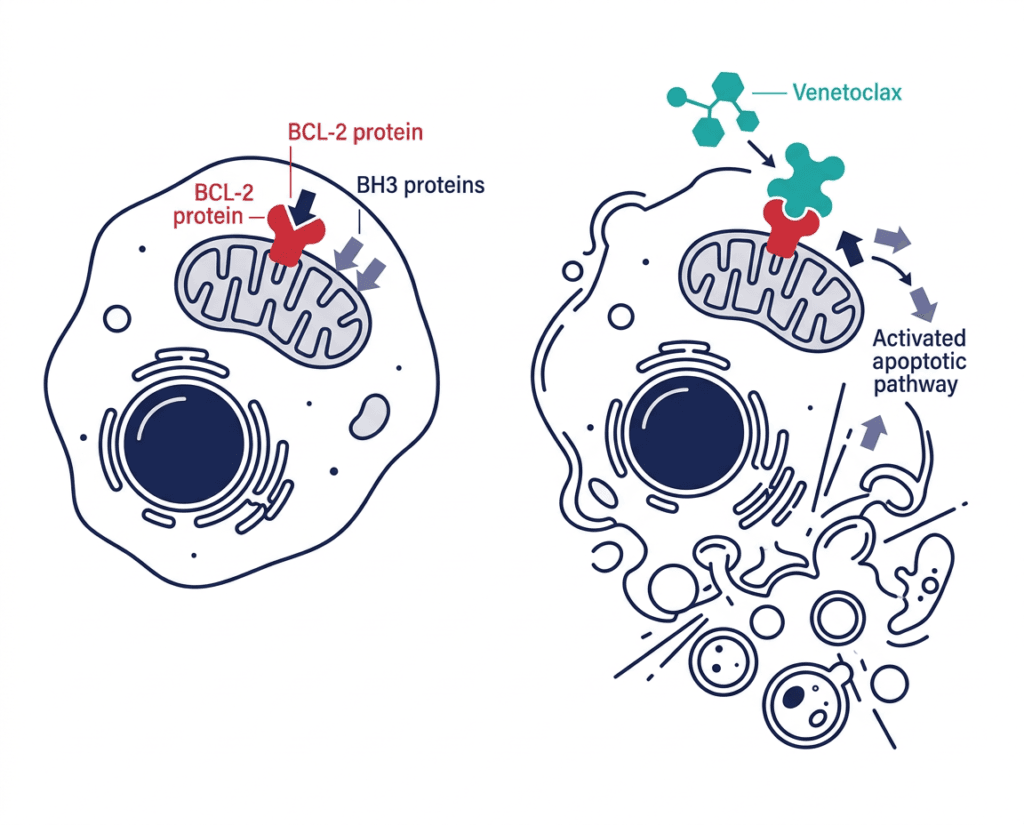
    Venetoclax (Venclexta) is an oral BCL-2 inhibitor that works through a completely distinct mechanism: it blocks the BCL-2 protein, which cancer cells overexpress to prevent their own programmed death (apoptosis). By blocking BCL-2, venetoclax restores the apoptotic pathway, causing AML cells to die. The synergy between HMA and BCL-2 inhibition is well-established: HMA therapy primes AML cells toward apoptosis, and venetoclax completes the process.

    Venetoclax has been oral since its approval. The barrier to an all-oral HMA/BCL-2 regimen was always the parenteral HMA component. Inqovi resolves that barrier.

    Why “all-oral” matters clinically beyond convenience The shift from intravenous azacitidine to oral Inqovi is not merely a quality-of-life upgrade, though quality of life matters significantly in older patients with AML. It has tangible clinical implications. Parenteral HMA regimens require 7 treatment days per cycle for azacitidine, meaning patients must arrange transportation to a clinic or home health services 7 times per month, often indefinitely. For a patient who lives alone, relies on others for transportation, or has mobility limitations from heart failure, pulmonary disease, or peripheral neuropathy, these logistical demands create real discontinuation risk. Studies in AML and MDS have documented that patients on parenteral HMA regimens miss doses or discontinue treatment earlier than protocol intent due to the burden of frequent clinic visits. An oral regimen administered at home on days 1 to 5 of a 28-day cycle eliminates these specific barriers entirely.

    AML in Patients Ineligible for Intensive Chemotherapy: Who Is This Population?

    The FDA-approved indication covers adults aged 75 or older, or adults with comorbidities that preclude intensive induction chemotherapy. This population has specific characteristics that make treatment selection different from younger, fit patients.

    Intensive induction chemotherapy for AML, typically the “7+3” regimen of cytarabine and anthracycline, is effective but produces profound myelosuppression (bone marrow suppression) and requires weeks of inpatient hospitalization. Early mortality rates with intensive therapy approach 10 to 15% in older patients, largely from infections and organ toxicity during the aplastic period. For a patient aged 75 with renal insufficiency, uncontrolled heart failure, or severe pulmonary disease, the risk of dying from the treatment may exceed the benefit.

    The ASCERTAIN-V trial population reflects this clinical reality: median age was 78 years, 51.5% had ECOG performance status of 1, and 16.8% had TP53 mutations (associated with particularly poor prognosis). The distribution across European LeukemiaNet (ELN) risk categories was: favorable 31.7%, intermediate 33.7%, adverse 29.7%, reflecting a realistic mix of disease risk rather than a cherry-picked low-risk population.


    The ASCERTAIN-V Trial: Full Results

    Design

    ASCERTAIN-V (NCT04657081) is an international, multicenter, open-label, single-arm, Phase 2 study. The Phase 2b portion enrolled 101 adults with newly diagnosed AML per WHO 2016 criteria, ECOG performance status 0 to 3, ineligible for intensive induction chemotherapy, with a life expectancy of at least 3 months.

    Dosing schedule per 28-day cycle:

    • Cycle 1 (venetoclax ramp-up): venetoclax 100 mg day 1, 200 mg day 2, 400 mg day 3 through day 28; Inqovi days 1 to 5
    • Cycle 2 onward: Inqovi days 1 to 5; venetoclax 400 mg daily

    Median follow-up at time of analysis: 11.2 months.

    Efficacy results

    OutcomeResult
    Complete remission (CR) rate46.5% (95% CI 36.5 to 56.7%)
    CR plus CRi (incomplete hematologic recovery) rate63.4% (95% CI 53.2 to 72.7%)
    CR plus CRh (partial hematologic recovery) rate51.5% (95% CI 41.3 to 61.6%)
    Median time to CR2.4 months
    Patients in CR at 6 months80.0%
    Patients in CR at 12 months75.3%
    Median duration of CRNot reached at time of analysis
    Median overall survival15.5 months (95% CI 7.6 to not estimable)

    Source: ASCERTAIN-V Phase 2b results. Presented at ASCO 2025 Annual Meeting and EHA Congress 2025. Taiho Oncology press release, May 13, 2026. NCT04657081.

    Contextualization against the standard of care

    The obvious benchmark is the VIALE-A trial, which established azacitidine plus venetoclax as the standard for unfit AML. VIALE-A produced a CR rate of 24.2% and a median OS of 14.7 months in the venetoclax arm. The ASCERTAIN-V CR rate of 46.5% and median OS of 15.5 months are directionally favorable, though cross-trial comparison must be interpreted with caution given differences in patient selection, trial design, and follow-up periods.

    Why cross-trial comparisons must be interpreted cautiously ASCERTAIN-V and VIALE-A enrolled patients using different criteria, at different time periods, in different geographic mixes of sites. ASCERTAIN-V’s single-arm design without a comparator arm means there is no concurrent control to account for evolving supportive care standards, referral patterns, or patient selection over time. The CR rates may also reflect different definitions or measurement timing. The appropriate conclusion from ASCERTAIN-V is that the all-oral combination achieves remission and survival outcomes consistent with published HMA/venetoclax benchmarks in this population, not that it is proven superior to azacitidine/venetoclax. A randomized confirmatory trial comparing the two approaches directly would be needed to establish superiority.

    Safety results

    Safety results from ASCERTAIN-V were consistent with the known profiles of both drugs in this class and in this patient population. These are not mild side effects: AML patients treated with HMA/BCL-2 inhibitor combinations experience significant myelosuppression, and the grade 3 or higher adverse event rate reflects this.

    Safety outcomeRate
    Grade 3 or higher adverse events (any)98.0% of patients
    Febrile neutropeniaMost common grade 3 or higher event
    Anemia (grade 3 or higher)Frequent
    Neutropenia (grade 3 or higher)Frequent
    Dose interruptions68.3%
    Discontinuations due to adverse events8.9%
    Fatal adverse events15.8% (3 attributed to adverse events, 10 to disease progression per 30/60-day mortality assessment)
    New drug-drug interactions (venetoclax/decitabine)None identified

    The 98% grade 3 or higher adverse event rate is alarming on first read but is consistent with what hematologists and patients should expect in AML treatment. Myelosuppression is inherent to HMA therapy in a disease characterized by dysfunctional bone marrow. The absence of new drug-drug interaction signals between oral decitabine and venetoclax (which was a theoretical concern given cedazuridine’s CDA inhibition affecting venetoclax metabolism) is an important safety finding.

    Venetoclax requires co-administration with a CYP3A4 inhibitor prophylaxis protocol during ramp-up. Patients on antifungal prophylaxis (such as posaconazole or fluconazole) need venetoclax dose reductions during ramp-up because these agents inhibit CYP3A4 and increase venetoclax exposure. Prescribers managing this combination must follow the venetoclax drug interaction tables carefully.


    Safety Warnings: What the Label Covers

    The Inqovi prescribing information includes important safety warnings that apply to the AML indication:

    Myelosuppression: Inqovi can cause severe myelosuppression in patients with AML, including fatal adverse reactions. Complete blood count monitoring before each treatment cycle and as clinically indicated is required.

    Differentiation syndrome: HMA agents and venetoclax can cause differentiation syndrome in AML, a potentially life-threatening inflammatory reaction caused by rapid differentiation of leukemic cells. Symptoms include fever, dyspnea, hypoxemia, rapid weight gain, and pleural or pericardial effusion. This is a medical emergency requiring corticosteroids and sometimes treatment interruption.

    Embryo-fetal toxicity: Inqovi can cause fetal harm. Females of reproductive potential should use effective contraception during treatment and for at least 6 months after the final dose. Males with female partners of reproductive potential should use effective contraception during treatment and for at least 3 months after the final dose. Breastfeeding should not occur during treatment and for at least 2 weeks after the final dose.

    Interactions with venetoclax: Strong or moderate CYP3A4 inhibitors increase venetoclax exposure and require dose adjustments. Avoid strong CYP3A4 inducers. The full venetoclax prescribing information and dose modification tables for drug interactions apply throughout the regimen.


    Dosing: The All-Oral Treatment Schedule

    The ASCERTAIN-V-based treatment schedule is:

    Cycle 1 (venetoclax ramp-up cycle):

    • Venetoclax: 100 mg on day 1, 200 mg on day 2, 400 mg on days 3 through 28
    • Inqovi (35 mg decitabine / 100 mg cedazuridine): one tablet orally once daily on days 1 to 5
    • Antifungal prophylaxis should accompany the venetoclax ramp-up per institutional protocol and the venetoclax prescribing information

    Cycles 2 and beyond (28-day cycles):

    • Inqovi: one tablet orally once daily on days 1 to 5
    • Venetoclax: 400 mg orally once daily on days 1 to 28 (or per dose modification per prescribing information)

    Inqovi tablets should be taken at approximately the same time each day. They can be taken with or without food. The tablet should be swallowed whole; do not cut, crush, or chew. If a dose is missed, it should be taken as soon as possible on the same day. If the day has passed, the missed dose should be skipped and the next dose taken at the regular scheduled time.


    Where This Approval Fits: Inqovi’s Full Indication Picture

    With this approval, Inqovi now carries three FDA-approved indications across blood cancers:

    IndicationDatePartner drug
    Myelodysplastic syndromes (MDS), including CMMLJuly 2020None (monotherapy)
    Newly diagnosed AML, intensive chemotherapy-ineligibleMay 13, 2026Venetoclax (Venclexta)

    The progression from MDS/CMML monotherapy to AML combination therapy reflects the well-established clinical overlap between these diseases. Many patients with high-risk MDS progress to AML, and the HMA mechanism is active across the disease spectrum. The ability to use the same oral drug platform in both MDS and AML simplifies the treatment transition for patients who progress from one to the other.


    For Patients and Caregivers

    Who qualifies?

    Adults newly diagnosed with AML who are either 75 years or older, or who have comorbidities (organ dysfunction, severe frailty, concurrent illness) that make intensive induction chemotherapy unsafe. This is not a designation based solely on age: younger patients with significant comorbidities may also qualify.

    What does all-oral treatment mean practically?

    The five-day Inqovi dosing window (days 1 to 5 of each cycle) combined with daily venetoclax means treatment is taken at home throughout each 28-day cycle. There is no scheduled infusion clinic requirement for the regimen itself. Blood count monitoring, toxicity assessment, and clinical follow-up still require clinic visits, but not for drug administration.

    This is a genuinely meaningful practical change for patients who live alone, lack reliable transportation, or have mobility limitations. The drug is given at home, and patients control their own administration schedule within the 5-day window.

    Questions to discuss with your hematologist

    • Do my specific AML genetics (cytogenetics, molecular markers) suggest I am likely to respond to an HMA/BCL-2 approach?
    • Should I be tested for TP53, FLT3, IDH1/2, or other mutations that might inform therapy selection?
    • How will venetoclax drug interactions with my current medications be managed, particularly if I am on antifungal prophylaxis?
    • What blood count monitoring schedule is appropriate for my regimen?
    • What are the early signs of differentiation syndrome and when should I call the oncology team?

    For patients and families navigating a new AML diagnosis, the Leukemia and Lymphoma Society provides patient-facing disease information, clinical trial databases, and financial assistance resources. AAMDSIF (Aplastic Anemia and MDS International Foundation) covers the full MDS and AML spectrum with educational materials specific to these diseases. The NCI AML information page provides current treatment guidance in patient-accessible language.

    For related coverage on venetoclax and its expanding role in blood cancers, including the first all-oral AML regimen and the Immgolis biosimilar approvals relevant to RA and UC, see our venetoclax coverage on Health Evidence Digest.


    Sources

    FDA approval announcement: FDA approves oral combination of decitabine and cedazuridine tablets with venetoclax for newly diagnosed acute myeloid leukemia. FDA.gov. May 13, 2026.

    Taiho Oncology press release: U.S. FDA Approves INQOVI in Combination with Venetoclax, the First All-Oral Combination Treatment for Patients with Acute Myeloid Leukemia Who Are Ineligible for Intensive Induction Chemotherapy. businesswire.com. May 13, 2026.

    Cancer Therapy Advisor approval coverage: All-Oral Inqovi Regimen Approved for Newly Diagnosed AML. cancertherapyadvisor.com. May 2026.

    AJMC approval coverage: FDA Approves First All-Oral Regimen for AML. ajmc.com. May 2026.

    Targeted Oncology approval coverage: FDA Approves Decitabine/Cedazuridine Plus Venetoclax in Unfit AML. targetedonc.com. May 2026.

    OncLive approval coverage: FDA Approves Decitabine/Cedazuridine Plus Venetoclax in Newly Diagnosed AML. onclive.com. May 2026.

    CancerNetwork ASCO 2025 results: Oral Venetoclax Combo Elicits Responses, Survival in Newly Diagnosed AML. cancernetwork.com. 2025.

    AJMC ASCO 2025 summary: All-Oral AML Therapy: Decitabine-Cedazuridine Plus Venetoclax. ajmc.com. July 2025.

    ASCERTAIN-V trial registration: NCT04657081. ClinicalTrials.gov.

    Inqovi original MDS/CMML FDA approval: FDA approves decitabine and cedazuridine for treatment of adults with myelodysplastic syndromes. FDA.gov. July 2020.

    Venetoclax AML FDA approval: FDA approves venetoclax in combination for treatment of adults with newly diagnosed acute myeloid leukemia. FDA.gov.

    Decitabine mechanism: Decitabine. StatPearls. NCBI.

    DNA methylation and HMA therapy: DNA Hypomethylating Agents in Myeloid Malignancies. PMC4207474.

    Cedazuridine mechanism: Cedazuridine pharmacology. PMC7965890.

    BCL-2 and venetoclax: BCL-2 Inhibitors in Hematologic Malignancies. PMC8626879.

    AML overview: Acute Myeloid Leukemia. American Cancer Society.

    ASCO 2025 Annual Meeting: ASCO 2025 Annual Meeting. asco.org.

    EHA Congress 2025: EHA Congress 2025. ehaweb.org.

    Patient resources: Leukemia and Lymphoma Society | AAMDSIF | NCI AML Treatment (PDQ) | ClinicalTrials.gov: AML

    Disclaimer: Health Evidence Digest provides general information about FDA approvals and health research for educational purposes. This content is not a substitute for professional medical advice, diagnosis, or treatment. Treatment decisions for acute myeloid leukemia, including eligibility for intensive versus less intensive regimens, should be made in close consultation with a board-certified hematologist or hematologic oncologist familiar with the patient’s full disease characteristics, performance status, and comorbidity profile.
  • Fasenra Just Got a Third Approved Indication. Here Is What Hypereosinophilic Syndrome Is and What the NATRON Trial Data Actually Shows.

    Fasenra Just Got a Third Approved Indication. Here Is What Hypereosinophilic Syndrome Is and What the NATRON Trial Data Actually Shows.

    📌 The essentials On May 13, 2026, the FDA approved Fasenra (benralizumab, AstraZeneca) for the treatment of adults and pediatric patients aged 12 years and older with hypereosinophilic syndrome (HES) without an identifiable non-hematologic secondary cause. This is Fasenra’s third FDA-approved indication, joining severe eosinophilic asthma (approved 2017) and eosinophilic granulomatosis with polyangiitis (EGPA, approved 2022). On May 21, 2026, the European Medicines Agency’s CHMP issued a positive opinion recommending EU approval of Fasenra for HES (as part of a label update also covering severe asthma and EGPA). The clinical basis: Phase 3 NATRON trial (NCT04191304), published in Nature Medicine on March 31, 2026, enrolling 133 patients with HES (67 benralizumab, 66 placebo), 24 weeks, randomized double-blind placebo-controlled. Primary endpoint: 65% reduction in risk of first HES flare (HR 0.35; 95% CI 0.18 to 0.69; p=0.0024). All secondary endpoints met, including 66% reduction in annualized flare rate (0.41 versus 1.23 flares/year), 92% reduction in risk of hematologic relapse (HR 0.08; p less than 0.0001), and significant improvement in patient-reported fatigue by week 4. Dosing: 30 mg subcutaneous injection once every 4 weeks (different from the loading dose schedule used in asthma). Fasenra is the second anti-eosinophil biologic approved for HES, after mepolizumab (Nucala, approved 2020).

    Hypereosinophilic syndrome (HES) is a condition most people have never heard of. Most primary care providers encounter it rarely if at all. And for the approximately 30,000 to 200,000 Americans estimated to be living with it, that relative unfamiliarity often means years of unexplained symptoms, difficult diagnoses, and limited treatment options.

    On May 13, 2026, the FDA approved Fasenra (benralizumab) for HES, making it the second targeted biologic approved for this rare condition and the first approved for patients as young as 12. The pivotal trial behind the approval, NATRON, was published in Nature Medicine and met all of its endpoints, including a clinically meaningful reduction in flares, a striking near-elimination of hematologic relapse risk, and the first statistically significant improvement in fatigue ever demonstrated in a Phase 3 HES trial.

    This post covers what HES is and why it is hard to diagnose and treat, how benralizumab works, what every NATRON endpoint showed, and what this approval means for patients and clinicians navigating this condition.


    What Hypereosinophilic Syndrome Is

    Eosinophils are a type of white blood cell that normally account for less than 5% of circulating leukocytes. They are part of the immune system’s response to parasitic infections and play a role in allergic inflammation. In healthy adults, the normal eosinophil count is below 500 cells per microliter of blood.

    HES is defined by three criteria: a blood eosinophil count of 1,500 cells per microliter or higher, persisting for more than one month; evidence of eosinophil-mediated organ or tissue damage; and exclusion of identifiable secondary causes for the eosinophilia.

    When eosinophils are persistently elevated and activated, they infiltrate tissues throughout the body and release toxic granule proteins that damage the organs they contact. The damage is cumulative and organ-agnostic: any tissue can be affected. The most common sites of involvement include the lungs, skin, gastrointestinal tract, and heart. Eosinophilic heart disease, including Loeffler endocarditis, is one of the most serious and potentially fatal complications, with thrombus formation, valvular damage, and restrictive cardiomyopathy all documented.

    HES is not one disease: the subtypes matter clinically HES is a heterogeneous group of disorders, not a single entity. The classification includes: myeloproliferative HES, driven by a clonal eosinophil proliferation (the FIP1L1::PDGFRA fusion gene is the most common driver); lymphocytic variant HES, where an abnormal T-cell clone produces excess IL-5; idiopathic HES, where no underlying driver is identified; familial HES; and HES associated with other conditions. The NATRON trial specifically excluded patients with FIP1L1::PDGFRA-positive myeloproliferative HES, because those patients typically respond to imatinib (a tyrosine kinase inhibitor) and represent a distinct pathophysiology. The trial also required patients to be corticosteroid-responsive. The approved indication similarly excludes patients with an identifiable non-hematologic secondary cause. Clinicians should confirm these criteria before prescribing.

    HES is rare, with an estimated U.S. prevalence of 0.3 to 6.3 cases per 100,000 persons, but the true prevalence is likely underestimated due to diagnostic challenges. The condition can present with a wide and non-specific symptom spectrum: weight loss, fever, cough, chest pain, abdominal pain, skin rash, and neurological symptoms are all documented. Many patients spend years cycling through specialist consultations before a diagnosis is established. In the NATRON trial population, the mean time from first HES symptom appearance to enrollment was more than 8 years.


    The Disease Burden That NATRON Was Designed to Measure

    The NATRON trial population reflects what HES looks like in clinical practice. Of the 133 enrolled patients (median age 51, range 14 to 87 years, 61.7% female):

    • Most commonly involved organs were the lungs (35.6%), skin (25.3%), and gastrointestinal tract (21.8%)
    • 39.1% had experienced 2 HES flares in the prior 12 months; 36.8% had experienced 3 or more
    • Mean time since first HES symptoms was more than 8 years; mean time since diagnosis was nearly 5 years
    • Mean baseline PROMIS Fatigue T-score was 55.1, a score indicating clinically significant fatigue burden (population mean is 50; higher scores indicate worse fatigue)
    • Mean blood eosinophil count at baseline was 1,960 cells per microliter

    The flare definition used in NATRON is clinically meaningful: a flare required evidence of new or worsening HES clinical manifestations or laboratory abnormalities that resulted in hospitalization, or an increase in oral corticosteroid dose of at least 10 mg per day for at least 2 days, or the addition of new cytotoxic or immunosuppressive therapy. These are genuine clinical events with real consequences, not surrogate biomarker changes.


    How Benralizumab Works in HES

    Benralizumab is a humanized, afucosylated monoclonal antibody targeting the alpha subunit of the interleukin-5 receptor (IL-5Rα). IL-5 is the primary cytokine driving eosinophil production, maturation, survival, and activation. By binding IL-5Rα directly on eosinophils and their precursors (rather than binding the IL-5 ligand itself, as mepolizumab does), benralizumab triggers antibody-dependent cell-mediated cytotoxicity (ADCC) through natural killer cells, producing rapid and near-complete depletion of blood and tissue eosinophils within days of the first injection.

    The afucosylation engineering is the key pharmacological innovation that distinguishes benralizumab from mepolizumab within the anti-IL-5 class. By removing a fucose sugar from the antibody’s Fc region, the modified antibody binds Fc-gamma receptor IIIa on NK cells with much higher affinity, dramatically enhancing the ADCC-driven cell killing. This mechanism produces a more rapid and more complete eosinophil depletion than IL-5 ligand blocking alone.

    In HES, the downstream consequence of this eosinophil depletion is reduced tissue infiltration, less release of eosinophil granule proteins that damage organs, and a lower risk of the inflammatory flares that drive clinical worsening and organ damage. The NATRON data confirms that this biological effect translates to clinically meaningful outcomes.


    The NATRON Trial: All the Numbers

    Design

    NATRON (NCT04191304) was a Phase 3, multicenter, randomized, double-blind, placebo-controlled study. Eligible patients were aged 12 years and older, FIP1L1::PDGFRA-negative, with HES flare signs or symptoms at screening or at least 2 flares in the prior year, and confirmed corticosteroid-responsive disease. Patients were randomized 1:1 to benralizumab 30 mg or placebo subcutaneously every 4 weeks, on top of stable background HES therapy, for a 24-week double-blind treatment period.

    Primary endpoint

    OutcomeBenralizumab (n=67)Placebo (n=66)
    Patients with first HES flare19.4%42.4%
    Risk of first flare (HR)0.35 (95% CI 0.18 to 0.69)Reference
    p-value0.0024
    Flare risk reduction65%

    The primary endpoint was met with a hazard ratio of 0.35, meaning patients on benralizumab had only 35% of the flare risk of placebo-treated patients. The Kaplan-Meier curves separated early and continued to diverge, with benralizumab-treated patients maintaining lower flare risk throughout the 24-week observation period.

    Key secondary endpoints (all statistically significant)

    OutcomeBenralizumabPlaceboEffect size and significance
    Proportion with HES flares22.4%45.5%OR 0.31 (95% CI 0.14 to 0.69); p=0.0033
    Annualized flare rate0.41 flares/year1.23 flares/yearRR 0.34 (95% CI 0.18 to 0.63); p=0.0008
    Risk of hematologic relapseHR 0.08 (95% CI 0.03 to 0.20)Referencep less than 0.0001; 92% risk reduction
    PROMIS Fatigue improvement at Week 24LS mean difference vs placebo: −4.72Reference95% CI −7.64 to −1.80; p=0.0017
    Fatigue improvement onsetBy Week 4Sustained to Week 24

    Source: Ogbogu PU, Roufosse F, Akuthota P, et al. Benralizumab versus placebo for hypereosinophilic syndrome: a randomized, placebo-controlled phase 3 trial. Nat Med. Published online March 31, 2026. doi:10.1038/s41591-026-04315-8. NATRON NCT04191304.

    The hematologic relapse endpoint, defined as blood eosinophil count rising above 1,000 cells per microliter after confirmed depletion, showed a 92% risk reduction with benralizumab. This near-elimination of hematologic relapse reflects the drug’s mechanism: near-complete eosinophil depletion from the first dose, sustained throughout the dosing period.

    The fatigue endpoint is clinically important and worth highlighting. HES-related fatigue is one of the most commonly reported and most disabling symptoms in the condition. The NATRON PROMIS Fatigue results are the first statistically significant improvement in patient-reported fatigue from a Phase 3 HES trial. The fact that the improvement was detectable by week 4, after just the first monthly injection, and sustained to week 24, is a meaningful signal that the biological effect is rapid and durable.

    What PROMIS Fatigue measures and why a difference of 4.72 points is clinically meaningful The PROMIS (Patient-Reported Outcomes Measurement Information System) Fatigue Short Form 7a is a validated, standardized questionnaire assessing fatigue severity and impact over the previous 7 days. Scores are T-scored to a general population mean of 50, with higher scores indicating worse fatigue. The NATRON population had a mean baseline score of 55.1, indicating a clinically significant fatigue burden above population norms. A difference of 4.72 points is consistent with published minimally important difference thresholds for PROMIS Fatigue in chronic disease populations, generally estimated at 4 to 6 points. The improvement therefore exceeds the threshold for clinical meaningfulness, not just statistical significance.

    Safety

    The safety profile of benralizumab in NATRON was consistent with its well-established profile from seven years of use in severe asthma. Crucially, the overall adverse event rate was similar between groups: 64.2% in the benralizumab arm versus 66.7% with placebo, and serious adverse events occurred at virtually identical rates (7.5% versus 7.6%). This parity in overall adverse event burden, combined with a substantially better efficacy profile, is what the FDA reviewed in establishing a favorable benefit-risk balance.

    The most common adverse reactions in the HES population (occurring in 5% or more of benralizumab-treated patients and more frequently than placebo) were headache, hypersensitivity reactions (including urticaria, papular urticaria, and rash), and influenza-like illness. The adolescent patients (aged 12 to 17) in the trial had safety and tolerability results consistent with adults.


    Where Benralizumab Fits in HES Treatment

    Before discussing how benralizumab fits into HES management, it is worth acknowledging that the treatment landscape for HES remains relatively underdeveloped compared to more common eosinophilic conditions.

    The standard treatment for HES has historically been high-dose oral corticosteroids, which effectively suppress eosinophils and reduce symptoms but carry well-known long-term toxicity including osteoporosis, weight gain, diabetes, infections, and adrenal suppression. Patients on chronic steroids for HES accumulate organ damage from both the disease and the treatment.

    Imatinib (Gleevec) is the first-line agent for FIP1L1::PDGFRA-positive myeloproliferative HES, which is excluded from both the Fasenra and Nucala approvals.

    Mepolizumab (Nucala, GSK) was approved for HES in adults in 2020, as the first targeted anti-IL-5 agent for this indication, based on the Phase 3 EXPLORER trial showing a 50% reduction in the risk of HES worsening.

    Benralizumab now adds a second biologic option, with a 65% flare risk reduction and the additional advantages of near-complete eosinophil depletion (versus partial reduction with mepolizumab), once-monthly dosing throughout treatment (versus monthly loading then quarterly dosing with mepolizumab after the first three doses), and a pediatric indication down to age 12 (mepolizumab is approved for adults only in HES).

    Benralizumab vs. mepolizumab in HES: what the data comparison suggests No head-to-head trial comparing benralizumab and mepolizumab in HES has been conducted, and cross-trial comparisons are methodologically unreliable. The EXPLORER trial (mepolizumab) enrolled 108 patients and showed 50% reduction in HES worsening; NATRON enrolled 133 patients and showed 65% reduction in flare risk. The patient populations, flare definitions, and time periods differed in ways that make numerical comparison inappropriate. What is appropriate to note is that both drugs reduce eosinophils via the IL-5 pathway and both have demonstrated meaningful clinical benefit in HES. The mechanistic distinction (receptor blockade with direct eosinophil depletion versus ligand blockade with partial reduction) may matter more in individual patients with high eosinophil burden or disease that is incompletely controlled on mepolizumab. The choice between them will ultimately depend on prescriber experience, patient-specific factors, and in some cases prior response to one agent.

    Dosing: An Important Difference From the Asthma and EGPA Schedule

    Clinicians already prescribing Fasenra for severe asthma or EGPA should note that the dosing schedule for HES is different.

    For severe asthma: 30 mg every 4 weeks for the first 3 doses, then 30 mg every 8 weeks thereafter.

    For EGPA and HES: 30 mg once every 4 weeks throughout treatment. No switch to an every-8-week schedule.

    This distinction matters for prescription writing, patient counseling, and specialty pharmacy dispensing. Patients should receive a clear explanation that their dosing schedule differs from what they may have read about Fasenra in the asthma context.

    Administration: subcutaneous injection into the upper arm, thigh, or abdomen. Can be administered by a healthcare provider or by self-injection after proper training.


    What Patients and Caregivers Should Know

    Who is this approval for?

    Adults and pediatric patients aged 12 years and older with HES that does not have an identifiable non-hematologic secondary cause, and specifically FIP1L1::PDGFRA-negative disease. If you have been diagnosed with HES and are currently managing the condition with oral corticosteroids or other systemic therapies with inadequate control or significant side effects, Fasenra is now an FDA-authorized option to discuss with your hematologist or allergist-immunologist.

    When to involve a specialist

    HES is a rare condition that requires specialist expertise for accurate diagnosis and management. Hematologists, allergist-immunologists, and in some cases rheumatologists or pulmonologists depending on organ involvement are the specialists most experienced with HES diagnosis and treatment. Because the condition is rare, specialized centers with multi-disciplinary eosinophilia programs (several are affiliated with academic medical centers in the United States) often have the most experience with the full diagnostic workup, including genetic testing for FIP1L1::PDGFRA and lymphocytic variant HES markers.

    Patient support

    The American Partnership for Eosinophilic Disorders (APFED) is the primary patient advocacy organization for eosinophilic conditions in the United States and maintains updated resources on HES including a specialist referral network. The Hypereosinophilic Syndrome Research Program at NIH through the National Institute of Allergy and Infectious Diseases has been a leading center for HES research and may have open clinical trials. The National Organization for Rare Disorders (NORD) maintains a current clinical overview of HES.

    For related HED coverage on other biologic approvals in eosinophilic conditions, see our post on Trimbow, the first single-inhaler triple therapy for uncontrolled asthma, and our post on Fasenra’s companion indication in EGPA and the broader role of anti-IL-5 biologics in eosinophilic inflammation.


    Sources

    FDA approval announcement: FDA approves benralizumab (Fasenra) for hypereosinophilic syndrome. FDA.gov. May 13, 2026.

    AstraZeneca US press release: FASENRA approved in US for hypereosinophilic syndrome. astrazeneca-us.com. May 14, 2026.

    NATRON primary publication (Nature Medicine): Ogbogu PU, Roufosse F, Akuthota P, et al. Benralizumab versus placebo for hypereosinophilic syndrome: a randomized, placebo-controlled phase 3 trial. Nat Med. Published online March 31, 2026. doi:10.1038/s41591-026-04315-8.

    NATRON ACAAI 2025 abstract (Annals of Allergy): Benralizumab for patients with hypereosinophilic syndrome: A randomized, double-blind, placebo-controlled phase 3 trial (NATRON). Ann Allergy Asthma Immunol. November 2025.

    NATRON full results (AstraZeneca press release, November 2025): Statistically significant NATRON Phase III trial results for hypereosinophilic syndrome show Fasenra delayed time to first flare. astrazeneca.com.

    NATRON trial registration: NCT04191304. ClinicalTrials.gov.

    EMA CHMP positive opinion (May 21, 2026): Fasenra. EMA. ema.europa.eu.

    PharmExec FDA approval coverage: FDA Approves Fasenra for Hypereosinophilic Syndrome. pharmexec.com. May 2026.

    Pulmonology Advisor NATRON coverage: Add-On Benralizumab Effective in Hypereosinophilic Syndrome. pulmonologyadvisor.com.

    NATRON design paper (Blood/ASH 2023): The Phase 3 NATRON Study Evaluating Benralizumab in Patients with Hypereosinophilic Syndrome: Study Design and Patient Characteristics. Blood. 2023.

    HES GARD overview: Hypereosinophilic Syndrome. rarediseases.info.nih.gov.

    HES StatPearls: Hypereosinophilic Syndrome. StatPearls. NCBI.

    Eosinophil biology: Eosinophils. StatPearls. NCBI.

    Benralizumab mechanism (afucosylation and ADCC): Anti-IL-5 and IL-5Rα biologics: mechanisms and clinical evidence. PMC7186825.

    Eosinophilic heart disease: Cardiac Manifestations in Hypereosinophilic Syndrome. PMC5454610.

    Mepolizumab HES FDA approval: FDA approves mepolizumab for treatment of hypereosinophilic syndrome. FDA.gov.

    PROMIS Fatigue instrument: PROMIS Adult Measures: Fatigue. healthmeasures.net.

    Corticosteroids overview: Corticosteroids. StatPearls. NCBI.

    Fasenra prescribing information: FASENRA (benralizumab) Prescribing Information. AstraZeneca. 2026.

    Patient resources: American Partnership for Eosinophilic Disorders (APFED) | NIH HES Research Program (NIAID) | NORD: Hypereosinophilic Syndrome | ClinicalTrials.gov: HES

    Disclaimer: Health Evidence Digest provides general information about FDA approvals and health research for educational purposes. This content is not a substitute for professional medical advice, diagnosis, or treatment. Hypereosinophilic syndrome requires accurate diagnosis and specialist management. Treatment decisions should be made in consultation with a qualified allergist-immunologist or hematologist experienced in eosinophilic conditions.
  • A Blood Test After Bladder Cancer Surgery Can Now Guide Whether You Need Immunotherapy. The FDA Just Approved the First-Ever ctDNA-Guided Cancer Treatment.

    A Blood Test After Bladder Cancer Surgery Can Now Guide Whether You Need Immunotherapy. The FDA Just Approved the First-Ever ctDNA-Guided Cancer Treatment.

    The essentials: Drug approved: Tecentriq® (atezolizumab) and Tecentriq Hybreza® (atezolizumab and hyaluronidase-tqjs), Genentech/Roche. FDA approval date: May 15, 2026. This is Tecentriq’s eleventh FDA-approved indication. Indication: Adjuvant treatment for adults with muscle-invasive bladder cancer (MIBC) after cystectomy who have circulating tumor DNA molecular residual disease (ctDNA MRD), as determined by an FDA-authorized test. What makes it first-in-class: First ctDNA-guided therapy approval in oncology anywhere in the world. Treatment is triggered by what a serial blood test finds in the weeks after surgery, not by tumor staging alone. Companion diagnostic approved simultaneously: Signatera™ CDx (Natera, Inc.), the personalized ctDNA assay that identifies which patients have molecular residual disease and qualify for adjuvant treatment. Key trial results (IMvigor011, n=250 ctDNA-positive patients): DFS hazard ratio 0.64 (36% reduction in risk of recurrence or death, p less than 0.0001). OS hazard ratio 0.59 (41% reduction in risk of death). ctDNA-negative patients: Those who remained MRD-negative during serial monitoring had 2-year DFS of 88.4% and 2-year OS of 97.1% without receiving any adjuvant treatment. Dosing: Atezolizumab 840 mg IV every 2 weeks, 1200 mg every 3 weeks, or 1680 mg every 4 weeks for up to 1 year, or until recurrence or unacceptable toxicity. Subcutaneous option (Tecentriq Hybreza, 1875 mg every 3 weeks) also approved.

    Nearly half of all patients with muscle-invasive bladder cancer who undergo surgical removal of the bladder will see their cancer return. This is one of the most difficult realities in urological oncology: the patient did everything right, underwent a major operation with significant impact on quality of life, and cancer came back anyway. Often within two years. Often aggressively.

    Oncologists have tried for decades to prevent this with adjuvant therapy: chemotherapy or immunotherapy given after surgery to eliminate any cancer cells that surgery may have missed. But a fundamental problem made this approach uncertain. Without a way to know which patients still had cancer cells circulating after surgery, clinicians had to treat everyone at high pathological risk and accept that a large proportion were receiving toxic treatment they did not need, while others with lower-risk staging but hidden disease received nothing.

    On May 15, 2026, the FDA approved a fundamentally different approach. Using a serial blood test to detect circulating tumor DNA in the weeks after cystectomy, clinicians can now identify exactly which patients still carry molecular evidence of residual cancer. Those who test positive receive adjuvant immunotherapy. Those who remain negative skip it, with data showing they have excellent outcomes without it.

    The FDA approval of Tecentriq (atezolizumab) for ctDNA MRD-guided adjuvant treatment of muscle-invasive bladder cancer is the first approval of a ctDNA-guided therapy in oncology history. The companion diagnostic, Natera’s Signatera CDx, was approved the same day. Together they represent what the field has called a new paradigm: treating cancer not based on where it was, but on whether residual evidence of it remains.

    Muscle-Invasive Bladder Cancer: Why Adjuvant Therapy Has Been Such a Hard Problem

    Bladder cancer is the sixth most common cancer in the United States, with approximately 82,000 new diagnoses annually. The majority are non-muscle-invasive at diagnosis and have a relatively good prognosis with local treatment. Muscle-invasive bladder cancer (MIBC), which has penetrated the muscular wall of the bladder, is diagnosed in roughly 25% of cases and carries a substantially worse prognosis.

    Standard treatment for MIBC is radical cystectomy, the surgical removal of the bladder, with or without prior neoadjuvant cisplatin-based chemotherapy. Even with optimal surgical care, nearly half of patients experience disease recurrence within two years, predominantly as distant metastases. At the time progression is detected radiographically, some patients are already too ill to receive further systemic therapy. Earlier intervention, before relapse becomes clinically visible, is the clinical goal.

    Why the prior approach to adjuvant therapy failed in unselected patients The IMvigor010 trial, which directly preceded IMvigor011, tells the story of why patient selection matters. IMvigor010 evaluated adjuvant atezolizumab versus observation in unselected patients with high-risk MIBC after cystectomy. It found no statistically significant improvement in disease-free survival or overall survival with atezolizumab in the overall population. The question that emerged from the failed IMvigor010 result was not whether atezolizumab could work in bladder cancer, but whether the right patients were being selected. A retrospective analysis of the IMvigor010 data identified that approximately 40% of the enrolled patients were ctDNA-positive after surgery. In that ctDNA-positive subgroup, atezolizumab showed a meaningful survival benefit. In ctDNA-negative patients, there was no benefit, because there was no residual cancer for the immune system to target. IMvigor011 was designed prospectively around this insight. Rather than treating all high-risk patients and hoping some would benefit, the study used serial ctDNA testing to identify and enrich the treatment population for the patients most likely to have residual microscopic disease. The result was a positive Phase 3 trial where IMvigor010 had failed, using a different patient selection strategy with the same drug.

    What Circulating Tumor DNA and Molecular Residual Disease Actually Mean

    Circulating tumor DNA (ctDNA) is small fragments of DNA shed by cancer cells into the bloodstream. In a patient without cancer, or whose cancer has been completely removed, ctDNA is absent or present at extremely low levels. In a patient with residual cancer cells after surgery, those cells continue to shed tumor-specific DNA into circulation, even before any tumor becomes visible on imaging.

    Molecular residual disease (MRD) refers to the presence of detectable cancer at a molecular level, below the threshold of conventional imaging. A patient may have a clear CT scan, clear pathology margins, and no palpable disease, but still have cancer cells circulating or seeded in distant sites at levels that no current imaging can detect. ctDNA testing is the most sensitive available method for detecting this residual disease.

    How Signatera™ works

    Natera’s Signatera CDx is a personalized, tumor-informed ctDNA assay. This means it is not a generic cancer blood test. Instead, it starts with whole-exome sequencing of the patient’s own tumor tissue to identify up to 16 mutations specific to that individual’s cancer. It then designs a custom PCR panel targeting exactly those mutations to look for them in blood samples over time. This personalization makes Signatera substantially more sensitive than tumor-agnostic ctDNA approaches for detecting low levels of residual disease.

    In IMvigor011, serial Signatera testing was performed at multiple time points during the year after cystectomy. Patients who converted from negative to positive during monitoring, or who were positive from the first post-surgical test, were classified as ctDNA MRD-positive and became eligible for the treatment phase. This serial approach identified a 30-day window around each positive test that expanded the period during which patients could be enrolled, rather than requiring a single test result to determine eligibility.

    The IMvigor011 Trial: Design and Results

    Trial design

    IMvigor011 (NCT04660344) is a global Phase 3, randomized, double-blind, placebo-controlled trial. A total of 761 patients with MIBC, no radiographic evidence of disease, and no prior systemic therapy for MIBC were enrolled in the surveillance phase within 6 to 24 weeks of radical cystectomy with lymph node dissection. These patients underwent serial ctDNA monitoring with Signatera for up to one year after surgery.

    Of the 761 enrolled, 250 tested ctDNA-positive and entered the treatment phase. They were randomized 2:1 to receive atezolizumab (n=167) or placebo (n=83) every 4 weeks for 12 cycles (approximately one year) or until disease recurrence or unacceptable toxicity. The primary endpoint was investigator-assessed disease-free survival (DFS). Overall survival (OS) was a key secondary endpoint.

    Efficacy results

    EndpointAtezolizumab (n=167)Placebo (n=83)
    Primary: DFS hazard ratio0.64 (95% CI 0.44 to 0.93)Reference
    Risk reduction in recurrence/death36%N/A
    DFS p-valuep less than 0.0001N/A
    OS hazard ratio0.59 (95% CI 0.37 to 0.94)Reference
    Risk reduction in death41%N/A
    PublicationNew England Journal of Medicine (NEJM)N/A
    Conference presentationESMO 2025 Presidential Symposium (LBA8)N/A

    Source: Powles T et al. ctDNA-Guided Adjuvant Atezolizumab in Muscle-Invasive Bladder Cancer. NEJM. 2025. doi:10.1056/NEJMoa2511885. Presented at ESMO 2025, LBA8.

    A 41% reduction in the risk of death is a substantial survival benefit for an adjuvant setting, where the comparator is placebo (observation) and patients have no detectable disease on imaging. The publication in NEJM and the Presidential Symposium presentation at ESMO 2025 reflect the field’s recognition that this result represents a meaningful advance in bladder cancer care.

    The ctDNA-negative population: equally important findings

    Outcome in serial ctDNA-negative patients (n=171, no adjuvant treatment)Result
    DFS at 1 year95.4%
    DFS at 2 years88.4%
    OS at 1 year100%
    OS at 2 years97.1%
    Adjuvant treatment receivedNone

    Source: Natera IMvigor011 topline results. Presented at EAU 2024 and ESMO 2025.

    The ctDNA-negative data is as important to the clinical story as the treatment data. Patients who remain serially ctDNA-negative after cystectomy have a 97.1% two-year overall survival without receiving any adjuvant treatment. This means the ctDNA test is not just identifying who needs treatment; it is simultaneously identifying who can safely avoid it. In a disease where adjuvant immunotherapy carries meaningful toxicity and burden, sparing 60 to 70% of post-cystectomy patients from unnecessary treatment is a real clinical benefit.

    Why This Approval Matters Beyond Bladder Cancer

    The regulatory significance of this approval extends well beyond atezolizumab and bladder cancer. IMvigor011 is the first prospective Phase 3 trial anywhere in oncology to demonstrate that a ctDNA-guided treatment strategy produces statistically significant improvements in both DFS and OS. Every previous ctDNA study in the adjuvant setting had been retrospective or had not yet reported survival outcomes from a randomized controlled trial.

    The simultaneous approval of Signatera CDx as a companion diagnostic is the regulatory infrastructure that makes this a replicable model. By pairing a specific ctDNA assay with a specific drug in a specific indication, the FDA has established how ctDNA-guided therapy approvals work. Other drugs and other tumor types in which ctDNA monitoring is being studied now have a regulatory precedent to follow.

    ctDNA MRD-guided adjuvant strategies are already being investigated in colon cancer (DYNAMIC trial), lung cancer, breast cancer, and other solid tumors. IMvigor011’s success in bladder cancer, and its accompanying FDA approval, validates the paradigm and accelerates development in those other disease settings.

    What this means for how we think about ‘cancer-free’ after surgery For decades, ‘no evidence of disease’ after cancer surgery meant no visible tumor on imaging and clear margins on pathology. A patient who met those criteria was considered cancer-free and entered a watch-and-wait surveillance period. IMvigor011 establishes that ‘no evidence of disease’ on conventional imaging can coexist with detectable ctDNA in the bloodstream, and the presence of that ctDNA predicts a high probability of recurrence. The approval creates a new, more sensitive definition of post-surgical disease status and a new decision point: not just ‘is imaging clear?’ but ‘is the blood test clear?’ For patients, this changes the conversation after surgery. Serial ctDNA testing is now an FDA-authorized tool to determine whether adjuvant treatment is warranted. A positive result triggers a conversation about immunotherapy. A persistently negative result provides reassurance that the risk of early recurrence is low, and avoids unnecessary treatment.

    Safety: Immune-Mediated Adverse Reactions Are the Primary Consideration

    The safety profile of atezolizumab in IMvigor011 was consistent with its established profile across other approved indications. As a PD-L1 immune checkpoint inhibitor, the primary safety concern is immune-mediated adverse reactions: the immune system, once reinvigorated against cancer cells, can also attack healthy tissue.

    Immune-mediated adverse reactions can affect virtually any organ system and can range from mild and manageable to severe, life-threatening, or fatal. The systems most commonly involved include the lungs (pneumonitis), liver (hepatitis), intestines (colitis), endocrine glands (thyroid, pituitary, adrenal), kidneys, skin, and nervous system. Most are manageable with corticosteroids and, when necessary, discontinuation of atezolizumab.

    Patients receiving atezolizumab after cystectomy should be aware of the immune-mediated adverse reaction spectrum and know to report new or worsening symptoms promptly. Early detection of immune-mediated reactions improves outcomes. The prescribing information provides specific management guidance for each organ system.

    What Patients Who Have Had Bladder Cancer Surgery Should Know

    • Who is this approval for? Adults with muscle-invasive bladder cancer who have undergone radical cystectomy and who test positive for ctDNA MRD using serial Signatera CDx testing in the year after surgery. It is not for non-muscle-invasive bladder cancer or for patients who have already developed metastatic recurrence.
    • When does ctDNA testing happen? Serial testing begins within 6 to 24 weeks of cystectomy and continues for up to one year. Multiple tests are needed because the conversion from negative to positive can happen at any point during the surveillance window. A single negative test at one time point does not provide the same reassurance as persistently negative results across serial tests.
    • What happens if I test positive? A positive ctDNA MRD result identifies you as a candidate for adjuvant atezolizumab. Treatment lasts up to one year (approximately 12 cycles). Your oncologist will discuss the benefit-risk balance for your specific situation, including your kidney function, immune history, and other factors that may affect tolerability.
    • What happens if I test negative? Persistently ctDNA-negative results during the surveillance period indicate a low risk of early recurrence. The IMvigor011 data shows a 97.1% 2-year overall survival in this group without adjuvant treatment. Regular follow-up imaging continues, but adjuvant immunotherapy is not indicated.
    • Is Signatera CDx available now? The Signatera assay has been available commercially for ctDNA testing in several cancer types. The CDx designation for this specific MIBC + atezolizumab indication was granted May 15, 2026. Ask your urologist or oncologist about ordering serial Signatera testing as part of your post-cystectomy surveillance plan.

    Resources for bladder cancer patients and caregivers

    For patients navigating muscle-invasive bladder cancer treatment and post-surgical surveillance, the Bladder Cancer Advocacy Network (bcan.org) is the leading U.S. patient organization and maintains updated information on approved therapies, clinical trials, and specialist referral resources. For clinicians seeking the full IMvigor011 data, the primary results are published in the New England Journal of Medicine and were presented as a Presidential Symposium abstract at ESMO 2025. Information on Signatera CDx is available through Natera (natera.com).

    Sources

    FDA approval announcement: FDA approves atezolizumab for adjuvant treatment of muscle invasive bladder cancer in patients with molecular residual disease. FDA.gov. May 15, 2026.

    Genentech press release: FDA Approves Genentech’s Tecentriq for Adjuvant Muscle-Invasive Bladder Cancer With ctDNA-Guided Treatment. gene.com. May 15, 2026.

    Natera press release (full results): Successful IMvigor011 Trial Achieves 41% Improvement in Overall Survival for Bladder Cancer Patients. natera.com. October 2025.

    Primary publication (NEJM): Powles T et al. ctDNA-Guided Adjuvant Atezolizumab in Muscle-Invasive Bladder Cancer. N Engl J Med. 2025. doi:10.1056/NEJMoa2511885.

    Renal and Urology News: FDA Approves Atezolizumab for ctDNA-Guided Adjuvant MIBC Treatment. renalandurologynews.com. May 2026.

    OncoDaily trial summary: IMvigor011 Trial Reports ctDNA as Predictor of Response to Adjuvant Atezolizumab in Bladder Cancer. oncodaily.com.

    Urology Times (ESMO results): ctDNA-guided atezolizumab boosts survival in muscle-invasive bladder cancer. urologytimes.com. February 2026.

    Oncology News Central (ESMO presentation): IMvigor011 Data at ESMO 2025 Show ctDNA-Guided Adjuvant Atezolizumab Improves Survival in Bladder Cancer. oncologynewscentral.com.

    Targeted Oncology (landmark designation): Landmark IMvigor011 Trial Validates ctDNA-Guided MIBC Therapy. targetedonc.com. March 2026.

    IMvigor010 background context: Updated overall survival by circulating tumor DNA status from the phase 3 IMvigor010 trial. Eur Urol. 2024;85(2):114-122.

    Trial registration: IMvigor011 (NCT04660344). A Phase III, Randomized, Double-Blind, Placebo-Controlled Study of Atezolizumab in Patients With MIBC Who Have ctDNA Detectable Disease After Surgery. clinicaltrials.gov.

    Patient resources: Bladder Cancer Advocacy Network: bcan.org; Signatera CDx information: natera.com/oncology/signatera/

    Disclaimer: Health Evidence Digest provides general information about FDA approvals and health research for educational purposes. This content is not a substitute for professional medical advice. Treatment decisions for muscle-invasive bladder cancer, including ctDNA testing and adjuvant immunotherapy, should be made in close consultation with a qualified urologic oncologist experienced in bladder cancer management.
  • The First Biosimilars to Simponi and Simponi Aria Just Got FDA Approval. Here Is What Immgolis and Immgolis Intri Are, What They Treat, and Why You Cannot Buy Them Yet.

    The First Biosimilars to Simponi and Simponi Aria Just Got FDA Approval. Here Is What Immgolis and Immgolis Intri Are, What They Treat, and Why You Cannot Buy Them Yet.

    📌 The essentials On May 15, 2026, the FDA approved Immgolis (golimumab-sldi, Accord BioPharma) as an interchangeable biosimilar to Simponi (golimumab, Janssen), and Immgolis Intri (golimumab-sldi) as an interchangeable biosimilar to Simponi Aria (golimumab, Janssen). These are the first FDA-approved biosimilars to either reference product. Both share the same INN suffix: golimumab-sldi. Developed by Bio-Thera Solutions; commercialized in the U.S. by Accord BioPharma (a subsidiary of Intas Pharmaceuticals). Immgolis approved indications: adults with moderately to severely active rheumatoid arthritis (RA) in combination with methotrexate, and adults with moderately to severely active ulcerative colitis (UC). Immgolis Intri approved indication: adults with moderately to severely active RA in combination with methotrexate only. Administration: Immgolis is subcutaneous injection (prefilled syringe); Immgolis Intri is intravenous infusion (single-dose vial). Both carry interchangeable designation, meaning pharmacists may substitute them at the counter without calling the prescriber, subject to state law. Critical caveat for patients: Accord BioPharma plans to make both products commercially available in Q4 2026. Launch is uncertain due to active BPCIA patent litigation filed by Janssen. Janssen filed a motion for preliminary injunction on May 6, 2026. A hearing is expected August to September 2026.

    Golimumab (Simponi, Simponi Aria) is a fully human monoclonal antibody that blocks tumor necrosis factor alpha (TNF-alpha), the inflammatory cytokine that drives joint destruction in rheumatoid arthritis and the mucosal inflammation in ulcerative colitis. It is one of five TNF inhibitors currently approved in the United States. It generated approximately $1.19 to $1.2 billion in U.S. sales in 2025, making it a significant commercial target for biosimilar entry. And until May 15, 2026, not a single FDA-approved biosimilar existed for either formulation.

    That changed when the FDA granted approval to Immgolis and Immgolis Intri, both developed by Bio-Thera Solutions and to be commercialized in the United States by Accord BioPharma. Both carry the coveted interchangeable designation, meaning pharmacists can substitute them for a Simponi or Simponi Aria prescription at the counter without contacting the prescriber first, in states where such substitution is permitted.

    Whether patients will actually be able to access these products in the near term is a different question entirely. Active patent litigation filed by Janssen, including a preliminary injunction motion already before a federal court, means the actual launch date is uncertain even though the regulatory hurdle has been cleared.

    This post covers what golimumab is and who uses it, what makes Immgolis and Immgolis Intri different from each other, what the interchangeable designation means in practice, why the Janssen lawsuit matters for access, and what patients on Simponi or Simponi Aria should know right now.


    What Golimumab Is and Why It Matters in Autoimmune Disease

    Golimumab is a fully human IgG1 monoclonal antibody that binds with high affinity and specificity to both soluble and transmembrane forms of human TNF-alpha, preventing it from interacting with its receptors on cell surfaces. TNF-alpha is a central mediator of the inflammatory cascade in multiple immune-mediated conditions. By neutralizing TNF-alpha, golimumab interrupts the downstream signaling that produces joint inflammation, synovial destruction, and intestinal mucosal damage.

    When golimumab binds TNF-alpha, multiple pro-inflammatory biomarkers fall measurably: C-reactive protein (CRP), interleukin-6 (IL-6), intercellular adhesion molecule 1 (ICAM-1), matrix metalloproteinase 3 (MMP-3), and vascular endothelial growth factor (VEGF) all decline. These reductions reflect the broad anti-inflammatory effect of TNF blockade at multiple downstream steps.

    Golimumab is currently approved under two brand names with distinct delivery formats:

    Simponi (golimumab) is a subcutaneous injection given once monthly using a prefilled syringe or autoinjector. It is approved for:

    Simponi Aria (golimumab) is an intravenous infusion given at weeks 0 and 4, then every 8 weeks thereafter. It is approved for:

    • Moderately to severely active rheumatoid arthritis in combination with methotrexate

    The two formulations are not interchangeable with each other: the same molecule is used at different doses and via different administration routes for different indications. This distinction carries through to the biosimilars as well.


    Immgolis vs. Immgolis Intri: Two Products, One Molecule, Important Differences

    Both Immgolis and Immgolis Intri share the same INN (international nonproprietary name): golimumab-sldi. They are derived from the same manufacturing process. However they are distinct products with distinct approved indications and routes of administration, and they should not be used interchangeably with each other.

    Immgolis (golimumab-sldi)Immgolis Intri (golimumab-sldi)
    Reference productSimponi (golimumab)Simponi Aria (golimumab)
    Route of administrationSubcutaneous injection (prefilled syringe)Intravenous infusion (single-dose vial)
    Approved for RAYes, in combination with methotrexateYes, in combination with methotrexate
    Approved for UCYes (moderately to severely active)No
    Approved for ankylosing spondylitisNo (not part of current approval)No
    Approved for psoriatic arthritisNo (not part of current approval)No
    Interchangeable designationYesYes
    Commercially availableQ4 2026 (pending litigation outcome)Q4 2026 (pending litigation outcome)

    The indication scope of Immgolis and Immgolis Intri does not cover all of the indications currently on Simponi’s and Simponi Aria’s labels. Specifically, ankylosing spondylitis and psoriatic arthritis indications from the Simponi label are not included in the current Immgolis approval. Patients using Simponi for ankylosing spondylitis or psoriatic arthritis should not assume Immgolis is interchangeable for their specific indication until confirmed with their prescriber and insurer.


    What Interchangeable Designation Means Here

    Both Immgolis and Immgolis Intri received interchangeable designation from the FDA, the highest standard available for a biosimilar. This requires not only demonstrating biosimilarity (highly similar structure, function, and safety to the reference product) but also completing switching studies showing that patients who alternate between the biosimilar and the reference product do not experience greater risk or reduced efficacy compared to patients who remain on either product alone.

    In practical terms, interchangeable designation means:

    • A pharmacist can substitute Immgolis for a Simponi prescription without contacting the prescriber first, in states that permit pharmacy-level substitution
    • A pharmacist can substitute Immgolis Intri for a Simponi Aria prescription under the same conditions
    • The FDA has determined that switching between the biosimilar and the reference product is clinically appropriate

    The evidence basis for both approvals was described by the FDA as a comprehensive review of structural and functional product quality attributes, including those known to affect safety and efficacy, plus a human pharmacokinetic similarity study showing comparable drug exposure and immunogenicity results between Immgolis and Simponi.

    For a broader explanation of how biosimilar and interchangeable designations work and why the distinction matters at the pharmacy counter, see our post on PONLIMSI and the denosumab biosimilar landscape, which covers this regulatory framework in detail.


    Safety: The Boxed Warning and What Patients and Clinicians Need to Know

    Immgolis and Immgolis Intri carry the same boxed warnings as their reference products. These warnings apply to the golimumab molecule regardless of which manufacturer produces it.

    Boxed warning: serious infections and malignancy TNF inhibitors including golimumab increase the risk of serious infections that may lead to hospitalization or death, including tuberculosis (TB), bacterial sepsis, invasive fungal infections, and infections due to other opportunistic pathogens. Testing for latent tuberculosis is required before initiating therapy. Treatment of latent TB must be completed before starting golimumab in most cases. Monitor all patients for signs and symptoms of active infection during treatment. Lymphoma and other malignancies, some fatal, have been reported in children and adolescent patients treated with TNF blockers. Immgolis and Immgolis Intri are not approved for use in pediatric patients. In adult patients, an increased rate of lymphoma relative to the general population has been observed. The overall benefit-risk profile remains favorable for the approved indications, but the malignancy risk is a labeled concern requiring monitoring.

    Additional warnings and precautions:

    • Hepatitis B reactivation: Screen for HBV infection before initiating treatment. Patients who are HBV surface antigen positive require antiviral prophylaxis in most cases. Fatal HBV reactivation has been reported with TNF inhibitors.
    • Demyelinating disorders: New onset or exacerbation of central and peripheral demyelinating disorders, including multiple sclerosis, have been reported with TNF blockers. Discontinue if these develop.
    • Heart failure: Worsening or new-onset congestive heart failure has been reported. Avoid use in patients with moderate to severe heart failure.
    • Autoimmune reactions: Drug-induced lupus-like syndrome is rare but reported. Discontinue if suspected.
    • Live vaccines: Do not administer live vaccines to patients receiving golimumab products. The diminished immune response may make vaccines less effective and live vaccines may cause infections.
    • Concomitant biologics: Use with abatacept, anakinra, or other biologic DMARD combinations increases the risk of serious infections and is generally not recommended.

    Common adverse events from golimumab clinical experience include upper respiratory tract infections, nasopharyngitis, and injection site reactions for the subcutaneous formulation, and infusion-related reactions for the IV formulation.


    The Janssen Patent Litigation: Why the Launch Date Is Uncertain

    This is the most important practical piece of information for patients considering these products.

    Regulatory approval and commercial availability are two distinct things, and the gap between them in this case is substantial.

    The timeline of the litigation:

    • March 3, 2026: Janssen Biotech Inc. and Janssen Sciences Ireland UC filed a BPCIA (Biologics Price Competition and Innovation Act) patent infringement complaint against Bio-Thera Solutions and Accord BioPharma in the U.S. District Court for the District of Delaware (Case No. 1:26-cv-00222). The complaint asserts infringement of 17 patents related to golimumab, spanning manufacturing claims, method-of-treatment claims, and composition claims.
    • March 20, 2026: Accord, Intas, and Bio-Thera filed four inter partes review (IPR) petitions at the USPTO challenging four of the Janssen patents. The challenged patents cover method-of-treatment claims related to intravenous golimumab dosing.
    • May 6, 2026: Janssen filed a motion for preliminary injunction, seeking a court order that would block Accord and Bio-Thera from launching Immgolis and Immgolis Intri in the United States while the patent case is decided.
    • June 8, 2026: Accord BioPharma and Bio-Thera’s responsive brief to the preliminary injunction motion is due.
    • August to September 2026: Preliminary injunction hearing expected.
    • Q4 2026: Accord BioPharma’s stated launch target, which is contingent on the litigation outcome.
    What a BPCIA preliminary injunction means The Biologics Price Competition and Innovation Act created specific procedures for patent disputes between reference product sponsors (like Janssen) and biosimilar applicants. A preliminary injunction is a court order that can halt commercial launch while the underlying patent dispute is resolved, even after FDA approval. If the court grants Janssen’s motion, Immgolis and Immgolis Intri could not be sold in the United States until the litigation concludes or the injunction is lifted, even though the FDA approval is final. If the court denies the motion, Accord and Bio-Thera can proceed with their planned Q4 2026 launch while litigation continues. The court’s decision on the preliminary injunction will depend on Janssen’s ability to show a likelihood of success on the merits of its patent claims and that irreparable harm would result from allowing the launch to proceed. Given that 17 patents are asserted, the litigation is likely to be complex and prolonged regardless of the preliminary injunction outcome.

    The Alvotech/Teva context: A competing golimumab biosimilar (AVT05, golimumab) developed by Alvotech and Teva received a Complete Response Letter from the FDA in November 2025 following manufacturing concerns at Alvotech’s facility in Reykjavik, Iceland. Alvotech planned resubmission in Q2 2026. If AVT05 is ultimately approved, it would be the second golimumab biosimilar and would add competitive pricing pressure to the market.


    What This Means for Patients on Simponi or Simponi Aria

    Should you switch right now?

    No. Immgolis and Immgolis Intri are approved but not yet commercially available. Accord BioPharma has stated a Q4 2026 launch target, which is subject to the litigation outcome. Patients currently stable on Simponi or Simponi Aria should remain on their current regimen until their rheumatologist initiates a conversation about any formulary change.

    What will change when these products launch?

    When Immgolis and Immgolis Intri become available, several things may happen depending on your insurance plan:

    • Your insurer may add one or both biosimilars to its preferred formulary tier, potentially lowering your copay if you switch
    • Your pharmacy may substitute the biosimilar for a Simponi or Simponi Aria prescription at the counter, given the interchangeable designation, and must notify you and your prescriber
    • Step therapy requirements could shift, with insurers potentially requiring biosimilar trial before covering the originator

    What to do if your pharmacist substitutes a biosimilar

    If your pharmacist substitutes Immgolis for your Simponi prescription or Immgolis Intri for your Simponi Aria prescription, they are required by law in most states to notify you of the substitution and to notify your prescriber. The FDA has determined these products are clinically interchangeable. If you have concerns about a substitution, you or your prescriber can request “dispense as written” on your prescription to prevent automatic substitution.

    What cannot be substituted for what

    Immgolis (subcutaneous) is interchangeable with Simponi, not with Simponi Aria. Immgolis Intri (intravenous) is interchangeable with Simponi Aria, not with Simponi. The two Immgolis products cannot be substituted for each other, because they have different routes of administration, doses, and indications.

    Additionally, Immgolis and Immgolis Intri do not yet carry indications for ankylosing spondylitis or psoriatic arthritis. Patients using Simponi for either of those conditions should discuss with their rheumatologist before any switch is considered.


    The Broader Context: The Simponi Market and TNF Inhibitor Biosimilars

    Simponi and Simponi Aria generated combined U.S. sales of approximately $1.19 to $1.2 billion in 2025, making golimumab one of the last major TNF inhibitors to face biosimilar competition. Adalimumab (Humira) now has more than a dozen approved biosimilars and has seen substantial price competition. Etanercept (Enbrel) and infliximab (Remicade) have also seen biosimilar market entry. Golimumab has remained relatively insulated until now.

    The arrival of interchangeable biosimilars is typically the moment at which meaningful price competition can begin, because interchangeability allows formulary switching at the pharmacy level without the prescriber friction that limits non-interchangeable biosimilars. Whether Immgolis and Immgolis Intri produce Simponi price reductions comparable to what adalimumab biosimilars achieved with Humira will depend on the litigation outcome, Accord’s pricing strategy, and the pace of formulary decisions by major pharmacy benefit managers.

    Patients with rheumatoid arthritis and ulcerative colitis who are currently priced out of golimumab therapy have the most to gain from effective biosimilar competition. For those on Simponi for ankylosing spondylitis or psoriatic arthritis, the current Immgolis approval does not directly apply, though the existence of approved biosimilars may influence Janssen’s own pricing decisions over time.

    For related HED coverage of the biosimilar market dynamics in other drug classes, see our post on PONLIMSI and why FDA biosimilar approvals do not automatically translate to patient savings and our post on interchangeable basal insulin biosimilars and what the approval of Langlara means for insulin access.


    Sources

    FDA approval announcement: FDA approves first interchangeable biosimilars to Simponi and Simponi Aria (golimumab) to treat rheumatoid arthritis and ulcerative colitis. FDA.gov. May 15, 2026.

    Accord BioPharma press release: FDA Approves IMMGOLIS (golimumab-sldi) and IMMGOLIS INTRI (golimumab-sldi), First Biosimilars to Simponi (golimumab) and Simponi Aria (golimumab); Accord BioPharma to Lead U.S. Commercialization. PRNewswire. May 18, 2026.

    Bio-Thera Solutions press release: Bio-Thera Solutions’ Golimumab Biosimilars Receive FDA Approval as First Biosimilars to Simponi and Simponi Aria. BioSpace. May 18, 2026.

    Medscape clinical coverage: FDA Approves First Golimumab Biosimilars to Treat Rheumatoid Arthritis and Ulcerative Colitis. Medscape. May 18, 2026.

    BioPharm International: FDA Approves First Golimumab Biosimilars from Accord BioPharma. biopharminternational.com. May 2026.

    Drug Topics clinical summary: FDA Approves Golimumab-Sldi as First Biosimilar for Simponi. drugtopics.com. May 2026.

    Patent litigation (Big Molecule Watch): FDA Approves First Interchangeable Biosimilars to Simponi and Simponi Aria; Janssen Seeks a Preliminary Injunction to Block Their Launch. bigmoleculewatch.com. May 22, 2026.

    Janssen BPCIA complaint (Bloomberg Law): J&J’s Janssen Targets Accord Simponi Biosimilars in Patent Suit. bloomberglaw.com. March 2026.

    Accord/Bio-Thera IPRs: Accord and Bio-Thera File Four IPRs Challenging Janssen Simponi Patents. biologicshq.com. March 27, 2026.

    Pearce IP litigation summary: Bio-Thera/Accord BioPharma Secure First FDA Approval of Golimumab Biosimilars. pearceip.law. May 2026.

    Simponi reference FDA approval: FDA approves golimumab (Simponi). FDA.gov.

    Simponi Aria reference FDA approval: FDA approves golimumab (Simponi Aria). FDA.gov.

    Golimumab mechanism: Golimumab. StatPearls. NCBI.

    TNF-alpha biology: Tumor Necrosis Factor. StatPearls. NCBI.

    CRP reference: C-Reactive Protein. StatPearls. NCBI.

    BPCIA framework: Biosimilar Development, Review, and Approval. FDA.gov.

    FDA interchangeable biosimilars: Biosimilar and Interchangeable Products. FDA.gov.

    NIAMS RA overview: Rheumatoid Arthritis. niams.nih.gov.

    NIAMS ankylosing spondylitis: Ankylosing Spondylitis. niams.nih.gov.

    NIAMS psoriatic arthritis: Psoriatic Arthritis. niams.nih.gov.

    NIDDK ulcerative colitis: Ulcerative Colitis. niddk.nih.gov.

    TB testing before biologics: Testing for Latent TB Infection. CDC.

    Patient resources: Arthritis Foundation | Crohn’s and Colitis Foundation | NIAMS Rheumatoid Arthritis

    Disclaimer: Health Evidence Digest provides general information about FDA approvals and health research for educational purposes. This content is not a substitute for professional medical advice. Immgolis and Immgolis Intri are FDA-approved but not yet commercially available; planned Q4 2026 launch is subject to ongoing patent litigation. Decisions about switching between golimumab products should be made in consultation with a qualified rheumatologist or gastroenterologist familiar with your complete treatment history and indication.
  • Your Asthma Is Still Not Controlled on Two Inhalers. The FDA Just Approved a Third Drug You Can Add Without Adding a Second Device.

    Your Asthma Is Still Not Controlled on Two Inhalers. The FDA Just Approved a Third Drug You Can Add Without Adding a Second Device.

    The essentials: On May 14, 2026, the FDA approved Trimbow (beclomethasone dipropionate/formoterol fumarate/glycopyrrolate, Chiesi USA), a single-inhaler triple combination therapy for the long-term maintenance treatment of asthma in adults. It is the first and currently only inhaled triple combination therapy approved in the United States for asthma that delivers all three drug classes, an inhaled corticosteroid (ICS), a long-acting beta2-agonist (LABA), and a long-acting muscarinic antagonist (LAMA), in a single pressurized metered-dose inhaler. Indication: long-term maintenance treatment of asthma in adults. Not for children. Not for use as a rescue inhaler. Dosing: 2 inhalations twice daily (morning and evening), 4 total per day. Two strengths: 86 mcg/4.9 mcg/10.6 mcg and 172 mcg/4.9 mcg/10.6 mcg per actuation. The clinical basis: two Phase 3 randomized, double-blind, active-controlled trials, TRIMARAN and TRIGGER, enrolling 2,592 adults with uncontrolled asthma. Both trials showed statistically significant improvements in pre-dose FEV1 at 26 weeks compared with dual ICS/LABA therapy alone. TRIMARAN also showed a statistically significant 15% reduction in the rate of moderate and severe exacerbations. Critical safety note: Trimbow contains a LABA (formoterol). Do not use any other LABA or any other anticholinergic medication while taking Trimbow.

    Asthma affects approximately 27 million Americans and is a leading cause of emergency department visits, missed school and work days, and chronic respiratory morbidity. For most patients, the treatment goal is straightforward: control inflammation with an inhaled corticosteroid, open the airways with a bronchodilator, and live without symptoms. For many, that goal is achievable with a combination ICS/LABA inhaler.

    But a substantial proportion of patients, estimated at 5 to 10% of all asthma patients and sometimes characterized as moderate to severe uncontrolled asthma, do not achieve adequate control on dual ICS/LABA therapy even with appropriate adherence and technique. For these patients, the next therapeutic step has typically involved adding a long-acting muscarinic antagonist (LAMA), a third drug class that relaxes airway smooth muscle through a different mechanism than beta-agonists. Until now, adding a LAMA meant adding a separate inhaler, which adds complexity, cost, and another opportunity for missed or incorrect doses.

    On May 14, 2026, the FDA approved Trimbow, a single inhaler containing all three classes simultaneously. The clinical data supporting it has been in the literature since 2019, published in The Lancet. The U.S. approval now makes this approach officially available to American patients and prescribers.


    What Uncontrolled Asthma on ICS/LABA Looks Like and Why a Third Drug Class Helps

    To understand what Trimbow adds, it helps to understand the three drug classes it combines and why each contributes something the others cannot fully replace.

    Beclomethasone dipropionate: the ICS component

    Beclomethasone dipropionate (BDP) is a synthetic glucocorticoid that suppresses the airway inflammation that underlies asthma. Inflammation is the root cause of the chronic bronchial hyperreactivity that makes asthmatic airways prone to spasm, swelling, and mucus production. ICS therapy is the foundational treatment for persistent asthma because no bronchodilator, however effective at opening airways acutely, addresses the underlying inflammatory state. BDP is one of the most extensively studied and commonly used ICS agents. In Trimbow, it is formulated in an extrafine particle size (mass median aerodynamic diameter below 2 micrometers) that allows improved deposition in the small airways, a region of the lung that is a significant site of inflammation in asthma and that larger-particle formulations reach less effectively.

    Formoterol fumarate: the LABA component

    Formoterol fumarate is a long-acting beta2-agonist (LABA) that works by binding to beta2-adrenergic receptors on airway smooth muscle, causing relaxation and dilation. This bronchodilation reduces airway resistance and improves airflow. Unlike short-acting beta2-agonists (SABAs) such as albuterol, which last 4 to 6 hours and are used for quick relief, formoterol is designed for sustained bronchodilation over approximately 12 hours. It is taken twice daily as a maintenance medication, not for acute symptoms. Formoterol also has a relatively rapid onset compared to other LABAs, beginning to act within minutes of inhalation.

    An important safety note: LABAs, when used without an ICS, increase the risk of asthma-related hospitalizations and death. This risk drove FDA requirements that LABAs only be prescribed in combination with ICS for asthma. Trimbow contains both, so this risk is not present in the way it is with LABA-only products.

    Glycopyrrolate: the LAMA component

    Glycopyrrolate (also called glycopyrronium) is a long-acting muscarinic antagonist (LAMA) that blocks muscarinic receptors on airway smooth muscle and submucosal glands. Muscarinic receptors respond to acetylcholine, a neurotransmitter released by the parasympathetic nervous system. Parasympathetic stimulation causes bronchoconstriction and increased mucus secretion, both of which worsen airway obstruction in asthma. Glycopyrrolate blocks these effects, producing additional bronchodilation and reducing mucus production through a mechanism completely distinct from formoterol’s beta-agonist pathway.

    This mechanistic complementarity is the rationale for combining a LABA and a LAMA: they dilate airways through two separate receptor pathways, producing additive bronchodilation beyond what either achieves alone. In COPD, where LABA/LAMA combinations are well-established, this additive effect is substantial. In asthma, the role of LAMA therapy is newer and the evidence base is still evolving, which is what makes the TRIMARAN and TRIGGER trial data important.

    Why adding a LAMA to asthma therapy is different from COPD In COPD, LAMA therapy is foundational and often used as first-line bronchodilation, because the disease is primarily driven by fixed airflow limitation and parasympathetically mediated bronchoconstriction. In asthma, the primary problem is ICS-reversible inflammation with episodic bronchospasm, and the role of the parasympathetic nervous system is less dominant than in COPD. This is why LAMAs were not part of asthma therapy for many years: the theoretical rationale was weaker. The TRIMARAN and TRIGGER trials were specifically designed to test whether adding a LAMA to ICS/LABA in patients already failing dual therapy would produce meaningful additional benefit. The answer, at least for lung function and for severe exacerbations in TRIMARAN, was yes. The question of which patients benefit most, and how much, is one the subgroup analyses have tried to answer.

    The TRIMARAN and TRIGGER Trials: What the Evidence Actually Shows

    The FDA approval is based on two Phase 3 randomized, double-blind, active-controlled trials, both published in The Lancet in November 2019 and extensively analyzed in subsequent publications.

    Trial design

    Both trials enrolled adults with uncontrolled asthma, defined as:

    • Asthma Control Questionnaire-7 (ACQ-7) score of 1.5 or higher (indicating inadequate asthma control)
    • Pre-bronchodilator FEV1 below 80% of predicted normal (confirming measurable airflow limitation)
    • History of at least one moderate or severe asthma exacerbation in the prior year (establishing meaningful disease burden)
    • Current treatment with medium-dose ICS/LABA (TRIMARAN) or high-dose ICS/LABA (TRIGGER)

    TRIMARAN NCT02676076: enrolled 1,155 patients. Compared medium-strength BDP/FF/G (100 mcg/6 mcg/10 mcg per actuation) versus medium-strength BDP/FF (100 mcg/6 mcg) for 52 weeks.

    TRIGGER NCT02676089: enrolled 1,437 patients. Compared high-strength BDP/FF/G (200 mcg/6 mcg/10 mcg) versus high-strength BDP/FF (200 mcg/6 mcg), with an additional open-label arm receiving high-strength BDP/FF plus tiotropium (a separate LAMA) once daily, providing a comparison against adding a LAMA in a separate inhaler rather than a combined one.

    Co-primary endpoints for both trials were pre-dose FEV1 at week 26 and the rate of moderate and severe exacerbations over 52 weeks.

    Primary endpoint results

    OutcomeTRIMARAN (medium dose)TRIGGER (high dose)
    Improvement in pre-dose FEV1 at Week 26 (BDP/FF/G vs BDP/FF)+57 mL (95% CI 15 to 99; p=0.0080)+73 mL (95% CI 26 to 120; p=0.0025)
    Rate of moderate-to-severe exacerbations over 52 weeks (rate ratio vs BDP/FF)Rate ratio 0.85 (95% CI 0.73 to 0.99; p=0.033), 15% reductionRate ratio 0.88 (95% CI 0.75 to 1.03; p=0.11), 12% reduction, not statistically significant
    Patients experiencing moderate-to-severe exacerbations58.6% (BDP/FF/G) vs 66.0% (BDP/FF)56.6% (BDP/FF/G) vs 63.7% (BDP/FF)
    Patients experiencing severe exacerbations18.2% (BDP/FF/G) vs 22.4% (BDP/FF)Numerically reduced; statistically significant for severe exacerbations
    Tiotropium add-on vs BDP/FF/G (TRIGGER only)No statistically significant differences between the combined inhaler and the separate LAMA arm

    Source: Virchow JC et al. Single inhaler extrafine triple therapy in uncontrolled asthma (TRIMARAN and TRIGGER). The Lancet. 2019;394(10210):1737-1749. doi:10.1016/S0140-6736(19)32028-9.

    The FEV1 improvements in both trials are statistically significant and, while modest in absolute terms (57 to 73 mL), are consistent with meaningful clinical benefit in a population where gains are incremental. The 15% reduction in moderate and severe exacerbation rate in TRIMARAN is the more clinically impactful finding: exacerbations are the main driver of asthma-related hospitalizations, emergency visits, oral corticosteroid courses, and lung function decline over time. Reducing exacerbations reduces downstream harm.

    The fact that TRIGGER’s exacerbation reduction did not reach statistical significance (p=0.11 for combined moderate and severe) is worth acknowledging honestly. However, the point estimate was similar to TRIMARAN (12% vs 15%), and the severe exacerbation data in TRIGGER was statistically significant. The likely explanation for the differing statistical outcomes is that TRIGGER enrolled patients on higher-dose ICS/LABA, who are by definition more disease-refractory, making further improvement harder to demonstrate and more heterogeneous.

    The TRIGGER tiotropium add-on arm is also clinically important. The three-way comparison showed no statistically significant difference in outcomes between the triple combination inhaler and adding tiotropium as a separate inhaler to ICS/LABA. This means Trimbow is not demonstrably superior to the established approach of adding a separate LAMA inhaler. What it offers is the same clinical effect in a single device rather than two, which is a convenience and adherence advantage rather than a pharmacological superiority.

    Remission-on-treatment analysis

    A post-hoc analysis published in the Journal of Allergy and Clinical Immunology (2025) evaluated whether triple therapy increased the proportion of patients achieving on-treatment remission, defined as no severe exacerbations and no systemic corticosteroid use over 52 weeks, plus ACQ-5 score below 1.5 at weeks 26, 40, and 52, plus stable or improved lung function. In TRIMARAN, 30.2% of patients on triple therapy met all remission criteria compared with 25.6% on dual therapy. This finding is exploratory and post-hoc, but it provides useful context for the meaningful goal of deep disease control rather than simply symptom reduction.


    The Extrafine Formulation: Why Particle Size Matters

    Trimbow is specifically described as an extrafine formulation, meaning the active ingredients are delivered in particles with a mass median aerodynamic diameter below 2 micrometers. This is smaller than standard inhaled corticosteroid particles, which typically have diameters of 2 to 5 micrometers.

    The significance of small-particle size relates to where in the lung the drug deposits. Larger particles tend to deposit in the central airways, the larger bronchi visible on bronchoscopy. Smaller particles travel further into the lung, reaching the small airways below 2 mm in diameter. In asthma, inflammation and airflow limitation are present throughout the bronchial tree, including in these small peripheral airways, and conventional larger-particle inhalers may not adequately treat this compartment.

    This is not a theoretical claim for Trimbow specifically: the TRIMARAN and TRIGGER trials were conducted with the extrafine formulation, and the results reflect its performance. Whether the extrafine delivery is responsible for a meaningful component of the observed benefit, or whether standard-particle LABA/LAMA/ICS would perform similarly, has not been tested head-to-head in asthma.


    Who Is Trimbow For? Patient Selection and the Treatment Hierarchy

    Trimbow is not a first-line therapy for asthma. It is indicated for adults with asthma that is not adequately controlled on existing treatment, specifically on medium or high-dose ICS/LABA combination therapy. The GINA (Global Initiative for Asthma) guidelines position LAMA add-on as a Step 4 to 5 consideration for patients with persistent symptoms or exacerbations on medium-to-high-dose ICS/LABA, which is exactly the population studied in TRIMARAN and TRIGGER.

    Trimbow is appropriate to consider for patients who:

    • Have documented uncontrolled asthma (frequent symptoms, reliever use, recent exacerbations, or reduced quality of life) despite adherent use of a medium or high-dose ICS/LABA inhaler
    • Have experienced at least one moderate or severe exacerbation in the past year
    • Have pre-bronchodilator FEV1 below 80% of predicted, indicating measurable airflow limitation
    • Are adults (Trimbow is not approved for children)

    Trimbow is not appropriate for patients who:

    • Need emergency or acute symptom relief (Trimbow is a maintenance inhaler, not a rescue inhaler; always carry albuterol or another SABA)
    • Are already using a separate LAMA inhaler (tiotropium, ipratropium, aclidinium, umeclidinium) or another LABA (salmeterol, vilanterol, indacaterol, olodaterol) — combining Trimbow with these creates duplicate drug class exposure with elevated risk of cardiovascular and anticholinergic side effects
    • Are children under 18
    • Have poorly controlled narrow-angle glaucoma or significant urinary retention from enlarged prostate, as the anticholinergic component can worsen both

    Safety: What Patients and Clinicians Need to Know

    The safety profile of Trimbow reflects the combined profile of its three components, each of which has decades of clinical experience in other products.

    The LABA safety warning

    LABAs carry a class-level FDA warning: when used without an ICS, they increase the risk of asthma-related death and hospitalization. This risk is resolved when LABAs are combined with an ICS, as they are in Trimbow. The warning is present on the label but not a contraindication for ICS/LABA combination use. It is the reason that LABAs should never be used as monotherapy in asthma.

    Serious risks requiring awareness

    • Oral thrush (oropharyngeal candidiasis): The most common ICS-related complication. Rinse and gargle with water after every use, without swallowing. This simple step significantly reduces the risk.
    • Adrenal insufficiency: In patients transitioning from oral or systemic corticosteroids to an ICS-containing inhaler, the adrenal glands may not immediately produce sufficient cortisol during physiological stress (illness, surgery, trauma). This risk is real during the transition period and requires gradual steroid tapering under medical supervision.
    • Paradoxical bronchospasm: Occasionally, an inhaled medication causes immediate airway tightening rather than opening. If this occurs, stop Trimbow and seek medical care immediately.
    • Cardiovascular effects: The beta-agonist and anticholinergic components can increase heart rate and blood pressure. Monitor patients with underlying cardiovascular conditions.
    • Glaucoma and urinary retention: The anticholinergic component (glycopyrrolate) increases intraocular pressure and can worsen urinary retention from enlarged prostate. Patients with these conditions need evaluation before starting Trimbow, and regular eye exams are recommended during use.
    • Osteoporosis: Long-term ICS use at higher doses contributes to bone density reduction. Assess bone health, particularly in patients with other osteoporosis risk factors.
    • Metabolic effects: Elevated blood glucose (particularly in patients with diabetes or at risk for it) and low potassium are possible with LABA therapy.

    Common side effects

    Bronchitis, upper respiratory infections, hoarseness, mouth and throat discomfort, back pain, and muscle spasms were among the most commonly reported adverse events in clinical trials. Oral hoarseness specifically is related to vocal cord effects of the corticosteroid and can often be reduced by rinsing after use and using a spacer device.


    Dosing, Administration, and Storage

    FeatureDetails
    Dose2 inhalations twice daily (morning and evening), 4 total puffs per day
    Available strengths86 mcg/4.9 mcg/10.6 mcg (medium) and 172 mcg/4.9 mcg/10.6 mcg (high) per actuation
    Device typePressurized metered-dose inhaler (pMDI)
    Spacer useRecommended to improve lung deposition and reduce oropharyngeal deposition
    Rinse mouthAfter every use, with water, without swallowing
    Storage before first useRefrigerate at 36°F to 46°F (2°C to 8°C)
    Storage after first useBelow 77°F (25°C) for a maximum of 2 months; discard after 2 months or when dose counter reaches zero
    Do notFreeze; use near heat or open flame; pierce the canister
    Missed doseTake as soon as remembered on the same day; skip if it is already the next day; never take more than 4 puffs per day

    If you have previously used a beclomethasone-containing inhaler from a different manufacturer, ask your prescriber about the effective dose. Trimbow’s extrafine formulation may deliver equivalent clinical effect at a lower stated dose than some other BDP-containing products due to improved small airway deposition.


    Where Trimbow Fits in the U.S. Asthma Treatment Landscape

    Trimbow is the first single-inhaler ICS/LABA/LAMA approved for asthma in the United States. There are existing single-inhaler triple combinations approved for COPD, including Breztri Aerosphere (budesonide/glycopyrrolate/formoterol) and Trelegy Ellipta (fluticasone/umeclidinium/vilanterol), but Trimbow is the first such combination with an asthma-specific approval in the U.S.

    Adding a LAMA to ICS/LABA therapy in asthma is already supported by GINA guidelines and the American Thoracic Society/European Respiratory Society guidelines for patients with uncontrolled moderate to severe asthma. What Trimbow provides is the ability to implement this strategy in a single inhaler, which has meaningful practical implications for patients managing multiple devices.

    A note on biologic therapy for severe asthma For patients with severe, refractory asthma and elevated eosinophils or IgE, biologic therapies targeting the type 2 inflammatory pathway are an important consideration alongside or instead of triple inhaled therapy. These include dupilumab (Dupixent), mepolizumab (Nucala), benralizumab (Fasenra), omalizumab (Xolair), and others. These are injected subcutaneous therapies with their own clinical trial programs and indications. Whether triple inhaled therapy or biologic therapy is the appropriate next step for a given patient depends on asthma phenotype, eosinophil count, allergy status, exacerbation history, and other clinical factors best discussed with a pulmonologist or allergist. Trimbow and biologic therapy are not mutually exclusive; some patients may use both.

    For Patients: What to Discuss With Your Doctor

    If your asthma is still not controlled despite consistent use of a combination ICS/LABA inhaler, Trimbow may be worth discussing with your pulmonologist or allergist. The relevant questions are:

    • Does my current asthma control score indicate uncontrolled disease despite adherent dual therapy?
    • Have I had exacerbations requiring oral steroids or emergency care in the past year?
    • Is my pre-bronchodilator FEV1 below normal, suggesting persistent airflow limitation?
    • Do I have any contraindications to a LAMA (glaucoma, significant urinary retention, active narrow-angle glaucoma)?
    • Am I currently on a separate LAMA or LABA that would need to be discontinued before starting Trimbow?

    For general asthma management resources, the American Lung Association and the Asthma and Allergy Foundation of America (AAFA) maintain patient-facing guides on asthma treatment, inhaler technique, and finding specialist care. The GINA Pocket Guide for Patients provides evidence-based guidance on asthma management that patients can review with their healthcare providers.


    Sources

    FDA approval news: FDA Approves Trimbow (beclomethasone/formoterol/glycopyrrolate) Inhaler for the Maintenance Treatment of Asthma. Drugs.com. May 14, 2026.

    Trimbow prescribing information: Trimbow (beclomethasone dipropionate/formoterol fumarate/glycopyrrolate) Prescribing Information. Chiesi USA. 2026.

    Drugs.com drug information: Trimbow: Uses, Dosage, Side Effects and Warnings. drugs.com.

    TRIMARAN and TRIGGER primary Lancet publication: Virchow JC et al. Single inhaler extrafine triple therapy in uncontrolled asthma (TRIMARAN and TRIGGER): two double-blind, parallel-group, randomised, controlled phase 3 trials. The Lancet. 2019;394(10210):1737-1749. doi:10.1016/S0140-6736(19)32028-9.

    TRIMARAN trial registration: NCT02676076. ClinicalTrials.gov.

    TRIGGER trial registration: NCT02676089. ClinicalTrials.gov.

    Remission-on-treatment analysis: Post-hoc analysis of TRIMARAN and TRIGGER: achieving asthma remission with BDP/FF/GB. Journal of Allergy and Clinical Immunology. 2025.

    Subgroup determinants analysis: Determinants of response to inhaled extrafine triple therapy in asthma: analyses of TRIMARAN and TRIGGER. Respiratory Research. 2020. PMC7597025.

    Triple therapy review (extrafine formulation): Ridolo E et al. Extrafine formulation of beclomethasone dipropionate/formoterol fumarate/glycopyrronium bromide in the treatment of asthma: a review. Therapeutic Advances in Respiratory Disease. 2025.

    Small airways disease in asthma: Small Airways Disease in Asthma. PMC6560600.

    LABA FDA safety communication: FDA Drug Safety Communication: New safety requirements for long-acting inhaled asthma medications (LABAs). FDA.gov.

    NHLBI asthma overview: Asthma. National Heart, Lung, and Blood Institute.

    GINA guidelines: Global Initiative for Asthma (GINA) Reports. ginasthma.org.

    Beclomethasone dipropionate: Beclomethasone Dipropionate. StatPearls. NCBI.

    Formoterol fumarate: Formoterol Fumarate. StatPearls. NCBI.

    Glycopyrrolate/glycopyrronium: Glycopyrrolate. StatPearls. NCBI.

    ACQ-7 instrument: Asthma Control Questionnaire validation. PMC4799806.

    Patient resources: American Lung Association | Asthma and Allergy Foundation of America | GINA Guidelines

    Disclaimer: Health Evidence Digest provides general information about FDA approvals and health research for educational purposes. This content is not a substitute for professional medical advice, diagnosis, or treatment. Asthma management decisions, including changes to inhaler therapy, should be made in consultation with a qualified pulmonologist, allergist, or primary care provider familiar with your individual asthma history and current treatment.
  • High Blood Pressure That Won’t Budge on Multiple Medications Just Got Its First New Drug Class in Decades. Here Is What Baxfendy Is and What the BaxHTN Data Shows.

    High Blood Pressure That Won’t Budge on Multiple Medications Just Got Its First New Drug Class in Decades. Here Is What Baxfendy Is and What the BaxHTN Data Shows.

    📌 The essentials On May 18, 2026, the FDA approved Baxfendy (baxdrostat, AstraZeneca) as the first and only aldosterone synthase inhibitor (ASI) for the treatment of hypertension. Baxfendy is the first drug in an entirely new pharmacological class to be approved for high blood pressure in decades. Indication: in combination with other antihypertensive drugs, to lower blood pressure in adults who are not adequately controlled on other agents. This is an add-on therapy, not a replacement for existing medications. Dosing: 2 mg orally once daily (recommended dose); 1 mg once daily for patients at increased risk of hyperkalemia or hyponatremia. Available: expected early June 2026. The clinical basis: Phase 3 BaxHTN trial (NCT06034743), published in the New England Journal of Medicine on August 30, 2025, enrolling 796 patients across 214 sites in 29 countries. Key result: placebo-adjusted systolic blood pressure reduction of 9.8 mmHg (2 mg dose) and 8.7 mmHg (1 mg dose) at 12 weeks (p less than 0.001 for both). Key safety warnings: hyperkalemia (elevated potassium) and hyponatremia (low sodium). Monitor electrolytes. Important caveat: the approval is based on blood pressure reduction as a surrogate endpoint, not on direct cardiovascular outcomes data. A cardiovascular outcomes trial is expected to follow.

    Hypertension affects an estimated 1.4 billion people worldwide and approximately 119 million adults in the United States. It is the single largest modifiable risk factor for stroke, myocardial infarction, heart failure, and chronic kidney disease. And yet, despite a treatment landscape that includes a dozen established drug classes and hundreds of individual medications, approximately 50% of patients on multiple antihypertensive treatments still do not have their blood pressure adequately controlled.

    The patients in that 50% are not failing treatment through non-compliance alone. Many of them have a biological reason their blood pressure is hard to control, namely elevated or dysregulated aldosterone, a hormone that promotes sodium and water retention and raises blood pressure through mechanisms that existing drug classes do not directly address. Recognizing that aldosterone dysregulation is far more prevalent in difficult-to-control hypertension than previously understood is part of what makes Baxfendy’s approval a meaningful scientific development rather than just an incremental addition to a crowded market.

    On May 18, 2026, the FDA approved Baxfendy (baxdrostat), the first aldosterone synthase inhibitor ever approved for hypertension. It targets the production of aldosterone itself, a mechanistic approach no approved drug has taken before in this indication.


    What Aldosterone Is and Why Inhibiting Its Production Is a New Idea

    To understand what makes Baxfendy mechanistically distinct, it helps to understand both what aldosterone does and why existing treatments have not addressed its overproduction directly.

    Aldosterone is a steroid hormone produced by the adrenal glands, specifically in a region called the zona glomerulosa. Its primary role is to regulate sodium and potassium balance in the kidneys. When aldosterone is elevated, the kidneys retain more sodium and water, increasing blood volume and raising blood pressure. Aldosterone also promotes potassium excretion, which is why elevated aldosterone is often associated with low potassium levels.

    The enzyme responsible for producing aldosterone in the zona glomerulosa is called aldosterone synthase (CYP11B2). There is a closely related enzyme, cortisol synthase (CYP11B1), that makes cortisol in a neighboring region of the adrenal gland. Earlier attempts to develop aldosterone synthase inhibitors failed because they could not distinguish between CYP11B2 and CYP11B1 well enough: blocking both suppresses not only aldosterone but also cortisol, which is essential for the stress response and metabolic regulation. The side effects of cortisol suppression at therapeutic doses were unacceptable.

    Baxdrostat is designed to solve this problem. It is described as a highly selective inhibitor of CYP11B2 that spares CYP11B1. In the BaxHTN trial, cortisol levels were monitored and remained stable, with no clinically meaningful cortisol suppression detected.

    How existing drug classes compare mechanistically

    Existing antihypertensive classes target aldosterone’s effects downstream rather than its production:

    • ACE inhibitors and ARBs block the renin-angiotensin-aldosterone system (RAAS) at earlier steps, reducing angiotensin II signaling that drives aldosterone secretion. But in many patients, aldosterone eventually “escapes” this inhibition through angiotensin-independent pathways.
    • Mineralocorticoid receptor antagonists (MRAs) like spironolactone and eplerenone block the aldosterone receptor in the kidney rather than reducing aldosterone itself. They are effective in resistant hypertension but carry a significant hyperkalemia risk, limiting their use in patients with chronic kidney disease.
    • Diuretics reduce blood volume directly, addressing one consequence of aldosterone excess without reducing aldosterone levels.

    Baxdrostat is the first approved drug to work at the top of this pathway, reducing aldosterone production in the adrenal gland before it reaches the circulation. Whether this upstream approach ultimately produces better clinical outcomes than MRAs in head-to-head comparison is not yet established by trial data.


    The BaxHTN Trial: Design and Full Results

    Trial design

    The BaxHTN Phase 3 trial (NCT06034743) was a multinational, randomized, double-blind, placebo-controlled study conducted at 214 clinical sites across 29 countries. Results were presented at the European Society of Cardiology Congress 2025 in Madrid in August 2025 and simultaneously published in the New England Journal of Medicine.

    Eligibility:

    • Seated systolic blood pressure (SBP) of 140 mmHg or higher and less than 170 mmHg
    • Receiving stable treatment with at least 2 antihypertensive medications of different classes, one of which was a diuretic (uncontrolled hypertension group), or at least 3 antihypertensive medications including a diuretic (resistant hypertension group)
    • Estimated glomerular filtration rate (eGFR) of 45 mL/min/1.73m² or higher
    • Serum potassium within acceptable range at baseline

    Enrollment: 796 patients total across uncontrolled and resistant hypertension subgroups.

    Design structure: After a placebo run-in period, the trial had four sequential phases: a 12-week double-blind, placebo-controlled period (the primary analysis period); a 12-week open-label extension; an 8-week randomized withdrawal period to assess persistence of effect; and a 20-week open-label safety assessment.

    Primary endpoint results

    Outcome at 12 weeksBaxdrostat 2 mgBaxdrostat 1 mgPlacebo
    Mean seated SBP reduction from baseline15.7 mmHg (95% CI 13.7 to 17.6)14.6 mmHgApproximately 5.9 mmHg
    Placebo-adjusted SBP reduction9.8 mmHg (95% CI 7.0 to 12.6)8.7 mmHg (95% CI 6.0 to 11.4)Reference
    p-valuep less than 0.001p less than 0.001
    Cortisol levelsNo clinically meaningful changeNo clinically meaningful change
    Aldosterone reductionSignificantSignificantNo change

    Source: Efficacy and Safety of Baxdrostat in Uncontrolled and Resistant Hypertension. New England Journal of Medicine. Published August 30, 2025. doi:10.1056/NEJMoa2507109. BaxHTN NCT06034743.

    The 9.8 mmHg placebo-adjusted SBP reduction at the 2 mg dose is clinically significant in context. Epidemiological data consistently show that a 10 mmHg reduction in systolic blood pressure is associated with approximately a 20% lower risk of serious cardiovascular events. In a population already on two or more antihypertensive medications, achieving nearly 10 mmHg additional reduction from one add-on pill is a meaningful result.

    The randomized withdrawal period confirmed that blood pressure rose when baxdrostat was stopped and returned to target when it was reintroduced, confirming that the drug’s effect was causal rather than incidental.

    The Bax24 trial: 24-hour ambulatory blood pressure

    A separate Phase 3 study, Bax24 (NCT06168409), evaluated baxdrostat specifically in resistant hypertension using 24-hour ambulatory blood pressure monitoring (ABPM) rather than seated office measurements. Ambulatory blood pressure is considered a more reliable predictor of cardiovascular outcomes than clinic-based readings because it captures average pressure across the full daily cycle including nighttime.

    Presented at the American Heart Association Scientific Sessions 2025 and published in The Lancet in March 2026, Bax24 showed a placebo-adjusted reduction of 14.0 mmHg in 24-hour average systolic blood pressure (p less than 0.0001) in patients with resistant hypertension. Nighttime systolic blood pressure was reduced by 13.9 mmHg (placebo-adjusted). Notably, 71% of baxdrostat-treated patients achieved a 24-hour average SBP below 130 mmHg compared with 17% of placebo-treated patients.

    The Bax24 findings are not part of the current FDA approval label, but they are relevant context for understanding how comprehensively baxdrostat controls blood pressure across the full daily cycle in the most difficult-to-treat patients.

    The uncontrolled vs. resistant hypertension distinction The BaxHTN trial enrolled two overlapping but distinct populations. Uncontrolled hypertension is defined as blood pressure that remains above target despite the use of two antihypertensive medications. Resistant hypertension is a more stringent category: blood pressure that remains above target despite three antihypertensive agents including a diuretic, or that requires four or more agents to achieve control. Resistant hypertension is estimated to affect 10 to 15% of all hypertension patients and carries a substantially higher risk of end-organ damage, including left ventricular hypertrophy, kidney disease, and stroke. Both groups were included in BaxHTN because elevated aldosterone has been implicated in both, though the biological rationale is strongest in resistant hypertension where aldosterone escape from RAAS therapy is well-documented.

    Safety: What the Label Covers

    Baxdrostat was generally well tolerated in the BaxHTN trial, with no unexpected safety findings reported. The most clinically significant warnings in the prescribing information are:

    Hyperkalemia (elevated potassium): The most important class-related concern. Aldosterone promotes potassium excretion in the kidney. Inhibiting aldosterone synthesis reduces that excretion, which can raise serum potassium. The risk is greatest in patients with chronic kidney disease or those on other drugs that raise potassium, including ACE inhibitors, ARBs, MRAs, and potassium-sparing diuretics. The 1 mg starting dose is specifically recommended for patients at increased risk of hyperkalemia. Baseline and periodic electrolyte monitoring is essential.

    Hyponatremia (low sodium): Less common than hyperkalemia but present in the trial data. Monitor sodium, particularly in older patients or those at risk for volume-related sodium shifts.

    Adrenal function: Despite the selective mechanism, monitoring for signs of adrenal insufficiency is prudent in patients undergoing physiological stress such as illness or surgery, given the proximity of the drug’s mechanism to cortisol synthesis.

    Common adverse events from the trial included headache, dizziness, and fatigue. Rates of these were generally comparable between baxdrostat and placebo.

    Drug interactions to know: Because baxdrostat reduces aldosterone, its combination with MRAs (spironolactone, eplerenone, finerenone) produces additive aldosterone-lowering effects and substantially increases the risk of hyperkalemia. The prescribing information addresses this interaction specifically. Clinicians should review the full prescribing information before initiating.


    What This Means for Patients and Clinicians

    Who is this drug for?

    Baxfendy is approved as add-on therapy for adults with hypertension that is not adequately controlled on other agents. The typical candidate based on the BaxHTN enrollment criteria is a patient who:

    • Has systolic blood pressure of 140 mmHg or higher despite being on at least 2 established antihypertensive medications
    • Is already taking a diuretic as part of their regimen
    • Has adequate kidney function (eGFR of 45 or higher)
    • Does not have a potassium level that contraindicates further aldosterone suppression

    It is not approved as monotherapy or as initial hypertension treatment. Patients already well-controlled on existing medications have no indication to switch.

    Who should discuss this with their cardiologist or hypertension specialist?

    Patients with documented uncontrolled or resistant hypertension who have cycled through ACE inhibitors, ARBs, calcium channel blockers, and diuretics without achieving target blood pressure are the population this drug was designed for. The mechanism is specifically compelling for patients suspected to have elevated aldosterone as a driver, including those with primary aldosteronism or confirmed aldosterone excess, though the approval does not require this testing.

    What is still unknown

    The current FDA approval is based on blood pressure reduction as a surrogate endpoint, not on direct demonstration that baxdrostat reduces heart attacks, strokes, kidney disease progression, or death. In antihypertensive drug development, this is standard and accepted: the FDA has long approved blood pressure medications based on surrogate blood pressure endpoints given the overwhelming prior evidence that blood pressure reduction reduces cardiovascular events across drug classes.

    That said, a cardiovascular outcomes trial is expected to follow. The results of that trial will be important for fully establishing Baxfendy’s place in the treatment hierarchy and for understanding whether aldosterone-specific lowering produces benefits beyond what is predicted by the blood pressure reduction alone. AstraZeneca has also announced trials in primary aldosteronism, chronic kidney disease with hypertension, and heart failure prevention, as well as a combination development program with dapagliflozin.


    The Bigger Picture: A New Mechanism in a Disease That Has Needed One

    Hypertension’s pharmacological armamentarium has not seen a genuinely new mechanism in a long time. Most drug classes currently prescribed for hypertension were developed between the 1950s and 1990s. Baxfendy’s approval is notable precisely because it represents a new biological angle on a very old problem.

    The recognition that aldosterone dysregulation is far more prevalent in treatment-resistant hypertension than the classical primary aldosteronism diagnosis would suggest has been building in the cardiology literature for more than a decade. Studies using more sensitive aldosterone assays have found that a significant proportion of patients with resistant hypertension have inappropriately elevated aldosterone relative to their sodium and volume status, even without the discrete aldosterone-secreting adenomas that define classical primary aldosteronism. BaxHTN’s results are consistent with this evolving understanding: the magnitude of blood pressure reduction seen suggests that the drug is addressing a real and prevalent biological driver of difficult-to-control hypertension, not just an edge-case mechanism.

    For patients whose blood pressure has resisted years of medication escalation, having a drug that works through a pathway none of their existing medications addresses is clinically meaningful, independent of where it eventually lands in outcome trials.

    For related coverage of advances in cardiovascular and metabolic drug development, see our post on the first generic dapagliflozin, which covers the SGLT2 inhibitor class and its now-expanding role from blood sugar management to cardiovascular and kidney protection, and our post on Awiqli, the first once-weekly basal insulin for type 2 diabetes.


    Sources

    AstraZeneca FDA approval press release: BAXFENDY approved in the US as the first and only aldosterone synthase inhibitor treatment for adults with hypertension. AstraZeneca. May 18, 2026.

    AstraZeneca US press release: FDA Approves Baxfendy (baxdrostat) as the First Aldosterone Synthase Inhibitor Treatment for Adults with Hypertension. businesswire.com. May 18, 2026.

    BaxHTN primary NEJM publication: Efficacy and Safety of Baxdrostat in Uncontrolled and Resistant Hypertension. New England Journal of Medicine. August 30, 2025. doi:10.1056/NEJMoa2507109.

    BaxHTN trial registration: NCT06034743. ClinicalTrials.gov.

    Bax24 primary Lancet publication: Azizi M et al. Effect of baxdrostat on ambulatory blood pressure in patients with resistant hypertension (Bax24). The Lancet. 2026 Mar 7;407(10532):988-999.

    Bax24 trial registration: NCT06168409. ClinicalTrials.gov.

    BaxHTN Phase 3 design paper: Flack JM et al. Baxdrostat for uncontrolled and resistant hypertension: rationale and design of the Phase 3 clinical trials BaxHTN, BaxAsia, and Bax24. Hypertension Research. 2025. doi:10.1038/s41440-025-02297-7.

    BioPharma Dive approval coverage: AstraZeneca wins US approval for Baxfendy hypertension drug. biopharmadive.com. May 18, 2026.

    Cardiology Advisor approval coverage: Baxfendy Earns FDA Nod as First-in-Class Hypertension Treatment. thecardiologyadvisor.com. May 2026.

    PharmExec coverage: FDA Approves Baxdrostat for Uncontrolled Hypertension in First-in-Class Entry. pharmexec.com. May 2026.

    HCPLive approval coverage: FDA Approves Baxdrostat for Uncontrolled Hypertension on Background Therapy. hcplive.com. May 2026.

    ESC Congress 2025 presentation: BaxHTN top-line data presented at ESC Congress 2025, Madrid, August 30, 2025.

    AHA Scientific Sessions 2025 (Bax24): Bax24 Phase III trial full results presented at AHA Scientific Sessions 2025.

    Drugs.com approval news: FDA Approves Baxfendy (baxdrostat) as the First Aldosterone Synthase Inhibitor Treatment for Adults with Hypertension. drugs.com. May 18, 2026.

    Aldosterone biology: Aldosterone. StatPearls. NCBI.

    Aldosterone synthase selectivity: CYP11B2 and CYP11B1 selectivity in aldosterone synthase inhibitors. PMC6116014.

    ACE inhibitors and ARBs: ACE Inhibitors. StatPearls. NCBI.

    MRAs in hypertension: Mineralocorticoid Receptor Antagonists. StatPearls. NCBI.

    Diuretics in hypertension: Diuretics. StatPearls. NCBI.

    NHLBI hypertension overview: High Blood Pressure. National Heart, Lung, and Blood Institute.

    Patient resources: American Heart Association: High Blood Pressure | National Hypertension Control Initiative | AstraZeneca Baxfendy information

    Disclaimer: Health Evidence Digest provides general information about FDA approvals and health research for educational purposes. This content is not a substitute for professional medical advice, diagnosis, or treatment. Baxfendy is approved as add-on therapy and should only be initiated and monitored by a qualified healthcare provider. Blood pressure management requires individualized care; do not stop or change antihypertensive medications without consulting your prescriber.
  • A Child’s Legs Grow Stiffer Every Year. For Decades, Nothing Could Stop It. The FDA Just Approved the First Drug That Addresses Why.

    A Child’s Legs Grow Stiffer Every Year. For Decades, Nothing Could Stop It. The FDA Just Approved the First Drug That Addresses Why.

    📌  The essentials Drug: Loargys (pegzilarginase-nbln) — a PEGylated recombinant human arginase-1 enzyme. FDA approval type: Accelerated approval, February 23, 2026. Based on reduction of plasma arginine as a surrogate endpoint. Continued approval may depend on confirmatory trial results. Developer: Immedica Pharma (Stockholm/Chicago). Indication: Treatment of hyperargininemia in adult and pediatric patients 2 years of age and older with Arginase 1 Deficiency (ARG1-D), in conjunction with dietary protein restriction. What makes it first-in-class: First and only FDA-approved therapy proven to lower arginine levels in ARG1-D. Prior management was symptomatic only — dietary restriction and ammonia scavengers. Neither addressed endogenous arginine production. Key trial results (PEACE, n=32): 90.5% of pegzilarginase patients normalized plasma arginine at 24 weeks vs 0% on placebo. Mean plasma arginine reduced from 354 to 86 μmol/L (72% reduction, p<0.0001). Administration: Intravenous infusion once weekly, administered in a healthcare setting. Subcutaneous administration was offered in the long-term extension. Critical warning: Boxed warning for life-threatening hypersensitivity reactions including anaphylaxis. Requires administration under direct healthcare supervision with emergency support available. Availability: Estimated available in the U.S. from April 2026. Patient support: There for Rare program (Immedica).

    The parents of a child with Arginase 1 Deficiency learn quickly that the disease does not announce itself with a dramatic crisis. There is no sudden collapse. There is no dramatic fever. Instead, something subtler and harder to name: the child who was walking begins to walk differently. The legs become stiffer. The gait changes. Developmental milestones come later than expected, or not at all. The child who could run begins to struggle with stairs.

    Many of these families spent years before diagnosis being told it was cerebral palsy, or hereditary spastic paraplegia, or developmental delay without a clear cause. The correct diagnosis, when it finally came, offered a name for what was happening but not a way to stop it. Management meant strict dietary protein restriction, which is genuinely difficult to maintain in a young child, and ammonia scavenger drugs that addressed one downstream consequence of the disease without touching the core problem: too much arginine in the blood, accumulating every day, slowly damaging the nervous system.

    On February 23, 2026, the FDA granted accelerated approval to Loargys (pegzilarginase-nbln) for the treatment of hyperargininemia in patients aged 2 and older with Arginase 1 Deficiency. It is the first drug approved that directly addresses the underlying biochemical defect — replacing the missing enzyme, lowering arginine, and in long-term studies, improving the very spasticity that defines this disease.

    What Is Arginase 1 Deficiency and Why Does Arginine Damage the Nervous System?

    The urea cycle is the biochemical pathway the liver uses to convert ammonia, a toxic byproduct of protein metabolism, into urea for excretion. The cycle involves eight enzymes working in sequence. Arginase 1 is the final enzyme in the cycle: it cleaves the amino acid arginine into urea and ornithine, the last step before ammonia-derived waste leaves the body.

    In ARG1-D, both copies of the ARG1 gene are mutated (autosomal recessive inheritance), and arginase-1 enzyme activity is severely reduced or absent. Arginine, which cannot be cleared, accumulates persistently in the blood and cerebrospinal fluid. Normal plasma arginine is below 100 micromolar (μmol/L). Patients with ARG1-D typically present with levels of 300 to 500 μmol/L. It is this chronic arginine elevation, and the accumulation of arginine’s toxic metabolites including guanidino compounds, that causes progressive neurological damage.

    Unlike most other urea cycle disorders, ARG1-D is not primarily characterized by hyperammonemia crises. Ammonia levels are often near-normal, because the blocked urea cycle step is at the end of the pathway. This is part of why the disease is different from other urea cycle disorders and why managing ammonia does not meaningfully control ARG1-D.

    How ARG1-D typically presents and why it is so often misdiagnosed Clinical manifestations in ARG1-D are typically absent in the newborn period and early infancy, despite the metabolic defect being present from birth. Symptoms usually first appear between ages 1 and 3 years. The most common initial presentation is spasticity of the lower limbs, followed by developmental delay and loss of previously acquired motor milestones. Because spasticity and gait abnormalities in young children are common features of cerebral palsy and hereditary spastic paraplegia, ARG1-D is frequently misdiagnosed as one of these conditions. A systematic review found that diagnostic delays are common, driven by limited disease awareness, the absence of hyperammonemic crises (which would more immediately suggest a urea cycle disorder), and inconsistent availability of newborn screening programs that could detect elevated arginine at birth. ARG1-D is listed on the Recommended Uniform Screening Panel (RUSP) for U.S. newborn screening, but inclusion varies by state, and the sensitivity of screening for ARG1-D using standard amino acid profiling has been debated. For families who receive a diagnosis late, the neurological damage that has already accumulated during the years of missed diagnosis is not fully reversible. This is the clinical argument for early diagnosis and early treatment.

    How Loargys Works: Replacing the Enzyme, Not Just Managing Its Absence

    Pegzilarginase is a recombinant human arginase-1 enzyme produced using genetic engineering, then modified by attaching polyethylene glycol (PEG) chains to its surface. This PEGylation serves two purposes: it extends the enzyme’s half-life in the bloodstream, making once-weekly dosing sufficient, and it reduces immunogenicity, lowering the risk that the immune system will produce antibodies that neutralize the enzyme.

    When pegzilarginase is administered intravenously, it acts as an exogenous source of the arginase-1 activity the patient’s own cells cannot provide. It circulates in the blood and catalyzes the conversion of arginine to ornithine and urea, just as endogenous arginase-1 would in a person without the deficiency. This directly lowers plasma arginine levels toward the normal range.

    This mechanism addresses the fundamental limitation of dietary protein restriction: even with strict dietary control, the body continues to produce arginine endogenously through the first part of the urea cycle. Restricting dietary protein reduces the amount of arginine coming in from food, but it cannot stop the liver from producing arginine from within. Pegzilarginase clears both sources.

    The PEACE Trial: What the Clinical Data Shows

    Trial design

    The PEACE trial (NCT03921541) was a Phase 3, randomized, double-blind, placebo-controlled study conducted at 19 sites in 7 countries (United States, Canada, United Kingdom, Austria, France, Germany, and Italy). It enrolled 32 patients aged 2 years and older with genetically confirmed ARG1-D. Patients were randomized 2:1 to receive IV pegzilarginase (n=21) or matched placebo (n=11) once weekly for 24 weeks. Patients continued their existing individualized disease management (dietary restriction, ammonia scavengers) throughout.

    A sample size of 32 in a randomized controlled trial is small by conventional standards. It is large for a disease with a median prevalence of 1 in 1,000,000. The PEACE trial enrolled what was, at the time, the largest prospectively studied ARG1-D cohort ever assembled, and it is the first randomized, blinded, placebo-controlled clinical trial ever conducted in this disease.

    Primary endpoint: plasma arginine reduction

    MeasurePegzilarginasePlacebo
    Plasma arginine at baseline354.0 μmol/L (geometric mean)464.7 μmol/L
    Plasma arginine at week 2486.4 μmol/L426.6 μmol/L
    Mean percent reduction72% (p<0.0001)No meaningful change
    Mean absolute reduction−312 μmol/L (95% CI −384 to −239)
    Patients reaching target (<200 μmol/L)90.5%0%
    Patients reaching normal levels (<100 μmol/L)90.5%0%

    Source: PEACE trial, eClinicalMedicine (Lancet). 2024;68:102400. doi:10.1016/j.eclinm.2023.102400. NCT03921541.

    The 90.5% versus 0% normalization rate is the most arresting number in the entire dataset. No patient on placebo brought their plasma arginine into the normal range; nearly all patients on pegzilarginase did. The clinical trial design, in which dietary management continued in both arms, means this difference is attributable specifically to the enzyme replacement therapy, not to dietary changes.

    Mobility outcomes: secondary endpoints and long-term extension data

    The primary endpoint of the PEACE trial was plasma arginine reduction, the surrogate measure on which accelerated approval was granted. Secondary endpoints examined functional mobility using validated instruments: the Gross Motor Function Measure (GMFM-D and GMFM-E subscales), timed walk tests, and the 6-minute walk test. These endpoints showed a positive trend in the pegzilarginase arm during the 24-week trial period.

    The more clinically compelling functional data comes from the long-term extension (LTE) studies, which followed patients receiving pegzilarginase for up to 5 years. Published in 2025, these combined results from Study 102A (n=14, up to 5 years) and the PEACE LTE (n=31, up to 3 years) showed:

    • Spasticity improved in 84% of patients, as measured by the Modified Ashworth Scale (MAS).
    • 12 patients achieved MAS 0, meaning no detectable spasticity at all.
    • Six-minute walk test (6MWT) distances improved across the cohort, reflecting real-world functional mobility gains.
    • Gross Motor Function Measure scores improved in the D and E subscales (standing and walking/running/jumping), which are the most clinically relevant for patients with ARG1-D.
    • Plasma arginine remained suppressed at normal or near-normal levels throughout the extension period.
    • An Italian real-world case series also documented that when treatment was interrupted for 13 months after the trial concluded, arginine levels returned and spasticity worsened; when treatment was restarted, benefits resumed. This discontinuation-rechallenge observation is the strongest indirect evidence that the biochemical normalization drives the functional improvement.
    Why this is accelerated approval and what that means The FDA approved Loargys under the accelerated approval pathway, which allows earlier access to drugs for serious conditions based on a surrogate endpoint reasonably likely to predict clinical benefit. For Loargys, the surrogate is plasma arginine reduction. The rationale is well-established in the ARG1-D literature: persistent arginine elevation is the proximal driver of neurological damage in this disease. Normalizing arginine is mechanistically sound as a predictor of clinical benefit. Continued approval may depend on confirmatory trial results demonstrating actual clinical benefit such as improved functional outcomes. The long-term extension data described above, while not the confirmatory trial, provides the strongest available evidence that arginine normalization does translate into meaningful spasticity reduction and mobility improvement. For families: accelerated approval means the FDA has determined the drug works on a meaningful surrogate and that the benefit outweighs the risk given the severity of the disease. It does not mean clinical benefit is fully confirmed. The full evidence picture will emerge from the confirmatory studies.

    Safety: The Anaphylaxis Warning That Requires In-Clinic Administration

    Boxed warning: hypersensitivity reactions including anaphylaxis

    Loargys carries a boxed warning for life-threatening hypersensitivity reactions, including anaphylaxis. This risk is the primary reason the drug must be administered under direct supervision in a healthcare setting with emergency support immediately available. Reactions can occur during or after infusion. For this reason, Loargys is not a self-administered home therapy — every dose requires a scheduled clinic or infusion center visit.

    Signs of a hypersensitivity reaction that require immediate intervention include hives, difficulty breathing, swelling of the face or throat, rapid or irregular heartbeat, dizziness, and loss of consciousness. Patients and families should be counseled on these symptoms before each infusion.

    Other adverse reactions

    The most common adverse reactions in the PEACE trial were vomiting, pyrexia (fever), infusion-associated reactions, and constipation. These are manageable in most cases. The real-world Italian case series, following three pediatric patients over years of treatment, did not report serious safety events apart from infusion reactions. The prescribing information also includes a precaution for embryo-fetal toxicity, relevant for patients of reproductive age.

    Practical Details: Dosing, Administration, and Patient Support

    FeatureDetails
    RouteIntravenous infusion (30 minutes)
    FrequencyOnce weekly
    SettingHealthcare setting with direct supervision; emergency support required
    Available formulationsSingle-dose vials: 2 mg/0.4 mL and 5 mg/1 mL
    Subcutaneous optionAvailable in long-term extension phase; ask treating metabolic specialist about current access
    Used alongsideDietary protein restriction (required); ammonia scavengers if applicable
    AvailabilityEstimated available in U.S. from April 2026
    Patient supportThere for Rare program (Immedica): financial assistance and nonmedical education support
    ContraindicationsKnown hypersensitivity to pegzilarginase or excipients
    Pediatric useApproved from age 2 years; most clinical trial participants were pediatric or young adults

    What This Means for Families Affected by ARG1-D

    For a disease affecting roughly 1 in 1,000,000 people, ARG1-D has generated a disproportionate amount of research attention over the past decade, driven substantially by patient advocacy. The Arginase 1 Deficiency Foundation, established by families directly affected by the disease, has been one of the forces accelerating clinical development and raising the standard of care expectations for this patient community.

    The clinical significance of this approval should be understood in its proper context. Most patients diagnosed with ARG1-D today are children or young adults who have already accumulated some neurological damage before treatment can begin, because diagnosis often comes late. Loargys does not reverse established neurological damage. What the long-term extension data shows is that it can halt or reduce ongoing spasticity progression and improve functional mobility in patients who begin treatment. The most meaningful benefit likely comes with early treatment, before accumulated damage is severe.

    For newly diagnosed patients identified through newborn screening or early clinical presentation, Loargys represents the possibility of intervening before significant neurological damage accumulates. For older patients who have been managing on dietary restriction and ammonia scavengers alone, it represents the first drug that can actually bring arginine to normal levels and the only approved therapy with evidence of functional benefit.

    The weekly infusion requirement is a real burden for families, many of whom already manage complex dietary protocols and multiple specialist appointments. The availability of subcutaneous administration in the extension period, if it eventually becomes part of the approved label, would substantially reduce that burden. This is worth monitoring as post-marketing data accumulates.

    Resources for families and clinicians

    For families navigating an ARG1-D diagnosis, the Arginase 1 Deficiency Foundation (a1d.org) provides patient and family support resources, clinical trial information, and a community of families with direct experience of this disease. The National Urea Cycle Disorders Foundation (nucdf.org) covers the full spectrum of urea cycle disorders and maintains a specialist referral directory. For Loargys access and patient support, the There for Rare program is available through immedicaus.com.

    Sources

    FDA accelerated approval announcement: FDA grants accelerated approval to pegzilarginase-nbln (Loargys) for treatment of hyperargininemia in patients with ARG1-D. FDA.gov. February 23, 2026.

    Immedica press release: U.S. FDA has granted accelerated approval of Loargys (pegzilarginase-nbln) for treatment of hyperargininemia in patients 2 years and older with Arginase 1 Deficiency. Immedica Pharma. February 23, 2026.

    Endocrinology Advisor: FDA Grants Accelerated Approval to Loargys for Arginase 1 Deficiency. endocrinologyadvisor.com. February 25, 2026.

    Drugs.com history: Loargys (pegzilarginase-nbln) FDA Approval History. drugs.com.

    PEACE trial primary publication (eClinicalMedicine): Efficacy and safety of pegzilarginase in arginase 1 deficiency (PEACE): a phase 3, randomized, double-blind, placebo-controlled, multi-centre trial. eClinicalMedicine (The Lancet). 2024;68:102400. doi:10.1016/j.eclinm.2023.102400. PMC10825663.

    Long-term extension study: Long-Term Efficacy and Tolerability of Pegzilarginase in Arginase 1 Deficiency: Results of Two International Multicentre Open-Label Extension Studies. PubMed PMID 40714964.

    Italian real-world case series (MDPI): Pegzilarginase in Arginase 1 Deficiency: Clinical and Biochemical Effects of Treatment Initiation, Discontinuation and Re-Initiation. MDPI Children. 2026;13(5):610.

    ARG1-D systematic review (prevalence/diagnosis): Epidemiology, methods of diagnosis, and clinical management of patients with ARG1-D: A systematic review. PubMed PMID 36049366.

    Natural history systematic review: Natural history of arginase 1 deficiency and the unmet needs of patients: A systematic review of case reports. JIMD Reports. PMC9259395.

    Misdiagnosis/clinical review (PMC): Arginase 1 deficiency: a treatable form of spastic paraplegia. PMC12394256.

    Trial registration: PEACE: A Phase 3 Study of Pegzilarginase in Patients With Arginase 1 Deficiency. NCT03921541. clinicaltrials.gov.

    Patient resources: Arginase 1 Deficiency Foundation: a1d.org; National Urea Cycle Disorders Foundation: nucdf.org; Immedica patient support: immedicaus.com

    Disclaimer: Health Evidence Digest provides general information about FDA approvals and health research for educational purposes. This content is not a substitute for professional medical advice. Loargys is approved under the accelerated approval pathway, and continued approval may depend on confirmatory trial results. Treatment decisions for ARG1-D should be made in consultation with a metabolic specialist or biochemical geneticist experienced in urea cycle disorders.