Category: Blog

HealthEvidenceDigest offers evidence based coverage of FDA approvals, regulatory updates, clinical research, and drug safety communications. Posts focus on the data behind each decision and explain the potential impact on patient care and clinical practice.

  • Bixlenvo (Bictegravir and Lenacapavir) Receives FDA Approval as the First Single-Tablet Regimen Accessible to People With HIV on Complex Multi-Drug Treatment Regimens

    Bixlenvo (Bictegravir and Lenacapavir) Receives FDA Approval as the First Single-Tablet Regimen Accessible to People With HIV on Complex Multi-Drug Treatment Regimens

    The essentials: On August 27, 2026, the FDA approved Bixlenvo (bictegravir 75 mg/lenacapavir 50 mg, Gilead Sciences) as a complete once-daily single-tablet regimen (STR) to replace the current antiretroviral regimen in adults who are virologically suppressed (HIV-1 RNA below 50 copies/mL) on a stable regimen with no known or suspected resistance to either component. Bixlenvo is the smallest available STR for HIV, measuring 7 by 13 mm, and the first and only STR available for virologically suppressed adults on complex multi-tablet regimens who have not been able to use currently available STRs due to pre-existing resistance or tolerability issues. What it combines: bictegravir (BIC), a guideline-recommended integrase strand transfer inhibitor (INSTI) with a high barrier to resistance, and lenacapavir (LEN), a first-in-class HIV-1 capsid inhibitor with a novel multi-stage mechanism and no cross-resistance to any other antiretroviral class. Together, the two drugs target HIV at two distinct and separate points in its replication cycle. The clinical basis: Phase 3 ARTISTRY-1 (NCT05502341; n=557, 15 countries; Lancet publication) and Phase 3 ARTISTRY-2 (NCT06333808; Lancet HIV publication). Both trials enrolled virologically suppressed adults with no known resistance to bictegravir or lenacapavir. ARTISTRY-1 evaluated switching from complex multi-tablet regimens; ARTISTRY-2 evaluated switching from Biktarvy (bictegravir/emtricitabine/tenofovir alafenamide). Both trials were randomized 2:1 to Bixlenvo or continuation of baseline regimen. Primary endpoint (both trials): proportion of participants with HIV-1 RNA at or above 50 copies/mL at week 48 (FDA Snapshot algorithm). ARTISTRY-1 result: 1.0% (Bixlenvo) versus 1.1% (complex regimen); difference minus 0.3% (95.002% CI minus 2.3% to 1.8%); noninferiority met. No resistance mutations emerged. ARTISTRY-2 result: 1% (Bixlenvo) versus 1% (Biktarvy); difference 0.3% (95.002% CI minus 1.9% to 2.4%); noninferiority met. Virologic suppression maintained in 93% (Bixlenvo) versus 91% (Biktarvy) at week 48. CD4 counts stable in both groups. No capsid resistance mutations. Treatment satisfaction higher with Bixlenvo in ARTISTRY-1. Most common adverse reactions (at least 2%): headache, nausea, diarrhea. Contraindications: dofetilide; strong CYP3A inducers.

    The history of HIV treatment is, in many ways, a story about simplification. In the early years of combination antiretroviral therapy, regimens commonly involved 20 or more pills per day, each with its own food requirements, side effect profile, and resistance history. The development of fixed-dose combinations progressively collapsed those regimens: first to triple combinations, then to three-drug single tablets. By the mid-2010s, a complete HIV regimen could fit in a single once-daily pill. That simplicity changed everything about adherence, tolerability, and quality of life.

    But not everyone has been able to take advantage of it. A meaningful population of long-term HIV patients carry resistance mutations accumulated from years of earlier therapy or treatment interruptions. For these patients, the standard three-drug single tablets often do not work because the regimen includes at least one drug to which their virus has developed resistance. They instead remain on complex multi-tablet regimens, sometimes four or five pills across multiple classes, to maintain virologic suppression.

    Until now, no single-tablet regimen existed that could reach them.

    Bixlenvo (bictegravir/lenacapavir, Gilead) is specifically designed to address this gap. By combining bictegravir, already considered one of the most resistance-resilient INSTIs, with lenacapavir, a capsid inhibitor that works through a completely different mechanism with no cross-resistance to any other existing antiretroviral class, Bixlenvo offers a two-drug combination that maintains virologic suppression even in heavily treatment-experienced patients whose prior regimen history would have excluded them from every other STR on the market.


    HIV-1 and Why Virologic Suppression Is the Central Treatment Goal

    HIV-1 is a retrovirus that infects CD4-positive T cells and other immune cells, using the host cell machinery to replicate and progressively depleting the immune system if untreated. Without antiretroviral therapy, HIV infection eventually leads to AIDS and life-threatening opportunistic infections.

    Modern antiretroviral therapy does not cure HIV. What it does is suppress viral replication to levels below the detection threshold of standard assays, typically defined as HIV-1 RNA below 50 copies/mL. At this level of virologic suppression, the immune system stabilizes, HIV-related morbidity falls dramatically, and life expectancy approaches that of the general population. Just as critically, a virologically suppressed person cannot sexually transmit the virus to partners, the U=U (undetectable equals untransmittable) principle that has reshaped both clinical practice and public health messaging.

    Maintaining that suppression requires adherence to antiretroviral therapy indefinitely. This is why simplification matters so much in clinical practice. Every pill burden reduction, every drug interaction eliminated, and every side effect avoided is a factor that improves the chance that a patient stays on their regimen for life.


    The Two Mechanisms: What Bictegravir and Lenacapavir Each Do

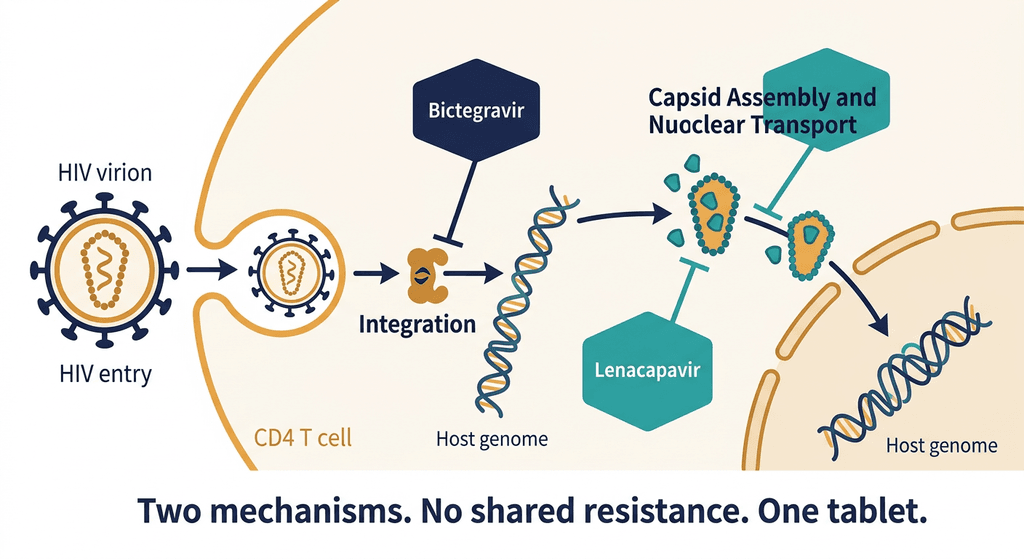
    Bixlenvo works at two distinct stages of the HIV replication cycle, which is the core pharmacological rationale for the combination.

    Bictegravir: INSTI with a high resistance barrier

    Bictegravir is an integrase strand transfer inhibitor (INSTI). HIV integrase is the enzyme the virus uses to insert its DNA into the host cell genome, a step essential for establishing a persistent infection. By blocking integrase, bictegravir prevents the virus from integrating and establishing a permanent reservoir in new cells.

    Bictegravir’s resistance barrier is notably high. Selecting for resistance mutations against bictegravir in vitro requires multiple simultaneous mutations, making it substantially harder for the virus to develop clinical resistance compared to first-generation INSTIs like raltegravir or elvitegravir. This high resistance barrier is why bictegravir remains effective even in patients with prior INSTI exposure, provided specific substitutions at key positions have not emerged.

    Lenacapavir: the first-in-class capsid inhibitor

    Lenacapavir is the only approved HIV-1 capsid inhibitor and works through a mechanism entirely unlike any other antiretroviral. The HIV capsid is a protein shell that forms around the viral core during replication and plays roles at multiple stages of the HIV lifecycle: capsid assembly during viral budding, nuclear transport of the viral complex into the host cell nucleus, and disassembly (uncoating) after cell entry to release the viral genome.

    Lenacapavir binds directly to the capsid protein at a specific interface site and disrupts all of these functions simultaneously. Because the capsid protein target and binding site are structurally distinct from the targets of INSTIs, nucleoside reverse transcriptase inhibitors, protease inhibitors, and other classes, lenacapavir has no cross-resistance with any of them. A patient who carries mutations that render NRTI, protease inhibitor, or older INSTI therapy ineffective still has a fully functional capsid protein that lenacapavir can target.

    In Bixlenvo, lenacapavir is dosed at 50 mg orally once daily, which is a different dose than the 600 mg subcutaneous injection dose used in Sunlenca (lenacapavir injection), already approved for heavily treatment-experienced adults. The oral daily formulation in Bixlenvo is specifically designed for the maintenance setting in virologically suppressed patients.

    Who Bixlenvo Is and Is Not For

    The approved indication is carefully defined and requires understanding on both dimensions.

    Who it is for: Adults who are virologically suppressed, meaning HIV-1 RNA below 50 copies/mL for at least 6 months on a stable regimen, with no known or suspected resistance to bictegravir or lenacapavir. This includes both patients switching from complex multi-tablet regimens (ARTISTRY-1 population) and patients switching from Biktarvy (ARTISTRY-2 population).

    Who it is not for: Patients with known resistance to bictegravir or lenacapavir are excluded. Bixlenvo is not approved for treatment-naive patients starting HIV therapy for the first time. It is a switch regimen for stable, suppressed adults, not an initiation regimen for newly diagnosed patients.

    The complex regimen population covered by ARTISTRY-1 is particularly significant. These are patients who, because of prior antiretroviral resistance history, could not take any of the existing three-drug single-tablet options. For them, Bixlenvo is not just a simplification option. For the first time, it is the only STR available to them at all.


    The ARTISTRY Trials: What the Data Shows

    ARTISTRY-1 (NCT05502341): Switching from complex regimens

    ARTISTRY-1 was a randomized, open-label, active-controlled, Phase 3 noninferiority trial conducted across 15 countries. It enrolled 557 virologically suppressed adults on complex multi-tablet antiretroviral regimens, meaning two or more separate antiretroviral agents taken as multiple pills. Participants were randomized 2:1 to switch to once-daily Bixlenvo (n=371) or continue their complex regimen (n=186). Enrollment required at least 6 months of virologic suppression on baseline therapy and no known or suspected resistance to bictegravir or lenacapavir.

    The primary endpoint was the proportion of participants with HIV-1 RNA at or above 50 copies/mL at week 48 by FDA Snapshot algorithm, with a noninferiority margin of 4%.

    Endpoint at week 48BixlenvoComplex regimenResult
    HIV-1 RNA at or above 50 copies/mL (primary)1.0%1.1%Difference minus 0.3% (95.002% CI minus 2.3% to 1.8%); noninferiority met
    Resistance mutationsNone—No resistance emerged in Bixlenvo arm
    Treatment satisfactionHigherReferenceStatistically significant

    Source: ARTISTRY-1, The Lancet. 2026. NCT05502341.

    Virologic failure rates were essentially identical between arms, at approximately 1%. No resistance mutations to either bictegravir or lenacapavir emerged in participants who switched to Bixlenvo. Treatment satisfaction was meaningfully higher with Bixlenvo, reflecting the quality-of-life impact of simplifying from a complex multi-pill regimen to a single small tablet.

    ARTISTRY-2 (NCT06333808): Switching from Biktarvy

    ARTISTRY-2 was a randomized, double-blind, active-controlled, Phase 3 noninferiority trial comparing Bixlenvo to continued Biktarvy (bictegravir/emtricitabine/tenofovir alafenamide) in virologically suppressed adults. Participants switching from Biktarvy were randomized 2:1 to Bixlenvo or continued Biktarvy. This trial addressed a different clinical question: does adding the capsid inhibitor dimension of lenacapavir, while dropping the two nucleoside analogs (emtricitabine and tenofovir alafenamide), maintain the same virologic control?

    Endpoint at week 48BixlenvoBiktarvyResult
    HIV-1 RNA at or above 50 copies/mL (primary)1.0%1.0%Difference 0.3% (95.002% CI minus 1.9% to 2.4%); noninferiority met
    Virologic suppression (HIV-1 RNA below 50 copies/mL)93%91%Comparable
    Capsid resistance mutationsNone—No capsid resistance emerged
    CD4 cell countStableStableNo meaningful change in either arm
    Drug-related adverse events10.0%12.0%Similar

    Source: ARTISTRY-2, Lancet HIV. Published May 6, 2026. NCT06333808.

    One isolated integrase substitution without phenotypic resistance was detected in one ARTISTRY-2 participant on Bixlenvo, but no clinically meaningful resistance emerged in either trial. Body mass index remained stable after the switch. Together, the two ARTISTRY trials establish that Bixlenvo maintains virologic suppression comparably to both complex regimens and established three-drug STRs across the 48-week observation period.


    Why the Two-Drug Combination Works Without NRTI Backbone

    Traditional HIV regimens are built around a nucleoside reverse transcriptase inhibitor (NRTI) backbone, typically two NRTIs (such as emtricitabine and tenofovir alafenamide), which provides the foundational antiretroviral activity to which a third drug from another class is added. Biktarvy and most other STRs follow this framework.

    Bixlenvo abandons the NRTI backbone entirely. It is a two-drug regimen using two classes that have not previously been combined in a daily oral format. This works because the resistance barrier of the bictegravir and lenacapavir combination in vitro is extremely high. Selecting for resistance to this combination simultaneously requires independent mutations at two unrelated targets, the integrase active site and the capsid protein binding interface, a pharmacologically demanding dual requirement. The absence of capsid resistance mutations across both ARTISTRY trials, even in participants with prior antiretroviral treatment history, supports the clinical robustness of this barrier.

    The two-drug design also has practical advantages. Removing the NRTI backbone eliminates the renal and bone density concerns associated with tenofovir-based therapy, which is relevant for older patients or those with renal impairment who may already be managing these concerns.

    For coverage of the other new two-drug switch regimen approved in 2026, Idvynso (doravirine/islatravir), which takes a different approach using an NNRTI plus a first-in-class NRTTI with no INSTI and no tenofovir, see our earlier post at healthevidencedigest.com/fda-approves-two-drug-hiv-suppression-regimen.


    Safety: What Prescribers and Patients Need to Know

    The safety profile of Bixlenvo across ARTISTRY-1 and ARTISTRY-2 was consistent with the established profiles of both component drugs and showed no new or unexpected safety signals.

    Most common adverse reactions (at least 2% across the ARTISTRY program): headache, nausea, and diarrhea. These were generally mild and consistent with both bictegravir’s and lenacapavir’s known individual profiles.

    Drug-related adverse event rates were 10.0% in the Bixlenvo arm and 12.0% in the Biktarvy arm in ARTISTRY-2, confirming that Bixlenvo was at least as well tolerated as the established comparator.

    Contraindications: Bixlenvo is contraindicated with dofetilide (a cardiac antiarrhythmic) because bictegravir inhibits the renal transporter OCT2, which can dramatically increase dofetilide exposure and risk of serious cardiac arrhythmia. Strong CYP3A inducers (rifampin, carbamazepine, phenytoin, St. John’s wort, and others) are also contraindicated because they reduce bictegravir and lenacapavir plasma concentrations to subtherapeutic levels, risking virologic failure.

    Drug interaction review is essential before switching. Lenacapavir is a substrate and inhibitor of CYP3A and P-glycoprotein, and bictegravir has its own interaction profile. Clinicians and pharmacists should review the full Bixlenvo prescribing information for each patient’s concurrent medications before initiating or approving a switch.


    What This Means for HIV Clinicians and Patients

    For infectious disease clinicians and HIV specialists

    Bixlenvo addresses a real and longstanding gap. Heavily treatment-experienced patients on complex multi-pill regimens have tolerated that burden because no single-tablet alternative was accessible to them. For patients with no resistance to bictegravir or lenacapavir, Bixlenvo is now that alternative. The ARTISTRY-1 data, specifically in this complex-regimen population, support switching confidence: equivalent virologic outcomes, no emerging resistance, and better treatment satisfaction.

    For the broader population already on Biktarvy who are managing renal or bone concerns from the tenofovir component, ARTISTRY-2 provides the evidence base to consider switching to the NRTI-free Bixlenvo formulation while maintaining virologic control.

    Resistance testing before switching is essential: the absence of known or suspected resistance to either component is a hard requirement of the indication. The prescribing information’s drug interaction section requires careful review for each patient.

    For patients living with HIV

    If you are on HIV medication and your viral load has been undetectable, Bixlenvo is a once-daily single-tablet option to discuss with your HIV provider. For patients currently taking multiple pills, Bixlenvo may offer simplification to a single small tablet while maintaining the same virologic control. For patients who have been told they cannot switch to any existing single-tablet regimen because of their resistance history, Bixlenvo may be the first one that works for you.

    The HIV.gov treatment resources page and AIDS.gov provide current patient information on HIV treatment options. The Ryan White HIV/AIDS Program provides assistance with medication costs and care access for uninsured and underinsured patients. Gilead’s patient assistance program can be reached through the Bixlenvo website.


    Sources

    FDA approval announcement: FDA approves bictegravir/lenacapavir (Bixlenvo) for virologically suppressed adults with HIV-1. FDA.gov. August 27, 2026.

    Gilead approval press release: U.S. FDA Approves Gilead’s Bixlenvo, a New Once-Daily Single Tablet Option for Virologically Suppressed Adults With HIV. investors.gilead.com. August 27, 2026.

    Drugs.com approval news: FDA Approves Bixlenvo (bictegravir and lenacapavir) for the Treatment of HIV in Adults Who Are Virologically Suppressed. drugs.com. August 28, 2026.

    ARTISTRY-1 primary Lancet publication: Switch to single-tablet bictegravir–lenacapavir from a complex HIV regimen (ARTISTRY-1): a randomised, open-label, phase 3 clinical trial. The Lancet. 2026. NCT05502341.

    ARTISTRY-2 Lancet HIV publication: Meissner EG, Ramgopal M, Ruane PJ, et al. Safety and efficacy of switching to bictegravir–lenacapavir versus continuing bictegravir–emtricitabine–tenofovir alafenamide in virologically suppressed people with HIV-1 (ARTISTRY-2). Lancet HIV. Published online May 6, 2026. NCT06333808.

    Pharmacy Times (full ARTISTRY-2 endpoint data, contraindications, CD4 stability): FDA Approves Bixlenvo Once-Daily Single-Tablet Regimen for Virologically Suppressed Adults With HIV. pharmacytimes.com. August 2026.

    Infectious Disease Advisor (complete indication language, drug interaction warning, suppression rates 93% vs 91%): Bixlenvo Approved as Single-Tablet Option in HIV-1 Management. infectiousdiseaseadvisor.com. August 2026.

    Drug Topics (complex regimen population, smallest STR, contraindication detail): FDA Approves Bixlenvo, a Single Tablet Option for Adults With HIV. drugtopics.com. August 2026.

    TheBodyPro (ARTISTRY-1 design detail, treatment satisfaction data, primary endpoint exact CI): ARTISTRY-1 Analysis: Bictegravir/Lenacapavir in Older, HIV Treatment-Experienced Patients. thebodypro.com. March 2026.

    ARTISTRY-1 trial registration: NCT05502341. ClinicalTrials.gov.

    ARTISTRY-2 trial registration: NCT06333808. ClinicalTrials.gov.

    Bixlenvo HCP site (prescribing information, resistance barrier data): bixlenvohcp.com.

    Bixlenvo prescribing information: BIXLENVO (bictegravir 75 mg/lenacapavir 50 mg) Prescribing Information. Gilead Sciences. 2026.

    Bixlenvo approval history: Bixlenvo FDA Approval History. drugs.com.

    Patient resources: HIV.gov treatment resources | Ryan White HIV/AIDS Program | Gilead Advancing Access patient assistance | Bixlenvo patient site | CDC HIV basics

    Disclaimer: Health Evidence Digest provides general information about FDA approvals and health research for educational purposes. This content is not a substitute for professional medical advice. Bixlenvo (bictegravir/lenacapavir) is indicated only for adults who are virologically suppressed with no known or suspected resistance to either component; it is not approved for treatment-naive patients initiating HIV therapy. Clinicians should review the complete prescribing information for drug interactions before initiating Bixlenvo, particularly regarding the contraindications with dofetilide and strong CYP3A inducers. All HIV treatment decisions should be made in collaboration with a board-certified infectious disease specialist or HIV clinician.
  • Rasonque (Daraxonrasib) Receives FDA Approval as the First RAS-Targeted Therapy for Metastatic Pancreatic Cancer, Nearly Doubling Median Overall Survival Versus Chemotherapy in the Phase 3 RASolute 302 Trial

    Rasonque (Daraxonrasib) Receives FDA Approval as the First RAS-Targeted Therapy for Metastatic Pancreatic Cancer, Nearly Doubling Median Overall Survival Versus Chemotherapy in the Phase 3 RASolute 302 Trial

    The essentials: On August 26, 2026, the FDA approved Rasonque (daraxonrasib, Revolution Medicines) for adults with metastatic pancreatic adenocarcinoma who have received at least one prior systemic therapy or who are not candidates for multiagent systemic therapy. Rasonque is the first approved RAS-targeted therapy for pancreatic cancer and the first approved agent in the new RAS(ON) multi-selective inhibitor class. The approval was granted 6.5 months before its PDUFA deadline. No companion diagnostic test is required. Rasonque is approved for patients with or without an identified RAS tumor mutation. Dosing: 300 mg orally once daily. The clinical basis: Phase 3 RASolute 302 (NCT06625320), a randomized, open-label, multicenter trial comparing daraxonrasib versus investigator’s choice of cytotoxic chemotherapy in 500 adults with previously treated metastatic PDAC. Both co-primary endpoints (OS and PFS) were met in both the RAS G12 mutant population and the overall intent-to-treat (ITT) population. Median OS: 13.2 months (daraxonrasib) versus 6.7 months (chemotherapy); HR 0.40 (95% CI 0.30 to 0.53; p less than 0.0001). 60% reduction in risk of death. 12-month OS rate: 53.2% (daraxonrasib) versus 17.3% (chemotherapy). Median PFS: 7.2 months versus 3.6 months; HR 0.45 (95% CI 0.34 to 0.59). ORR: 31.6% (daraxonrasib) versus 11.2% (chemotherapy). Grade 3 or higher AEs: 43.6% (daraxonrasib) versus 57.5% (chemotherapy). Treatment discontinuation due to toxicity: 1.2% (daraxonrasib) versus 11.2% (chemotherapy). Published simultaneously in the New England Journal of Medicine. At ASCO 2026, the invited discussant called daraxonrasib “probably the most exciting strategy in five decades” for pancreatic cancer. Regulatory designations: Breakthrough Therapy Designation; Orphan Drug Designation; Priority Review.

    For more than 50 years, the treatment of metastatic pancreatic cancer has been defined by a single clinical reality: the disease is largely resistant to targeted therapy. While lung cancer, breast cancer, and colorectal cancer acquired a growing menu of molecularly targeted agents over the past two decades, pancreatic cancer had almost nothing. Chemotherapy remained the standard: harsh, modestly effective, and unable to touch the molecular drivers that make pancreatic cancer so aggressive.

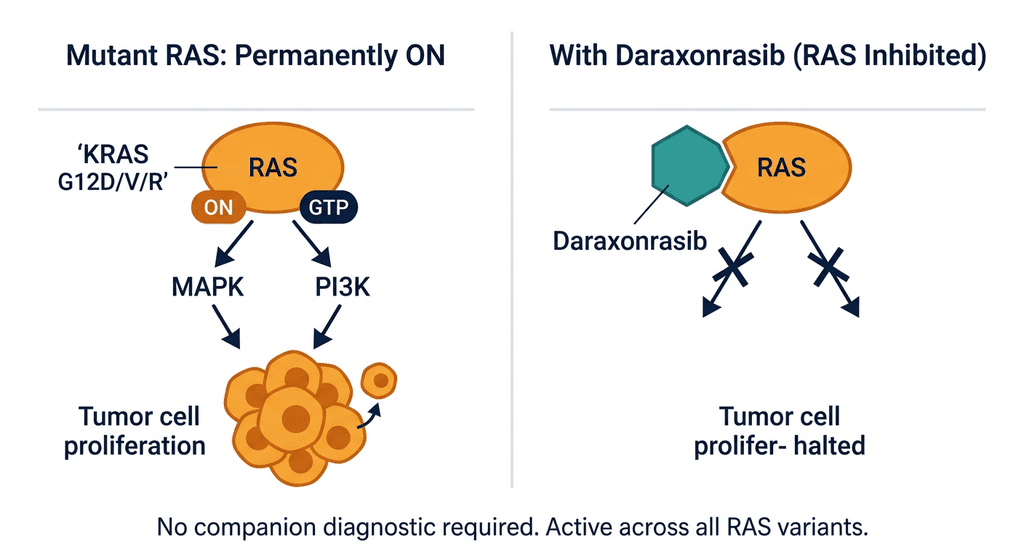
    The central molecular driver, present in over 90% of pancreatic ductal adenocarcinomas, is a mutant RAS protein locked permanently in its active, growth-signaling state. For decades, RAS was considered undruggable. It has no obvious binding pocket, no enzymatic activity that small molecules can inhibit cleanly, and no dependence on the kind of receptor signaling that first-generation targeted therapies could block.

    Rasonque (daraxonrasib, Revolution Medicines) is the first drug that has broken through that barrier. It targets all active (ON-state) RAS proteins across multiple mutation types simultaneously, producing a 60% reduction in the risk of death and nearly doubling median overall survival compared to chemotherapy in the Phase 3 RASolute 302 trial. The approval, granted 6.5 months ahead of schedule, marks one of the most significant advances in pancreatic cancer treatment since FOLFIRINOX was introduced in 2011.


    What Pancreatic Ductal Adenocarcinoma Is and Why It Has Been So Hard to Treat

    Pancreatic ductal adenocarcinoma (PDAC) arises from the exocrine cells lining the ducts of the pancreas. It accounts for approximately 90 to 95% of the roughly 67,000 new pancreatic cancer cases diagnosed in the United States annually. Despite making up only 3.2% of all cancer diagnoses, PDAC is responsible for a disproportionately high share of cancer deaths, because most cases are diagnosed at advanced stages, when curative surgery is no longer possible.

    The 5-year survival rate for metastatic PDAC is approximately 3 to 4%. Median overall survival in the second-line setting, after progression on first-line gemcitabine-based or FOLFIRINOX-based chemotherapy, has historically been 4 to 6 months with available cytotoxic agents. The disease’s resistance to most systemic therapies reflects its dense stromal microenvironment, its highly immunosuppressive tumor immune landscape, and above all, the near-universal presence of mutant RAS proteins that drive autonomous, relentless tumor growth.


    The RAS Problem: Why This Target Took Decades to Drug

    RAS proteins are GTPases, molecular switches that cycle between an active GTP-bound state (RAS-ON) and an inactive GDP-bound state (RAS-OFF). In normal cells, growth factor signaling activates RAS transiently, triggering downstream proliferation and survival signals, before GTPase activity hydrolyzes GTP to GDP and turns the signal off.

    In PDAC, activating mutations at codon 12 of the KRAS gene, most commonly G12D (approximately 42%), G12V (approximately 32%), and G12R (approximately 14%), impair GTPase activity and lock RAS in its active ON state permanently. The cell receives a continuous, unregulated growth signal it cannot turn off.

    For decades, attempts to drug mutant RAS failed because RAS has an unusually smooth protein surface with no obvious deep binding pocket for small molecules. The first breakthrough came in 2021, when KRAS G12C inhibitors (sotorasib, adagrasib) were approved, exploiting a unique cysteine residue created by the G12C mutation. However, KRAS G12C accounts for only 1 to 2% of PDAC cases. The dominant PDAC mutations, particularly G12D and G12V, have no equivalent cysteine and could not be targeted by this approach.

    Daraxonrasib represents a fundamentally different strategy. Rather than targeting the nucleotide-binding pocket occupied by GDP or GTP, it binds to an alternative site on the RAS protein that is accessible in the active (ON) state across all RAS variants. This RAS(ON) inhibitor approach allows daraxonrasib to inhibit multiple RAS GTPase family members simultaneously, regardless of which specific mutation is present or even in the absence of a mutation.


    How Daraxonrasib Works: The RAS(ON) Multi-Selective Mechanism

    Daraxonrasib is a RAS(ON) multi-selective inhibitor, designed to bind directly to active RAS proteins across a broad spectrum of mutations. It inhibits KRAS, HRAS, and NRAS in their GTP-bound active conformations, covering not only the three major KRAS G12 variants that together account for nearly 90% of PDAC but also less common RAS variants and potentially RAS pathway activation even in the absence of a direct RAS mutation.

    This broad coverage is precisely why no companion diagnostic is required. Because the drug works across essentially the full RAS mutation landscape present in PDAC, testing for a specific mutation is unnecessary for eligibility. Any patient with metastatic PDAC who has received prior therapy is a candidate.

    The once-daily oral 300 mg tablet delivers drug exposure that sustains RAS inhibition throughout the dosing interval, keeping the primary oncogenic driver of the tumor suppressed continuously rather than in episodic bursts that might allow recovery.


    The RASolute 302 Trial: Complete Data

    Design

    RASolute 302 (NCT06625320) was a global, randomized, open-label, multicenter Phase 3 trial. It enrolled 500 adults with metastatic PDAC who had progressed on at least one prior line of systemic therapy. Patients were randomized to daraxonrasib 300 mg orally once daily or investigator’s choice of cytotoxic chemotherapy (FOLFOX, FOLFIRI, gemcitabine-based regimens, or other standard options). The trial included patients with RAS G12 mutations (the primary population) and a broader overall ITT population that included less common RAS mutations and RAS wild-type patients. Both groups were analyzed as co-primary populations.

    The two co-primary endpoints were overall survival and progression-free survival in the RAS G12 population, with OS, PFS, and ORR as key secondary endpoints in the ITT population.

    Efficacy results at median follow-up of 8.5 months

    EndpointDaraxonrasibChemotherapyResult
    Median OS, RAS G12 population13.2 months (95% CI 10.0 to NE)6.6 months (95% CI 5.4 to 8.2)HR 0.40 (95% CI 0.30 to 0.54); p less than 0.0001
    Median OS, ITT population13.2 months6.7 monthsHR 0.40 (95% CI 0.30 to 0.53); p less than 0.0001
    12-month OS rate, ITT53.2%17.3%—
    Median PFS, RAS G12 population7.3 months3.5 monthsHR 0.45 (95% CI 0.34 to 0.59)
    Median PFS, ITT population7.2 months3.6 monthsHR 0.45
    ORR, RAS G12 population33.2%11.8%—
    ORR, ITT population31.6%11.2%—
    Grade 3 or higher AEs43.6%57.5%Lower with daraxonrasib
    Treatment discontinuation (toxicity)1.2%11.2%Substantially lower

    Sources: RASolute 302 data. ASCO 2026 Plenary. NEJM June 2026 publication. NCT06625320.

    The headline number, median OS of 13.2 months versus 6.7 months with HR 0.40, represents a 60% reduction in the risk of death and a near-doubling of survival time. To put that in context: the largest survival improvement achieved by any second-line PDAC treatment in the preceding two decades was the approximately 2-month improvement offered by olaparib in BRCA-mutant patients, and that applied to fewer than 5% of PDAC patients. The RASolute 302 result applies to essentially the entire PDAC population, across all RAS mutation types, with the same magnitude of benefit observed whether patients had a RAS G12 mutation or not.

    The 12-month OS rate is perhaps even more striking than the median: 53.2% of daraxonrasib patients were alive at one year versus only 17.3% on chemotherapy. Three times as many patients alive at one year is not a marginal clinical improvement. It is a transformation of what patients with second-line metastatic PDAC can expect.

    The safety advantage is also clinically meaningful. Grade 3 or higher adverse events occurred in 43.6% of daraxonrasib patients versus 57.5% on chemotherapy. Treatment discontinuation due to toxicity was 1.2% with daraxonrasib versus 11.2% with chemotherapy. Patients survived longer and tolerated the therapy better than the comparator.

    What the safety profile looks like

    The most common adverse events with daraxonrasib in the Phase 1/2 NEJM-published dataset (168 PDAC patients) were rash, diarrhea, nausea, mucositis, vomiting, and fatigue. Grade 3 or higher events occurred in 30% of patients at the approved 300 mg dose, driven primarily by these gastrointestinal and skin effects. These are manageable toxicities with appropriate supportive care and dose modification, and they compare favorably to the bone marrow suppression, neuropathy, and fatigue that dominate chemotherapy toxicity profiles.


    What No Companion Diagnostic Means in Practice

    One of the most clinically important features of the Rasonque label is what it does not require: a companion diagnostic test. Unlike KRAS G12C inhibitors (sotorasib, adagrasib), which require confirmed KRAS G12C mutation for eligibility, Rasonque is approved for all patients with previously treated metastatic PDAC regardless of RAS mutation status.

    This matters enormously for access. Pancreatic cancer patients often receive their diagnosis under urgent circumstances, with rapid clinical deterioration. The time and infrastructure required to obtain and process molecular profiling results from a biopsy adds weeks to treatment planning. For patients who are not candidates for multiagent chemotherapy due to performance status or comorbidity, any delay is especially costly.

    Removing the testing requirement means that any oncologist can prescribe Rasonque to any eligible PDAC patient without waiting for molecular results. Molecular profiling remains valuable for other reasons (identifying candidates for BRCA-targeted therapy, NTRK inhibitors, and tumor-agnostic indications), but it is no longer a gating criterion for RAS-targeted therapy in pancreatic cancer.


    The ASCO 2026 Reaction and What It Tells Us

    The RASolute 302 data were presented at the ASCO 2026 Annual Meeting Plenary Session, one of only four or five presentations given this designation each year and reserved for the most practice-changing results in oncology. The invited discussant, Dr. Jennifer Knox of Princess Margaret Cancer Center, called daraxonrasib a “game changer” and described it as “probably the most exciting strategy in five decades” for pancreatic cancer.

    That framing is not hyperbole in the context of the history. FOLFIRINOX’s introduction in 2011 improved median OS in first-line metastatic PDAC from approximately 6.8 months to 11.1 months, and it was considered a landmark. Daraxonrasib’s 6.5-month absolute OS improvement over chemotherapy in the second-line setting, in a patient population with much worse prognosis than first-line patients, is a larger absolute benefit in a harder clinical context.

    As Brian Wolpin, MD, director of the Hale Family Center for Pancreatic Cancer Research at Dana-Farber Cancer Institute and principal investigator for RASolute 302, noted: this approval gives physicians the confidence that directly inhibiting RAS can make a striking difference for patients and provides a critically needed new approach to treating patients with metastatic pancreatic cancer.


    What Comes Next: The Rasonque Pipeline

    Daraxonrasib’s approval in second-line PDAC is the beginning of a broader development program. Revolution Medicines is evaluating the drug in additional settings:

    RASolute 303: Phase 3 trial evaluating daraxonrasib as monotherapy and in combination with chemotherapy in first-line metastatic PDAC. If successful, Rasonque could move to earlier lines of therapy where the potential survival benefit may be even larger.

    RASolute 304: Phase 3 trial evaluating daraxonrasib in the adjuvant setting after surgery and perioperative chemotherapy in resectable PDAC, where the goal is preventing recurrence rather than treating established metastatic disease.

    RASolve 301: Phase 3 trial in NSCLC, reflecting the broader RAS-addicted cancer indication that the RAS(ON) inhibitor approach enables beyond pancreatic cancer.

    RASolute 309: Evaluation of the combination of daraxonrasib plus zoldonrasib (a KRAS G12D-selective inhibitor), a RAS inhibitor doublet strategy targeting the pathway at two distinct points simultaneously.

    The Pipeline post on olomorasib (LY3537982) receiving Breakthrough Therapy Designation for KRAS G12C-mutant pancreatic cancer provides additional context on the broader KRAS-targeting landscape. Daraxonrasib’s approval and olomorasib’s continued development together illustrate that the “undruggable” RAS mutation may become the most targetable oncogene in pancreatic cancer within the next few years.


    What This Means for Oncologists and Patients

    For oncologists

    Rasonque represents a new standard of care option for patients with previously treated metastatic PDAC. The OS benefit is large, consistent across RAS mutation subgroups and the ITT population, and accompanied by a favorable tolerability profile relative to chemotherapy. No companion diagnostic is required, simplifying treatment access.

    The approval also covers patients who are not candidates for multiagent systemic therapy, meaning that even patients whose performance status or comorbidities previously excluded them from second-line treatment now have an oral, once-daily option with demonstrated survival benefit.

    Quality of life data from RASolute 302, including patient-reported outcomes, are a key secondary endpoint that will inform how to counsel patients about the lived experience of treatment. Early indications from ASCO presentations suggest QoL was maintained or improved with daraxonrasib versus deteriorating with chemotherapy.

    For patients with metastatic pancreatic cancer

    If you have been diagnosed with metastatic pancreatic adenocarcinoma and have received prior chemotherapy, Rasonque is now an FDA-approved oral option your oncologist can prescribe without requiring any additional molecular testing. The trial data show that patients receiving Rasonque lived nearly twice as long as those receiving chemotherapy, with better tolerability.

    For patients who have been told they are not well enough for more chemotherapy, the “not candidates for multiagent systemic therapy” approval pathway may also provide access to this therapy. Discussing this with your oncologist is the right starting point.

    The Pancreatic Cancer Action Network (pancan.org; 1-877-272-6226) maintains current resources on treatment options, clinical trials, and patient support for pancreatic cancer. Revolution Medicines’ patient support program can be accessed through the Rasonque website.


    Sources

    FDA approval announcement: FDA approves daraxonrasib for metastatic pancreatic adenocarcinoma. FDA.gov. August 26, 2026.

    FDA press announcement: FDA approves first in class targeted therapy for metastatic pancreatic cancer. FDA.gov. August 26, 2026.

    Revolution Medicines approval press release: U.S. FDA Approves Revolution Medicines’ RASONQUE (daraxonrasib). ir.revmed.com. August 26, 2026.

    Drugs.com approval news: FDA Approves Rasonque (daraxonrasib), the First Broad RAS-Targeted Medicine in Metastatic Pancreatic Cancer. drugs.com. August 26, 2026.

    RASolute 302 topline data announcement: Daraxonrasib Demonstrates Unprecedented Overall Survival Benefit in Pivotal Phase 3 RASolute 302 Clinical Trial. ir.revmed.com. April 13, 2026.

    ASCO 2026 Plenary announcement: Revolution Medicines Announces ASCO Plenary Presentation Highlighting Unprecedented Results from RASolute 302. ir.revmed.com. May 31, 2026.

    Cancer Therapy Advisor (full data table, 12-month OS rates, PFS data, Dr. Wolpin quote): RASolute-302: Daraxonrasib Improves Survival, ORR in Metastatic PDAC. cancertherapyadvisor.com. June 2026.

    Targeted Oncology (NEJM publication context, Phase 1/2 safety data, grade 3 AE rates, discontinuation data): Daraxonrasib PDAC Data Published in NEJM as FDA Allows Expanded Access. targetedonc.com.

    Binaytara Foundation (full safety data, ORR by population, trial eligibility criteria): Daraxonrasib Pancreatic Cancer Trial: RASolute 302 Data. binaytara.org. July 2026.

    Medscape (6.5 months ahead of schedule, Dr. Knox “game changer” quote, expanded access letter): FDA Approves RAS Inhibitor Daraxonrasib for Pancreatic Cancer. medscape.com. August 2026.

    NBC News (patient-facing summary, Dr. Shroff context): FDA approves game-changing pancreatic cancer drug. nbcnews.com. August 26, 2026.

    RASolute 302 trial registration: NCT06625320. ClinicalTrials.gov.

    PDAC overview: Pancreatic Ductal Adenocarcinoma. StatPearls. NCBI.

    Rasonque prescribing information: RASONQUE (daraxonrasib) Prescribing Information. Revolution Medicines. 2026.

    Rasonque approval history: Rasonque FDA Approval History. drugs.com.

    Patient resources: Pancreatic Cancer Action Network: 1-877-272-6226 | American Cancer Society pancreatic cancer resources | Revolution Medicines patient support | ClinicalTrials.gov: search daraxonrasib

    Disclaimer: Health Evidence Digest provides general information about FDA approvals and health research for educational purposes. This content is not a substitute for professional medical advice. Treatment decisions for metastatic pancreatic adenocarcinoma should be made in close collaboration with a board-certified medical oncologist experienced in pancreatic cancer management.
  • Imaavy (Nipocalimab) Receives FDA Approval as the First-Ever Treatment Proven Safe and Effective Specifically for Warm Autoimmune Hemolytic Anemia, Ending Decades of Off-Label Management With Non-Specific Immunosuppression

    Imaavy (Nipocalimab) Receives FDA Approval as the First-Ever Treatment Proven Safe and Effective Specifically for Warm Autoimmune Hemolytic Anemia, Ending Decades of Off-Label Management With Non-Specific Immunosuppression

    The essentials: On August 24, 2026, the FDA approved a new indication for Imaavy (nipocalimab-aahu, Johnson and Johnson) for the treatment of warm autoimmune hemolytic anemia (wAIHA) in adults and pediatric patients aged 12 years and older who are currently or previously treated with corticosteroids. This is the first time any therapy has been proven safe and effective specifically for wAIHA. No FDA-approved treatment for wAIHA has existed before this date. Imaavy was originally approved on April 29, 2025 for generalized myasthenia gravis (gMG). The wAIHA approval is its second indication. What wAIHA is: a rare, life-threatening autoimmune disease in which immunoglobulin G (IgG) autoantibodies attach to the surface of red blood cells and mark them for destruction, causing severe hemolytic anemia. The condition affects approximately 1 to 3 per 100,000 people per year. Prior standard of care relied on corticosteroids and non-specific immunosuppressants, which suppress the entire immune system rather than targeting the IgG autoantibodies driving the disease. What nipocalimab is: an immunoselective neonatal Fc receptor (FcRn) blocker. The FcRn receptor normally recycles IgG antibodies, extending their circulating half-life. By blocking FcRn, nipocalimab accelerates IgG degradation across all IgG subclasses, selectively reducing the pathogenic IgG autoantibodies that destroy red blood cells, while preserving B-cell function. The clinical basis: Phase 2/3 ENERGY trial (NCT04119050), multicenter, randomized, double-blind, placebo-controlled. 115 adults with wAIHA randomized approximately 1:1:1 to nipocalimab 30 mg/kg IV every 4 weeks, 15 mg/kg IV every 4 weeks, or placebo every 4 weeks. Approved dose: 30 mg/kg IV every 4 weeks. Primary endpoint: durable hemoglobin response, defined as achieving hemoglobin above 10 g/dL and an increase of at least 2 g/dL from baseline for at least 28 days without the need for rescue therapy. Result: approximately 3 times as many patients in the 30 mg/kg arm achieved durable hemoglobin response versus placebo by week 24; p value met statistical significance. Onset: mean hemoglobin improvement of at least 1 g/dL at week 1 (first post-baseline assessment) in the 30 mg/kg arm. Key secondary endpoint: FACIT-Fatigue score at week 24: mean difference 3.51 points (95% CI 0.64 to 6.39) in the 30 mg/kg arm versus placebo (higher scores indicate less fatigue). Corticosteroid reduction: 15% mean reduction from baseline CS dose in the nipocalimab arm versus 4% in placebo at week 24. Regulatory designations: Priority Review. Safety in ENERGY: consistent with the established safety profile from the gMG program.

    This analysis was recently featured by Hemostasis Today in their weekly roundup of notable hematology posts. Read the feature: https://hemostasistoday.com/blog/10-posts-80305

    Warm autoimmune hemolytic anemia does not announce itself with drama. It arrives the way most forms of anemia do: fatigue, pallor, shortness of breath with minimal exertion, a feeling of heaviness and exhaustion that does not resolve with rest. What distinguishes wAIHA from other anemias is its mechanism. The red blood cells are not being produced inadequately. The bone marrow is working. The problem is that the body’s own immune system has turned against its own red blood cells, producing IgG antibodies that bind to the cell surface and mark the cells for destruction in the spleen and liver. The red blood cells are being manufactured and destroyed in parallel, with destruction eventually outpacing production.

    For decades, the therapeutic answer to wAIHA has been blunt: suppress the immune system broadly with corticosteroids, add more non-specific immunosuppressants if steroids fail, or remove the spleen to reduce the site of red cell destruction. These approaches work imperfectly. They carry substantial toxicity. They do not specifically target the IgG autoantibodies that are driving the disease. And until August 24, 2026, not a single one of them had been FDA-approved specifically for wAIHA. Every prescribing decision for wAIHA was being made off-label, without the regulatory framework of a purpose-built approval.

    Imaavy (nipocalimab-aahu, Johnson and Johnson) changes that. The ENERGY trial demonstrated, in a randomized placebo-controlled study, that blocking the FcRn receptor reduces circulating IgG autoantibodies, raises hemoglobin to clinically meaningful levels, and reduces fatigue in patients with wAIHA whose disease had required corticosteroid management. The primary endpoint was not merely a laboratory improvement. It required hemoglobin above 10 g/dL, at least 2 g/dL above baseline, sustained for at least 28 days, without rescue therapy. Approximately three times as many nipocalimab patients met this stringent standard compared to placebo by week 24.


    What Warm Autoimmune Hemolytic Anemia Is: The Immunology and the Clinical Burden

    Autoimmune hemolytic anemia (AIHA) is classified by the temperature at which the responsible autoantibodies are most active. Warm AIHA, which accounts for approximately 70 to 80% of all AIHA cases, is driven by IgG autoantibodies that are most active at body temperature (37°C). Cold AIHA is driven by IgM antibodies active at lower temperatures.

    In wAIHA, pathogenic IgG autoantibodies bind to antigens on the surface of red blood cells. The most commonly targeted antigens are components of the Rh blood group system. Once the red cell is coated with IgG, macrophages in the spleen and liver recognize the IgG Fc regions through Fc gamma receptors (FcγR) and engulf or partially consume the coated cells, removing them from circulation faster than the bone marrow can replace them. The resulting hemolytic anemia produces:

    Anemia symptoms: Fatigue, weakness, pallor, dyspnea on exertion, and palpitations reflecting reduced oxygen-carrying capacity. Severe hemolysis can be life-threatening.

    Hemolysis markers: Elevated lactate dehydrogenase (LDH), elevated indirect bilirubin (from heme degradation), low haptoglobin (which binds free hemoglobin released from destroyed red cells), and elevated reticulocytes (immature red cells reflecting bone marrow compensatory response).

    Variable course: Approximately 1 to 3 new people per 100,000 are affected by wAIHA per year. The disease can be primary (idiopathic) or secondary to another condition including lymphoma, lupus, or other autoimmune diseases. It can be acute or chronic, with chronic relapsing disease representing the most clinically challenging form. Johnson & Johnson

    The clinical burden of wAIHA is disproportionate to its apparent rarity. Fatigue in wAIHA is profound: patients with hemoglobin chronically in the 7 to 9 g/dL range have severely curtailed exercise tolerance, impaired cognitive function, and quality of life that matches or exceeds the burden of other chronic serious conditions. Hospitalizations for acute hemolytic crises, transfusions, and the side effects of chronic immunosuppression collectively produce a disease burden that is poorly captured by incidence numbers alone.


    Why No Approved Treatment Has Existed: The Standard-of-Care Gap

    The absence of an FDA-approved wAIHA treatment until August 2026 is not because the disease was unknown or because no effective approaches existed. It is because the drugs used to manage it, corticosteroids and immunosuppressants, are generic, widely available, and never received dedicated approval for wAIHA specifically. The clinical evidence base for these approaches is built from observational studies, case series, and small uncontrolled trials rather than the randomized placebo-controlled trials that form the basis of FDA approval.

    The treatment algorithm prior to the Imaavy approval:

    First line: corticosteroids (prednisone). Prednisone at 1 mg/kg/day produces response in approximately 70 to 80% of patients, but durable complete responses are achieved in only 20 to 30%. Most patients who respond to steroids relapse when steroids are tapered and require ongoing immunosuppression or additional therapy.

    Second line options (all off-label): Rituximab (anti-CD20 antibody depleting B cells, the most commonly used second-line agent), splenectomy, azathioprine, mycophenolate mofetil, cyclophosphamide, and cyclosporine. Each of these approaches broadly suppresses immune function rather than specifically targeting the pathogenic IgG that drives the disease.

    Previously, available treatment options only included corticosteroids and immunosuppressants — therapies that suppress the entire immune system without specifically targeting the IgG autoantibodies driving the disease. Lifesciencehistory

    The clinical consequences of this non-specific immunosuppression include elevated infection risk, corticosteroid-induced hyperglycemia, osteoporosis, adrenal suppression, and the cumulative toxicity of long-term rituximab or other agents. For patients with chronic relapsing wAIHA requiring ongoing immunosuppression for years, this toxicity burden is substantial.


    How Nipocalimab Works: FcRn Blockade and Selective IgG Reduction

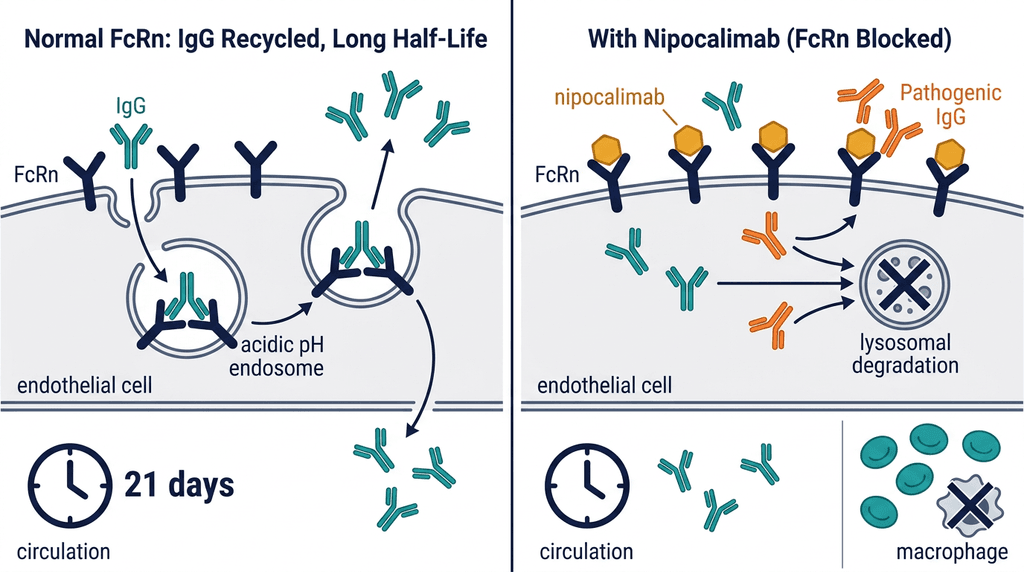
    Nipocalimab works through the neonatal Fc receptor (FcRn), a salvage receptor that plays a critical role in maintaining the circulating half-life of IgG antibodies. Understanding this mechanism requires understanding what FcRn normally does and what happens when it is blocked.

    The FcRn salvage pathway

    IgG antibodies, like all proteins, are naturally cleared from the circulation through degradation in lysosomes. In the absence of any protective mechanism, IgG would have a relatively short half-life. FcRn prevents this rapid clearance through a recycling mechanism: as IgG molecules are taken up by endothelial and immune cells through pinocytosis, they encounter FcRn in the acidic environment of early endosomes. The IgG Fc region binds to FcRn at acidic pH and the receptor-antibody complex is recycled back to the cell surface, where the neutral pH of the extracellular environment causes the IgG to dissociate and return to circulation. This recycling extends the normal half-life of IgG to approximately 21 days.

    What FcRn blockade does

    By binding to FcRn and blocking IgG from accessing the recycling pathway, nipocalimab prevents IgG from being rescued from lysosomal degradation. Without recycling, IgG antibodies, including the pathogenic IgG autoantibodies that drive wAIHA, are degraded at their natural rate without the FcRn salvage mechanism extending their half-life. Total IgG levels fall substantially across all IgG subclasses.

    The pharmacological result in wAIHA: with fewer circulating pathogenic IgG autoantibodies available to bind red blood cell surfaces, fewer red cells are marked for destruction, hemolysis slows, hemoglobin levels rise, and the disease burden decreases.

    The key pharmacological distinction from non-specific immunosuppressants: nipocalimab does not destroy B cells, does not suppress T cell function, and does not broadly impair immune surveillance. It selectively reduces IgG antibody levels through accelerated degradation. The manufacturer describes nipocalimab as immunoselective specifically to capture this distinction from broad immunosuppression. B-cell function is preserved, meaning the adaptive immune system’s long-term memory and other B-cell-mediated functions remain intact.

    This same FcRn blocking mechanism is the basis of nipocalimab’s approved gMG indication: in myasthenia gravis, pathogenic IgG antibodies targeting the acetylcholine receptor (or MuSK) at the neuromuscular junction drive neuromuscular blockade, and reducing those IgG autoantibodies through FcRn blockade improves neuromuscular function.


    The ENERGY Trial: Complete Data

    Design

    ENERGY (NCT04119050) is a multicenter, randomized, double-blind, placebo-controlled Phase 2/3 study evaluating the efficacy and safety of nipocalimab compared with placebo, followed by an open-label extension period, in adults living with warm autoimmune hemolytic anemia. 115 adults were randomized approximately 1:1:1 to receive nipocalimab at two different doses or placebo: nipocalimab 30 mg/kg IV every 4 weeks (the approved dose), nipocalimab 15 mg/kg IV every 4 weeks, or placebo IV every 4 weeks. The trial required participants to be currently or previously treated with corticosteroids, consistent with the approved indication.

    The primary endpoint was the stringent durable hemoglobin response: achieving hemoglobin above 10 g/dL and an increase of at least 2 g/dL from baseline for at least 28 consecutive days, without the need for rescue therapy during the 24-week treatment period.

    This primary endpoint definition is clinically demanding in a way that deserves explicit acknowledgment. Requiring hemoglobin above 10 g/dL (not just any improvement), at least 2 g/dL above baseline (a meaningful clinical increment), sustained for at least 28 days (not a transient response), and without rescue therapy (confirming the improvement is drug-driven rather than rescue-supported) sets a threshold that reflects genuine clinical hemolysis control rather than a marginal laboratory change.

    Efficacy results at week 24

    EndpointNipocalimab 30 mg/kg (approved dose)PlaceboResult
    Durable hemoglobin response (primary)Approximately 3x more patients achieved durable Hgb responseReferencep value met statistical significance
    Mean hemoglobin change at week 1Plus 1 g/dLReferenceRapid onset of effect at first post-baseline assessment
    FACIT-Fatigue score at week 24 (key secondary)Mean difference 3.51 points (95% CI 0.64 to 6.39) versus placeboReferenceDescriptive per pre-specified statistical analysis plan
    Mean CS dose reduction at week 2415% reduction from baseline4% reductionNumerically higher with nipocalimab

    Sources: J&J August 24, 2026 approval press release. ENERGY Phase 2/3 EHA 2026 data presentation. NCT04119050.

    The approximately threefold improvement in durable hemoglobin response rate represents a clinically meaningful separation between nipocalimab and placebo on the most stringent available measure of hemolysis control. The week 1 hemoglobin improvement of 1 g/dL is notable: FcRn blockade reduces circulating IgG rapidly as the salvage recycling pathway is interrupted, and the speed of IgG reduction translates into measurable early hemoglobin improvement.

    The FACIT-Fatigue improvement of 3.51 points at week 24 reflects the quality-of-life dimension of wAIHA that laboratory hemoglobin values alone do not capture. Fatigue is the most debilitating symptom reported by most wAIHA patients, and improvement in a validated patient-reported fatigue measure alongside hemoglobin improvement confirms that the laboratory benefit translates into patient-experienced benefit.

    The corticosteroid reduction data (15% mean dose reduction with nipocalimab versus 4% with placebo at week 24) provides early evidence of the steroid-sparing potential of nipocalimab. Patients were required to taper corticosteroids when they achieved durable hemoglobin response (reducing by 10% of baseline dose every 2 weeks, provided hemoglobin did not decline by 1 g/dL or more). The greater dose reduction in the nipocalimab arm reflects the higher rate of hemoglobin response enabling steroid taper.


    Imaavy’s Two-Indication Profile After August 2026

    Nipocalimab is now approved for two distinct IgG-autoantibody-driven diseases, both of which share the mechanistic common ground of pathogenic IgG causing organ or tissue damage that is ameliorated by reducing IgG levels through FcRn blockade:

    IndicationDisease mechanismApproval datePopulation
    Generalized myasthenia gravis (gMG)IgG autoantibodies against AChR or MuSK at neuromuscular junctionApril 29, 2025Adults
    Warm autoimmune hemolytic anemia (wAIHA)IgG autoantibodies against red blood cell surface antigensAugust 24, 2026Adults and pediatric patients aged 12 and older

    The logic of both approvals is identical: the disease is driven by pathogenic IgG, reducing IgG through FcRn blockade reduces the pathogenic antibody driving the disease, and clinical benefit follows from reduced autoantibody-mediated tissue destruction. Nipocalimab is becoming a platform therapy for IgG-autoantibody-mediated diseases, analogous to how rituximab has become a platform therapy for B-cell-mediated conditions across multiple indications.

    Johnson and Johnson has additional FcRn-mediated conditions in the nipocalimab clinical development pipeline, including hemolytic disease of the fetus and newborn (HDFN, where maternal IgG crosses the placenta and destroys fetal red blood cells), pemphigus vulgaris, and other IgG-mediated disorders. The breadth of the mechanistic applicability reflects the central role of FcRn in maintaining IgG levels across all autoimmune diseases driven by IgG autoantibodies.


    Safety: What the ENERGY Data and Prescribing Information Cover

    The safety profile of nipocalimab in the ENERGY wAIHA trial was consistent with the established safety profile from the gMG program, the most comprehensive nipocalimab safety database.

    Class-level consideration: reduced IgG and infection risk. By reducing circulating IgG levels, FcRn blockade impairs one component of humoral immune defense. The most clinically relevant consequence is a potential increase in susceptibility to certain infections, particularly encapsulated bacteria and infections where IgG antibody titers provide primary immune protection. Patients should be counseled about infection risk, and patients with active serious infections should not initiate nipocalimab.

    Immunization: Live vaccines should be avoided during nipocalimab treatment due to the potential for reduced vaccine efficacy from reduced IgG and the theoretical risk of infection from live attenuated organisms. Inactivated vaccines may be given but may produce lower antibody responses than in untreated patients.

    IgG monitoring: Serum IgG levels should be monitored periodically during treatment. Clinically significant hypogammaglobulinemia (IgG below the lower limit of normal) may require dose interruption or discontinuation.

    Pregnancy: Nipocalimab can cause fetal harm through IgG transport across the placenta (ironically, the same FcRn mechanism that nipocalimab blocks is responsible for normal maternal IgG transfer to the fetus during pregnancy). Women of reproductive potential should use effective contraception during treatment and for a specified period after the last dose.

    Common adverse reactions in the ENERGY trial: consistent with the gMIg indication experience. The prescribing information will provide the complete adverse reaction listing from the ENERGY trial data.


    Dosing and Administration

    The approved dose for wAIHA is nipocalimab 30 mg/kg administered intravenously every 4 weeks (once monthly). This is the higher of the two doses tested in ENERGY and the dose that achieved statistical significance on the primary endpoint.

    The IV infusion is administered over a specified infusion duration at qualified healthcare facilities. Unlike some autoimmune therapies where home administration is being explored, the current administration framework for nipocalimab requires a healthcare setting.

    For pediatric patients aged 12 to 17: the indication covers this population based on the wAIHA approval; specific pediatric dosing considerations should be reviewed in the prescribing information, as pharmacokinetic differences between adults and adolescents may apply.


    What This Means for Hematologists and wAIHA Patients

    For hematologists

    The wAIHA approval gives hematologists the first FDA-approved treatment specifically validated for this condition, with a mechanism that addresses the actual driver of the disease (pathogenic IgG) rather than broadly suppressing immune function.

    The approved indication (patients currently or previously treated with corticosteroids) positions Imaavy as an option for patients beyond the initial steroid-only phase of management, which captures the population with the greatest unmet need: those with steroid-dependent or steroid-refractory disease who would otherwise cycle through non-specific immunosuppressants without a purpose-built approved option.

    The corticosteroid reduction signal from ENERGY is clinically meaningful in a population for whom chronic steroid exposure is a significant morbidity concern. Whether nipocalimab can enable sustained steroid-free remission in a substantial proportion of patients is a question that longer-term follow-up from the ENERGY open-label extension will address.

    As Dr. David Kuter, Director of the Center for Hematology, Massachusetts General Hospital, and a principal ENERGY investigator, noted: wAIHA is an underserved patient population that has long needed a treatment option specifically designed for this disease. This approval addresses a real clinical gap.

    For patients with wAIHA

    If you have been managing warm autoimmune hemolytic anemia with prednisone, rituximab, or other immunosuppressants and your disease has not been adequately controlled, or if the side effects of your current regimen have been burdensome, Imaavy is now an FDA-approved option to discuss with your hematologist.

    The therapy requires monthly IV infusions at a healthcare facility. The clinical evidence shows rapid onset of hemoglobin improvement (beginning within the first week of treatment) and sustained improvement in both red blood cell counts and fatigue over the 24-week trial period.

    The Hemolytic Anemia Initiative and the American Society of Hematology (hematology.org) maintain current resources on AIHA treatment and specialist referral for patients navigating this diagnosis.

    For related HED coverage on IgG-autoantibody-mediated diseases and FcRn biology, note that Imaavy’s original gMG approval in April 2025 predates this session; the wAIHA approval is the drug’s second indication and the first to cover this specific disease. For coverage of other autoimmune hematologic conditions, see our post on Trutakna (atacicept-vymj) for IgA nephropathy, which covers the BAFF/APRIL cytokine axis that drives IgA production.


    Sources

    FDA approval announcement: FDA approves nipocalimab-aahu for warm autoimmune hemolytic anemia. FDA.gov. August 24, 2026.

    J&J FDA approval press release: FDA approves IMAAVY (nipocalimab-aahu) as first-ever treatment for warm autoimmune hemolytic anemia (wAIHA). jnj.com. August 24, 2026.

    BioSpace press release: FDA approves IMAAVY (nipocalimab-aahu) as first-ever treatment for wAIHA. biospace.com. August 24, 2026.

    Drugs.com approval news: FDA Approves Imaavy (nipocalimab-aahu) as First-Ever Treatment for Warm Autoimmune Hemolytic Anemia. drugs.com. August 24, 2026.

    BioPharm International (Priority Review, pediatric 12 and older population, first proven effective therapy context): FDA Approves J&J’s IMAAVY as First Treatment for Warm Autoimmune Hemolytic Anemia. biopharminternational.com. August 2026.

    LifeScienceHistory (full mechanism, FACIT-Fatigue data, 3x durable Hgb response rate, safety profile from gMG consistency): FDA approves J&J’s IMAAVY as first-ever treatment for wAIHA. lifesciencehistory.com. August 2026.

    J&J sBLA submission press release (February 2026, primary endpoint definition, FACIT-Fatigue secondary endpoint, Dr. Fattizzo quote): Johnson and Johnson seeks FDA approval of IMAAVY as first-ever FDA-approved treatment for wAIHA. jnj.com. February 24, 2026.

    J&J EHA 2026 data presentation (exact FACIT-Fatigue data, 15% CS dose reduction, week 1 Hgb data, 1:1:1 randomization, 115 adults): IMAAVY demonstrates durable hemoglobin response in pivotal Phase 2/3 study in wAIHA. jnj.com. June 11, 2026.

    ENERGY trial registration: NCT04119050. ClinicalTrials.gov.

    AIHA overview: Autoimmune Hemolytic Anemia. StatPearls. NCBI.

    Imaavy prescribing information: IMAAVY (nipocalimab-aahu) Prescribing Information. Janssen/Johnson and Johnson. 2026.

    Imaavy approval history: Imaavy FDA Approval History. drugs.com.

    Patient resources: Hemolytic Anemia Initiative | American Society of Hematology patient resources | NORD (National Organization for Rare Disorders) AIHA resources | J&J Imaavy patient support

    Disclaimer: Health Evidence Digest provides general information about FDA approvals and health research for educational purposes. This content is not a substitute for professional medical advice. Imaavy (nipocalimab-aahu) reduces circulating IgG antibody levels through FcRn blockade; patients should be counseled about infection risk, the need to avoid live vaccines during treatment, and monitoring of IgG levels during therapy. The FACIT-Fatigue secondary endpoint at week 24 is considered descriptive per the pre-specified statistical analysis plan. Decisions about initiating Imaavy for wAIHA should be made in close collaboration with a board-certified hematologist experienced in the management of autoimmune hemolytic anemia.
  • Pasatru (Garetosmab) Receives FDA Approval as the Second Approved Therapy for Fibrodysplasia Ossificans Progressiva, Reducing New Heterotopic Bone Formation by 90 to 94% in a 63-Patient Phase 3 Trial

    Pasatru (Garetosmab) Receives FDA Approval as the Second Approved Therapy for Fibrodysplasia Ossificans Progressiva, Reducing New Heterotopic Bone Formation by 90 to 94% in a 63-Patient Phase 3 Trial

    The essentials: On August 19, 2026, the FDA approved Pasatru (garetosmab-grts, Regeneron Pharmaceuticals) to reduce the formation of new heterotopic ossification (HO) lesions and clinician-assessed flare-ups in adults with fibrodysplasia ossificans progressiva (FOP). Pasatru is the second FDA-approved treatment for FOP, joining palovarotene (Sohonos, Ipsen), which received FDA approval in August 2023. It is the first FOP therapy demonstrated to reduce new lesion formation in a placebo-controlled randomized trial, and the first Activin A-blocking antibody approved for any condition. What FOP is: an ultra-rare, debilitating autosomal dominant genetic disorder affecting approximately 800 to 900 people worldwide (fewer than 300 in the United States) in which a gain-of-function mutation in the ACVR1 gene, encoding Activin A receptor type 1, causes the body to convert muscle, tendons, ligaments, and other soft connective tissues into bone. The progressive heterotopic ossification that defines FOP immobilizes patients joint by joint, beginning in childhood. Most patients cannot walk by age 30. Median survival is 56 years. Trauma, including minor injuries, intramuscular injections, surgery, falls, and even viral illness, triggers flare-ups that deposit new bone. What garetosmab is: a VelocImmune-derived, fully human monoclonal antibody that blocks Activin A, a TGF-beta superfamily ligand that Regeneron scientists discovered to be the critical mediator of ACVR1 gain-of-function-driven heterotopic ossification. The clinical basis: Phase 3 OPTIMA trial (NCT05394116), 63 adults with FOP randomized to garetosmab 10 mg/kg IV monthly (n=23), garetosmab 3 mg/kg IV monthly (n=19), or placebo (n=21). Week 56 primary results: new HO lesions detected in 2 of 23 patients (10 mg/kg), 1 of 19 patients (3 mg/kg), and 19 of 21 patients (placebo). Calculated reductions: 90% (10 mg/kg; p less than 0.0001) and 94% (3 mg/kg; p less than 0.0001). Clinician-assessed flare-ups: substantially reduced in both active arms versus placebo. Both doses approved with a dose reduction option: starting dose 10 mg/kg IV every 4 weeks; may decrease to 3 mg/kg IV every 4 weeks if not tolerated. Home infusion is supported where appropriate given the mobility challenges of FOP patients. Safety: consistent with Activin A blockade. Most common adverse reactions: skin and subcutaneous tissue disorders, infections, musculoskeletal symptoms, and headache. Serious adverse reaction: nosebleeds (epistaxis) requiring medical intervention in some patients. Regulatory designations: Breakthrough Therapy Designation; Fast Track Designation; Orphan Drug Designation; Priority Review.

    There are diseases so rare that a clinical trial enrolling 63 patients is not a compromise. It is the full scope of feasibility. Fibrodysplasia ossificans progressiva affects approximately 800 to 900 people worldwide. In the United States, fewer than 300 people are known to have it. Designing a randomized, placebo-controlled Phase 3 trial in this population, and convincing patients whose condition is triggered and worsened by trauma including the trauma of study procedures to participate in it, represents one of the most challenging feats in rare disease drug development.

    Regeneron did it. And the results were not modest. In the OPTIMA trial, patients receiving garetosmab developed new heterotopic ossification lesions at a rate reduced by 90 to 94% compared to placebo. Of 21 patients in the placebo group, 19 developed new bone lesions over 56 weeks. In the active treatment groups, only 2 of 23 (10 mg/kg) and 1 of 19 (3 mg/kg) did. This is, by any measure, a dramatic pharmacological intervention in a disease where new bone formation is the direct mechanism of progressive irreversible disability.

    Pasatru (garetosmab-grts, Regeneron) is approved on the strength of these numbers, and the 63-patient OPTIMA trial that generated them is a reminder that in ultra-rare disease, the size of the evidence does not determine its significance. When the effect size is large enough and the disease severe enough, small trials can carry the weight of approval.


    What Fibrodysplasia Ossificans Progressiva Is: Stone Man Syndrome

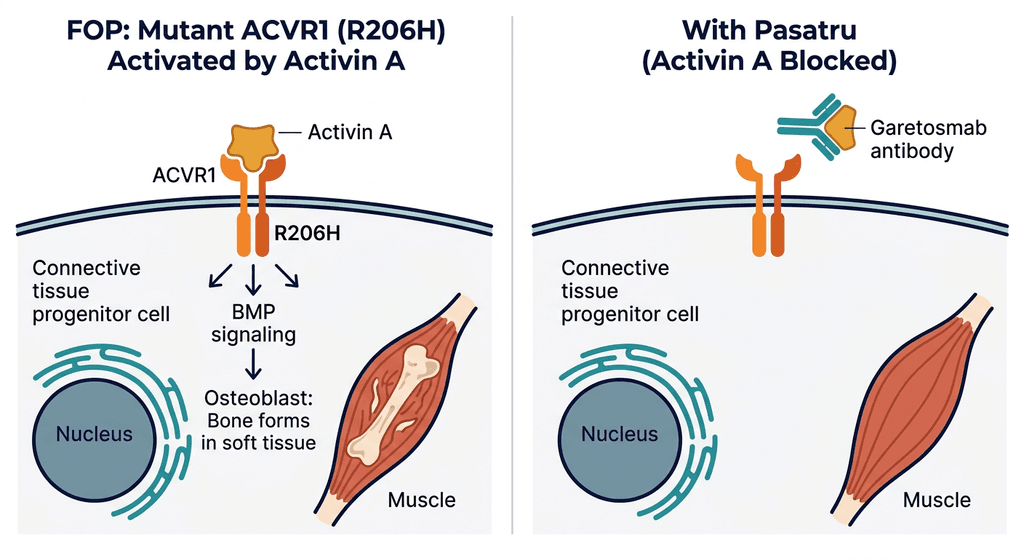
    Fibrodysplasia ossificans progressiva is one of the most severe rare diseases in medicine. It is caused by a gain-of-function mutation in ACVR1, the gene encoding the Activin A receptor type 1 (ALK2), a type I bone morphogenetic protein (BMP) receptor. The same mutation, c.617G>A (R206H), is present in nearly all FOP patients, arising de novo in the vast majority of cases. The mutation is autosomal dominant, but because most carriers are unable to reproduce due to the severity of the disease, almost all cases represent new mutations rather than inherited ones.

    The mutated ACVR1 receptor is constitutively more active than the normal receptor and becomes pathologically activated by Activin A, a TGF-beta superfamily ligand that normally does not activate the wild-type receptor at all. This aberrant signaling activates BMP signaling pathways in connective tissue progenitor cells, driving their differentiation into bone-forming cells (osteoblasts) and the progressive conversion of soft connective tissues into bone.

    The name “Stone Man Syndrome,” used colloquially to describe FOP, captures the clinical reality. The heterotopic bone that forms is structurally real bone, histologically normal, with cortex, marrow, and blood supply. It is simply in the wrong place: inside muscles, around joints, within tendons, and eventually encasing the ribcage and spine. As more soft tissue converts to bone across each flare-up, joints lose mobility permanently. The restriction is irreversible because the heterotopic bone cannot be surgically removed without triggering more bone formation from the trauma of surgery.

    The clinical progression: what FOP patients and families live with

    FOP typically presents at birth with a characteristic malformation of the great toes (shortened, malformed hallux valgus), which is diagnostic for the condition in a newborn. Heterotopic ossification begins in the neck and upper back in early childhood, typically following a trauma trigger. The disease progresses in episodic flare-ups, each of which deposits new bone that does not resolve. With each flare-up, function decreases.

    Most patients lose the ability to walk by age 30, with a median survival age of 56. The causes of premature death in FOP are predominantly respiratory: as heterotopic bone encases the ribcage and spine, breathing becomes progressively restricted, leading to respiratory failure. Pneumonia in immobilized patients is a common precipitating cause of death. Patient Care Online

    The triggers for FOP flare-ups include any trauma to soft tissue: falls, contact sports, intramuscular injections (including routine vaccines, which must be given subcutaneously or intravenously rather than intramuscularly in FOP patients), dental procedures, viral respiratory illness, and even fatigue. Managing FOP is therefore not just about treating flare-ups but about preventing the triggers that cause them, which imposes profound restrictions on daily life.

    No surgery can remove FOP bone. No drug can dissolve bone that has already formed. The therapeutic goal is prevention of new bone formation, which is precisely what Pasatru targets.


    The Activin A Discovery: Why This Target Matters

    The scientific story behind Pasatru begins with a discovery by Regeneron scientists: that Activin A, a member of the TGF-beta superfamily previously not known to drive bone formation in normal physiology, is the critical mediator of the aberrant BMP-ACVR1 signaling that causes FOP’s heterotopic ossification.

    ACVR1 R206H, the gain-of-function mutation present in virtually all FOP patients, makes the receptor hypersensitive to ligands from the TGF-beta superfamily. Crucially, it converts Activin A from a signal that normally does not activate ACVR1 at all into a potent activator. In FOP patients, Activin A, which is produced during inflammation and tissue injury, triggers the mutant ACVR1 receptor to drive BMP-like signaling in connective tissue progenitor cells, initiating the bone formation cascade.

    This discovery provided the molecular explanation for why trauma triggers FOP flare-ups: soft tissue injury produces inflammation and Activin A release, which in FOP patients activates the mutant receptor and starts new bone formation at the injury site. Blocking Activin A prevents this signaling cascade even though the mutant receptor remains present.

    Garetosmab is a fully human monoclonal antibody that specifically binds and neutralizes Activin A, preventing it from activating the mutant ACVR1 receptor. The antibody was developed using Regeneron’s VelocImmune technology, a proprietary platform that generates fully human antibodies by engineering mice with humanized immune systems. The clinical translation from the Activin A discovery to an approved antibody therapeutic represents one of the cleaner molecular target-to-drug success stories in rare disease pharmacology.


    The OPTIMA Trial: 63 Patients, Dramatic Results

    Design

    The phase 3 OPTIMA trial (NCT05394116) was a randomized, double-blind, placebo-controlled trial enrolling adults with FOP. Sixty-three participants were randomized to one of three arms: garetosmab 10 mg/kg IV monthly (n=23), garetosmab 3 mg/kg IV monthly (n=19), or placebo IV monthly (n=21). All received infusions once every 4 weeks for 56 weeks. FOP was confirmed by molecular diagnosis (ACVR1 R206H mutation) in all participants.

    The primary endpoint was the total number of new heterotopic ossification lesions detected by whole-body MRI at week 56. Additional assessments included clinician-assessed flare-ups, patient-reported flare-ups, joint involvement, disease severity scores, and safety.

    Results at week 56

    At week 56, investigators counted 2 new lesions in the 10-mg/kg group, 1 in the 3-mg/kg group, and 19 in the placebo group, corresponding to reported reductions of 90% and 94%, respectively.

    Endpoint at week 56Garetosmab 10 mg/kg (n=23)Garetosmab 3 mg/kg (n=19)Placebo (n=21)
    Patients with any new HO lesion2 of 231 of 1919 of 21
    New HO lesion reduction versus placebo90%94%Reference
    p-valuep less than 0.0001p less than 0.0001—
    Clinician-assessed flare-upsSubstantially reducedSubstantially reducedReference

    Sources: FDA approval announcement. FDA.gov. August 19, 2026. Regeneron press release. August 19, 2026. OPTIMA NCT05394116.

    The magnitude of the effect is striking in absolute terms: 19 of 21 placebo patients developed new HO lesions over 56 weeks, while only 3 of 42 active treatment patients did across both doses combined. The treatment effect is not subtle or marginal. It is a near-complete suppression of new bone formation in a disease defined by progressive bone formation as its primary pathophysiology.

    The equal or greater effect at the lower 3 mg/kg dose versus the 10 mg/kg dose reflects the practical reality of Activin A neutralization: the biologically relevant threshold for blocking enough Activin A to prevent ACVR1 activation may be reached at both doses, with the lower dose being sufficient for the mechanistic target even though it provides a lower peak antibody concentration. Both doses are approved, with the 10 mg/kg dose as the starting standard and the 3 mg/kg dose as the tolerated alternative.

    The LUMINA-1 Phase 2 foundation

    The OPTIMA data built on earlier Phase 2 evidence from LUMINA-1 (Raje N, Hochberg Z, Hsiao EC, et al. Nat Med. 2023;29(10):2614-2623), which provided the first placebo-controlled evidence of garetosmab’s activity in FOP and established the pharmacological proof of concept for Activin A neutralization in this disease. LUMINA-1 results were published in Nature Medicine in 2023, providing the scientific foundation that supported the Phase 3 OPTIMA trial design and the subsequent BLA submission.


    FOP’s Second Approved Treatment: Where Pasatru Fits Alongside Sohonos

    Pasatru is the second drug approved for patients with this very rare disease. The first, palovarotene (Sohonos, Ipsen), was approved in August 2023 for adults and adolescents with FOP aged 14 and older (females) and 8 and older (males, reflecting differential growth plate closure timing). Palovarotene is an oral retinoic acid receptor gamma (RARgamma) agonist that works downstream of ACVR1 signaling to suppress chondrogenesis and endochondral ossification, the bone formation pathway through which HO occurs in FOP.

    The two drugs address FOP through distinct mechanisms at different points in the pathological cascade:

    FeaturePasatru (garetosmab)Sohonos (palovarotene)
    MechanismBlocks Activin A (upstream ligand neutralization)RARgamma agonism (downstream ossification suppression)
    TargetACVR1 signaling triggerChondrogenesis and endochondral bone formation
    RouteIV infusion monthlyOral daily
    Age approvedAdults (18 and older)Adults and adolescents (8/14 and older)
    Approval typeTraditional (full)Traditional (full)
    Primary trial evidenceOPTIMA Phase 3MOVE Phase 3

    The availability of two mechanistically distinct approved therapies for FOP for the first time in history means that the approximately 800 to 900 patients worldwide with this condition now have two options that their physicians can select between based on patient age, tolerance, and individual disease characteristics, and potentially explore in combination in future research.

    As Dr. Kathryn Dahir, professor of medicine at Vanderbilt University and a primary OPTIMA investigator, noted: for people living with FOP, every irregular new bone formation is a step toward disability and potential loss of mobility. Reducing new lesions and flare-ups provides another treatment option for affected adults.


    Safety: What the OPTIMA Data and Prescribing Information Cover

    The safety profile of garetosmab in OPTIMA was consistent with the known biology of Activin A blockade. Activin A has physiological roles beyond FOP pathology, including in mucosal integrity, immune regulation, and reproductive biology, and blocking it produces some predictable off-target effects.

    Most common adverse reactions from the OPTIMA trial and the broader garetosmab clinical program included skin and subcutaneous tissue disorders, infections (consistent with modest immunomodulatory effects), musculoskeletal symptoms, and headache.

    Epistaxis (nosebleed): The most clinically notable adverse reaction with garetosmab is nosebleeds requiring medical intervention in some patients, an effect attributed to Activin A’s role in nasal mucosal vascular integrity. The prescribing information includes guidance on management and monitoring of epistaxis. Patients should be counseled about this risk before starting treatment and instructed to report significant or persistent nosebleeds.

    Reproductive and fetal considerations: Activin A plays important roles in reproductive biology including follicular development and pregnancy. Garetosmab should not be used during pregnancy. Patients of reproductive potential must use effective contraception during treatment and for a defined period after the last dose. Patients should be counseled about the reproductive implications before initiating therapy.

    Administration across care settings: Recognizing the profound mobility limitations of many FOP patients, Regeneron has designed the administration framework to support home infusion where appropriate, in addition to clinical infusion settings. This is a meaningful clinical consideration: FOP patients who have limited ability to travel to infusion centers due to joint ankylosis, spinal restriction, or mobility loss should not be excluded from treatment access for logistical reasons.


    What This Means for Rare Disease Specialists and FOP Families

    For clinicians

    Pasatru is approved for adults (18 and older) with FOP, with both the 10 mg/kg and 3 mg/kg doses available. The practical treatment decision between Pasatru and Sohonos (or their potential future combination) will be made by FOP specialists at centers with experience in this ultra-rare disease. The mechanistic complementarity of the two drugs (upstream Activin A blockade versus downstream ossification suppression) provides a rational basis for exploring combination approaches in future research.

    For patients aged 18 and older, Pasatru now represents a monthly IV treatment option with robust Phase 3 evidence of 90 to 94% reduction in new HO lesion formation. For adolescent patients (ages 8/14 to 17), Sohonos remains the only approved option pending future pediatric data for Pasatru.

    The home infusion option for Pasatru is clinically significant. Requiring FOP patients to travel to an infusion center monthly, when travel itself carries fall risk and any physical trauma can trigger flare-ups, imposes an unacceptable burden. The prescribing information’s explicit support for home infusion where appropriate addresses this correctly.

    For FOP patients and families

    If you are an adult with FOP, Pasatru is the most effective FOP treatment ever tested in a randomized placebo-controlled trial. The OPTIMA data showing 90 to 94% reduction in new bone lesions is not a modest effect. It is near-complete prevention of the bone formation that has been progressively immobilizing you and every other FOP patient throughout their lives.

    The therapy does not reverse existing bone. Bone that has already formed does not dissolve with garetosmab. But preventing new formation from occurring is the most meaningful intervention available in a disease that is entirely defined by progressive accumulation of new bone with each flare-up.

    The epistaxis risk is real and worth discussing with your physician before starting. Monthly IV infusion, whether at home or at a treatment center, requires logistical planning in a population for whom any fall or physical contact carries trauma risk. These are manageable considerations but should be part of the pre-treatment discussion.

    For related HED coverage on gene therapy for rare pediatric diseases, see our post on Genglycos (pariglasgene brecaparvovec) receiving the first FDA approval for glycogen storage disease type Ia, approved the same day as Pasatru.

    The International FOP Association (IFOPA) (ifopa.org; 1-800-IFOPA-14) is the leading patient advocacy organization for FOP worldwide and maintains current information on treatment options, FOP specialists, and patient community support.


    Sources

    FDA approval announcement: FDA approves second treatment for fibrodysplasia ossificans progressiva. FDA.gov. August 19, 2026. Full announcement.

    Regeneron approval press release: Pasatru (garetosmab-grts) first and only FDA-approved treatment demonstrating reduction in new HO lesions and clinician-assessed flare-ups in adults with FOP. GlobeNewswire. August 19, 2026.

    Regeneron investor relations: Pasatru (garetosmab-grts) FDA approval announcement. investor.regeneron.com. August 19, 2026.

    Drugs.com approval news: FDA Approves Pasatru (garetosmab-grts) for the Treatment of Fibrodysplasia Ossificans Progressiva. drugs.com. August 19, 2026.

    PharmTech (63-patient trial context, full OPTIMA data, Activin A mechanism): How a 63-Patient Trial Delivered an FDA Approval. pharmtech.com. August 2026.

    Patient Care Online (Dr. Dahir quote, 90% and 94% reduction data, flare-up data): FDA Approves Garetosmab for Adults With Fibrodysplasia Ossificans Progressiva. patientcareonline.com. August 2026.

    BioPharm International (OPTIMA trial NCT, RMAT designation, FOP global prevalence): FDA Approves Garetosmab-grts (Pasatru) for Bone Lesions in Rare Disease FOP. biopharminternational.com. August 2026.

    BLA acceptance announcement (February 2026): Garetosmab Biologics License Application Accepted for FDA Priority Review for FOP. investor.regeneron.com. February 19, 2026.

    LUMINA-1 Phase 2 Nature Medicine publication: Raje N, Hochberg Z, Hsiao EC, et al. Garetosmab in fibrodysplasia ossificans progressiva: a randomized, double-blind, placebo-controlled phase 2 trial. Nat Med. 2023;29(10):2614-2623. doi:10.1038/s41591-023-02561-8.

    OPTIMA trial registration: NCT05394116. ClinicalTrials.gov.

    FOP GeneReviews overview: Fibrodysplasia Ossificans Progressiva. GeneReviews. NCBI.

    Pasatru prescribing information: PASATRU (garetosmab-grts) Prescribing Information. Regeneron Pharmaceuticals. 2026.

    Pasatru approval history: Pasatru FDA Approval History. drugs.com.

    Patient resources: International FOP Association (IFOPA): 1-800-IFOPA-14 | FOP Action, UK | Regeneron Pasatru patient support | NORD (National Organization for Rare Disorders) FOP resources

    Disclaimer: Health Evidence Digest provides general information about FDA approvals and health research for educational purposes. This content is not a substitute for professional medical advice. Pasatru (garetosmab-grts) has not been established as safe and effective in children. Intramuscular injections are contraindicated in FOP patients due to flare-up risk; IV administration must be used. Patients of reproductive potential must use effective contraception during treatment. The safety and efficacy of Pasatru was established in a 63-patient Phase 3 trial reflecting the ultra-rare nature of FOP. Treatment decisions for FOP should be made in close collaboration with a physician or center with expertise in fibrodysplasia ossificans progressiva management.
  • Genglycos (Pariglasgene Brecaparvovec) Receives FDA Accelerated Approval as the First and Only Approved Treatment for Glycogen Storage Disease Type Ia, Offering Patients a One-Time Liver-Directed Gene Therapy That Reduces Dependence on Lifelong Cornstarch Supplementation

    Genglycos (Pariglasgene Brecaparvovec) Receives FDA Accelerated Approval as the First and Only Approved Treatment for Glycogen Storage Disease Type Ia, Offering Patients a One-Time Liver-Directed Gene Therapy That Reduces Dependence on Lifelong Cornstarch Supplementation

    The essentials: On August 19, 2026, the FDA granted accelerated approval to Genglycos (pariglasgene brecaparvovec-opnr, Ultragenyx Pharmaceutical) for use in adult and pediatric patients aged 8 years and older with glycogen storage disease type Ia (GSD1a) to reduce daily cornstarch intake as an adjunct to nutritional management. Genglycos is the first FDA-approved treatment of any kind for GSD1a. The disease has had no approved pharmacologic or biological therapy since it was first described. Every patient with GSD1a has been managed exclusively through dietary intervention, most critically through regular supplementation with raw uncooked cornstarch as a slow-release carbohydrate to prevent potentially life-threatening hypoglycemia. What Genglycos is: a one-time, liver-directed gene therapy using an adeno-associated virus serotype 8 (AAV8) vector carrying a functional copy of the G6PC gene, which encodes the enzyme glucose-6-phosphatase (G6Pase). G6Pase deficiency is the direct molecular cause of GSD1a. By restoring G6Pase expression in liver cells, Genglycos enables the liver to resume its normal function of releasing glucose into the bloodstream during fasting and metabolic stress. Administration: single intravenous infusion. The clinical basis: Phase 3 GlucoGene study, 48-week randomized, double-blind, placebo-controlled trial, 46 participants aged 8 and older. Modified intention-to-treat (mITT) efficacy population: 44 participants (DTX401 n=20; placebo n=24). Primary endpoint: mean reduction from baseline in daily cornstarch intake at week 48. Result: statistically significant mean reduction of 31% in daily cornstarch intake versus placebo (p value met the prespecified threshold). Patient Global Impression of Change (PGIC) scale: meaningful improvements in patient-reported quality of life consistent with the cornstarch reduction. Safety profile: acceptable; the most clinically significant concern is pre-existing anti-AAV8 antibodies (neutralizing antibodies to AAV8 exclude patients from treatment since they would neutralize the vector). Regulatory designations: Regenerative Medicine Advanced Therapy (RMAT) Designation; Fast Track Designation; Priority Review. Ultragenyx received a Rare Pediatric Disease Priority Review Voucher upon approval. Post-marketing commitment: Ultragenyx must provide the FDA with 2 years of safety and efficacy data from an open-label commercial treatment program covering 50 patients receiving Genglycos and 20 control patients who cannot receive the therapy due to anti-AAV8 antibodies, assessed through the GSD1a disease monitoring program, with follow-up of up to 10 years. Manufacturing: produced entirely within the United States at Ultragenyx’s gene therapy manufacturing facility in Bedford, Massachusetts. GSD1a prevalence: approximately 600 people in the United States and 6,000 worldwide.

    There are rare diseases and there are ultra-rare diseases. GSD1a falls into the second category with conviction. Approximately 600 people in the United States have it. Every one of them wakes up with the same biochemical problem: their liver cannot complete the final step of glucose release, because the enzyme that should catalyze that step, glucose-6-phosphatase, does not work. Without G6Pase, stored glycogen in the liver cannot be converted to free glucose and released into the bloodstream. The result is that fasting of any significant duration, including sleeping, leads to hypoglycemia. And unlike the hypoglycemia of insulin excess, which patients or caregivers can treat when they recognize it, the hypoglycemia of GSD1a can progress rapidly and fatally if a dose of carbohydrate is missed.

    The solution that GSD1a patients and families have relied on for decades is raw uncooked cornstarch. Not regular cooked starch, which digests too quickly and does not provide sustained glucose release, but specifically raw cornstarch, eaten multiple times per day and throughout the night, mixed into food or water, on a schedule that revolves around the biological clock of hypoglycemia risk. For infants and young children, this often means overnight nasogastric tube feeding of a cornstarch solution to maintain glucose levels while they sleep. For older patients and adults, it means setting alarms to wake up and eat cornstarch at 2 a.m. or 3 a.m. It means planning every trip, every school day, every social event around access to cornstarch and the fear of what happens if it is missed.

    Glucose control with cornstarch is crude with large swings in glucose, and patients instead end up spending a large fraction of their day significantly hyperglycemic to avoid hypoglycemic episodes.

    Genglycos (pariglasgene brecaparvovec-opnr, Ultragenyx) is the first pharmacological therapy ever approved for GSD1a. It does not cure the disease in the sense of eliminating every complication or replacing every aspect of dietary management. But it delivers a functional G6PC gene directly to the liver cells where it is needed, restores meaningful glucose-6-phosphatase activity, and in doing so allows the liver to begin performing the glucose regulation function that GSD1a patients’ livers have never been able to perform on their own. The Phase 3 GlucoGene trial showed a 31% statistically significant reduction in daily cornstarch intake at 48 weeks. For patients whose lives have been organized around cornstarch supplementation, that reduction is not just a number on a scale. It is nights of uninterrupted sleep. It is flexibility in meal timing. It is a metabolic safety margin that cornstarch alone cannot reliably provide.


    What Glycogen Storage Disease Type Ia Is: The Enzyme, the Pathway, and the Consequences

    Glycogen storage disease type Ia is an autosomal recessive inborn error of metabolism caused by pathogenic variants in the G6PC gene, which encodes glucose-6-phosphatase catalytic subunit alpha (G6Pase-alpha). G6Pase is expressed primarily in the liver (with lesser expression in the kidney and intestine) and is located in the endoplasmic reticulum membrane. Its function is to catalyze the final step of both glycogenolysis (breakdown of stored glycogen) and gluconeogenesis (synthesis of glucose from non-carbohydrate precursors): the hydrolysis of glucose-6-phosphate to free glucose, which is then released into the bloodstream.

    Without functional G6Pase, glucose-6-phosphate cannot be converted to free glucose. Instead, it accumulates in the cell and is channeled into:

    Glycogen synthesis: Excess glucose-6-phosphate drives continued glycogen accumulation in the liver, leading to massive hepatomegaly. The liver enlarges progressively as glycogen accumulates without the ability to be cleared as glucose.

    Lipid synthesis (de novo lipogenesis): Excess glucose-6-phosphate is also channeled into fatty acid and triglyceride synthesis, causing hyperlipidemia and hepatic steatosis, and eventually contributing to hepatocellular adenoma formation.

    Lactate and uric acid production: Metabolic byproducts of blocked glycolysis pathways accumulate, causing chronic lactic acidosis and hyperuricemia.

    The clinical consequences across a patient’s lifetime are substantial:

    Immediate risk: hypoglycemia. During any fasting period, even overnight sleep, blood glucose falls to dangerous levels because the liver cannot release glucose from glycogen. Severe hypoglycemia causes seizures, loss of consciousness, and can be fatal if not corrected rapidly. The cornstarch regimen exists entirely to prevent this by providing a continuous slow-release carbohydrate source that mimics, imperfectly, what G6Pase-mediated glucose release would normally provide.

    Long-term complications: Chronic hyperlipidemia contributes to pancreatitis and cardiovascular risk. Hepatic steatosis progresses over decades to hepatic fibrosis and cirrhosis in some patients. Hepatocellular adenomas develop in most adults with GSD1a, with malignant transformation risk. Hyperuricemia causes gout. Renal involvement (from glycogen accumulation and metabolic abnormalities) can lead to focal segmental glomerulosclerosis and chronic kidney disease. Growth delay is common in children.

    GSD1a affects approximately 600 people in the US and 6000 worldwide. In the United States, it is classified as an ultra-rare disease. Despite its rarity, it is one of the most well-characterized inborn errors of metabolism, identified decades ago, with its molecular basis understood for over 30 years. The fact that no approved pharmacological treatment existed until August 2026 reflects the extraordinary challenge of developing therapies for this category of disease. Drugs.com


    How Genglycos Works: Liver-Directed AAV8 Gene Therapy

    Genglycos is an adeno-associated virus serotype 8 (AAV8) vector-based gene therapy administered as a single intravenous infusion. Understanding how it works requires understanding both the AAV vector platform and the specific molecular design of Genglycos.

    The AAV8 vector

    Adeno-associated viruses (AAVs) are small, non-enveloped, single-stranded DNA viruses that have been extensively engineered as gene therapy delivery vehicles. They are non-replicating (they cannot make copies of themselves), non-integrating in most cells (the therapeutic DNA exists as an episome rather than inserting into the host genome), and produce minimal immune response compared to other viral vectors.

    AAV serotype 8 (AAV8) has a natural tropism for the liver, meaning it preferentially infects and enters hepatocytes after intravenous administration. This liver specificity is precisely what GSD1a gene therapy requires: G6Pase is needed in hepatocytes, and delivering the gene specifically to liver cells while minimizing off-target expression is the design goal.

    The G6PC gene payload

    The Genglycos AAV8 vector carries a functional human G6PC coding sequence, the gene that encodes glucose-6-phosphatase. When the vector infects a hepatocyte after intravenous infusion, the G6PC transgene is delivered to the cell nucleus, where it is expressed under the control of liver-specific regulatory elements. The hepatocyte begins producing functional G6Pase protein, which inserts into the endoplasmic reticulum membrane and begins catalyzing the conversion of glucose-6-phosphate to free glucose, the reaction that GSD1a hepatocytes cannot perform.

    As more hepatocytes receive the vector and express functional G6Pase, the liver’s overall capacity to release glucose from glycogen increases. The patient’s liver begins performing, at least partially, the normal glucose regulatory function that GSD1a has prevented throughout their lifetime.

    The therapy is given as a single intravenous infusion at a dose of 1.0 x 10^13 genome copies per kilogram (GC/kg). This is a one-time treatment, not a chronic therapy. The expressed G6PC episome is maintained in the hepatocyte nuclei of treated cells and continues to express G6Pase as long as those cells survive. Because hepatocytes are long-lived cells with limited turnover in adults, the duration of expression is expected to be prolonged, though long-term data from commercial patients will be required to characterize durability fully.

    The critical pre-treatment screening requirement: anti-AAV8 antibodies

    A critical exclusion criterion for Genglycos is the presence of anti-AAV8 neutralizing antibodies. Patients with pre-existing anti-AAV8 antibodies cannot receive Genglycos, because those antibodies would neutralize the vector before it can infect hepatocytes, preventing gene delivery and wasting the therapy entirely. Approximately 20 to 40% of adults have pre-existing anti-AAV8 antibodies from prior natural AAV8 exposure. All patients must be screened for anti-AAV8 antibodies before treatment; those with neutralizing titers above the specified threshold are not eligible.

    This antibody exclusion is also the basis for the post-marketing control group: the 20 control patients in the open-label commercial treatment monitoring program are patients who are excluded from treatment due to anti-AAV8 antibodies and therefore serve as natural history controls for comparison with the 50 Genglycos-treated commercial patients.


    The GlucoGene Trial: What the Phase 3 Data Shows

    Design

    The GlucoGene study was a 48-week, randomized, double-blind, placebo-controlled Phase 3 trial enrolling 46 participants aged 8 years and older with confirmed GSD1a (biallelic pathogenic G6PC variants). Participants were randomized to Genglycos 1.0 x 10^13 GC/kg (single intravenous infusion) or placebo infusion. The modified intention-to-treat (mITT) efficacy population included 44 participants with evaluable week 48 data: 20 in the Genglycos arm and 24 in the placebo arm.

    All participants continued their standard nutritional management including cornstarch supplementation throughout the trial. The trial was conducted as an adjunct to, not a replacement for, dietary management.

    The primary endpoint was mean reduction from baseline in daily cornstarch intake at week 48. Cornstarch intake is the clinical quantification of how much exogenous carbohydrate supplementation patients require to maintain safe glucose levels; a reduction in cornstarch intake indicates that the liver is providing more of its own glucose release, reducing the dependence on external carbohydrate supplementation.

    Efficacy results

    EndpointGenglycos (n=20)Placebo (n=24)Result
    Mean reduction in daily cornstarch intake at week 48 (primary)31% reduction from baselineReferenceStatistically significant (p met prespecified threshold)
    Patient Global Impression of Change (PGIC)Meaningful improvement in patient-reported QoLReferenceConsistent with cornstarch reduction
    Safety profileAcceptable—No treatment-related serious adverse events in the pivotal trial

    Sources: Ultragenyx press release. August 19, 2026. FDA announcement. HCPLive clinical summary. GlucoGene Phase 3 trial.

    What 31% cornstarch reduction means in practice

    For a patient taking 60 grams of cornstarch per day divided across multiple doses, including a middle-of-the-night dose, a 31% reduction means approximately 18 fewer grams per day and potentially the elimination of one or more overnight doses depending on individual pharmacodynamic response. For patients and families whose nights are currently interrupted by scheduled cornstarch supplementation, this translates into meaningful quality-of-life change. The PGIC patient-reported outcomes, which showed meaningful improvement consistent with the cornstarch reduction, confirm that the change was perceptible and meaningful to the patients themselves.

    The accelerated approval framework places the 31% cornstarch reduction as the surrogate endpoint. The FDA determined it is reasonably likely to predict clinical benefit, specifically prevention of hypoglycemia events and reduction in long-term complications. The confirmatory post-marketing program, following commercial patients for up to 10 years, will establish whether the reduction in cornstarch dependence translates into fewer hypoglycemic events, better metabolic control, and reduced long-term liver, kidney, and metabolic complications.

    As Eric Crombez, MD, CMO of Ultragenyx, described: the reduced reliance on cornstarch demonstrates this gene therapy’s ability to establish the normal breakdown of glycogen to produce glucose during fasting or episodes of metabolic stress.


    The Post-Marketing Program: What Continuity of Approval Requires

    As with all accelerated approvals, continued marketing authorization for Genglycos may be contingent upon verification of clinical benefit in confirmatory studies. The FDA and Ultragenyx have agreed on a specific post-marketing program structure:

    Open-label commercial treatment monitoring: Ultragenyx must provide the FDA with 2 years of safety and efficacy clinical data from an open-label commercial treatment of 50 people receiving Genglycos and 20 control patients who cannot receive the therapy due to anti-AAV8 antibodies. Data will be assessed through the GSD1a disease monitoring program, which will also follow patients from the clinical trial and commercial patients for up to 10 years.

    This real-world follow-up program is designed to answer the questions that the 48-week Phase 3 trial, with its small sample size (n=44 mITT) and its relatively short follow-up, could not fully address: How durable is the G6Pase restoration? Do patients maintain reduced cornstarch dependence at 2, 5, and 10 years? Does the gene therapy reduce the incidence of hypoglycemic events, hepatic adenomas, renal disease, and other long-term complications of GSD1a? And are there late-emerging safety signals from long-term AAV8 exposure in the liver?


    Safety: What the GlucoGene Data and Prescribing Information Cover

    The safety profile of Genglycos in the GlucoGene trial was acceptable, with no treatment-related serious adverse events reported in the pivotal study. The safety data from 1,734 subjects in the broader DTX401 clinical program (Phase 1/2 and Phase 3) showed a manageable profile.

    Key safety considerations:

    Immune response to the AAV8 vector: The immune response to the AAV8 capsid is the primary safety concern with any AAV gene therapy. Acute infusion reactions, fever, and liver enzyme elevations from capsid-directed T cell immunity are the most commonly monitored events in the post-infusion period. Corticosteroids are pre-administered to suppress the immune response, and liver function monitoring is required in the weeks to months following infusion. In the GlucoGene trial, this immune management protocol was incorporated into the treatment protocol.

    Anti-AAV8 antibody exclusion: Pre-treatment antibody screening excludes patients with neutralizing titers above the threshold. Patients who receive Genglycos will develop anti-AAV8 antibodies as a result of treatment, making re-treatment with an AAV8-based therapy not feasible if the gene therapy’s effect wanes over time.

    Hepatic monitoring: Given the pre-existing hepatic disease burden in GSD1a patients (hepatomegaly, steatosis, adenoma risk), hepatic monitoring before and after Genglycos administration is required. Liver function tests are monitored at scheduled intervals post-infusion.

    Administration setting: Genglycos is administered by intravenous infusion at an authorized healthcare facility with capability for management of allergic or immune-mediated reactions and monitoring of vital signs and liver function.

    Long-term durability uncertainty: Because AAV8 episomes do not replicate with dividing cells, and because pediatric hepatocytes divide as part of normal growth, the durability of gene expression in growing patients (particularly those aged 8 to 12 who are still in active growth phases) may differ from adults. Long-term follow-up data are critical for understanding whether dose re-escalation or alternative approaches may eventually be needed in pediatric patients who treated during rapid growth phases.


    What This Means for Metabolic Disease Specialists, Pediatricians, and GSD1a Families

    For specialists managing GSD1a

    Genglycos provides the first pharmacological tool available for GSD1a management after decades in which dietary intervention was the only option. The 31% mean reduction in cornstarch intake from a single treatment is clinically meaningful, particularly for the subset of patients who show the deepest responses.

    Patient selection requires: confirmed biallelic pathogenic G6PC variants; age 8 or older; anti-AAV8 antibody screening confirming eligibility; hepatic assessment; and clinical assessment of disease severity and cornstarch dependence. The age restriction reflects the clinical trial population and the growth-related considerations for gene therapy expression in younger children.

    Dietary management and nutritional monitoring remain essential after Genglycos treatment. The approved indication is as an adjunct to nutritional management, not a replacement for it. Patients who receive Genglycos should continue working with their metabolic disease dietitian and specialist to adjust cornstarch dosing as glucose regulation improves.

    For GSD1a families

    If you or your child has GSD1a and is aged 8 or older, Genglycos is now an FDA-approved option to discuss with your metabolic disease specialist. The most important first step is anti-AAV8 antibody testing: without confirming antibody-negative status, the therapy cannot be administered. The testing is straightforward and available through specialized metabolic laboratories.

    As one patient advocate described: for families affected by GSDIa, every day revolves around strict schedules, overnight vigilance, and the constant worry that a missed meal or unexpected delay could lead to a dangerous hypoglycemic episode. Genglycos does not eliminate this vigilance entirely, but a 31% reduction in cornstarch dependence represents a real and meaningful reduction in that daily burden. Pharma Journalist

    Ultragenyx has established a patient support program to assist with treatment access, insurance navigation, and connection to authorized treatment centers. Information is available through the Genglycos website and through the Association for Glycogen Storage Disease (agsdus.org).

    For related HED coverage on gene therapies for rare genetic diseases, see our posts on Casgevy (exagamglogene autotemcel) expanding to children as young as age 2 with sickle cell disease and transfusion-dependent beta thalassemia, and Tregzi (marnetegragene autotemcel) becoming the first precision-engineered cell therapy for allogeneic stem cell transplantation in blood cancers.


    Sources

    FDA approval announcement: FDA approves first therapy for patients aged 8 years and older with glycogen storage disease type Ia. FDA.gov. August 19, 2026. Full announcement.

    Ultragenyx approval press release: Ultragenyx Announces U.S. FDA Approval of GENGLYCOS Gene Therapy. GlobeNewswire. August 19, 2026.

    Ultragenyx investor relations: Ultragenyx Announces U.S. FDA Approval of GENGLYCOS. ir.ultragenyx.com. August 19, 2026.

    Drugs.com approval news: FDA Grants Accelerated Approval for Genglycos for Treatment of Glycogen Storage Disease Type Ia. drugs.com. August 19, 2026.

    HCPLive (31% cornstarch reduction, mITT population, 600 U.S. patients): FDA Approves Gene Therapy for Glycogen Storage Disease Type 1a. hcplive.com. August 2026.

    CGT Live (RMAT designation, first approved treatment context, Karim Mikhail and Megha Kaushal FDA quotes): Pariglasgene Brecaparvovec-opnr Approved for Glycogen Storage Disease 1a. cgtlive.com. August 2026.

    BioPharm International (RMAT, Fast Track, Priority Review, 6,000 global patients, confirmatory trial contingency): FDA Grants Accelerated Approval to Ultragenyx’s Genglycos. biopharminternational.com. August 2026.

    Healio (post-marketing 50 commercial patients plus 20 controls, 10-year follow-up commitment, first gene therapy context): FDA approves first gene therapy to treat glycogen storage disease type Ia. healio.com. August 2026.

    LifeScienceHistory (GlucoGene study design, 1.0 x 10^13 GC/kg dose, glucose-6-phosphate metabolic pathways, hyperglycemia-to-avoid-hypoglycemia context): Ultragenyx Announces U.S. FDA Approval of GENGLYCOS Gene Therapy. lifesciencehistory.com. August 2026.

    BLA acceptance announcement (February 2026): Ultragenyx Announces U.S. FDA Acceptance and Priority Review of the BLA for DTX401. Ultragenyx. February 23, 2026.

    GSD1a overview: Glycogen Storage Disease Type I. GeneReviews. NCBI.

    AAV gene therapy mechanism: Adeno-Associated Virus as a Vector for Gene Therapy. PMC6107701.

    Genglycos prescribing information: GENGLYCOS (pariglasgene brecaparvovec-opnr) Prescribing Information. Ultragenyx Pharmaceutical Inc. 2026.

    Genglycos approval history: Genglycos FDA Approval History. drugs.com.

    Patient resources: Association for Glycogen Storage Disease (AGSD): agsdus.org | Children’s Fund for Glycogen Storage Disease Research | Ultragenyx Genglycos patient support | NORD (National Organization for Rare Disorders) GSD1a resources

    Disclaimer: Health Evidence Digest provides general information about FDA approvals and health research for educational purposes. This content is not a substitute for professional medical advice. Genglycos (pariglasgene brecaparvovec-opnr) received accelerated approval based on reduction of daily cornstarch intake as a surrogate endpoint; continued approval may be contingent upon verification of clinical benefit in confirmatory studies. Pre-treatment screening for anti-AAV8 antibodies is required; patients with neutralizing antibody titers above the specified threshold are not eligible. Genglycos must be administered at an authorized healthcare facility by qualified personnel. All decisions about gene therapy for GSD1a should be made in close consultation with a board-certified metabolic disease specialist or biochemical geneticist with expertise in glycogen storage disease management.
  • Tauklarify (Florquinitau F 18) Receives FDA Approval as a Tau PET Imaging Agent for Alzheimer’s Disease Evaluation, Adding the Second Approved Tau Tracer to a Rapidly Evolving Diagnostic Toolkit

    Tauklarify (Florquinitau F 18) Receives FDA Approval as a Tau PET Imaging Agent for Alzheimer’s Disease Evaluation, Adding the Second Approved Tau Tracer to a Rapidly Evolving Diagnostic Toolkit

    The essentials: On August 13 to 14, 2026, the FDA approved Tauklarify (florquinitau F 18 injection, Lantheus Holdings) for positron emission tomography (PET) of the brain in adults with cognitive impairment who are being evaluated for Alzheimer’s disease to identify patients with tau neurofibrillary tangle (NFT) pathology. Tauklarify was previously known as MK-6240 during its clinical development phase. Tauklarify is the second FDA-approved tau PET imaging agent in the United States, joining flortaucipir F 18 (Tauvid, Eli Lilly/Avid Radiopharmaceuticals), which received FDA approval in 2020 as the first tau PET tracer. The approval rests on two blinded-read studies drawn from three clinical trials involving more than 500 subjects. Independent readers analyzed the tau PET images without knowledge of the subjects’ clinical histories or amyloid PET results. Readers characterized each scan as positive or negative for tau neurofibrillary tangle pathology using a standardized visual interpretation method. Key reader agreement data: Study 1 positive percent agreement 80% to 88% across readers. Study 2 positive percent agreement 68% to 82% across readers. Safety: assessed in 1,734 subjects receiving approximately 185 MBq (5 mCi) intravenously. Most common adverse reactions: headache (0.7%), nausea (0.2%), injection site reactions (0.1%), dizziness (0.1%), abdominal discomfort (0.1%). All adverse reactions occurred in less than 1% of subjects. Important limitation of use: the safety and effectiveness of Tauklarify have not been established for the evaluation of non-Alzheimer’s disease tauopathies. Regulatory designations: Fast Track Designation. Lantheus acquired the rights to MK-6240 from Enigma Biomedical USA in 2023 and collaborated with Enigma Biomedical through approval. Clinical context: Lantheus frames Tauklarify as one of several complementary diagnostic tools, alongside amyloid PET, blood-based biomarkers, and CSF analysis, intended to guide Alzheimer’s diagnosis and treatment selection as more disease-modifying therapies, including anti-tau therapies, enter clinical practice. The drug’s approval coincides with the NIH-funded CLARiTI study (a 5-year multisite investigation across all 37 Alzheimer’s Disease Research Centers) for which Lantheus is supplying MK-6240. Tauklarify has not been reviewed by the broader commercial market yet: Lantheus is evaluating the path toward broader commercial availability following the approval. Corporate context: Lantheus recently announced a deal to be acquired by rival Curius for approximately $8 billion.

    Alzheimer’s disease is not a single moment. It is a process that unfolds over decades, beginning with the earliest accumulation of pathological proteins in the brain, progressing through measurable but clinically silent biological changes, and only eventually producing the cognitive symptoms that bring most patients to a physician’s attention. By the time memory loss is obvious, the disease has typically been active for 15 to 20 years.

    Understanding where a patient is in that process, and which pathological changes are present, has become increasingly important as treatment options for Alzheimer’s disease evolve. As HED covered in August 2026, Leqembi Iqlik received approval for at-home subcutaneous initiation dosing, bringing the first disease-modifying anti-amyloid therapy one step closer to practical reach for patients with early Alzheimer’s disease. Anti-amyloid therapy requires not just the clinical diagnosis but the biological confirmation that amyloid pathology is present. And as the disease-modifying pipeline continues to fill with approaches targeting tau rather than amyloid, the ability to characterize tau pathology with the same precision becomes the next diagnostic imperative.

    Tauklarify (florquinitau F 18, Lantheus) is designed specifically for that purpose: a PET imaging agent that binds to tau neurofibrillary tangles in the brain, producing a scan that visualizes both the presence and the anatomical distribution of tau pathology. It does not diagnose Alzheimer’s disease by itself. But it provides information that amyloid PET cannot: the staging of disease progression, the correlation between tau spread and clinical symptom severity, and ultimately the ability to select and monitor patients for tau-directed therapies as those therapies approach approval.


    The Two Pathological Hallmarks of Alzheimer’s Disease and Why Both Matter

    Alzheimer’s disease is defined neuropathologically by two protein abnormalities that accumulate in the brain years to decades before clinical symptoms appear:

    Amyloid beta plaques: Aggregations of misfolded amyloid beta protein that deposit between neurons as extracellular plaques. Amyloid accumulation begins 15 to 20 years before cognitive symptoms appear. Amyloid PET imaging with approved tracers (florbetapir, florbetaben, flutemetamol, and Locametz for PSMA) can visualize amyloid burden and confirm or exclude amyloid pathology as part of the diagnostic workup. Anti-amyloid therapies including Leqembi and donanemab target this pathology.

    Tau neurofibrillary tangles: Aggregations of hyperphosphorylated tau protein that accumulate inside neurons. Normal tau stabilizes the microtubule cytoskeleton of neurons. When tau becomes hyperphosphorylated, it dissociates from microtubules, misfolds, and aggregates into paired helical filaments that form neurofibrillary tangles (NFTs) inside the neuron’s cell body and processes. Tau NFTs are directly toxic to neurons and are strongly correlated with neuronal death.

    The relationship between the two pathologies is sequential and important for clinical practice. Amyloid accumulation typically precedes tau NFT formation by many years, though the mechanism connecting the two is not fully understood. Tau pathology follows a stereotyped anatomical staging pattern described by Braak and Braak: beginning in the transentorhinal cortex and hippocampus (Braak stages I to II), spreading to limbic regions (stages III to IV), and eventually spreading across the neocortex (stages V to VI). This anatomical progression of tau NFTs correlates closely with the progression of clinical symptoms: patients with Braak stage I to II tau pathology have minimal symptoms, while patients with Braak stage V to VI have severe dementia.

    This is why tau PET provides information that amyloid PET does not. Amyloid positivity tells you the disease process is underway. Tau PET tells you how far along the process has progressed and which brain regions are affected. Together, they provide a biological characterization of the disease stage that clinical assessment alone cannot match.


    The Tau PET Landscape: What Tauklarify Adds

    The first FDA-approved tau PET agent, flortaucipir F 18 (Tauvid, Eli Lilly/Avid Radiopharmaceuticals), was approved in May 2020 for estimating the density and distribution of aggregated tau NFTs in adults with cognitive impairment.

    Tauklarify is the second approved tau PET tracer. Both are F18-labeled radioligands that bind to aggregated tau in neurofibrillary tangle form and produce a PET signal proportional to the density of tau pathology at each brain location. The two agents differ in their specific binding characteristics, pharmacokinetics, and the standardized visual interpretation approaches validated for each:

    Flortaucipir (Tauvid): Binds to tau NFTs; approved 2020; the most extensively studied tau PET tracer with the largest published clinical evidence base including multiple large phase 2 and 3 clinical trials.

    Florquinitau (Tauklarify): Also binds to tau NFTs; approved August 2026; developed with a different chemical scaffold designed to optimize binding characteristics and imaging quality. Extensively validated in the CLARiTI NIH study infrastructure and in more than 500 subjects across the FDA pivotal studies.

    The availability of two approved tau tracers matters for supply chain resilience, site-specific manufacturing logistics, and potentially for clinical scenarios where one tracer’s pharmacokinetic profile provides a practical advantage. The clinical interpretation framework for both agents uses standardized regional brain uptake patterns to characterize tau positivity.


    How Tau PET Imaging Works: The Technical Framework

    Tauklarify is administered as a single intravenous dose of approximately 185 MBq (5 mCi) in a low volume. After injection, the F18-labeled compound circulates through the bloodstream and crosses the blood-brain barrier, where it binds with high affinity to aggregated tau in neurofibrillary tangle form. Regions with high tau NFT burden retain more tracer; regions with low or no tau pathology clear the tracer normally.

    After a waiting period to allow non-specific tracer clearance, the patient undergoes PET brain imaging. The scanner detects the positron emissions from the F18 decay at each brain location, producing a 3-dimensional map of tau-binding signal intensity across the brain. A trained reader, typically a radiologist or nuclear medicine physician, interprets the scan using a standardized visual interpretation methodology that characterizes each brain region as positive or negative for tau pathology.

    The regional pattern of tau signal provides staging information consistent with the Braak staging framework: medial temporal lobe signal indicates early-stage tau, while parietal and frontal cortical involvement indicates later-stage disease. This staging information is clinically meaningful because it correlates with the severity of cognitive impairment and with the expected trajectory of decline.

    Important limitation: Tauklarify detects tau neurofibrillary tangle pathology consistent with Alzheimer’s disease tau staging. The label specifically notes that safety and effectiveness have not been established for non-Alzheimer’s disease tauopathies. Other neurodegenerative diseases including progressive supranuclear palsy (PSP), corticobasal degeneration (CBD), and frontotemporal dementia with tau pathology also involve abnormal tau accumulation, but often with different tau isoforms, different anatomical distributions, and different binding characteristics for current tau PET tracers. A tau-positive scan with Tauklarify indicates Alzheimer’s pattern tau pathology specifically, not tau pathology from other conditions.


    The FDA Approval Evidence: What the Pivotal Studies Showed

    The FDA based its decision on two blinded-read studies drawn from three clinical trials involving more than 500 participants. Independent readers who were unaware of patients’ clinical histories or amyloid PET results interpreted the scans.

    The two pivotal studies evaluated whether trained readers could reliably and reproducibly identify tau-positive versus tau-negative PET scans using the Tauklarify standardized visual interpretation methodology. This reader study design is standard for diagnostic imaging agents and reflects the primary regulatory question: not whether the scan predicts patient outcomes (that requires longitudinal studies), but whether trained readers can reliably characterize the scan’s findings with meaningful agreement.

    Both showed high rates of agreement across readers: Study 1 had an 80% to 88% positive percent agreement, and Study 2 had a 68% to 82% positive percent agreement.

    The trial populations included individuals with mild cognitive impairment and mild Alzheimer’s disease dementia, spanning the early Alzheimer’s disease spectrum that is most clinically relevant for the diagnostic workup that Tauklarify supports.

    These inter-reader agreement rates reflect the real-world variability inherent in visual scan interpretation. The 80 to 88% agreement range in Study 1 represents stronger reader concordance; the 68 to 82% range in Study 2 indicates somewhat more variability, which is common when scan populations include more borderline or challenging cases. Standardized training, regional cutoff values, and quantitative software support tools can improve inter-reader reliability in clinical practice.

    Safety across 1,734 subjects at the clinical dose of approximately 185 MBq (5 mCi) showed an excellent profile: headache in 0.7% of subjects, nausea in 0.2%, injection site reactions in 0.1%, dizziness in 0.1%, and abdominal discomfort in 0.1%. No serious adverse reactions were identified in the safety population.


    How Tauklarify Fits Into the Evolving Alzheimer’s Diagnostic Framework

    The diagnosis of Alzheimer’s disease has been transformed by the availability of biomarker-based diagnostics. The 2023 Alzheimer’s Association revised diagnostic criteria (AA/NIA 2023) define Alzheimer’s disease biologically, based on the presence of amyloid and tau pathology, rather than solely on clinical symptoms. This framework places tau PET as a core component of a complete Alzheimer’s disease biological characterization.

    The practical clinical diagnostic framework now integrates multiple biomarker tools:

    Blood-based biomarkers: Plasma phospho-tau 217 (p-tau217), p-tau181, amyloid 42/40 ratio, and GFAP tests that can identify patients with high probability of Alzheimer’s pathology from a blood draw, often as a first-line screen before more costly imaging.

    Amyloid PET: Visualizes amyloid burden across the brain; confirms or excludes amyloid pathology; required before initiating anti-amyloid therapies like Leqembi.

    Tau PET: Visualizes tau NFT distribution and burden; provides disease staging information; required for clinical trial enrollment in many tau-directed therapeutic trials; increasingly used in clinical practice to characterize disease stage.

    CSF analysis: Measures amyloid 42/40 ratio and p-tau to assess both amyloid and tau pathology biochemically; invasive but accurate; used when PET is unavailable or for confirmation.

    Tauklarify sits in the tau PET position in this framework, providing the anatomical staging of tau pathology that blood tests and amyloid PET cannot provide. As Lantheus CEO Mary Anne Heino noted, as the field continues to advance, clinicians are seeking a more complete understanding of this disease, with tau PET imaging providing information that complements amyloid PET and other diagnostic tools.

    The CLARiTI study (5-year NIH multisite investigation across all 37 Alzheimer’s Disease Research Centers), for which Lantheus is supplying Tauklarify, will generate one of the largest prospective datasets linking tau PET findings to clinical outcomes in real-world Alzheimer’s disease populations. This study will help establish the longitudinal prognostic value of tau PET in clinical practice.


    Why Tau PET Is Becoming More Important Now

    The clinical value of tau PET imaging is increasing in direct proportion to the number of anti-tau therapies in the pipeline. Today, more than 30 therapeutic programs targeting tau are in active clinical development, including antibodies targeting tau aggregates, tau vaccines, antisense oligonucleotides targeting tau mRNA, and small molecules inhibiting tau aggregation.

    For these therapies to be appropriately developed and deployed, patient selection by tau PET status is essential. A patient with no tau pathology on PET would not be expected to benefit from an anti-tau therapy; a patient with moderate hippocampal tau but minimal cortical spread is in a different disease stage and prognosis than one with widespread cortical tau. The FDA’s approval of a second tau PET tracer expands the imaging infrastructure that these trials and eventual anti-tau therapy approvals will require.

    The connection to HED’s recent Leqembi post is direct: Leqembi targets amyloid, and its anti-amyloid mechanism removes the upstream pathology. But tau pathology, once established, does not appear to reverse with amyloid removal. Understanding how much tau pathology is present before and during anti-amyloid therapy, and how tau burden correlates with clinical response, are among the most important open questions in Alzheimer’s disease pharmacology. Tau PET tools like Tauklarify are part of the infrastructure that will answer those questions.


    What This Means for Neurologists, Geriatricians, and Patients

    For clinicians evaluating patients for Alzheimer’s disease

    Tauklarify provides a second FDA-approved tau PET option alongside flortaucipir (Tauvid). The practical availability of Tauklarify for routine clinical use will depend on the commercial deployment decisions Lantheus makes following the approval, which the company has characterized as under evaluation. Initial deployment may focus on research settings and Alzheimer’s Disease Research Center sites participating in CLARiTI before broader commercial rollout.

    For clinical settings where tau PET is already being used, Tauklarify provides an additional sourcing option. For settings newly considering tau PET, both approved agents require trained readers using the specific standardized interpretation methodology validated for each tracer. Cross-tracer interpretation methods are not established, and quantitative software tools are tracer-specific.

    The complementary role of tau PET alongside amyloid PET should inform how these studies are ordered in practice: amyloid PET first to confirm Alzheimer’s pathology is present, followed by tau PET for staging and prognosis. In some clinical scenarios (patients who are amyloid-negative on a prior scan but have strong clinical suspicion for Alzheimer’s), tau PET may also help resolve diagnostic uncertainty.

    For patients and families

    If you or a family member is undergoing evaluation for Alzheimer’s disease, a tau PET scan may be recommended as part of a comprehensive diagnostic workup to determine whether tau neurofibrillary tangles are present and how they are distributed in the brain. This information helps characterize how far the Alzheimer’s disease process has progressed and may influence treatment decisions, including eligibility for disease-modifying therapies and clinical trials.

    A positive tau PET scan does not by itself mean a specific course of action is required. It is one piece of diagnostic information, interpreted alongside clinical assessment, cognitive testing, amyloid PET results, and other biomarkers, to inform a complete picture of the disease.

    For related HED coverage on Alzheimer’s disease diagnostics and treatment, see our post on Leqembi Iqlik (lecanemab-irmb subcutaneous) receiving FDA approval for at-home initiation dosing in early Alzheimer’s disease, which covers the anti-amyloid mechanism and the role of amyloid PET confirmation in treatment selection.

    The Alzheimer’s Association (alz.org; 1-800-272-3900) and the Alzheimer’s Drug Discovery Foundation maintain current resources on Alzheimer’s disease diagnosis, biomarker testing, treatment options, and clinical trial opportunities.


    Sources

    Lantheus FDA approval press release: Lantheus Announces FDA Approval of TAUKLARIFY (Florquinitau F 18 Injection), an F18-Labeled Tau PET Imaging Agent for Alzheimer’s Disease. GlobeNewswire. August 14, 2026.

    Lantheus investor relations: Lantheus Announces FDA Approval of TAUKLARIFY. lantheusholdings.gcs-web.com. August 14, 2026.

    Drugs.com approval news: FDA Approves Tauklarify (florquinitau F 18 injection), an F18-Labeled Tau PET Imaging Agent for Alzheimer’s Disease. drugs.com. August 14, 2026.

    Psychiatric Times (reader agreement data, adverse reaction profile): FDA Approves Tauklarify (MK-6240) For Tau Pathology Detection in Alzheimer Disease. psychiatrictimes.com. August 2026.

    NeurologyLive (CLARiTI study context, 30 anti-tau programs in pipeline, fast track history): FDA Approves Tau PET Tracer MK-6240 for Alzheimer Diagnostic Workup. neurologylive.com. August 2026.

    VINnews (three clinical trials, more than 500 subjects basis, 1,734 safety subjects, Enigma Biomedical acquisition): FDA Approves Tauklarify as New Tau Imaging Agent for Alzheimer’s Evaluation. vinnews.com. August 2026.

    Radiology Business (Mary Anne Heino quote, Curius acquisition context, CLARiTI supply): FDA approves new Alzheimer’s PET imaging agent from Lantheus. radiologybusiness.com. August 2026.

    AuntMinnie (F18 binding characteristics, Enigma Biomedical 2023 acquisition detail): Lantheus wins FDA approval for tau PET imaging agent. auntminnie.com. August 2026.

    Investing.com (185 MBq dose, Pharma Solutions commercial path): FDA approves Lantheus’ tau imaging agent for Alzheimer’s disease. investing.com. August 2026.

    Lantheus NDA acceptance announcement (October 2025): Lantheus Announces FDA Acceptance of New Drug Application for MK-6240. lantheusholdings.gcs-web.com. October 2025.

    Lantheus 10-Q (pivotal study co-primary endpoints, NDA submission basis): Form 10-Q FY2026. SEC.gov.

    Tauvid (flortaucipir) original tau PET approval (2020): FDA approves first drug to image tau pathology in patients being evaluated for Alzheimer’s disease. FDA.gov.

    Tau and amyloid pathology in Alzheimer’s disease: Amyloid Beta and Alzheimer’s Disease. PMC7232739.

    NIA Alzheimer’s disease overview: Alzheimer’s Disease Fact Sheet. NIA.

    Tauklarify prescribing information: TAUKLARIFY (florquinitau F 18 injection) Prescribing Information. Lantheus Holdings. 2026.

    Tauklarify approval history: Tauklarify FDA Approval History. drugs.com.

    Patient resources: Alzheimer’s Association: 1-800-272-3900 | Alzheimer’s Drug Discovery Foundation | BrightFocus Foundation | Lantheus Tauklarify information

    Disclaimer: Health Evidence Digest provides general information about FDA approvals and health research for educational purposes. This content is not a substitute for professional medical advice. Tauklarify (florquinitau F 18 injection) is a radiodiagnostic imaging agent indicated for PET imaging only; it is not a therapeutic drug. The safety and effectiveness of Tauklarify have not been established for the evaluation of non-Alzheimer’s disease tauopathies. Tau PET imaging results should be interpreted by trained, qualified nuclear medicine physicians or radiologists using the approved standardized interpretation methodology and in the full clinical context, including amyloid PET results, cognitive testing, and clinical assessment.

  • Lerochol (Lerodalcibep) Adds an Autoinjector Option and New Cardiovascular Risk Label Language in Its Second FDA Action, Securing Its Position as the Most Affordable Monthly PCSK9 Inhibitor at $199 Per Dose

    Lerochol (Lerodalcibep) Adds an Autoinjector Option and New Cardiovascular Risk Label Language in Its Second FDA Action, Securing Its Position as the Most Affordable Monthly PCSK9 Inhibitor at $199 Per Dose

    The essentials: On August 17, 2026, the FDA approved two updates to Lerochol (lerodalcibep-liga, LIB Therapeutics): a new autoinjector dosage form for once-monthly self-administration, and updated labeling that explicitly links LDL-C lowering with statins or monoclonal antibody PCSK9 inhibitors to reduced risk of major adverse cardiovascular events (MACE) in adults at increased cardiovascular risk. Neither action changes the active molecule, the dosing regimen, or the approved indication. This is Lerochol’s second FDA action since its original approval on December 12, 2025. The autoinjector launches at the same $199 per month cash price as the existing pre-filled syringe, well below the approximately $14,000 annual list price at which alirocumab (Praluent) and evolocumab (Repatha) first launched in 2015. What lerodalcibep is: a third-generation PCSK9 inhibitor using a novel molecular format, an adnectin-PCSK9 inhibitor fusion protein, rather than the large monoclonal antibody format of evolocumab and alirocumab. This smaller molecule format enables once-monthly dosing (versus every 2 weeks for evolocumab and alirocumab), a smaller injection volume, and extended room-temperature stability of up to 3 months, enabling home storage and travel without cold-chain requirements. The clinical evidence base (LIBerate Phase 3 program, more than 2,900 patients): sustained LDL-C reductions of at least 60% in patients with cardiovascular disease or at very high/high risk; at least 59% in patients with HeFH; 72-week open-label extension with no treatment-related serious adverse events. The updated label now includes language consistent with outcomes trial consensus that LDL-C lowering with statins or monoclonal antibody PCSK9 inhibitors, added to statins, reduces MACE risk in adults at increased risk. Lerochol itself does not have a completed cardiovascular outcomes trial. The label language references the class effect established by the FOURIER (evolocumab) and ODYSSEY OUTCOMES (alirocumab) trials. This mirrors the approach taken in the HED post on Lipfendra (the first oral PCSK9 inhibitor, approved July 2026): class-based CV outcomes inference while a dedicated outcomes trial for lerodalcibep is conducted. Storage: refrigerated storage or room temperature up to 25°C for up to 3 months. Common adverse reactions: injection site reactions, flu-like symptoms (nasopharyngitis, upper respiratory tract infections), myalgia. No myocarditis or serious treatment-related adverse events in the long-term extension.

    PCSK9 inhibitors have been among the most effective LDL-C lowering drugs ever developed, capable of reducing LDL-C by 50 to 60% or more on top of maximally tolerated statin therapy. They have also, for most of their existence, been among the most expensive and the most underused: a 2015 launch at approximately $14,000 per year, combined with strict prior authorization requirements, meant that the majority of eligible patients never received them.

    That access problem drove the development of multiple alternative approaches to PCSK9 inhibition: inclisiran’s twice-yearly dosing, the small molecule approach of Lipfendra (approved in July 2026 and covered in an earlier HED post), and lerodalcibep’s third-generation protein format. Lerochol, approved December 2025 and now adding an autoinjector and strengthened label language, represents one of the most practical and affordable entries into the PCSK9 landscape: once-monthly dosing, room-temperature storage, and a $199/month direct cash price.

    The August 17 actions add two things that matter for clinical practice. The autoinjector makes self-administration more accessible for patients who find prefilled syringes technically or psychologically challenging. And the updated label language, which now explicitly connects lerodalcibep’s LDL-C lowering to cardiovascular risk reduction through the class evidence base, removes a gap in the prescribing information that required clinicians to infer the cardiovascular benefit rather than reading it directly in the label.


    What Lerodalcibep Is: Third-Generation PCSK9 Inhibition

    As covered in HED’s earlier post on Lipfendra (orforglipron, the first oral PCSK9 inhibitor), the PCSK9 protein directs the degradation of LDL receptors on liver cell surfaces, preventing them from clearing LDL-C from the bloodstream. Blocking PCSK9 allows more LDL receptors to remain on the cell surface, substantially increasing LDL-C clearance and lowering blood LDL-C levels.

    The first-generation PCSK9 inhibitors, evolocumab (Repatha) and alirocumab (Praluent), are large monoclonal antibodies (approximately 145 kDa) that bind PCSK9 in the bloodstream. Their size drives several practical limitations: they require every-2-week subcutaneous injection, relatively large injection volumes, and refrigerated storage.

    Lerodalcibep is structurally different. It is an adnectin-PCSK9 inhibitor fusion protein, combining an adnectin (a small fibronectin-based protein scaffold approximately 10 kDa) that binds PCSK9 with high affinity, fused to a human serum albumin-binding domain that extends its circulating half-life to approximately 14 days, enabling once-monthly rather than every-2-week dosing. The total molecular weight is approximately 47 kDa, substantially smaller than monoclonal antibodies.

    This molecular architecture produces a set of practical advantages:

    Once-monthly dosing: 300 mg subcutaneously once per month, self-administered at home. This is half the injection frequency of evolocumab and alirocumab and matches the practical convenience of inclisiran (though inclisiran is clinician-administered every 6 months).

    Small injection volume: The compact molecule size allows a low injection volume, reducing injection site discomfort compared to larger-volume biologic injections.

    Room-temperature stability: Up to 3 months at room temperature (up to 25°C), avoiding the cold-chain logistics that complicate travel and home storage for refrigerator-dependent biologics. Patients can keep Lerochol at room temperature and take it with them on extended trips without packing a cooler.

    No food or drug interaction concerns: Unlike the oral PCSK9 inhibitor Lipfendra, which requires consideration of CYP3A4 drug interactions and carries a simvastatin dose restriction, lerodalcibep is an injectable biologic without the same drug interaction profile.


    The Autoinjector: What It Changes and What It Does Not

    The original Lerochol approval in December 2025 provided the drug in a prefilled syringe format requiring manual injection. The August 17, 2026 approval adds an autoinjector device, a spring-loaded prefilled injection device that delivers the dose with a button press without requiring the patient to manually depress a plunger or to see or handle the needle directly.

    The clinical significance of an autoinjector versus a prefilled syringe is primarily adherence and patient experience. For many patients managing long-term injectable therapy, particularly those with needle anxiety, arthritis or hand weakness, or limited experience with self-injection, a button-press autoinjector is substantially more accessible than a conventional syringe. The device conceals the needle, simplifies the injection motion, and reduces the technical complexity of the administration step.

    This is the same design principle behind the BESREMi Pen for ropeginterferon (covered in HED’s Besremi post) and the Kevzara and other autoinjector formats for biologics: the drug does not change, but the device reduces the practical barriers that contribute to missed or discontinued doses.

    As Kristen Miller, Vice President, Brand Communications at LIB Therapeutics noted: “Innovation in PCSK9 inhibition cannot stop at the molecule, because how a medicine for life-long therapy fits into a patient’s life is what determines whether they stick with it over the long haul. The monthly dosing by autoinjector is completed in seconds, does not interfere with any oral medications, require overnight fasting, or limit the timing of food and beverage consumption. These features, along with the extended room temperature storage, mean LEROCHOL fits into patients’ lives and not the other way around.” TCTMD

    The autoinjector launches at the same $199 per month direct cash price as the prefilled syringe. Both device options remain available.


    The Updated Label: What the New Cardiovascular Risk Language Says and Why It Matters

    The second element of the August 17 approval is an updated indication that adds explicit language linking lerodalcibep’s LDL-C lowering to cardiovascular risk reduction.

    Labeling now reflects outcomes-trial consensus that LDL-C lowering with statins or monoclonal antibody PCSK9 inhibitors, added to statins, reduces MACE risk in adults at increased risk. Libtherapeutics

    This language references the cardiovascular outcomes evidence established by the FOURIER trial (evolocumab) and ODYSSEY OUTCOMES trial (alirocumab), both of which demonstrated that adding a PCSK9 inhibitor to maximally tolerated statin therapy reduces the risk of major adverse cardiovascular events (MACE) including heart attack, stroke, and cardiovascular death. Lerodalcibep does not yet have a completed dedicated cardiovascular outcomes trial.

    The practical significance of this label update for prescribers: the prescribing information now explicitly supports the clinical inference that prescribing lerodalcibep to reduce LDL-C in high-risk patients is intended to reduce cardiovascular events, not merely to achieve a biomarker goal. This strengthens the regulatory basis for prescribing Lerochol to patients at elevated cardiovascular risk and provides clearer documentation for payer prior authorization requests.

    This mirrors the situation described in HED’s earlier post on Lipfendra (oral PCSK9 inhibitor): the drug reduces LDL-C convincingly, the cardiovascular outcomes evidence for the drug specifically is pending, and the prescribing is supported by the strong class-effect evidence while dedicated outcomes trial data mature. For lerodalcibep, that outcomes trial is the LIBerate-OUTcomes study, which is ongoing.


    The LIBerate Clinical Trial Program: The Evidence Foundation

    The December 2025 original approval and the August 2026 label update both rest on the Phase 3 LIBerate program, which enrolled more than 2,900 patients across multiple trials:

    TrialPopulationLDL-C reductionDuration
    LIBerate-CVDAdults with established cardiovascular diseaseAt least 60% sustained reduction52 weeks (registration); 72-week OLE
    LIBerate-HRAdults without CVD at very high or high riskAt least 60% sustained reduction52 weeks (registration); 72-week OLE
    LIBerate-HeFHAdults with heterozygous familial hypercholesterolemiaAt least 59% sustained reduction52 weeks (registration); 72-week OLE

    Source: LIB Therapeutics original approval press release. December 15, 2025.

    The LDL-C reductions across these populations are clinically robust and sustained over the full 52-week registration period. The 72-week open-label extension showed no treatment-related serious adverse events in over 2,400 continued participants, supporting the long-term safety profile.

    These reductions compare favorably with the approximately 59% LDL-C reductions achieved by evolocumab in FOURIER and approximately 62% by alirocumab in ODYSSEY OUTCOMES, confirming that lerodalcibep’s LDL-C lowering efficacy is within the same class range as the established injectable PCSK9 inhibitors.


    The $199/Month Pricing: Why It Is Clinically Important

    When alirocumab and evolocumab launched in 2015, their approximately $14,000 annual list price prompted payers and pharmacy benefit managers to impose strict prior authorization protocols. A 2015 Institute for Clinical and Economic Review draft benchmark concluded those medications would need to fall to $2,177 annually, an 85% discount, to meet standard cost-effectiveness thresholds.

    At $199 per month ($2,388 per year), lerodalcibep meets and exceeds that cost-effectiveness threshold. It is priced below the ICER-recommended threshold that was identified as the level at which PCSK9 inhibitors would be cost-effective for the populations most likely to benefit.

    The practical consequences for prescribing: the cost barrier that has historically required prior authorization, step therapy requirements, and multiple rejections before PCSK9 inhibitor access has been substantially lower with Lerochol’s pricing than with the established agents. Patients paying cash or whose insurance does not cover PCSK9 inhibitors have a real-world access option at $199/month that did not exist with evolocumab or alirocumab at their list prices.

    For context within the PCSK9 landscape as it now stands:

    • Evolocumab (Repatha) and alirocumab (Praluent): both now available at substantially reduced net prices compared to 2015 list, with patient assistance programs, but list prices remain substantially higher than $199/month
    • Inclisiran (Leqvio): clinician-administered, every 6 months, priced at a different tier
    • Lerochol (lerodalcibep): $199/month cash, self-administered monthly
    • Lipfendra (oral PCSK9 inhibitor, approved July 2026): $149/month self-pay at LillyDirect, oral daily tablet

    The PCSK9 inhibitor market in August 2026 looks very different from its 2015 origins. With multiple mechanisms (monoclonal antibody, siRNA, small molecule, adnectin fusion protein), multiple dosing frequencies (every 2 weeks, monthly, every 6 months, daily), and prices ranging from $149 to $2,388 annually at self-pay, the access problem that defined PCSK9 inhibitor therapy for a decade is meaningfully reduced.


    Where Lerochol Fits in the Current PCSK9 Landscape

    With multiple approved options now available, understanding how lerodalcibep is positioned relative to alternatives helps clinicians and patients make informed choices:

    DrugRouteFrequencyStorageSelf-pay priceCV outcomes trial
    Repatha (evolocumab)SC injectionEvery 2 weeks or monthlyRefrigeratedHigher; varies by planYes (FOURIER)
    Praluent (alirocumab)SC injectionEvery 2 weeks or monthlyRefrigeratedHigher; varies by planYes (ODYSSEY OUTCOMES)
    Leqvio (inclisiran)SC injection (clinician)Every 6 monthsRefrigeratedClinician-administered; Part BNo (ongoing)
    Lerochol (lerodalcibep)SC injection (self)Once monthlyRoom temp up to 3 months$199/monthNo (LIBerate-OUTcomes ongoing)
    Lipfendra (enlicitide)Oral tabletOnce dailyRoom temp$149/monthNo (CORALreef Outcomes ongoing)

    The unique combination of monthly self-administration, room-temperature storage, and $199/month cash pricing positions Lerochol distinctly in the market, particularly for patients who find every-2-week injections burdensome, who have cold-chain storage challenges, or for whom the cost of evolocumab and alirocumab has been a barrier.

    The absence of a completed cardiovascular outcomes trial for lerodalcibep is the most important limitation in its label relative to evolocumab and alirocumab, both of which have established MACE reduction in large randomized outcomes trials. The updated label language acknowledges and incorporates the class-level evidence, but physicians and patients making cardiovascular risk reduction decisions should understand that the outcomes evidence for lerodalcibep specifically is still being generated.


    Safety: What the Prescribing Information Covers

    The safety profile of lerodalcibep from the LIBerate program is consistent with the injectable PCSK9 inhibitor class and is generally favorable.

    Most common adverse reactions (occurring more frequently than placebo): injection site reactions (redness, bruising, pain at the injection site), flu-like symptoms including nasopharyngitis and upper respiratory tract infections, and myalgia. These are predominantly mild and consistent with the subcutaneous biologic class effect.

    No treatment-related serious adverse events were reported in the 72-week open-label extension study covering more than 2,400 participants. No myocarditis or cardiovascular safety concerns were identified.

    Immunogenicity: As with all biologic proteins, anti-drug antibodies can develop. The rate and clinical significance of immunogenicity in the LIBerate program was consistent with the class.

    Embryo-fetal risk: As with all PCSK9 inhibitors, the potential for fetal harm should be discussed with patients of reproductive potential, and the benefit-risk discussion should inform contraception counseling.

    No boxed warnings apply to lerodalcibep.


    What This Means for Clinicians and Patients

    For primary care physicians and cardiologists

    The autoinjector addition and label update do not change the clinical calculus for prescribing Lerochol versus existing PCSK9 inhibitors in significant ways, but they do address two practical barriers. The autoinjector is a real-world adherence support, particularly for patients whose concern about self-injection has been a practical barrier. The updated CV risk label language removes the need for clinicians to step outside the prescribing information to justify the cardiovascular risk reduction rationale for prescribing.

    The $199/month pricing remains the most clinically distinctive feature of this drug. For patients who have been unable to access or afford evolocumab or alirocumab through their insurance, or who prefer a cash-pay option that bypasses prior authorization processes, Lerochol at $199/month represents a real access pathway.

    The absence of a dedicated completed cardiovascular outcomes trial for lerodalcibep should be communicated transparently to patients, particularly those with established ASCVD whose primary motivation for PCSK9 inhibition is event reduction rather than solely LDL-C goal achievement. For those patients, the class evidence is compelling and the label now explicitly references it, but the drug-specific outcomes data are not yet available.

    For patients managing high LDL-C

    If you have high LDL-C that has not reached goal on statins and lifestyle modification, and you or your provider have been considering a PCSK9 inhibitor, Lerochol’s once-monthly autoinjector at $199/month is worth discussing. The monthly injection schedule means 12 injections per year. The room-temperature stability for up to 3 months means you do not need to plan your travel around keeping the medication refrigerated. The autoinjector format means the injection itself takes seconds and does not require you to handle the needle directly.

    For patients who would prefer to take a daily pill instead of a monthly injection, HED’s earlier post on Lipfendra (enlicitide, the first oral PCSK9 inhibitor) covers that option, available at $149/month through LillyDirect.

    The National Lipid Association (lipid.org) and the American Heart Association maintain current patient resources on cholesterol management, cardiovascular risk, and treatment options.


    Sources

    LIB Therapeutics autoinjector press release: U.S. Food and Drug Administration Approves an Autoinjector Version of LEROCHOL (lerodalcibep-liga) and Updated Indication. BusinessWire. August 17, 2026.

    Drugs.com approval news: U.S. Food and Drug Administration Approves an Autoinjector Version of Lerochol (lerodalcibep-liga) and Updated Indication. drugs.com. August 17, 2026.

    AJMC (autoinjector pricing $199/month, label update context, ICER cost-effectiveness history): FDA Clears Lerodalcibep-Liga Autoinjector, Widens LDL-C Indication. ajmc.com. August 17, 2026.

    Drug Topics (autoinjector details, label language on CV risk, Kristen Miller quote, LIBerate program summary): FDA Approves Autoinjector of Lerodalcibep-Liga With Updated Indication. drugtopics.com. August 17, 2026.

    Patient Care Online (Kristen Miller quote, monthly autoinjector context, EMA submission): FDA Approves Lerodalcibep Autoinjector for Hypercholesterolemia, Updated Indication. patientcareonline.com. August 17, 2026.

    LIB Therapeutics original approval press release (December 2025): U.S. Food and Drug Administration Approves LIB Therapeutics’ LEROCHOL (lerodalcibep-liga) for Adults with Elevated LDL Cholesterol. libtherapeutics.com. December 15, 2025.

    AJMC original approval (December 2025, LIBerate program data): FDA Approves Once-Monthly PCSK9 Injection for LDL-C Reduction. ajmc.com. December 15, 2025.

    Pharmacy Times original approval (LDL-C reduction percentages by population): FDA Approves Lerodalcibep for Hypercholesterolemia and Heterozygous Familial Hypercholesterolemia. pharmacytimes.com. December 2025.

    NLA original approval (mechanism, 72-week OLE safety, room-temperature stability): FDA Approves LIB Therapeutics’ LEROCHOL for Adults with Elevated LDL Cholesterol. lipid.org. December 15, 2025.

    TCTMD original approval (quote from Dean Kereiakes, access barriers addressed): FDA Approves Lerodalcibep for Adults With Hypercholesterolemia. tctmd.com. December 15, 2025.

    Patient Care Online original approval (third-generation positioning, Raal HeFH trial reference): FDA Approves Lerodalcibep, Third-Generation PCSK9 Inhibitor. patientcareonline.com. December 2025.

    PCSK9 biology and LDL receptor pathway: PCSK9 and LDL Receptor Regulation. PMC9290282.

    Lerochol prescribing information: LEROCHOL (lerodalcibep-liga) Prescribing Information. LIB Therapeutics. 2026.

    Lerochol approval history: Lerochol FDA Approval History. drugs.com.

    Patient resources: National Lipid Association | American Heart Association cholesterol resources | Family Heart Foundation (HeFH resources) | LIB Therapeutics Lerochol patient support

    Disclaimer: Health Evidence Digest provides general information about FDA approvals and health research for educational purposes. This content is not a substitute for professional medical advice. The updated Lerochol label language references cardiovascular risk reduction based on class-level outcomes evidence from trials of other PCSK9 inhibitors; lerodalcibep does not yet have a completed dedicated cardiovascular outcomes trial. Decisions about initiating PCSK9 inhibitor therapy, including the choice among available agents, should be made in consultation with a qualified healthcare provider who can evaluate individual LDL-C levels, cardiovascular risk, current medications, and treatment goals.
  • Zenbexus (Iberdomide) Receives FDA Accelerated Approval as the First Cereblon-Modulating Protein Degrader and the First Multiple Myeloma Drug Approved Based on MRD-Negative Complete Response

    The essentials: On August 13, 2026, the FDA granted accelerated approval to Zenbexus (iberdomide, Bristol Myers Squibb) in combination with daratumumab and hyaluronidase-fihj (Darzalex Faspro, Janssen) and dexamethasone for adults with multiple myeloma who have received at least one prior line of therapy including a proteasome inhibitor and an immunomodulatory agent. The combination is abbreviated ZDd (Zenbexus plus Darzalex Faspro plus dexamethasone). Two regulatory firsts in a single approval: Zenbexus is the first FDA-approved cereblon E3 ligase modulator (CELMoD), a new class of targeted protein degraders, and this is the first FDA approval in relapsed or refractory multiple myeloma based on minimal residual disease-negative complete response (MRD-negative CR) as the primary efficacy endpoint. Mechanism: iberdomide is an oral CELMoD that binds to cereblon, a substrate receptor of the CRL4-CRBN E3 ubiquitin ligase complex, with substantially higher potency than IMiD agents (thalidomide, lenalidomide, pomalidomide). This binding reprograms the E3 ligase to selectively degrade two transcription factors, Ikaros (IKZF1) and Aiolos (IKZF3), that myeloma cells depend on for survival, while sparing non-target proteins. The clinical basis: Phase 3 EXCALIBER-RRMM (NCT04975997), a two-stage, randomized, multicenter, open-label trial. Primary efficacy population: 420 patients (207 ZDd arm; 213 DVd arm) with RRMM who had received 1 to 2 prior lines of therapy. Comparator: daratumumab, bortezomib, and dexamethasone (DVd). Dual primary endpoints: MRD-negative CR at any time and progression-free survival (PFS). MRD-negative CR at any time: 41% (ZDd; 95% CI 34% to 48%) versus 21% (DVd; 95% CI 15% to 27%); p less than 0.0001. A near doubling of MRD-negative CR. Median follow-up: 16 months. PFS data: trial remains ongoing; PFS is the confirmatory endpoint on which full traditional approval will depend. Exclusions: patients with prior anti-CD38 antibody-refractory disease or prior bortezomib-refractory disease were excluded. Key safety: boxed warnings for embryo-fetal toxicity (with REMS program required) and venous and arterial thromboembolism. Neutropenia and secondary malignancies are warnings. REMS program: Zenbexus is available only through a restricted distribution program due to embryo-fetal toxicity risk, similar to the IMiD REMS programs.

    Multiple myeloma has never been curable with systemic therapy for most patients. But the depth of response to treatment, how completely the malignant clone is suppressed, correlates directly with how long patients remain in remission and how long they survive. The deeper the response, the longer the control. And the deepest measurable response in myeloma, the one that now anchors this approval, is minimal residual disease negativity: the absence of detectable myeloma cells at a sensitivity of one cancer cell in one million bone marrow cells or circulating tumor cells.

    Until August 13, 2026, no myeloma drug had ever received FDA approval based primarily on achieving MRD-negative complete response in a randomized trial. The approvals that built the modern myeloma treatment landscape were based on progression-free survival, overall survival, or overall response rate. MRD negativity was recognized as a clinically meaningful and prognostically validated endpoint, but it had not crossed the regulatory threshold of serving as the basis for approval.

    Zenbexus (iberdomide, BMS) is the drug that changed that, based on EXCALIBER-RRMM data showing ZDd nearly doubled the MRD-negative CR rate compared to the established DVd regimen (41% versus 21%), a result so statistically robust (p less than 0.0001) that the FDA determined MRD-negative CR could serve as a surrogate endpoint for accelerated approval while PFS data mature. The approval simultaneously marks the arrival of a new drug class, the CELMoDs, which were designed to address one of the most persistent limitations of the IMiD class that has dominated myeloma therapy for 20 years.


    What Multiple Myeloma Is and Why Depth of Response Matters So Much

    Multiple myeloma is a cancer of plasma cells, the antibody-secreting cells of the bone marrow. As covered in HED’s earlier post on Sarclisa Escena, myeloma is the second most common blood cancer in the United States, is incurable for most patients with current therapy, and is managed across multiple treatment lines as patients cycle through regimens. Approximately 36,000 Americans are diagnosed annually.

    The prognostic importance of response depth in myeloma is well established. Patients who achieve complete response (no detectable M-protein by standard assays) do better than those with partial response. Patients who achieve MRD-negative complete response do better still, with significantly longer PFS and OS in multiple retrospective and prospective analyses.

    Minimal residual disease (MRD) negativity in myeloma is assessed by next-generation sequencing (NGS) or next-generation flow cytometry at a sensitivity of 10 to the minus 5 or 10 to the minus 6, meaning 1 myeloma cell in 100,000 to 1,000,000 bone marrow cells. A patient who achieves MRD-negative CR has no detectable clonal myeloma cells at this extraordinary sensitivity. Meta-analyses consistently show that MRD-negative status correlates strongly with prolonged PFS and OS across treatment contexts.

    The FDA’s willingness to grant accelerated approval to Zenbexus based on MRD-negative CR, rather than waiting for PFS data, reflects the agency’s recognition that this endpoint is reasonably likely to predict clinical benefit, the same standard applied to other validated surrogate endpoints in oncology.


    What CELMoDs Are and Why They Represent a New Class

    To understand what iberdomide is and why it is genuinely first-in-class rather than just a next iteration of an existing drug, it is essential to understand both the IMiD mechanism that preceded it and the specific pharmacological improvement CELMoDs provide.

    The IMiD class: lenalidomide and pomalidomide

    Immunomodulatory drugs (IMiDs) including thalidomide, lenalidomide (Revlimid), and pomalidomide (Pomalyst, covered in HED’s LOE series) are the backbone of myeloma therapy. Their anti-myeloma mechanism was not fully understood for years but is now known to operate through cereblon (CRBN), a substrate receptor of the CRL4 E3 ubiquitin ligase complex.

    IMiDs bind to cereblon and redirect the E3 ligase to ubiquitinate and degrade Ikaros (IKZF1) and Aiolos (IKZF3), two transcription factors that myeloma cells depend on for proliferation and survival. Without Ikaros and Aiolos, myeloma cells cannot sustain the gene expression programs that keep them alive. Lenalidomide and pomalidomide produce myeloma cell death through this targeted protein degradation mechanism.

    The limitation of IMiDs: their binding affinity for cereblon is modest relative to their maximum possible potency. Additionally, long-term IMiD exposure drives acquired resistance through cereblon mutations and downregulation, reducing the drug’s ability to continue directing protein degradation. Most patients who progress through multiple lines of myeloma therapy become IMiD-refractory.

    How CELMoDs differ

    Cereblon E3 ligase modulators (CELMoDs) were designed to overcome these limitations. Iberdomide and mezigdomide (another CELMoD in BMS’s pipeline) bind to cereblon with substantially higher affinity and precision than IMiDs, producing:

    Deeper and faster Ikaros and Aiolos degradation: CELMoDs engage the E3 ubiquitin ligase more efficiently, directing faster ubiquitination and proteasomal degradation of the target proteins. This translates into more complete suppression of myeloma cell survival signals at clinically relevant doses.

    Activity in IMiD-refractory disease: Because CELMoDs bind cereblon through a distinct and more optimized interaction, they retain activity in some patients whose myeloma has become resistant to lenalidomide or pomalidomide, either through cereblon mutations or through mechanisms that reduce IMiD efficacy. This is the therapeutic rationale for CELMoDs in patients who have already received IMiD-based therapy.

    Oral administration: Like IMiDs, iberdomide is an oral capsule taken once daily, maintaining the convenience of oral myeloma therapy.

    Selective protein degradation: The precision of CELMoD cereblon engagement allows selective degradation of target proteins without the broader off-target effects that limit IMiD tolerability. Iberdomide has a cleaner selectivity profile against non-target proteins than earlier IMiDs.

    The CELMoD mechanism represents the next chapter in the protein degradation approach to myeloma that IMiDs pioneered. While the molecular target (cereblon-mediated IKZF1/IKZF3 degradation) is shared, the pharmacological precision and potency of CELMoDs are meaningfully improved.


    The EXCALIBER-RRMM Trial: Full Data

    Design

    EXCALIBER-RRMM (NCT04975997) is a Phase 3, two-stage, randomized, multicenter, open-label trial evaluating ZDd versus DVd in adults with RRMM. The two-stage design included a dose optimization phase (Stage 1) that established the recommended 1 mg iberdomide dose, followed by the main efficacy evaluation (Stage 2) at that dose.

    The primary efficacy population included the first 420 patients randomized to ZDd (iberdomide 1 mg plus Darzalex Faspro plus dexamethasone; n=207) or DVd (daratumumab plus bortezomib plus dexamethasone; n=213) across both stages at the 1 mg iberdomide dose.

    Eligibility required 1 to 2 prior lines of therapy. Importantly, patients with disease refractory to prior anti-CD38 monoclonal antibody therapy or prior bortezomib were excluded, which is an important boundary condition for the approved indication. The trial is ongoing to assess the primary endpoint of PFS.

    Primary efficacy results

    EndpointZDd (iberdomide plus DarFaspro plus dex; n=207)DVd (daratumumab plus bortezomib plus dex; n=213)Result
    MRD-negative CR at any time (primary, efficacy-evaluable)41% (n=85; 95% CI 34% to 48%)21% (n=44; 95% CI 15% to 27%)p less than 0.0001; near doubling
    Median follow-up16 months16 months—
    PFS (dual primary endpoint)Trial ongoingTrial ongoingRequired for confirmatory full approval

    Sources: BMS press release. August 13, 2026. FDA accelerated approval announcement. EXCALIBER-RRMM NCT04975997.

    The 41% MRD-negative CR rate with ZDd versus 21% with DVd is a striking result. Nearly doubling the rate of patients achieving undetectable myeloma at one-in-a-million sensitivity is a pharmacodynamically meaningful signal. In a disease where depth of response is directly linked to duration of control, this magnitude of difference provides a compelling mechanistic rationale for the accelerated approval, even in the absence of mature PFS data.

    Why the MRD-negative CR endpoint is and is not the whole story

    The FDA’s acceptance of MRD-negative CR as the basis for accelerated approval is itself a regulatory landmark for the myeloma field. As described in the approval framework, MRD negativity is among the deepest measures of response in multiple myeloma and is considered predictive of improved progression-free survival.

    That predictive value is the basis for the surrogate endpoint acceptance. Multiple prospective and retrospective analyses have demonstrated that achieving MRD negativity correlates with longer PFS and OS in myeloma across treatment contexts. The FDA determined this association was sufficiently robust to support accelerated approval while PFS data mature.

    What the MRD-negative CR data do not yet tell us: whether the deeper MRD negativity with ZDd versus DVd translates into longer PFS, and whether longer PFS translates into longer OS. The EXCALIBER-RRMM trial continues, with PFS as the ongoing primary endpoint whose results will determine whether the accelerated approval converts to full traditional approval. As with all accelerated approvals, continued marketing authorization for this indication may be contingent on that verification.


    What MRD-Negative CR Means for Patients in Plain Terms

    For patients receiving myeloma treatment, MRD negativity means that when a specialized test examines bone marrow or blood samples at extremely high sensitivity, no myeloma cells can be found. This is a deeper level of response than a complete response by standard criteria (which confirms no M-protein is detectable by standard protein tests) because it uses next-generation sequencing or flow cytometry to search for even a single myeloma cell among a million normal ones.

    Patients who achieve MRD-negative CR have the most complete suppression of myeloma that current technology can measure. The practical significance: studies across many myeloma trials show that patients who achieve MRD negativity stay in remission longer than those who do not, even among patients who both achieved a standard complete response. It is the most sensitive available indicator of how completely the treatment has suppressed the myeloma clone.

    ZDd achieving MRD-negative CR in 41% of patients compared to 21% with DVd means that among every 100 patients treated, approximately 20 more patients achieved this deepest level of response with ZDd. Whether those additional 20 patients will remain in remission longer as a result is what the ongoing PFS analysis will determine.


    The Comparator: Why DVd Is a Meaningful Standard

    The choice of DVd (daratumumab plus bortezomib plus dexamethasone) as the comparator arm is clinically appropriate and makes the ZDd result meaningful. DVd is a well-established, effective regimen for relapsed myeloma that combines the anti-CD38 antibody with a proteasome inhibitor, one of the most active drug classes in myeloma. It is not a weak control arm chosen to make ZDd look good by comparison. Achieving a near doubling of MRD-negative CR over DVd, a genuinely effective regimen, represents a significant pharmacological advance.

    The inclusion of daratumumab in both arms is notable: ZDd replaces the bortezomib component of DVd with iberdomide, maintaining the anti-CD38 backbone and asking whether an oral CELMoD is more effective than a proteasome inhibitor when partnered with daratumumab. The answer from the MRD data is a clear yes.


    Where ZDd Fits in the Myeloma Treatment Landscape

    Myeloma therapy is organized around triplet regimens, typically combining an anti-CD38 antibody (daratumumab or isatuximab), a proteasome inhibitor (bortezomib, carfilzomib, ixazomib), and an IMiD (lenalidomide or pomalidomide) or dexamethasone backbone, depending on the line of therapy and prior drug exposure.

    ZDd introduces a CELMoD into this framework, replacing the IMiD component with a more potent protein degrader while maintaining the anti-CD38 backbone. The approved indication covers patients who have received at least one prior line including both a proteasome inhibitor and an immunomodulatory agent, which encompasses the majority of patients who have progressed on standard first-line therapy.

    The exclusion of anti-CD38-refractory patients from EXCALIBER-RRMM is an important practical consideration. Patients whose disease progressed on or within 60 days of completing a daratumumab-containing regimen are not represented in the trial population and are excluded from the indication. ZDd is positioned for patients at first or second relapse who have not already become refractory to CD38-directed therapy.

    As Dr. Sagar Lonial, Professor and Chair of Hematology and Medical Oncology at Winship Cancer Institute, Emory University, and one of the EXCALIBER-RRMM investigators, noted: the FDA approval of iberdomide marks the anticipated arrival of a new therapeutic class for relapsed or refractory multiple myeloma and has the potential to make a meaningful difference for patients.

    For related HED coverage on the myeloma treatment landscape and anti-CD38 therapy, see our post on Sarclisa Escena (isatuximab-irfc subcutaneous), the first anticancer drug approved for administration via an on-body injector, and our LOE series post on Pomalyst (pomalidomide) and what generic pomalidomide means for the IMiD market.


    Safety: Boxed Warnings, REMS, and Key Prescribing Considerations

    Boxed warnings

    Embryo-fetal toxicity: Iberdomide, like all IMiD and CELMoD agents acting through cereblon, is highly teratogenic and can cause severe birth defects including limb abnormalities (the same mechanism that caused the thalidomide tragedy). Zenbexus is available only through a restricted distribution program, the ZENBEXUS REMS (Risk Evaluation and Mitigation Strategy), which requires:

    • Females of reproductive potential: negative pregnancy test before initiating, weekly pregnancy testing during treatment, and monthly pregnancy testing thereafter. Must use two forms of effective contraception or abstain.
    • Males: must use condoms during treatment and for a defined period after the last dose, even if they have had a vasectomy.
    • Prescribers and pharmacies must be certified in the REMS program before dispensing.

    Venous and arterial thromboembolism: Cereblon-modulating agents, including IMiDs and now iberdomide, increase the risk of blood clots including deep vein thrombosis, pulmonary embolism, and arterial thrombotic events. Thromboprophylaxis is required: aspirin, low-molecular-weight heparin, or other anticoagulants as appropriate for individual patient risk. The DVd comparator arm also carries this risk through the daratumumab component, but the CELMoD further amplifies it.

    Key warnings and precautions

    Neutropenia: Grade 3 or higher neutropenia was the most common severe adverse event in the CELMoD program. CBC monitoring before each cycle and dose modification for clinically significant neutropenia are required. G-CSF support may be needed.

    Infections: Immunosuppression from the combined effects of iberdomide, daratumumab, and dexamethasone increases susceptibility to infections including bacterial, viral, and opportunistic infections. Antiviral prophylaxis (for herpes zoster reactivation) and standard myeloma infection prevention measures apply.

    Secondary malignancies: As with other myeloma regimens involving immunomodulatory agents, an increased risk of secondary primary malignancies has been observed. Routine monitoring is recommended.

    Dosing

    Iberdomide 1 mg orally once daily on days 1 to 21 of each 28-day cycle. Taken without food. Darzalex Faspro at standard subcutaneous dosing (1,800 mg daratumumab). Dexamethasone 40 mg weekly (20 mg for patients aged 75 or older). Cycle length and schedule adjustments for adverse events follow the prescribing information.


    Sources

    FDA accelerated approval announcement: FDA grants accelerated approval to iberdomide with daratumumab and hyaluronidase-fihj and dexamethasone for multiple myeloma. FDA.gov. August 13, 2026.

    BMS approval press release: U.S. FDA Grants Accelerated Approval to Bristol Myers Squibb’s First CELMoD Therapy ZENBEXUS, in Combination with Daratumumab and Hyaluronidase-fihj and Dexamethasone (ZDd) for Patients with Multiple Myeloma, as Early as First Relapse. BusinessWire. August 13, 2026.

    BMS news page: U.S. FDA Grants Accelerated Approval. news.bms.com. August 13, 2026.

    Drugs.com approval news: FDA Grants Accelerated Approval to Zenbexus (iberdomide) for Multiple Myeloma. drugs.com. August 13, 2026.

    PharmExec (MRD-negative CR endpoint data, DVd comparator, first approval by MRD-negative CR): FDA Grants Accelerated Approval to Zenbexus Plus Daratumumab for Multiple Myeloma. pharmexec.com. August 2026.

    Pharmacy Times (full safety profile, REMS details, neutropenia, VTE boxed warning): FDA Grants Accelerated Approval to Iberdomide Combination for Multiple Myeloma. pharmacytimes.com. August 2026.

    International Myeloma Foundation (MRD-negative CR rates, first approval by this endpoint, patient context): FDA Accelerated Approval for Iberdomide plus Daratumumab-Dex for RRMM. myeloma.org. August 2026.

    HealthTree (CELMoD class context, Dr. Lonial quote, exclusion criteria): FDA Approves Iberdomide for Multiple Myeloma. healthtree.org. August 2026.

    ONS (EXCALIBER-RRMM exclusion criteria, DVd comparator details): FDA Grants Accelerated Approval to Iberdomide with Daratumumab. ons.org. August 2026.

    EXCALIBER-RRMM trial registration: NCT04975997. ClinicalTrials.gov.

    EXCALIBER-RRMM Future Oncology publication: Lonial S et al. EXCALIBER-RRMM: a phase III trial of iberdomide, daratumumab, and dexamethasone in relapsed/refractory multiple myeloma. Future Oncol. 2025;21(14):1761-1769. doi:10.1080/14796694.2025.2501920.

    MRD assessment role in multiple myeloma: Szalat RE, Anderson KC, Munshi NC. Role of minimal residual disease assessment in multiple myeloma. Haematologica. 2024;109(7):2049-2059. doi:10.3324/haematol.2023.284662.

    Multiple myeloma overview: Multiple Myeloma. StatPearls. NCBI.

    Zenbexus prescribing information: ZENBEXUS (iberdomide) Prescribing Information. Bristol Myers Squibb. 2026.

    Zenbexus approval history: Zenbexus FDA Approval History. drugs.com.

    Patient resources: Multiple Myeloma Research Foundation: 1-888-841-6673 | International Myeloma Foundation: 1-800-452-CURE | Leukemia and Lymphoma Society | BMS Zenbexus patient support and REMS information

    Disclaimer: Health Evidence Digest provides general information about FDA approvals and health research for educational purposes. This content is not a substitute for professional medical advice. Zenbexus (iberdomide) received accelerated approval based on MRD-negative complete response as a surrogate endpoint; continued approval may be contingent on verification of clinical benefit through the ongoing PFS primary endpoint in EXCALIBER-RRMM. Zenbexus carries boxed warnings for embryo-fetal toxicity and venous and arterial thromboembolism, and is available only through the ZENBEXUS REMS program. All treatment decisions for relapsed or refractory multiple myeloma should be made in collaboration with a board-certified hematologist or medical oncologist experienced in myeloma management.

  • mFLUSIVA Receives FDA Approval as the First mRNA-Based Influenza Vaccine in the United States, Demonstrating 26.6% Superior Relative Efficacy Versus Standard-Dose Flu Vaccine in a 40,805-Person Phase 3 Trial

    mFLUSIVA Receives FDA Approval as the First mRNA-Based Influenza Vaccine in the United States, Demonstrating 26.6% Superior Relative Efficacy Versus Standard-Dose Flu Vaccine in a 40,805-Person Phase 3 Trial

    The essentials: On August 5, 2026, the FDA approved mFLUSIVA (mRNA-1010, Moderna) for adults aged 50 years and older for the prevention of influenza caused by influenza A and B strains. mFLUSIVA is the first influenza vaccine built on messenger RNA technology to receive FDA approval in the United States. It is Moderna’s fourth FDA-approved product, joining Spikevax and mNEXSPIKE (COVID-19) and mResvia (RSV). The approval is age-stratified: full traditional approval for adults aged 50 to 64, based on clinical efficacy data from the Phase 3 FLUENT trial. Accelerated approval for adults aged 65 and older, based on immunogenicity data from a separate trial (NCT05827978), with a required postmarketing confirmatory efficacy trial in this age group. The FLUENT trial (NCT06602024): 40,805 adults aged 50 and older enrolled across 301 sites in 11 countries during the 2024 to 2025 influenza season. Randomized 1:1 to trivalent mFLUSIVA 37.5 mcg (12.5 mcg hemagglutinin mRNA per strain) or a standard-dose inactivated influenza vaccine comparator (Fluarix/Fluarix Tetra or equivalent). Primary endpoint: relative vaccine efficacy (rVE) against RT-PCR-confirmed, protocol-defined influenza-like illness caused by any influenza A or B strain. Results: influenza-like illness in 2.0% of mFLUSIVA recipients versus 2.8% of standard-dose comparator recipients. rVE 26.6% (95% CI 16.7% to 35.4%); met prespecified thresholds for noninferiority, superiority, and higher-level superiority (p less than 0.001). rVE in adults aged 65 and older: 27.4% (95% CI 12.1% to 40.0%). Published in the New England Journal of Medicine. NEJM doi:10.1056/NEJMoa2516491. Safety: solicited adverse reactions more frequent with mFLUSIVA than comparator. Injection-site pain: 65.8% versus 29.8%. Fatigue: 45.1% versus 20.3%. Headache: 37.8% versus 18.0%. Myalgia: 35.4% versus 11.6%. Most reactions mild to moderate and transient, resolving within 1 to 2 days. No myocarditis or pericarditis identified. Serious adverse events: 2.2% (mFLUSIVA) versus 1.9% (comparator); three mFLUSIVA-related serious events. No new safety concerns. Regulatory context: Moderna filed an initial BLA that the FDA refused to file in February 2026, citing incomplete information. A resubmission was accepted and the approval was granted on the PDUFA date of August 5, 2026. ACIP recommendation: pending; the Advisory Committee on Immunization Practices must issue a recommendation before federal vaccine programs (Medicare, Medicaid, VFC) can incorporate mFLUSIVA into routine vaccination schedules. This timing may affect coverage and availability for the 2026 to 2027 season. Commercial availability: Moderna expects mFLUSIVA to be available at select U.S. retailers within weeks of approval, with broader deployment for the 2026 to 2027 respiratory virus season. The vaccine contains three mRNA strains selected by the FDA for the 2026 to 2027 season: A/Missouri/11/2025 (H1N1), A/Michigan/105/2025 (H3N2-like), and B/Pennsylvania/19/2025.

    Every year, influenza kills between 12,000 and 52,000 Americans and hospitalizes hundreds of thousands more. For the past 70 years, the response to that annual threat has been built on the same foundational technology: inactivated or live-attenuated influenza viruses grown in chicken eggs or cell culture, formulated into a shot that must be reformulated annually as circulating strains change and that provides variable protection depending on how accurately the season’s vaccine strains were predicted.

    The mRNA platform changed the playbook for COVID-19. The same platform is now the basis of the first FDA-approved mRNA influenza vaccine.

    mFLUSIVA (mRNA-1010, Moderna), approved August 5, 2026, is not just a technological curiosity. It is a vaccine that, in a 40,805-person Phase 3 trial covering the 2024 to 2025 influenza season, produced 26.6% fewer influenza illness episodes than a standard-dose inactivated flu vaccine, met all three prespecified superiority thresholds, and was published in the New England Journal of Medicine. It is more effective than the standard flu shot that most adults under 65 currently receive. It requires higher-frequency surveillance of adverse reactions, primarily due to more injection site discomfort and systemic symptoms, consistent with the mRNA vaccine class. And it opens a door that extends well beyond annual flu shots: a path to rapidly updated influenza vaccines, combination COVID-flu shots, and potentially pandemic-response influenza vaccines that could be designed and deployed in weeks rather than months.

    This post covers what mFLUSIVA is and how it works, what the FLUENT trial showed and how to interpret the comparative efficacy data, the age-stratified approval structure and what the accelerated approval for adults 65 and older means practically, the safety profile and how it compares to existing flu vaccines, and what the ACIP recommendation question means for access this season.


    What Influenza Is and Why the Annual Vaccine Is Imperfect

    Influenza is a respiratory illness caused by influenza A and B viruses that circulate globally in seasonal epidemics, typically peaking in the Northern Hemisphere between October and March. Influenza viruses mutate rapidly through a process called antigenic drift, meaning the surface proteins of the virus, primarily hemagglutinin (HA) and neuraminidase (NA), change incrementally from season to season in ways that can reduce or eliminate the immunity generated by prior vaccination or infection.

    This continuous evolution requires a new flu vaccine every year. The World Health Organization and the FDA recommend which strains to include in the coming season’s vaccine based on global surveillance of circulating strains. Manufacturers then produce the vaccine to match those recommendations. The process takes approximately 6 months from strain selection to distribution.

    The limitation of egg-based and conventional cell-based influenza vaccines is that their efficacy is highly sensitive to how accurately the predicted strains match the strains that actually circulate. In seasons with good strain match, standard-dose vaccines produce approximately 40 to 60% efficacy. In poorly matched seasons, efficacy can fall to 20% or lower. The average annual efficacy of standard-dose flu vaccines in adults, across matched and mismatched seasons, has historically been 40 to 50%.

    For adults 65 and older, the situation is more challenging. Aging immune systems produce lower antibody responses to standard-dose vaccines, leading to reduced protection in the population that accounts for the majority of influenza-associated hospitalizations and deaths. This is why higher-dose (Fluzone High-Dose) and adjuvanted (Fluad) influenza vaccines are specifically recommended for adults 65 and older: they stimulate stronger immune responses in older immune systems.


    How mFLUSIVA Works: The mRNA Influenza Vaccine Mechanism

    mFLUSIVA (mRNA-1010) uses the same lipid nanoparticle-encapsulated mRNA technology as Moderna’s COVID-19 vaccines. Rather than delivering inactivated virus particles or viral proteins directly, mFLUSIVA delivers messenger RNA sequences encoding the hemagglutinin proteins of the three target influenza strains. After injection, these mRNA sequences are taken up by cells at the injection site, which temporarily produce the encoded hemagglutinin proteins. The immune system recognizes these foreign proteins and mounts an adaptive immune response: generating antibodies against the HA proteins and establishing immunological memory.

    The 2026 to 2027 mFLUSIVA formulation is trivalent, encoding HA from three strains:

    • A/Missouri/11/2025 (H1N1 pdm09-like)
    • A/Michigan/105/2025 (H3N2-like)
    • B/Pennsylvania/19/2025 (B lineage)

    Each strain component contains 12.5 mcg of hemagglutinin-encoding mRNA, for a total dose of 37.5 mcg per 0.38 mL injection.

    Why mRNA vaccine manufacturing may improve speed and precision

    The most significant potential advantage of the mRNA platform for influenza is not the approved product’s efficacy relative to existing vaccines. It is what the platform enables for future seasons:

    Speed of strain update: Traditional egg-based flu vaccine manufacturing requires approximately 6 months from strain selection to distribution. mRNA sequences can be designed, synthesized, and scaled up substantially faster, potentially allowing vaccine composition updates later in the season cycle when circulating strains are better characterized.

    No egg adaptation issues: Egg-based vaccines occasionally require adaptation of virus strains to grow efficiently in eggs, which can introduce mutations in the HA protein that reduce the match between the vaccine strain and circulating viruses. mRNA vaccines bypass egg production entirely, eliminating this source of mismatch.

    Pandemic preparedness: An mRNA pandemic influenza vaccine could theoretically be designed within days of identifying a novel pandemic strain and manufactured at scale within weeks. This is the capability that makes the mFLUSIVA approval strategically important beyond its immediate clinical impact.


    The FLUENT Trial: What the Data Shows

    Design

    FLUENT (NCT06602024) was a Phase 3, randomized, observer-blind, active-controlled, case-driven study enrolling 40,805 adults aged 50 years and older across 301 sites in 11 countries during the 2024 to 2025 Northern Hemisphere influenza season. Participants were randomized 1:1 to receive a single intramuscular dose of trivalent mFLUSIVA 37.5 mcg or a licensed standard-dose inactivated comparator (Fluarix, Fluarix Tetra, Influsplit Tetra, or Alpharix Tetra depending on country). Median follow-up was 181 days.

    Influenza surveillance used twice-weekly electronic symptom prompts, with nasopharyngeal swabs collected within 72 hours of symptom onset and RT-PCR confirmation of influenza A or B. The primary endpoint was relative vaccine efficacy against the first episode of RT-PCR-confirmed, protocol-defined influenza-like illness caused by any influenza A or B strain beginning at least 14 days after vaccination through the end of the influenza season.

    Efficacy results

    EndpointmFLUSIVAStandard-dose comparatorResult
    Protocol-defined ILI (primary, per-protocol)2.0% of participants2.8% of participantsrVE 26.6% (95% CI 16.7% to 35.4%); met noninferiority, superiority, and higher-level superiority; p less than 0.001
    rVE in adults aged 65 and older (subgroup)——27.4% (95% CI 12.1% to 40.0%)
    Median follow-up181 days181 days—
    Participant demographicsMedian age 64; 56.9% female; 82.6% White; 13.2% Black; 10.4% Hispanic/Latino——

    Source: Efficacy and Safety of an mRNA Seasonal Influenza Vaccine in Adults. NEJM. 2026. doi:10.1056/NEJMoa2516491. FLUENT NCT06602024.

    How to interpret the 26.6% relative vaccine efficacy number

    The 26.6% relative vaccine efficacy means mFLUSIVA reduced the risk of RT-PCR-confirmed influenza-like illness by 26.6% compared to the standard-dose comparator vaccine. This is a superiority result over an active comparator, not over placebo. The standard-dose comparator was itself protecting participants from influenza, and mFLUSIVA provided an additional 26.6% reduction on top of that protection.

    Absolute terms: 2.0% of mFLUSIVA recipients developed influenza illness versus 2.8% of standard-dose comparator recipients. The absolute risk reduction is 0.8 percentage points. In a population of 100 adults vaccinated with mFLUSIVA rather than a standard-dose vaccine, approximately 1 fewer person develops influenza during the season.

    This framing matters for patient counseling. The trial was conducted during the 2024 to 2025 season, which may have had moderate strain match. In a high-match season, both vaccines perform better and the absolute risk difference may be smaller. In a low-match season, the mRNA vaccine’s composition precision may provide a larger relative advantage. The clinical significance of the 26.6% improvement over standard-dose will vary across seasons.

    For adults 65 and older, the comparison that matters most is not mFLUSIVA versus standard-dose (which is not the recommended flu vaccine for this age group) but mFLUSIVA versus high-dose or adjuvanted vaccines. FLUENT was not powered to make this comparison directly; the accelerated approval for adults 65 and older reflects this gap.


    The Two-Tier Approval Structure: What It Means for Adults 65 and Older

    The age-stratified approval is the most practically important nuance of the mFLUSIVA label for clinicians.

    Full approval for adults 50 to 64: Supported by the FLUENT Phase 3 clinical efficacy trial demonstrating statistically significant and clinically superior protection against influenza-like illness versus standard-dose vaccine. Standard-dose inactivated flu vaccines are the currently recommended option for this age group, and mFLUSIVA has now demonstrated clinical superiority over them.

    Accelerated approval for adults 65 and older: This age group was included in FLUENT (n=19,260 participants aged 65 and older, rVE 27.4%), and the descriptive efficacy data are favorable. However, the FDA required the accelerated approval pathway for this age group based on a separate immunogenicity study (NCT05827978, n=2,992 adults aged 65 and older in the United States) that compared mFLUSIVA’s immune response against a high-dose inactivated influenza vaccine comparator. The accelerated approval for adults 65 and older is contingent on a required postmarketing confirmatory efficacy trial demonstrating clinical benefit versus the high-dose or adjuvanted comparators that are the current recommended standard for this age group.

    Why does this matter clinically? Adults 65 and older are already recommended to receive high-dose (Fluzone High-Dose Quadrivalent) or adjuvanted (Fluad Quadrivalent) influenza vaccines rather than standard-dose vaccines, because those formulations provide stronger immune responses in the aging immune system. FLUENT compared mFLUSIVA against standard-dose, not against high-dose or adjuvanted vaccines. The accelerated approval structure acknowledges that clinical efficacy superiority versus the actual recommended standard of care for adults 65 and older has not yet been established. The confirmatory postmarketing trial will answer this question.


    Safety: A Meaningful Increase in Reactogenicity

    The safety profile of mFLUSIVA is characterized by higher rates of solicited local and systemic adverse reactions compared to standard-dose inactivated flu vaccines. This is a consistent feature of mRNA vaccines broadly, reflecting the more robust innate immune activation that the lipid nanoparticle mRNA delivery mechanism produces.

    Adverse reactionmFLUSIVAStandard-dose comparator
    Injection-site pain65.8%29.8%
    Fatigue45.1%20.3%
    Headache37.8%18.0%
    Myalgia35.4%11.6%
    Serious adverse events2.2%1.9%
    Vaccine-related serious adverse events3 events2 events

    Source: NEJM FLUENT publication. doi:10.1056/NEJMoa2516491.

    Most reactions were mild to moderate and resolved within 1 to 2 days. Importantly, solicited adverse reaction rates were generally lower in adults 65 and older than in younger participants, which is consistent with the known pattern that older adults often experience less intense vaccine reactogenicity despite having weaker overall immune responses to vaccines.

    No cases of myocarditis or pericarditis were identified across the full three-part clinical development program evaluating more than 4,200 participants. No new safety signals beyond the expected mRNA platform adverse reaction profile were identified.

    The practical implication for patient counseling: adults receiving mFLUSIVA should be advised to expect a higher likelihood of injection site soreness, fatigue, headache, and muscle aches than they may have experienced with prior standard-dose flu vaccines. These reactions are evidence of immune activation, are expected, and resolve quickly. They do not indicate a problem with the vaccine.


    The ACIP Recommendation Gap: What It Means for the 2026 to 2027 Season

    FDA approval and ACIP recommendation are two distinct regulatory steps for vaccines. FDA approval authorizes a vaccine’s use in the United States. ACIP (Advisory Committee on Immunization Practices) recommendations, issued by the CDC, determine which vaccines are incorporated into federal vaccine programs including Medicare, Medicaid, the Vaccines for Children (VFC) program, and the immunization schedules used by most healthcare providers.

    For a flu vaccine to be covered under Medicare Part B with no cost-sharing to patients, it must carry an ACIP recommendation. Without an ACIP recommendation, mFLUSIVA may be available commercially and administered to patients who choose it and whose insurance covers it, but it will not automatically be covered as a routine recommended vaccine at the zero cost-sharing level that applies to other ACIP-recommended flu vaccines.

    ACIP meetings are scheduled periodically and must vote on new vaccines and vaccine recommendations. The timing of mFLUSIVA’s approval in early August 2026, with the flu season beginning in fall 2026, creates a potential window between approval and ACIP recommendation during which access will be limited for many patients.

    Clinicians should be prepared for patient questions about whether mFLUSIVA is covered and available, and should be aware that the standard recommended flu vaccines remain the appropriate choice for patients who cannot access mFLUSIVA due to coverage or availability constraints. Receiving any recommended influenza vaccine is substantially better than delaying vaccination to wait for a specific formulation.


    What mFLUSIVA Means for the Broader mRNA Vaccine Platform

    The mFLUSIVA approval carries implications that extend beyond the 2026 to 2027 flu season:

    mRNA-1083 (COVID-flu combination vaccine): Moderna has indicated that the mFLUSIVA approval resolves a key regulatory prerequisite for resubmitting its combination COVID-19 and influenza mRNA vaccine (mRNA-1083) in the United States. Establishing mFLUSIVA as an approved mRNA flu vaccine is part of the regulatory foundation for the combination product, which would allow simultaneous protection against both viruses with a single injection.

    H5 pandemic influenza preparedness: Moderna and the Coalition for Epidemic Preparedness Innovations (CEPI) have embedded the FLUENT Phase 3 data into a pandemic H5 influenza vaccine licensure plan. An mRNA H5 vaccine could be updated and manufactured far more rapidly than traditional egg-based H5 vaccines if an avian influenza pandemic emerged, providing a critical public health advantage.

    Demonstrating mRNA flu platform validity: The approval confirms that the mRNA approach can produce clinically superior protection against influenza, not merely immune responses that might predict benefit. This is an important distinction: prior mRNA influenza Phase 2 studies showed strong immunogenicity; FLUENT is the first Phase 3 trial demonstrating actual efficacy superiority in a head-to-head comparison with an approved vaccine.


    What This Means for Clinicians and Patients

    For clinicians and vaccination providers

    For adults aged 50 to 64, mFLUSIVA is now an FDA-approved flu vaccine option that demonstrated statistically significant superiority over standard-dose inactivated flu vaccines in a large Phase 3 trial. Standard-dose inactivated vaccines remain appropriate for this age group and are widely available; mFLUSIVA is an evidence-backed alternative when it becomes available in your market.

    For adults aged 65 and older, the clinical picture is more nuanced. mFLUSIVA received accelerated approval in this age group and the FLUENT trial showed 27.4% relative efficacy versus standard-dose comparator. However, the recommended flu vaccines for adults 65 and older are high-dose or adjuvanted formulations. Whether mFLUSIVA is superior, inferior, or equivalent to Fluzone High-Dose or Fluad is not established from the available data. Until the confirmatory postmarketing efficacy trial comparing mFLUSIVA to high-dose/adjuvanted vaccines in adults 65 and older is completed, the established high-dose or adjuvanted vaccines remain the standard-of-care recommendation for this age group in guidelines.

    ACIP recommendation timing will be the critical factor for broad deployment. Monitor ACIP meeting schedules and recommendations before the peak of the 2026 to 2027 flu season.

    For patients

    If you are 50 years of age or older and would like to receive the first mRNA-based flu vaccine, mFLUSIVA will become available at pharmacies and other vaccination locations during the fall 2026 flu season. The main practical difference from a standard flu shot you may notice is that injection site soreness, fatigue, headache, and muscle aches are more common with mFLUSIVA and may last 1 to 2 days.

    If you are 65 or older: the high-dose and adjuvanted flu vaccines remain the standard recommendation for your age group. Whether mFLUSIVA is superior to those vaccines for people your age is an ongoing clinical question. Discuss the options with your provider.

    The most important message remains unchanged regardless of which flu vaccine you choose: get vaccinated. Any approved influenza vaccine is substantially more protective than no vaccine, and the flu season waits for no one.

    For related HED coverage on the mRNA vaccine platform and respiratory virus prevention, see our post on Leqembi Iqlik (lecanemab-irmb subcutaneous) receiving FDA approval as the first at-home disease-modifying Alzheimer’s therapy for a discussion of how delivery innovation changes treatment access, and our broader vaccine and public health coverage.

    The CDC flu resources page (cdc.gov/flu) maintains current flu vaccine recommendations, ACIP schedules, and flu activity surveillance data. For 2026 to 2027 season flu shot availability in your area, the VaccineFinder tool at vaccines.gov is the most current locator.


    Sources

    FDA approval/Moderna press release: Moderna receives US FDA approval for influenza vaccine mFLUSIVA (mRNA-1010). Moderna. August 5, 2026.

    FLUENT Phase 3 NEJM primary publication: Efficacy and Safety of an mRNA Seasonal Influenza Vaccine in Adults. New England Journal of Medicine. 2026. doi:10.1056/NEJMoa2516491.

    FLUENT trial registration: NCT06602024. ClinicalTrials.gov.

    Immunogenicity trial registration (ages 65 and older, accelerated approval basis): NCT05827978. ClinicalTrials.gov.

    HCPLive (full approval summary, trial design detail, ACIP context): mFLUSIVA Receives FDA Approval for Influenza in Adults 50 and Older. hcplive.com. August 2026.

    PharmExec (rVE 26.6%, accelerated approval structure, geriatric burden data): FDA Approves Moderna’s mRNA-Based Flu Vaccine. pharmexec.com. August 2026.

    Pharmacy Times (primary endpoints, safety profile full table, ACIP timing concern): FDA Approves mFlusiva, the First mRNA-Based Influenza Vaccine. pharmacytimes.com. August 2026.

    Drug Topics (NCT05827978 enrollment detail, safety by age group, immunogenicity design): FDA Approves mFLUSIVA, First mRNA-Based Flu Vaccine. drugtopics.com. August 2026.

    AJMC (refusal-to-file February 2026, resubmission timeline, Bancel quote): FDA Approves Moderna’s mRNA Flu Vaccine After Phase 3 Success. ajmc.com. August 2026.

    TechTimes (mRNA-1083 combination vaccine context, pandemic H5 preparedness implication): mFLUSIVA Approved: FDA Clears mRNA Flu Shot, Unlocking Combo and Pandemic Vaccine Resubmission. techtimes.com. August 2026.

    NBC News (general audience summary, first mRNA flu shot framing): FDA approves 1st mRNA flu shot, from Moderna. nbcnews.com. August 2026.

    Applied Clinical Trials (trial design detail, reactogenicity exact numbers, swab methodology): Phase 3 Trial Finds Moderna’s mRNA-1010 Influenza Vaccine Outperformed Standard-Dose Vaccines. appliedclinicaltrialsonline.com. August 2026.

    PMC FLUENT abstract: mRNA-1010, an mRNA-Based Influenza Vaccine, is Safe and Efficacious in Adults Aged 50 Years. PMC12792163.

    CDC influenza overview: Influenza (Flu). CDC.

    FDA flu vaccine information: Influenza Vaccines. FDA.

    mFLUSIVA prescribing information: mFLUSIVA (mRNA-1010) Prescribing Information. Moderna. 2026.

    Patient resources: CDC VaccineFinder / vaccines.gov: flu shot locator | CDC Flu Season Resources | ACIP recommendations | Moderna mFLUSIVA information

    Disclaimer: Health Evidence Digest provides general information about FDA approvals and health research for educational purposes. This content is not a substitute for professional medical advice. mFLUSIVA received accelerated approval for adults aged 65 and older based on immunogenicity data; clinical efficacy versus high-dose or adjuvanted influenza vaccines, which are the currently recommended standard for adults 65 and older, has not been established in a completed confirmatory trial. ACIP recommendation status, which affects vaccine coverage under federal programs including Medicare, was pending at time of publication. Vaccination decisions should be made in consultation with a qualified healthcare provider.
  • Drugs in the Pipeline: Olomorasib (LY3537982) Receives Breakthrough Therapy Designation for Previously Treated KRAS G12C-Mutant Advanced Pancreatic Cancer

    Drugs in the Pipeline: Olomorasib (LY3537982) Receives Breakthrough Therapy Designation for Previously Treated KRAS G12C-Mutant Advanced Pancreatic Cancer

    This post is part of HED’s Drugs in the Pipeline series, covering drugs that have not yet received FDA approval but have reached meaningful regulatory or clinical milestones. These posts are distinct from approval coverage: the drug discussed here is investigational, not approved, and the evidence described is preliminary. They are published to help readers track what is coming and understand what the data already suggests.

    The essentials: On August 3, 2026, Eli Lilly announced that the FDA granted Breakthrough Therapy Designation to olomorasib (LY3537982) as a monotherapy for adult patients with advanced pancreatic cancer who have received at least one prior systemic therapy and have a KRAS G12C mutation, as determined by an FDA-approved test. This is olomorasib’s second Breakthrough Therapy Designation: the first was granted in September 2025 for the combination of olomorasib plus pembrolizumab in first-line KRAS G12C-mutant non-small cell lung cancer with PD-L1 expression at or above 50%. What Breakthrough Therapy Designation means: it does not constitute FDA approval and does not guarantee approval will follow. It indicates that preliminary clinical evidence suggests the potential for substantial improvement over available therapy on a clinically significant endpoint, and it triggers more intensive FDA guidance throughout drug development and may shorten the path to approval. What olomorasib is: an oral, potent, highly selective next-generation inhibitor of the KRAS G12C protein, administered orally once daily. It is part of a class of direct KRAS G12C inhibitors that includes the approved agents sotorasib (Lumakras, AMG 510, Amgen) and adagrasib (Krazati, MRTX849, Mirati/BMS). Olomorasib is designed to have enhanced potency and selectivity over these first-generation agents. The clinical basis for the designation: preliminary findings from the open-label, multicenter Phase 1/2 LOXO-RAS-20001 study (NCT04956640), which is evaluating olomorasib in patients with KRAS G12C-mutant advanced solid tumors, including a pancreatic cancer cohort. Specific Phase 1/2 efficacy data numbers have not been publicly disclosed in detail. The designation itself reflects FDA agreement that the preliminary clinical signal in the pancreatic cancer cohort is clinically meaningful. Why this matters in the context of HED’s recent coverage: on July 22, 2026, the FDA accepted Revolution Medicines’ NDA for daraxonrasib (RMC-6236, a pan-RAS multi-selective inhibitor) for previously treated metastatic pancreatic cancer based on the landmark RASolute 302 Phase 3 data. Olomorasib, which specifically targets only KRAS G12C (approximately 1 to 2% of pancreatic cancers), and daraxonrasib, which targets all RAS mutations regardless of specific variant, represent two distinct molecular approaches to the same oncogenic pathway in one of the hardest-to-treat cancers in medicine. Currently no FDA-approved therapies specifically target KRAS G12C-mutant pancreatic cancer.

    In June 2026, HED published a post on daraxonrasib and the RASolute 302 trial, which generated a standing ovation at the ASCO plenary and produced the most dramatic overall survival improvement seen in second-line metastatic pancreatic cancer to date. The daraxonrasib story centered on what happens when you target active RAS proteins comprehensively, across all mutation types, rather than focusing on a single mutation. The olomorasib story is the parallel track: what happens when you target the most common specific KRAS mutation as precisely and potently as current chemistry allows.

    These are not competing approaches. They are complementary ones, addressing different portions of the KRAS-driven pancreatic cancer population and potentially, in the future, different positions in the treatment sequence. Understanding why both exist and why the FDA is prioritizing both with Breakthrough Therapy Designation requires understanding the KRAS mutation landscape in pancreatic cancer and the specific pharmacological problem that KRAS G12C inhibitors were built to solve.


    The KRAS Mutation Landscape in Pancreatic Cancer: Where G12C Fits

    As covered in the daraxonrasib post, more than 90% of pancreatic ductal adenocarcinoma (PDAC) cases harbor a RAS mutation. The distribution across specific mutations matters for understanding which drug applies to which patient:

    KRAS mutationApproximate frequency in PDACTargeted by
    KRAS G12DApproximately 42%Daraxonrasib (pan-RAS); MRTX1133 (investigational G12D specific)
    KRAS G12VApproximately 32%Daraxonrasib (pan-RAS)
    KRAS G12RApproximately 14%Daraxonrasib (pan-RAS)
    KRAS G12CApproximately 1 to 2%Olomorasib; sotorasib; adagrasib; daraxonrasib (pan-RAS)
    Other variantsRemainingDaraxonrasib (pan-RAS)

    The G12C mutation, which substitutes glycine for cysteine at codon 12 of the KRAS protein, is present in only 1 to 2% of pancreatic cancers. In absolute terms, with approximately 66,000 pancreatic cancer diagnoses annually in the United States, that translates to roughly 660 to 1,320 new G12C-mutant PDAC cases per year. It is a small population in an already rare-disease context.

    The G12C mutation is more common in NSCLC (approximately 13% of cases), which is why the clinical development of KRAS G12C inhibitors began primarily in lung cancer, where sotorasib and adagrasib were first approved. Their activity in pancreatic cancer with the same mutation has been far more modest: single-agent response rates of 10 to 21% in pancreatic cancer versus 36 to 45% in NSCLC, reflecting the distinct biology of the pancreatic tumor microenvironment.

    The reason olomorasib is generating enough preliminary signal to earn Breakthrough Therapy Designation in pancreatic cancer, despite this historically poor performance of KRAS G12C inhibitors in PDAC, is the core clinical story of the pipeline series.


    What Makes Olomorasib a “Next-Generation” KRAS G12C Inhibitor

    Olomorasib (LY3537982) is developed by Eli Lilly (via its Loxo Oncology acquisition) as an oral, highly selective covalent inhibitor of KRAS G12C. Like sotorasib and adagrasib, it works by exploiting the unique cysteine at position 12 that the G12C mutation creates. The drug covalently binds to this cysteine in the inactive (GDP-bound) form of the KRAS G12C protein, locking the protein in an inactive conformation that prevents downstream signaling.

    The “next-generation” designation reflects several pharmacological improvements Lilly has engineered compared to the first approved KRAS G12C inhibitors:

    Higher potency: Olomorasib demonstrates substantially higher biochemical potency against KRAS G12C than sotorasib or adagrasib in preclinical assays. Higher potency means more complete target occupancy at clinically achievable doses, which translates into more effective suppression of KRAS G12C-driven signaling.

    Higher selectivity: Olomorasib has a cleaner selectivity profile against closely related kinases and off-target proteins, which is expected to reduce off-target adverse effects and potentially allow higher effective doses.

    Improved pharmacokinetics: Oral bioavailability and half-life characteristics support once-daily dosing with consistent drug exposure throughout the dosing interval, maintaining effective target coverage between doses.

    Activity against resistance mutations: First-generation KRAS G12C inhibitors develop resistance in part through acquired secondary mutations in KRAS (including Y96D, H95) and through alternative pathway activation. Olomorasib’s binding mode and potency may provide some advantage against known resistance mechanisms, though this remains an area of active preclinical and clinical investigation.

    In NSCLC, where KRAS G12C inhibitors are most established, olomorasib has demonstrated response rates in the LOXO-RAS-20001 trial that exceed what was seen with first-generation agents, supporting the next-generation positioning. The pancreatic cancer Breakthrough Therapy Designation suggests a similar step-up in activity in PDAC, though the specific data supporting the designation have not yet been fully disclosed publicly.


    The LOXO-RAS-20001 Study: What Is Known

    LOXO-RAS-20001 (NCT04956640) is an open-label, multicenter Phase 1/2 basket trial evaluating olomorasib across KRAS G12C-mutant advanced solid tumors. The trial includes:

    Phase 1a: Dose escalation evaluating olomorasib monotherapy safety and pharmacokinetics across KRAS G12C-mutant solid tumors to establish the recommended Phase 2 dose.

    Phase 1b: Dose expansion and optimization evaluating olomorasib as monotherapy and in combination regimens (with pembrolizumab, with chemotherapy, and with other standard-of-care agents) across defined tumor-type cohorts.

    The pancreatic cancer cohort within the dose expansion phase enrolled patients with advanced PDAC harboring KRAS G12C mutation who had received at least one prior systemic therapy, consistent with the Breakthrough Therapy Designation eligibility criteria.

    Lilly has indicated that the Breakthrough Therapy Designation was based on encouraging preliminary findings from this study in the pancreatic cancer cohort. Specific ORR, DOR, and PFS numbers for the pancreatic cancer cohort have not been fully publicly disclosed as of the time of writing. Updated data from LOXO-RAS-20001, including pancreatic cancer cohort results, are expected at major oncology conferences in late 2026 and 2027 as the program matures and a pivotal trial design is finalized.

    In the NSCLC cohorts of LOXO-RAS-20001, published data and ASCO presentations have shown response rates in the 35 to 45% range for olomorasib monotherapy, substantially exceeding the rates achieved with sotorasib and adagrasib in similar NSCLC populations. If even a fraction of that improvement over first-generation agents translates to the pancreatic cancer cohort, it would represent a meaningful advance over the 10 to 21% response rates seen with first-generation KRAS G12C inhibitors in PDAC.


    The Competitive Landscape: How Olomorasib Relates to Daraxonrasib

    Given HED’s recent coverage of daraxonrasib and RASolute 302, it is worth being explicit about how these two drugs relate and why both are being actively developed in pancreatic cancer.

    The fundamental difference is mechanistic breadth: daraxonrasib targets all active RAS proteins regardless of which specific mutation is driving activity, while olomorasib targets only KRAS G12C. For the 1 to 2% of pancreatic cancer patients with KRAS G12C mutations, both are potentially applicable.

    Whether a mutation-specific inhibitor or a pan-RAS inhibitor is superior for KRAS G12C-mutant PDAC is a question clinical data will need to answer. The theoretical argument for the mutation-specific approach is that a more targeted inhibitor can achieve deeper and more sustained KRAS G12C suppression without the off-target effects of broader RAS inhibition. The theoretical argument for the pan-RAS approach is that it closes more escape pathways: even in G12C-mutant tumors, pathway feedback and cross-activation may maintain some wild-type RAS activity, and blocking only G12C leaves those escape routes open.

    In practice, sequencing will also matter: if a patient with G12C-mutant PDAC receives daraxonrasib as second-line therapy and progresses, olomorasib (or vice versa) could provide a rationally sequenced next option targeting the same pathway with a different mechanism. These are questions for future trials.

    Jacob Van Naarden, Lilly’s executive vice-president and oncology president, summarized the clinical rationale: pancreatic cancer has historically been one of the most difficult-to-treat cancers and people whose tumors harbor a KRAS G12C mutation face limited options once their disease progresses. This Breakthrough Therapy Designation reflects the early potential we are seeing with olomorasib in this setting and the critical need for new treatment options.


    What Comes Next: The Path to Potential Approval

    The Breakthrough Therapy Designation for olomorasib in KRAS G12C-mutant pancreatic cancer triggers intensive FDA guidance on clinical development, which typically means more frequent meetings with the FDA about trial design, endpoint selection, and regulatory strategy. This guidance often accelerates the path from Phase 1/2 data to a pivotal registrational trial and eventual NDA submission.

    Based on Lilly’s development program, the likely next steps include:

    Mature Phase 1/2 data disclosure: Full results from the pancreatic cancer cohort of LOXO-RAS-20001, including ORR, DOR, PFS, safety profile, and subgroup analyses, are expected at major oncology conferences in late 2026 or 2027.

    Pivotal trial design: A registrational Phase 2 or Phase 3 trial in KRAS G12C-mutant advanced PDAC will be required to support NDA submission. Given the small patient population (1 to 2% of PDAC), a randomized Phase 2 or single-arm Phase 2 under accelerated approval may be the pathway, similar to the design used for the first-line approvals of KRAS G12C inhibitors in NSCLC.

    Potential NDA submission: Depending on the Phase 1/2 data maturity and pivotal trial readout timing, an NDA submission for pancreatic cancer could potentially occur in 2027 or 2028, though this timeline is speculative.

    The lung cancer program is further along: the SUNRAY-01 Phase 3 trial evaluating olomorasib plus pembrolizumab in first-line KRAS G12C-mutant NSCLC with PD-L1 at or above 50% is ongoing, and data from that trial will be the first large-scale Phase 3 test of olomorasib’s clinical benefit. If SUNRAY-01 is positive, it will support an NDA submission for the lung cancer indication while the pancreatic cancer program matures.

    HED will continue tracking olomorasib as data emerges, particularly when LOXO-RAS-20001 pancreatic cancer cohort data are fully disclosed and when a pivotal trial design is announced. For related coverage, see our post on daraxonrasib and the RASolute 302 Phase 3 data presented at ASCO 2026, which covers the pan-RAS inhibitor approach and the biology of KRAS-driven pancreatic cancer in depth.


    Sources

    Lilly BTD press release: Lilly’s olomorasib receives U.S. FDA’s Breakthrough Therapy Designation for the treatment of previously treated KRAS G12C-mutant advanced pancreatic cancer. PRNewswire. August 3, 2026.

    Lilly investor news: Lilly’s olomorasib receives U.S. FDA’s Breakthrough Therapy Designation for previously treated KRAS G12C-mutant advanced pancreatic cancer. investor.lilly.com. August 3, 2026.

    Targeted Oncology (BTD context, KRAS G12C pancreatic frequency, first-gen agent comparison): FDA Grants Breakthrough Status to Olomorasib in Pancreatic Cancer. targetedonc.com. August 2026.

    OncLive (BTD rationale, LOXO-RAS-20001 reference, September 2025 NSCLC BTD context): FDA Grants Breakthrough Therapy Designation to Olomorasib in KRAS G12C+ Pancreatic Cancer. onclive.com. August 2026.

    CancerNetwork (BTD confirmation, prior NSCLC BTD, daraxonrasib NDA acceptance context): Olomorasib Earns FDA Breakthrough Therapy in KRAS G12C+ Pancreatic Cancer. cancernetwork.com. August 2026.

    OncoDaily (mechanism overview, LOXO-RAS-20001 design, van Naarden quote): FDA Grants Breakthrough Therapy Designation to Olomorasib for KRAS G12C-Mutant Advanced Pancreatic Cancer. oncodaily.com. August 2026.

    Pharmaceutical Business Review (clinical context, Van Naarden quote): FDA designation: Lilly’s olomorasib. pharmaceutical-business-review.com. August 2026.

    LOXO-RAS-20001 trial registration: NCT04956640. ClinicalTrials.gov.

    SUNRAY-01 trial registration (NSCLC Phase 3): NCT06119581. ClinicalTrials.gov.

    Prior September 2025 NSCLC BTD: Lilly’s olomorasib receives U.S. FDA’s Breakthrough Therapy designation for the treatment of certain newly diagnosed metastatic KRAS G12C-mutant lung cancers. investor.lilly.com. September 4, 2025.

    HED companion post: Daraxonrasib and the RASolute 302 ASCO 2026 Phase 3 data. healthevidencedigest.com.

    ACS pancreatic cancer statistics: Pancreatic Cancer. American Cancer Society.

    Disclaimer: Health Evidence Digest provides general information about drug development and regulatory milestones for educational purposes. This content is not a substitute for professional medical advice. Olomorasib is an investigational drug that has not received FDA approval and is not commercially available. Breakthrough Therapy Designation does not constitute FDA approval and does not guarantee that approval will follow. Patients with KRAS G12C-mutant advanced pancreatic cancer should discuss all treatment options, including clinical trial participation, with their treating oncologist. For information on open studies evaluating olomorasib, visit ClinicalTrials.gov and search NCT04956640.