Category: FDA Approvals

This category focuses on FDA approvals for drugs, biologics, and devices. Here you will find clear summaries of each decision, the data behind it, and the clinical context that helps make sense of what the approval means in real world care.

  • A New AI Tool Can Help Predict Which Breast Cancer Patients Can Skip Chemotherapy. The FDA Just Cleared It.

    A New AI Tool Can Help Predict Which Breast Cancer Patients Can Skip Chemotherapy. The FDA Just Cleared It.

    Chemotherapy works. For many women with breast cancer, it meaningfully reduces the risk that cancer will return. But chemotherapy also causes real harm: nausea, fatigue, increased infection risk, potential cardiac effects, nerve damage, and in some cases long-term consequences that persist years after treatment ends. For decades, oncologists have known that some women with early-stage breast cancer receive chemotherapy even though their tumor biology would never have threatened them with a recurrence. They endure months of treatment and its side effects for a benefit that, statistically, would not have materialized.

    The challenge has always been identifying those women reliably, at the time of diagnosis, before any treatment has started. Existing tools like Oncotype DX and MammaPrint already attempt this, but they require separate molecular testing, come with turnaround times of several days, and cost thousands of dollars. The question the field has been working toward: can AI read a standard pathology slide, combine that with basic clinical data, and produce reliable risk stratification at the point of diagnosis, using materials that already exist?

    On May 6, 2026, the FDA cleared ArteraAI Breast (Artera) for exactly that purpose. It is the first FDA-cleared digital pathology-based risk stratification tool for breast cancer. The answer, based on validated clinical trial data, is yes.

    🔗  Also on HED: AI-Supported Mammography Just Got Its Strongest Evidence Yet This post is part of an ongoing HED series on artificial intelligence in women’s cancer care. Our previous post covered the landmark MASAI trial, which showed AI-supported mammography detected more cancers with no increase in false positives in a 105,000-woman randomized controlled trial.

    Who ArteraAI Breast Is For

    ArteraAI Breast is cleared for patients with early-stage, hormone receptor-positive (HR+), HER2-negative invasive breast cancer. This is the most common breast cancer subtype, accounting for approximately 70% of all breast cancer diagnoses. The HR+/HER2- designation means the tumor is driven by estrogen or progesterone signaling and does not overexpress HER2. Standard treatment for early-stage disease in this group includes surgery, radiation, endocrine therapy (hormonal treatment), and, depending on risk, chemotherapy.

    The decision about whether to add chemotherapy to endocrine therapy is the key clinical question for most of these patients. Women with clearly high-risk tumors, based on size, lymph node involvement, and grade, typically receive chemotherapy. Women with clearly low-risk disease typically receive endocrine therapy alone. But a substantial middle group sits in ambiguous territory, where the right answer is not obvious from standard pathological features alone. This is precisely the population ArteraAI Breast is designed to help.

    How ArteraAI Breast Works

    The tool uses multimodal artificial intelligence (MMAI), a term that describes AI systems that combine multiple types of data rather than analyzing a single input. In this case, the two inputs are a digitized histopathology image and patient clinical variables.

    The pathology slide input

    When a breast tumor is surgically removed, tissue samples are processed, embedded in paraffin wax, sliced very thin, stained with standard dyes (hematoxylin and eosin, or H&E), and placed on glass slides. A pathologist reviews these slides under a microscope to assess tumor grade, cell type, and other features. For ArteraAI Breast, the same slides are digitally scanned at high resolution, creating whole-slide images that the AI analyzes. No additional staining, no additional tissue processing, and no additional cost for sample preparation.

    The clinical variables input

    Alongside the digitized image, the system incorporates standard patient clinical data such as age, tumor size, nodal status, and grade. This multimodal approach allows the AI to recognize patterns across both the visual features of the tumor tissue and the clinical context, producing a composite risk score that neither input alone could generate as accurately.

    The output

    ArteraAI Breast generates a numerical risk score that provides prognostic information on the likelihood of distant metastasis. Using a predefined risk score cutoff, patients are stratified into low-risk and high-risk groups. Artera reports that results are available within one to two days of receiving the digitized sample, and the test produces no inconclusive results based on insufficient tissue, which is a meaningful practical advantage over some existing molecular assays.

    How does this differ from Oncotype DX and MammaPrint? Oncotype DX (Genomic Health/Exact Sciences) and MammaPrint (Agendia) are the two most widely used molecular risk stratification tests for early-stage HR+/HER2- breast cancer. Both analyze gene expression patterns in tumor tissue and generate recurrence risk scores. Both are validated in large clinical trials (TAILORx for Oncotype DX, MINDACT for MammaPrint) and incorporated into NCCN and ASCO guidelines. The key practical differences with ArteraAI Breast are the input type and the infrastructure required. Oncotype DX and MammaPrint require tumor tissue to be processed with specialized molecular assays, shipped to central laboratories, and analyzed using RNA extraction and gene expression profiling. This adds cost, processing time, and requires specific tissue handling. ArteraAI Breast uses the standard H&E pathology slides that every pathology laboratory already produces as part of routine diagnosis, digitized on equipment increasingly common in pathology labs. ArteraAI Breast does not yet have the decades of clinical validation data behind Oncotype DX and MammaPrint. The tools serve complementary rather than competing roles in the current clinical framework. As the evidence base for ArteraAI grows, the field will develop clearer guidance on how these tools should be used together or sequentially.

    The Clinical Trial Data Behind the Clearance

    The FDA clearance is supported by data from two clinical trials, both presented at the 2025 San Antonio Breast Cancer Symposium (SABCS).

    ABCSG 8 trial: postmenopausal patients, 10-year outcomes

    In a presentation evaluating postmenopausal patients from the ABCSG 8 trial (NCT00291759), the MMAI platform stratified patients into three risk groups with the following 10-year distant metastasis-free survival rates:

    Risk group10-year DMFSClinical meaning
    Low riskApproximately 95%Very low likelihood of cancer spreading to distant organs within 10 years
    Intermediate riskApproximately 89%Moderate likelihood; additional therapy discussion warranted
    High riskApproximately 77%Substantially elevated risk; chemotherapy benefit more likely to outweigh harm

    NSABP B-20 trial: chemotherapy benefit in high-risk patients

    A separate presentation evaluated patients with node-negative, HR-positive disease from the NSABP B-20 trial. In the subset of patients the MMAI tool classified as high-risk, chemotherapy produced a 52% relative decrease in 10-year distant metastasis rates compared with no chemotherapy. This is the predictive component of the tool: not just identifying who has high recurrence risk, but identifying who actually benefits from adding chemotherapy.

    The 52% figure is clinically significant. It suggests the AI is not merely sorting patients by overall risk level but identifying the biologically distinct group for whom chemotherapy’s mechanism of action provides substantial additional protection beyond endocrine therapy alone.

    Both datasets were presented at SABCS 2025 rather than published in a peer-reviewed journal at the time of FDA clearance. Peer-reviewed publication of the full analyses will be an important milestone for establishing this tool’s position in clinical guidelines.

    “Patients and clinicians need to understand their risks for recurrence and decide which treatments will be the most effective, thereby avoiding both undertreatment and overtreatment.” — Calvin Chao, MD, Vice President of Medical Science, Artera. Medical News Today, May 2026.

    The Bigger Picture: AI Is Changing How Oncologists Make Treatment Decisions

    ArteraAI Breast is part of a broader pattern in oncology: artificial intelligence tools are moving from research into regulated clinical practice, with specific cleared or approved uses that change how clinicians gather and act on diagnostic information. The FDA clearance for ArteraAI Breast came in the same month as several other landmark AI decisions in women’s health, reflecting a maturation of the regulatory pathway for these tools.

    The clinical and societal significance of AI in this specific context is worth stating plainly. Approximately 300,000 women are diagnosed with breast cancer in the United States each year. A substantial fraction have early-stage HR+/HER2- disease, the exact population for whom the chemotherapy decision is genuinely uncertain. Any tool that reliably identifies the women who can safely avoid chemotherapy reduces harm at scale, not just for individual patients.

    The challenge the field now faces is integration. Hospitals need digital pathology scanning infrastructure. Clinicians need to understand what the score means and how to incorporate it alongside existing tools. Guidelines from NCCN, ASCO, and other bodies will need to address how ArteraAI fits alongside Oncotype DX and MammaPrint in clinical decision-making. None of this happens automatically after FDA clearance.

    What Patients with Early-Stage HR+/HER2- Breast Cancer Should Know

    Is this tool available at my hospital?

    ArteraAI Breast received FDA clearance on May 6, 2026. Commercial availability is being rolled out now. Not every hospital or pathology laboratory will have access immediately. Availability depends on whether the institution has digital pathology scanning capability and whether they have contracted with Artera. It is reasonable to ask your oncologist or breast surgeon whether their center uses ArteraAI or a similar digital pathology tool.

    Does this replace Oncotype DX or other genomic tests?

    Not currently. Oncotype DX and MammaPrint have more extensive published evidence and are incorporated into major clinical guidelines. ArteraAI Breast is a new cleared tool with promising validation data. The two types of tests are based on different biological signals and may provide complementary information. Your oncologist will determine which risk stratification approach is most appropriate for your specific situation.

    What does a low-risk result mean in practice?

    A low-risk score from ArteraAI Breast indicates that the tumor’s pathological features and your clinical characteristics, as analyzed by the AI, suggest a low probability of distant metastasis. It does not guarantee that cancer will not return. What it does provide is additional evidence that can inform the conversation with your oncologist about whether chemotherapy is likely to offer you a meaningful benefit. That conversation still requires individual clinical judgment, not just a test result.

    What limitations exist?

    • The supporting data was presented at a conference, not yet published in a peer-reviewed journal. Peer-reviewed publication with full methodology and statistical detail is the standard against which tools are evaluated by guidelines committees. This is expected to follow, and the FDA clearance was granted on the basis of this data, but it is a relevant caveat.
    • The tool stratifies into low and high risk, not a single continuous recurrence score. Some other tools provide a continuous score with a range of risk thresholds. The binary or three-tier stratification provides clear decision support but may not capture the full spectrum of risk for every individual patient.
    • Long-term prospective data specifically tracking ArteraAI-guided treatment decisions and their outcomes does not yet exist. The existing validation uses retrospective data from prior trials. Prospective evidence that patients guided by ArteraAI scores have better outcomes than those guided by standard assessment alone will take time to accumulate.

    The bottom line

    For a large number of women with early-stage HR+/HER2- breast cancer, chemotherapy is a treatment they could safely skip. Identifying those women reliably at diagnosis has always been the challenge. ArteraAI Breast is a new, FDA-cleared tool that uses the pathology slide already generated during standard cancer diagnosis to produce a risk score within one to two days, with no additional tissue processing required. The clinical trial data supporting the clearance is promising, particularly the 52% reduction in distant metastasis with chemotherapy in the tool’s high-risk group. The limitations around peer-reviewed publication and prospective outcome data are real and worth tracking. For patients currently navigating a breast cancer diagnosis, the most useful next step is a conversation with a breast oncologist about which risk stratification tools are appropriate for your specific tumor and clinical profile. The National Cancer Institute Cancer Center directory and the Susan G. Komen helpline are strong starting points for connecting with specialized breast oncology care.

    Sources

    Artera FDA clearance press release: Artera Receives U.S. FDA Clearance for ArteraAI Breast, Expanding Its AI Platform to Breast Cancer. May 6, 2026.

    CancerNetwork: FDA Clears AI Stratification Tool in HR+/HER2- Invasive Breast Cancer. CancerNetwork. May 2026.

    ITN Online: FDA Clears AI Digital Pathology Risk Stratification Tool in Breast Cancer. Imaging Technology News. May 6, 2026.

    Femtech Insider: Artera Receives FDA Clearance for AI-Powered Breast Cancer Risk Stratification Tool. Femtech Insider. 2026.

    Medical News Today: FDA-cleared AI risk tool could help guide breast cancer therapy. Medical News Today. May 2026.

    Medical Device Network: Artera hits US first with pathology-based breast cancer risk tool’s clearance. May 2026.

    BusinessWire: Artera Receives U.S. FDA Clearance for ArteraAI Breast. BusinessWire. May 6, 2026.

    LabMedica: FDA Clears AI Digital Pathology Tool for Breast Cancer Risk Stratification. LabMedica. 2026.

    ABCSG 8 trial: Austrian Breast and Colorectal Cancer Study Group Trial 8 (NCT00291759).

    NSABP B-20 trial: National Surgical Adjuvant Breast and Bowel Project B-20. ClinicalTrials.gov.

    HED internal post (MASAI): AI-Supported Mammography Just Got Its Strongest Evidence Yet. Health Evidence Digest.

    Disclaimer: Health Evidence Digest provides general information about FDA clearances and health research for educational purposes. This content is not a substitute for professional medical advice. ArteraAI Breast is a risk stratification aid and is not intended to replace clinical judgment. All treatment decisions for breast cancer should be made in consultation with a qualified oncologist.
  • For the First Time, Every Form of Myasthenia Gravis Has an Approved Treatment. What the FDA’s May 8 Decision Means for Patients Who Were Left Out.

    For the First Time, Every Form of Myasthenia Gravis Has an Approved Treatment. What the FDA’s May 8 Decision Means for Patients Who Were Left Out.

    📌 The essentials On May 8, 2026, the FDA approved a label expansion for VYVGART (efgartigimod alfa-fcab, IV infusion) and VYVGART Hytrulo (efgartigimod alfa and hyaluronidase-qvfc, subcutaneous injection), making them the first and only FDA-approved treatments for ALL serotypes of adult generalized myasthenia gravis (gMG), including anti-AChR antibody positive (previously covered), anti-MuSK antibody positive (newly covered), anti-LRP4 antibody positive (newly covered, first approved therapy ever for this subtype), and triple seronegative (newly covered, first approved therapy ever for this subtype). The clinical basis: The Phase 3 ADAPT SERON trial (NCT06298552), the largest clinical study ever conducted specifically in seronegative gMG, met its primary endpoint with statistical significance (p=0.0068), showing a mean 3.35-point improvement in the MG-ADL (Activities of Daily Living) score at week 4 compared to placebo. Who this matters most for: The approximately 20% of gMG patients whose antibody tests come back negative, a population that has been systematically excluded from clinical trials and left with no indication-specific approved therapy until today.

    If you have been diagnosed with myasthenia gravis but your antibody test came back negative, you already know what it means to be told your disease is real while the treatment options designed around your specific diagnosis are not. Until May 8, 2026, no FDA-approved therapy carried an indication that specifically covered your form of the disease. That changed today.

    Generalized myasthenia gravis (gMG) is a rare, chronic autoimmune disease of the neuromuscular junction, the connection point between nerve signals and muscle movement. When it malfunctions, the result is debilitating muscle weakness that can affect the ability to breathe, swallow, speak, see clearly, or move. For roughly 80% of patients, the diagnosis is confirmed by a blood test that detects antibodies against the acetylcholine receptor (AChR-Ab). For the remaining 20%, those tests come back negative or detect antibodies against different targets entirely.

    That 20% has historically been a clinical blind spot: rarely included in the pivotal trials that generate approved indications, often managed with the same medications as antibody-positive patients but without the evidence base to support that approach formally, and excluded from having a therapy with their specific diagnosis on the label. The May 8 expansion closes that gap.


    What Myasthenia Gravis Is and Why Serotype Matters

    Myasthenia gravis is caused by pathogenic immunoglobulin G (IgG) antibodies that attack proteins at the neuromuscular junction, disrupting the transmission of nerve signals to muscles. The specific protein being attacked determines the serotype, and different serotypes can produce somewhat different clinical presentations.

    gMG SerotypeTarget antibodyPrevalence in gMGPre-May 8 approved therapy with specific indication
    Anti-AChR antibody positiveAcetylcholine receptor~80% of gMG patientsYes (multiple approved therapies)
    Anti-MuSK antibody positiveMuscle-specific tyrosine kinase~1 to 10% of gMG patientsNone specific to this serotype
    Anti-LRP4 antibody positiveLow-density lipoprotein receptor-related protein 4~1 to 5% of gMG patientsNone, ever
    Triple seronegativeNo detectable AChR, MuSK, or LRP4 antibodies~10% of gMG patientsNone, ever

    The practical implications of serotype extend beyond treatment options. Triple seronegative patients historically have faced a longer and more complicated path to diagnosis because the standard antibody tests that confirm MG in most patients simply don’t help in their case. Diagnosis relies on clinical presentation, electrodiagnostic testing (repetitive nerve stimulation, single-fiber EMG), and expert clinical judgment. This difficulty getting to a confirmed diagnosis is part of why these patients have also been harder to enroll in clinical trials, which has in turn meant fewer trials designed to study them. It is a reinforcing cycle that the ADAPT SERON trial was specifically designed to break.


    gMG as a Women’s Health Issue: Why This Approval Matters by Gender

    Myasthenia gravis has a bimodal age distribution. In women, it peaks in the third and fourth decades of life, with women under 40 representing the highest-prevalence group in this earlier peak. This matters because the women most likely to be diagnosed with gMG are also in their reproductive years, and the intersection of this disease with pregnancy is clinically significant and underrecognized in mainstream health coverage.

    gMG can worsen during pregnancy. The physiological changes of pregnancy, including shifts in immune regulation, can affect disease activity in either direction, but exacerbation during pregnancy is well documented and requires careful co-management with neurology and maternal-fetal medicine. Importantly, gMG can cause neonatal myasthenia gravis in newborns: maternal antibodies cross the placenta and temporarily affect the newborn’s neuromuscular function, causing transient muscle weakness, feeding difficulties, and in severe cases, respiratory compromise. Neonatal MG typically resolves as maternal antibodies are cleared, but it requires neonatal monitoring and sometimes intervention.

    For women with seronegative gMG in particular, pregnancy planning has been especially complex because of the lack of approved options with a safety and efficacy record in their specific form of the disease. The VYVGART label includes a pregnancy exposure registry (VYVGARTPregnancy.com, 1-855-272-6524), and the prescribing information notes that it is not known whether VYVGART or VYVGART Hytrulo will harm an unborn baby. This should be a direct conversation between patients and their neurologist before and during pregnancy planning.

    For women navigating other autoimmune conditions alongside reproductive health decisions, our post on GLP-1 medications and PCOS fertility research addresses a similar intersection of systemic disease management and reproductive planning.


    The Mechanism: What Is an FcRn Blocker and Why Does It Work Across All Serotypes?

    To understand why efgartigimod works regardless of which antibody is causing the disease, it helps to understand the biology it targets.

    In gMG, the damaging agents are IgG autoantibodies. The specific target those antibodies attack determines the serotype. A drug designed to block AChR-Ab specifically (like eculizumab, which targets complement downstream of AChR-Ab) or MuSK-Ab specifically will only help patients with those particular antibodies. This target-specific approach is why earlier approved therapies couldn’t cover all serotypes: they worked downstream of one antibody type, not upstream of all of them.

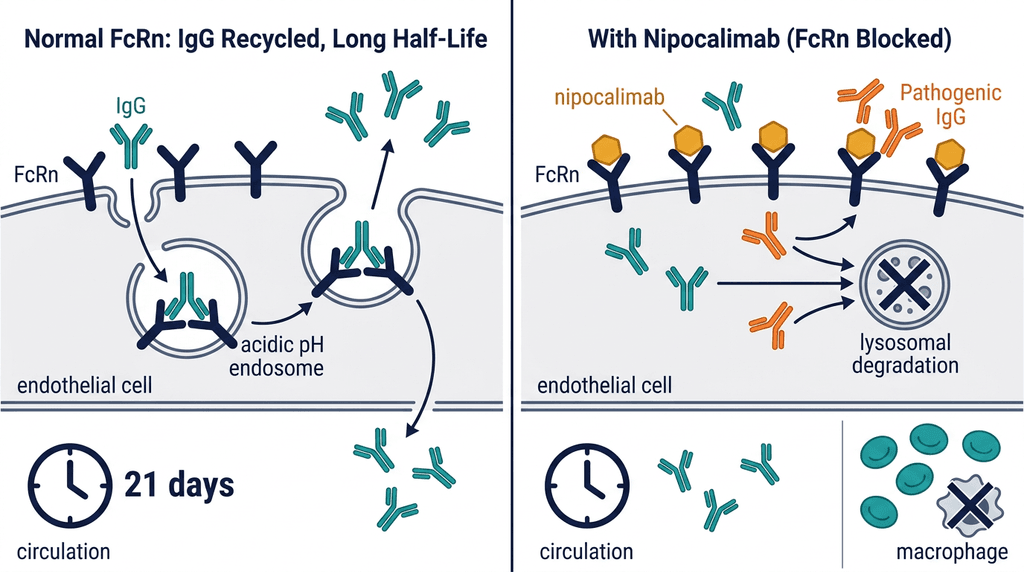
    Efgartigimod takes a fundamentally different approach. Rather than blocking a specific pathogenic antibody, it reduces the total circulating pool of all IgG antibodies, including the pathogenic ones, regardless of which protein they are targeting.

    The FcRn pathway

    FcRn (neonatal Fc receptor) is a protein expressed in many cell types throughout the body. Its normal function is to protect IgG antibodies from degradation, extending their half-life in circulation. When an IgG antibody is taken up by a cell, FcRn binds to it in the endosome and recycles it back to the cell surface, releasing it back into circulation rather than allowing it to be degraded. This recycling mechanism is why IgG antibodies have such long half-lives compared to other proteins.

    Efgartigimod is an engineered fragment of a human IgG1 antibody that binds to FcRn with high affinity. By occupying FcRn, it competes with endogenous IgG antibodies for receptor binding. IgG antibodies that cannot bind FcRn during the recycling process are instead routed to degradation. The result is a significant reduction in total circulating IgG levels, including the pathogenic IgG autoantibodies responsible for gMG across all serotypes.

    Because this mechanism does not depend on which specific IgG antibody is causing the disease, it works whether the target is AChR, MuSK, LRP4, or an antibody that hasn’t been identified yet. This is why the ADAPT SERON trial showed improvements across all three previously excluded serotypes, and why the FDA’s label expansion covers all adult gMG patients rather than requiring serotype-specific subgroup analysis to drive the approval.

    How efgartigimod compares mechanistically to other approved gMG treatments Prior to this approval, the main classes of approved or widely used therapies for gMG worked through different and more targeted mechanisms. Acetylcholinesterase inhibitors (pyridostigmine/Mestinon) don’t address the autoimmune cause at all; they work by slowing acetylcholine breakdown at the NMJ to compensate for the reduced receptor availability. Corticosteroids and general immunosuppressants (azathioprine, mycophenolate) broadly suppress the immune system, which reduces antibody production but also carries long-term systemic effects. Complement inhibitors (eculizumab/Soliris, ravulizumab/Ultomiris) target the complement pathway that AChR antibodies activate, which is why they work in anti-AChR positive patients but not in MuSK or seronegative patients, where complement is not the primary mechanism of damage. B-cell depleting therapies (rituximab, used off-label in MuSK-positive disease) work by eliminating the B cells that produce pathogenic antibodies, which can be particularly effective in MuSK-positive disease but requires significant immunosuppression. FcRn blockade with efgartigimod works upstream of all of these mechanisms, directly depleting the pathogenic antibodies themselves rather than compensating for their effects or blocking their downstream consequences.

    The ADAPT SERON Trial: What the Evidence Shows

    Trial design

    ADAPT SERON (NCT06298552) was a randomized, double-blind, placebo-controlled, multicenter Phase 3 study, conducted across North America, Europe, China, and the Middle East. It enrolled 119 adults with anti-AChR antibody negative gMG, spanning all three seronegative serotypes: anti-MuSK antibody positive, anti-LRP4 antibody positive, and triple seronegative.

    This was the largest clinical trial ever conducted specifically in seronegative gMG. Every enrolled participant had a confirmed MG diagnosis verified by an independent panel of experts and an MG-ADL total score of 5 or higher at enrollment, indicating meaningful functional impairment. Participants were on stable background therapy prior to randomization, including acetylcholinesterase inhibitors, corticosteroids, or other immunosuppressive drugs.

    Part A of the study randomized participants 1:1 to receive either 4 once-weekly IV infusions of efgartigimod or placebo, followed by a 5-week follow-up period. The primary endpoint was the change in MG-ADL total score from baseline to week 4 (day 29) in Part A. Part B is an open-label extension in which participants receive ongoing efgartigimod cycles with cycle initiation guided by clinical status from cycle 3 onward.

    What the MG-ADL score measures

    The MG-ADL (Myasthenia Gravis Activities of Daily Living) scale is an 8-item validated measure of the functional impact of myasthenia gravis symptoms on daily life. It evaluates: talking, chewing, swallowing, breathing, brushing teeth or combing hair, arising from a chair, double vision, and drooping eyelids. Each item is scored 0 to 3, with higher scores indicating greater impairment. A total score of 5 or higher at baseline indicates meaningful functional impairment. A reduction of 2 or more points is generally considered clinically meaningful.

    Results

    OutcomeEfgartigimod (VYVGART)Placebo
    Primary endpoint metYes (p=0.0068)Reference
    Mean change in MG-ADL at week 43.35-point improvementLess than efgartigimod arm
    Meaningful improvements across serotypesYes, all three: anti-MuSK, anti-LRP4, triple seronegative
    QMG score improvementYes (Quantitative Myasthenia Gravis scale)
    Sustained improvements through subsequent cyclesYes, observed in Part B (open-label extension)
    Safety profileConsistent with established efgartigimod profile
    New safety signalsNone identified

    Source: ADAPT SERON, NCT06298552. argenx press release, May 8, 2026. Presented at the 2026 MDA Clinical and Scientific Conference.

    A 3.35-point improvement on the MG-ADL scale is clinically meaningful. To put that in concrete terms: it represents measurable improvement across the specific tasks, breathing, swallowing, speaking, seeing clearly, and performing basic physical movements, that gMG takes away from patients. In a population that had no indication-specific approved therapy before today, this result represents the first formal evidence of efficacy derived from a study built specifically around their diagnosis.

    The improvement was observed across all three serotypes studied, which is the key finding from a regulatory standpoint. The FDA’s label expansion to cover all seronegative gMG is grounded in subgroup consistency: anti-MuSK, anti-LRP4, and triple seronegative patients all showed benefit in ADAPT SERON.


    Safety: What Patients and Providers Need to Know

    The safety profile in ADAPT SERON was consistent with efgartigimod’s established profile from prior trials in anti-AChR positive gMG and from its existing approvals for gMG and CIDP. No new safety signals were identified.

    The most common adverse effects of VYVGART and VYVGART Hytrulo include:

    • Respiratory tract infection
    • Headache
    • Urinary tract infection
    • Injection site reactions (VYVGART Hytrulo only)

    Important safety considerations from the prescribing information:

    • Infection risk: Because efgartigimod reduces total IgG levels (not just pathogenic antibodies), it also reduces some of the IgG antibodies that contribute to normal immune defense. Providers should delay treatment if a patient has an active infection. Patients should report any signs of infection promptly.
    • Allergic reactions: Serious hypersensitivity reactions can occur during or after infusion or injection. Patients should be monitored accordingly.
    • Infusion/injection-related reactions: Including elevated blood pressure, chills, and chest or back pain. These can occur during or shortly after administration.
    • Vaccinations: Live vaccines should be avoided during treatment. Discuss vaccination timing with your neurologist.
    • Pregnancy: Safety in pregnancy is not established. A pregnancy exposure registry is available at VYVGARTPregnancy.com or by calling 1-855-272-6524.

    The full prescribing information for VYVGART and VYVGART Hytrulo is available through the FDA.


    Two Administration Options: IV Infusion and Subcutaneous Injection

    One practical note for patients navigating the treatment decision is that efgartigimod is now available in two administration formats, which differ in setting and convenience.

    VYVGART (IV infusion): Administered intravenously in a clinical setting (infusion center or office). Each treatment cycle consists of 4 once-weekly infusions, approximately one hour per infusion.

    VYVGART Hytrulo (subcutaneous injection): Administered as a subcutaneous injection, which can be self-administered at home with a prefilled syringe. This option uses Halozyme’s ENHANZE drug delivery technology to allow subcutaneous delivery of the same efgartigimod. For patients who prefer to avoid the infusion center setting, this represents a meaningful quality-of-life difference.

    Both formulations are now approved for all adult gMG serotypes. The choice between them is made with a treating neurologist based on patient preference, access, and clinical circumstances.


    The Equity Dimension: Why a Trial Built Around Seronegative Patients Matters

    The structural problem that ADAPT SERON addressed is worth naming plainly. For decades, the way pivotal gMG trials were designed reflected and reinforced the treatment gap. Enrollment criteria typically required detectable anti-AChR antibodies for confirmation of diagnosis. This made sense from a scientific standpoint at the time: it reduced diagnostic uncertainty and created a more homogeneous trial population. But the effect was that seronegative patients, who make up roughly 20% of gMG cases and share the same debilitating disease, were systematically excluded from the evidence base that generated approved indications.

    The consequence is not abstract. An FDA approval requires indication-specific evidence. Without trials that enrolled seronegative patients, no drug could carry an indication specific to their form of the disease. Without an indication, prescribing for this population operated in a gray zone, even when the same drugs were being used. For triple seronegative patients in particular, no approved drug had ever been studied or indicated specifically for them before today.

    ADAPT SERON was built from the ground up to generate that evidence. The result is not just a label expansion for one drug. It is the first Phase 3 clinical evidence generated specifically for this population that has successfully supported FDA approval.


    What Patients With gMG Should Know Right Now

    If you have been diagnosed with gMG and your serotype is MuSK-positive, LRP4-positive, or triple seronegative

    VYVGART and VYVGART Hytrulo are now FDA-approved for your specific serotype. This means they can be prescribed by your treating neurologist with an approved indication covering your diagnosis. The label expansion took effect May 8, 2026. Talk to your neurologist about whether this treatment is appropriate for your situation, including your current medication regimen, your disease activity, and whether the IV or subcutaneous administration option is a better fit for your circumstances.

    If your antibody status is unknown or your diagnosis has not been fully characterized serologically

    The expanded label means that clinicians can now prescribe efgartigimod based on a confirmed gMG diagnosis without requiring full serological characterization first. If your diagnosis has not included complete antibody testing (AChR, MuSK, and LRP4), discuss with your neurologist whether additional testing would be informative for your treatment planning.

    Insurance coverage and access

    Coverage decisions by insurers typically follow FDA approvals for rare disease treatments, but prior authorization requirements can create delays. The argenx patient support program, My VYVGART Path, provides access support, benefits verification, and financial assistance for eligible patients. More information is available at VYVGART.com.

    For patients without insurance or with limited coverage, discuss options with your treatment center’s patient services team and review the argenx access support resources.

    Finding a specialist

    gMG is a rare disease and is ideally managed by or in consultation with a neurologist with expertise in neuromuscular disease. The Myasthenia Gravis Foundation of America (MGFA) maintains a physician directory and patient resources. The Muscular Dystrophy Association (MDA) also provides care resources, including MDA Care Centers with neuromuscular specialists. The National Organization for Rare Disorders (NORD) maintains a patient-facing overview of the disease and available resources.


    Sources

    argenx FDA approval press release: argenx Announces U.S. FDA Approval Expanding VYVGART and VYVGART Hytrulo for Use in All Adult Patients Living with gMG. GlobeNewswire. May 8, 2026.

    MDA welcome statement: FDA Expands Approval of VYVGART and VYVGART Hytrulo to All Adults Living with Generalized Myasthenia Gravis. Muscular Dystrophy Association. May 8, 2026.

    ADAPT SERON trial registration: NCT06298552. ClinicalTrials.gov.

    NeurologyLive sBLA coverage: sBLA Acceptance Positions Efgartigimod as Potential First Therapy for Seronegative Myasthenia Gravis. NeurologyLive. February 2026.

    Clinical Trial Vanguard analysis: FDA Expands Efgartigimod Approval to All Adult Generalized Myasthenia Gravis Patients. clinicaltrialvanguard.com. May 8, 2026.

    FcRn biology: The neonatal Fc receptor (FcRn): a misnomer? PMC7211387.

    MG-ADL scale reference: Validation of the MG-ADL scale. PMC6527389.

    Neonatal myasthenia gravis: Neonatal Myasthenia Gravis. StatPearls. NCBI.

    NINDS gMG overview: Myasthenia Gravis. National Institute of Neurological Disorders and Stroke.

    MGFA patient resources: Myasthenia Gravis Foundation of America.

    Patient resources: MGFA | MDA | NORD | VYVGART.com | VYVGARTPregnancy.com

    Disclaimer: Health Evidence Digest provides general information about FDA approvals and health research for educational purposes only. Nothing on this site constitutes medical advice, diagnosis, or treatment. Decisions about myasthenia gravis treatment, including whether efgartigimod (VYVGART/VYVGART Hytrulo) is appropriate for your situation, should be made in consultation with a qualified neurologist or neuromuscular disease specialist who can evaluate your individual diagnosis, serotype, and treatment history.

  • Nexplanon Now Lasts 5 Years: What Women and Providers Need to Know About the FDA’s Extended Approval

    Nexplanon Now Lasts 5 Years: What Women and Providers Need to Know About the FDA’s Extended Approval

    📌 What changed and when January 16, 2026: The FDA approved a supplemental NDA extending Nexplanon’s approved duration from 3 years to 5 years. February 23, 2026: New REMS (Risk Evaluation and Mitigation Strategy) program launched. Nexplanon is now only available through REMS-enrolled providers. August 23, 2026: Deadline by which all providers who insert or remove Nexplanon must complete REMS certification or lose ordering access. If you have a Nexplanon currently: it may now be left in place for up to 5 years from insertion, rather than 3. Discuss your specific timeline with your provider.

    If you have a Nexplanon implant in your arm, there’s a good chance you’ve heard the three-year date coming up like a countdown. Get it out, replace it, or switch to something else. That schedule just changed.

    On January 16, 2026, the FDA approved a supplemental new drug application from Organon extending Nexplanon’s approved duration of use from three years to five years. The approval is based on a clinical trial that followed 399 women through years four and five of continuous implant use and found zero pregnancies and no new safety findings. The same implant, the same arm, two additional years of coverage.

    This post covers the clinical evidence behind the extension, what the new REMS program means for patients and providers, who can benefit from the extended duration and who should still remove at three years, and what to do if you have an implant right now.


    What Nexplanon Is and How It Works

    Nexplanon is a single-rod subdermal contraceptive implant, a small, flexible rod about 4 centimeters long and 2 millimeters wide, roughly the size of a matchstick. It is inserted just under the skin of the inner, non-dominant upper arm by a trained provider. It contains 68 mg of etonogestrel, a synthetic progestin, along with 15 mg of barium sulfate (which makes the implant visible on X-ray) and 0.1 mg of magnesium stearate.

    Etonogestrel is released slowly and continuously from the implant into the bloodstream. It prevents pregnancy through three complementary mechanisms:

    • Suppression of ovulation: the primary mechanism. Etonogestrel inhibits the LH surge that triggers ovulation. No egg released means no pregnancy possible.
    • Thickening of cervical mucus: even if ovulation were to occur, thickened cervical mucus creates a barrier that sperm cannot penetrate effectively.
    • Modification of the endometrium: changes in the uterine lining create an additional unfavorable environment for implantation.

    These three mechanisms together make Nexplanon one of the most effective contraceptive methods available. Its failure rate is less than 0.1% per year, lower than tubal ligation, vasectomy, IUDs, pills, patches, rings, and condoms. Unlike daily pills or monthly rings, it works without any ongoing action on the patient’s part: once inserted, it simply works.

    It is also fully reversible. Fertility returns rapidly after removal, typically within days to weeks, not months. This makes it suitable for patients who want highly effective contraception now but may want to conceive in the future.


    The Clinical Evidence Behind the 5-Year Extension

    The FDA’s extension is based on data from a dedicated clinical trial designed specifically to evaluate contraceptive efficacy and safety during years four and five of use, the period for which no prior approval existed.

    Study design

    NCT04626596 was a multicenter, single-arm, open-label study conducted in the United States. It enrolled 399 women aged 18 to 35 who had been using a Nexplanon implant for exactly 36 months (within a two-week window). Participants continued using the same implant for an additional 24 months, with visits at months 6, 12, 18, and 24 of the extended period. The primary efficacy endpoint was the Pearl Index during years four and five.

    The results

    MeasureResult
    Participants enrolled399 women aged 18 to 35 (mean age 27)
    Pregnancies during years 4 to 5Zero
    Pearl Index (years 4 to 5)0.0 per 100 women-years (95% CI 0.00 to 0.69)
    Mean BMI29.4 kg/m² (range 17.2 to 64.3)
    Participants with BMI 30 or above (obesity)152 participants, 38.1%
    Participants with BMI 40 or above (severe obesity)40 participants, 10.0%
    New safety findings in years 4 to 5None
    Safety profile vs. years 1 to 3Consistent; no new or worsening signals
    Most common adverse event (extended use)Intermenstrual (irregular) bleeding

    Source: NCT04626596. Organon press release January 16, 2026. FDA sNDA approval January 16, 2026.

    The Pearl Index of 0.0, meaning zero pregnancies observed per 100 women-years of use, is the strongest possible contraceptive efficacy result. The upper bound of the 95% confidence interval (0.69) confirms that even accounting for statistical uncertainty, the maximum plausible pregnancy rate during years four and five remains well below 1 per 100 women-years. This is consistent with the established efficacy in years one through three.

    The BMI data is important and clinically underappreciated Weight-based concerns about hormonal contraceptive efficacy are a common patient question. Higher body weight means more body fat, and progestin hormones can be distributed into fat tissue, potentially lowering circulating hormone levels. For some hormonal methods, particularly emergency contraception and some combined pills, this is a documented efficacy concern. For the etonogestrel implant, the clinical trial data has consistently shown maintained efficacy across a wide BMI range. The year 4 to 5 extension study enrolled participants with a mean BMI of 29.4, nearly at the obesity threshold, with a full 38% above BMI 30 and 10% above BMI 40. Zero pregnancies across this population is a meaningful data point for clinicians advising patients with obesity on contraceptive options. The updated label explicitly reflects this diversity.

    Who Benefits From the Extended Duration and Who Should Still Remove at 3 Years

    The 5-year approval is a maximum, not a mandate. Every patient’s situation is individual, and the right duration depends on goals, health status, and preferences.

    Patients likely to benefit from extending to 5 years

    • Those who are satisfied with their current implant experience and have no plans to conceive in the next two years
    • Those who want to avoid an additional insertion/removal procedure, a minor but real burden for some patients
    • Those with irregular access to healthcare where scheduling a replacement at exactly 3 years is difficult
    • Those for whom cost is a factor: one fewer procedure and one fewer device every 5 years versus every 3

    Patients who may prefer removal at or before 3 years

    • Those planning pregnancy in the next year or two
    • Those experiencing side effects (irregular bleeding, headache, mood changes, weight changes) that are troublesome and haven’t improved
    • Those who want to switch to a different contraceptive method
    • Those who have significant medical changes since insertion that affect contraceptive choice or introduce new contraindications

    If You Have a Nexplanon Right Now: What This Means for You

    This is the question most current implant users will want answered directly.

    My implant is approaching or just past 3 years

    The FDA approval means you now have the option to leave your existing implant in place for up to 5 years from the original insertion date, not 5 more years from now. Contact your provider to discuss whether extending is right for you. If you and your provider decide to extend, no procedure is needed; you simply continue as-is. If your implant has already been in place for more than 3 years and you were unaware of the extension, discuss with your provider promptly. The implant must be removed by the end of year 5.

    My implant was recently inserted (within the last year or two)

    When you approach the previously expected 3-year mark, you can now choose to stay with your current implant for an additional 2 years, as long as you remain a good candidate for continued use and have no contraindications at that point. No action needed now.

    My implant was removed and replaced recently, or I’m planning removal

    If you had your implant replaced at or before 3 years, you cannot retroactively extend the old implant. That device has been removed. Your new implant can now be used for up to 5 years from its insertion date. If you scheduled removal before learning about the extension and want to delay, contact your provider’s office to discuss.


    The New REMS Program: What It Is and Why It Exists

    Alongside the duration extension, the FDA required implementation of a new Risk Evaluation and Mitigation Strategy (REMS) for Nexplanon. A REMS is a safety program the FDA uses when a product has known or potential risks that require specific measures beyond standard labeling to manage safely. Nexplanon’s REMS exists specifically to address the risk of complications from improper insertion and removal.

    Why improper insertion is a real concern

    Nexplanon insertion is a minor procedure, but it is a procedure, and getting it wrong has consequences. An implant placed too deeply (intramuscular or beyond) can be difficult or impossible to remove without surgery. Migration, where the implant or a fragment moves from the insertion site, has been reported and sometimes requires more complex removal. Insertion near neurovascular structures can cause nerve damage. The REMS is designed to ensure that every provider who offers Nexplanon has the training to place it correctly, at the recommended depth and location, every time.

    What the REMS requires for providers

    StepWhat’s Required
    1. Register at nexplanonrems.comCreate an account at the REMS portal
    2. Review the Healthcare Provider GuideRead through the updated training materials
    3. Review the Prescribing InformationUpdated to reflect 5-year duration and BMI data
    4. Complete Knowledge Assessment7-question online quiz (~10 minutes total for steps 1 to 4)
    5. Complete Enrollment FormSubmit to receive REMS certification
    6. Complete in-person practical trainingRequired if not previously Organon-trained; includes competency checklist
    7. Report insertion/removal eventsAny complications must be reported using the IRRE form or by calling 1-833-NXP-REMS
    Critical provider deadline: August 23, 2026 Providers who insert or remove Nexplanon must complete REMS certification by August 23, 2026. After this date, providers who have not enrolled will not be able to order or receive Nexplanon for insertion. The enrollment window opened February 23, 2026. For providers who completed Organon’s previous Clinical Training Program, the online REMS enrollment (steps 1 to 5 above) may be sufficient without additional in-person training, depending on whether training history is reflected in the portal. If the system indicates training is required despite prior completion, call 1-833-NXP-REMS (1-833-697-7367). There are no changes to the recommended insertion technique or location. The correct site remains 3 to 5 cm posterior to the sulcus between the biceps and triceps on the inner upper arm. Full guidance is available at nexplanonrems.com.

    For patients: the REMS is a provider-side requirement. You do not need to do anything differently. It does mean that your provider must be REMS-certified to insert or remove your implant. If you are concerned about whether your current provider is enrolled, you can ask them directly or contact Organon’s REMS support line at 1-833-697-7367.


    Safety, Side Effects, and Contraindications

    Common side effects (from years 1 to 3 trials)

    These were reported in at least 5% of clinical trial participants and remain the primary side effects to counsel patients about:

    • Headache (24.9%), the most common
    • Vaginitis (14.5%)
    • Weight increase (13.7%)
    • Acne (13.5%)
    • Breast pain (12.8%)
    • Abdominal pain (10.9%)
    • Pharyngitis/upper respiratory symptoms (10.5%)
    • Changes in menstrual bleeding patterns (the most common reason for discontinuation, at 11.1%)

    Menstrual pattern changes deserve specific mention because they are common and often unexpected. Nexplanon can cause irregular spotting or light bleeding, more frequent bleeding, less frequent bleeding, or complete absence of periods, and the pattern that develops in the first three months is broadly predictive of what to expect going forward. This is not a sign of pregnancy or a problem; it is a normal pharmacological effect of progestin on the endometrium. For patients who find their bleeding pattern unacceptable, removal and method change remains an option at any time.

    Contraindications: who should not use Nexplanon

    Per the updated prescribing information, Nexplanon is contraindicated in patients with:

    • Known or suspected pregnancy
    • Current or past history of thrombosis or thromboembolic disorders
    • Liver tumors (benign or malignant) or active liver disease
    • Undiagnosed abnormal uterine bleeding
    • Known or suspected breast cancer, personal history of breast cancer, or other progestin-sensitive cancer
    • Allergy to any component of Nexplanon

    Drug interactions to know

    Certain medications that induce the CYP3A4 enzyme, including rifampin, some anti-seizure medications (carbamazepine, phenytoin, phenobarbital), and St. John’s Wort, can accelerate etonogestrel metabolism and potentially reduce implant efficacy. Patients starting these medications should discuss contraceptive options with their provider. The implant does not interact with most common medications.


    Cost and Insurance Coverage

    Under the Affordable Care Act, most private insurers are required to cover FDA-approved contraceptive methods without cost-sharing, meaning $0 out-of-pocket for the patient, including the device and the insertion procedure. This applies to Nexplanon. However, coverage details vary by plan, and some plans have grandfathered exemptions or denominational exemptions. It is always worth verifying with your specific insurer.

    For uninsured or underinsured patients, the 5-year duration represents meaningful cost savings, one fewer device and insertion procedure per 10 years of use compared to the 3-year schedule. Title X family planning clinics provide Nexplanon on a sliding-scale fee basis. Organon’s patient support program can assist with coverage navigation; contact information is available at organon.com.

    This extension is part of a broader pattern of evidence-based updates improving access to women’s reproductive healthcare in 2026. For related coverage, see our post on new 2026 cervical cancer self-collection screening guidelines and our overview of GLP-1 medications and PCOS fertility research.


    Do you have questions about your implant or your timeline?

    The FDA’s 5-year extension is a straightforward evidence-based update: the implant keeps working, the safety profile stays consistent, and women with BMI across a wide range continue to be protected. For women with a current implant approaching the 3-year mark, the conversation with your provider is now richer; you have a real choice rather than an automatic expiration date. For providers: the REMS enrollment deadline of August 23, 2026 is actionable now. The enrollment process at nexplanonrems.com takes approximately 10 minutes for those who have completed prior training. Bedsider’s provider resource page and the Reproductive Health Access Project have step-by-step REMS guides for clinical teams.


    Sources

    Organon press release: Organon Announces FDA Approval of sNDA Extending Duration of Use of NEXPLANON (etonogestrel implant) 68 mg Radiopaque. January 16, 2026.

    FDA updated prescribing information: NEXPLANON Prescribing Information (2026). accessdata.fda.gov.

    Clinical trial registration: NCT04626596: Study to Assess Contraceptive Efficacy and Safety of ENG Implant Beyond 3 Years of Use. ClinicalTrials.gov.

    Contemporary OB/GYN: FDA approves 5-year use for etonogestrel implant 68 mg contraceptive. contemporaryobgyn.net. January/March 2026.

    ReproHH (UCSF): FDA Approves Updated Nexplanon Label and Launches New REMS: What to Know. reprohh.ucsf.edu. February 2026.

    Reproductive Health Access Project: Contraceptive Pearl: New FDA REMS Requirement on Nexplanon. reproductiveaccess.org. March 2026.

    Bedsider for providers: Nexplanon REMS Requirements: What Providers Need to Know. providers.bedsider.org. March 2026.

    Organon Pro (REMS FAQs): FAQs: NEXPLANON for HCPs. organonpro.com.

    REMS enrollment: nexplanonrems.com. REMS support: 1-833-NXP-REMS (1-833-697-7367)

    ACOG LARC resource: Long-Acting Reversible Contraception: Intrauterine Device and Implant. ACOG.

    Disclaimer: Health Evidence Digest provides general information about FDA approvals and health research for educational purposes. This content is not a substitute for professional medical advice. Decisions about contraceptive methods, including whether to extend Nexplanon use to 5 years, should be made in consultation with a qualified healthcare provider who can account for your individual health history and circumstances.
  • A Historic First: FDA Approves Immunotherapy for Platinum-Resistant Ovarian Cancer — What the KEYNOTE-B96 Data Tells Us

    A Historic First: FDA Approves Immunotherapy for Platinum-Resistant Ovarian Cancer — What the KEYNOTE-B96 Data Tells Us

    📌 The essentials On February 10, 2026, the FDA approved pembrolizumab (Keytruda, Merck) in combination with paclitaxel, with or without bevacizumab, for adult patients with platinum-resistant epithelial ovarian, fallopian tube, or primary peritoneal carcinoma whose tumors express PD-L1 (combined positive score, or CPS, of at least 1). The approval covers patients who have received one or two prior lines of systemic therapy. This is the first FDA-approved immunotherapy for ovarian cancer in history. The clinical basis: KEYNOTE-B96/ENGOT-ov65 (NCT05116189), a randomized, double-blind, placebo-controlled Phase 3 trial in 643 patients, showed median overall survival of 18.2 months versus 14.0 months with placebo (HR 0.76; p=0.0053) in the PD-L1 CPS of 1 or higher population. The first statistically significant OS benefit ever demonstrated by an immune checkpoint inhibitor in ovarian cancer. A companion diagnostic requirement: Tumor testing with the PD-L1 IHC 22C3 pharmDx assay confirming CPS of 1 or higher is required before treatment. This is a requirement, not a recommendation.

    Ovarian cancer has resisted immunotherapy for decades. Every major trial of immune checkpoint inhibitors in this disease came back negative or borderline, results that didn’t survive longer follow-up. The field watched other gynecologic cancers, particularly cervical and endometrial, respond to PD-1 blockade while ovarian cancer remained stubbornly outside that story.

    That changed on February 10, 2026.

    The FDA approved pembrolizumab (Keytruda, Merck) in combination with paclitaxel, with or without bevacizumab, for adult patients with platinum-resistant epithelial ovarian, fallopian tube, or primary peritoneal carcinoma whose tumors express PD-L1 (CPS of at least 1). The approval covers patients who have received one or two prior lines of systemic therapy.

    It is the first FDA-approved immunotherapy for ovarian cancer in history.

    This post covers what platinum resistance means and why it matters, what KEYNOTE-B96 showed across its primary and key secondary endpoints, how to read the survival data carefully, what the companion diagnostic approval means in practice, and what questions are still open.


    Platinum Resistance: Why This Setting Is So Hard to Treat

    Most women with advanced ovarian cancer respond well to their first-line treatment, typically surgery followed by platinum-based chemotherapy, often combined with a taxane and increasingly with PARP inhibitors as maintenance. Response rates in the frontline setting can exceed 70 to 80%.

    The problem is recurrence. About 70 to 80% of patients with advanced ovarian cancer relapse after initial treatment. When recurrence happens, the most important prognostic factor is how quickly it occurs after the last platinum therapy. Patients whose disease progresses more than six months after platinum are classified as platinum-sensitive and can be retreated with platinum. Patients whose disease progresses within six months are classified as platinum-resistant.

    Platinum resistance is a watershed moment in the treatment arc. Non-platinum options, including weekly paclitaxel, pegylated liposomal doxorubicin, gemcitabine, and bevacizumab, produce response rates in the 10 to 20% range and median progression-free survival measured in months. Median overall survival in platinum-resistant ovarian cancer has historically ranged from roughly 12 to 16 months. These patients carry significant unmet need, and the disease is hard to control with anything currently available.

    That is the context in which the KEYNOTE-B96 results need to be understood.


    The KEYNOTE-B96 Trial: Design and Patient Population

    KEYNOTE-B96 (also known as ENGOT-ov65, NCT05116189) was a multicenter, randomized, double-blind, placebo-controlled Phase 3 trial enrolling 643 patients with histologically confirmed epithelial ovarian, fallopian tube, or primary peritoneal carcinoma. Eligibility required:

    • Platinum-resistant disease, defined as radiographic progression within six months of the last platinum-based regimen
    • One or two prior lines of systemic therapy for ovarian carcinoma
    • At least one prior platinum-based chemotherapy regimen
    • Measurable disease by RECIST v1.1

    Patients with primary platinum-refractory disease, meaning progression during or immediately after first-line platinum, were excluded.

    Patients were randomized 1:1 to pembrolizumab plus weekly paclitaxel (80 mg/m² on days 1, 8, and 15 of each 3-week cycle), with or without bevacizumab (10 mg/kg every two weeks), or placebo plus the same backbone. Bevacizumab use was at investigator’s discretion and was a stratification factor. Stratification also included geographic region and PD-L1 expression by CPS.

    The primary endpoint was investigator-assessed progression-free survival (PFS) by RECIST v1.1, evaluated first in the PD-L1 CPS of 1 or higher population, then in the ITT population. Overall survival was a key secondary endpoint.

    What is PD-L1 CPS and why does it determine eligibility? PD-L1 Combined Positive Score (CPS) measures PD-L1 protein expression across tumor cells, tumor-associated lymphocytes, and macrophages. A CPS of 1 or higher means at least 1 PD-L1-staining cell per 100 tumor cells was detected. This is a relatively low threshold: in KEYNOTE-B96, approximately 466 of 643 patients (roughly 72%) had CPS of 1 or higher. The FDA approval is restricted to CPS of 1 or higher patients, where both PFS and OS benefits were demonstrated. The ITT population also showed significant PFS improvement, but the OS benefit was most clearly established in the CPS of 1 or higher group. This matters in practice: before receiving this regimen, a patient’s tumor must be tested with the FDA-approved companion diagnostic, the PD-L1 IHC 22C3 pharmDx assay, and return a CPS of 1 or higher result. This is a requirement, not a recommendation.

    The Results: Progression-Free Survival and Overall Survival

    The trial conducted two pre-specified interim analyses. The second (IA2), with a data cutoff of May 5, 2025, was presented at ESMO Congress 2025 in Berlin in October 2025 and formed the basis for the February 2026 FDA approval. Final OS data were subsequently published in The Lancet in April 2026.

    Progression-Free Survival

    In the PD-L1 CPS of 1 or higher population (n=466), median PFS was 8.3 months with pembrolizumab versus 7.2 months with placebo, with a hazard ratio of 0.72 (95% CI 0.58 to 0.89; p=0.0014). The 12-month PFS rate was 35.2% for pembrolizumab versus 22.6% for placebo.

    In the ITT population (all 643 patients), median PFS was 8.3 versus 6.4 months (HR 0.70; 95% CI 0.58 to 0.84; p less than 0.0001), with 12-month PFS rates of 33.1% versus 21.3%.

    These are statistically significant and clinically meaningful improvements in a setting where six months of progression-free survival is often considered a reasonable benchmark.

    Overall Survival

    Among the 466 PD-L1 CPS of 1 or higher patients, median OS was 18.2 months in the pembrolizumab arm versus 14.0 months with placebo, a hazard ratio of 0.76 (95% CI 0.61 to 0.94; p=0.0053). The 12-month OS rate was 69.1% versus 59.3%. The 18-month OS rate was 51.5% versus 38.9%.

    A four-month improvement in median OS. The first statistically significant overall survival benefit ever shown by an immune checkpoint inhibitor in ovarian cancer.

    EndpointPembrolizumab plus chemoPlacebo plus chemoHR (95% CI)P-value
    Median PFS (CPS of 1 or higher)8.3 months7.2 months0.72 (0.58 to 0.89)0.0014
    Median PFS (ITT)8.3 months6.4 months0.70 (0.58 to 0.84)less than 0.0001
    Median OS (CPS of 1 or higher)18.2 months14.0 months0.76 (0.61 to 0.94)0.0053
    12-month OS (CPS of 1 or higher)69.1%59.3%
    18-month OS (CPS of 1 or higher)51.5%38.9%

    Source: KEYNOTE-B96/ENGOT-ov65 Phase 3 trial, IA2 (data cutoff May 5, 2025). Final OS data: The Lancet, April 2026. FDA approval: February 10, 2026.


    How to Read These Numbers Carefully

    A four-month improvement in median OS is real and clinically meaningful in this setting, particularly given the historical absence of any survival benefit from immunotherapy in ovarian cancer. But it is worth understanding what the numbers do and don’t tell us.

    The hazard ratio of 0.76 means that at any given point during the trial, patients in the pembrolizumab arm had a 24% lower risk of death than those in the placebo arm. This is not a cure. It is a reduction in the rate of events that translates into prolonged survival for a meaningful portion of patients. The 18-month OS rate shifting from 38.9% to 51.5% is the clearest way to see this: at 18 months, roughly one in eight additional patients were alive in the pembrolizumab arm compared to the placebo arm.

    The approval is restricted to CPS of 1 or higher. About 72% of patients in KEYNOTE-B96 met this threshold, so most platinum-resistant ovarian cancer patients would be eligible for testing, but not all will test positive.

    Median survival describes the midpoint of the distribution, not individual patient outcomes. Some patients in the pembrolizumab arm had substantially longer survival than 18 months. The final OS data from The Lancet publication provides a clearer view of the tail of the survival curve, which will help clarify whether there is a subset of patients with especially durable benefit, the pattern that checkpoint inhibitors sometimes produce in other tumors.


    The Companion Diagnostic: What the PD-L1 Test Means in Practice

    The FDA simultaneously approved the PD-L1 IHC 22C3 pharmDx assay (Agilent Technologies) as a companion diagnostic for identifying eligible patients. Tumor PD-L1 testing confirming CPS of 1 or higher is required before treatment, not optional.

    The 22C3 pharmDx assay is the same companion diagnostic used in pembrolizumab approvals across multiple other tumor types, including cervical, endometrial, esophageal, and gastric cancers. At most academic medical centers and major oncology practices, this test is already part of the standard pathology workflow. At community oncology centers or in lower-resource settings, access to and turnaround time on the assay is a practical consideration worth discussing with the treating team.

    Tumor tissue for PD-L1 testing can come from the original diagnosis or a recurrence biopsy. Given that PD-L1 expression can change with disease progression, some oncologists may prefer more recently collected tissue, though the label does not mandate this.

    What about bevacizumab? The approved regimen is pembrolizumab plus paclitaxel, with or without bevacizumab. Bevacizumab (Avastin) is an anti-VEGF antibody with established activity in ovarian cancer, including in the platinum-resistant setting. Its use in KEYNOTE-B96 was at investigator discretion and was a stratification factor. Patients with contraindications to anti-VEGF therapy, such as certain cardiovascular risk factors, recent major surgery, a history of GI perforation, or significant proteinuria, can receive pembrolizumab plus paclitaxel without bevacizumab. Review the full Keytruda prescribing information for complete contraindication guidance.

    Why Previous Immunotherapy Trials in Ovarian Cancer Failed, and Why This One Didn’t

    The history of checkpoint inhibitor trials in ovarian cancer before KEYNOTE-B96 is largely a story of negative results. Earlier Phase 3 trials, including atezolizumab plus chemotherapy in frontline and maintenance settings, did not demonstrate meaningful survival improvements. Single-agent anti-PD-1 trials showed modest response rates of 10 to 15% in unselected ovarian cancer patients.

    Several factors likely contributed. Ovarian cancer has a relatively immunosuppressive tumor microenvironment, with high regulatory T cell infiltration, immunosuppressive cytokines, and ascites fluid that dampens immune activity. Tumor mutational burden is generally lower than in cancers like melanoma or lung cancer that respond robustly to checkpoint inhibitors. And earlier trials often did not select for PD-L1 expression.

    KEYNOTE-B96 made design choices that may have improved its chances. The combination with weekly paclitaxel, a metronomic dosing schedule thought to have immunomodulatory properties alongside its cytotoxic effects, may have made the tumor microenvironment more permissive to immune infiltration. The CPS of 1 or higher selection enriched for a more immunologically accessible population. These are mechanistic hypotheses with biological plausibility, not proven causal explanations, but they provide a rational basis for why this combination in this specific population succeeded where broader efforts did not.


    Safety: What Patients and Clinicians Need to Know

    The safety profile of the pembrolizumab combination in KEYNOTE-B96 was consistent with prior pembrolizumab trials. No new safety signals were identified.

    Pembrolizumab carries immune-mediated adverse reactions as a class, the consequence of broadly activating the immune system. These can affect virtually any organ system.

    Key immune-mediated risks:

    • Pneumonitis: inflammation of the lungs; monitor for new or worsening respiratory symptoms
    • Colitis: diarrhea and abdominal pain; may require corticosteroids or discontinuation
    • Hepatitis: elevated liver enzymes; regular LFT monitoring during treatment
    • Endocrinopathies: thyroid dysfunction, adrenal insufficiency, type 1 diabetes mellitus, hypophysitis
    • Nephritis: elevated creatinine; monitor renal function
    • Dermatologic reactions: rash, rare severe skin reactions including Stevens-Johnson syndrome

    Most immune-mediated adverse reactions are manageable with corticosteroids if caught early. The prescribing information outlines detailed management algorithms, including when to hold versus permanently discontinue pembrolizumab.

    Other warnings:

    Infusion-related reactions: fever, chills, hypotension, and bronchospasm are possible. Standard premedication and monitoring protocols apply.

    Embryo-fetal toxicity: pembrolizumab can cause fetal harm. Women of reproductive potential should use effective contraception during treatment and for at least four months after the final dose.

    Dosing:

    The approved pembrolizumab dose is 200 mg IV every three weeks or 400 mg IV every six weeks, until disease progression, unacceptable toxicity, or up to 24 months of treatment. Pembrolizumab is administered before paclitaxel and bevacizumab when given on the same day.

    Keytruda Qlex, a subcutaneous formulation combining pembrolizumab with berahyaluronidase alfa-pmph, was also approved. The subcutaneous dose is 395 mg/4,800 units every three weeks or 790 mg/9,600 units every six weeks, and can be administered in approximately five to ten minutes rather than the 30-minute IV infusion. For patients receiving multiple cycles over months of treatment, this is a real reduction in clinic time.


    Open Questions and the Road Ahead

    The KEYNOTE-B96 approval opens a new chapter in ovarian cancer treatment, but several clinical questions will shape how the approval is used in practice.

    How durable is the benefit?

    The final OS data in The Lancet provides longer follow-up than the interim analysis. The field will be watching for a favorable tail on the survival curve, the pattern suggesting a subset of patients achieve especially prolonged disease control, which checkpoint inhibitors produce in some tumor types.

    Does PD-L1 CPS fully capture who responds?

    CPS of 1 or higher is a broad threshold. Within the PD-L1-positive population there is likely meaningful heterogeneity in response. Future work will examine whether higher CPS thresholds, tumor mutational burden, microsatellite instability status, or tumor-infiltrating lymphocyte density can further refine patient selection.

    What about earlier lines of therapy?

    The positive KEYNOTE-B96 result will prompt investigators to ask whether pembrolizumab-containing regimens have a role in the frontline or maintenance setting in ovarian cancer. Several trials are already exploring this. The data in those settings will need to be evaluated on their own terms.

    Sequencing after progression on this regimen:

    The approval covers patients after one or two prior regimens. What comes next for patients who progress on pembrolizumab plus chemotherapy? The treatment landscape at third or later lines remains difficult, and ongoing trials will need to address sequencing questions. ClinicalTrials.gov is the primary resource for identifying open studies.

    Project Orbis: A Global Review Pathway This approval was reviewed under Project Orbis, an FDA Oncology Center of Excellence initiative enabling concurrent submission and review across multiple international regulatory agencies. For KEYNOTE-B96, FDA collaborated with Australia’s Therapeutic Goods Administration, Health Canada, and Switzerland’s Swissmedic. Project Orbis doesn’t mean all countries approve simultaneously; each agency makes its own decision. But it creates a framework for data sharing that can accelerate global access. The designation signals that review is underway or completed in partner countries.

    What This Means for Patients With Platinum-Resistant Ovarian Cancer

    For patients who have progressed after one or two lines of therapy and are now facing platinum-resistant disease, the conversation with their oncologist includes a genuinely new option for the first time. Pembrolizumab plus paclitaxel, with or without bevacizumab, is not a marginal refinement. It is the first regimen to improve overall survival in this population in a Phase 3 trial.

    The first step is PD-L1 testing. Patients whose disease has not been recently biopsied may want to discuss with their oncologist whether fresh tissue for biomarker testing is feasible and clinically appropriate at the time of progression.

    For related coverage of how immunotherapy and ADC approvals are expanding across gynecologic and breast cancers in 2026, see our posts on Dato-DXd in triple-negative breast cancer, vepdegestrant and the first PROTAC approval in oncology, and what the FDA’s contrasting decisions on camizestrant and vepdegestrant reveal about the future of ESR1-guided treatment.

    Patient advocacy organizations with resources for ovarian cancer include the Ovarian Cancer Research Alliance, the National Ovarian Cancer Coalition, and the Foundation for Women’s Cancer. All three maintain clinical trial databases and physician directories. Patients interested in trials evaluating pembrolizumab in earlier-line ovarian cancer settings can search for open studies at ClinicalTrials.gov.


    Sources

    FDA approval: FDA Approves Pembrolizumab with Paclitaxel for Platinum-Resistant Epithelial Ovarian, Fallopian Tube, or Primary Peritoneal Carcinoma. February 10, 2026. FDA.gov.

    KEYNOTE-B96 trial registration: NCT05116189. ClinicalTrials.gov.

    ESMO 2025 abstract: Colombo N et al. Pembrolizumab vs Placebo Plus Weekly Paclitaxel plus/minus Bevacizumab in Platinum-Resistant Recurrent Ovarian Cancer. LBA3. ESMO Congress 2025, Berlin, October 2025.

    Final OS publication: KEYNOTE-B96/ENGOT-ov65 final overall survival analysis. The Lancet. April 2026.

    Merck press release: Merck Announces Phase 3 KEYNOTE-B96 Trial Met Primary Endpoint of Progression-Free Survival. May 2025. merck.com.

    OncLive approval coverage: KEYNOTE-B96 Approval Reinforces the Shift Toward Biomarker-Driven Treatment in Recurrent PROC. OncLive. March 2026.

    Clinical review: The role of chemo-immunotherapy in platinum-resistant ovarian cancer in light of the KEYNOTE-B96 trial. PubMed Central.

    Keytruda prescribing information: Keytruda (pembrolizumab) and Keytruda Qlex Prescribing Information. Merck. 2026.

    Keytruda Qlex FDA approval: FDA approves pembrolizumab and berahyaluronidase alfa-pmph (Keytruda Qlex) for multiple indications.

    Companion diagnostic: PD-L1 IHC 22C3 pharmDx. FDA list of cleared or approved companion diagnostics.

    Project Orbis: Project Orbis. FDA Oncology Center of Excellence.

    Patient resources: Ovarian Cancer Research Alliance | National Ovarian Cancer Coalition | Foundation for Women’s Cancer | ClinicalTrials.gov

    Disclaimer: Health Evidence Digest provides general health and regulatory information for educational purposes. This content is not a substitute for professional medical advice, diagnosis, or treatment. Treatment decisions for ovarian cancer should be made in consultation with a board-certified gynecologic oncologist experienced in managing platinum-resistant disease.
  • IZERVAY Can Now Be Used Beyond 12 Months. The Two-Year GATHER2 Data That Earned That Label Change and What It Means for Patients with Geographic Atrophy.

    IZERVAY Can Now Be Used Beyond 12 Months. The Two-Year GATHER2 Data That Earned That Label Change and What It Means for Patients with Geographic Atrophy.

    📌 The essentials On February 13, 2025, the FDA approved an expanded label for IZERVAY (avacincaptad pegol intravitreal solution, Astellas Pharma), removing the 12-month treatment duration limit that was part of the original August 2023 approval. The drug is now approved without restriction on duration of treatment. The clinical basis: Two-year data from the GATHER2 Phase 3 trial (NCT04435366), published in Ophthalmology in December 2025, showing that the treatment benefit of IZERVAY more than doubled between year one and year two of continuous treatment. The year-two data also showed that every-other-month (EOM) dosing maintained efficacy comparable to monthly dosing, offering a meaningful reduction in treatment burden for patients who tolerate the drug. Who this matters for: Patients currently on IZERVAY approaching or past the previous 12-month ceiling, and patients with geographic atrophy (GA) secondary to AMD who have not yet started treatment and are weighing their options.

    Geographic atrophy is the advanced form of dry age-related macular degeneration, and until 2023, it had no approved treatments. Patients watched their central vision deteriorate with nothing to offer but AREDS2 vitamins to slow progression to the advanced stage. That changed when the FDA approved two complement inhibitors in the same year: pegcetacoplan (Syfovre, Apellis) in February 2023 and avacincaptad pegol (IZERVAY, Astellas) in August 2023. For the first time, retinal specialists had tools, modest ones but real ones, to slow the growth of GA lesions.

    The original IZERVAY approval carried a limitation: the label authorized treatment for up to 12 months. That ceiling reflected the data available at the time of initial approval. But the GATHER2 Phase 3 trial continued beyond that point, and its two-year results are now in.

    On February 13, 2025, the FDA approved an expanded label for IZERVAY, removing the 12-month dosing limit. The drug is now approved without a restriction on duration of treatment. The updated label is based on two-year data from GATHER2 showing that the benefit of IZERVAY continued to grow over time, more than doubling between year one and year two.

    This post covers what geographic atrophy is and why treatment is difficult, how IZERVAY works, what the full GATHER2 data shows through two years, what the label change means in practice, and how IZERVAY sits in the context of the two available GA treatments.


    Geographic Atrophy: The Disease Behind the Drug

    Age-related macular degeneration (AMD) is the leading cause of central vision loss in adults over 50 in the developed world, affecting the macula, the small, high-acuity central area of the retina responsible for reading, recognizing faces, and driving. AMD progresses along a spectrum from early (drusen deposits, pigment changes) through intermediate to advanced forms.

    Advanced AMD has two forms. Neovascular AMD (wet AMD) involves abnormal blood vessel growth beneath the retina, causing rapid vision loss that is treatable with anti-VEGF injections. Geographic atrophy (GA), the dry advanced form, involves progressive loss of retinal pigment epithelial (RPE) cells, photoreceptors, and the underlying choriocapillaris. The name comes from the appearance of the lesions on imaging: well-demarcated, map-like areas of atrophy that expand over time. GA progresses slowly but relentlessly, with no reversal of lost retinal tissue.

    An estimated one million Americans have geographic atrophy. As GA expands toward the central fovea, it causes an increasingly large, permanent blind spot in central vision. The impact on reading, driving, and face recognition is severe. Because the process is slow and does not cause the sudden dramatic vision loss seen in wet AMD, patients sometimes do not realize the extent of their deterioration until it is substantial.

    Why GA is hard to treat and why lesion growth is the primary endpoint The complement system plays a central role in GA pathogenesis. Genome-wide association studies have identified complement factor H (CFH) variants as the strongest genetic risk factor for advanced AMD. Complement dysregulation causes chronic inflammation, drusen deposition, and formation of the membrane attack complex (MAC), which destroys RPE cells and photoreceptors. Because no treatment can restore dead retinal cells, approved therapies for GA are designed to slow the rate of lesion expansion, measured by area of GA on fundus autofluorescence imaging, rather than improve vision directly. Neither of the two approved GA drugs has demonstrated statistically significant improvement in best-corrected visual acuity (BCVA) in their pivotal trials. This is not a failure of the drugs; it reflects the biology of a slowly progressive disease where even a meaningful structural benefit may not translate to measurable visual gains over 12 to 24 months. The FDA accepted lesion growth rate as an acceptable primary endpoint for approval. The European Medicines Agency took a different position, declining to approve Syfovre on the grounds that lesion slowing was not sufficient evidence of clinically meaningful patient benefit. That regulatory distinction is worth understanding when comparing how this drug class is viewed globally.

    How IZERVAY Works: C5 Inhibition and the Complement Cascade

    IZERVAY (avacincaptad pegol) is a pegylated RNA aptamer, a chemically modified oligonucleotide rather than a monoclonal antibody, that specifically inhibits complement protein C5. Understanding why C5 is the target and what an RNA aptamer is helps make sense of both the mechanism and the safety profile.

    The complement cascade and C5’s role

    The complement system is a network of proteins that form a critical arm of innate immunity. When activated, the cascade converges on two central reactions: cleavage of complement component C3 into C3a and C3b, and then cleavage of C5 into C5a and C5b. C5a is a potent pro-inflammatory mediator. C5b initiates assembly of the membrane attack complex (MAC), a protein complex that punches holes in cell membranes and destroys them. In GA, chronic overactivation of the complement pathway leads to persistent MAC formation and progressive destruction of RPE cells and photoreceptors.

    IZERVAY blocks C5 cleavage, preventing formation of both C5a and C5b and therefore preventing downstream MAC assembly. Because C5 sits near the terminal end of the cascade, inhibiting it preserves upstream complement activity, including C3 function and opsonization, while specifically blocking the terminal destructive pathway implicated in GA.

    What makes avacincaptad pegol an RNA aptamer

    Unlike the monoclonal antibodies used in wet AMD (ranibizumab, bevacizumab, aflibercept), avacincaptad pegol is an RNA aptamer: a short, precisely folded strand of chemically modified RNA that binds its target protein, complement C5, with high specificity. The pegylation (attachment of polyethylene glycol chains) extends its half-life in the eye and improves stability. It is delivered as a 100 μL intravitreal injection directly into the vitreous humor of the eye.

    C5 vs. C3: Two targets, two drugs IZERVAY (avacincaptad pegol) targets C5, near the terminal end of the complement cascade. Syfovre (pegcetacoplan) targets C3, which sits upstream at the convergence of all three complement activation pathways (classical, alternative, and lectin). The theoretical advantage of C5 inhibition is that it preserves upstream C3 activity, including opsonization of pathogens and apoptotic cells, while blocking the terminal destructive MAC. The theoretical advantage of C3 inhibition is broader suppression of the cascade. Neither advantage has been definitively demonstrated to be clinically superior in head-to-head data. What is clear is that the two drugs have meaningfully different safety profiles, particularly regarding intraocular inflammation. Rare but serious cases of retinal vasculitis have been reported with pegcetacoplan in post-marketing surveillance. That signal has not been observed with avacincaptad pegol in clinical trials.

    The GATHER Trial Program: From Phase 2/3 to the Two-Year Label Change

    The evidence base for IZERVAY rests on two Phase 3 trials: GATHER1 and GATHER2. Both evaluated monthly 2 mg intravitreal injections of avacincaptad pegol versus sham in patients with non-center-point-involving GA secondary to AMD. The primary endpoint in both was GA lesion growth rate measured by fundus autofluorescence.

    GATHER1: Initial evidence and original approval

    GATHER1 (NCT02686658) enrolled 286 patients across 12 months of treatment. The trial evaluated doses of 2 mg and 4 mg versus sham. The 2 mg dose reduced GA lesion growth rate by 27.4% (p=0.0072) and the 4 mg dose by 27.8% (p=0.0051) compared with corresponding sham groups. The 2 mg dose was selected for further development based on its favorable benefit-risk profile. These data, combined with GATHER2, formed the basis of the original August 2023 FDA approval.

    GATHER2: The Phase 3 confirmatory trial through two years

    GATHER2 (NCT04435366) was a randomized, double-masked, sham-controlled, multicenter Phase 3 trial enrolling 448 patients. For the first 12 months, patients received monthly IZERVAY 2 mg or sham. At month 12, patients originally assigned to IZERVAY were re-randomized to continue monthly (EM, n=96) or switch to every-other-month dosing (EOM, n=93). Sham patients continued on sham through year two (n=203).

    TimepointIZERVAY vs. Sham: GA growth rate reductionStatistical significance
    Year 1 (Month 12)14% reduction in monthly group vs. shamp less than 0.01 (primary endpoint met)
    Year 2 (Month 24), every-month dosing (EM)Treatment benefit continued; total benefit more than doubled vs. year 1Maintained vs. sham
    Year 2 (Month 24), every-other-month (EOM)Treatment benefit maintained at comparable level to EMMaintained vs. sham
    Onset of benefitObserved as early as 6 monthsStatistically significant from month 6 onward

    Source: Khanani AM et al. Ophthalmology. Published online December 15, 2025. doi:10.1016/S0161-6420(25)00790-0

    The two-year findings carry a clinically important message: the benefit of IZERVAY did not plateau or diminish with continued treatment. It grew. The reduction in GA growth rate more than doubled between year one and year two, suggesting that the treatment effect compounds over time as the drug continues to suppress terminal complement activation and MAC formation. This is consistent with the biology: continuous inhibition of the destructive pathway progressively spares more retinal tissue relative to an untreated eye.

    The every-other-month data in year two is also practically significant. Reducing injection frequency from monthly to bimonthly without loss of efficacy substantially reduces the treatment burden for patients who are tolerating therapy. Fewer clinic visits and injections per year is a meaningful quality-of-life consideration for an older patient population managing multiple chronic conditions.


    Safety Through Two Years: What the GATHER2 Data Shows

    The safety profile of IZERVAY over two years in GATHER2 was consistent with year-one observations, with no new or significant signals. For patients and prescribers making long-term treatment decisions, the two-year safety picture matters as much as the efficacy data.

    Adverse eventIZERVAY (2-yr data)Clinical note
    Endophthalmitis (eye infection)1 case (culture-positive, non-serious)Rare; inherent risk of any intravitreal injection
    Intraocular inflammation (serious)0 casesNo serious IOI; no cases of retinal vasculitis
    Ischemic optic neuropathy0 casesSafety signal seen with Syfovre; absent here
    Choroidal neovascularization (CNV)/wet AMD conversionIZERVAY: 11.6% vs. Sham: 9.0%Small numerical increase; class effect for complement inhibitors
    Conjunctival hemorrhage (most common AE)CommonTypical injection-site reaction; self-limiting
    Increased intraocular pressureCommonTransient; monitored post-injection
    Blurred visionCommonTypically transient

    The absence of serious intraocular inflammation, retinal vasculitis, and ischemic optic neuropathy over two years is a notable feature of the IZERVAY safety profile. These events have been reported in post-marketing surveillance with pegcetacoplan (Syfovre), and their absence in GATHER2 is meaningful context for the prescribing decision.

    The small numerical increase in choroidal neovascularization (wet AMD conversion) with IZERVAY, 11.6% versus 9% in the sham group, is a known class effect of complement inhibition shared to some degree by both approved GA drugs. Complement pathway suppression may alter the balance of angiogenic regulation in the retina. Patients receiving IZERVAY should be monitored for signs of wet AMD conversion: visual distortions, straight lines appearing bent, or new deterioration in central vision.

    Key contraindications and precautions for IZERVAY Do not use IZERVAY in patients with: Active ocular or periocular infection; Active intraocular inflammation; History of or active choroidal neovascularization (wet AMD). Monitor for and counsel patients to report: Redness, pain, increased discomfort, worsening redness, or decreased/blurred vision after injection, which may be signs of endophthalmitis or retinal detachment; Visual distortions or new central vision changes, which may be signs of wet AMD conversion; Flashes of light or increased floaters, which may be signs of possible retinal complications. Patients should not drive or use machinery until vision has recovered after each injection. Full prescribing information is available at accessdata.fda.gov.

    What Removing the 12-Month Cap Means in Practice

    The original IZERVAY approval in August 2023 included a duration limitation: the label authorized use for up to 12 months. This ceiling was not arbitrary. It reflected the controlled trial data available at the time of the initial BLA, which covered only year-one efficacy and safety from GATHER2.

    Following a regulatory path that included a supplemental NDA submission, an initial Complete Response Letter from the FDA in November 2024, a rapid resubmission in December 2024, and FDA approval on February 13, 2025, the label no longer carries that limitation.

    Before (original label)After (updated label, Feb 2025)
    Duration of treatment limited to 12 monthsNo limitation on duration of treatment
    Patients approaching the 12-month mark faced uncertainty about continuationOngoing treatment can continue without an administrative ceiling
    Physicians managing longer-term patients had limited label supportFull prescribing information now covers two years of documented efficacy and safety
    Every-other-month dosing option in year 2 not formally labeledGATHER2 year-2 EOM data incorporated; flexible dosing schedules now supported by label

    The label change also has implications for the roughly 210,000 vials of IZERVAY distributed through December 2024. Patients already on therapy who were managed month-to-month under the year-one framework can now continue with the support of two-year efficacy and safety data in the formal prescribing information.

    Post-marketing safety reporting through the time of the label update remained consistent with the clinical trial program. No new or significant safety signals were identified in commercial use.


    IZERVAY in Context: Two Approved Drugs for a Disease Once Left Untreated

    The GA treatment landscape currently consists of two FDA-approved intravitreal complement inhibitors. No head-to-head clinical trial comparing them has been conducted. Here is a plain-language comparison of where they stand:

    FeatureIZERVAY (avacincaptad pegol)Syfovre (pegcetacoplan)
    DeveloperAstellas PharmaApellis Pharmaceuticals
    MechanismComplement C5 inhibitor (RNA aptamer)Complement C3 inhibitor (pegylated peptide)
    Original FDA approvalAugust 2023February 2023
    Duration restrictionNone, removed Feb 2025None
    DosingMonthly or every other month (EOM)Monthly or every other month (EOM)
    Pivotal trial primary endpoint (yr 1)GATHER1: 27% reduction (2 mg); GATHER2: 14% reductionOAKS: 21% reduction (monthly); DERBY: 12% reduction (not statistically significant)
    Statistically significant primary endpointMet in both Phase 3 trials (GATHER1 and GATHER2)Met in OAKS; not met in DERBY
    Post-marketing retinal vasculitis signalNot observed in clinical trialsRare cases reported in post-marketing surveillance
    Intraocular inflammationNo serious cases in GATHER2 through 2 yearsReported in post-marketing; retinal vasculitis cases
    EU regulatory statusEMA application withdrawn by Astellas (Oct 2024)Refused marketing authorization by EMA (Sep 2024)
    Patient population studiedNon-center-point-involving GA onlyBoth subfoveal and non-subfoveal GA (broader population)

    A few contextual points are worth understanding:

    Neither drug has demonstrated improvement in best-corrected visual acuity (BCVA) in their pivotal trials, which is a genuine limitation and the source of ongoing debate in the retinal community. The EMA declined to approve both drugs on the grounds that lesion slowing without demonstrated functional benefit did not meet the European standard for clinical meaningfulness. The FDA, evaluating the same data, reached a different conclusion, accepting lesion growth rate as a valid surrogate endpoint for GA progression.

    IZERVAY’s pivotal trials enrolled patients with non-center-point-involving GA, meaning GA that had not yet reached the central fovea. Syfovre’s trials enrolled a broader population including patients with subfoveal GA. This enrollment difference means the two trials are not directly comparable, and patients with subfoveal involvement are outside the population studied in GATHER1 and GATHER2.

    No randomized head-to-head comparison has been conducted. The right drug for an individual patient involves shared decision-making with a retinal specialist considering both efficacy and safety, individual risk factors, and payer formulary.

    Both drugs require indefinite monthly or bimonthly intravitreal injections, a significant treatment burden for an older patient population, many of whom have bilateral GA.


    What This Means for Patients with Geographic Atrophy

    The removal of the 12-month dosing limit is straightforward good news for patients already on IZERVAY who are tolerating the drug and want to continue. It is also good news for prescribers who can now manage GA patients on a longer-term basis with full label support and two years of documented efficacy and safety data.

    What this approval does not change is the fundamental nature of GA treatment: these drugs slow the progression of an irreversible disease. They do not restore lost vision. The decision to start, continue, or stop treatment involves weighing modest lesion-growth benefit against the burden of indefinite injections, the small risk of wet AMD conversion, and the individual patient’s preferences, disease location, and visual function goals.

    For patients with GA who have not yet been treated, the conversation with a retinal specialist should now include the full picture of two-year data, the flexibility of monthly or every-other-month dosing, and the comparative safety and efficacy profiles of the two available treatments.

    The American Academy of Ophthalmology and the BrightFocus Foundation maintain current patient resources on geographic atrophy and AMD treatment options. For patients interested in clinical trials evaluating next-generation GA therapies, ClinicalTrials.gov lists open enrollment studies.

    For related coverage of how FDA label updates are expanding treatment options across multiple specialties in 2026, see our post on Nexplanon’s FDA-approved extension from 3 years to 5 years and our analysis of the first approved immunotherapy for ovarian cancer.


    Sources

    Astellas press release: U.S. FDA Approves Expanded Label for IZERVAY (avacincaptad pegol intravitreal solution) for Geographic Atrophy. February 13, 2025. newsroom.astellas.com.

    GATHER2 two-year results: Khanani AM et al. Avacincaptad pegol for geographic atrophy secondary to age-related macular degeneration: 2-year efficacy and safety results from the GATHER2 phase 3 trial. Ophthalmology. Published online December 15, 2025. doi:10.1016/S0161-6420(25)00790-0

    GATHER1 Phase 2/3 results: Jaffe GJ et al. C5 Inhibitor Avacincaptad Pegol for Geographic Atrophy Due to Age-Related Macular Degeneration: A Randomized Pivotal Phase 2/3 Trial (GATHER1). Ophthalmology. 2021;128(4):576–586.

    GATHER2 12-month results: Khanani AM et al. Efficacy and safety of avacincaptad pegol in patients with geographic atrophy (GATHER2): 12-month results from a randomised, double-masked, phase 3 trial. The Lancet. September 2023.

    GATHER2 trial registration: NCT04435366. ClinicalTrials.gov.

    GATHER1 trial registration: NCT02686658. ClinicalTrials.gov.

    IZERVAY original FDA approval: FDA approves avacincaptad pegol for geographic atrophy secondary to age-related macular degeneration. FDA.gov. August 2023.

    IZERVAY prescribing information: IZERVAY (avacincaptad pegol intravitreal solution). FDA.gov.

    Ophthalmology Advisor label update coverage: Izervay Label Update Removes Limit on Treatment Duration for Geographic Atrophy. ophthalmologyadvisor.com. February 2025.

    Applied Clinical Trials: Two Year Trial Data Show Long-Term Efficacy of Izervay. appliedclinicaltrialsonline.com.

    AAO IZERVAY/Syfovre overview: What to Know About Syfovre and Izervay for Geographic Atrophy. aao.org. April 2025.

    EMA Syfovre refusal: Syfovre: Final opinion confirming refusal of marketing authorisation. EMA. September 2024.

    FDA Syfovre retinal vasculitis safety communication: FDA Drug Safety Communication: FDA warns about rare but serious risk of vision loss from retinal vasculitis associated with Syfovre. FDA.gov.

    Patient resources: American Academy of Ophthalmology | BrightFocus Foundation | NEI AMD overview | ClinicalTrials.gov: geographic atrophy studies

    Disclaimer: Health Evidence Digest provides general information about FDA approvals and health research for educational purposes. This content is not a substitute for professional medical advice. Treatment decisions regarding IZERVAY or any other geographic atrophy therapy should be made in consultation with a qualified, board-certified ophthalmologist or retinal specialist who can evaluate individual disease characteristics, risk factors, and treatment goals.
  • The First Gene Therapy for Deafness Is Here and It’s Free. Here’s What That Actually Means.

    The First Gene Therapy for Deafness Is Here and It’s Free. Here’s What That Actually Means.

    📌 The essentials On April 23, 2026, the FDA approved Otarmeni (lunsotogene parvec-cwha, Regeneron) as the first FDA-approved gene therapy for inherited deafness in history. The therapy is indicated for children and adults with profound hearing loss due to biallelic mutations in the OTOF gene, which causes a condition where the inner ear is structurally normal but cannot transmit sound signals to the brain. The clinical basis: Results from the CHORD Phase 1/2 trial (NCT05295056) showing 80% of participants (16 of 20) achieved or exceeded the primary endpoint at 6 months, and 42% of participants with longer follow-up achieved normal hearing. Nine of 12 children who received the therapy gained enough hearing to stop using cochlear implants. The approval was granted under accelerated approval with continued approval contingent on confirmatory trial results. This was also the first gene therapy approved under the FDA’s Commissioner’s National Priority Voucher (CNPV) program, approved in just 61 days after BLA submission. The price: Regeneron has stated it will provide Otarmeni at no cost for the drug itself to eligible patients in the United States. Important caveat: the surgical procedure required to administer it is not covered by Regeneron and will be subject to normal insurance and cost-sharing.

    When Travis Smith was born, he failed his newborn hearing test. His mother, Sierra, was told it was probably just fluid in the ears. But weeks passed, and nothing changed. Slamming pots and pans, yelling his name — nothing reached him. Travis was, as Sierra later described it, 100% deaf.

    A few months later, after genetic testing confirmed a mutation in a gene called OTOF, Travis received an experimental treatment at Columbia University in New York. About ten weeks after the procedure, Sierra laughed loudly while driving. Travis, asleep in his car seat, startled for the first time. She and her friend started yelling. He woke up.

    On April 23, 2026, that experimental treatment became Otarmeni (lunsotogene parvec-cwha), the first FDA-approved gene therapy for inherited deafness in history. And in a move that surprised nearly everyone in the pharmaceutical industry, Regeneron announced it will provide the drug at no cost to eligible patients in the United States.

    There is a lot to unpack here: the science, the price, the very reasonable counterarguments from the Deaf community, and what this means for the larger field of genetic hearing loss.


    What Is OTOF-Related Hearing Loss?

    Hearing happens through a remarkably precise chain of events. Sound waves enter the ear canal, cause the eardrum to vibrate, and those vibrations travel through three tiny bones in the middle ear before reaching the cochlea, the snail-shaped structure of the inner ear. Inside the cochlea, thousands of hair cells convert those vibrations into electrical signals. A protein called otoferlin is what allows those hair cells to release the neurotransmitters that carry those signals to the auditory nerve and then on to the brain.

    In children with biallelic mutations in the OTOF gene, meaning they inherited a non-working copy from both parents, otoferlin is absent or non-functional. The cochlea is structurally intact. The hair cells are there. Sound waves are converted normally. But the signal cannot be passed to the brain because the neurotransmitter release mechanism is broken. The result is profound sensorineural deafness from birth, despite an otherwise normal-looking inner ear.

    OTOF mutations account for roughly 2% to 8% of inherited non-syndromic hearing loss, according to the FDA. In absolute numbers, about 50 babies are born each year in the United States with the condition, a number small enough that most audiologists and pediatricians will rarely encounter it. But the impact on those families is total..

    How Otarmeni Works

    Otarmeni is an adeno-associated virus (AAV) vector-based gene therapy, specifically a dual-vector system, because the OTOF gene is unusually large and too big to fit inside a single AAV. Regeneron’s approach splits the gene in half across two AAV serotype 1 vectors that are co-administered. Once inside the hair cells, the two halves recombine to produce a functional OTOF gene, which then directs the cells to make working otoferlin protein.

    The treatment is administered surgically. Under general anesthesia, a surgeon makes a small incision behind the ear to access the cochlea and delivers the viral vectors directly into the fluid-filled space of the inner ear via a syringe and catheter, a procedure similar in approach to cochlear implant surgery, though the anatomy targeted is slightly different. The therapy can be given to one ear or both.

    One important technical detail: the OTOF gene in Otarmeni is under the control of a proprietary Myo15 promoter, which is designed to restrict gene expression specifically to hair cells that normally produce otoferlin. This cell-type specificity is important both for efficacy and safety, as it reduces the chance of off-target expression in tissues that do not need the protein.

    Why is the OTOF gene so large, and why does that matter? Standard single-AAV gene therapies are limited by the packaging capacity of the virus, roughly 4.7 kilobases of genetic material. The OTOF gene is approximately 6 kilobases, which has long made it technically challenging to deliver in a single vector. Regeneron’s dual-AAV approach is one of several strategies the field has developed to work around this constraint. It addresses the same large-gene delivery challenge that has been encountered in gene therapy for conditions like Duchenne muscular dystrophy. The fact that this approach produced consistent, durable results in the CHORD trial is a meaningful technical achievement, not just for hearing loss, but for the broader field of large-gene delivery.

    The CHORD Trial: What the Clinical Data Shows

    The FDA approval is based on results from the CHORD trial (NCT05295056), an ongoing, registrational Phase 1/2 multicenter, open-label study. Twenty participants aged 10 months to 16 years with molecularly confirmed OTOF mutations received a single dose of Otarmeni in one or both ears. The primary endpoint was improvement in hearing sensitivity measured by pure-tone audiometry at week 24.

    CHORD trial key results
    Participants meeting or exceeding primary endpoint at 6 months16 of 20 (80%)
    Participants achieving normal hearing with longer follow-up42%
    Children who stopped using cochlear implants after treatment9 of 12
    Minimum follow-up with durable hearing benefitsAt least 2 years
    Age range in trial10 months to 16 years
    Effect of age at treatment on efficacyNot significant, which supported label inclusion of adults
    Most common adverse eventsMiddle ear infection or inflammation, vomiting, nausea, dizziness (consistent with surgical procedure)

    Source: CHORD Phase 1/2 trial, NCT05295056. Primary results published in NEJM, 2026.

    Accelerated approval: what it means here Otarmeni received accelerated approval based on improvement in pure-tone audiometry as a surrogate endpoint. Continued approval may be contingent upon verification of treatment effects on clinical measures of speech development and quality of life, the outcomes families ultimately care most about. The confirmatory portion of the CHORD trial is ongoing. The FDA specifically notes that durability of hearing improvement is a key variable still being assessed. For a one-time gene therapy, how long the benefit lasts is the central question that will define long-term clinical value and public health cost-effectiveness. The approval was also notably fast: granted just 61 days after the Biologics License Application was filed, tied for the fastest BLA approval in modern FDA history, and the first gene therapy approved under the FDA’s Commissioner’s National Priority Voucher (CNPV) program. For context on how the CNPV program works and which other drug programs have received vouchers, see our post on the FDA’s fast-tracking of three psychedelic drug programs.

    The Price Tag: $0. What Is Actually Going On There?

    Gene therapies for rare diseases are expensive. Not slightly expensive — the kind of expensive that regularly makes headlines. Hemgenix (hemophilia B) was priced at $3.5 million per patient. Zolgensma (spinal muscular atrophy) at $2.1 million. Casgevy (sickle cell disease) at $2.2 million. These prices reflect the reality of developing treatments for patient populations sometimes numbering in the hundreds, where there is no scale to amortize development costs.

    Regeneron’s internal analysis suggested Otarmeni could have been priced as high as $4 million per patient, generating an estimated $200 million to $400 million in annual revenue. The company chose not to. Regeneron’s co-founder and president, Dr. George Yancopoulos, acknowledged the company made a deliberate choice to prioritize access over revenue from this particular therapy, despite internal discussion about alternative pricing models.

    That decision came alongside Regeneron’s participation in the Trump administration’s Most Favored Nation drug pricing announcement, a policy effort to bring U.S. drug prices more in line with prices paid in European and Asian markets. The timing was politically convenient, but the substance of offering the therapy free stands regardless of the surrounding context.

    Sarah Emond, President and CEO of the Institute for Clinical and Economic Review (ICER), noted in a statement following the approval that Regeneron has shown that one option companies can consider to ensure affordable patient access to these therapies is to simply not charge the health system for the drug. She called it a model worth understanding for what it demonstrates about the range of approaches available to developers of rare disease therapies.

    There are important nuances in the “free” framing worth noting clearly. Regeneron is providing the drug itself at no cost to clinically eligible patients. The company does not control and is not covering the cost of the surgical procedure required to administer it. Cochlear implant surgery, which uses a similar approach, typically costs between $30,000 and $100,000 including hospitalization and anesthesia. The out-of-pocket portion for patients will depend on their insurance coverage for the procedure, not the drug.

    Otarmeni’s pricing model also has no established precedent for international markets. CEO Leonard Schleifer told CNBC that overseas pricing has not been set, stating that other countries should pay their fair share. For families outside the United States with children who have OTOF mutations, the picture is much less clear.


    A Perspective Worth Sitting With: The Deaf Community Response

    Not everyone greeted this approval with unqualified celebration, and that response deserves more than a footnote.

    Jaipreet Virdi, a historian of medicine, technology, and deafness at the University of Victoria who is herself deaf, raised a concern that has been articulated within Deaf culture for years: that genetic therapies targeting deafness can reinforce the assumption that deafness is a deficiency to be corrected rather than a difference to be accommodated. For members of the Deaf community who use sign language, have Deaf cultural identities, and live full, rich lives, a medical framing of deafness as a problem in need of eradication is not a neutral position.

    This is not a fringe view. It is a well-established strand of Deaf cultural identity that preceded cochlear implants and will continue to evolve as genetic therapies expand. It does not invalidate what Otarmeni has done for Travis, or Miles, or the other children in the CHORD trial. But it does mean that the conversation around who benefits from these therapies, and on what terms, is more complex than the headline numbers suggest.

    Regeneron’s own press release acknowledged this directly. Janet DesGeorges, Executive Director of Hands and Voices, a family-driven organization supporting children with all forms of hearing loss and all communication approaches, was quoted in the approval announcement noting that families deserve access to balanced information and a range of options when navigating genetic hearing loss, and that the choice of approach belongs to individual families.

    Cochlear implants versus gene therapy: how they are different Cochlear implants are electronic devices surgically implanted in the inner ear that bypass damaged hair cells and directly stimulate the auditory nerve. They restore useful hearing for many patients but do not restore physiological hearing. The sound quality is different from natural hearing and varies considerably between users. They require external processors worn behind the ear, run on batteries, and must be managed over a lifetime. Otarmeni, by contrast, restores the biological mechanism of hearing by enabling the hair cells themselves to function. The hearing it produces is closer to natural hearing that is present continuously without external hardware. However, it only works for patients with OTOF mutations who have no prior cochlear implant in the ear to be treated. The two approaches are not directly comparable and serve partially overlapping but distinct populations.

    Beyond OTOF: What This Approval Unlocks

    OTOF mutations account for only 1% to 3% of cases of genetic hearing loss at birth. The significance of this approval is therefore less about its immediate patient population, roughly 50 children per year in the U.S., and more about what it proves and where it leads.

    Genetic hearing loss involves more than 100 identified genes. OTOF attracted early attention because its mechanism was well-understood, the hair cell pathology is isolated (outer hair cell function is preserved), and the AAV delivery route to the cochlea had been mapped in preclinical models. Proving that this approach works, that you can deliver a gene to inner ear hair cells via surgical infusion and produce durable, functional hearing, is the foundational result the broader field needed.

    Eli Lilly and several academic groups are also developing gene therapies targeting OTOF, many showing comparably strong results. The publication of strong data in the New England Journal of Medicine in 2026, which preceded and contributed to the FDA’s accelerated review, has drawn significant investment into the broader genetic hearing loss space. Dr. Lawrence Lustig of Columbia University, who treated several CHORD participants, noted substantial interest in pursuing other forms of genetic deafness that are more common, and that investment is now arriving.

    Researchers are also beginning to consider whether someday gene therapy approaches might address acquired hearing loss from aging or noise exposure, which affects hundreds of millions of people globally. That is a much longer road, requiring different targets and delivery methods. But the clinical validation of cochlear gene delivery in OTOF patients makes it a more credibly walkable path than it was before April 23, 2026.


    What This Approval Does Not Yet Answer

    How long does the benefit last?

    The CHORD trial has follow-up of at least two years in some participants, and hearing benefits have been durable over that period. But two years is a short window for what is being offered as a one-time, potentially permanent treatment, particularly for children who may live for seven more decades. Long-term follow-up from the confirmatory CHORD trial will be critical. The FDA has specifically listed durability of hearing improvement as a condition of continued approval.

    What about speech and language development?

    Pure-tone audiometry tells us whether a patient can detect sounds at various frequencies and volumes. It does not directly measure what matters most to families: speech comprehension, language acquisition, and the ability to communicate in the ways they choose. The confirmatory trial is tasked with verifying treatment effects on these clinical measures. The gap between “can detect a whisper” and “is developing speech and language normally” is the one families and clinicians most need filled.

    Which patients are candidates?

    The indication requires molecularly confirmed biallelic OTOF variants, preserved outer hair cell function (confirmed by otoacoustic emissions testing), and no prior cochlear implant in the ear to be treated. Genetic testing infrastructure for identifying OTOF mutations in newborns varies considerably across health systems. The therapy’s real-world reach will depend partly on how systematically genetic diagnosis of congenital deafness is pursued, which is currently inconsistent in the U.S.


    For families navigating genetic hearing loss:

    This approval touches on intersecting questions: the science of gene delivery, the ethics of treating deafness, the unprecedented pricing decision, and what proof-of-concept in OTOF means for the dozens of other genetic causes of hearing loss. For families with children recently diagnosed with genetic hearing loss, regardless of which gene is involved, several organizations maintain current resources:

    Hands and Voices supports families navigating all communication approaches without advocacy for any single one. The National Association of the Deaf (NAD) provides resources from a Deaf cultural perspective. The Hearing Loss Association of America (HLAA) offers advocacy and practical support resources. The NIDCD maintains clinical information on cochlear implants and emerging therapies. Families interested in the CHORD confirmatory trial or other OTOF gene therapy studies can search for open enrollment studies at ClinicalTrials.gov.


    Sources

    FDA approval announcement: FDA Approves First-Ever Gene Therapy for Treatment of Genetic Hearing Loss Under National Priority Voucher Program. FDA.gov. April 23, 2026.

    Regeneron press release: Otarmeni (lunsotogene parvec-cwha) Approved by FDA. investor.regeneron.com. April 23, 2026.

    CHORD trial registration: NCT05295056. ClinicalTrials.gov.

    Primary clinical data: CHORD Phase 1/2 trial results. New England Journal of Medicine. 2026.

    ICER pricing commentary: Institute for Clinical and Economic Review. Statement on Otarmeni pricing. icer.org.

    Pricing context (CNBC): Schleifer L. Regeneron weighs overseas price for Otarmeni. CNBC. April 24, 2026.

    Deaf community perspective: Virdi J. Quoted in NPR/KERA News. Rob Stein. The FDA gives the green light to the first gene therapy for deafness. keranews.org. April 23, 2026.

    Hands and Voices: handsandvoices.org. Cited in Regeneron approval press release.

    Patient story (Travis): NPR/KERA News. Rob Stein. April 23, 2026.

    Patient story (Miles): CNN. Meg Tirrell. April 23, 2026.

    Pipeline context: Gene therapy for deafness approved. Science. April 23, 2026.

    Patient and family resources: Hands and Voices | National Association of the Deaf | Hearing Loss Association of America | NIDCD Cochlear Implants | ClinicalTrials.gov: OTOF hearing loss

    Disclaimer: Health Evidence Digest provides general information about health research and FDA decisions for educational purposes. This content is not a substitute for professional medical advice, diagnosis, or treatment. Accelerated approval does not constitute final confirmation of clinical benefit. The confirmatory CHORD trial is ongoing. Always consult a qualified audiologist, otolaryngologist, or geneticist regarding treatment decisions for your child or yourself.
  • Hands. Grip. Independence. What the FDA’s Clearance of the ExaStim® System Actually Means for Spinal Cord Injury Rehab.

    Hands. Grip. Independence. What the FDA’s Clearance of the ExaStim® System Actually Means for Spinal Cord Injury Rehab.

    📌 The essentials On April 16, 2026, the FDA cleared the ExaStim Stimulation System (ANEUVO) for use in the United States, marking the first FDA-cleared transcutaneous spinal cord stimulation device for home use in adults with incomplete spinal cord injury. Important terminology: this is an FDA 510(k) clearance, not a drug approval. The distinction matters and is explained below. What ExaStim is cleared for: improving hand sensation and strength in adults aged 18 to 75 with chronic, non-progressive neurological deficits resulting from incomplete spinal cord injury, when used in conjunction with functional task practice. Where it can be used: both clinical settings and at home, under a prescribing clinician’s supervision. The regulatory basis: ExaStim received FDA Breakthrough Device Designation, completed the ASPIRE clinical study at the Kennedy Krieger Institute and other sites, and received CE Mark certification in Europe in April 2025 before U.S. clearance. The broader context: ExaStim is entering a real but still-developing evidence base for transcutaneous spinal cord stimulation. What the clinical data shows, where it is strongest, and where legitimate gaps remain is what this post covers.

    Spinal cord injury (SCI) affects approximately 18,000 Americans each year and an estimated 302,000 people currently live with SCI in the United States. The consequences are not uniform. About 69% of new SCI cases are classified as incomplete, meaning some neural pathways across the injury site are preserved, and some degree of function below the level of injury remains possible. For people with cervical incomplete SCI specifically, the loss of hand and arm function is consistently ranked as the highest priority for recovery, above walking. Being able to hold a cup. Press a button. Open a door independently. These are not small things.

    The standard rehabilitation toolkit for incomplete SCI, including physical therapy, occupational therapy, and conventional functional electrical stimulation, produces meaningful but limited gains for many patients. A growing body of research has been investigating whether non-invasive electrical stimulation of the spinal cord itself, delivered through electrodes placed on the skin rather than surgically implanted, can amplify the nervous system’s own residual capacity for recovery.

    The FDA’s April 16 clearance of the ExaStim Stimulation System from ANEUVO represents the first time a transcutaneous spinal cord stimulation device has been cleared specifically for at-home use in incomplete SCI in the United States. This post covers what the device is, how it works, what the clinical evidence actually shows about transcutaneous spinal stimulation as a treatment class, what the ASPIRE study contributed, and what this clearance does and does not mean for patients navigating SCI rehabilitation.


    What Is Transcutaneous Spinal Cord Stimulation and Why Is It Relevant to SCI?

    To understand what ExaStim does, it helps to understand what happens at the neuromuscular level in incomplete spinal cord injury and why spinal stimulation might influence it.

    The injured spinal cord is not simply broken

    In a complete SCI, the neural pathways crossing the injury site are entirely severed, and no voluntary signal from the brain reaches muscles below the injury. In an incomplete SCI, some pathways remain partially intact. But “partially intact” does not mean “working normally.” The surviving connections often cannot generate sufficient neural drive on their own to produce coordinated voluntary movement. The circuits exist, but they are not generating enough signal to translate into function.

    Neuroplasticity, the nervous system’s capacity to reorganize and strengthen connections through activity-based learning, is a central principle of SCI rehabilitation. The more consistently neural circuits are activated, the more the nervous system can reinforce and strengthen those connections over time. This is why task-specific training, where you practice the actual functional movement you are trying to recover, tends to outperform generalized exercise in SCI rehabilitation.

    Transcutaneous spinal cord stimulation (tSCS) delivers low-level electrical current through electrodes placed on the skin over the spinal cord, at the level corresponding to the neural circuits being targeted. For upper extremity function in cervical SCI, electrodes are typically placed at the cervical spinal level, approximately C4 to C7. The proposed mechanism is that tSCS increases the excitability of surviving neural pathways and the motor neuron pools they connect to, making it easier for the brain’s residual descending signals to produce muscle activity. In effect, it lowers the threshold for the injured circuits to fire, potentially unlocking function that exists but cannot be accessed without facilitation.

    What distinguishes ExaStim within the tSCS category

    ExaStim uses a multi-electrode array rather than the single-pair electrode configurations used in earlier-generation tSCS research. This matters because different muscle groups in the arm and hand are controlled by different spinal cord segments and fiber pathways. A multi-electrode system allows the stimulation to be spatially targeted and the parameters personalized to an individual patient’s injury level, neurological profile, and therapy goals, rather than delivering a single undifferentiated current across the whole area. The system is controlled via a mobile digital device, enabling flexible parameter adjustment in clinical and home settings.

    ExaStim received FDA Breakthrough Device Designation, a designation reserved for devices that provide more effective treatment or diagnosis of a serious condition compared to available options and where no approved alternative exists. This designation preceded the FDA clearance and provided an expedited review pathway.


    The Regulatory Distinction: Clearance Versus Approval

    The original post on this site described ExaStim as “approved,” which is not technically accurate and is worth correcting explicitly. This distinction matters on a health evidence site.

    FDA clearance (510(k)) means the FDA has determined that a device is substantially equivalent to a legally marketed predicate device in terms of its intended use and technological characteristics. It is the standard pathway for medical devices. The clearance process does not require the same level of randomized controlled trial evidence as a drug approval. It requires demonstration of safety and effectiveness sufficient to establish substantial equivalence.

    FDA approval (PMA or BLA) is the more rigorous pathway used for higher-risk devices or drugs, requiring independent demonstration of safety and effectiveness through controlled clinical trials.

    ExaStim was cleared through the 510(k) pathway. This is normal and appropriate for this category of device. It does not mean the device lacks evidence. It means the evidence standard is different from what would be required for a drug approval. The distinction is important for patients and clinicians evaluating the strength of the regulatory basis.


    What the Evidence Shows: The Broader tSCS Literature

    ExaStim’s clearance builds on a growing but still-developing body of research on transcutaneous spinal cord stimulation for SCI. The most important thing to understand about this evidence base is where it is genuinely strong and where gaps remain.

    What the peer-reviewed literature shows

    A 2024 meta-analysis published in Neurorehabilitation and Neural Repair pooled results from six randomized controlled trials of transcutaneous spinal cord stimulation in SCI patients. The analysis found that tSCS combined with conventional rehabilitation significantly improved limb strength (mean difference 4.82, p=0.004) and reduced spasticity (MD 0.40, p=0.02) compared to conventional rehabilitation alone. Walking speed and distance also improved significantly. The upper-extremity motor function composite endpoint did not reach statistical significance in this specific pooled analysis (p=0.75), though individual studies have shown gains in grip strength and hand function.

    A 2024 review published in the Journal of Neurotrauma examining transcutaneous stimulation specifically for upper extremity function in cervical SCI reviewed studies involving 55 participants across multiple research groups. The review found that tSCS combined with task-specific training “consistently improved voluntary control of arm and hand function and sensation,” though noting the studies were limited in number and sample size.

    A 2026 systematic review in Life covering cervical spinal cord stimulation through July 2025, including epidural, intraspinal, and transcutaneous approaches, synthesized preclinical and clinical evidence and found consistent evidence of functional improvement across approaches, while noting substantial heterogeneity across study designs that precluded meta-analysis of the combined dataset.

    A systematic review in PMC covering electrical stimulation modalities for motor recovery in SCI synthesized 37 clinical trials and found consistent evidence of functional improvement, with transcutaneous approaches showing promise as a non-invasive alternative to epidural stimulation.

    What the evidence supports and what it does not yet confirm The evidence for transcutaneous spinal cord stimulation in incomplete SCI supports the following conclusions: tSCS combined with task-specific training improves motor neuron excitability and can augment voluntary movement in incomplete SCI. Limb strength and spasticity improvements are the most consistently demonstrated outcomes across RCTs. Hand and upper extremity function improvements have been shown in multiple studies, though the evidence base here is smaller and more heterogeneous than for lower extremity outcomes. The technology is safe and well-tolerated based on available data, with no major safety signals identified across the clinical trial literature. What the evidence does not yet confirm: long-term durability of functional gains after treatment ends, optimal stimulation parameters (frequency, intensity, electrode placement) for different injury levels and patient profiles, whether benefits generalize across the full spectrum of incomplete SCI severity, and how ExaStim’s specific multi-electrode platform compares to single-electrode systems used in most published research. These are legitimate open questions that the post-clearance clinical data and the ASPIRE long-term follow-up will need to address.

    The ASPIRE Study: ANEUVO’s Foundational Clinical Evidence

    The ASPIRE (Assessing non-invasive spinal Stimulation and PT/OT for motor Improvement Response with ExaStim) study was ANEUVO’s registrational clinical program, conducted at the International Center for Spinal Cord Injury at Kennedy Krieger Institute, affiliated with Johns Hopkins University School of Medicine, and at additional sites across the United States.

    The study enrolled adults with upper extremity paralysis due to chronic, traumatic incomplete SCI. Participants received ExaStim tSCS therapy in combination with traditional physical and occupational therapy (PT/OT) rehabilitation as an adjunct treatment. The FDA designated the study as non-significant risk (NSR), meaning the agency determined that the risk profile did not warrant the oversight requirements applied to significant-risk device studies.

    ANEUVO completed the ASPIRE study and has stated that results will be shared in early 2026. The full peer-reviewed publication of ASPIRE data has not yet been publicly available at the time of this post. The clearance was supported by the ASPIRE dataset alongside the preceding pilot study and the broader tSCS literature.

    The pilot study that preceded ASPIRE, published in the Archives of Physical Medicine and Rehabilitation in 2023, evaluated ExaStim in a small group of participants with incomplete SCI and found preliminary evidence of treatment safety and possible effectiveness in improving upper limb function. The authors, who included both ANEUVO employees and independently funded investigators, noted that further investigation in a larger trial was warranted, which the ASPIRE study was designed to provide.

    Important disclosure context: Several investigators in the ExaStim research program, including the ASPIRE principal investigator Dr. Rebecca Martin and others, received research funding from ANEUVO. Dr. Yi-Kai Lo and Rachel Yung are ANEUVO employees. This does not invalidate the research, but it is relevant context for interpreting company-funded data pending independent replication.


    What FDA Clearance for Home Use Means in Practice

    The clearance of ExaStim for both clinical and at-home use is notable. Most rehabilitation neurostimulation devices are limited to clinical or supervised settings. ExaStim’s home-use clearance means that once prescribed by a clinician, patients can continue therapy in their own home environment, extending the treatment dose beyond what clinic visits alone allow.

    This matters because neuroplasticity-based rehabilitation for SCI appears to be dose-dependent: more frequent, consistent activation of the target neural circuits tends to produce better outcomes. Clinic-only therapy typically means two to three sessions per week. Home use could mean daily therapy, compressing the treatment timeline and potentially improving outcomes.

    The practical requirements for home use include:

    • The device must be prescribed by a qualified clinician
    • Initial setup, parameter programming, and training occur in a clinical setting
    • Patients must be trained on electrode placement, device operation, and recognition of adverse effects
    • Ongoing clinical oversight continues throughout the home therapy period
    • The therapy is used in conjunction with functional task practice, not as a standalone intervention

    The home-use clearance also has implications for access. Clinic-based rehabilitation is limited by geography, transportation, and appointment availability. For patients in rural or underserved areas, a home-based tSCS system potentially removes a significant logistical barrier to consistent rehabilitation. Whether insurance coverage follows the clearance is a separate and clinically important question. Home medical device coverage under Medicare, Medicaid, and private insurance for novel neuromodulation systems varies and requires prior authorization. Clinicians prescribing ExaStim should be prepared to support patients through the coverage determination process.


    Where ExaStim Fits in the SCI Rehabilitation Landscape

    Spinal cord injury rehabilitation encompasses a wide range of interventions. Here is where transcutaneous spinal cord stimulation, and ExaStim specifically, sits relative to other approaches:

    ApproachHow it worksFDA statusEvidence level
    Physical and occupational therapyTask-specific training, strength, and functionStandard of care, no device clearance neededStrong; foundational
    Functional electrical stimulation (FES)Stimulates peripheral nerves/muscles directly to produce movementMultiple FDA-cleared devices existEstablished; strongest for lower extremity
    Epidural spinal cord stimulationSurgically implanted electrodes deliver continuous or patterned stimulation to dorsal spinal cordFDA cleared/approved for pain; investigational for SCI motor functionGrowing; invasive
    Transcutaneous spinal cord stimulation (tSCS)Non-invasive surface electrodes deliver stimulation to spinal cordExaStim now FDA-cleared for incomplete SCI upper extremityEmerging; consistent signals, limited large RCTs
    Robotic exoskeletonsMechanically assisted movement trainingMultiple FDA-cleared devicesEstablished for gait training

    ExaStim is positioned as an adjunct to, not a replacement for, physical and occupational therapy. The clearance language requires its use “in conjunction with functional task practice,” which is consistent with how tSCS has been used across the clinical trial literature and with the neuroplasticity rationale for the therapy.


    What This Means for Patients and Clinicians

    For patients with incomplete cervical SCI and their families

    The ExaStim clearance represents a genuine expansion of the non-invasive rehabilitation toolkit. The device is the first of its kind cleared for home use in the United States, and the clinical evidence for tSCS as a class supports cautious optimism for upper extremity functional gains when combined with task-specific therapy.

    What to realistically expect: ExaStim is a rehabilitation adjunct. It is designed to improve outcomes when used alongside physical and occupational therapy, not to produce dramatic recovery on its own. The evidence base shows meaningful improvements in grip strength and upper extremity function in incomplete SCI patients, with a good safety profile. The magnitude and durability of individual outcomes will vary.

    What to discuss with your rehabilitation team: whether the degree of incompleteness and level of your injury makes you a candidate for upper extremity tSCS therapy; how ExaStim compares to other FES and neurostimulation devices your team has experience with; what the coverage situation is for your specific insurance; and how home-based ExaStim therapy would be integrated with your current PT/OT program.

    The Christopher and Dana Reeve Foundation and the United Spinal Association both maintain current, clinician-reviewed resources on rehabilitation options for SCI. The Model Systems Knowledge Translation Center at the University of Washington maintains evidence-based SCI rehabilitation guides for patients and families. Clinical trials evaluating transcutaneous spinal cord stimulation can be found at ClinicalTrials.gov.

    For rehabilitation clinicians

    ExaStim’s clearance for home use creates a new prescribing and follow-up responsibility. The device integrates with a mobile platform for parameter management. ANEUVO is building out its clinical partnership program, and training and onboarding support is available through the company. Given that the ASPIRE full dataset has not yet been peer-reviewed and published, clinicians should follow the literature for independent replication of the company-funded results as they become available.

    The tSCS class as a whole has a favorable safety profile across the published literature. The main clinical considerations for patient selection are injury completeness level (incomplete is required; complete injury is outside the cleared indication), chronicity of injury, and upper extremity functional baseline. Patients with implanted electronic devices (pacemakers, deep brain stimulators) are generally not candidates for transcutaneous spinal stimulation.


    Sources

    ANEUVO FDA clearance press release: ANEUVO Receives FDA Clearance for ExaStim Stimulation System. GlobeNewswire. April 16, 2026.

    ASPIRE clinical study registration: NCT05294237. ClinicalTrials.gov.

    ExaStim pilot study: Lo YK et al. A Pilot Study Using ExaStim to Restore Upper Limb Function After Spinal Cord Injury. Archives of Physical Medicine and Rehabilitation. 2023.

    2024 tSCS meta-analysis: Shi C et al. Transcutaneous spinal cord stimulation on motor function in patients with spinal cord injury: A meta-analysis. Neurorehabilitation and Neural Repair. 2024.

    2024 cervical SCI upper extremity review: Singh G et al. Spinal Cord Transcutaneous Stimulation in Cervical Spinal Cord Injury: A Review Examining Upper Extremity Neuromotor Control, Recovery Mechanisms, and Future Directions. Journal of Neurotrauma. 2024.

    2026 systematic review cervical SCS: Cervical Spinal Cord Stimulation for Functional Rehabilitation After Spinal Cord Injury: A Systematic Review. Life. 2026;16(1):179.

    Electrical stimulation systematic review (PMC): Electrical Stimulation and Motor Function Rehabilitation in Spinal Cord Injury: A Systematic Review. PMC11214755.

    SCI statistics: National Spinal Cord Injury Statistical Center. Facts and Figures 2023.

    FDA 510(k) clearance explained: Premarket Notification 510(k). FDA.gov.

    FDA Breakthrough Device Designation: Breakthrough Device Program. FDA.gov.

    Patient resources: Christopher and Dana Reeve Foundation | United Spinal Association | Model Systems Knowledge Translation Center | ClinicalTrials.gov: SCI transcutaneous stimulation

    Disclaimer: Health Evidence Digest provides general information about FDA clearances and health research for educational purposes. This content is not a substitute for professional medical advice. ExaStim was cleared through the FDA’s 510(k) pathway. Decisions about rehabilitation technology and treatment approaches for spinal cord injury should be made in consultation with a qualified physiatrist, physical therapist, or occupational therapist experienced in SCI rehabilitation.

  • Wegovy HD: The FDA Just Approved a Semaglutide Dose Three Times Stronger Than Before. Here’s What the Data Actually Shows.

    Wegovy HD: The FDA Just Approved a Semaglutide Dose Three Times Stronger Than Before. Here’s What the Data Actually Shows.


    📌 The essentials On March 19, 2026, the FDA approved Wegovy HD (semaglutide 7.2 mg injection, Novo Nordisk) for chronic weight management in adults with obesity (BMI of 30 or higher), or overweight (BMI of 27 or higher) with at least one weight-related condition. This is the highest available dose of injectable semaglutide and the first GLP-1 receptor agonist approved under the Commissioner’s National Priority Voucher (CNPV) program. Prerequisite for use: patients must have tolerated the 2.4 mg Wegovy dose for at least 4 weeks, and additional weight reduction must be clinically indicated. The clinical basis: The STEP UP Phase 3b trial, published in The Lancet Diabetes and Endocrinology in November 2025, showed mean weight loss of 20.7% at 72 weeks with semaglutide 7.2 mg versus 15% with semaglutide 2.4 mg. Approximately 1 in 3 participants lost 25% or more of their body weight. 89% of Wegovy HD participants achieved at least 5% body weight loss versus 38% on placebo. The STEP UP T2D trial in participants with obesity and type 2 diabetes showed mean weight loss of 14.1%. What this approval does not change: Wegovy HD is used alongside a reduced-calorie diet and increased physical activity, not as a standalone treatment. The safety profile is consistent with previously established semaglutide effects, with new attention warranted on altered skin sensation at the higher dose.

    When Wegovy (semaglutide 2.4 mg) was approved in June 2021, it represented a meaningful advance in obesity pharmacotherapy. Producing roughly 15% mean body weight loss in clinical trials, it substantially outperformed prior generations of weight management drugs and drove the GLP-1 wave that has since reshaped both prescribing patterns and public conversation around obesity treatment.

    But 15% average weight loss, while meaningful, still leaves many patients short of the weight reduction needed to achieve their health goals. For someone starting at 250 pounds, 15% is about 37 pounds. For patients with significant obesity-related comorbidities who need to lose 60 or 80 pounds to meaningfully reduce cardiovascular risk, type 2 diabetes progression, or joint disease burden, the 2.4 mg ceiling was a clinical limitation.

    Wegovy HD (semaglutide 7.2 mg), approved March 19, 2026, is Novo Nordisk’s answer to that limitation. It is not a new drug. It is the same semaglutide molecule at a higher dose, with a new clinical program demonstrating that going higher produces meaningfully greater weight loss, with a safety profile consistent with what clinicians and patients already know about semaglutide.

    This post covers what the STEP UP trial actually showed, how to read the numbers carefully, who this approval is for, how it fits into the existing semaglutide landscape, and what the CNPV program means for why this approval moved so quickly.


    Semaglutide: A Brief Recap of the Mechanism and Existing Approvals

    Semaglutide is a GLP-1 (glucagon-like peptide-1) receptor agonist, a class of drugs that mimic the gut hormone GLP-1. GLP-1 is released after eating and signals the pancreas to produce insulin in a glucose-dependent way, suppresses glucagon, slows gastric emptying, and most relevantly for weight management, signals satiety to the brain through receptors in the hypothalamus and brainstem.

    At pharmacological doses, semaglutide produces a potent and sustained reduction in appetite and caloric intake that goes well beyond what natural GLP-1 signaling achieves. The weight loss is real and clinically meaningful, but it is dose-dependent: higher doses produce more robust GLP-1 receptor engagement and, in the clinical trials conducted so far, greater weight loss.

    The existing semaglutide portfolio in the United States includes:

    ProductDoseRoutePrimary indicationFDA status
    Ozempic0.5 mg, 1 mg, 2 mgWeekly injectionType 2 diabetesApproved 2017
    Rybelsus3 mg, 7 mg, 14 mgDaily oral tabletType 2 diabetesApproved 2019
    Wegovy 2.4 mg2.4 mgWeekly injectionChronic weight managementApproved 2021
    Wegovy oral 25 mg25 mgDaily oral tabletChronic weight managementApproved 2025
    Wegovy HD 7.2 mg7.2 mgWeekly injectionChronic weight managementApproved March 2026

    Wegovy HD joins this portfolio as a step-up option specifically for patients who have been on Wegovy 2.4 mg for at least four weeks and need greater weight reduction. It is not a replacement for the existing 2.4 mg formulation, and it is not the starting point for treatment-naive patients.


    The STEP UP Trials: What the Evidence Actually Shows

    The FDA approval is based on two Phase 3b trials, both published in The Lancet Diabetes and Endocrinology in November 2025.

    STEP UP (obesity without type 2 diabetes)

    The STEP UP trial enrolled approximately 1,400 adults with obesity (BMI of 30 or higher) or overweight (BMI of 27 or higher) with at least one weight-related condition. Participants were randomized to once-weekly semaglutide 7.2 mg, semaglutide 2.4 mg, or placebo, all as adjuncts to lifestyle intervention, over 72 weeks. Mean baseline body weight was approximately 248 pounds (112.5 kg).

    OutcomeSemaglutide 7.2 mgSemaglutide 2.4 mgPlacebo
    Mean body weight loss at 72 weeks20.7%~15%~2 to 3%
    Participants losing 25% or more~1 in 3 (approx. 33%)Substantially lowerRare
    Participants achieving at least 5% weight loss89%Higher than placebo38%
    Statistical significance vs. placeboYes (p less than 0.0001)YesReference
    Statistical significance vs. 2.4 mgYes (superior)Reference

    Source: Wharton S, Freitas P, Hjelmesaeth J, et al. STEP UP trial group. Once-weekly semaglutide 7.2 mg in adults with obesity (STEP UP): a randomised, controlled, phase 3b trial. Lancet Diabetes Endocrinol. 2025;13(11):949-963. doi:10.1016/S2213-8587(25)00226-8

    A mean weight loss of 20.7% from a baseline of approximately 248 pounds translates to roughly 51 pounds of average weight reduction. The finding that approximately 1 in 3 participants achieved 25% or greater weight loss is the number generating the most clinical interest, because it suggests that a meaningful subset of patients on the 7.2 mg dose approaches the weight loss territory previously associated only with bariatric surgery.

    For context, Roux-en-Y gastric bypass typically produces 25 to 35% total body weight loss over two years. The overlap between the upper end of pharmacological response with Wegovy HD and surgical outcomes is a genuinely new development in obesity medicine, with implications for how patients and clinicians think about the threshold for surgical consideration.

    STEP UP T2D (obesity with type 2 diabetes)

    The STEP UP T2D trial enrolled approximately 500 adults with obesity and type 2 diabetes. Semaglutide 7.2 mg produced mean weight loss of 14.1% at 72 weeks compared to placebo. The lower magnitude versus the non-diabetes STEP UP trial is consistent with the pattern seen throughout the semaglutide clinical program: type 2 diabetes attenuates GLP-1-mediated weight loss. This is likely because individuals with established T2D have varying degrees of beta cell dysfunction and altered GLP-1 receptor sensitivity that reduces the drug’s weight-lowering effect. The 14.1% figure is still a clinically meaningful weight loss in a T2D population and substantially better than prior generation weight management drugs.


    How to Read the 20.7% Carefully

    The 20.7% mean weight loss headline deserves careful interpretation.

    It is a mean, not a universal outcome. Mean weight loss describes the average across all participants who completed the trial. Some participants lost substantially more. Some lost less, and some may have lost little or nothing. The 1-in-3 statistic for 25% or greater loss and the 89% statistic for at least 5% loss together give a clearer picture of the distribution: the vast majority of participants achieved meaningful weight loss, and a substantial minority achieved very large weight loss.

    72 weeks is not a lifetime. The trial ran for 72 weeks (approximately 17 months). What happens to weight after year two, especially if the drug is discontinued, is a well-established concern across the entire GLP-1 class. Studies of semaglutide 2.4 mg discontinuation show substantial weight regain after stopping treatment. The same pattern should be assumed for Wegovy HD until data proves otherwise. This is a chronic medication for a chronic condition, not a course of treatment with a defined end.

    The comparison to 2.4 mg matters for patient selection. The additional weight loss of approximately 5 to 6 percentage points over the existing Wegovy 2.4 mg dose is real and statistically significant, but it comes with additional cost, potentially greater side effect burden, and the requirement for prior tolerance of the lower dose. For patients at or near their weight management goals on 2.4 mg, the step-up may not be necessary or clinically indicated. The label specifically requires that additional weight reduction be clinically indicated before stepping up.


    Safety: What’s the Same and What’s New at 7.2 mg

    The safety profile of Wegovy HD is broadly consistent with established semaglutide pharmacology. Clinicians and patients familiar with Wegovy 2.4 mg will recognize most of the safety considerations.

    Consistent with prior semaglutide experience:

    New at the higher dose:

    The clinical data from STEP UP identified altered skin sensation, including sensitivity, pain, or burning, at a higher frequency than seen with the 2.4 mg dose. Most cases resolved spontaneously or with dose adjustment, but this is a new signal worth counseling patients about before initiating.

    What the label requires for step-up:

    Patients must have tolerated semaglutide 2.4 mg for at least four weeks before stepping up to 7.2 mg. This requirement reflects both the clinical logic of demonstrating tolerance at the lower dose and the practical need to allow the most common GI side effects to stabilize before adding a higher dose burden.


    The CNPV Connection: Why This Approval Moved Quickly

    Wegovy HD was the first GLP-1 receptor agonist to receive a Commissioner’s National Priority Voucher (CNPV) and, notably, the first product to be approved under the CNPV program (the program was used for Wegovy HD before the subsequent psychedelic drug designations announced in April 2026).

    As covered in our post on the FDA’s fast-tracking of psychedelic drug programs, a CNPV compresses the FDA review timeline to approximately one to two months from NDA submission versus the standard 10 to 12 months. It does not change the evidentiary standard for approval. The drug still needs to demonstrate substantial evidence of safety and efficacy. It means the FDA will prioritize the review and engage more frequently with the sponsor.

    The CNPV for Wegovy HD reflects the FDA’s and the current administration’s positioning of obesity treatment as a national health priority, consistent with the executive orders and policy signals throughout early 2026. Whether this prioritization extends to other obesity and metabolic drugs in the pipeline will be worth watching.


    How This Fits Into the GLP-1 and Obesity Treatment Landscape

    Wegovy HD does not exist in isolation. It enters a treatment landscape that has been transformed over the past five years by the GLP-1 class and continues to evolve rapidly.

    The tirzepatide comparison: Tirzepatide (Zepbound, Eli Lilly), the dual GLP-1/GIP receptor agonist approved in 2023, produces mean weight loss of approximately 20 to 22% in its pivotal SURMOUNT trials at the highest 15 mg dose, with roughly 1 in 3 participants achieving 25% or greater weight loss. The efficacy profile of Wegovy HD at 20.7% mean weight loss with similar distribution now places it in the same general range as tirzepatide, narrowing the efficacy gap that had developed after tirzepatide’s approval. No head-to-head trial comparing the two drugs has been conducted; cross-trial comparisons are unreliable and should not be used to conclude one drug is superior to the other.

    The role of step-up therapy: The availability of a higher dose within the semaglutide class provides clinicians with a titration option that did not previously exist for patients on Wegovy who needed more. Previously, the next step beyond 2.4 mg Wegovy for a patient needing greater weight reduction would have been switching to tirzepatide or considering bariatric surgery. Wegovy HD adds an intermediate option within the semaglutide class, which may be preferable for patients who are tolerating semaglutide well and want to maximize their response before considering a class switch.

    Availability: Wegovy HD became available at major retail pharmacies, telehealth partners, and through NovoCare/GoodRx channels beginning in April 2026.

    For more on how GLP-1 medications are being used beyond their original approved indications, including emerging evidence in PCOS and fertility, see our post on GLP-1 medications and PCOS: what the 2026 research actually shows.


    Who Should Consider Wegovy HD and Who Should Not

    The FDA label establishes clear parameters for appropriate use. This is not a starting-point obesity treatment, and it is not for everyone who has been on Wegovy 2.4 mg.

    May be appropriate for:

    • Adults with obesity who have been on Wegovy 2.4 mg for at least four weeks, tolerated it well, and still have clinically significant weight loss goals to meet
    • Patients with obesity-related comorbidities (cardiovascular disease, type 2 diabetes, hypertension, sleep apnea, osteoarthritis) where additional weight loss would materially change the disease course
    • Patients being evaluated for bariatric surgery who want to explore whether maximal pharmacological therapy achieves sufficient weight loss to meet their goals or reduce surgical risk

    Likely not appropriate for:

    • Treatment-naive patients (must start at lower doses and titrate per established protocol)
    • Patients who did not tolerate GI side effects at 2.4 mg
    • Patients at or near their weight management goals on the current dose
    • Patients with contraindications to semaglutide (personal or family history of MTC or MEN2, history of pancreatitis)
    • Patients who are pregnant or planning pregnancy in the near term (GLP-1 medications should be discontinued approximately two months before attempting conception)

    The cost question: Wegovy HD is a branded medication. List price for Wegovy 2.4 mg has been approximately $1,300 to $1,700 per month without insurance. Wegovy HD pricing has not been separately published as of this post. Novo Nordisk’s NovoCare savings program provides cost assistance for eligible patients. Insurance coverage for higher-dose GLP-1s for obesity (as opposed to type 2 diabetes) remains variable across payers, and prior authorization requirements are common. Patients should verify coverage before starting.


    Sources

    FDA approval and Novo Nordisk press release: Novo Nordisk A/S: Wegovy HD (semaglutide 7.2 mg) approved in the US, providing 20.7% mean weight loss. GlobeNewswire. March 19, 2026.

    Novo Nordisk US press release: FDA Approves Novo Nordisk’s New Wegovy HD Injection. PRNewswire. March 19, 2026.

    STEP UP primary publication: Wharton S, Freitas P, Hjelmesaeth J, et al; STEP UP trial group. Once-weekly semaglutide 7.2 mg in adults with obesity (STEP UP): a randomised, controlled, phase 3b trial. Lancet Diabetes Endocrinol. 2025;13(11):949-963. doi:10.1016/S2213-8587(25)00226-8

    STEP UP T2D publication: Once-weekly semaglutide 7.2 mg in adults with obesity and type 2 diabetes (STEP UP T2D): a randomised, controlled, phase 3b trial. Lancet Diabetes Endocrinol. 2025;13(11):935-948.

    AJMC clinical coverage: Higher-Dose Semaglutide Approved Under New FDA Accelerated Review Process. AJMC. March/May 2026.

    HCPLive approval coverage: FDA Approves Higher Dose Semaglutide (Wegovy HD) Injection 7.2 mg for Obesity. HCPLive. March 2026.

    PharmExec coverage: FDA Approves Wegovy HD Injectable Under Accelerated Approval. PharmExec. March 2026.

    Wegovy 2.4 mg original FDA approval: FDA approves new drug treatment for chronic weight management in adults. FDA.gov. June 2021.

    Semaglutide mechanism reference: Semaglutide. StatPearls. NCBI.

    Weight regain after GLP-1 discontinuation: Wilding JPH et al. Weight regain and cardiometabolic effects after withdrawal of semaglutide: the STEP 1 trial extension. Diabetes Obes Metab. 2022. PMC9183237.

    Bariatric surgery weight loss reference: Mechanick JI et al. Clinical practice guidelines for the perioperative nutritional, metabolic, and nonsurgical support of the bariatric surgery patient. PMC4371744.

    Tirzepatide FDA approval: FDA approves novel dual GI peptide receptor agonist for chronic weight management. FDA.gov. November 2023.

    Wegovy existing prescribing information: Wegovy prescribing information. accessdata.fda.gov.

    NovoCare patient support: novonordisk-us.com/patient-support.html

    Disclaimer: Health Evidence Digest provides general information about FDA approvals and health research for educational purposes. This content is not a substitute for professional medical advice. Decisions about obesity treatment, including whether to step up to Wegovy HD, should be made in consultation with a qualified healthcare provider who can evaluate your individual health history, current medications, and weight management goals. GLP-1 medications should not be discontinued or dose-changed without clinical guidance.
  • The FDA Just Removed the Age Limit on Needle-Free Epinephrine. Here Is What Families and Caregivers Need to Know.

    The FDA Just Removed the Age Limit on Needle-Free Epinephrine. Here Is What Families and Caregivers Need to Know.

    📌 The essentials On March 27, 2026, the FDA approved a label update for neffy 1 mg (epinephrine nasal spray, ARS Pharmaceuticals) removing the minimum age requirement from the indication. Any patient weighing 33 pounds (15 kg) or more can now use neffy 1 mg for emergency treatment of Type I allergic reactions, including anaphylaxis, regardless of age. Previously, the 1 mg dose required patients to be at least 4 years old AND weigh between 33 and 66 pounds. The age floor is now gone entirely. Who this affects: approximately 25% of patients in the 33 to 66 pound weight range are under age 4, a group that was previously excluded despite meeting the weight criterion and facing real anaphylaxis risk. The label update also clarified: sniffing after administration is not required for the drug to work; the device remains usable if accidentally frozen and thawed; high-temperature exposure up to 122°F for brief periods does not compromise the product. What neffy is: a needle-free intranasal epinephrine spray that delivers epinephrine through the nasal mucosa without injection, cleared as the first non-injectable epinephrine option for anaphylaxis. Available in two doses: neffy 1 mg for patients 33 to 66 pounds (15 to 30 kg) and neffy 2 mg for patients 66 pounds or more (30 kg or more).

    Anaphylaxis is a medical emergency. It can progress from first symptoms to respiratory failure or cardiovascular collapse within minutes. The only FDA-approved first-line treatment is epinephrine, and the evidence is unambiguous: early administration saves lives. Delayed administration of epinephrine is a consistent factor in anaphylaxis fatalities.

    Yet epinephrine is frequently not given when it should be, and the reason is often not the absence of a device. It is fear of the needle.

    Multiple studies have documented that a significant proportion of caregivers, parents, and even patients delay or avoid using epinephrine autoinjectors because of needle phobia, fear of injuring the child or themselves during a high-stress emergency, or hesitation about whether the situation truly warrants injection. One survey found that fewer than half of patients at risk for anaphylaxis consistently carry their epinephrine, and non-adherence is frequently attributed to the injection format itself.

    neffy (epinephrine nasal spray) was developed specifically to address this barrier. It delivers epinephrine through the nasal mucosa without a needle. It is compact, discreet, and does not require injection technique. The March 27, 2026 label update makes it accessible to the youngest weight-eligible patients for the first time.


    What Changed and Why It Matters

    The original neffy 1 mg approval in May 2025 included a pediatric age restriction: patients using the 1 mg dose had to be at least 4 years old in addition to meeting the 33 to 66 pound weight criterion. Children under 4 who were in the eligible weight range were excluded from the labeled indication.

    The updated label removes the age floor entirely. Eligibility is now determined solely by weight: 33 pounds or more for the 1 mg dose, regardless of how old the patient is.

    This is not a small gap. Approximately 25% of patients in the 33 to 66 pound weight range are under 4 years of age. Anaphylaxis in young children is not rare. Food allergies affect approximately 8% of children, and the foods most commonly causing severe reactions in young children, including peanuts, tree nuts, milk, and egg, are foods that toddlers and preschool-aged children routinely encounter. A 3-year-old who weighs 35 pounds and has a severe peanut allergy was previously outside the labeled indication for neffy despite being in the labeled weight range. That gap is now closed.


    The Clinical Evidence Behind the Label Expansion

    The age requirement was removed based on clinical data presented to the FDA, including pharmacokinetic and pharmacodynamic evidence. Here is what the data shows.

    Pharmacokinetic equivalence to injectable epinephrine

    The original approval of neffy 1 mg was based on extensive clinical trials demonstrating that pharmacokinetic and pharmacodynamic responses in pediatric and adult subjects were consistent with those of injectable epinephrine products. This means neffy delivers comparable blood concentrations of epinephrine and produces comparable effects on blood pressure and heart rate as intramuscular autoinjector products.

    This is the pharmacological foundation of the entire neffy program: if the blood epinephrine levels achieved are equivalent, the clinical effect should be equivalent. That equivalence was established in healthy adults and pediatric subjects in the original approval.

    Real-world effectiveness data

    Since neffy’s approval, real-world prescribing data has been accumulating. Real-world data show that a single dose of neffy achieves an 89.2% symptom resolution rate in anaphylaxis, comparable to the 88.9% rate observed with intramuscular epinephrine autoinjectors. That near-identical real-world effectiveness rate across the two delivery formats is a meaningful data point for families deciding between options.

    Pediatric trial response data

    In pediatric clinical trials, 100% of patients responded to a single dose of neffy, with a median response time of 16 minutes. Adverse events in pediatric trials were generally mild and transient, consistent with the known epinephrine side effect profile (increased heart rate, pallor, tremor) rather than drug-specific adverse effects from the nasal route.

    Human factors studies

    Human factors studies demonstrated that children as young as 10 years old can use neffy effectively by following the instructions, and that untrained individuals, including babysitters, teachers, and other non-medical caregivers, can successfully administer the device in simulated emergency conditions. This real-world usability finding is as important as the pharmacokinetic data for a rescue medication whose effectiveness depends on whether it actually gets used.


    The Other Label Updates: Storage and Administration Clarifications

    The March 27 label update also includes several practical clarifications that address common questions and concerns caregivers have raised:

    What changedWhat it means in practice
    Sniffing after administration is not requiredPreviously unclear whether patients needed to sniff to pull the medication deeper into the nasal cavity. The label now clarifies that normal administration is effective regardless of whether the patient sniffs. This matters for small children who may not follow instructions during an allergic emergency.
    Accidental freezing does not render the device unusableIf neffy is accidentally frozen and thawed, it can still be used. Previously, accidental freezing was a concern that might lead caregivers to discard the device.
    High temperature excursions up to 122°F permittedBrief exposure to temperatures as high as 122°F (50°C) does not compromise product quality. This matters for devices stored in car glove compartments, diaper bags, or outdoor settings in warm climates.
    Carrying case included with each prescription cartonBeginning this summer, each carton will include a carrying case. Availability is intended to improve day-to-day portability and reduce the barrier to carrying the device consistently.

    How neffy Compares to Other Epinephrine Options

    Epinephrine remains the only FDA-approved medication for anaphylaxis. It is not optional or a second-line measure: antihistamines like diphenhydramine (Benadryl) do not treat anaphylaxis and are not substitutes. For any patient at risk for anaphylaxis, carrying epinephrine is the medical standard.

    The available options in the U.S. currently include:

    ProductFormatDoses availableWeight-based dosingAge restriction
    EpiPen / EpiPen JrIntramuscular autoinjector (spring-loaded, needle-based)0.3 mg (adult), 0.15 mg (Jr)0.15 mg for 33 to 66 lbs; 0.3 mg for 66 lbs or moreNo age floor, weight-based
    Auvi-QIntramuscular autoinjector (needle-retractable, with voice instructions)0.1 mg, 0.15 mg, 0.3 mgMultiple doses for different weight ranges including 16 to 33 lbsNo age floor, weight-based
    neffy 1 mgIntranasal spray, no needle1 mgFor patients 33 to 66 lbs (15 to 30 kg)No age floor as of March 27, 2026
    neffy 2 mgIntranasal spray, no needle2 mgFor patients 66 lbs or more (30 kg or more)No age floor

    The key practical difference is the delivery mechanism. EpiPen and Auvi-Q are effective, extensively studied intramuscular products with long track records. Auvi-Q’s voice instructions and needle-retraction design address some of the usability concerns associated with EpiPen, but both still require needle injection. neffy’s non-injectable format does not replace injection-based options but adds a choice for patients, families, and caregivers for whom needle administration is a real barrier.

    Clinically, the two approaches should be considered equivalent in terms of epinephrine delivery based on the pharmacokinetic data. The choice between them is appropriately individualized based on patient preference, caregiver confidence, and clinical judgment.

    The anaphylaxis delay problem: why needle hesitancy has clinical consequences Delayed epinephrine administration is the most common preventable factor in anaphylaxis fatalities. Studies consistently show that patients, parents, and bystanders delay using epinephrine for multiple reasons: uncertainty about whether symptoms are severe enough, concern about hurting the patient with a needle, fear of accidentally self-injecting, and lack of confidence in administering a needle device under pressure. Each minute of delay in epinephrine administration during a severe anaphylactic reaction increases the risk of cardiovascular and respiratory compromise. Antihistamines, commonly given as a first response, do not block the systemic cascade that makes anaphylaxis life-threatening. They treat urticaria (hives) and mild symptoms but cannot prevent or reverse anaphylactic shock. The clinical rationale for neffy is not that intranasal epinephrine is pharmacologically superior to injected epinephrine. The rationale is that a treatment which is equivalent in pharmacokinetics but significantly more likely to be used promptly by hesitant caregivers is clinically superior in practice, even if it is equivalent in theory.

    Dosing, Administration, and What Caregivers Need to Know

    Weight-based dosing is the rule:

    • neffy 1 mg: patients weighing 33 to 66 pounds (15 to 30 kg), any age
    • neffy 2 mg: patients weighing 66 pounds or more (30 kg or more), any age

    Administration:

    1. Remove the device from the case.
    2. Hold the device upright with your thumb on the bottom and two fingers on the nozzle.
    3. Insert the nozzle into one nostril. The patient does not need to sniff.
    4. Press firmly to release the dose.
    5. If symptoms do not improve within 5 minutes or worsen, administer a second dose in the same nostril from a second device.
    6. Call 911 or go to the nearest emergency room immediately after use, even if symptoms improve.

    Carry two devices: Current prescribing guidelines recommend carrying two epinephrine devices at all times because biphasic anaphylaxis, where symptoms return after initial improvement, can occur in approximately 1 in 5 anaphylaxis events.

    Storage guidance: neffy can be stored at room temperature. Brief exposure up to 122°F is permitted. If accidentally frozen, it can be thawed and used. Keep the cap on between uses. The shelf life is 24 months at room temperature.

    When to call 911: Always. Even after epinephrine administration and apparent symptom improvement, anaphylaxis requires emergency medical evaluation because of biphasic reaction risk.


    What This Means for Schools, Daycares, and Emergency Preparedness

    The removal of the age restriction has implications beyond individual families. Schools and daycare facilities with anaphylaxis emergency plans now have an additional option to consider for their youngest students who meet weight criteria. Many early childhood programs struggle with the needle administration training requirements that injectable epinephrine demands of staff, and untrained-user data showing effective neffy administration by non-medical personnel is directly relevant in these settings.

    FARE (Food Allergy Research and Education) maintains resources for schools navigating food allergy emergency planning. ACAAI (American College of Allergy, Asthma and Immunology) provides clinical guidance on anaphylaxis preparedness. Both organizations’ resources may be updated to reflect the age restriction removal.


    Sources

    ARS Pharmaceuticals press release (March 27, 2026): ARS Pharmaceuticals Receives FDA Approval to Remove Age Requirement From neffy 1 mg (epinephrine nasal spray) Label. GlobeNewswire.

    ARS Pharmaceuticals IR page: ARS Pharmaceuticals Receives FDA Approval to Remove Age Requirement. ir.ars-pharma.com.

    Original neffy 1 mg approval (May 2025): ARS Pharmaceuticals Announces FDA Approval of neffy 1 mg. ir.ars-pharma.com.

    FDA drug approval page: FDA approves epinephrine nasal spray for Type I allergic reactions, including anaphylaxis. FDA.gov.

    Pharmacy Times coverage: FDA Removes Age Restriction for neffy 1 mg, Expanding Access to Needle-Free Epinephrine. pharmacytimes.com. March 2026.

    Contemporary Pediatrics coverage (with 89.2% real-world data): FDA removes age restriction for epinephrine nasal spray. contemporarypediatrics.com. March 2026.

    Epinephrine delay and anaphylaxis fatalities: Epinephrine Use and Barriers to Carrying. PMC6290645.

    Anaphylaxis overview: AAAAI Anaphylaxis.

    Food allergy statistics: Facts and Statistics. FARE.

    Patient and caregiver resources: FARE: Food Allergy Research and Education | ACAAI Anaphylaxis | AAAAI Anaphylaxis | neffy prescribing information

    Disclaimer: Health Evidence Digest provides general information about FDA approvals and health research for educational purposes. This content is not a substitute for professional medical advice. Patients with known or suspected anaphylaxis risk should work with a board-certified allergist or immunologist to establish an individualized emergency action plan. Always call 911 after epinephrine administration, even if symptoms appear to resolve.
  • Once-Weekly Navepegritide Is Now FDA-Approved for Children With Achondroplasia. Here Is What the APPROACH Trial Data Actually Shows.

    Once-Weekly Navepegritide Is Now FDA-Approved for Children With Achondroplasia. Here Is What the APPROACH Trial Data Actually Shows.

    📌 The essentials On February 27, 2026, the FDA approved YUVIWEL (navepegritide, Ascendis Pharma) under the Accelerated Approval Program for increasing linear growth in children aged 2 years and older with achondroplasia with open epiphyses. This is the first and only once-weekly treatment for achondroplasia and the only approved therapy that provides continuous systemic CNP exposure over the weekly dosing interval. The clinical basis: The Phase 2b APPROACH randomized controlled trial (NCT05598320) published in JAMA Pediatrics (November 2025) showed annualized growth velocity (AGV) of 5.84 cm/year with navepegritide versus 3.88 cm/year with placebo (p less than 0.0001), a difference of nearly 2 cm/year additional growth. Accelerated approval context: continued approval may be contingent on confirmatory trials verifying long-term clinical benefit. AGV is the accepted surrogate endpoint; long-term height and functional outcomes are the subject of ongoing follow-up. How it compares: the only other approved therapy for achondroplasia is vosoritide (Voxzogo, BioMarin), approved in 2021, which requires daily injection. YUVIWEL is weekly. Neither has been compared head-to-head in a clinical trial. Rare Pediatric Disease Priority Review Voucher granted alongside this approval. Commercial availability: expected early Q2 2026.

    Achondroplasia is the most common form of skeletal dysplasia, affecting approximately 1 in 15,000 to 40,000 live births worldwide. It is caused by a gain-of-function mutation in the FGFR3 gene that overactivates a signaling pathway limiting endochondral bone growth. For decades, treatment was supportive, focused on managing the complications of the condition rather than addressing its underlying biology. That began to change in 2021, when the FDA approved the first drug targeting the root cause of achondroplasia. On February 27, 2026, a second drug entered clinical use offering the same mechanistic approach with a meaningful practical difference: once-weekly dosing instead of once-daily.

    YUVIWEL (navepegritide) was developed by Ascendis Pharma using their TransCon technology. Its FDA approval under the Accelerated Approval Program makes it the first and only once-weekly treatment for achondroplasia, supported by robust Phase 2b trial data published in JAMA Pediatrics and presented at major pediatric endocrinology meetings.


    What Achondroplasia Is and Why It Extends Beyond Height

    To understand what navepegritide does, it helps to understand what achondroplasia actually is, because the condition is more than a difference in stature.

    Achondroplasia causes characteristic skeletal features including short stature with rhizomelic (proximal limb) shortening, enlarged head circumference with midface hypoplasia, exaggerated lumbar lordosis, and bowed legs. The average adult height in achondroplasia is approximately 4 feet 1 inch (125 cm) in women and 4 feet 4 inches (131 cm) in men. But height is one dimension of the condition’s impact.

    Achondroplasia is a multisystem condition. Many affected individuals face:

    • Spinal cord compression at the foramen magnum, which can cause central apnea and is the leading cause of sudden death in infancy in achondroplasia
    • Spinal stenosis in adulthood, causing pain, weakness, and neurological symptoms
    • Obstructive sleep apnea, occurring in a majority of affected children
    • Recurrent otitis media and associated hearing loss due to midface hypoplasia
    • Varus deformity (bowing) of the lower extremities affecting mobility and joint health

    This multisystem burden is why the pediatric orthopedic and skeletal dysplasia research community frames achondroplasia pharmacotherapy in terms of improving overall skeletal development, not simply maximizing height. The APPROACH trial endpoints reflect this: in addition to AGV, the trial measured tibial-femoral angle, mechanical axis deviation, fibula-to-tibia length ratio, and the Achondroplasia Child Experience Measure for physical functioning.


    The Mechanism: CNP and the FGFR3 Pathway

    The biology behind navepegritide requires understanding what the FGFR3 mutation actually does and how CNP counteracts it.

    In normal bone growth, endochondral ossification converts cartilage to bone at growth plates. This process depends on chondrocyte (cartilage cell) proliferation and differentiation being maintained at the appropriate rate. FGFR3 (fibroblast growth factor receptor 3) normally acts as a brake on this process. In achondroplasia, the gain-of-function FGFR3 mutation overactivates this brake through the MAPK signaling pathway, suppressing chondrocyte proliferation and slowing bone elongation.

    C-type natriuretic peptide (CNP) is a naturally occurring peptide that counteracts FGFR3-MAPK signaling. By activating its receptor (NPR-B) in chondrocytes, CNP inhibits the overactivated MAPK pathway, supporting more normal chondrocyte proliferation and therefore more normal bone growth. The therapeutic logic is to restore CNP-mediated inhibition of the overactive FGFR3 pathway.

    Navepegritide is a CNP analog prodrug. “Prodrug” means it is administered in an inactive or slowly releasing form that is converted to active CNP in the body over time. Ascendis Pharma’s TransCon technology uses a hydrolytically cleavable linker to attach CNP to an inert carrier. After subcutaneous injection, the linker degrades slowly, releasing active CNP at a controlled, continuous rate over approximately seven days, matching the weekly dosing interval. This sustained release is the key pharmacological advance over vosoritide, which has a short half-life requiring daily injection to maintain therapeutic CNP exposure.


    The APPROACH Trial: What the Evidence Shows

    Trial design

    The APPROACH trial (NCT05598320) was a Phase 2b, randomized, double-blind, placebo-controlled study enrolling 84 children aged 2 to 11 years with achondroplasia across seven countries. Participants were randomized 2:1 to receive navepegritide 100 μg/kg subcutaneously once weekly or placebo for 52 weeks, followed by a single-arm open-label extension (OLE) in which placebo-treated children crossed over to navepegritide.

    The primary endpoint was annualized growth velocity (AGV) at week 52. Secondary endpoints included changes in skeletal proportionality measures (tibial-femoral angle, mechanical axis deviation, fibula-to-tibia length ratio) and the Achondroplasia Child Experience Measure for physical functioning.

    52-week results

    EndpointNavepegritidePlaceboSignificance
    Annualized growth velocity (AGV)5.84 cm/year3.88 cm/yearp less than 0.0001
    Difference in AGV (LS mean)+1.96 cm/yearReferenceStatistically significant
    Tibial-femoral angleImprovedNo improvementSignificant
    Mechanical axis deviationImprovedNo improvementSignificant
    Fibula-to-tibia length ratioImprovedNo improvementSignificant
    Physical functioning (ACH-CPM)ImprovedNo improvementSignificant
    Safety: grade 3 or higher AEs related to drugNone reportedFavorable

    Source: Savarirayan R et al. JAMA Pediatrics. 2025;180(1):18-25. doi:10.1001/jamapediatrics.2025.4771. PMC12624480.

    The nearly 2 cm/year additional AGV over placebo is the headline number. To contextualize it: untreated children with achondroplasia typically grow at rates substantially below age-matched peers without the condition. Adding nearly 2 cm/year of growth velocity, across years of treatment, could translate to several centimeters of additional stature by the end of linear growth, though height is a secondary consideration given the bone proportionality and functional improvements also observed.

    The improvements in tibial-femoral angle and mechanical axis deviation are clinically significant beyond their contribution to height. These measurements reflect the degree of lower limb bowing that is common in achondroplasia and contributes to gait abnormalities, knee pain, and long-term joint health. Improving these parameters addresses functional and structural aspects of the condition, not just growth velocity.

    The Achondroplasia Child Experience Measure for physical functioning is a validated patient-reported outcome instrument assessing how children experience the physical limitations of achondroplasia in daily activities. Its improvement alongside the growth and skeletal endpoints indicates that the trial captured changes meaningful to the children themselves, not only measurements observable on radiographs.

    Two-year data (May 2026 update)

    In May 2026, Ascendis presented two-year APPROACH trial data showing pronounced gains specifically in children aged 5 years and older. In this subgroup, navepegritide produced AGV of 5.84 cm/year (observed mean) versus 3.88 cm/year on placebo over the initial 52 weeks, with durable benefit sustained through the open-label extension. The company also presented data from the combination navepegritide plus lonapegsomatropin (once-weekly growth hormone) program, which showed mean AGV of 8.80 cm/year in treatment-naive children and exceeded the 97th-percentile AGV of average-stature children after 52 weeks, though this combination is investigational and not yet approved.


    Accelerated Approval: What It Means Here

    The FDA granted YUVIWEL approval under the Accelerated Approval Program, which allows approval based on a surrogate endpoint reasonably likely to predict clinical benefit. The surrogate endpoint for YUVIWEL is annualized growth velocity.

    Continued approval is contingent on verification of clinical benefit in confirmatory trials. Ascendis is conducting confirmatory long-term studies evaluating final adult height and clinical functional outcomes. This is standard practice for accelerated approvals in rare pediatric diseases and does not mean the drug’s efficacy is uncertain; it means that the FDA has determined the available evidence is sufficient for approval now while longer-term confirmatory data is generated.

    YUVIWEL vs. vosoritide (Voxzogo): how they compare Vosoritide (Voxzogo, BioMarin) was the first disease-targeting drug approved for achondroplasia, in August 2021. It is a CNP analog but not a prodrug: it requires daily subcutaneous injection because its active form degrades quickly in the body. Navepegritide is a prodrug using TransCon technology to achieve weekly dosing through sustained release, providing continuous CNP exposure over the dosing interval rather than daily peaks and troughs. Both target the same CNP-FGFR3 pathway. Neither has been directly compared in a head-to-head randomized trial. The evidence for vosoritide’s efficacy comes from the pivotal ACH-003 trial, which showed a difference of 1.57 cm/year in AGV versus placebo. The APPROACH trial showed a 1.96 cm/year difference for navepegritide versus placebo. Cross-trial comparisons are unreliable and should not be used to conclude one drug is superior. The clinically relevant difference for families is dosing schedule: once-weekly versus once-daily injection. For young children, the reduction in injection frequency is a meaningful quality-of-life consideration.

    Safety Profile

    The safety profile of navepegritide in the APPROACH trial was favorable, with no grade 3 or higher adverse events attributed to the drug. The most common adverse events were consistent with the expected profile of a subcutaneous injection therapy in children:

    • Injection site reactions (most common, typically mild and transient)
    • Headache
    • Fever
    • Vomiting
    • Upper respiratory symptoms

    No new safety signals were identified in the extended follow-up period. The full prescribing information includes complete safety data and monitoring recommendations.


    Regulatory Designations

    YUVIWEL received multiple FDA designations supporting its development:

    As discussed in our post on the first gene therapy for genetic deafness, the Rare Pediatric Disease Priority Review Voucher is a transferable incentive granted upon approval of therapies for rare pediatric conditions. It can be used by Ascendis or sold to another pharmaceutical company to accelerate a different drug’s FDA review, and has market value in the hundreds of millions of dollars. The voucher program exists specifically to incentivize development of treatments for conditions affecting small pediatric populations where commercial markets alone would not support development costs.


    What This Approval Means for Families

    For a child aged 2 to 11 years with achondroplasia and open growth plates, YUVIWEL is now an FDA-approved treatment option. The practical question for most families will be a conversation with a pediatric endocrinologist or geneticist at a center specializing in skeletal dysplasia about whether navepegritide or vosoritide is the right choice for their child’s specific situation.

    Key considerations include the child’s current growth trajectory, whether they are already on vosoritide, family preference for injection frequency, and access and insurance coverage. YUVIWEL is expected to be available through commercial channels beginning early Q2 2026.

    For families with children being managed at a skeletal dysplasia center, this conversation should be initiated with the treating team. For families who do not have access to specialized skeletal dysplasia care, the Achondroplasia & Hypochondroplasia AllianceLittle People of America, and the National Organization for Rare Disorders (NORD) maintain physician referral resources, patient community networks, and current information on treatment options.

    ClinicalTrials.gov lists ongoing navepegritide trials including the adolescent trial (NCT06732895) for ages 12 to 18 and the combination lonapegsomatropin trial, for families interested in investigational options beyond the current approval.

    For related coverage of rare pediatric disease FDA approvals, see our posts on the first gene therapy for genetic deafness approved under the Rare Pediatric Disease PRV program and the UX111 gene therapy for Sanfilippo syndrome now under FDA review.


    Sources

    Ascendis Pharma FDA approval press release: FDA Approves Once-Weekly YUVIWEL (navepegritide) for Children with Achondroplasia Aged 2 Years and Older. GlobeNewswire. February 27, 2026.

    APPROACH trial primary publication: Savarirayan R, McDonnell C, Bacino CA, et al. Once-Weekly Navepegritide in Children With Achondroplasia: The APPROACH Randomized Clinical Trial. JAMA Pediatrics. 2025;180(1):18-25. doi:10.1001/jamapediatrics.2025.4771. PMC12624480.

    APPROACH trial registration (Phase 2b): NCT05598320. ClinicalTrials.gov.

    Two-year APPROACH data (May 2026): New 2-Year Data from Pivotal ApproaCH Trial of TransCon CNP (Navepegritide) Show Pronounced Gains in Growth Outcomes in Children with Achondroplasia Aged 5 Years. GlobeNewswire. May 6, 2026.

    Pediatric Endocrine Society clinical review: Navepegritide (Yuviwel) for Children with Achondroplasia: New Drugs and Therapeutics. pedsendo.org. March 2026.

    Contemporary Pediatrics approval coverage: FDA Issues Historic Approval for Navepegritide in Achondroplasia. contemporarypediatrics.com. 2026.

    Combination therapy data (HCPLive): Combination Navepegritide, Lonapegsomatropin Shows Durable Benefit in Phase 2 Pediatric Achondroplasia Trial. hcplive.com. February 2026.

    Adolescent trial registration: NCT06732895. ClinicalTrials.gov.

    Vosoritide FDA approval: FDA approves vosoritide for achondroplasia. FDA.gov. August 2021.

    YUVIWEL prescribing information: YUVIWEL (navepegritide) full prescribing information. accessdata.fda.gov.

    Achondroplasia NORD overview: Achondroplasia. NORD.

    NIH GARD achondroplasia: Achondroplasia. rarediseases.info.nih.gov.

    CNP biology reference: C-type natriuretic peptide and bone growth. PMC3482906.

    Endochondral ossification reference: Endochondral Ossification. StatPearls. NCBI.

    Accelerated Approval pathway: Accelerated Approval Program. FDA.gov.

    Rare Pediatric Disease PRV: Rare Pediatric Disease Priority Review Voucher Program. FDA.gov.

    Patient resources: Achondroplasia & Hypochondroplasia Alliance | Little People of America | NORD: Achondroplasia | ClinicalTrials.gov: navepegritide

    Disclaimer: Health Evidence Digest provides general information about FDA approvals and health research for educational purposes. This content is not a substitute for professional medical advice. Decisions about treatment for children with achondroplasia should be made in close consultation with a pediatric endocrinologist, geneticist, or specialist in skeletal dysplasia familiar with the child’s individual growth history and clinical circumstances.